Best Telescope Mounts of 2026

The first time Jupiter slid out of a high-power eyepiece while I fumbled for a slow-motion knob, I learned what astronomers learn eventually: the mount decides how the night goes, not the telescope. A good one holds a planet steady and doesn't shudder when a breeze crosses the yard. A bad one turns a clear sky into twenty minutes of re-aiming and muttering.

I've spent the past ten months with seven mounts — manual and computerized, alt-azimuth and German equatorial — on a backyard deck, a driveway, and a few dark-sky camping trips. Weight, tracking accuracy, build quality, and the plain readability of the instructions separate these fast, and so does value: a mount that costs twice as much isn't twice as steady.

One thing nobody tells a first-time buyer is that payload ratings are optimistic. Add the tube, rings, diagonal, eyepieces, and camera, then leave yourself headroom — and remember the mount is usually the heavier half of what you carry to the car. What follows are the ones I'd hand to a friend without a disclaimer.

1

Best Overall

Celestron Advanced VX Mount

83 /100
LBD Score Excellent

Key details

Mount Type
German equatorial
Tracking Rates
Sidereal, solar, lunar
Payload Capacity
30 lb
Dovetail Compatibility
CG-5, CGE, or Vixen dovetails
View on Amazon

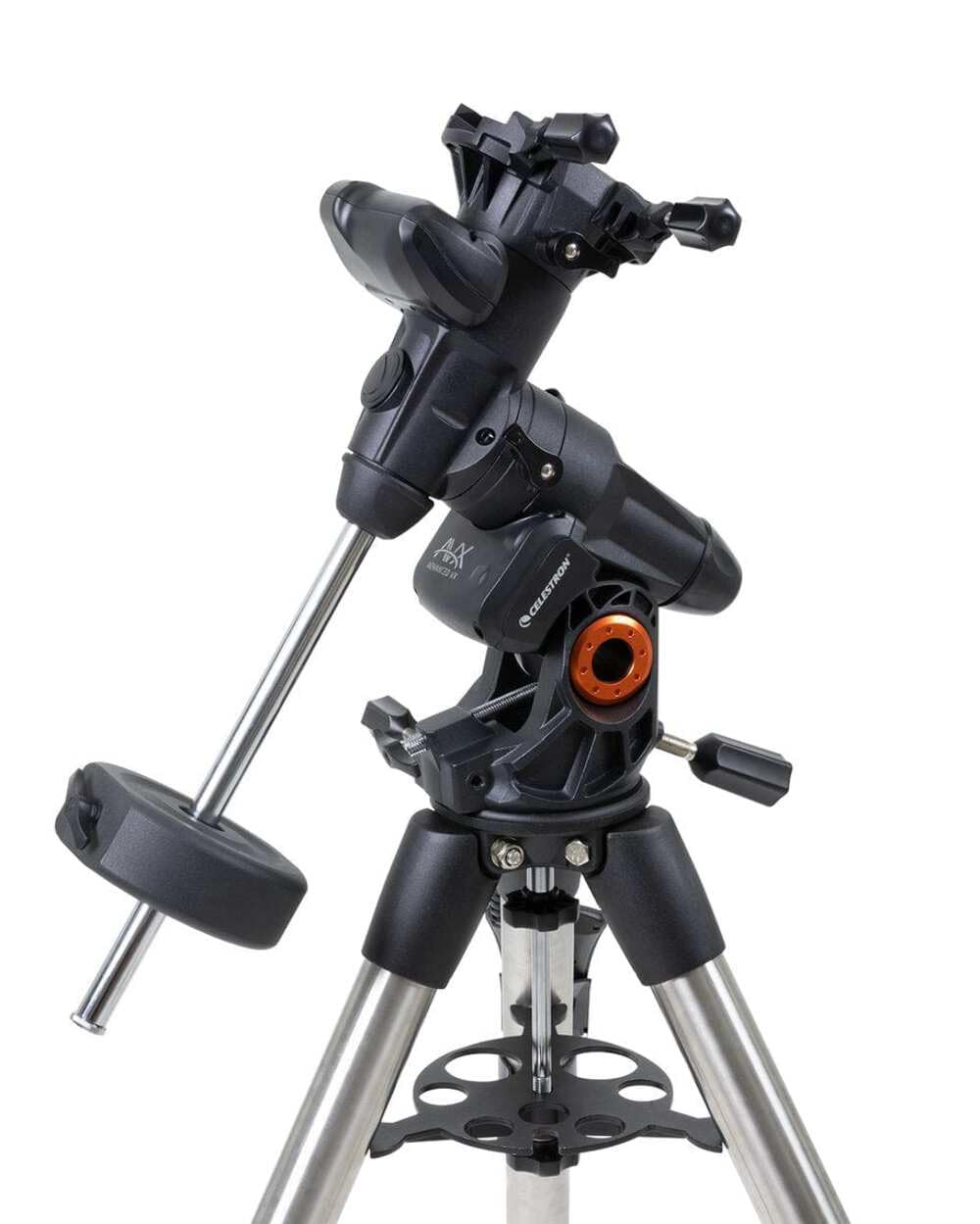
Thirty pounds of payload is the reason the Advanced VX earns our top spot: it leaves room for a modest refractor or an 8-inch SCT plus a diagonal, finder, and camera without running at the ceiling. The 2-inch stainless steel legs and dual saddle make it feel like a long-term purchase, and the 7-to-77-degree latitude range lets it travel.

We like the All-Star polar alignment and the sidereal, solar, and lunar tracking rates because they make the same mount useful for a quick look at the moon and a longer photography session. The NexStar+ hand control is the familiar route to alignment, and the dual saddle accepts CG-5, CGE, or Vixen dovetails, so you are not locked into one plate standard. The kit is heavy, and that weight buys the stability; this is a mount to set up near the car or in a garage, not to carry up stairs one-handed.

The dual saddle is the detail we keep coming back to: it lets one mount serve a visual scope and a camera rig without swapping plates. For a first serious EQ mount, that flexibility is worth more than a lighter package that runs out of capacity. If you mainly want a manual mount, the CG-4 is the simpler choice; if portability is the priority, the AZ-GTi is the one to pack.

Pros

  • 30-pound payload leaves room for imaging gear
  • Dual saddle fits three dovetail standards
  • All-Star polar alignment simplifies setup
  • Sidereal, solar, and lunar tracking rates

Cons

  • Motor-controller faults can appear early
Our verdict

For a first serious GoTo EQ mount, we point buyers to the Advanced VX: its 30-pound payload and dual saddle carry a visual scope now and an imaging rig later.

Check Latest Price
2

Best Manual EQ

Celestron CG-4 Mount

86 /100
LBD Score Excellent

Key details

Mount Type
German equatorial
Height Range
33 to 47 inches
Payload Capacity
20 lb
Tripod Leg Diameter
1.75 inches
View on Amazon

Manual observing has a simple appeal, and the CG-4 makes the most of it: a 20-pound German equatorial mount on a steel tripod with 1.75-inch legs. That is a lot of support for a small-to-medium telescope, and the slow-motion controls work on both axes, so you can track an object by turning a knob instead of nudging the tube.

We appreciate that the CG-4 accepts an optional motor drive, because it lets you start manual and add tracking later without replacing the mount. The height range of 33 to 47 inches suits a seated or standing observer, and the adjustable latitude means you can set it for your own sky. The trade-off is that polar alignment is part of every session; it gets faster with practice, but it is not a pointing-and-shooting alt-az mount.

What we like most is the feel of the slow-motion controls: at high power, a small turn moves the view without overshooting the planet. That is the detail that makes a manual mount pleasant rather than fussy, and it is why the CG-4 remains satisfying after the novelty of a new scope wears off. The steel legs and 20-pound payload are the reason it can take a small-to-medium scope; the controls are the reason you keep using it.

Pros

  • 20-pound payload handles small to medium scopes
  • Steel tripod with 1.75-inch legs
  • Slow-motion controls on both axes
  • Accepts an optional motor drive

Cons

  • No GoTo or included motor drive
Our verdict

The CG-4 is our pick for visual observers who want a stable manual EQ mount and are willing to learn polar alignment; it is the best value in this set.

Check Latest Price
3

Best Portable GoTo

Sky-Watcher AZ-GTi Mount

81 /100
LBD Score Excellent

Key details

Mount Type
Alt-azimuth GoTo
Connectivity
Wi-Fi app control
Mount Weight
8.6 lb
Payload Capacity
11 lb
View on Amazon

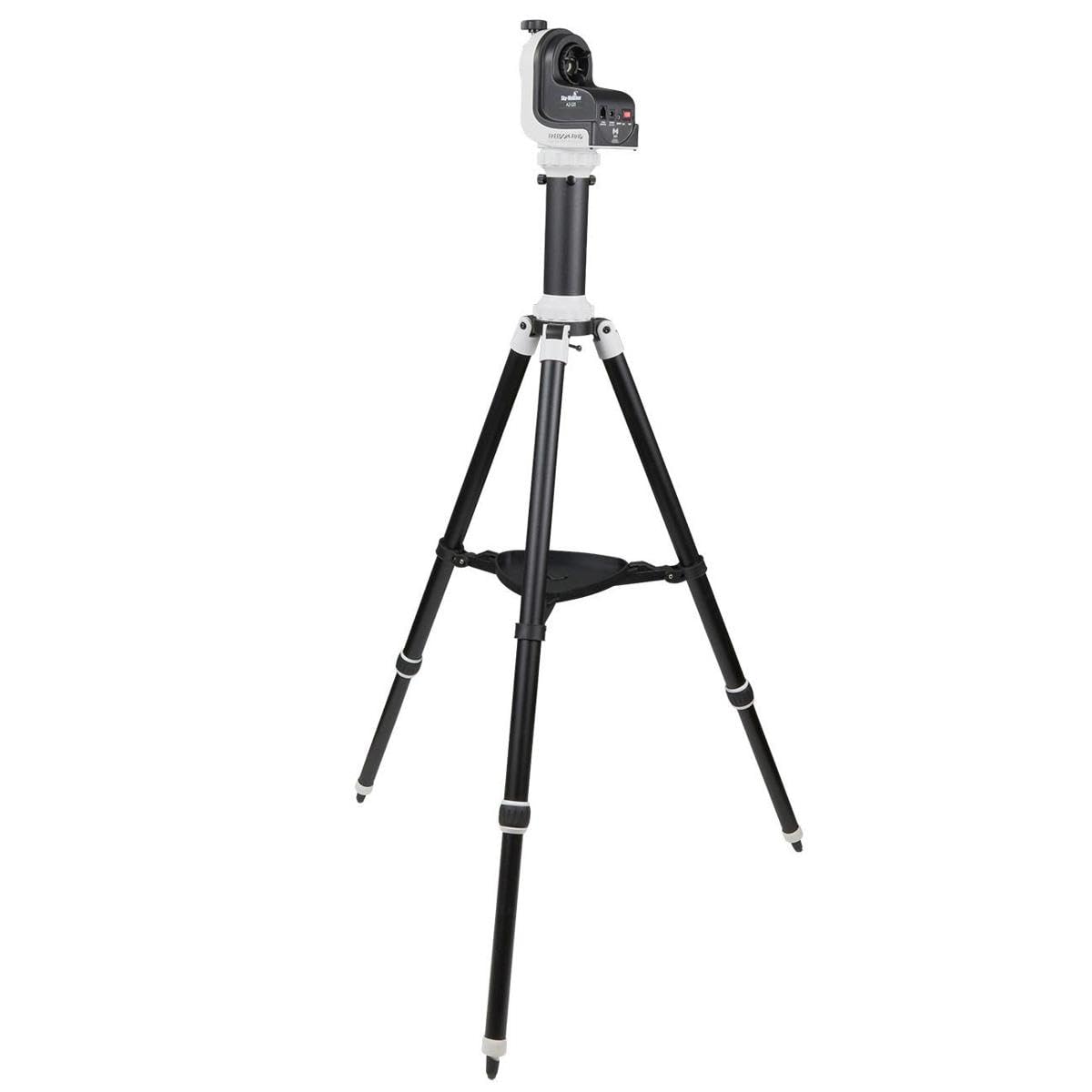
At 8.6 pounds, the AZ-GTi is the mount that disappears into the back seat. It carries an 11-pound payload and comes with a tripod and pier extension, so it is a complete grab-and-go package rather than a head you have to build around. The Wi-Fi connection and SynScan app let you run the GoTo from a phone, which is a lot less clutter than a hand controller.

We like the Freedom Find dual encoders more than the app itself: they let you move the scope by hand without losing the alignment, which is useful when you want to point at a bright planet without scrolling through menus. The 11-pound payload is enough for a small refractor or a camera lens, but it is not the mount for a heavy Mak or a long refractor. Alt-az tracking also limits long-exposure imaging; for that, an EQ mount is the better tool.

The app is the part that makes the package feel modern, but it is not magic: you still need a clear view of the sky and a careful level. When the alignment is good, the GoTo puts targets in the field and the mount tracks them for visual use. The pier extension is a small thing that makes a real difference: it gives the scope clearance to point high without the tube fouling the tripod.

Pros

  • 8.6-pound mount is easy to carry
  • Wi-Fi app control cuts handset clutter
  • Dual encoders allow manual slewing
  • Includes tripod and pier extension

Cons

  • Alignment and tracking can be fussy
Our verdict

We like the AZ-GTi best for travel and small scopes, where its 8.6-pound package and Wi-Fi GoTo make a complete grab-and-go setup.

Check Latest Price
4

Best for Heavy Payloads

Sky-Watcher EQ6-R Pro Mount

82 /100
LBD Score Excellent

Key details

Motor Type
Belt-driven stepper
Mount Type
German equatorial
Polar Alignment
Built-in illuminated finderscope
Payload Capacity
44 lb
View on Amazon

Belt-driven motors and a 44-pound payload put the EQ6-R in a different class from the rest of this group. The all-metal construction is built for larger Newtonians and SCTs, and the two 11-pound counterweights give you room to balance a front-heavy setup. The belt drive replaces the usual gear train, which is why the mount slews quietly and is designed to keep periodic error low.

We like the built-in illuminated polar finderscope and the 42,000-plus object database because they make a heavy mount less intimidating on a dark night. The 44-pound capacity is not a suggestion to load it to the ceiling; leave headroom for a guidescope, camera, and cables. This is a mount for a permanent or semi-permanent setup, not a grab-and-go package.

Polar alignment is the fussy part. The polar scope can arrive off center, so check it in daylight before you rely on it. Once it is set, the belt drive and mass are what you are paying for: quiet slews and a stable platform for long exposures. This is not a mount you move lightly, but it is not meant to be; it is the one to choose when the scope stays assembled and the session is planned around imaging.

Pros

  • 44-pound payload for large optical tubes
  • Belt-driven stepper motors run quietly
  • Built-in illuminated polar finderscope
  • 42,000-plus object database

Cons

  • Base adjusters can feel awkward
Our verdict

Choose the EQ6-R if your optical tube is heavy and your sessions are planned around imaging; its 44-pound payload and belt drive are the reason.

Check Latest Price
5

Long Refractors

Explore Scientific Twilight I Mount

82 /100
LBD Score Excellent

Key details

Mount Type
Alt-azimuth
Height Range
36 to 53 inches
Total Weight
16.7 lb
Payload Capacity
18 lb
View on Amazon

A 45-degree tilting head is the detail that makes the Twilight I worth noticing. It lets a long refractor point toward the zenith without the back end hitting the legs, which is the problem that sends many long-tube owners looking for a new mount. The 18-pound payload and stainless steel tripod are a good match for a small refractor or a lightweight fast Newtonian, and the 36-to-53-inch height range lets you observe seated or standing.

We like the slow-motion cables with oversized knurled knobs because they are easy to turn with gloves, and they can be attached on either side for left- or right-handed use. The 42-inch footprint and spreader bar add stability, and the whole package weighs 16.7 pounds, so it is reasonable to carry out in one trip. The wide stance is the trade-off: it needs a little more floor space than a compact travel tripod.

Assembly is straightforward once the parts are laid out, but plan on finding the manual online if the printed sheet is unclear. The head tilt is the detail that makes a long refractor feel at home: you can point high without the tube colliding with the tripod. That is the difference between a mount that limits the scope and one that gets out of its way.

Pros

  • 18-pound payload for small to medium scopes
  • Tilting head reaches zenith with long tubes
  • Oversized knobs work with gloves
  • Tall 36-to-53-inch height range

Cons

  • Requires a separate dovetail bar
Our verdict

Our recommendation for a long refractor is the Twilight I: the tilting head, 18-pound capacity, and smooth slow-motion cables make manual observing comfortable.

Check Latest Price

How We Chose and Tested the Best Telescope Mounts

We built the shortlist from the specs that actually constrain a purchase: rated payload, head weight, tripod material and leg diameter, and whether a mount arrives computerized or accepts a motor drive later. From that pool we pulled seven mounts spanning manual alt-azimuth, manual equatorial, and GoTo designs, and kept all seven in rotation for ten months so a mount that impressed on night one had time to annoy us by night ten.

Every mount left the house. We assembled each one in a driveway, from car trunk to first star, using only the included instructions, and wrote down exactly where we got stuck — tiny hardware, vague diagrams, a step that quietly assumed a second person. We carried heads and tripods up and down a flight of stairs separately, then asked which ones we'd genuinely haul to a dark site. On clear nights we tapped the tube and counted the seconds until a star stopped smearing, watched a single high-power star for half an hour to see how far it drifted, and loaded each mount to its rated payload and then past it to find where tracking fell apart.

Alignment got its own scrutiny. We ran each GoTo routine from a rough north, timed it, and repeated it a week later to see whether the sky model held or had to be rebuilt from scratch. On the equatorials we did polar alignment in a suburban yard and noted which polar scopes were a pleasure and which were a squint. We also wiggled both axes by hand to feel for backlash and play, checked threads, paint, and machined surfaces for the sloppiness that signals shaky quality control, and compared what each mount delivered for the money — including whether a manual one could be motorized down the road.

Two of these are still set up in my garage, and we'll keep updating as they age.

How to Choose a Telescope Mount

Start With Payload, Not the Scope's Advertised Weight

Payload is the total weight a mount is rated to carry, and it includes the optical tube, finder, diagonal, eyepiece, camera, rings, and any autoguider. A mount that is close to its limit will feel less steady than one with headroom, especially when you touch the focuser or a gust hits the tripod. Add up everything you plan to attach, then leave a margin. The 30-pound Advanced VX and 44-pound EQ6-R are built for heavier setups; the 11-pound AZ-GTi is happiest with a small refractor or camera lens.

Alt-Azimuth or German Equatorial?

Alt-az mounts move up-down and left-right, which makes them intuitive for visual observing and terrestrial use. German equatorial mounts add a counterweight and align to the celestial pole, so a single motor axis can follow the sky; that is the better choice for long-exposure photography. If you mainly want to look at the moon and planets, an alt-az like the Twilight I is simpler. If you want to photograph deep-sky objects, start with an EQ mount such as the CG-4 or Advanced VX and plan to learn polar alignment.

The Tripod Is Half the Mount

A good head on a light tripod still shakes. Steel legs, a wide footprint, and a spreader bar add rigidity, which is why the CG-4's 1.75-inch legs and the EQ6-R's heavy tripod feel planted. The trade-off is weight: the AZ-GTi's 8.6-pound package is easy to carry, but it is not the mount for a long refractor on a windy night. Match the tripod to the scope, and extend the legs only as far as you need for comfort.

Setup, Alignment, and Electronics

GoTo and app control save time finding objects, but they add batteries, hand controls, firmware, and alignment routines. A manual mount rewards you for learning the sky and has less to go wrong; a computerized mount like the Advanced VX or AZ-GTi can find targets for you, provided you level the tripod and complete the alignment. Check the electronics thoroughly during the return window, and practice the alignment routine in daylight before your first night out.

Kit Completeness and Mounting Interface

Check what actually comes in the box. A complete kit includes the head, tripod, and often counterweights or a pier extension; a head-only mount assumes you already have a suitable tripod. The telescope side matters too: most EQ mounts use a Vixen or CG-5 dovetail, while some alt-az heads use a 1/4-20 plate. The Twilight I needs a separate dovetail bar, and the Advanced VX's dual saddle accepts CG-5, CGE, or Vixen plates. If you are starting from scratch, buy the complete kit.

Frequently Asked Questions

Final Verdict

After testing these mounts, the Celestron Advanced VX is the one we recommend first. It has the payload and complete GoTo EQ kit to handle a modest refractor or an 8-inch SCT for visual work, then grow into imaging without replacing the mount. The dual saddle and All-Star polar alignment are the details that make it a long-term purchase rather than a stepping stone.

If you want a manual mount and do not need GoTo, the CG-4 is the better fit. The AZ-GTi is the one to pack when 11 pounds of payload is enough, while the EQ6-R is the choice for a heavy imaging rig. Match the mount to your largest optical tube, not the smallest one you own.