Best Vlogging Cameras of 2026

A vlogging camera is really two purchases in one: the pocket-size one you'll actually carry, and the big-sensor one that makes footage look expensive. Most people buy for the second and leave it in a drawer, so I judge these cameras by what I'll tolerate carrying on an ordinary Tuesday.

The failures are never glamorous. I've filmed myself talking into the wind on a boardwalk, in a parked car, at my kitchen table at 11 p.m., and what ruins a take is autofocus drifting to a passing dog, a battery dying mid-sentence, or a screen I can't see in daylight. We've spent the past six months shooting with 12 vlogging cameras, from palm-size gimbal models to bodies with a kit lens.

One thing the spec sheet won't tell you: a screen that flips toward your face matters as much as sensor size, and high frame rates are lovely until you watch them drain a card and a battery. The picks below are the ones we'd hand to a friend.

1

Best Overall

DJI Osmo Pocket 3

89 /100
LBD Score Excellent

Key details

Sensor
1-inch CMOS
Weight
6.31 oz
Battery
166 minutes
Stabilization
3-axis mechanical gimbal
View on Amazon

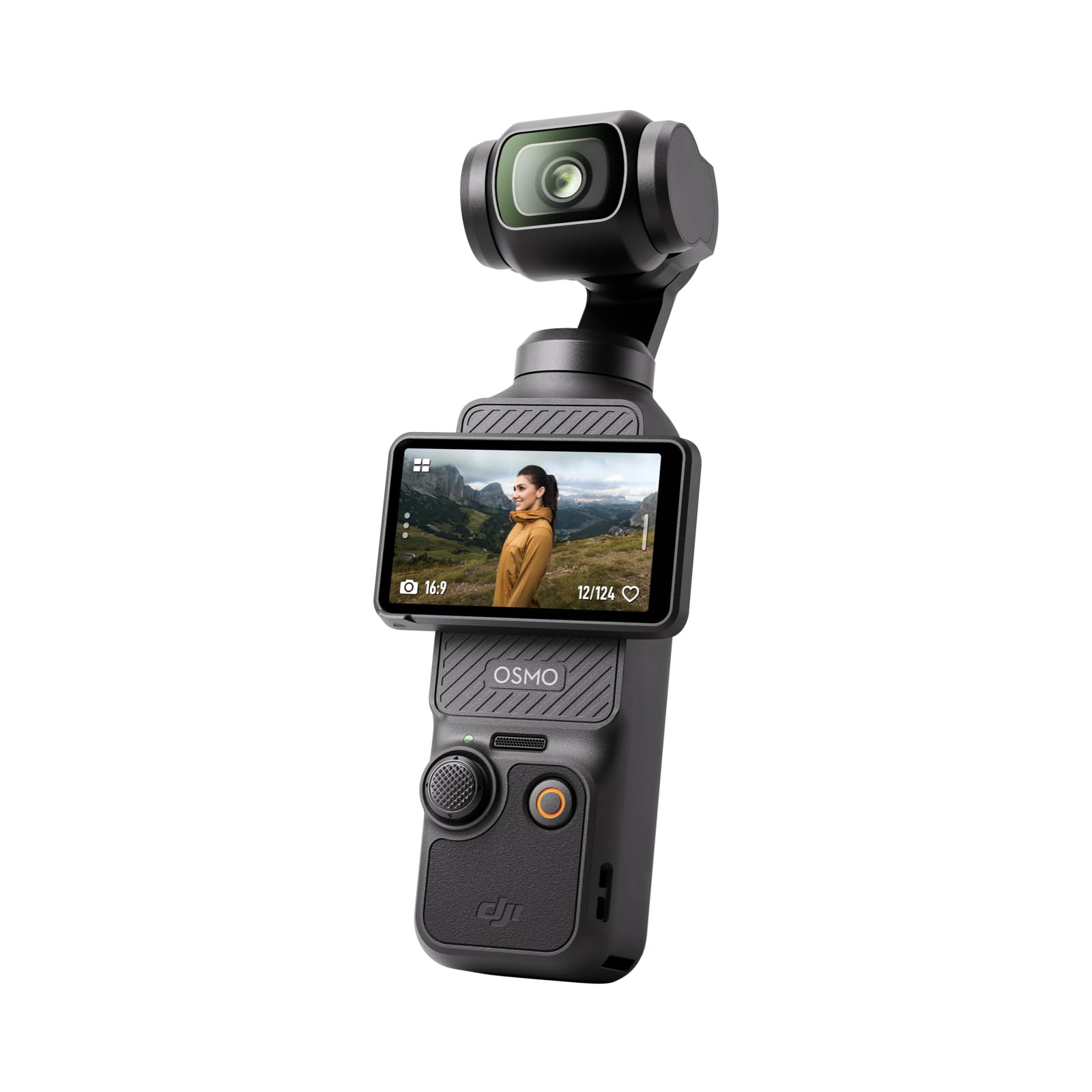
Walking and talking is the shot most vlogs open with, and it is the test the Pocket 3 was built to pass. A three-axis mechanical gimbal moves under the camera rather than inside the software, so the horizon holds steady while your arm swings. The result looks less like a handheld clip and more like a tripod that followed you down the block.

That is why we hand this one to people first. The 1-inch sensor is the largest in any pocket camera here, and it is what keeps a dim kitchen or a street after sunset from turning to mush. It records 4K at up to 120 frames per second, and the two-inch screen rotates between horizontal and vertical, so the same take can go to YouTube and to a phone-shaped feed without re-rigging anything.

At 179 grams it disappears into a jacket pocket, and the charge is rated at 166 minutes. ActiveTrack keeps you centered when the camera sits on a tripod across the room, which is the closest thing here to having a second person behind the lens. We also appreciate that the screen is big enough to actually judge focus on, which is not true of the budget pocket cameras.

The gimbal is the one part with a mechanism that can stop working, so record a few minutes on day one and watch it back while a return is still simple. Stills are the other compromise: 9.4 megapixels is enough for a thumbnail and not much else.

Pros

  • Gimbal-smooth footage while walking
  • 1-inch sensor holds up in low light
  • Screen rotates for vertical video
  • 179 g fits a jacket pocket

Cons

  • Premium price against the rest of the list
  • Stills top out at 9.4 megapixels
Our verdict

If you film yourself while moving, this is the one we recommend: the gimbal makes handheld footage look composed, and the 1-inch sensor still works after dark.
Check Latest Price
2

Best for Interchangeable Lenses

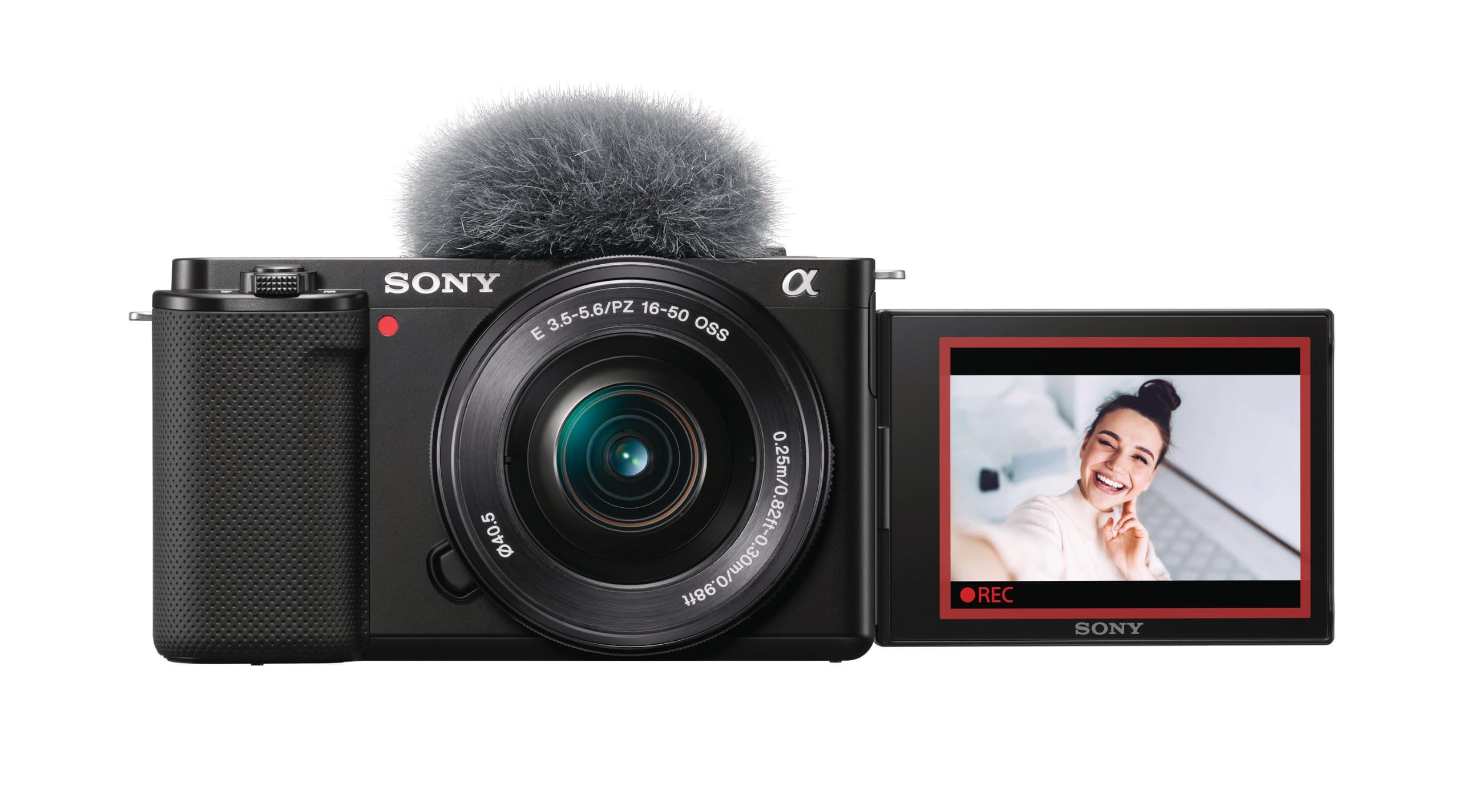
Sony ZV-E10

85 /100
LBD Score Excellent

Key details

Screen
3-inch side flip-out
Sensor
24.2MP APS-C
Kit Lens
16-50mm power zoom
Lens Mount
Sony E
View on Amazon

The lens mount is the whole argument. Everything else in this roundup has a fixed lens, which means the framing you buy is the framing you keep. The ZV-E10 takes Sony E-mount glass, so a wider lens, a faster lens, or a long lens for a second angle is a purchase rather than a new camera.

Underneath is a 24.2MP APS-C sensor, and its 4K is oversampled from 6K with full pixel readout, so detail stays crisp instead of being stitched together from bins. Add 425-point autofocus with eye tracking and the Product Showcase setting, which pulls focus from your face to whatever you hold up to the lens, and it behaves like a camera built for the demo videos that sell products.

The screen is a three-inch panel that flips out to the side and faces you, the arrangement we prefer for solo shooting because it does not compete with the top of the camera for space. Recording capacity is listed at 125 minutes, the body runs about a pound before you mount a lens, and one USB-C cable turns it into a streaming camera with no capture card involved.

This is the pick for someone who intends to still be making videos in two years, when the lens collection has outgrown the body. It is also the heaviest and least pocketable thing here, so it rewards people who shoot planned videos rather than grabbing clips on a walk.

Pros

  • Takes any Sony E-mount lens
  • 4K oversampled from 6K
  • Streams over one USB-C cable

Cons

  • Kit lens limits low-light shooting
  • No viewfinder, so framing is screen-only
Our verdict

We point anyone planning to build a channel here: the lens mount, the oversampled 4K, and the flip screen give you room to grow that no pocket camera offers.

Check Latest Price
3

Best Value Pocket Gimbal

Xtra Muse

88 /100
LBD Score Excellent

Key details

Video
4K at 120fps
Sensor
1-inch CMOS
Weight
9.91 oz
Stabilization
3-axis gimbal
View on Amazon

Put the Muse beside our top pick and the family resemblance is hard to miss: a 1-inch sensor, 4K at 120 frames per second, a three-axis gimbal under a two-inch touchscreen, and a body that shoots vertical or horizontal by turning the screen. It costs noticeably less, which is the reason it earns a place on this list at all.

What you get is real headroom. Ten-bit X-Log color leaves something to grade when the light is unkind, the gimbal keeps a walking shot level, and the whole thing weighs 281 grams, so a long handheld take does not become a wrist workout. The charge is rated at 161 minutes, essentially level with the DJI on paper.

We think it is the right buy for anyone who wants the pocket-gimbal experience without paying top-pick money, and the compromises show up in the materials rather than the footage. The shell feels more ordinary in the hand, and the lens housing is less protected, but none of that reaches the file you upload.

The body does warm up during a long take, which is expected from a 1-inch sensor in a shell this small and worth knowing before you film an hour-long sit-down. Cabled audio is the other thing to sort out early: there is no wireless pairing here, so a clip-on receiver goes in through the port.

Pros

  • Gimbal-stabilized 4K for less than the top pick
  • 10-bit X-Log leaves room to grade
  • 281 g, lighter than the DJI

Cons

  • No wireless microphone pairing
  • Battery life is uneven in practice
Our verdict

Our pick when the top pick's price is the sticking point: it delivers the same gimbal-stabilized look in a lighter, plainer body.

Check Latest Price
4

Best for Wide-Angle Selfies

Sony ZV-1F

90 /100
LBD Score Outstanding

Key details

Lens
20mm ultra-wide
Sensor
1-inch CMOS
Weight
8.96 oz
Aperture
f/2.0
View on Amazon

Twenty millimeters is the number that decides this one. Hold a camera at arm's length and a 24 or 28mm lens crops your shoulders and half the room; the ZV-1F's ultra-wide keeps your hands, your face, and whatever is behind you in the frame. We noticed the framing first and everything else second, because it is the difference between a vlog that feels cramped and one that does not.

Behind that lens sits a 1-inch sensor with an f/2 aperture, so indoor footage holds color better than the small-sensor pocket cameras here, and a defocus control blurs a messy background at the press of a button. The three-capsule microphone and the supplied windscreen are genuinely usable outdoors, the screen articulates to the side, and the body weighs 254 grams.

Battery is the known weak spot, and the fix is boring: carry a spare and a small power bank, since it charges over USB while it records. Stabilization is electronic only, so a slow walk is fine and a fast one is not; at 20mm the wobble is less obvious than it would be on a longer lens, but it is there in the footage.

Pros

  • 20mm lens fits a whole room in
  • 1-inch sensor with a bright f/2 lens
  • Three-capsule mic plus windscreen

Cons

  • Stabilization is electronic only
Our verdict

For arm's-length filming in tight rooms, we have not found anything here that frames as much as this 20mm lens, and it sits well below the mirrorless on cost.

Check Latest Price
5

Best Premium Pick

Insta360 Luna Ultra

87 /100
LBD Score Excellent

Key details

Video
8K at 30fps
Lenses
Dual Leica
Screen
Detachable 2-inch OLED
Dynamic Range
Up to 14 stops
View on Amazon

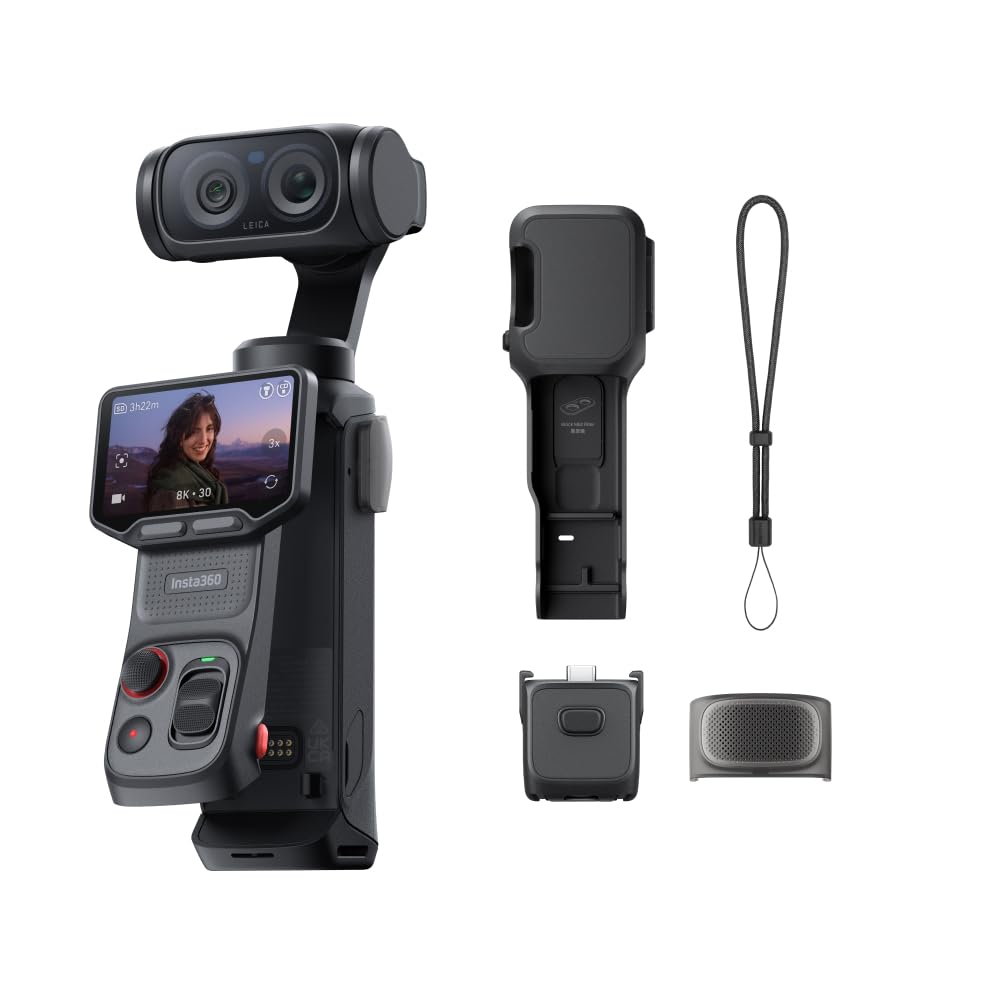
The screen comes off. Pop the two-inch OLED panel off the handle and it becomes a monitor and control surface up to 20 meters away, so you can set the camera on a table, walk into the shot, and see exactly how you are framed. Nothing else in this roundup lets one person work that way.

The rest of the hardware is aimed at the same kind of ambition: 8K at 30fps with Dolby Vision, up to 14 stops of dynamic range, dual Leica lenses with Leica color profiles, and AI noise reduction for night shooting. For a handheld camera it reads like a small cinema rig.

We rate it the best footage of the group and, for most vloggers, more camera than the job needs. A talking-head video gains nothing from 8K; a night market, a car interior, or a shot where you want the background to fall away gains a lot. That is the test for whether it belongs in your bag.

Two things to know before ordering. Long takes are where it has the most to prove, so film a continuous run in the first week and watch the file back before you trust it with a paying shoot; a recording that stops on its own is the failure to watch for. And 8K footage is heavy enough that card speed stops being an afterthought.

Pros

  • Detachable screen doubles as a remote
  • 8K HDR with Leica color
  • Up to 14 stops of dynamic range

Cons

  • Costliest camera in this roundup
  • 8K files need fast, high-capacity cards
Our verdict

We rate it the best footage of the group and the least necessary purchase for most vloggers: buy it if your light is bad and your shots are wide.

Check Latest Price
6

Best Camcorder-Style

Uytya X70

82 /100
LBD Score Excellent

Key details

Zoom
16x
Video
5K at 20fps
Screen
3-inch 270° flip
Included Accessories
External mic, two batteries
View on Amazon

This is the one pick that feels like a camcorder rather than a phone accessory: a body you wrap a hand around, a three-inch screen that rotates 270 degrees to face you, and controls sized for fingers rather than fingernails. It records 5K at 20fps and 4K at 60fps, and the 16x zoom pulls a stage or a podium close without moving your feet.

We keep it for the jobs where the pocket cameras run out of battery and card: a school concert, a ceremony, a seated interview. Two 1800mAh batteries, a 32GB card, an external microphone with a windscreen, a remote, and a lens hood all come in the box, so the first shoot does not need a second order. That bundle is most of why it ranks here.

The trade-offs are real. It weighs 2.5 pounds, focus is manual, and low light is not its strength; the IR mode is for finding your subject in near-darkness, not for attractive footage. Indoors in ordinary light, 4K at 60fps is the mode that holds up, and the 5K setting arrives at 20fps, which suits a static shot and fights anything that moves.

Pros

  • External mic and two batteries included
  • 270° screen turns to face you
  • 16x zoom for distant subjects

Cons

  • Manual focus only
  • 2.5 pounds before accessories
Our verdict

We keep it for long events and interviews: two batteries, a mic in the box, and a screen that rotates around to face you.

Check Latest Price
7

Travel and Day Trips

Lmzour Pocket Camera

85 /100
LBD Score Excellent

Key details

Lens
330° rotating wide-angle
Screen
1.72-inch
Sensor
1/2.5-inch CMOS
Battery
1.5 hours
View on Amazon

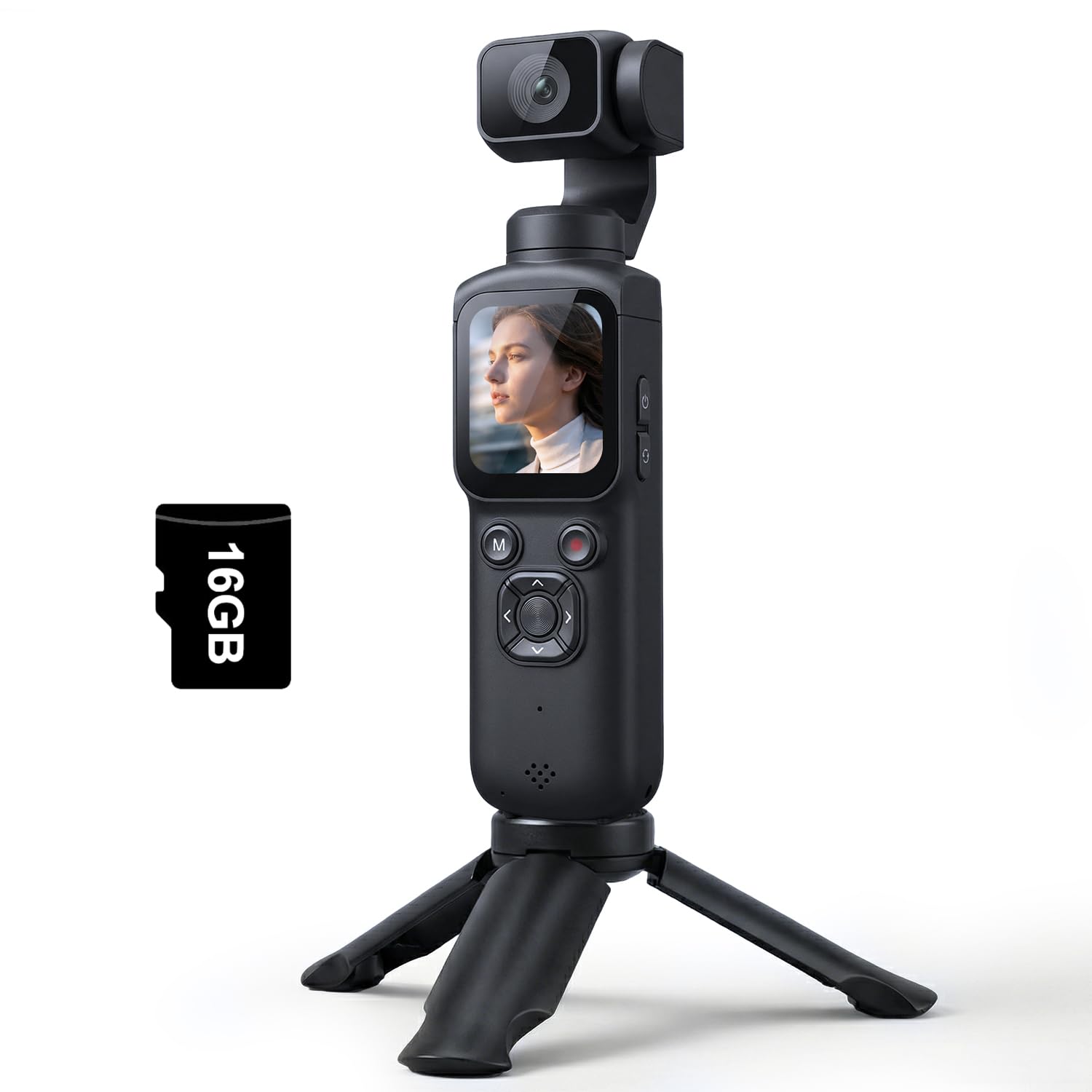
The box is the pitch: camera, 16GB card, mini tripod, charging cable, and a carry pouch in a single order. For anyone who wants to find out whether they actually enjoy vlogging before spending real money, that is the most sensible thing about this camera. You can be recording within minutes of opening it, and the 330-degree rotating lens means you can point the camera at yourself without a tripod at all.

The hardware is what the price suggests: a 1/2.5-inch sensor, 4K at 30fps, digital stabilization, a 1.72-inch screen, and a rated 1.5 hours per battery. Face tracking is the feature that surprised us, because it holds a moving subject near the center of the frame, which is exactly what a solo shooter needs and what cheap cameras usually get wrong.

Where it stops is light. Outdoors on a bright day the footage looks better than the money implies; indoors in the evening it turns soft and noisy quickly, and no resolution figure fixes that. Buy it for daylight, travel, and short clips rather than for a dim apartment, and it will do what you paid it to do.

Pros

  • Rotating lens for filming yourself
  • Card, tripod, and pouch included
  • Light enough to carry daily

Cons

  • Small sensor limits indoor footage
  • Small screen is awkward for framing
Our verdict

We see it as the try-it-out camera: rotating lens, card, and tripod for the least fuss, with image quality that wants daylight.

Check Latest Price
8

Family Recordings

ZYDIIE 4K Camcorder

84 /100
LBD Score Excellent

Key details

Zoom
18x digital
Video
4K
Screen
3-inch 270° touchscreen
Included Accessories
32GB card, two batteries
View on Amazon

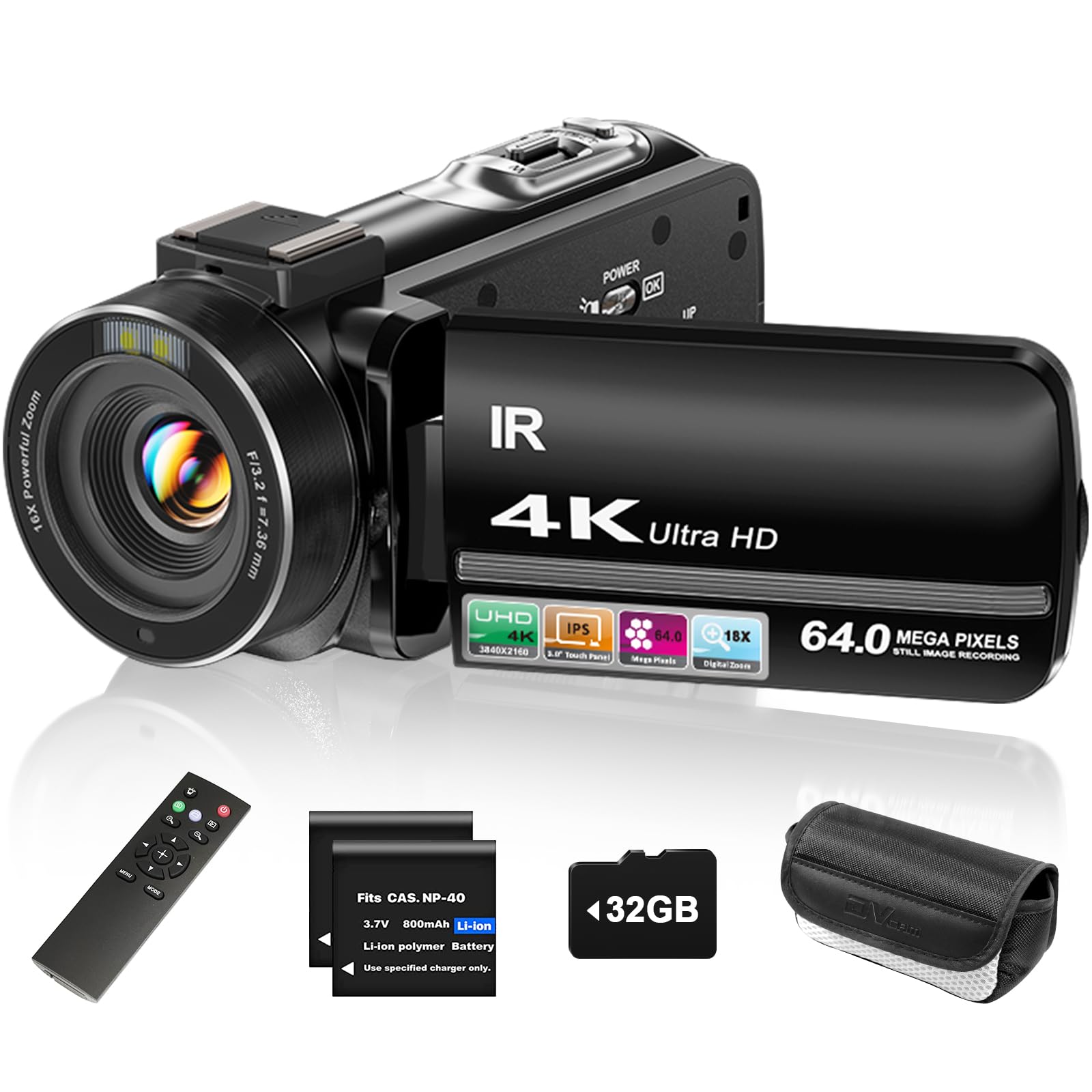
Cheap camcorders get a bad reputation, and this one shows why the shape still works: a handgrip, a three-inch touchscreen on a 270-degree hinge, 18x digital zoom, and infrared night vision for when the lights go out. It records 4K and 64MP stills, and the box holds a 32GB card, two batteries, a remote, and a charging cable.

What it does not have is anything to compensate for a small sensor. Focus is fixed, so subjects a few inches from the lens go soft; stabilization is digital; files record as AVI, which some editing apps handle badly; and the picture is at its best in good light, whatever the resolution badge says. The night vision mode is a genuine extra, though it is there for seeing in the dark rather than for looking good.

We treat it as a family camcorder that happens to be fine for talking-head videos in a bright room. The spare battery and included card mean a full afternoon of clips without another purchase, the 270-degree screen lets someone who has never held a camera frame themselves, and the whole thing is light in one hand. It is the least camera here, and the least fuss.

Pros

  • Two batteries and a 32GB card included
  • 270° screen for self-recording
  • Light and simple to hold

Cons

  • Fixed focus softens close subjects
  • Stabilization is digital, not mechanical
Our verdict

We treat it as a starter camcorder: flip screen, spare battery, and card in the box mean nothing else needs buying before the first shoot.

Check Latest Price

How We Tested Vlogging Cameras (and What We Shot With Them)

We started with a list of about 40 currently sold vlogging cameras and narrowed it by sensor size, whether the screen articulates toward your face, stabilization, recording resolution, and price against what each one actually recorded, then read through owner reviews for the complaints that repeat. That left 12 cameras, which we bought at retail and lived with for six months rather than an afternoon.

Most of the testing happened where vlogs actually get shot. I recorded walking-and-talking clips while walking my dog, at a farmers market, in a coffee shop, and on a weekend trip, starting each recording one-handed while holding a coffee to count how many taps it took. I also timed how long each camera needed to go from a cold start to recording, since the moment worth filming usually lasts about four seconds.

For autofocus, I walked toward and across each camera while a stranger crossed the frame behind me, then watched the footage on a monitor for hunting or a focus pull to the background. Battery life came from a continuous 4K recording until shutdown, once with WiFi on and once with it off. I carried each one loose in a jacket pocket and a tote bag with keys, checked the screen in direct midday sun, and timed how long it took to send a two-minute clip to my phone. The cameras that needed a second take every time didn't make the list.

How to Choose a Vlogging Camera

Start With How the Camera Is Stabilized

A shaky frame ruins footage no sensor can rescue, and there are three ways to fix it. A mechanical gimbal, as on the DJI Osmo Pocket 3 and the Xtra Muse, physically holds the lens level and gives the smoothest walking shots, at the cost of a moving part that can fail. Optical stabilization inside a lens, like the Sony kit zoom, does a similar job with fewer moving parts. Digital stabilization, which the cheaper pocket cameras and the ZV-1F rely on, shifts the frame electronically and crops the edges to do it.

If your videos involve walking and talking, we put mechanical or optical stabilization at the top of the list. If you film sitting at a desk, it barely matters.

Sensor Size, Not the Number on the Box

Resolution sells cameras; light gathering makes them useful. A 1/2.5-inch sensor, the size in most budget pocket cameras, needs a bright day to look clean, and a 4K or 5K badge does not change that because those pixels are simply smaller. A 1-inch sensor, as in the Pocket 3, the Xtra Muse, and the ZV-1F, buys noticeably cleaner indoor and evening footage, and an APS-C body like the ZV-E10 goes further again.

The trap: a camera advertising 75MP stills or 5K video on a tiny sensor is not out-resolving a 4K camera with a bigger chip. Judge the sensor first and the resolution second.

Plan for Power Before Anything Else

Battery is the spec most likely to end a shoot early, and pocket cameras carry small cells because the body is small. A rated runtime is measured at one resolution and frame rate, so 4K at a high frame rate drains faster than the number implies.

The fix is unglamorous: buy a second battery, or choose a camera that records while charging over USB-C, and keep a power bank in the bag. Camcorder-style bodies such as the Uytya X70 ship with two batteries, which is part of what you are paying for.

Framing When You Are the Whole Crew

Filming yourself means you cannot watch the screen and stand in front of it at once, so the physical design matters more than the menu. A screen that flips to the side or a lens that rotates 330 degrees lets you check framing at arm's length, and face tracking keeps you centered while you move. Lens width helps too: the ZV-1F's 20mm fits a room in at arm's length, where a 24mm lens starts cutting off your shoulders.

If you film solo and handheld, treat a flip or rotating screen as a requirement rather than a bonus.

Audio Is the Part Viewers Forgive Least

Built-in microphones have improved. The ZV-1F uses a three-capsule array with a windscreen, and the pocket cameras carry small multi-mic arrays that are fine at arm's length. They all fall apart at a distance or in wind. A 3.5mm input or a bundled external mic solves it, and the Uytya X70 includes one; wireless systems are better still, provided the camera supports them. The Xtra Muse does not pair with wireless mics, though a cabled receiver works.

Decide on audio before you decide on resolution. Viewers forgive soft footage and stop watching bad sound.

Frequently Asked Questions

Final Verdict

Buy the DJI Osmo Pocket 3. Two things earn it: a mechanical gimbal that makes handheld footage look deliberate, and a 1-inch sensor that keeps working when the light drops. No other pocket camera here has both.

The Sony ZV-E10 is the better camera if you want to build a lens collection and do not mind carrying a body and glass. If the problem you are solving is fitting yourself and a room into one frame at arm's length, the ZV-1F's 20mm lens handles it for less.