Best Robot Vacuum and Mop Combos of 2026

The fantasy is a floor that cleans itself while you're at work. The reality, with the wrong machine, is a robot beached on a bath mat with a dead battery and a bin packed solid. I've had both kinds in my house. Over the past eight months, my team and I put 12 robot vacuum-and-mop combos through the same messy routine: two shedding dogs, a kitchen floor that collects crumbs faster than anyone sweeps it, and a hallway of rugs that snag everything with an edge.

Here's what I didn't appreciate until I'd emptied a bin by hand for the tenth time: the dock is half the machine. A base that empties itself and mop pads that wash and dry on their own are what turn a daily chore into a weekly one, and the suction number on the box tells you far less than how the roller handles a wad of wet hair. Noise matters more than the spec sheet admits, too — a bot loud enough to interrupt a call just gets scheduled for when nobody's home, which rather defeats the point. The machines below are the ones that survived all of it.

1

Best Overall

roborock Qrevo S Pro

84 /100
LBD Score Excellent

Key details

Runtime
180 minutes
Suction
18,500Pa
Mop Care
167°F wash, hot-air dry
Self-empty Bag
2.7L, 7-9 weeks
View on Amazon

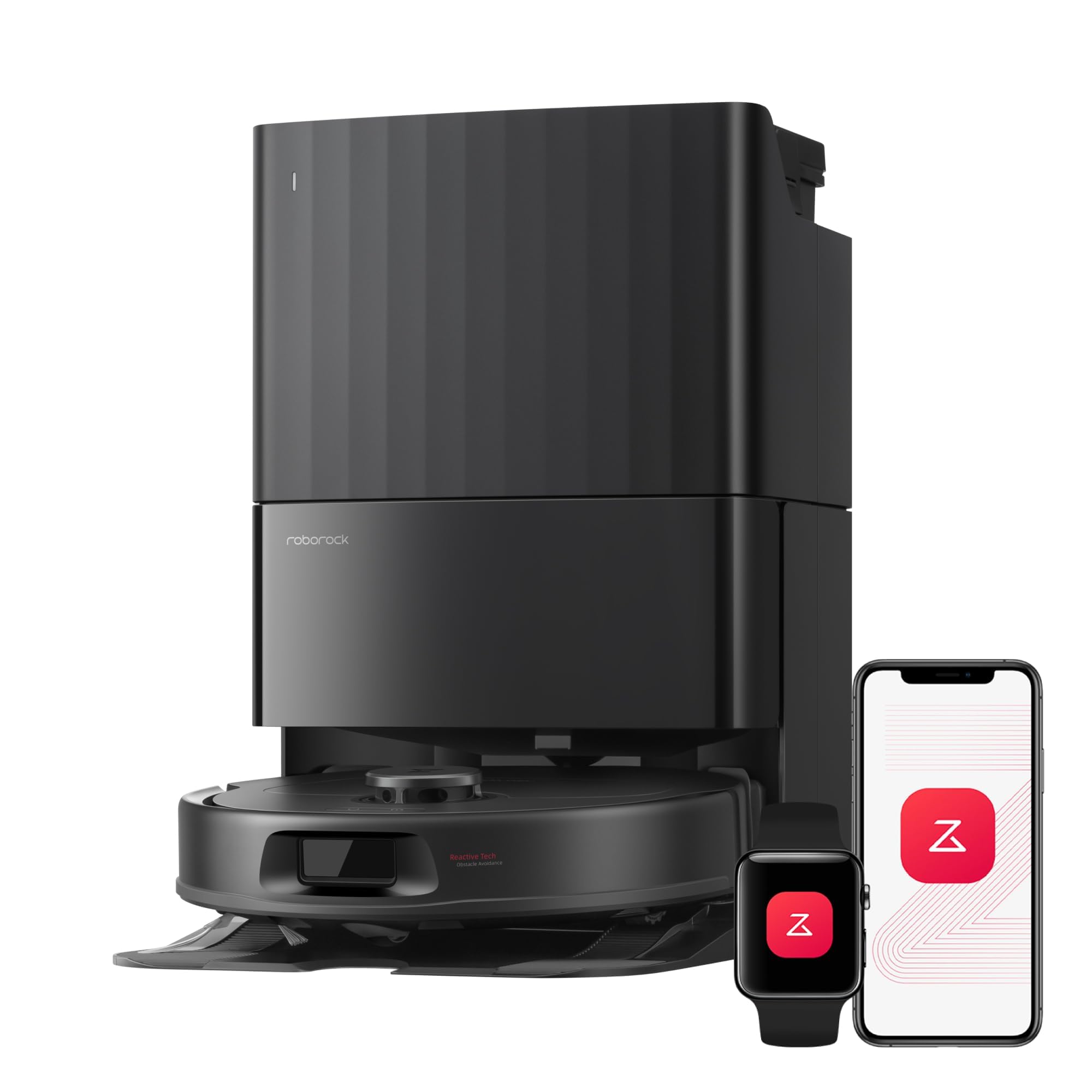
Four jobs, one dock: the Qrevo S Pro empties its bin into a sealed 2.7L bag rated for seven to nine weeks, washes its spinning mop pads at 167°F, dries them with hot air, and refills its own water tank. That is the automation list usually attached to the most expensive machines in this category, and here it arrives at a midrange price.

We think that is where the money belongs. Emptying a bin and rinsing a wet pad are the two chores that make people quietly stop using a robot mop, and this dock removes both. The mops also lift clear of the floor when the robot moves onto carpet, so one schedule covers tile, hardwood, and a low-pile rug without you building separate no-mop routines.

Underneath it all is a capable vacuum: 18,500Pa of claimed suction with four levels, LiDAR mapping with room-by-room scheduling and no-go zones, and a 3.8-inch body that slides under a sofa skirt. roborock rates it at 60 dB, which puts it among the quieter combos here on paper, and the dock's drying cycle means the pads are not sitting damp between runs.

One practical note before ordering: the dock stands about 20 inches tall, so measure the wall you had in mind rather than assuming it slots into the gap beside the fridge. Give it an outlet of its own, and setup is a mapping run followed by a schedule.

Pros

  • Dock empties, washes, dries, and refills on its own
  • Spinning mops lift clear of carpet
  • 18,500Pa with LiDAR mapping and no-go zones
  • Quiet 60 dB rating

Cons

  • Pet hair pickup is patchier than its dust pickup
  • Bags and replacement pads add ongoing cost
Our verdict

Our pick for most homes: it empties the bin, washes and dries its mops, and lifts them over rugs for midrange money rather than premium money.
Check Latest Price
2

Best for Corners and Edges

dreame L40 Ultra Gen 2

87 /100
LBD Score Excellent

Key details

Dock
Self-empty, wash, hot-air dry
Runtime
231 minutes
Suction
25,000Pa
Mop Lift
10.5mm
View on Amazon

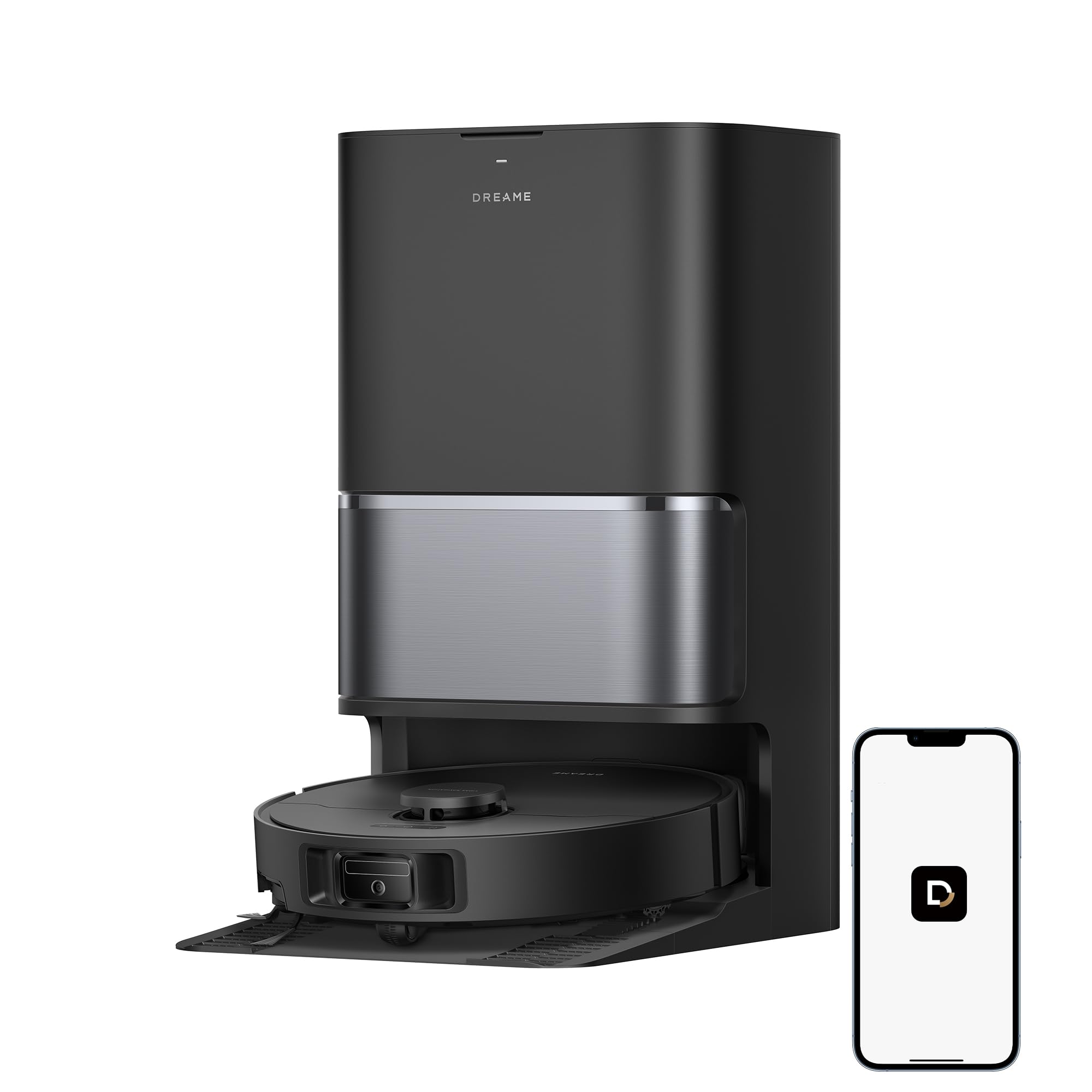
Corners are where most robot mops give up, and the L40 Ultra Gen 2 is the one machine here that does something structural about it: the side brush and the mop both extend outward to reach the angle where the baseboard meets the floor. On a hard-surface house, that is the strongest edge story in this group, and it is why the dreame takes our premium slot.

The rest of the package is built for big floors. There is 25,000Pa of claimed suction across five levels, an all-in-one dock that empties the bin, washes the mops, and dries them with hot air, and a claimed 231 minutes of runtime, long enough that most apartments finish a job without a recharge. The mops lift 10.5mm when they cross onto carpet, and four carpet modes include full avoidance.

Navigation here is the best in this set: 3DAdapt and Smart Pathfinder steer around shoes and cables instead of bulldozing them, which cuts down on the rescue missions that make robot vacuums tedious. What you pay for all of that is the highest price here, and if clean corners matter less to you than the money, the Qrevo S Pro covers most of the same jobs for less.

Pros

  • Extending brush and mop reach into corners
  • 25,000Pa suction across five levels
  • 231-minute claimed runtime
  • Dock empties, washes, and dries the mops

Cons

  • The highest price in this group
Our verdict

We recommend it to anyone whose floors are mostly hard surface and whose pet peeve is a dirty corner; the top price here is the whole trade.

Check Latest Price
3

Best Value

Tikom L8000 Plus

88 /100
LBD Score Excellent

Key details

Runtime
150 minutes
Suction
6000Pa
Navigation
LiDAR with no-go zones
Self-empty Bag
3L, 90 days
View on Amazon

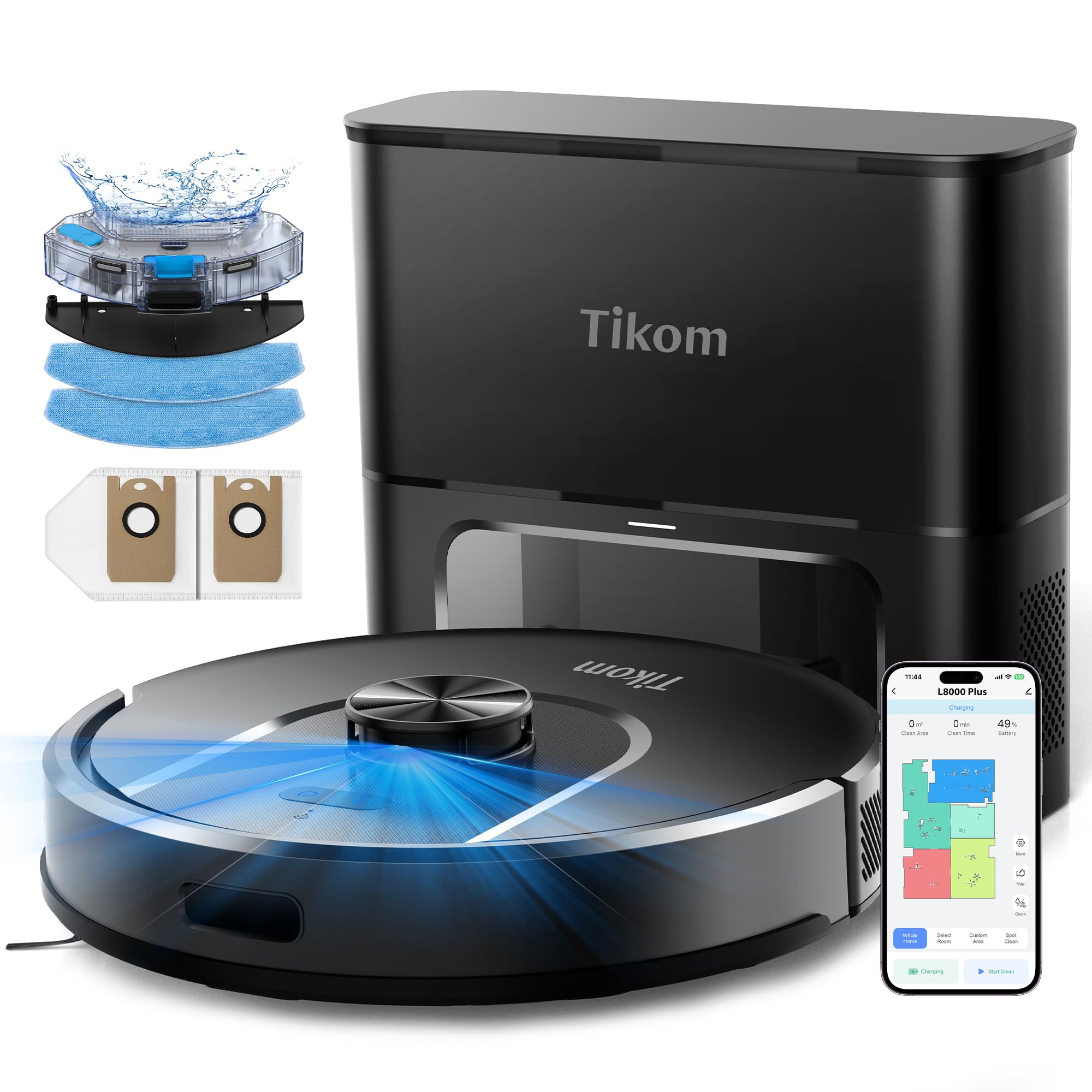
Ninety days is the number that matters here. The L8000 Plus empties into a 3L sealed bag that Tikom rates for about three months of debris, which is the difference between a robot you deal with every few days and one you deal with roughly once a season.

The rest of the machine is better than the price suggests: 360° LiDAR mapping with room select, no-go zones, and virtual walls, 150 minutes of runtime, and a claimed 60 dB that makes daytime scheduling realistic. Three suction levels and three water-flow settings let you dial the mop back for laminate or push it on tile, which is the sort of control we actually use rather than set once and forget.

Where it earns its place is the balance. The mapping is good enough that room-by-room scheduling is worth the ten minutes of setup, the bag buys you a season, and nothing about the machine demands attention between runs. If you have been waiting for combo mops to get boring before you buy one, this is the one that qualifies.

Pros

  • 3L bag rated for 90 days
  • LiDAR mapping with no-go zones and room select
  • 150-minute runtime at a claimed 60 dB

Cons

  • The mop wipes; it does not scrub
Our verdict

We call it the best value here: a three-liter bag, genuine LiDAR mapping, and no-go zones for the least money of any self-emptying pick.

Check Latest Price
4

Best for Hard Floors

Lefant M210 Omni

87 /100
LBD Score Excellent

Key details

Mop
Fresh-water roller, self-wash and dry
Height
3.35 in (85mm)
Dustbin
800ml
Suction
20,000Pa
View on Amazon

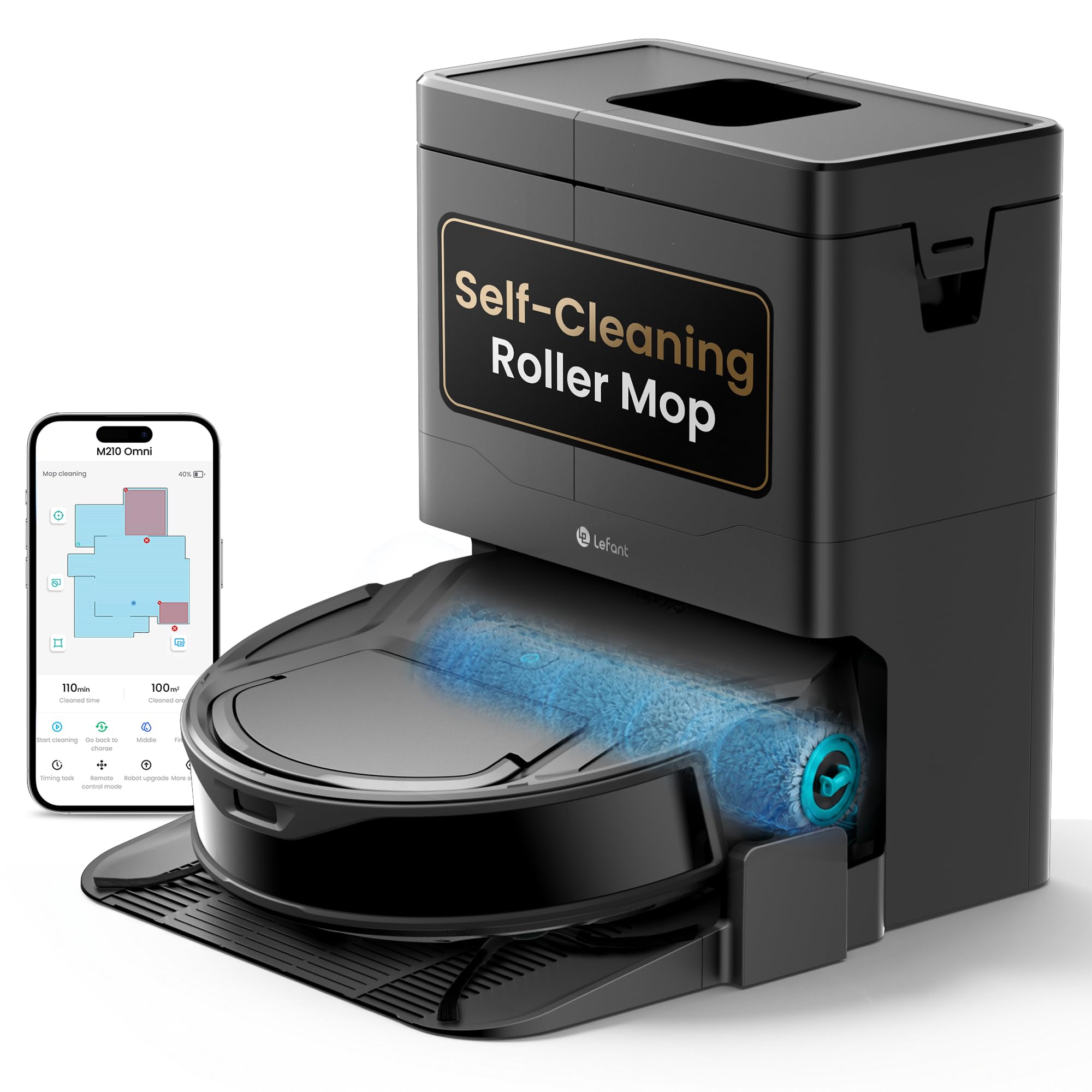
Most combo mops drag the same damp pad around the house and then park it wet. The M210 Omni does not: it runs a roller fed with fresh water from a 2.4L clean tank, and the base washes and dries that roller between runs, with a separate 1.5L tank for the dirty water. For an all-tile or all-hardwood house, that is the mop design we trust most in this set.

Everything else is shaped around that job. The body is 85mm tall, or 3.35 inches, so it reaches under low sofas and toe-kicks that stop taller robots, and the 800ml dustbin means fewer trips to the trash than the small bins on the budget machines. Suction is rated at 20,000Pa through a tangle-free roller, and runtime is 120 minutes.

The boundary is the surface. Lefant builds this one for hard floors, and on carpet you are leaning on suction alone rather than the brush-and-beater work a carpet-first robot does. A rug in the hallway is fine; a bedroom of thick pile is not its territory, and that is the honest limit of the recommendation.

Pros

  • Fresh-water roller washed and dried at the base
  • 3.35-inch body clears low furniture
  • 800ml dustbin holds more between empties
  • 20,000Pa suction

Cons

  • Clean and dirty tanks need manual filling and draining
Our verdict

For tile and hardwood throughout, we think the fresh-water roller makes more sense than any spinning pad in this group.

Check Latest Price
5

Budget Self-Emptying

Kilgone SDL40-1J

85 /100
LBD Score Excellent

Key details

Height
3.2 in
Runtime
150 minutes
Navigation
LiDAR
Self-empty Bag
2.5L, up to 9 weeks
View on Amazon

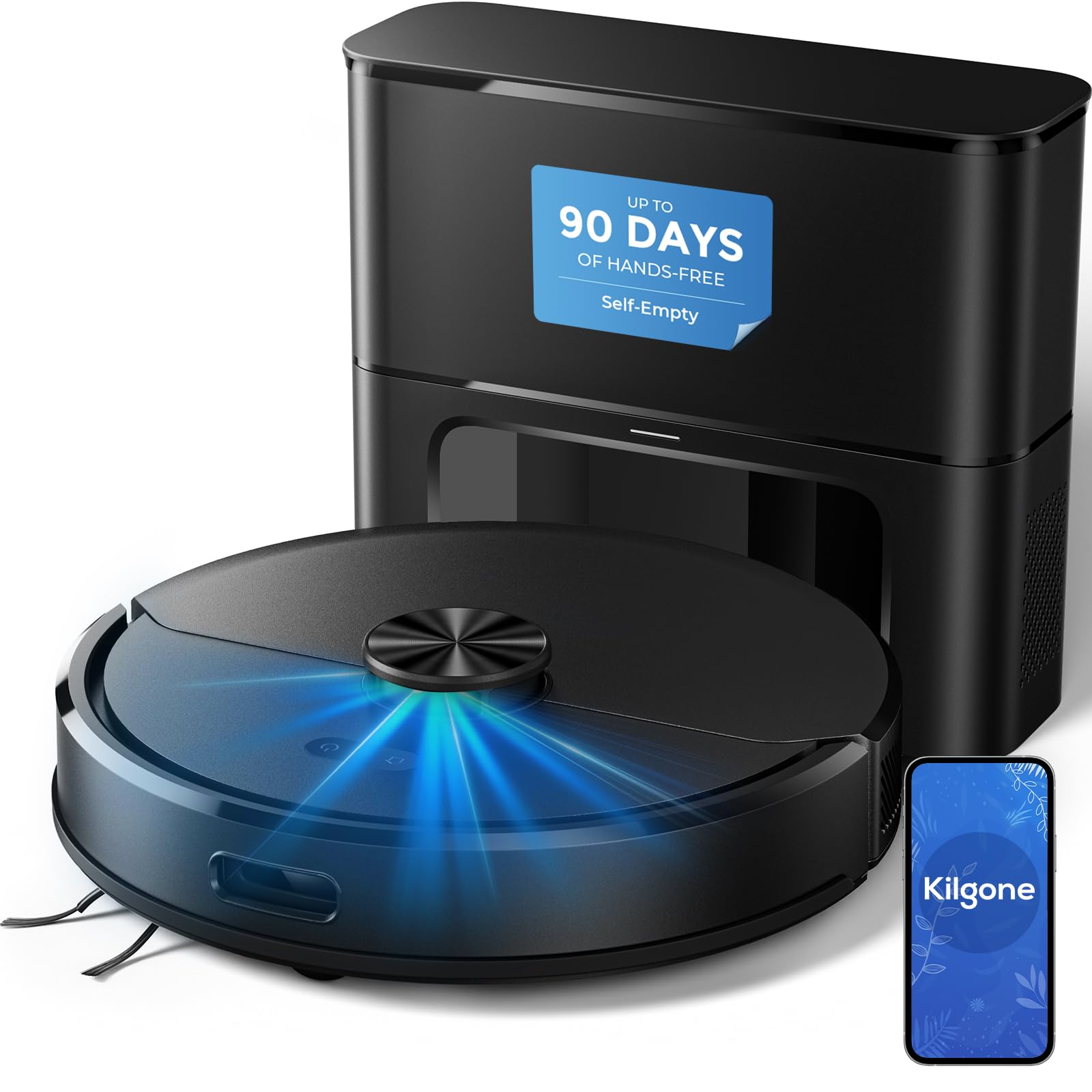
Two questions decide whether a budget self-emptying robot is worth owning: does the dock really buy you weeks, and does the brush survive a shedding dog? The SDL40-1J answers both. The sealed 2.5L bag is rated for up to nine weeks, the main brush is built to resist hair wrap, and HEPA filtration is part of the package, all of it with LiDAR steering and a 150-minute runtime in a 3.2-inch body.

What we like is the restraint. Kilgone spends the money on mapping, a decent bag, and a brush that stays clear instead of on dock features you may never use, which makes this the sensible landing point between the cheapest combos and the full self-washing stations. Schedule it, and most weeks it runs without you touching it; the bag is the part you replace.

Pros

  • 2.5L bag rated for up to nine weeks
  • LiDAR navigation with obstacle sensing
  • Anti-tangle brush and HEPA filtration

Cons

  • Mop only wipes, with no scrubbing action
Our verdict

Buy it if you want self-emptying and LiDAR mapping without paying for a scrubbing mop; we rate it the best middle path here.

Check Latest Price
6

Specs on a Budget

wrydao S6 Pro

92 /100
LBD Score Outstanding

Key details

Runtime
160 minutes
Suction
6000Pa
Navigation
LiDAR with no-go zones
Self-empty Bag
3L, 90 days
View on Amazon

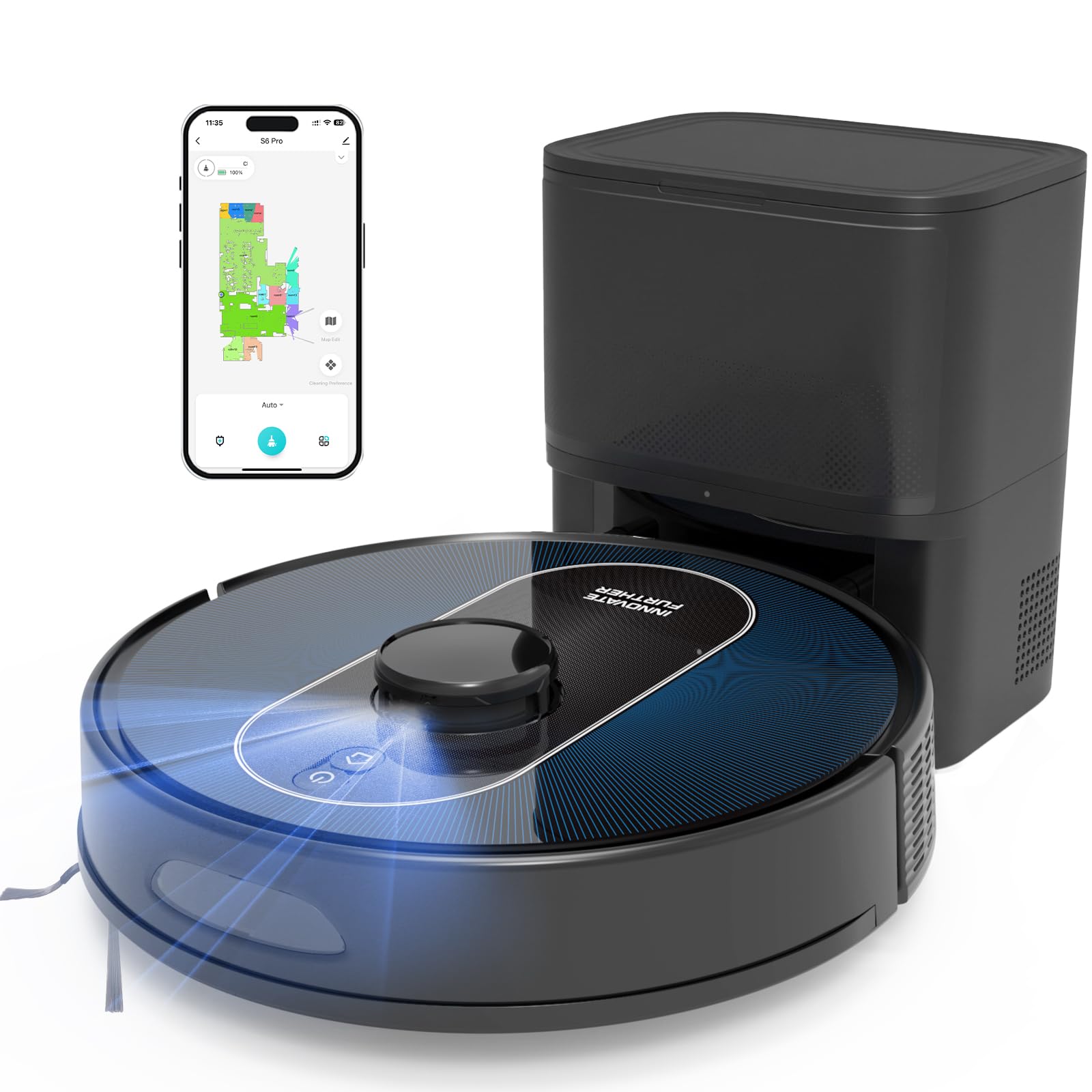
An unfamiliar name attached to a spec sheet that reads like a much more expensive robot: 6000Pa of suction with automatic carpet boost, a 3L bag rated for ninety days, LiDAR mapping with no-go zones, three water-flow settings, 160 minutes of runtime, and Alexa control. Shop by specification and the S6 Pro looks like a mistake in your favor.

The design is sensible in the details. You can run it vacuum-only on carpet, mop-only on sealed hardwood, or both at once, and four suction levels plus room select give you a reason to use the schedule rather than the spot-clean button. That 3L bag is the same capacity class as machines costing noticeably more.

What it does not have is history. This is a new name with a short ownership record behind it, and a robot vacuum is something you live with daily rather than a gadget you can shrug off if it disappoints. That is why we point first-time buyers to the Tikom L8000 Plus and suggest the S6 Pro for a second home, a hard-floor apartment, or a buyer who has read the specs and likes what they see.

Pros

  • 6000Pa with automatic carpet boost
  • 3L bag rated for 90 days
  • LiDAR mapping with no-go zones
  • 160-minute runtime

Cons

  • Short ownership track record for a new brand
Our verdict

We like it for a second home or a hard-floor apartment, where the spec sheet matters more than the name on the box.

Check Latest Price
7

Cheapest Entry Point

Tikom G8000 Max

88 /100
LBD Score Excellent

Key details

Height
2.99 in
Runtime
150 minutes
Suction
5000Pa
Dustbin And Tank
450ml dustbin, 300ml water tank
View on Amazon

No dock means a routine: fill the 300ml water tank, empty the 450ml dustbin, peel the damp pad off its holder and let it dry. That is the trade the G8000 Max makes for its place at the bottom of this group, and it is a trade plenty of people are happy to make in a one-bedroom flat where a base station would eat the only free outlet.

What the money does buy is cleaning. Suction is rated at 5000Pa with four levels and four modes, runtime reaches 150 minutes in quiet mode, and the body is 2.99 inches tall, slim enough for the gap under a bed frame. Tikom also gives you four ways to drive it: app, remote, voice, and buttons on the machine, which matters more than it sounds when you are buying for a parent who does not want another app.

We think it suits a first robot, a small apartment, or a second unit for a basement. Walk the floor before the first run and keep cords and rug tassels out of its path; the mop pad and side brushes are the parts that find loose cable.

Pros

  • 5000Pa suction with four levels and modes
  • Four control methods, including a remote
  • 2.99-inch body fits under low frames

Cons

  • Gets hung up on rugs and furniture legs
Our verdict

We think it is the right first robot for a small apartment: strong suction, a slim body, and no base station to find room for.

Check Latest Price

How We Tested the Best Robot Vacuum and Mop Combos

We started with every combo we could find that both vacuums and mops, then filtered by price, dock type — bagged or bagless, pads that get washed at the base or just get wet — and whether the app allowed room-by-room scheduling and no-go zones. That narrowed things to 12 machines, which we ran for eight months in two homes rather than on a lab floor.

Every unit faced the same circuit: a kitchen cooked in nightly and swept never, a low-pile rug two dogs sleep on, a bathroom where hair collects at the base of the tub, and a dining set with eight chair legs to navigate. We scattered a measured scoop of cereal and coffee grounds across hardwood, ran one pass, and counted what was left — then repeated it the next day to see whether the mapping actually improved. Obstacles were logged as they happened: mat fringe, a charging cable, the lip of a rug. We wrote down where each machine stalled, how long it took to free itself, and whether the app told us at all.

For noise, I stood in the next room on a call and noted whether I had to mute. Battery life we timed on the highest setting until the machine quit and crawled back to its dock. Ease of use came down to a stopwatch question — could I send it to a single room in under ten seconds — and value to what the dock genuinely handled without my hands. Reliability and durability were a running tally: how many rescue missions per week, how often the brush roller wrapped in hair, whether the pads still dried without a smell by month six, and whether the bumpers and wheels looked the same in month eight as they did on day one.

How to Choose a Robot Vacuum and Mop Combo

Decide How Much of the Job the Dock Should Take

Self-emptying is the headline, but docks differ enormously in what they actually do. Some only pull debris out of the robot into a bag. Others, like the roborock Qrevo S Pro, also wash the mop pads at 167°F, dry them with hot air, and refill the robot's water tank, so the machine can run for weeks without you touching a wet pad.

Read the dock's job list before you read the suction number. If you know you will not rinse a damp pad by hand, pay for a dock that does it; if you will happily empty a bin once a week, the extra automation is money you do not need to spend. Bag capacity matters in the same way: a 3L bag rated for 90 days is roughly four bag changes a year.

Match the Mop to the Floor You Actually Have

There are three mop designs in this group and they behave differently. A flat pad dragged behind the robot wipes light dust and needs the pad rinsed. Spinning pads scrub harder and lift clear of the floor on carpet transitions. A roller fed with fresh water, like the Lefant M210 Omni, rinses itself as it goes and never drags dirty water back across the tile.

The trap is mop lifting. A 10.5mm lift clears flat rugs and the edge of low-pile carpet, not a deep-pile rug, and no lift saves a mop from a carpet it should not be on at all. Set a no-mop zone over anything thick or unsealed and let the vacuum handle those rooms alone.

Suction Figures Are Not a Ranking

A 25,000Pa claim and a 5,000Pa claim are not measured the same way by different brands, and the gap between them on paper is much bigger than the gap you would notice on a kitchen floor. Airflow, brush design, and how well the robot reaches an edge decide more of the result than the advertised number.

We would weigh two other things first. An anti-tangle brush matters in any home with long hair or a shedding dog, because it decides how often you cut hair out of a roller. And an edge brush or mop that extends outward, as on the dreame L40 Ultra Gen 2, does more for corners than another few thousand pascals.

Measure Twice: Robot Height and Dock Space

Robot height in this group runs from 2.99 inches to 3.86 inches, and that difference decides whether the machine reaches the dust under a bed frame or skirts it forever. Measure the gap under your lowest sofa and the clearance under the kitchen cabinets before you choose.

Then plan the dock. A full multifunction station is a piece of furniture: the Qrevo S Pro's stands about 20 inches tall, needs a wall outlet, and needs a little room either side. Measure the gap beside the fridge before you assume it lives there.

Budget for What It Costs After You Buy

Bags, mop pads, filters, and cleaning solution are recurring costs, and the frequency varies with the machine: a sealed 2.7L bag is rated for seven to nine weeks, a 3L bag for ninety days. Buy a spare pack of bags with the robot so a full bag never becomes the reason it sits idle.

Charging and battery faults are the failure mode to plan around across this whole category, so register the warranty as soon as the box arrives. The Qrevo S Pro, for example, carries a one-year warranty for quality-related issues, and you want that clock started and documented.

Frequently Asked Questions

Final Verdict

The roborock Qrevo S Pro is the combo we recommend to most households: a dock that empties, washes, dries, and refills, mops that lift over rugs, and LiDAR mapping that makes a schedule worth setting. It removes the two chores that make people abandon a robot mop.

If your floors are hard surface from the front door to the back and dirty corners bother you, the dreame L40 Ultra Gen 2 is the upgrade, and its extending brush and mop are the reason. On a tighter budget, the Tikom L8000 Plus buys a real map and a three-month bag for the least money here.