Best Self-Emptying Robot Vacuums of 2026

A self-emptying robot vacuum promises something specific: you stop thinking about your floors for weeks, not days — no bin to tip, no dust cloud, no matted hairs to pull out with your fingers. What separates these machines isn't the suction number on the box; it's whether one can thread a forest of chair legs, lift a wet mop over a rug instead of soaking it, and finish a floor without needing a rescue.

I've lived with eight of these for six months, in a house with a shedding dog, a long-haired cat, and more stray charging cables than I'd like to admit. We measured pickup, but the real differences were smaller: how loud the self-empty blast is at 7 a.m., how clean the mop comes out of its own wash, whether the brush returns to the dock wrapped in hair, and how many days pass before the base needs anything from you.

First-time buyers tend to miss that the dock is the appliance. The money buys mop washing and drying, weeks of debris capacity, and a footprint that fits your hallway — so check both halves before you commit. The picks below held up on both.

1

Best Overall

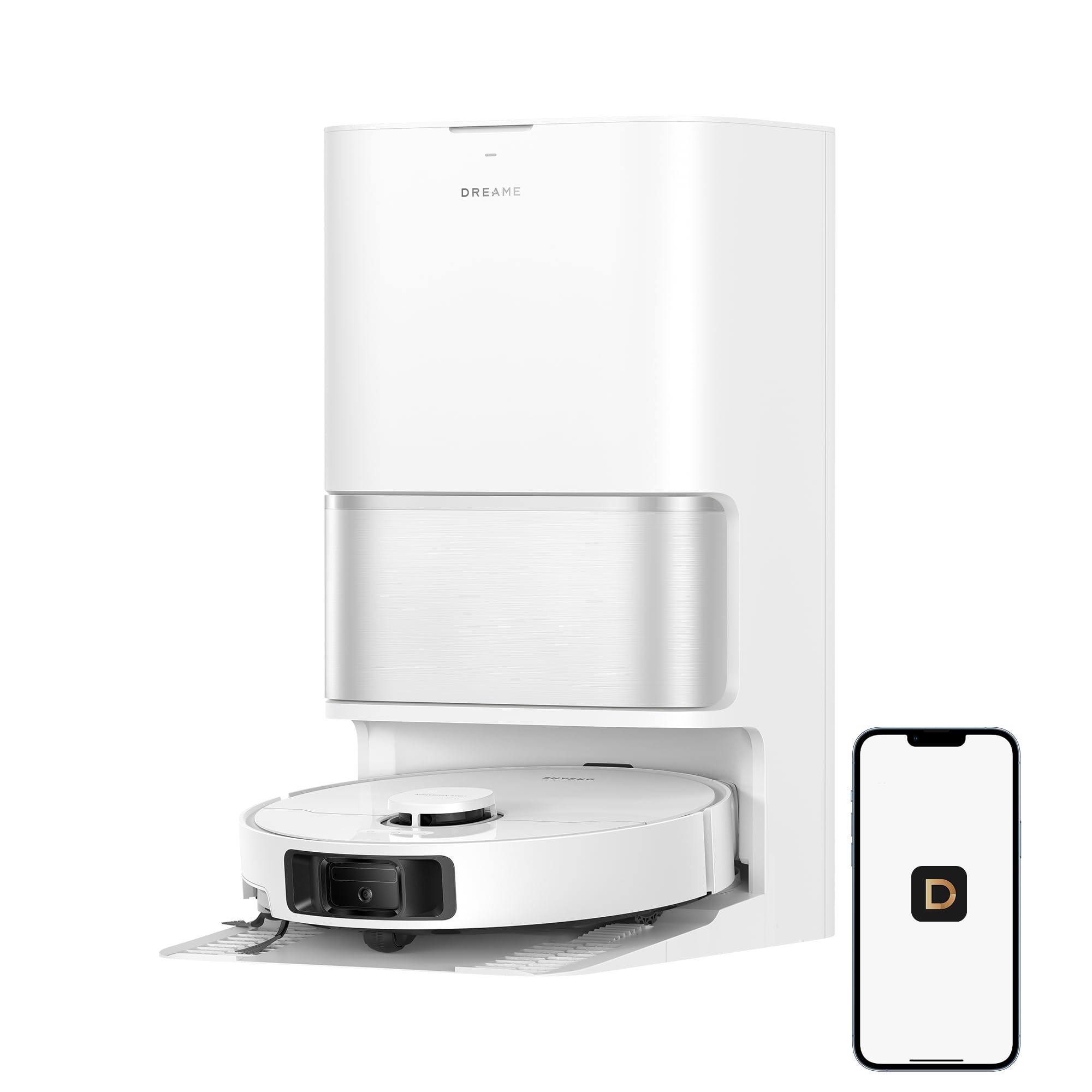
Dreame L40 Ultra Gen 2

87 /100
LBD Score Excellent

Key details

Suction
25,000Pa
Mop Lifting
10.5mm
Battery Life
231 minutes
Dock Functions
Auto-empty, mop wash, hot-air dry
View on Amazon

Corners are where a robot vacuum quietly gives up. A round body with a fixed side brush leaves a line of grit along every baseboard, and after a few weeks that line is the first thing you notice when you walk in. The L40 Ultra Gen 2 fixes it mechanically: the side brush and the mop both extend out past the chassis, so the edge of the floor gets the same pass as the middle. It gets under the lip of the kitchen cabinets too, which is where most of the crumbs end up.

That extending arm is why this is our top pick, and the rest of the package supports it rather than carrying it. Suction runs to 25,000Pa across five levels, the navigation steers around shoes and chair legs instead of shouldering them, and the rated 231 minutes is the longest runtime in this group. We noticed the runtime most on open-plan runs: a shorter battery means the robot heads back to the dock before the far rooms are done, and you finish the job yourself.

The dock empties the bin, washes the mop pads, and dries them with hot air, which is the difference between a mop you run daily and one you start avoiding. What we appreciate more is the 10.5mm lift: the pads rise clear when the robot crosses from tile onto a rug, so a mop run does not end with damp footprints across the living room. In a house with mixed floors, that one figure earns its keep more than the wash cycle does.

It is the most expensive machine here, and if your home is wall-to-wall carpet and you never mop, you are paying for dock hardware you will not use. For hard floors with a couple of rugs and a muddy entry, it is the one we reach for.

Pros

  • Extending brush and mop clean past the chassis edge
  • 231-minute runtime is the longest in this set
  • Dock empties, washes, and hot-air dries the mop
  • 10.5mm mop lift clears rugs mid-run

Cons

  • Dock stands about 23 inches tall
Our verdict

The one we recommend by default: it reaches the baseboards, runs long enough to finish the floor, and washes its own mop.

Check Latest Price
2

Best for Shedding Pets

eufy C28

89 /100
LBD Score Excellent

Key details

Suction
15,000Pa
Dust Bag
3 liters, 75 days
Mop System
HydroJet roller, 270 RPM
Hair Handling
Zero-tangle to 11.8 in
View on Amazon

Eleven and three-quarter inches is the number to remember. That is the length of hair — human or dog — the C28's DuoSpiral brush is rated to pass without wrapping, and anyone who has cut a mat off a roller with scissors knows why that is the first thing we check on a robot. In a household with long hair and a dog, that rating is the difference between a monthly chore and a weekly fight.

The mop is the second thing we like. A 28cm HydroJet roller spins at 270 RPM while 24 water ports feed it, so it rinses itself continuously instead of dragging the same dirty pad around the kitchen. With the station washing and hot-air drying at 50°C afterward, nobody has to pick up a wet, sour pad at the end of a run. The 3L bag is rated for 75 days, and the station refills the robot's water tank on its own, so a mop cycle does not start with you crouched on the floor with a pitcher.

Runtime is where it asks for patience. At 140 minutes it is the shortest of our picks — fine for a normal single floor, tighter in a big open plan. Otherwise the money buys a lot: a full-feature station at the same price as our top pick, with LiDAR navigation and no camera on board, which matters if you do not want a lens mapping your bedrooms.

What you are really buying is fewer interventions: less cutting hair off a brush, less rinsing a pad, less filling a tank. That is the version of hands-free we care about most.

Pros

  • Zero-tangle brush rated for 11.8-inch hair
  • Roller mop rinses itself at 270 RPM
  • 3L bag rated for 75 days, with self-refill
  • Camera-free LiDAR navigation

Cons

  • Rated for hard floors and short wool carpet only
Our verdict

For a house with long hair and a shedding pet, the C28's zero-tangle brush and self-rinsing roller are the least fussy combination here.

Check Latest Price
3

Best Midrange All-In-One

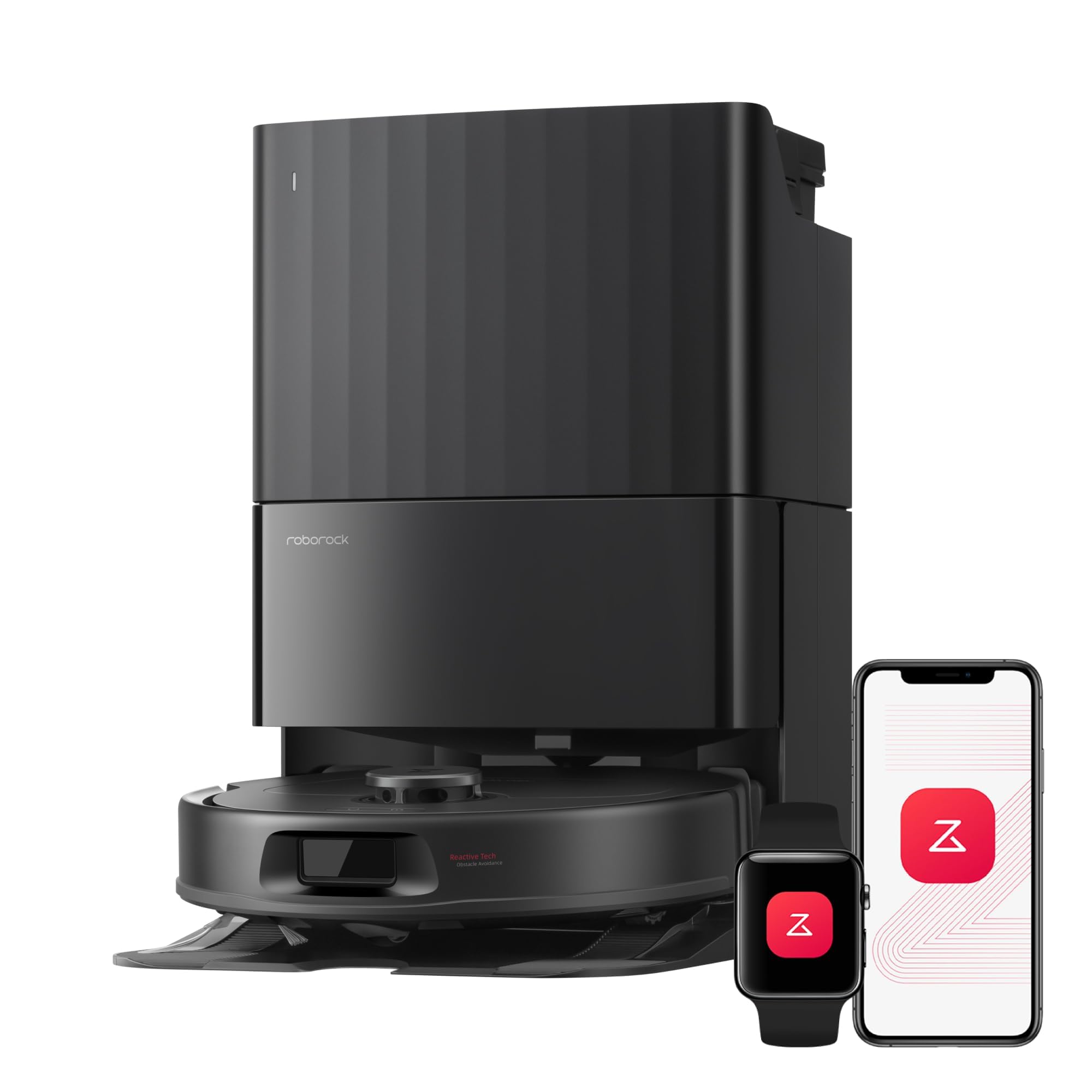
roborock Qrevo S Pro

84 /100
LBD Score Excellent

Key details

Suction
18,500Pa
Dust Bag
2.7 liters, 7-9 weeks
Battery Life
180 minutes
Mop Cleaning
167°F wash, hot-air dry
View on Amazon

The Qrevo S Pro is the sensible middle of this group. It empties into a sealed 2.7L bag, washes its two spinning mop pads in 167°F water, dries them with hot air, and refills the robot's water tank from the station — the same hands-free loop our top pick runs, for noticeably less money.

What tips it for us is how uneventful it is. Rooms map accurately the first time and stay mapped, the pads lift clear of the floor when the robot crosses onto carpet, and at a rated 60 dB it is tied for the quietest machine here. We also like that the 3.8-inch body slides under the sofa without scraping. None of that is dramatic; all of it is what you want from something you stop thinking about.

If your dog has a thick coat, the eufy C28 is the safer bet — its zero-tangle brush is built for that house. For dust, crumbs, and daily kitchen traffic, this is the value buy of the group: 18,500Pa, 180 minutes, and a dock that handles the mop so you never touch a wet pad.

Pros

  • Washes mop pads at 167°F and dries them
  • Station refills the robot's water tank
  • 18,500Pa suction with liftable spinning mops
  • Rated at 60 dB, tied for quietest here

Cons

  • Heavy dog hair is its weakest dimension
Our verdict

If you want the dock that washes, dries, and refills without paying flagship money, this is the machine we point you to.

Check Latest Price
4

Best Bagless Base

iMartine D16S MAX

87 /100
LBD Score Excellent

Key details

Suction
18,000Pa
Body Height
3.93 inches
Battery Life
180 minutes
Base Capacity
1.3L bagless, 45 days
View on Amazon

Every bagged dock on this page is a small subscription: the base works, then you buy bags. The D16S MAX skips that. It empties into a 1.3-liter cup built into the base, which you tip straight into the trash — no bags to order, no guessing which model number fits, no drawer full of the wrong ones.

Forty-five days is the rated interval, and that is the honest trade for going bagless: the biggest bagged stations here run to 75 or 90 days. What you get back is 18,000Pa of suction, five saved floor maps so the same robot can cover upstairs, a 3.93-inch body that gets under the sofa, and a rated 180 minutes of runtime. In our runs it came back to the dock and emptied without any prompting, which is the whole promise of the category.

The app is Tuya-based rather than a house app, so setup and schedules live in a third-party interface that works but feels borrowed. You will want to spend ten minutes on room names and no-go zones in the first week; this is a machine that finds the awkward gaps, and telling it which gaps to skip saves everyone time.

For the money, the fundamentals are right: it picks up hair, it maps, it docks, and it never asks you for a bag. That is a lot of robot for a hard-floor apartment or a first foray into robot vacuums.

Pros

  • Bagless 1.3L base cup, no bags to buy
  • 18,000Pa suction and 180-minute runtime
  • Five saved floor maps for multi-level homes
  • Low 3.93-inch body reaches under furniture

Cons

  • Can stall on flat rugs and tight gaps
  • 150ml mop tank makes mopping a light pass
Our verdict

The bagless answer: you give up some interval and some polish, and you never buy a dust bag again.

Check Latest Price
5

Best Budget

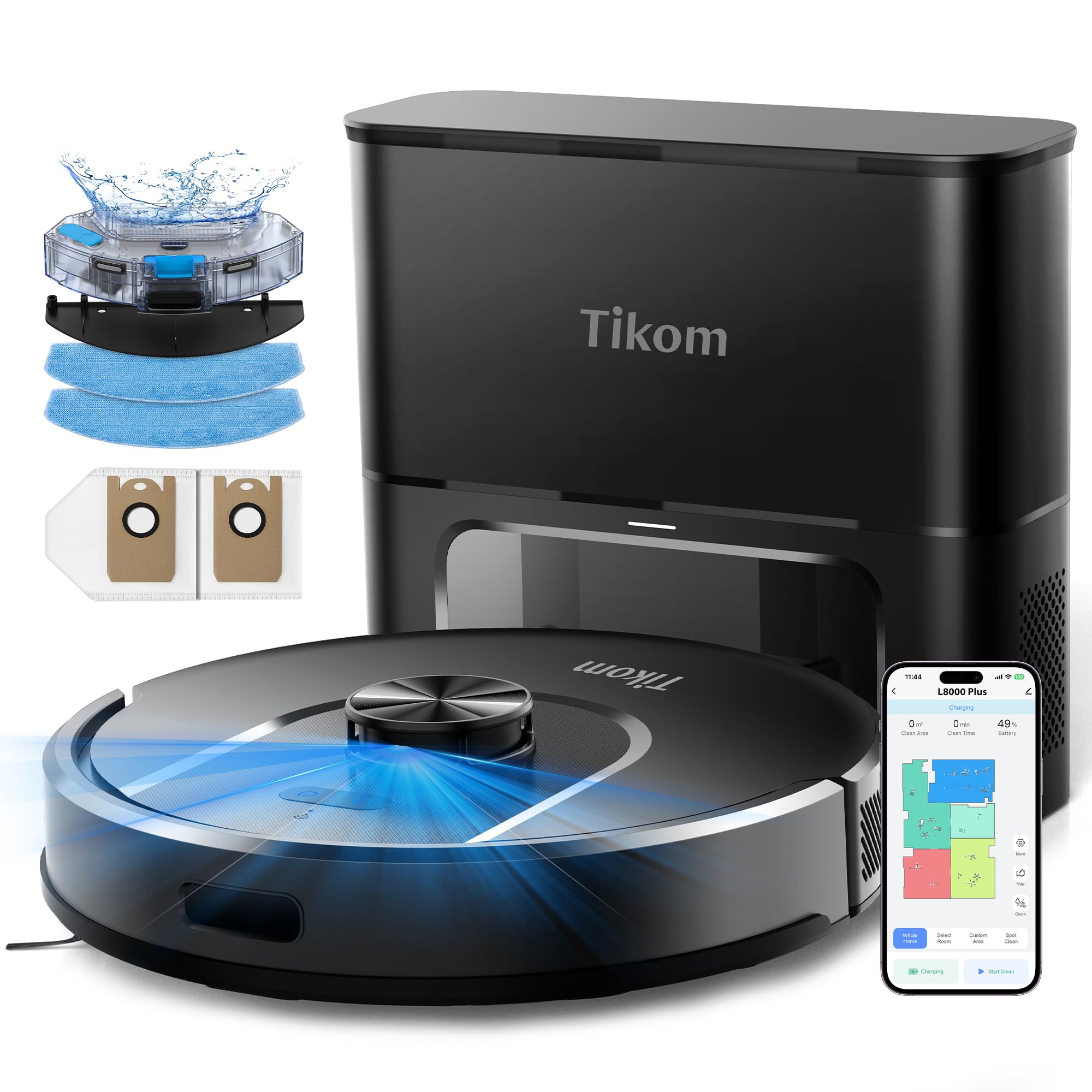
Tikom L8000 Plus

88 /100
LBD Score Excellent

Key details

Noise
60 dB
Suction
6000Pa
Dust Bag
3 liters, 90 days
Battery Life
150 minutes
View on Amazon

If your place is hard floors end to end and you have been waiting for self-emptying to get affordable, the L8000 Plus is where it lands. A 3L bag in the base is rated for 90 days, mapping is LiDAR rather than bump-and-turn, and the whole thing is rated at 60 dB — quiet enough that running it during a work call is not a disaster.

Suction is the trade. 6000Pa across three levels is the lowest rating in this group, and on tile, laminate, and vinyl it is genuinely enough for daily grit and hair. What it will not do is dig into a carpet the way the bigger machines here can, which is why the two specs to weigh together are that figure and the surface rating rather than the figure alone.

What we keep coming back to is how little it asks. Three water settings and a 2-in-1 tank for a damp pass, no-go zones and virtual walls in the app, 150 minutes of runtime, and a bag you change about four times a year. It is the least dramatic machine on this page, and for a one-bedroom with a cat, that is exactly the point.

Pros

  • 3L bag rated for 90 days
  • Rated at 60 dB
  • LiDAR mapping with no-go zones and virtual walls

Cons

  • Rated for hard floors, not carpet
Our verdict

The budget entry that still empties itself for months: ideal for a hard-floor apartment, wrong for a carpeted house.

Check Latest Price

How We Tested the Self-Emptying Robot Vacuums

We started with research rather than a shopping cart: spec sheets and owner reviews for every self-emptying model we could find, then narrowed by what the dock actually does (bagged versus bagless, mop washing and drying, how many days the base holds), navigation hardware, and price band. That left eight machines, which ran for six months across the same two homes — one with wall-to-wall carpet and a low sofa, one mostly hardwood with area rugs and a cat that sheds year-round.

Each vacuum ran on a schedule and on demand: a full hardwood-and-rug floor scattered with a measured amount of dog hair, cereal, and tracked-in grit; a deliberate obstacle course of charging cables, socks, and chair legs; and a low-clearance pass under the sofa. We mapped a two-story house with each one, sent them out at night with a bedroom door open, and timed single-charge runs on the largest floor to see whether they finished or crawled back to the dock.

What we watched for was rarely on the spec sheet. We pulled the brush roll and mop pad after every pet-hair run and noted whether hair wrapped the roller or landed in the bin, and we ran a second pass to see what the first one left behind. We noted whether a machine rode up and shoved a rug into a heap or eased over the edge, and how many days passed before the base needed us. Ease of use meant setting up the app, naming rooms, and drawing a no-go zone without a manual; noise was measured from one room over; value meant asking whether the pricier dock features were ones we still used in month five.

How to Choose a Self-Emptying Robot Vacuum

How Long a Dock Actually Buys You

Base capacity is the figure that decides how often you touch the machine. The bagged stations here run from 2.7 to 3 liters and claim 75 to 90 days between changes; the bagless iMartine holds 1.3 liters and claims 45. Those claims assume an average home, and a shedding dog or a toddler with a cracker habit shortens them, so read them as a ceiling rather than a schedule.

Bagged versus bagless is really a question about money and mess. Bags buy you the longest interval and a sealed disposal; a bagless cup costs nothing to run, but you empty it more often and you do it in the open, over the trash, with the lid off.

Match the Brush to Your Floors, Not the Pa Number

Suction ratings are not measured to a shared standard, so a 6000Pa machine and a 25,000Pa machine are not necessarily as far apart as those figures suggest, and neither tells you how a vacuum handles a carpeted hallway. The surface recommendation and the brush design tell you far more, and they are both printed on the listing if you look for them.

Mostly hard floors? A mid-priced model with LiDAR mapping is the sensible spend. Carpet in the bedrooms? Buy a model rated for it and look for a rubber or anti-tangle brush, especially with long hair in the house. A bristle roller plus long hair is where most of the cutting and untangling happens.

Decide How Much Mopping You Want the Dock to Handle

A station that washes and dries the mop pads is the difference between mopping daily and avoiding it, because nobody wants to peel a cold wet pad off a robot at the end of a run. Spinning pads and rollers both work; the drying matters as much as the washing, since a pad that stays damp is a smell waiting to happen.

Mop lifting is the feature to check if you have rugs. Our top pick raises its pads 10.5mm clear, which is enough to cross a flat rug without leaving a wet stripe, and the Qrevo S Pro lifts its spinning pads when it senses carpet. If you never mop, put that money into suction and battery instead.

Measure the Wall Before the Floor

These docks are taller than the robots that park in them: 18 inches on the eufy, over 20 on the Qrevo, about 23 on the Dreame. The gap under a counter may not take one, and the corner behind the sofa probably will not either. You need a level patch of wall, an outlet, and enough open floor for the robot to line up and back in.

Pick the spot by where you want the cleaning done, not by where a plug happens to be. A dock in the far corner of a basement will not help the kitchen, and one under a bedroom will make you regret the empty cycle.

Budget for the Noise and the Maintenance

Every one of these is quiet in normal running and briefly loud when the dock empties the bin, a few seconds of jet noise that the decibel figure on the box does not really capture. If the base sits near a room you work in, schedule the runs for the afternoon.

The recurring labor is the part listings undersell: brush rolls collect hair, filters clog, pads need an occasional deep clean and eventual replacement. Set aside a few minutes every couple of weeks. That is the real cost of hands-free.

Frequently Asked Questions

Final Verdict

The choice here comes down to your floors. The Dreame L40 Ultra Gen 2 is our pick because the extending brush and mop reach baseboards a round body cannot, the 231-minute runtime finishes a floor in one go, and the dock washes and dries the mop so a daily mopping habit actually survives.

If a thick-coated dog lives with you, the eufy C28's zero-tangle brush and self-rinsing roller are the better match. If you want the mop-washing dock and little else, the Qrevo S Pro gets you most of the way for less.