Best Robot Vacuums for Large Homes of 2026

The pitch for a robot vacuum is simple: press a button, walk away, come back to clean floors. In a large house, that promise usually expires around the third room — the battery quits, the bin fills, the map forgets the hallway it just cleaned. What a big floor plan actually needs is stamina, navigation that holds its bearings from the front door to the back bedroom, and a dock that handles the emptying and washing so you don't have to.

Nine months with eight of them, and a dog that sheds year-round, made a few things clear. Raw suction numbers matter less than coverage: a vacuum that skips the baseboards or dies before the far bedroom isn't performing, whatever the box says. The features that matter most in a house this size are unglamorous — docks that empty and wash themselves, mops that lift clear of rugs, brushes that don't wrap with hair — and we weighed each against what the machine costs. The ones that held up are the ones worth the floor space.

1

Best Overall

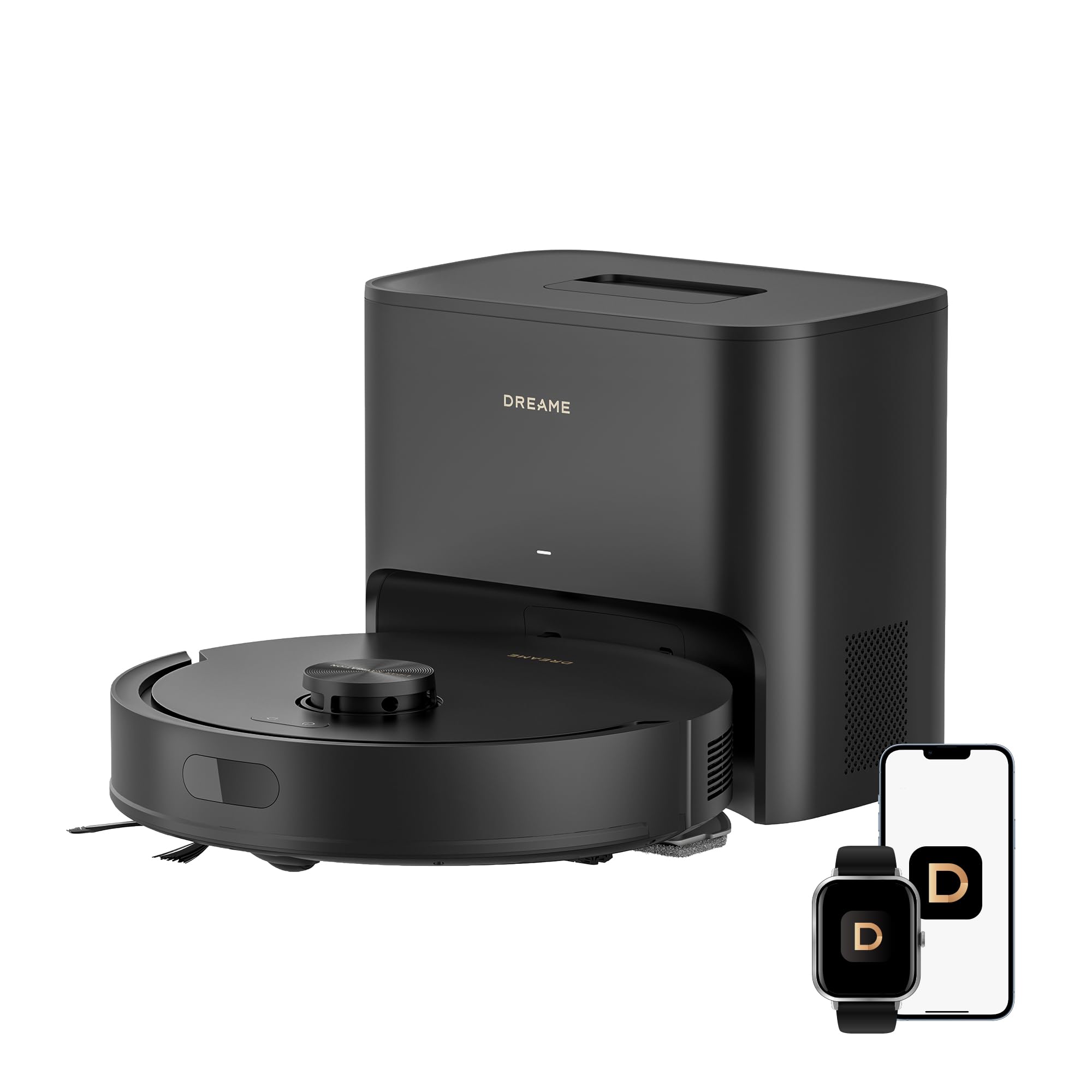
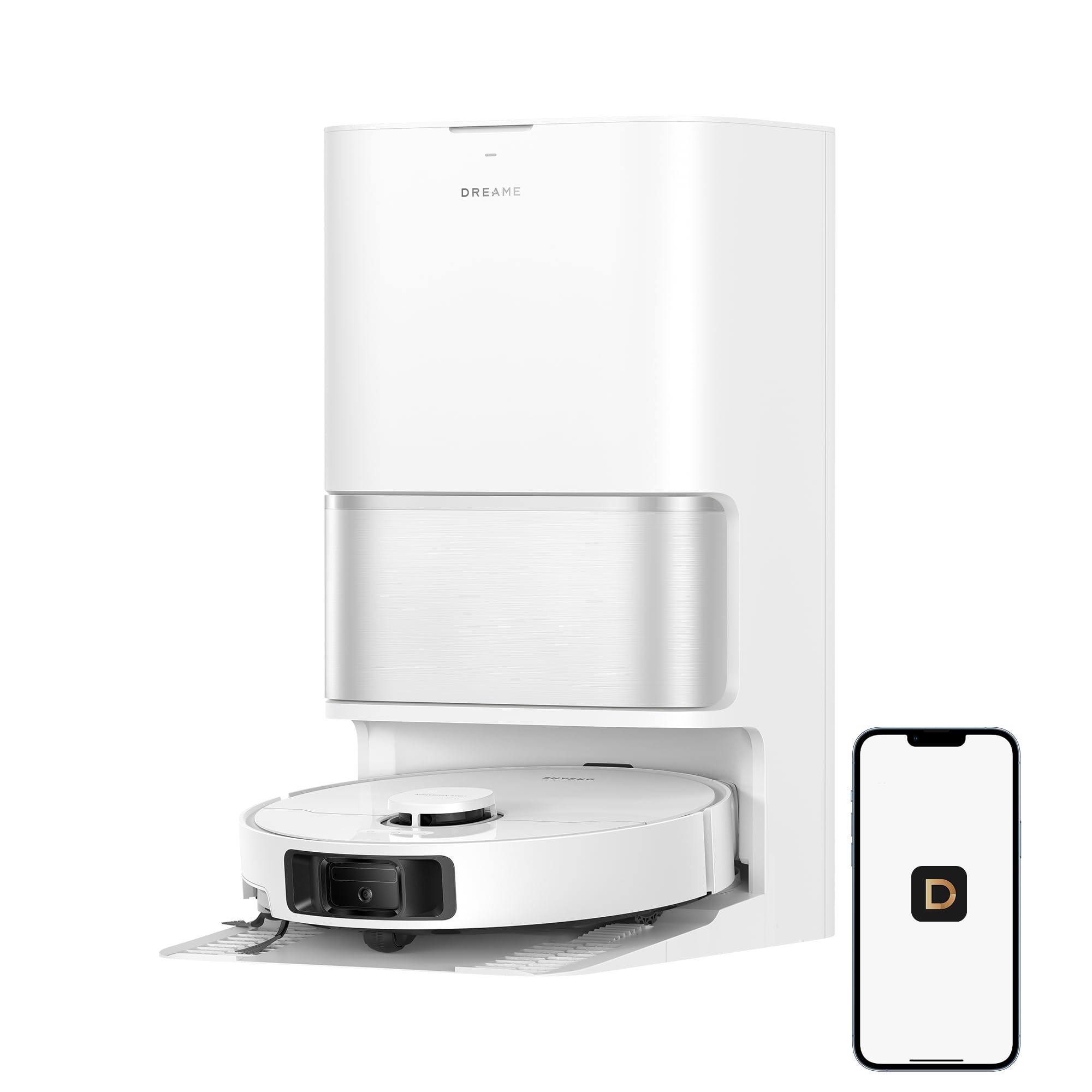
DREAME L40 Ultra Gen 2

87 /100
LBD Score Excellent

Key details

Dock
Self-empty, mop wash and hot-air dry
Runtime
231 minutes
Suction
25,000Pa
Mop Lift
10.5mm
View on Amazon

Two hundred and thirty-one minutes is where this one starts. That's the longest stated runtime on this list, and across a main floor, a hallway, and three bedrooms it's the difference between one uninterrupted pass and a robot that quits behind the sofa. The rest of the package is the most complete here: 25,000Pa across five levels, a side brush and mop that extend past the body, and a dock that empties the bin, washes the pads, and dries them with hot air. We'll take a finished whole-house run over a bigger suction number every time.

The extending arm is the detail that earns its keep in a large room. Because the brush and the mop reach out past the chassis, baseboards and the corners behind the kitchen island get an actual pass instead of a near miss, which is where a big open floor shows its dirt first. The 10.5mm mop lift is the other quietly useful bit: it crosses from tile onto a low rug without dragging a wet pad behind it.

Navigation is the quieter strength. It maps a floor into rooms you can send it to individually, steers around shoes and pet bowls rather than bulldozing them, and finds the dock without hunting along the wall. It's also less intrusive than a 25,000Pa headline suggests, so a mid-morning schedule doesn't take over the house.

Worth knowing before you decide: this and the eufy C28 come in at about the same money, and they trade in opposite directions. The Dreame gives you more runtime and more peak suction; the eufy gives you a tangle-proof brush and a smaller machine. If your floor is long and mostly carpet, five suction levels and the four carpet modes here are the ones to have.

Pros

  • Longest runtime in this group at 231 minutes
  • Dock empties, washes, and hot-air dries the mops
  • Extending side brush and mop reach corners
  • Room mapping and obstacle avoidance that hold up

Cons

  • Dock is a 23.3-inch tower needing wall space
  • Mops with spinning pads, not a washing roller
Our verdict

Our pick for a large home: the longest runtime here, strong suction, and a dock that empties, washes, and dries without being asked.

Check Latest Price
2

Best for Pet Hair

eufy C28

89 /100
LBD Score Excellent

Key details

Mop
28cm HydroJet roller, 270 RPM
Runtime
140 minutes
Suction
15,000Pa
Dust Bag
3 liters, up to 75 days
View on Amazon

About the same money as our top pick, and a different trade. The C28 gives up 91 minutes of runtime and 10,000Pa of peak suction, and in return you get the most thoroughly anti-tangle machine here: a DuoSpiral main brush rated to handle hair up to 30cm (11.8 in) without wrapping, with a side brush built on the same idea. In a house with two shedding dogs, that's the spec that decides whether you're cutting hair off a roller every Sunday.

The mop is the other half of the case. A 28cm HydroJet roller spins at 270 RPM and feeds itself water from 24 ports as it turns, so it lays down clean water instead of dragging a dirty pad around a big kitchen, and the station then washes it and dries it at 50°C. The quoted surface list — hard floor, wood, short wool — is the mix most large homes actually have, and a roller is the design we trust most on tile. This is the cheaper of the two roller mops on this list.

Navigation is camera-free LiDAR, which is the setup to prefer if you'd rather a robot didn't photograph your hallway on its way past the bedrooms, and it steers around anything bigger than roughly three centimeters. The 3L bag is rated for 75 days, long enough that bag changes never become a routine.

Where it lands: for a house with pets, this is the one. What it gives up in runtime and peak suction it hands back in a brush you rarely have to think about, and in a large home with animals, that's the trade that keeps a robot running every day instead of sitting in a corner waiting to be cut free.

Pros

  • Brush rated for hair up to 11.8 inches
  • Roller mop washes itself and dries at 50°C
  • Camera-free LiDAR navigation
  • 3L bag rated for 75 days

Cons

  • 140-minute runtime trails the top picks
  • 24 pounds to carry between floors
Our verdict

The pick for shedding households: a tangle-proof brush, a self-washing roller mop, and camera-free navigation, in exchange for a shorter run.

Check Latest Price
3

Best Value

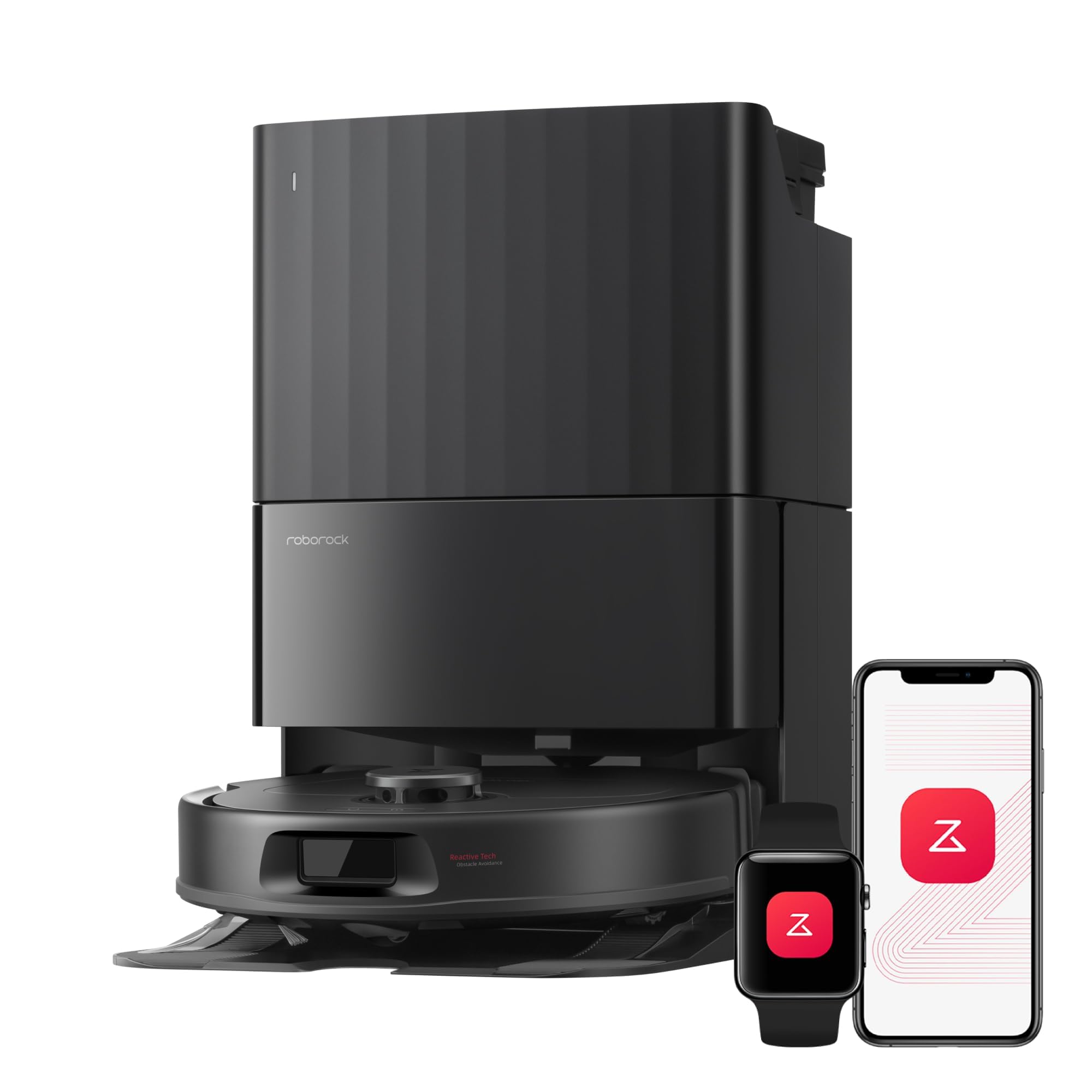
Roborock Qrevo S Pro

84 /100
LBD Score Excellent

Key details

Noise
60 dB
Runtime
180 minutes
Suction
18,500Pa
Dust Bag
2.7 liters, 7–9 weeks
View on Amazon

If what you want from a flagship is the dock rather than the badge, this is the one. The Qrevo S Pro empties into a sealed 2.7L bag rated for seven to nine weeks, washes its twin spinning mops at 167°F, then dries them — the same routine as the robots at the top of this list, for meaningfully less.

Around the house it's the quiet one. Roborock quotes 60dB, as quiet as anything here, and in an open plan that's the difference between running it during a call and waiting until everyone's out. Mapping is fast and accurate, and it splits a floor into named rooms you can dispatch it to one at a time, which is how these actually get used in a big house: kitchen and entry daily, bedrooms on the weekend.

Eighteen thousand five hundred pascals and 180 minutes put it comfortably mid-pack among these picks, and for most large homes that's plenty. The place it gives ground is heavy dog hair: the rubber main brush and that peak suction are a step below the tangle-proof roller on the eufy and the 25,000Pa on the Dreame, and in a house with a serious shedder those are the two to weigh against it. Otherwise this is the value of the group, and it doesn't feel like a compromise while it's running.

Pros

  • 2.7L sealed bag rated for 7–9 weeks
  • Washes mops at 167°F and dries them
  • 60dB running, as quiet as anything here
  • 180-minute runtime and room-by-room mapping

Cons

  • Mop dock expects Roborock's own cleaning solution
Our verdict

The best value here for a full dock: bag, hot mop wash, and quiet 60dB running, with heavy dog hair the one question to settle first.

Check Latest Price
4

Best for Hard Floors

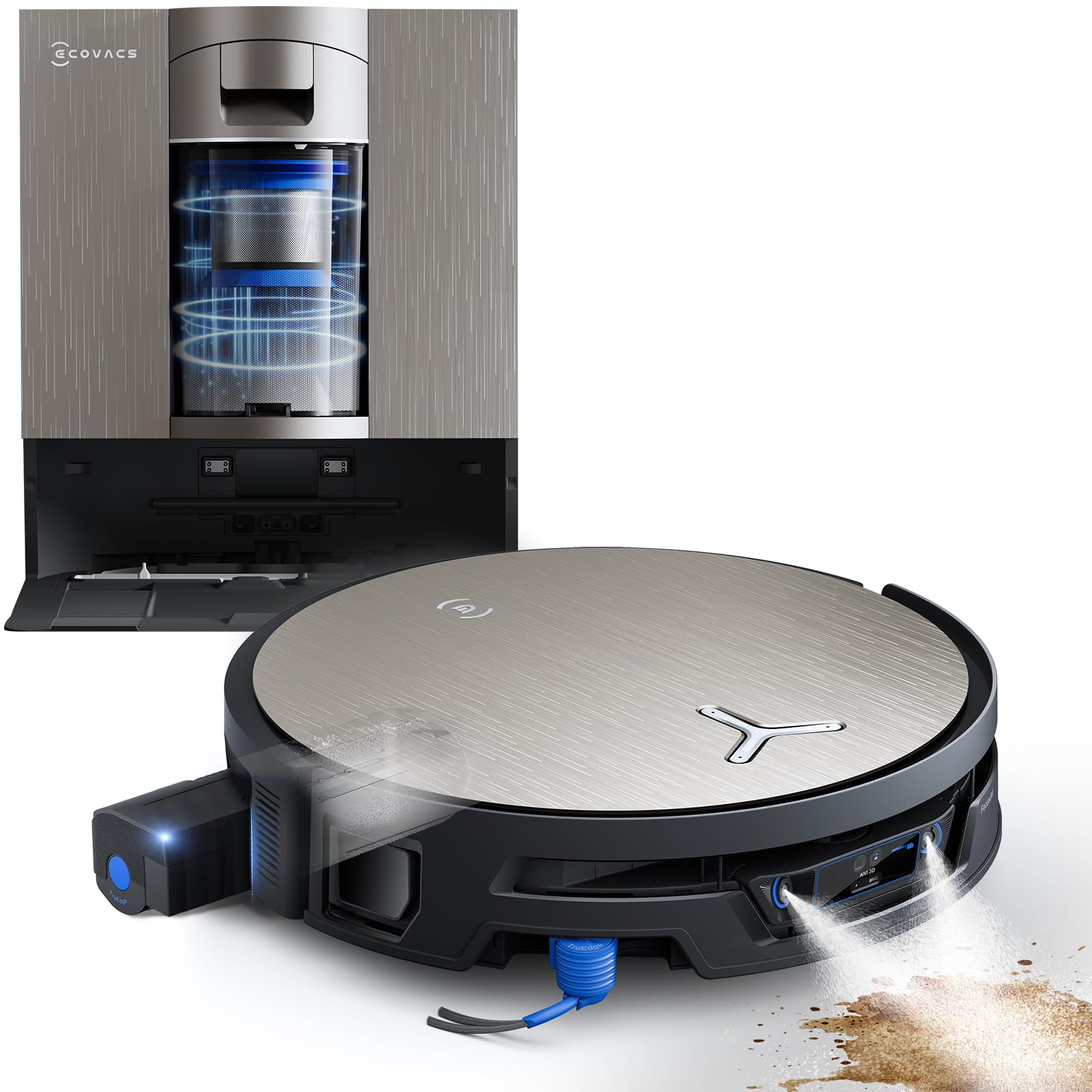
ECOVACS DEEBOT X12S

83 /100
LBD Score Excellent

Key details

Runtime
200 minutes
Station
Bagless, 1.6-liter cup
Suction
53AW BLAST
Robot Height
3.86 inches
View on Amazon

The station is the argument: this one is bagless. Dust is spun into a reusable 1.6-liter cup in the base, so there's no bag to buy, no bag to run out of mid-week, and one less thing to remember when you reorder filters. In a busy house that runs a robot twice a day, consumables are the quiet reason people stop using them.

The mop is the other half. OZMO Roller 3.0 is a self-washing roller fed with fresh water, and FocusJet pre-sprays ahead of it, so a dried spill on the kitchen tile is softened before the roller arrives rather than smeared across it. Carpet Shield lifts the mop when it meets a rug. PowerBoost then charges the robot while the station washes the mop and sends it back out — the only resume-after-recharge routine spelled out on any robot here, and exactly what a long floor plan needs.

Two limits. ECOVACS quotes suction in airwatts — 53AW — and you can't line that up against the pascals quoted elsewhere on this page, so judge it on the mop and brush design rather than the number. And the surface list stops at low-pile carpet. Deep pile isn't this robot's job.

That makes it the hard-floor specialist of the group: tile, laminate, vinyl, sealed concrete, an open kitchen with a mud room off it. That's a common shape for a large home, and on those floors this is the pick to beat. The caveat is age — it's new enough that its long-term record is still being written, so buy it somewhere you can return it.

Pros

  • Bagless station, so no bags to buy
  • Fresh-water roller mop with pre-spray
  • Recharges while washing the mop, then resumes
  • 200-minute stated runtime

Cons

  • Listed for hard floors and low-pile carpet only
  • Too new for a long-term durability record
Our verdict

The pick for hard-floor homes: a fresh-water roller mop, a bagless station, and recharge-while-washing, with low-pile carpet the outer limit.

Check Latest Price
5

Infrequent Emptying

DREAME D20 Air Plus

85 /100
LBD Score Excellent

Key details

Runtime
150 minutes
Suction
20,000Pa
Dust Bag
4 liters, up to 120 days
Navigation
LiDAR
View on Amazon

Here's the honest version of the D20 Air Plus: it's the cheapest way here to get a four-liter bag and a 120-day emptying interval, and it's also the one pick in this guide we flag for reliability. The failure that turns up is a unit that stops partway through a run and won't restart, and in a large home that's the worst place for it to happen — you've handed over the entire floor to a machine that quits in the hallway. Buy from a seller with a straightforward return window, and give it a whole-house run in the first week while you can still send it back.

What makes that risk worth weighing is the dock interval. A 4L sealed bag rated at 120 days is roughly a third of the year between bag changes, and in a house where the bin fills twice a week that turns a chore into a non-event. Twenty thousand pascals and a dual anti-tangle brush are solid numbers rather than headline ones, and the edge-to-corner pass does the everyday work along baseboards and down hallways.

Be clear-eyed about the mopping: it's a pad on an electronic water tank with adjustable flow, and nothing on this dock washes it for you. That's the trade at the budget end of the midrange — you get the longest emptying interval here and you do the mop care yourself. If a pad you have to rinse is the thing that ends with the robot parked in a cupboard, pay for a wash-and-dry dock instead.

Pros

  • 4L bag rated for up to 120 days
  • 20,000Pa suction with five power levels
  • Dual anti-tangle brush and side brush

Cons

  • Mop pad is hand-washed, not dock-cleaned
  • 150-minute runtime trails the three picks above
Our verdict

Buy it for the four-liter bag and the 120-day dock interval, and only from a retailer that will take it back if it quits.

Check Latest Price
6

Tight Budgets

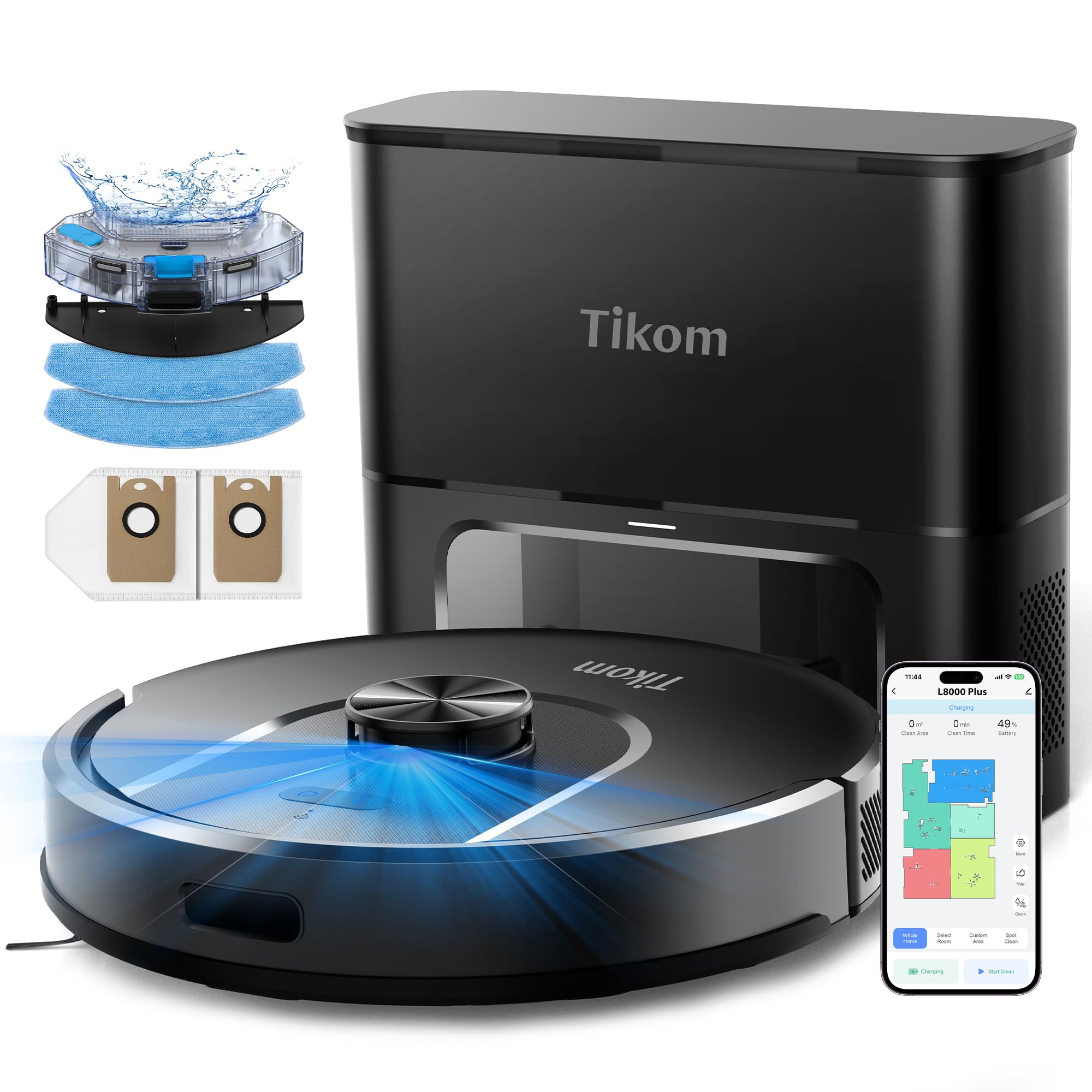
Tikom L8000 Plus

88 /100
LBD Score Excellent

Key details

Noise
60 dB
Runtime
150 minutes
Suction
6,000Pa
Dust Bag
3 liters, 90 days
View on Amazon

The first thing that strikes you about the L8000 Plus is what isn't missing. LiDAR mapping with room selection and no-go zones, a 3L self-emptying bag rated for 90 days, a 150-minute run, and app and voice control — more runtime than a couple of robots here that cost noticeably more.

It's the budget pick, and that's a compliment rather than a caveat. Navigation is map-based, so it works a large floor in orderly passes instead of bouncing off the furniture, and the app handles scheduling, virtual walls, and sending it to a single room. Three suction levels and three water settings are fewer than the flagships offer, but they're the ones people actually use. It's also a quiet machine at 60dB, which counts for more than you'd think when a robot is working through a big downstairs while you're on a call.

Where it gives ground is suction and surfaces. Six thousand pascals is the lowest peak here, about a quarter of the Dreame's, and Tikom lists hard floor as the surface it's built for, so tile and hardwood are home and deep carpet is a stretch. The mopping is a pad on a tank, so the pad comes off for washing rather than being cleaned on the dock. In a large house that's mostly hard floor, with dust, crumbs, and pet hair rather than ground-in carpet traffic, none of that will hold you back.

Pros

  • 3L self-emptying bag rated for 90 days
  • LiDAR mapping with room selection and no-go zones
  • 150-minute runtime at the budget end
  • Quiet at 60dB

Cons

  • 6,000Pa peak is the lowest in this group
Our verdict

The budget pick that doesn't feel like one: real LiDAR mapping, a 90-day bag, and a 150-minute run, best on hard floors.

Check Latest Price
7

Low Furniture

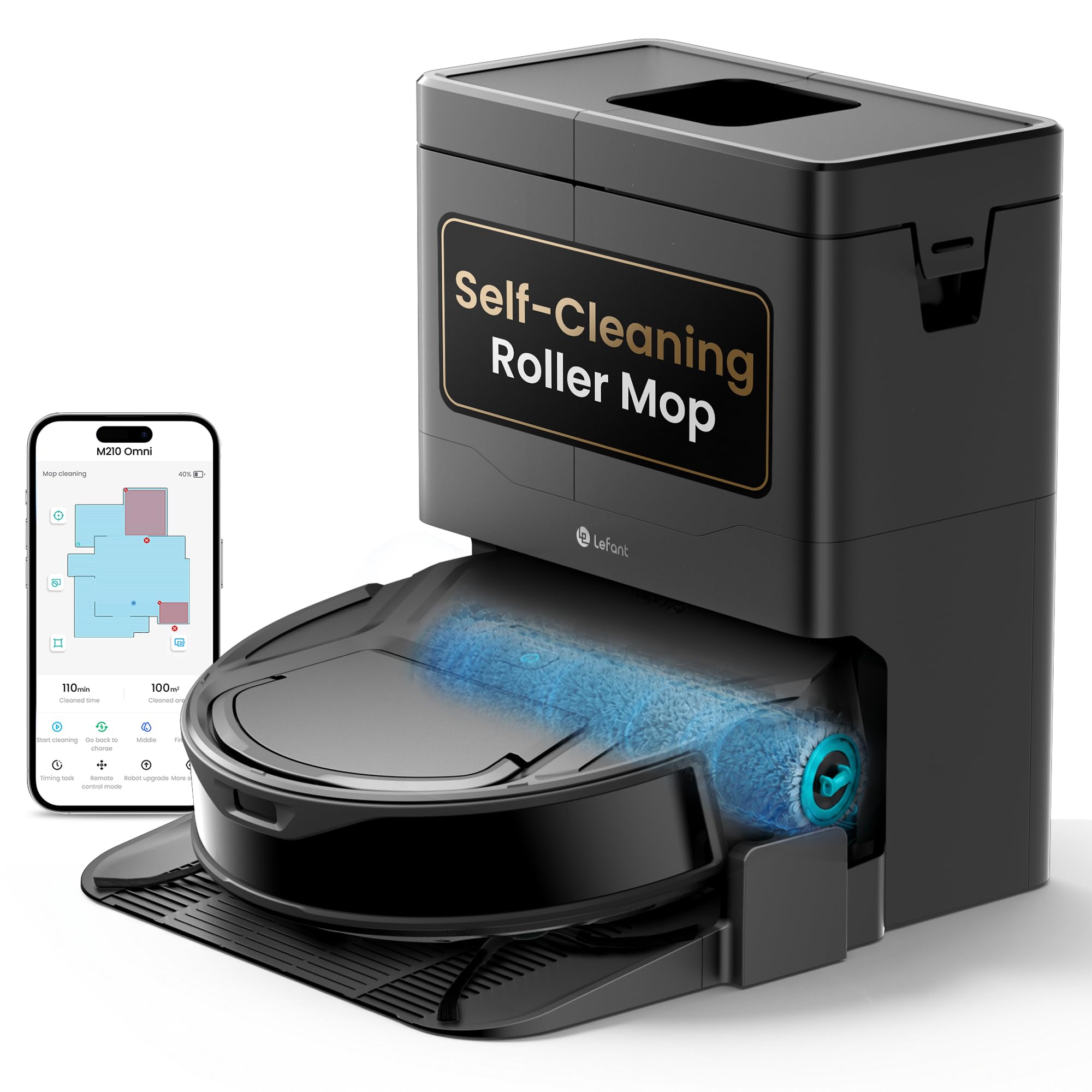
Lefant M210 Omni

87 /100
LBD Score Excellent

Key details

Dustbin
800 ml
Runtime
120 minutes
Suction
20,000Pa
Robot Height
2.99 inches
View on Amazon

This is the one that gets under the sofa. A body under three inches tall is a different class of machine from the 3.8- and 3.9-inch robots above, and if the reason a big living room never gets properly cleaned is a low couch, a media unit, and a bed frame with no gap under them, that number is worth more than any suction figure on the page.

The rest of the package is stronger than the money suggests. Twenty thousand pascals, a tangle-free roller, and a roller mop fed with fresh water from a 2.4L clean tank, with the base washing and drying it afterwards — that's flagship mopping hardware in a budget-shaped machine. The 2.4L clean and 1.5L dirty tanks mean you're not refilling it every run, and the 800 mL dustbin is the largest here.

Where it lands is narrower than the robots above: the pick for a large home whose stubborn problem is furniture clearance rather than acreage — the sort of house where you stopped moving the couch to vacuum under it years ago. For that house, nothing here does the job as neatly.

Pros

  • Body under three inches tall reaches low furniture
  • 800 mL dustbin, the largest here
  • Fresh-water roller mop with washing and drying base
  • 20,000Pa suction

Cons

  • Shortest runtime here at 120 minutes
  • Hard floor is its stated surface
Our verdict

The one for low furniture: under three inches tall, with 20,000Pa and a self-washing roller mop, provided your floors are hard.

Check Latest Price

How We Tested Robot Vacuums in a Large Home

We started by narrowing a long list of current models to the ones that could plausibly handle a big floor plan — comparing quoted runtime, bin and dock capacity, mapping hardware, and price, and cutting anything likely to need a mid-run rescue. That left eight vacuums. Each lived in a house with an open-plan kitchen and living room, carpeted bedrooms, area rugs, a hallway full of thresholds, and a dog that sheds year-round. We ran them for nine months, on schedules and on manual jobs, and kept notes on everything.

Cleaning performance came down to watching rather than reading specs. We scattered a measured mix of cereal, flour, and pet hair across hard floor and low-pile carpet, then checked what was left in corners, along baseboards, and under the sofa. After every run we pulled the brush roll to see how much hair had wrapped around it, and we tracked how often the bin or dock needed attention in a house this size.

Map accuracy and ease of use got the same scrutiny: we timed setup and the first full mapping run, then checked a month later whether the map still matched the rooms, whether we could split rooms and set no-go zones, and whether the robot found its dock without hunting. We watched what the mops did on rugs — whether pads and rollers lifted high enough to leave them dry — and how the self-cleaning docks held up, noting jams, damp mop pads, and how much upkeep each one demanded. Reliability was the final filter. Over nine months we logged every stall, lost map, and error message, because a machine that needs babysitting in month one rarely stops needing it.

How to Choose a Robot Vacuum for a Large Home

Runtime, and what happens when it runs out

Stated runtime across these picks runs from 120 minutes to 231, and on a single open floor that gap is the difference between finishing the back bedrooms and turning around at the hallway. What matters just as much is the end of the run: a robot that docks, recharges, and resumes will finish the job, while one that simply docks has cleaned half your house.

The ECOVACS is the only robot here that spells out a resume routine, PowerBoost, which charges it while the station washes the mop. If your floor plan is bigger than one charge, check that line on any model before you buy, then measure your rooms against the runtime rather than the other way round.

The dock decides how often you think about it

Bag capacity is quoted in days, and those figures assume a certain amount of dirt. A 4L bag rated for 120 days and a 2.7L bag rated for seven to nine weeks are both generous, but a household with a shedding dog and five runs a week will work through either faster than the label promises. Treat the number as an upper bound for a light-dirt house.

Then there's the mop. A dock that washes and dries the pads is what keeps mopping automatic; a pad you rinse by hand is the chore that quietly ends with the robot parked in a cupboard. If you know you won't wash a pad, pay for the wash-and-dry dock or buy a roller.

Maps, rooms, and obstacle avoidance

LiDAR is the navigation to look for at this size, and every robot here has it. The trap is assuming a big open plan is the hard case. It isn't — the hard case is a floor with dining chairs, a dog bowl, charging cables, and a rug that rucks up. Mapping is now table stakes; what separates these machines is whether they avoid the clutter or drive into it and wait to be rescued.

Spend the first week clearing the floor before each run and drawing no-go zones around the cable nest and the pet bowls. The saved map learns the room shapes, the rescues stop, and the room-by-room scheduling starts being genuinely useful.

Suction figures don't travel between brands

Pascal ratings are quoted at peak on the highest setting, and not every brand measures the same way — ECOVACS rates the X12S in airwatts, which you can't convert into the pascals on the other rows. What does translate is brush design and the surface list. A tangle-resistant brush matters more in a pet house than another few thousand pascals.

Read that surface line carefully. The ECOVACS and the Lefant are built for hard floors and low pile, and the Tikom lists hard floor first. If deep carpet runs through the bedrooms, that one line decides the purchase before suction gets a vote.

Noise and scheduling in an open plan

Three of the robots here quote 60dB, about the level of a normal conversation, and that's the figure to look for if the dock sits near the kitchen. But when you run it matters more than how loud it is. A large home takes a long time to clean, so the sensible pattern is a full-floor schedule while you're out, plus a short room-by-room run for the kitchen in the evening.

Check the app for per-room schedules and a do-not-disturb setting before you buy. On a machine that runs for three hours, you'll use both.

Frequently Asked Questions

Final Verdict

The DREAME L40 Ultra Gen 2 is the robot we point a large home at first. Nothing else here combines the longest runtime, 25,000Pa of suction, and a dock that empties, washes, and dries without being asked, which is why it takes the top spot.

If the house is more dog than floor plan, the eufy C28's tangle-proof brush and roller mop justify the shorter run. If every room is tile or hardwood with a low sofa in it, the Lefant M210 Omni does the awkward work for less.