Best Robot Vacuums for Hardwood Floors of 2026

A robot vacuum can run for forty minutes on hardwood and still leave a halo of dust along the baseboards. The good ones separate themselves less by suction figures than by what happens at the edges, under the sofa, and around the dog bowl. Hair is the real test on bare floors: it wraps brush rolls, clogs bins, and reappears by the next morning. What you're actually buying is fewer passes with a broom.

We've lived with nine of these for seven months — mapping, remapping, emptying, unjamming, and running them over wide-plank oak and a rental's tired laminate. I came away caring more about navigation that holds its map and a dock that empties itself than about a bigger suction number, and about battery life you can plan a whole floor around. One thing to check before you buy: a no-go zone that actually holds, so the vacuum stays off the fringed rug and out of the water bowl. Value reveals itself months later, when you're not fishing a sock out of the brush roll.

1

Best Overall

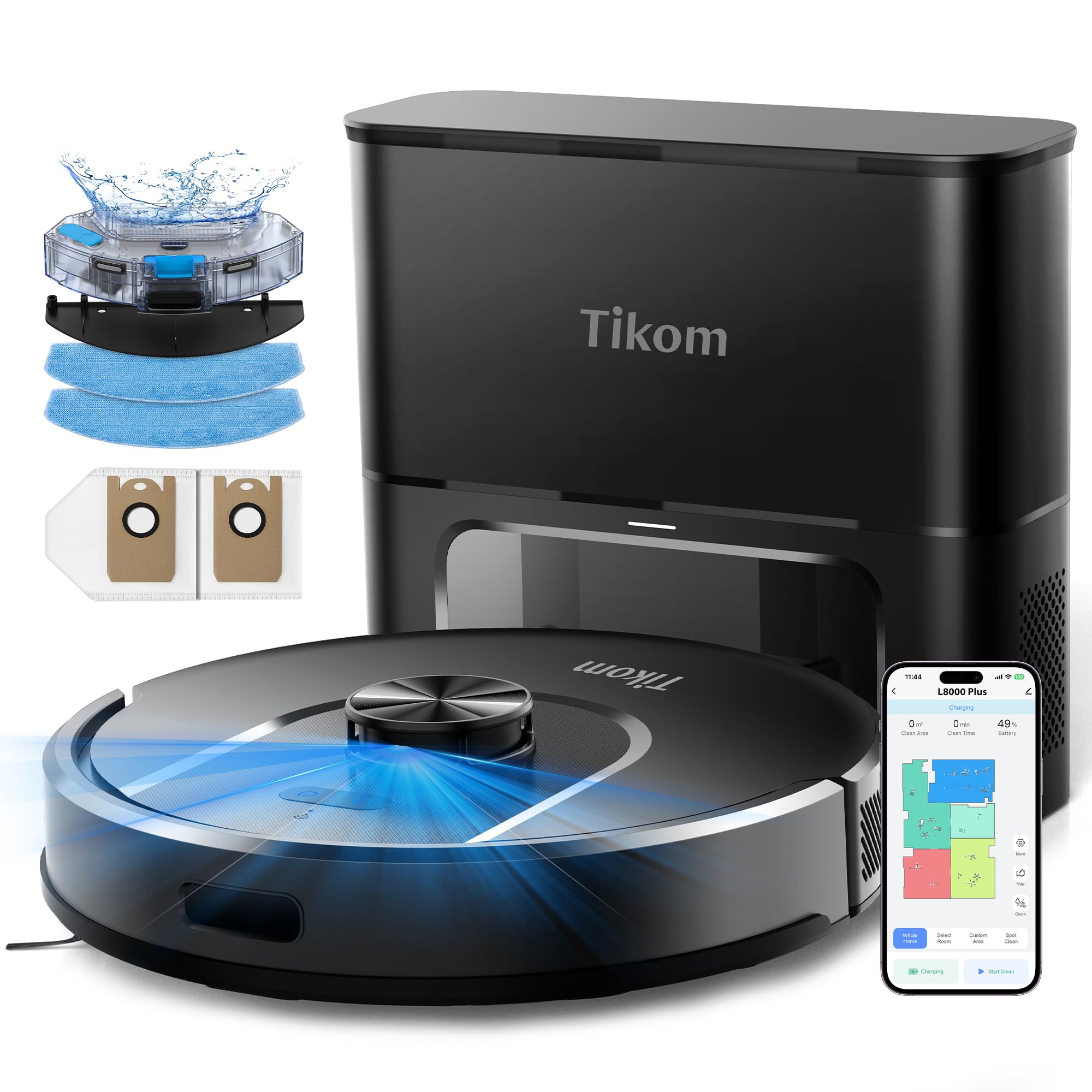
Tikom L8000 Plus

88 /100
LBD Score Excellent

Key details

Runtime
150 minutes
Suction
6,000 Pa
Navigation
LiDAR with no-go zones
Self-empty Bag
3 L
View on Amazon

The L8000 Plus is the one we point friends to first, because it fixes the two things that make people abandon a robot vacuum: it cleans in a mapped path instead of bumping around the furniture, and it empties itself into a 3-liter bag rated for about 90 days. Getting LiDAR mapping and a self-empty dock in one machine usually costs more than this.

The mapping is what we lean on daily. No-go zones, virtual walls, and room selection mean it can be sent to the kitchen after dinner and kept off the bedroom rug, and three suction levels plus three water-flow settings separate a quick crumb pass from a weekend going-over.

Six thousand pascals is more than a sealed floor needs; what matters is that the daily run stays easy. We ran it on the middle setting through the main rooms, and the bag was grey with fine dust inside a week, the stuff you only find when you wipe the floor with a damp paper towel. A 150-minute runtime finishes an average single floor with margin, and it docks itself rather than dying under the table.

Mopping is the modest part: a cloth pad on three water settings is a maintenance pass for dusty floors, and the pad pulls off for a rinse in the sink. What earns the recommendation is the routine. Map once, schedule it, and the floor stays ahead of you instead of the other way around.

Pros

  • LiDAR mapping with no-go zones and room selection
  • Self-empty base holds roughly 90 days of debris
  • 6,000 Pa with three suction levels
  • 150-minute runtime on a charge

Cons

  • Replacement dust bags are an ongoing cost
  • Mop pad lifts dust but won't scrub spills
Our verdict

We think this is the best all-rounder here for hardwood: real mapping, a self-emptying dock, and enough suction to keep a sealed floor dust-free daily.
Check Latest Price
2

Best for Pet Hair

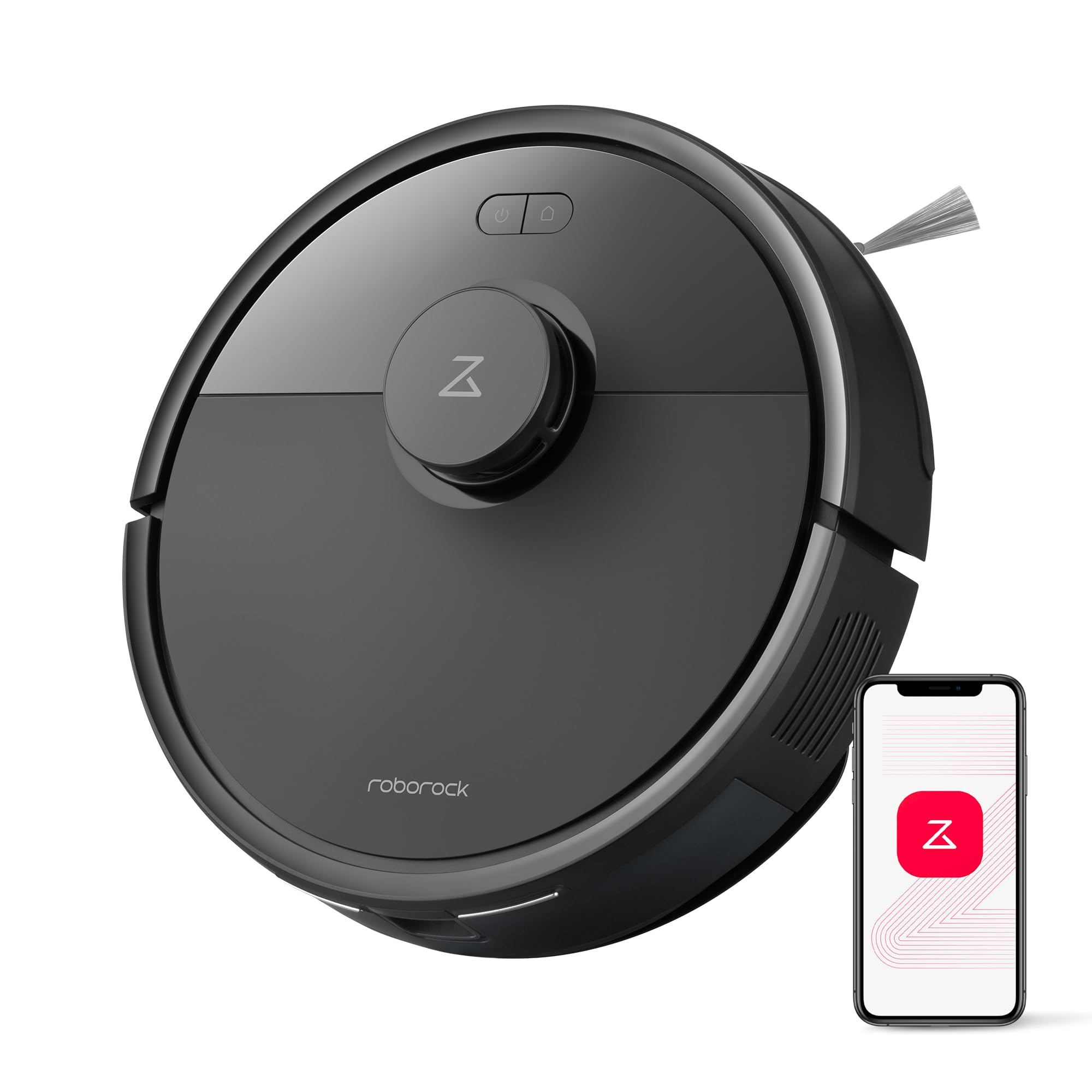
Roborock Q7 L5

82 /100
LBD Score Excellent

Key details

Runtime
150 minutes
Suction
8,000 Pa
Mop Tank
270 ml
Navigation
LiDAR, multi-floor maps
View on Amazon

If the hardwood in your house is really a pet-hair problem with some floor visible underneath, start here. The Q7 L5 pulls 8,000 Pa and pairs a specially shaped main brush with a side brush built not to wrap, which is the difference between a weekly haircut and a weekly annoyance.

The mapping carries the rest of the argument. A 360-degree LiDAR scan plans the room, keeps separate maps for separate floors, and lets you set no-go zones and room-by-room schedules from the app. We ran the mop module on its lowest water level for a light pass on sealed oak and kept it off the rug entirely.

Two things to weigh. At 3.89 inches it's the tallest body among the mapped picks here, so it won't follow the 2.99-inch models under a low sofa or a deep toe-kick. And when these do stop, the failure tends to be the LiDAR tower rather than the cleaning, which makes the warranty part of what you're buying.

Pros

  • 8,000 Pa suction with dual anti-tangle brushes
  • LiDAR mapping with multi-floor maps and no-go zones
  • Three water levels for light mopping
  • 150-minute runtime with self-charging

Cons

  • 3.89-inch body clears fewer low furniture gaps
  • Small dustbin fills quickly on heavy pet hair
Our verdict

We recommend the Q7 L5 when shedding pets set the agenda: 8,000 Pa, twin anti-tangle brushes, and mapping that keeps a hardwood floor clear.

Check Latest Price
3

Best Value With Mapping

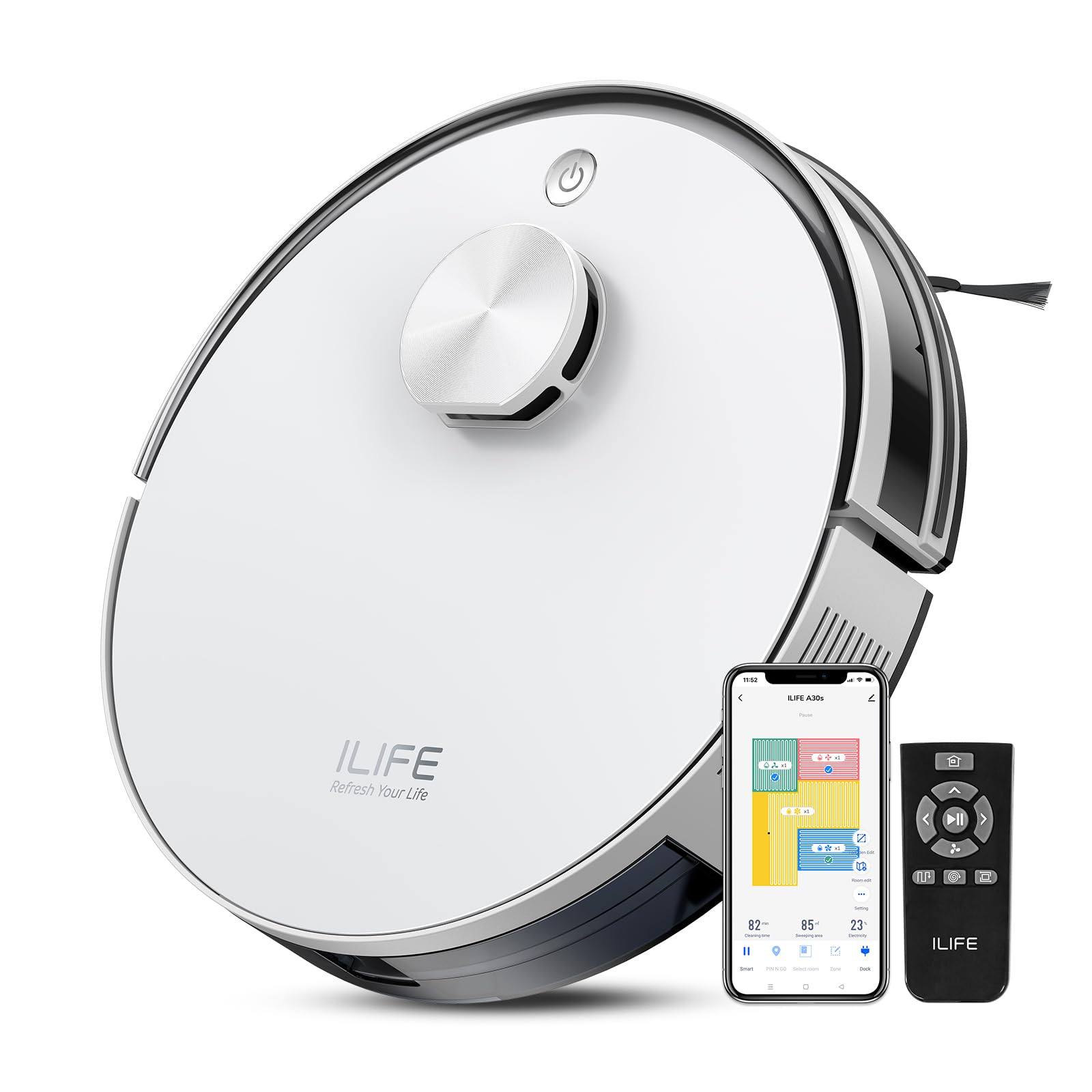
ILIFE A30s

83 /100
LBD Score Excellent

Key details

Dustbin
500 ml
Runtime
150 minutes
Suction
Up to 10,000 Pa (Spot mode)
Navigation
LiDAR with no-go zones
View on Amazon

Ten thousand pascals is the number on the box, and it applies in Spot mode only. Everyday cleaning runs on a gentler setting, so judge the A30s as a mapped midrange vacuum rather than a suction monster.

On that measure it's the cheapest way in this group to get real LiDAR mapping, no-go zones, and virtual walls, the features that turn a robot from a novelty into something you actually schedule. The map holds, the 500 ml bin is generous for the money, and 150 minutes covers an open-plan main floor in one pass.

Two things to plan around. At 72 dB it's the loudest model here on paper, and a hard floor reflects that noise rather than absorbing it, so we schedule it for when the house is empty. The battery is the unsettled part of the package: charging faults are the recurring failure, and registering the warranty on day one is the sensible move.

Pros

  • LiDAR mapping with no-go zones and virtual walls
  • 500 ml dustbin, large for the price
  • 150-minute runtime
  • App, remote, and voice control

Cons

  • Loudest noise rating in this group
  • Charging faults are the recurring failure
Our verdict

We think the A30s is the smart money if you want a real map and no-go zones without a dock: just plan around the noise.

Check Latest Price
4

Best Budget Combo

Tikom G8000 Max

88 /100
LBD Score Excellent

Key details

Height
2.99 in
Runtime
150 minutes
Suction
5,000 Pa
Dustbin / Water Tank
450 ml / 300 ml
View on Amazon

One magnetic boundary strip comes in the box, and one strip guards one doorway. That's the fine print on the G8000 Max, and it's the kind of detail that decides whether a budget robot earns its keep. Add strips as your floor plan demands them, and most of the rest of this machine is a bargain.

Five thousand pascals, a 450 ml bin alongside a 300 ml water tank so it can vacuum and mop in the same pass, four cleaning modes, and four ways to start it: app, remote, voice, or the button on top. For a household that wants a daily pass on sealed hardwood with a damp cloth behind it, that covers the job.

At 2.99 inches it slides under furniture the taller mapped models can't reach, which on hardwood is often where the dust lives. What gives us pause is longevity: charging and running complaints sit right beside the praise, and it does trap itself under low furniture. Treat the warranty as part of the purchase.

Pros

  • 5,000 Pa with four cleaning modes
  • Vacuums and mops in a single pass
  • 2.99-inch body reaches under low furniture
  • App, remote, voice, and button control

Cons

  • Ships with a single boundary strip
  • Battery and long-run reliability are inconsistent
Our verdict

We rate the G8000 Max the best budget combo here: it vacuums and mops in one pass, fits under low furniture, and asks very little of your wallet.

Check Latest Price
5

Best Simple Vacuum

ILIFE V2

86 /100
LBD Score Excellent

Key details

Height
2.99 in
Control
Remote control
Dustbin
300 ml
Runtime
120 minutes
View on Amazon

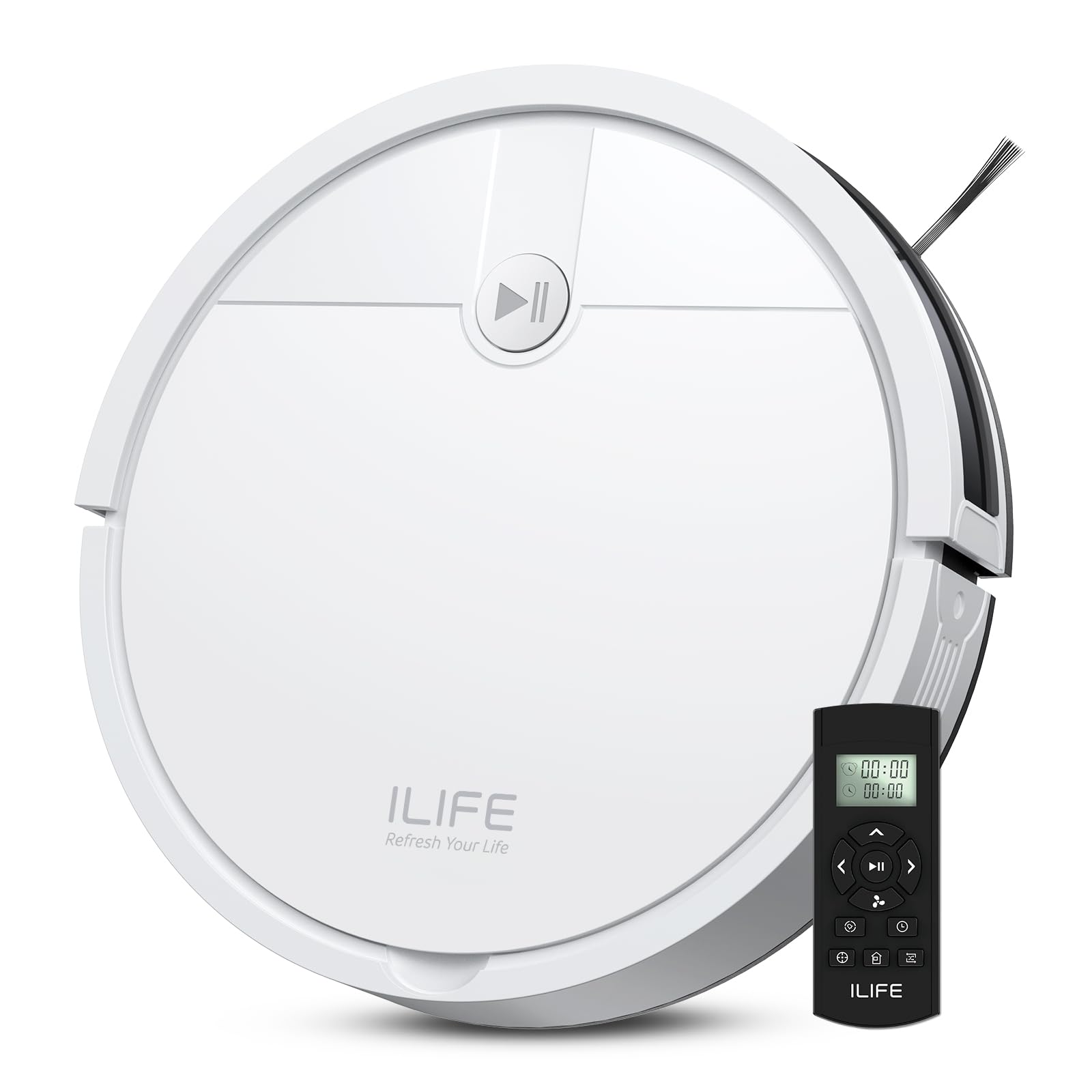
There's no roller brush on the V2. A suction port underneath pulls hair and grit straight into a 300 ml bin, so nothing needs unpicking afterward, and the chore that makes people quit on robot vacuums doesn't exist here. On hardwood, where hair sits on the surface instead of weaving into pile, that's the right tool for the job.

It's also the least demanding vacuum here to own. The 2.99-inch body gets under low furniture, the remote works without Wi-Fi, and a 120-minute run covers an ordinary floor. You pick a room, choose auto, spot, or edge, and let it work through the space; there's a single suction level, so there's nothing to fiddle with and no boost when you want one. Longevity is the open question, since the failures that turn up are units dying inside a year rather than poor cleaning.

Pros

  • Suction port means no hair wrap
  • 2.99-inch body cleans under low furniture
  • 120-minute runtime
  • Remote control works without Wi-Fi

Cons

  • 300 ml bin needs emptying mid-run in bigger homes
  • One suction level, no boost setting
Our verdict

Our pick for a simple hard-floor vacuum: nothing to untangle, no app to learn, and a low enough outlay to be an easy yes.

Check Latest Price
6

Hands-Off Cleaning

wrydao S6 Pro

92 /100
LBD Score Outstanding

Key details

Runtime
160 minutes
Suction
6,000 Pa
Navigation
LiDAR with no-go zones
Self-empty Bag
3 L
View on Amazon

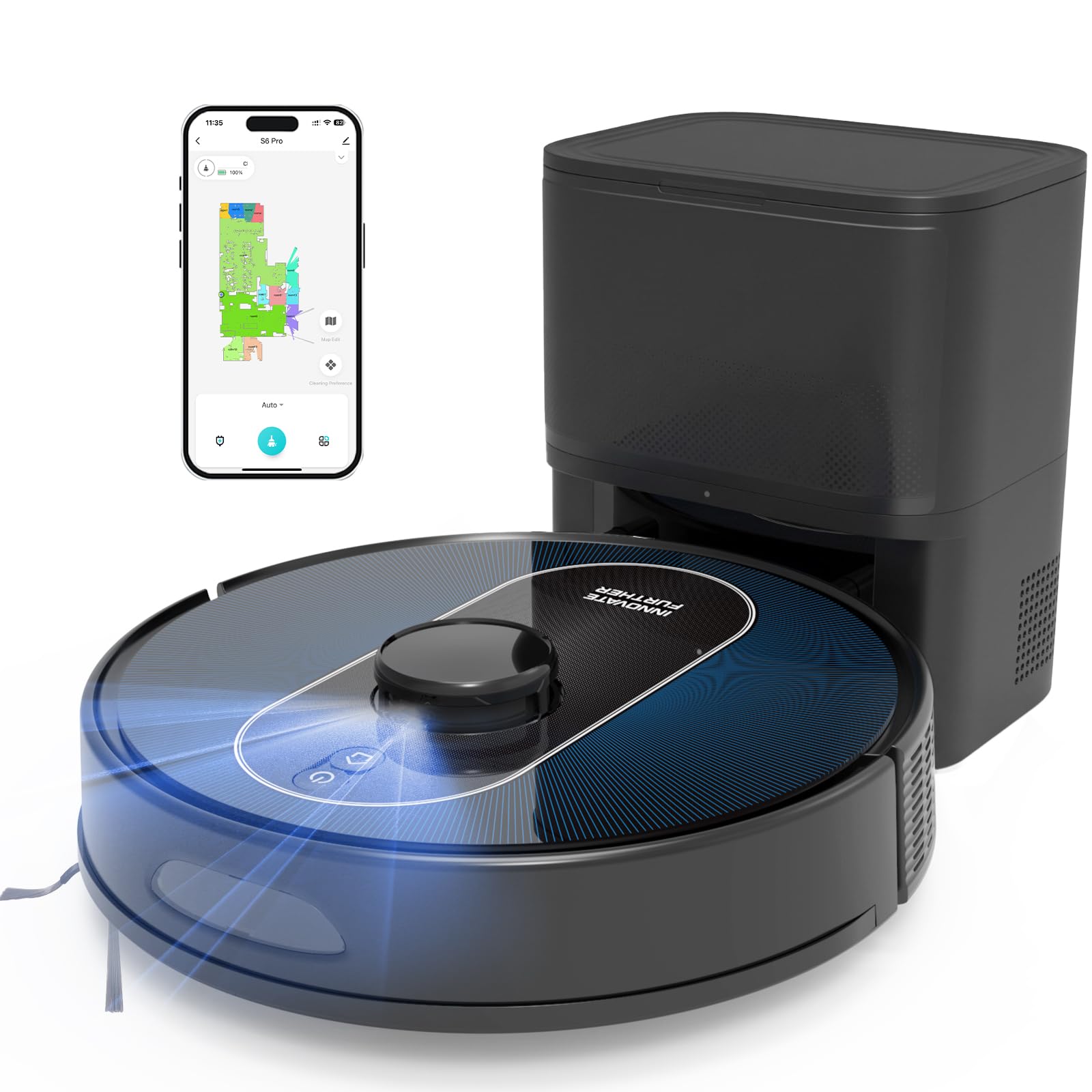
On paper the S6 Pro belongs with the expensive robots: LiDAR mapping, no-go zones, a 3-liter self-empty bag rated for 90 days, 6,000 Pa, and a 160-minute runtime.

The shape is what caught our eye. It's rectangular rather than a disc, which on hardwood means it can square up to a baseboard and push into a corner instead of nosing in at an angle. Four suction levels, carpet boost, three water-flow settings, and separate vacuum-only, mop-only, and combined modes make it a more thoughtful hard-floor machine than its place in this group suggests.

Where we hold back is time. Everything above is a specification, and what we can't vouch for yet is how the dock and the battery behave after a couple of years, the part that decides whether a robot vacuum was money well spent and the part no spec sheet answers. If you're an early adopter by temperament, this is the one to take a chance on.

Pros

  • LiDAR mapping with no-go zones
  • 3-liter bag, roughly 90 days between changes
  • Rectangular body reaches corners and baseboards
  • 160-minute runtime

Cons

  • Dust bags are a recurring cost
  • Long-term durability is unproven
Our verdict

We like the S6 Pro for anyone who wants self-emptying and real mapping and doesn't mind being early: the hardware is right, the track record is short.

Check Latest Price
7

Mop-First Homes

Lefant M210 Omni

87 /100
LBD Score Excellent

Key details

Dustbin
800 ml
Runtime
120 minutes
Suction
20,000 Pa
Mop Base Tanks
2.4 L clean / 1.5 L dirty
View on Amazon

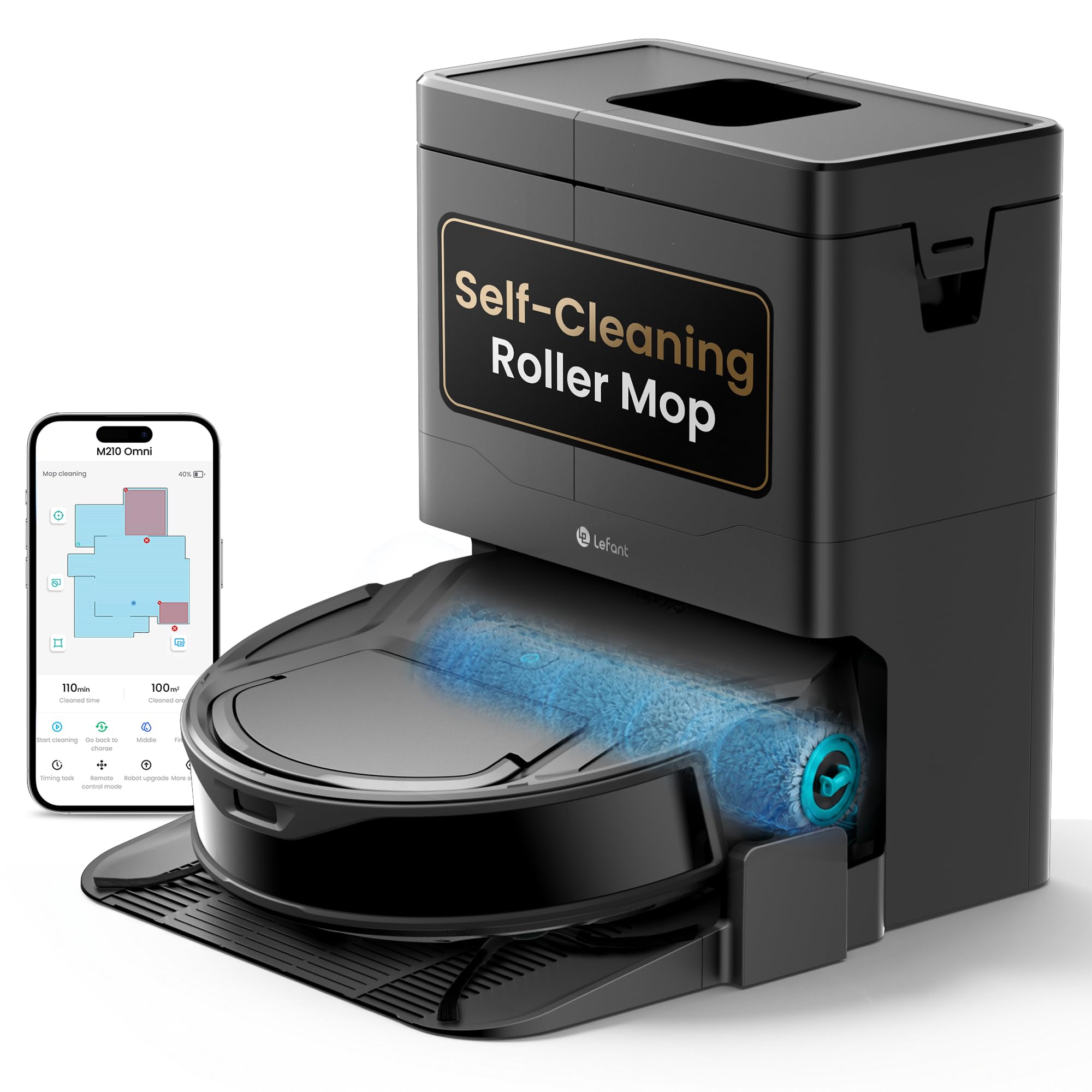
This is the only robot here that washes and dries its own mop. A roller runs wet along the floor with fresh water from a 2.4-liter tank while the dirty water lands in a 1.5-liter one, and the base rinses and dries the roller afterward, so there's no sour pad waiting in a cupboard two days later.

The roller is also the better tool for hardwood. A damp cloth pad smears a sticky mark around; a roller that's being rinsed as it turns lifts it. The 20,000 Pa figure is the highest in this group, and the 800 ml dustbin is the largest, which on a shedding floor means fewer interruptions.

The base is the part you live with. Two tanks to fill and empty, a dock that wants wall space and clearance, and a self-clean cycle after every mop. None of it is difficult; all of it needs a routine, and a machine sitting on a full dirty tank is worse than no mop at all.

The 120-minute runtime is the shortest of the mop-capable picks here, which matters in a large open plan and barely at all in an apartment. What we appreciate most is that the mopping has become the part you don't have to think about; the vacuuming was already that.

Pros

  • Roller mop washes and dries at the base
  • 800 ml dustbin, the largest here
  • 20,000 Pa suction
  • 2.4 L clean and 1.5 L dirty tanks

Cons

  • 120-minute runtime trails the other mop picks
Our verdict

For sticky, kid-and-pet hardwood, we reach for this one: a self-rinsing roller mop, the biggest dustbin here, and the highest suction figure.

Check Latest Price
8

Long Open Floors

XIEBro E8S

86 /100
LBD Score Excellent

Key details

Dustbin
560 ml
Runtime
Up to 200 minutes (Eco)
Suction
6,500 Pa
Navigation
Gyro inertial
View on Amazon

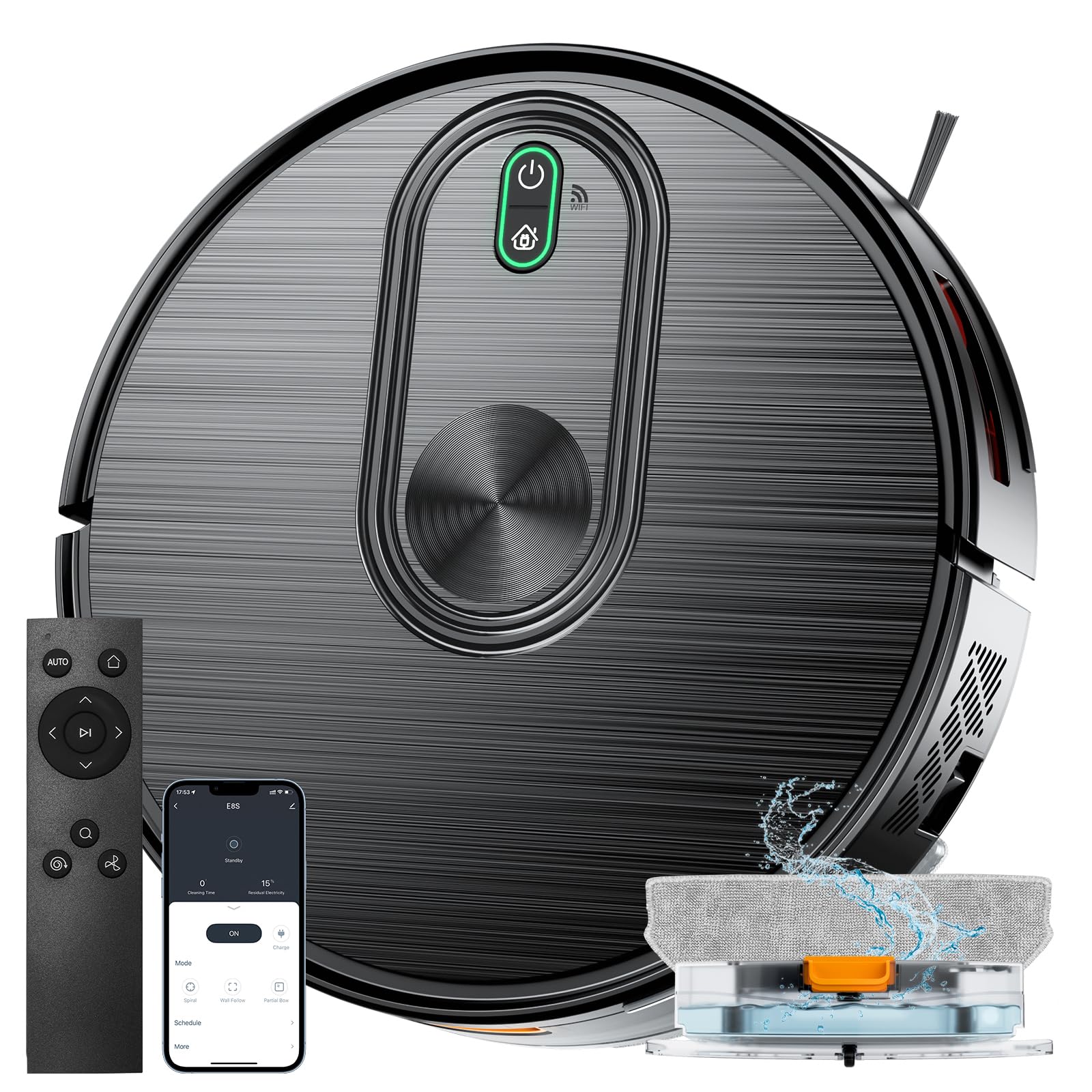
Two hundred minutes is the longest runtime in this group, and it's the number the E8S leads with. Read the small print: that's Eco mode, from a 2,600 mAh battery, and there's a physical side switch to isolate the battery when the vacuum sits unused.

The rest of the package is a 6,500 Pa motor with four levels, a 560 ml bin that's larger than most here, a 2.95-inch body that gets under furniture, and three modes, zigzag, spot, and edge, run from the Tuya app, a remote, or Google Assistant.

Navigation is where the money didn't go. Gyroscopic planning keeps it running in straight rows instead of bouncing off the sofa, a real step up from the cheapest robots here, but it works from sensors in the moment rather than a saved plan of your rooms. Battery is the shakiest part of the package, with charging complaints sitting alongside the long-runtime praise.

So what you're buying is time on the floor rather than control over where it goes. That's a fair trade in an open living room and a poor one in a house where you want the kitchen done and the bedroom left alone.

Pros

  • Up to 200 minutes in Eco mode
  • 6,500 Pa with four suction levels
  • 560 ml dustbin, large for the budget tier
  • App, remote, and voice control

Cons

  • Navigation plans by pattern, not by saved room map
  • Battery longevity is the weak spot
Our verdict

We recommend the E8S when minutes on the floor matter more than maps: 200 minutes a charge, 6,500 Pa, and the biggest bin among the budget picks.

Check Latest Price

How We Tested Robot Vacuums on Hardwood

To build the shortlist, we started with the specs that actually matter on bare floors — navigation type, mapping and no-go zones, brush-roll design, runtime, and whether the dock empties itself — then filtered by price so the final group spanned entry-level and mid-range rather than a single tier. We also weighed whether the extras justified a price jump over the simpler models. Nine made the cut, and each one ran in a real home for seven months, across wide-plank oak, laminate, tile, and the low-pile rugs in between.

In the first week, we scattered a measured quarter-cup of cereal and dry rice across the kitchen, then counted what came back on the first pass and what got nudged into the toe-kick instead. After dinner we watched how each one handled kibble and a deliberately scattered pinch of pet hair, and checked the brush roll every few days for wrapping. Weekly, we sent them along the baseboards and under the sofa to see whether dust bunnies were collected or merely relocated, and whether the side brush flung debris back onto clean floor.

Every vacuum was docked in the same corner, with a lamp cord and a chair leg in its path, and we logged each stall, spin, and rescue along with where it happened. A no-go zone was drawn over a fringed rug and a water bowl to see whether it held. We ran each battery from full to dead on max and on eco to get a realistic read on how much floor one charge covers, and weighed the bin after a week of ordinary traffic.

At the end, we re-walked the high-traffic strips to check for scuffs or dulling, and took stock of what had worn — filters, brushes, wheels — as a durability gut check.

How to Choose a Robot Vacuum for Hardwood Floors

Start With the Brush, Not the Pascal Count

Hardwood has no pile to hold dust, so pickup comes down to airflow along the surface, edge reach, and what the brush does with hair. A spinning bristle brush flicks grit into the suction path, but it also wraps long hair and can hold onto grit that later scuffs the finish. A suction port or a soft roller avoids the tangle entirely, which is why the ILIFE V2 is among the easiest of these to live with in a shedding house.

The practical split: if hair and dust dominate your floor, look for a suction port or a dual anti-tangle brush like the Roborock Q7 L5's. If rugs and low carpet are part of the mix, you want a brushroll, and you accept the weekly unpicking that comes with it.

Mapping Is What Makes It a Habit

Random-bounce navigation still cleans, but you end up clearing the whole floor before every run, and a robot you have to prep is one you stop using. LiDAR or camera mapping lets you name a room, drop a no-go zone over a fringe rug, and schedule the kitchen after dinner. Gyroscopic navigation, like the XIEBro E8S's, runs neat rows without a saved plan, which is fine for one open space and thin for a flat full of rugs and cables.

One trap: the dimensions in a listing usually describe the robot, not the dock. A self-empty base needs a wall, a socket, and room to approach, so measure that patch of floor before you fall for a slim body.

Measure the Gap Under Your Furniture

Body height is the specification hardwood owners regret ignoring, because the dust lives under the sofa, the bed, and the toe-kick. Across these picks it runs from roughly 2.9 to 3.9 inches, and that inch decides whether the robot reaches the dust or just polishes the front edge of the frame.

Get down with a tape and measure the lowest gap you actually care about, plus the clearance under dining chairs it has to pass. If the answer is under three inches, that narrows the shortlist faster than any suction figure will.

Decide Honestly About Mopping

On sealed hardwood a damp pass is safe and standing water is not, and a cloth-pad mop is a damp pass. That makes a pad a maintenance tool: good for the film that builds up in a kitchen, close to useless on a dried spill. A roller does more, and the self-rinsing roller on the Lefant M210 Omni is the only one here that keeps clean water on the floor from start to finish.

If you already mop weekly, a pad is a bonus and you should not pay for more. If you never mop and want the robot to take it over, buy the roller, and lift the pad or mop module off before a run on waxed or oiled floors.

Budget for the Upkeep, Not Just the Robot

Self-empty docks trade your time for bags; a mop trades it for filter rinses and pad washes. Before you buy, look at what is consumable: dust bags, HEPA filters, side brushes, and on the mopping models, the pad or roller. Those costs arrive on a schedule whether or not the vacuum is still under warranty.

A big bag goes months between changes; a 300 ml bin needs emptying mid-run on a large floor. That difference, not the suction figure, is what decides whether the thing becomes a habit or a chore.

Frequently Asked Questions

Final Verdict

We keep coming back to the Tikom L8000 Plus because it turns cleaning into a schedule you'll actually keep: LiDAR mapping so it goes where you send it, a self-empty dock so the daily run costs you nothing, and 150 minutes to finish a floor in one pass. In the middle of this group on price, it's the pick we measure the others against.

Change one requirement and the answer changes with it. For heavy shedding, the Roborock Q7 L5's 8,000 Pa and anti-tangle brushes are worth the taller body. For sticky floors, the Lefant M210 Omni's self-rinsing roller is the only real answer here. And for the simplest thing that works, the ILIFE V2 has no brush to untangle.