Best Robot Lawn Mowers for Large Yards of 2026

A robot mower that stalls on a slope or loses its position under a stand of oaks isn't saving you time — it's handing the job back to you. For anyone with an acre or more, the question isn't whether a robot can cut grass. It's whether it can navigate a yard that big, week after week, without being rescued.

I spent eight months letting six of them try on real lawns. Wire-free navigation is the headline change in this category, and on a large property it decides whether the mower is dependable or a weekend project — the ones that pair GPS-style positioning with camera vision recover when one system drops under trees. The quieter details matter too: how loud it runs at 6 a.m., how much of the setup you can manage alone, how it looks parked on the lawn all season, and whether the price feels earned by month three.

The picks below cover flat acreage, steep slopes, and tree-heavy lots — different jobs, same goal.

1

Best Overall

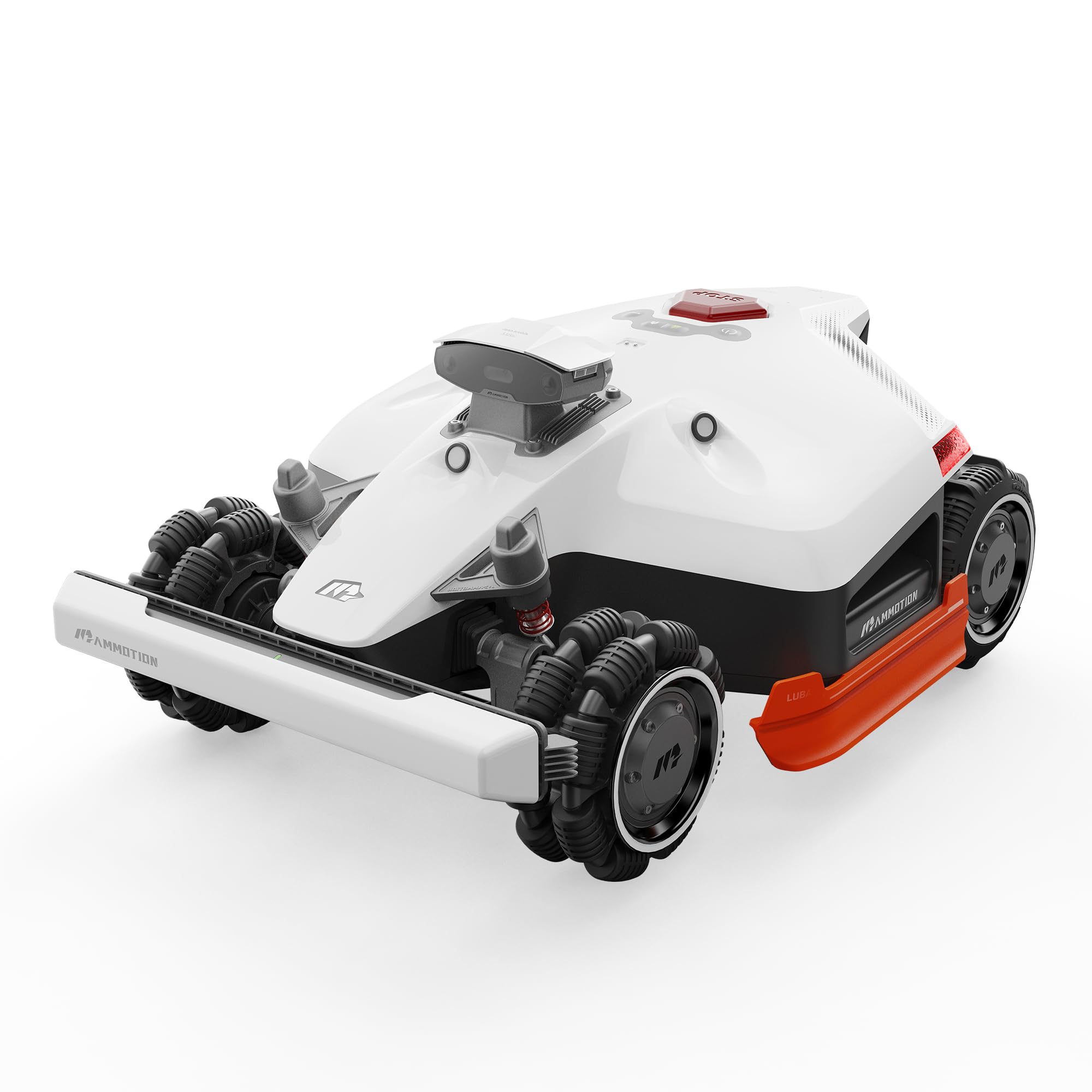
Mammotion LUBA 2 AWD 5000HX

83 /100
LBD Score Excellent

Key details

Slope Rating
80% (38°)
Cutting Width
15.7 inches
Cutting Height
2.2 to 4.0 inches
Rated Coverage
1.25 acres reception, 1.48 acres max
View on Amazon

Coverage is the number that decides whether a robot mower earns its place on a big property, and the LUBA 2 AWD 5000HX is rated for more of it than anything here short of the Yarbo: 1.25 acres with a reliable satellite fix, 1.48 acres at the outside. That's well over a third more ground than the Dreame is rated for, and it costs less. For a lot between half an acre and an acre and a quarter, the arithmetic is hard to argue with.

Large yards are also where navigation earns its keep, because the tree line, the shed, and the far fence are exactly where a satellite-only mower gets confused. Mammotion pairs RTK with an AI vision system, and in our runs the pairing held its position under canopy and along the house. The 4G radio is the quiet luxury: you can check the mower from work instead of walking the property to see whether it's stuck. Mapping is the part to slow down for — splitting the lawn into zones and giving each its own schedule takes an extra half hour and saves weeks of fiddling.

Cutting is where the 5000HX asks you to meet it halfway. The deck spans 2.2 to 4.0 inches across 18 positions, which covers tall fescue and St. Augustine comfortably and rules out the Bermuda lawn you keep at an inch — check your grass before you fall for the coverage rating. On a frequent schedule the cut comes out even; stretch the interval through a wet spring and you'll find strips standing up where the deck passed. That's a scheduling habit more than a hardware fault, but it's the difference between a lawn that looks mown and one that looks missed.

Then there's the app, the one part we wanted better: moving between zones and editing a boundary isn't obvious the first few times, and it doesn't get much more elegant with practice. It never changed what happened on the grass. What the mower really buys you is frequency — a few short passes a week instead of one long Saturday, on a lawn that never gets ahead of the deck.

Pros

  • Rated for 1.25 acres, with headroom to 1.48
  • RTK plus AI vision holds position under canopy
  • Four driven wheels climb 80% slopes
  • Quiet enough to run while you're outside

Cons

  • Minimum cut height of 2.2 inches rules out short lawns
  • App and zone editing take time to learn
Our verdict

For a lawn between half an acre and about one and a quarter, this is the mower we recommend: the coverage rating, the 4G link, and the price all land where a large-yard buyer needs them.

Check Latest Price
2

Best No-RTK Setup

Dreame A3 AWD Pro 3500

81 /100
LBD Score Excellent

Key details

Navigation
360° LiDAR plus dual AI vision
Cutting Width
15.75 inches
Cutting Height
1 to 4 inches
Rated Coverage
0.87 acre
View on Amazon

There's no reference station to site, no mast to explain to a skeptical neighbor, and no cable to bury: the Dreame A3 AWD Pro 3500 fixes its position with a 360-degree LiDAR turret and a pair of cameras instead. On a wooded lot that's not a small convenience. An RTK mower needs a clean view of the sky at its base station, and the properties that can't offer one are exactly where this design makes sense.

The rest of the package is built for ground that isn't a golf green. Four hub motors climb the same 38.7-degree grades the Mammotion handles, a suspension system rolls it over roots and curbs up to 2.2 inches, and dual floating discs cut a 15.75-inch swath — Dreame claims up to 8,611 square feet an hour in its rush mode, which is the figure that matters when the lawn is measured in acres. At 26.4 pounds it's light enough to lift over a garden wall on your own, and the three-year warranty with 4G service included is a longer commitment than Yarbo offers.

Height adjustment is the one place the Dreame feels less considered: four steps between 1 and 4 inches, where the Mammotion gives you 18 positions. Set a height in spring and leave it and you'll never notice; if you raise the deck for the summer heat and drop it again in fall, you'll feel the coarseness. What we keep coming back to is the install — an afternoon of watching it map the lawn as it mows, and nothing left standing in the flowerbed afterward.

Pros

  • No RTK station to site or maintain
  • 1-to-4-inch cut range suits short and tall grass
  • Dual discs cut a 15.75-inch swath
  • Three-year warranty with 4G service included

Cons

  • Rated for 0.87 acre, with little headroom past that
Our verdict

If you can't give an RTK station a clean view of the sky, buy this one: LiDAR and AI vision handle the mapping, and the 1-to-4-inch cut covers more grass types than the Mammotion.

Check Latest Price
3

Best for Big Acreage

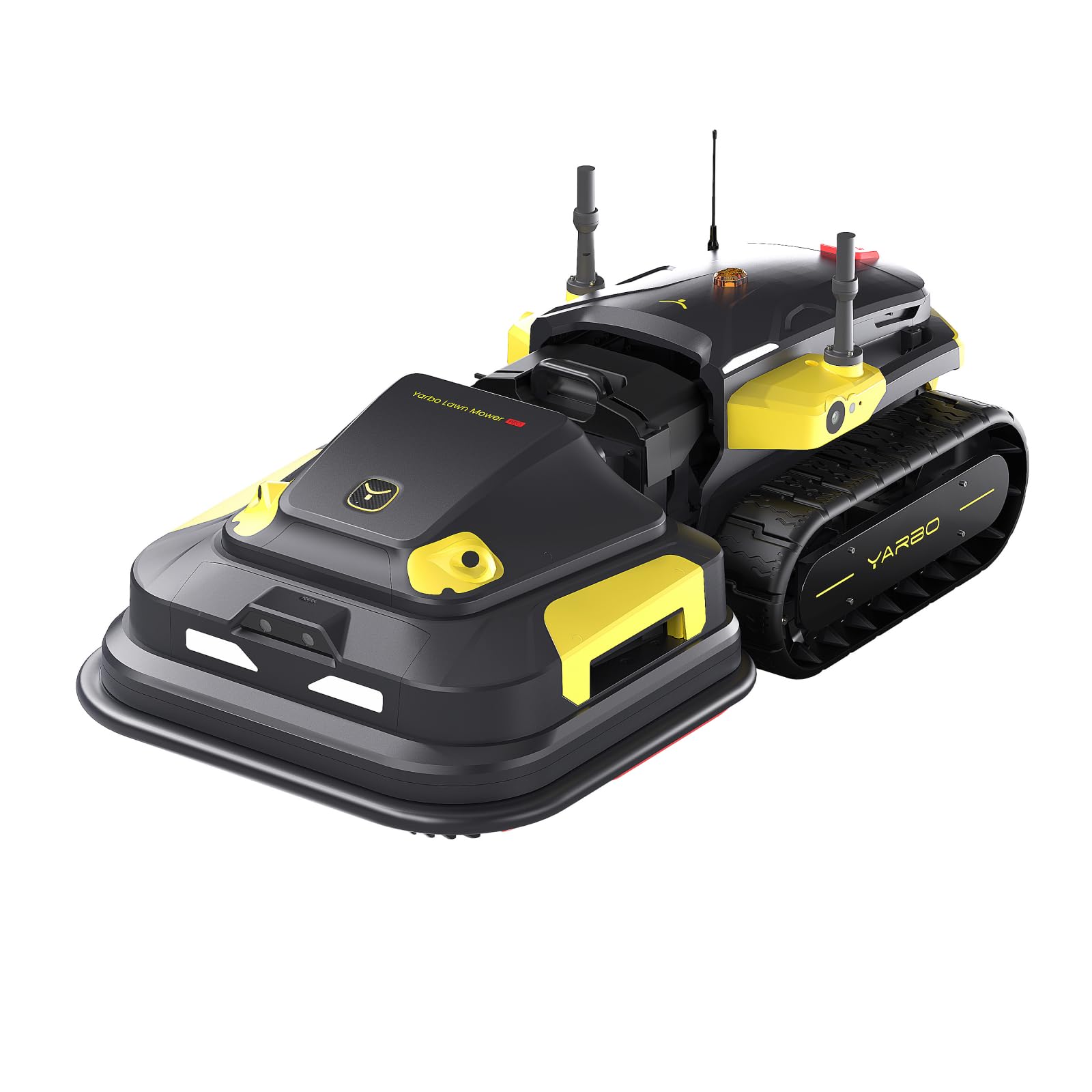
Yarbo Lawn Mower Pro

80 /100
LBD Score Excellent

Key details

Cutting Width
20 inches
Cutting Height
0.8 to 4.0 inches
Machine Weight
194.4 lb
Rated Coverage
6 acres
View on Amazon

This is less a robot mower than a small tracked vehicle that mows, and the numbers say so before you ever see it: 6 acres of rated coverage, a 20-inch deck, and 88.2 kg of machine that arrives in four boxes. Yarbo's Lawn Mower Pro is aimed at the property where a riding mower used to live, and everything about it — the tracks, the steel skid shoes, the dual 300 W motors — is sized for that job rather than for a suburban quarter acre.

On rough ground it makes its case. The tracks carry it up 70 percent grades and across muddy, stony, uneven terrain that would stop a wheeled mower, and the 20-inch cut means noticeably fewer passes on open lawn. The blade system is the detail we appreciated most: razor blades for cool-season grass, straight blades for thick, damp warm-season growth, with an ejection design that keeps clippings from packing under the deck. With 120 minutes of battery and auto-charge between sessions, six acres is a job measured in days rather than hours, which is rather the point of owning one.

The logistics are the trade. At nearly 200 pounds it isn't something you shift on a whim, the four-box delivery wants two people, and the dock needs an unobstructed view of the sky for the RTK link — plan the site before the truck arrives. Once it's running, the modular platform is the underrated part: the same base takes a leaf blower and a snow blower, so the machine occupying garage space in July is still earning its footprint in January.

Where it stumbles is the software side. The app isn't the friendliest of the three, and getting a complicated property mapped the way you want it takes trial and error. On a genuinely large lot, that's a one-time cost against years of not spending Saturdays on a tractor.

Pros

  • Six-acre rating with a 20-inch cutting deck
  • Tracks and a 70% slope rating for rough ground
  • Razor and straight blades for different grasses
  • Swappable leaf and snow modules

Cons

  • Setup on a complicated property takes real patience
  • A run can stop mid-job and need a manual restart
Our verdict

For three acres and up, this is the pick: a 20-inch tracked deck, a six-acre rating, and swappable modules that keep it working past mowing season.

Check Latest Price

How We Tested Robot Mowers for Big Yards

We started by filtering listings on the numbers that actually govern a big yard: rated coverage, slope handling, and whether the boundary could be mapped without trenching wire. Over eight months, each of the six finalists ran on two properties — a sloped, tree-heavy yard with a dog, a garden hose, and two kids' toys left out on purpose, and a flatter open lot where the only obstacles were a shed and a fence line.

Setup was timed from unboxing to first autonomous cut, and we noted how many times we had to restart the mapping walk or move the dock to get a clean signal. Once running, we logged every rescue — a mower stopped mid-lawn, a boundary ignored, a schedule that never fired — and how long it took to sort out from the app. We also emailed each brand's support line with the same routine question about zone mapping and tracked who answered with something usable.

Cutting was judged on lawns deliberately left three days past due, checking for stragglers, scalped patches on uneven ground, and how much trimming the edges needed afterward. We stood 25 feet back with a decibel meter while each one ran, since a machine that starts at dawn is a neighbor problem. And we watched the calendar: how many minutes a week we still spent on mowing chores after the robot took over — clearing toys, emptying the bin, freeing a stuck wheel — because that number is what you're actually buying. How each one looked parked mid-cut counted too, alongside what it delivered for the money.

How to Choose a Robot Lawn Mower for a Large Yard

Size the rating to the lawn, then add headroom

The coverage figure on the box assumes decent conditions and a mower that isn't fighting a hill or a hedge on every pass. Treat it as a ceiling, not a target: a mower rated at 1.25 acres is right for an acre you want cut twice a week, while one rated at 0.87 acre belongs on something closer to half.

The other half of the equation is how much it cuts between charges. The Mammotion covers up to 13,000 square feet per charge, which on a big lawn is one session rather than a whole day. Buy 25 to 30 percent more rating than your lawn actually measures.

Match the navigation to what's overhead

Every mower here finds its way without a boundary wire, but they do it differently. RTK systems compare a satellite fix against a fixed base station and are extremely accurate, provided the station can see a wide slice of sky and the mower can see satellites. Canopy, a tall barn, or a steep north-facing bank breaks that.

LiDAR and camera systems build their own picture of the lawn and keep working under cover, which is why the Dreame suits a wooded lot. Walk the property and ask where a base station would have a clear view. If the answer is nowhere, buy vision.

Check the cut height against your grass

Cutting height is the specification people skip and then regret. Bermuda and some cool-season lawns want an inch to an inch and a half; St. Augustine and centipede want three to four. A mower that bottoms out at 2.2 inches, as the Mammotion does, is a fine machine that simply cannot cut a short lawn.

Read the range before the feature list, and prefer a deck with many positions over a four-step one if you adjust the cut with the seasons. St. Augustine owners should also check the top end: a deck that stops at 3 inches leaves a tall grass lawn scalped in July.

Plan for slopes, gates, and the dock

Grades are where a big property separates the mowers. The ratings here run from 70 to 80 percent, roughly 35 to 38 degrees, and those numbers assume dry grass and good grip, so wet mornings and loose soil count as well past the limit. Tracks, as on the Yarbo, beat wheels on mud and gravel; four driven wheels handle a lawn that is merely steep.

Then walk the route. A gate narrower than the deck, a step, or a gravel strip between zones all change the plan, and the dock needs power plus whatever sky view its navigation demands.

Budget for setup, blades, and support

None of these is a plug-in appliance. Expect a day of mapping, more if the property is complicated, and expect to redraw a boundary or two after the first week. Week to week it comes down to blades and cleaning: mulching blades dull, clipping buildup under the deck costs cut quality, and a spare set on the shelf is worth having.

Support is the variable you can't test in advance, so buy somewhere a return is practical if the first unit arrives unhappy. The three-year warranty on the Dreame is the longest stated in this group.

Frequently Asked Questions

Final Verdict

The Mammotion LUBA 2 AWD 5000HX is the mower we point most large-yard buyers to. It covers more ground than anything here short of the Yarbo, holds a fix where satellite alone gets shaky, and costs less than the alternatives.

The catch is grass type: if you cut below 2.2 inches, look at the Dreame, which also sidesteps the base-station problem by not needing one. And if the property runs past three or four acres, the tracked Yarbo is the only machine here sized for it.