Best Robot Lawn Mowers of 2026

A robot mower promises to give you back your Saturdays, and the catch is never the cutting — it's the finding. One that wanders into the flowerbed, stalls against a fence post, or loses its signal and parks mid-lawn is more work than the push mower it replaced. The good ones cover the awkward strip along the fence, hold their line on a slope, and put themselves back on the charger while you're doing something else.

My team and I spent six months with eight of these, through a full mowing season, and the real divide is navigation. Wire-free machines that map with LiDAR, cameras, or satellite positioning save you a weekend of burying perimeter wire, though each has quirks: satellite positioning wants a clear sky, and camera systems want light.

What I watch for is whether a mower still finds its way home in week twelve, whether the edge along a fence comes out even, whether app time beats push time, and whether the money buys more lawn or just a fancier app. The picks below earned their docks.

1

Best Overall

Mammotion LUBA mini 2

87 /100
LBD Score Excellent

Key details

Coverage
0.37 acres
Navigation
360° LiDAR + dual-camera AI
Slope Rating
80%
Cutting Width
7.9 inches
View on Amazon

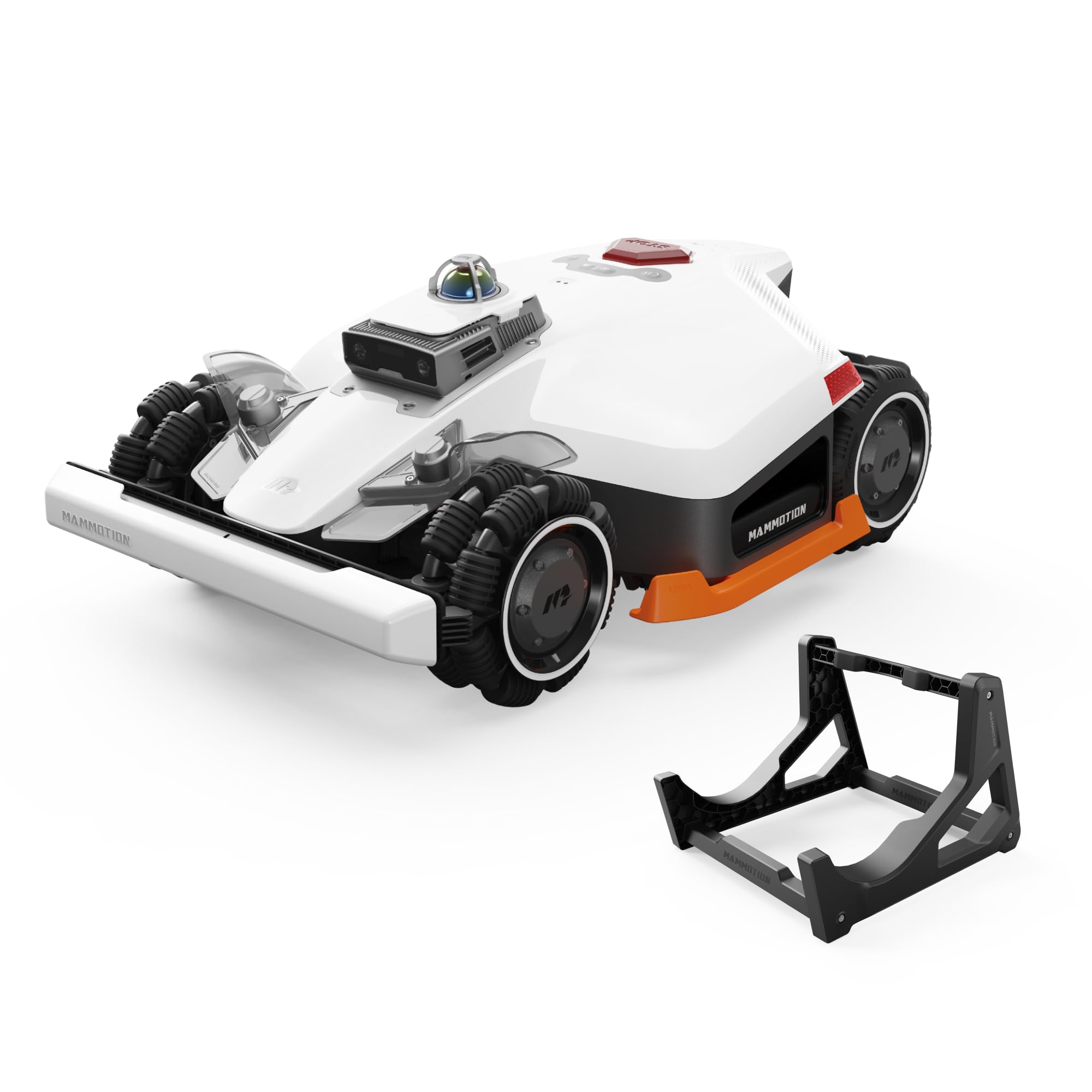
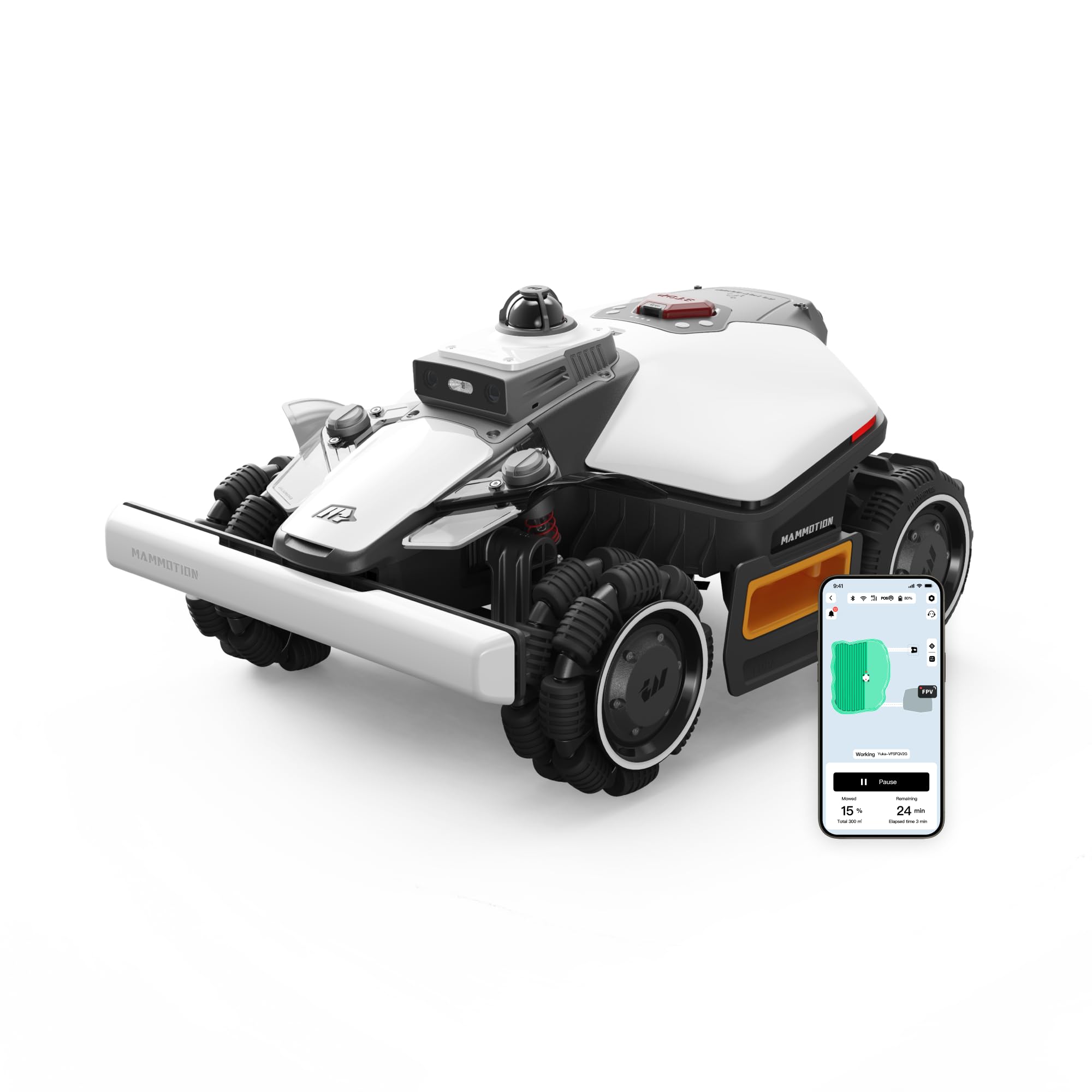
An 80% slope rating is the first thing we look at on the LUBA mini 2, because it tells you this is not a mower that quits at the first embankment. The AWD system pairs two independent 88W motors with an omni wheel, and the 0.37-acre coverage is the right size for a complicated suburban lot rather than a flat postage stamp. That combination is why we recommend it as the default for most residential yards: it has enough capacity for a real lawn and enough traction for the parts you dread mowing.

The dual cutting discs are the detail we appreciate most. One main disc does the bulk of the work, while a dedicated edge disc cuts along borders where one side is lawn and the other is hardscape. That means less follow-up trimming along driveways and beds, which is the chore that makes robotic mowing feel incomplete. The 7.9-inch cut is narrower than the big machines here, so it takes longer on wide-open grass, but it also lets the mower slip through gates and around beds.

The custom charge limit is another design choice we like more than we expected. You can set the battery to stop at 80% instead of sitting full all the time, which is a sensible way to treat a battery that lives outdoors. The 360° LiDAR and dual-camera vision handle obstacles, and the app supports up to 20 zones. On a lawn with tree cover, the vision assist matters more than the RTK signal alone.

At 2.2 to 4 inches of cutting height, it covers the range most cool-season lawns need, though warm-season grass owners should check the low end before buying. The bigger caveat is the premium price. We think it earns that premium if your lawn has slopes, multiple zones, or edges that need real attention. If your yard is flat and small, the budget picks below make more sense.

Pros

  • Climbs slopes up to 80% with AWD
  • Dual discs cut closer along edges
  • Custom 80% charge limit protects battery
  • 0.37-acre coverage with 20 zones

Cons

  • Mapping takes patience in complex yards
  • Narrow 7.9-inch cut on wide lawns
Our verdict

We recommend the Mammotion LUBA mini 2 for complex residential lawns: it pairs 0.37-acre coverage and an 80% slope rating with dual-disc edge cutting that reduces follow-up trimming.
Check Latest Price
2

Best Budget

ANTHBOT M5

83 /100
LBD Score Excellent

Key details

Coverage
0.15 acre
Included
Garage and RTK station
Slope Rating
45%
Cutting Width
7.9 inches
View on Amazon

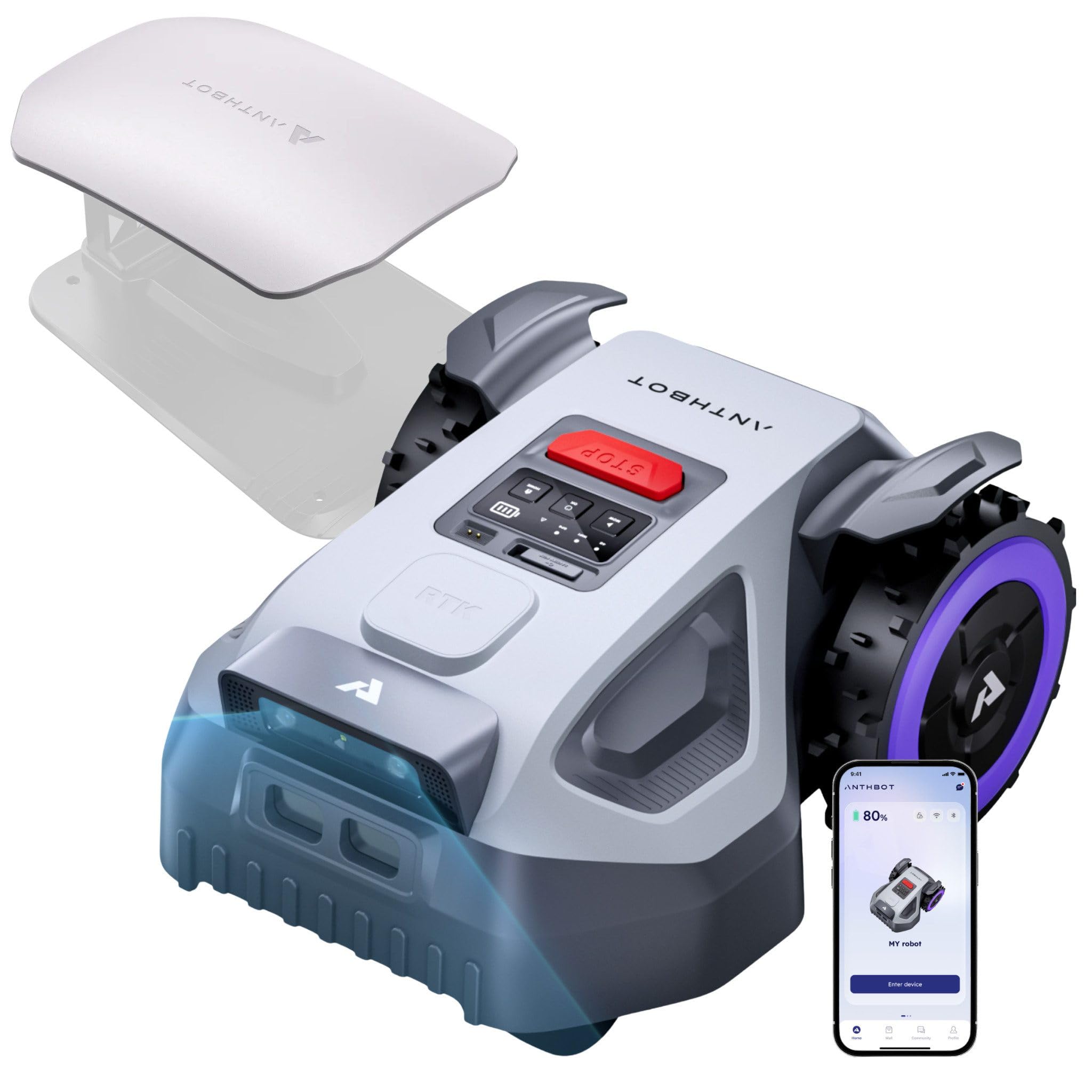
The ANTHBOT M5 arrives with a garage, a charging base, a blade set, and an RTK reference station. That complete kit is unusual at the budget end, and it solves a practical problem: you don't have to build a shelter or hunt for a separate dock cover. For a small yard, the 0.15-acre coverage and 45% slope rating are enough for most suburban front or back lawns, and the 20-zone app control gives you room to separate beds, paths, and no-go areas.

We think the M5 is the best budget pick here because it gives you the essentials—wire-free NRTK mapping, dual-camera vision, and a garage—without stretching to premium money. The 7.9-inch cut is modest, and the 1.2-to-2.7-inch height range is better suited to shorter, maintained lawns than to overgrown grass. But for a quarter-acre or less, that is a fair trade.

The five free-rotating blades are another detail we like: they are designed to pivot away from small obstacles rather than shear through them, and replacement is straightforward. The M5 can handle slopes up to 45%, which covers many yards that would defeat a flat-land mower, but it is not the machine for a steep, rutted hillside. Mapping is the part to budget time for; the app lets you draw zones manually, and that is more reliable than expecting a perfect automatic map on the first pass.

Pros

  • Includes garage and RTK station
  • Handles 45% slopes
  • Five free-rotating blades
  • 20-zone app control

Cons

  • Coverage tops out at 0.15 acre
  • Mapping can need manual adjustments
Our verdict

We recommend the ANTHBOT M5 for small lawns on a budget: it includes the garage and RTK station, maps without perimeter wire, and handles modest slopes.

Check Latest Price
3

Best for Large Yards

DREAME A3 AWD Pro 3500

81 /100
LBD Score Excellent

Key details

Coverage
0.87 acre
Navigation
360° 3D LiDAR + AI vision
Slope Rating
38.7° (80%)
Cutting Width
15.8 inches
View on Amazon

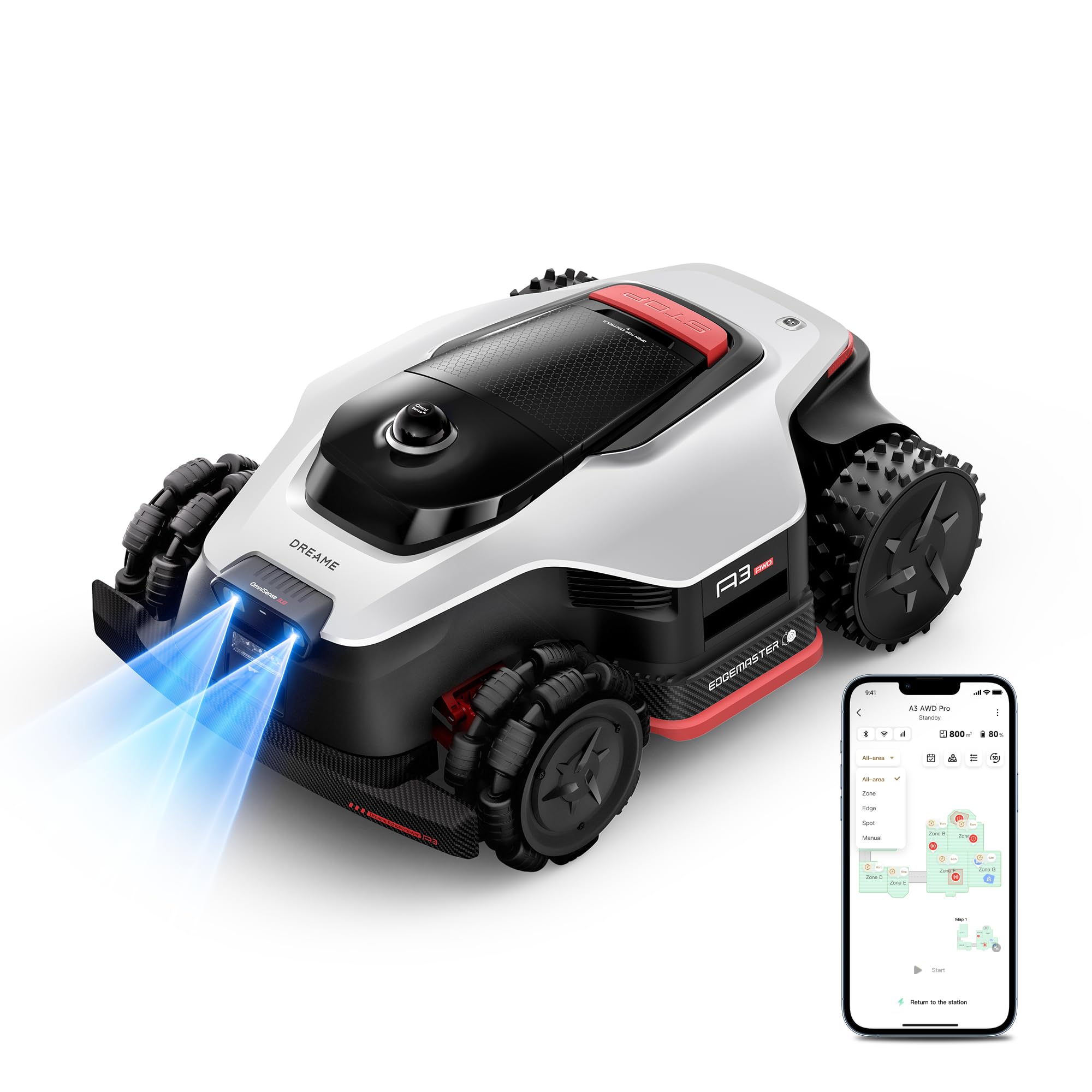
The DREAME A3 AWD Pro 3500 skips the RTK station entirely, relying on 360° 3D LiDAR and AI vision to map and navigate. That is the detail that makes it interesting for tree-heavy yards, where a fixed reference signal can be fussy. With 0.87-acre coverage and a 15.8-inch dual-disc cut, it is sized for a larger property that would take a smaller mower multiple sessions to finish.

The 4WD hub motors are rated for 38.7° slopes, and the suspension clears roots, curbs, and thresholds up to 2.2 inches without high-centering. Those numbers matter more on a big lot than on a manicured quarter-acre: the mower has to keep moving over tree roots and uneven ground, not just climb a single hill. The 1-to-4-inch cutting height range and one-tap adjustment also give you room to adapt to different grasses through the season.

We recommend the A3 AWD Pro for large, obstacle-heavy lawns because it combines the wide cut and 4WD traction with a no-RTK navigation stack that is easier to place than an antenna. The trade-off is that the 0.87-acre rating assumes a fairly open lawn; if your property is cut up by beds, fences, and narrow gates, the 15.8-inch deck can feel wide. It is also a premium machine, so the value case depends on how much lawn you actually have. The three-year warranty and included 4G service are a nice backstop for a machine that depends on software.

Pros

  • No RTK station to place
  • 4WD with 38.7° slope rating
  • 15.8-inch dual-disc cut
  • 3-year warranty and free 4G

Cons

  • Wide deck limits tight passages
  • Premium price for smaller lawns
Our verdict

We recommend the DREAME A3 AWD Pro 3500 for large, tree-heavy yards: its no-RTK LiDAR navigation, 4WD traction, and 15.8-inch cut cover ground quickly.

Check Latest Price
4

Best Premium for Steep Lawns

Mammotion LUBA 3 AWD 3000

81 /100
LBD Score Excellent

Key details

Navigation
360° LiDAR + NetRTK + AI
Battery Life
175 minutes
Slope Rating
80% (38.6°)
Cutting Width
15.7 inches
View on Amazon

A 15.7-inch cutting width puts the LUBA 3 AWD 3000 in a different class from the small residential mowers here. That wide deck, combined with 5,400 square feet per hour and four independent motors, is built for large lawns that would otherwise eat a whole afternoon. The 80% slope rating and 360° LiDAR with a 230-foot range are the supporting acts: this is a machine for a property with real distance and real grade changes.

The tri-fusion navigation combines 360° LiDAR, NetRTK, and dual-camera AI vision. In a big yard, that redundancy is useful because no single positioning method is perfect around trees, buildings, and fences. The LiDAR's 59° vertical view also helps it see obstacles that a flat-plane sensor would miss. The app supports up to 20 zones, and the mower can auto-resume charging, which matters when a single session is not enough.

The cutting height runs from 1 to 2.7 inches, and the mower comes with a cleaning stand and an extra set of blades. We like the cleaning stand more than it sounds: a wide deck collects a lot of grass, and having a dedicated place to wash it down makes routine upkeep less of a chore. The 175-minute battery life is enough for a long run, but on a large property you should expect it to dock and resume rather than finish in one charge.

We recommend the LUBA 3 for large, steep lawns where the wide cut and 4WD traction justify the premium. The navigation is the part to watch: the hardware is strong, but mapping and route planning can still feel less polished than the rest of the machine. If your lawn is mostly flat and under an acre, the LUBA mini 2 is the smarter size. If you have a long slope and a lot of grass, the LUBA 3's capacity is worth the step up.

Pros

  • 15.7-inch cut for large lawns
  • 4WD climbs 80% slopes
  • 360° LiDAR with 230-ft range
  • Cleaning stand and spare blades included

Cons

  • Navigation can feel less polished
  • Too much machine for small lawns
Our verdict

We recommend the Mammotion LUBA 3 AWD 3000 for large, steep properties: its 15.7-inch cut, 4WD traction, and 80% slope rating turn heavy mowing into a schedule.

Check Latest Price
5

Best for Very Large Properties

YARBO Y40 Core

80 /100
LBD Score Excellent

Key details

Weight
194.4 lb
Coverage
6 acres
Slope Rating
70%
Cutting Width
20 inches
View on Amazon

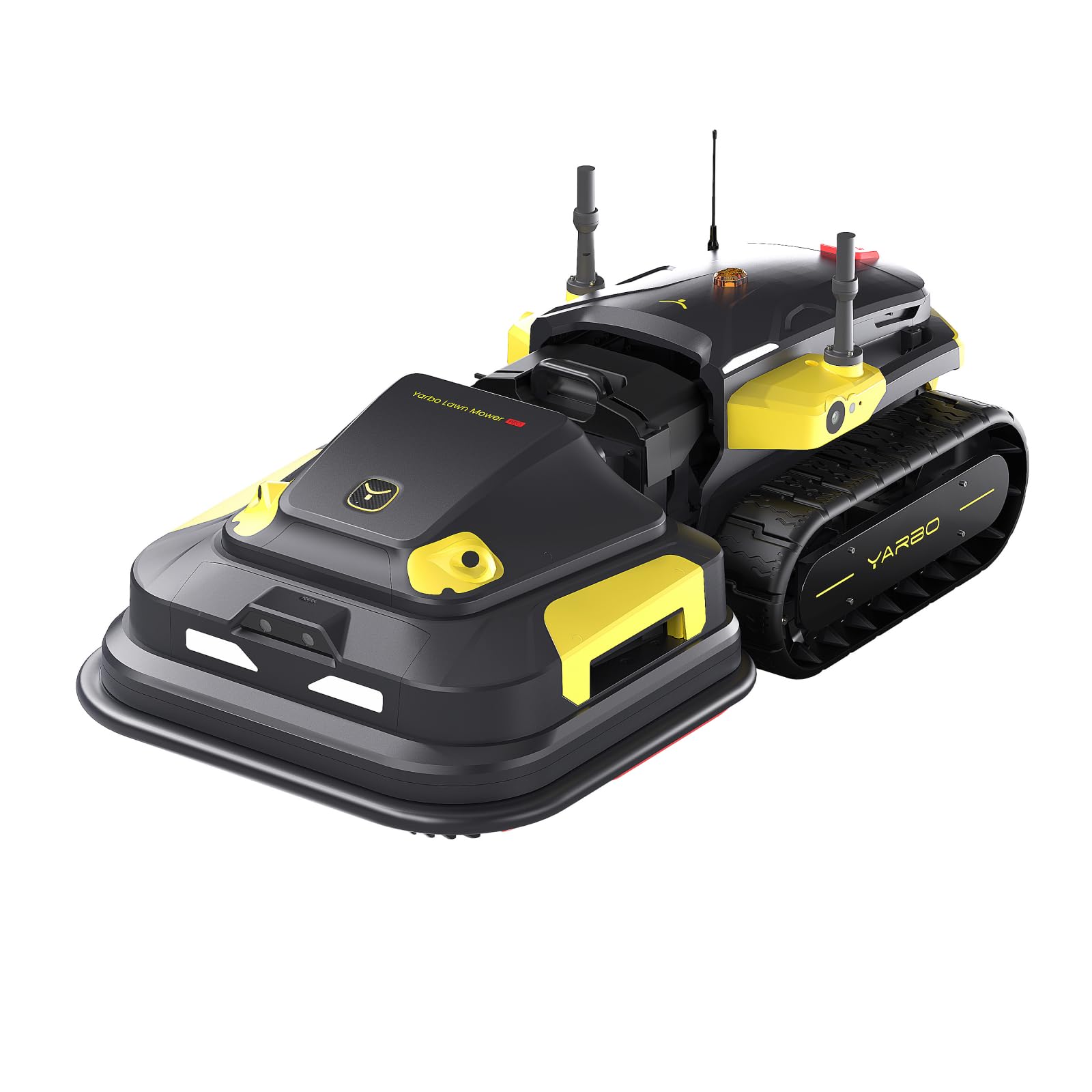
Six acres is not a typo, and that capacity is why we recommend the YARBO Y40 Core for very large properties. It is built for properties where a standard robotic mower would spend the entire week working through zones. The 20-inch cutting width and 70% slope rating are large-property numbers, and the track drive is meant for uneven, muddy, or stony ground that would stop a wheeled mower. This is less a lawn gadget and more a piece of outdoor equipment.

The dual 300W motors and two blade options—razor blades and straight blades—are designed for both fine cool-season grass and thick, damp warm-season growth. The high-efficiency ejection path is there to keep clippings from clogging the deck, which is a real concern when you are cutting that much grass. The 0.8-to-4-inch height range is broad enough for different seasons and grass types, and the modular platform is what lets YARBO sell it as a four-season tool rather than a one-job mower.

The trade-off is real. At 88.2 kg, it is not something you move around casually, and setup is more involved than the small wire-free mowers here. The app and user experience are the weak point: the hardware is more impressive than the software. If you have two acres or less, this is more machine than you need. For a property that genuinely needs 6-acre coverage, though, the capacity is the reason to buy.

Pros

  • 6-acre capacity
  • 20-inch cut with dual 300W motors
  • Track drive for rough terrain
  • Two blade options for different grasses

Cons

  • Very heavy at 88.2 kg
  • App and setup require patience
Our verdict

We recommend the YARBO Y40 Core for very large, rough properties: its 6-acre capacity, 20-inch cut, and track drive handle terrain smaller mowers cannot.

Check Latest Price
6

Midsize Value Lawns

Sunseeker X3 Plus

78 /100
LBD Score Very Good

Key details

Weight
19.9 lb
Coverage
0.3 acre
Cutting Width
8 inches
Cutting Height
1.6 to 3.2 inches
View on Amazon

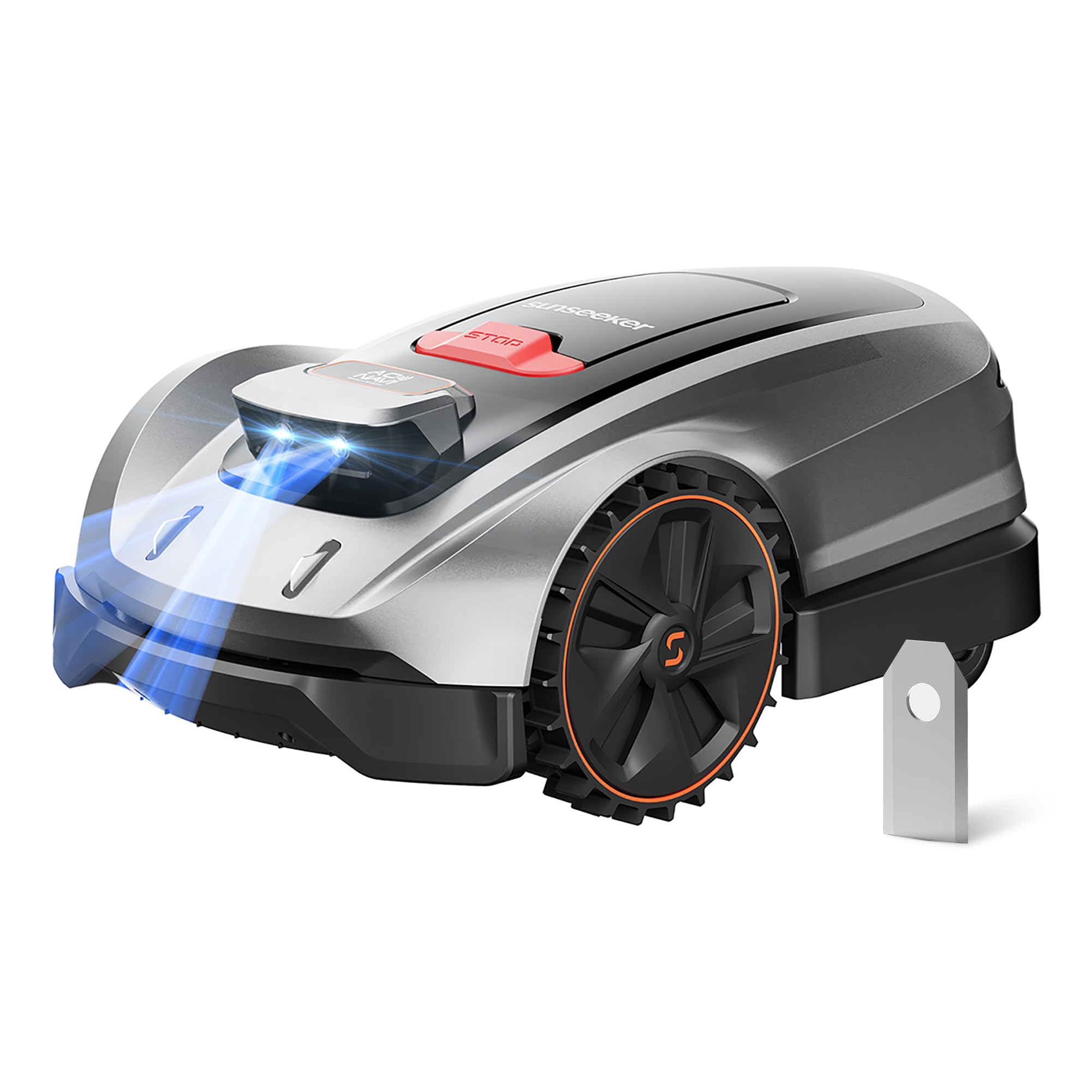
The Sunseeker X3 Plus is the rare mower that claims 0.3 acre without a premium price tag. That alone makes it worth a look for a suburban yard that is too big for a 1/8-acre budget model but not big enough to justify a large-acreage machine. The 8-inch cut, 19.9-pound body, and two-position height adjustment keep it simple; the offset blade is the feature that helps it cut closer along fences, walkways, and hardscape borders.

We think the X3 Plus earns a place as the value pick for midsize lawns because it combines RTK and VSLAM navigation with a wire-free setup and a reasonable footprint. The large front wheels with offset lugs are good for traction, but they can also climb over edging, which is a detail to check if your beds are bordered by low blocks or timbers. The 1.6-to-3.2-inch height range is workable for maintained lawns, though two positions is a narrow adjustment range compared with the seven-position mowers here.

The app creates virtual boundaries and no-go zones, and the camera-plus-ultrasonic obstacle avoidance is designed to route around common yard objects. Setup is one of the stronger parts of the package: there are no boundary wires to bury, and the mapping process is meant to be quick. The caveat is that this is a smaller, lighter mower, so it is better suited to a defined suburban lawn than to rough, steep, or heavily obstructed ground. Replacement blades are a recurring cost, and the OEM blades are not cheap.

Pros

  • 0.3-acre coverage at a budget position
  • Offset blade cuts closer to edges
  • Wire-free RTK + VSLAM navigation
  • Light 19.9-pound body

Cons

  • Only two cutting-height positions
  • Large front wheels can climb edging
Our verdict

We recommend the Sunseeker X3 Plus for midsize lawns on a tighter budget: it covers 0.3 acre, cuts close to edges, and sets up without perimeter wire.

Check Latest Price
7

Narrow Passages

ECOVACS Goat O1000 LiDAR PRO

79 /100
LBD Score Very Good

Key details

Coverage
1/4 acre
Cutting Width
8.66 inches
Cutting Height
1.2 to 3.6 inches
Narrow Passage
0.8 m
View on Amazon

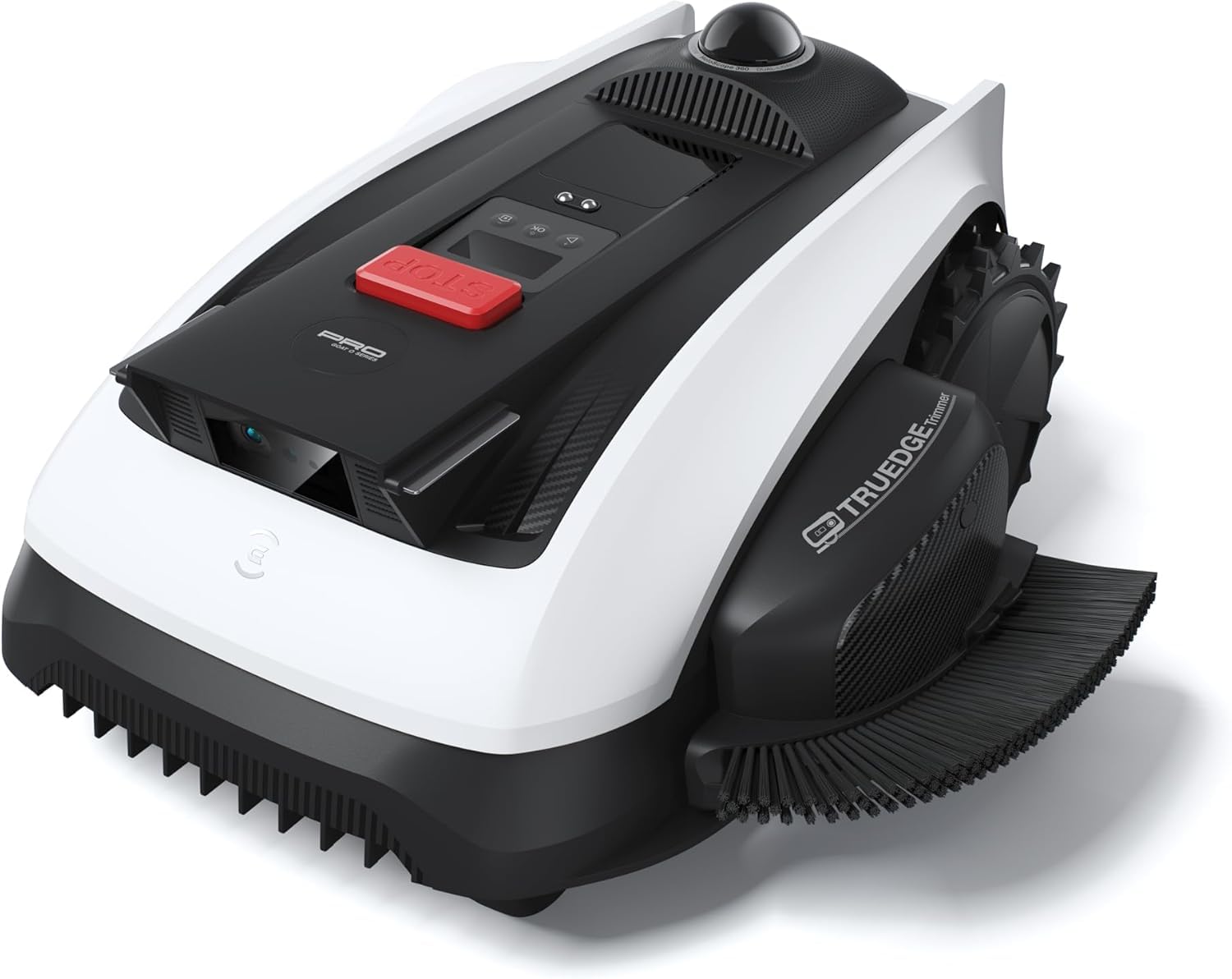
The ECOVACS Goat O1000 LiDAR PRO is built around a narrow body that fits through passages as slim as 0.8 meter. That is a specific advantage: side yards, narrow lawn corridors, and tight gaps between beds are exactly where wider mowers give up. The 8.66-inch cut and 1/4-acre coverage make it a small-to-midsize yard tool, not a large-property machine.

The integrated TruEdge trimmer is the feature we find most useful in principle. Instead of leaving a strip along driveways and walls for you to finish with a string trimmer, it is designed to trim right up to the edge. The 360° dual-LiDAR and 3D ToF sensors identify more than 200 obstacle types, and the app handles zones, schedules, and no-go areas. The mower also stores its maps locally, which is a sensible detail if your Wi-Fi is not perfect at the edge of the yard.

We recommend the Goat O1000 for narrow, obstacle-heavy yards where access matters more than raw speed. The catch is speed: a quarter-acre can take a long time, and the mower is not the one to choose if you want a big lawn finished quickly. The edge trimming also is not a substitute for a clean border in every situation; thick growth and tight corners still need a trimmer. For a small yard with a narrow side path, though, the compact body is the reason to buy.

Pros

  • Fits passages as narrow as 0.8 m
  • Built-in TruEdge trimmer
  • 360° LiDAR and 3D obstacle detection
  • Stores maps locally

Cons

  • Slow coverage on larger lawns
  • Edge trimmer still needs follow-up in thick growth
Our verdict

We recommend the ECOVACS Goat O1000 LiDAR PRO for narrow yards: its 0.8-meter body and built-in edge trimmer reach places wider mowers cannot.

Check Latest Price
8

No-RTK Simple Setup

eufy E15 Gen2

77 /100
LBD Score Very Good

Key details

Setup
No RTK station
Coverage
1,000 m²
Cutting Width
8 inches
Cutting Height
1 to 3 inches
View on Amazon

The eufy E15 Gen2 takes the RTK station out of the equation entirely. Instead of a fixed reference antenna, it uses pure-vision cameras and algorithms to map the lawn, navigate edges, and avoid obstacles. That is the design to consider if your yard has tree cover, buildings, or signal headaches that make RTK fussy. The claimed setup is about five minutes, and the mower maps while it mows rather than making you wait for a separate mapping run.

The 1,000-square-meter coverage and 8-inch cut put it in the small-to-midsize residential class. It handles 500-plus obstacle types with dual cameras and AI semantic segmentation, and the ride-on-edge system uses sensors to detect boundaries, drops, walls, and obstacles. The 1-to-3-inch cutting height covers the usual maintained-lawn range, and the 27.6-pound body is manageable for a single person to lift or move when needed.

We like the idea of a mower that maps as it works. It removes one of the most tedious parts of robot mower setup, and it makes the E15 Gen2 a good fit for a lawn with clear visual borders and a dock near Wi-Fi. The trade-off is that vision-only navigation depends on what the cameras can see; if your lawn has long, featureless edges or deep shade, the mower has less to work with. The E15 Gen2 is a newer approach, so long-term durability is the open question.

We recommend the eufy E15 Gen2 for homeowners who want the simplest possible wire-free setup. The no-RTK, no-mapping-wait design is genuinely different from the rest of this group, and the 1,000-square-meter coverage is enough for many suburban lawns. If your yard is large, steep, or heavily obstructed, the capacity and traction of the bigger picks matter more. But if setup friction is the thing that has kept you from buying a robot mower, this is the one to look at first.

Pros

  • No RTK station or antenna
  • Maps while mowing
  • 500+ obstacle types
  • 1,000 m² coverage

Cons

  • No RTK fallback for positioning
  • Vision-only navigation needs clear sightlines
Our verdict

We recommend the eufy E15 Gen2 for setup-averse homeowners: its no-RTK vision system maps while it mows and skips the antenna and mapping wait.

Check Latest Price

How We Tested Eight Robot Mowers Over a Full Season

We shortlisted every wire-free mower we could find, then filtered by navigation method — LiDAR, camera vision, satellite positioning, or some combination — along with coverage rating, slope capability, cutting-height range, and price per acre. Eight machines made the cut, and we ran them for six months, a full mowing season here, on lawns from about a quarter acre up to several acres.

Setup was timed and done solo, from box to first mapping run to first real cut, with notes on how often a map had to be redone after a mower lost its position. Navigation got tested in unglamorous places: a narrow side yard, a tree line that eats satellite signal, the corner by the shed, a lawn chair left out overnight. We watched each machine mow the same lawn twice, recording where it missed, where it doubled back, and how long the job took.

Cut quality we checked by hand — running fingers through the grass for a ragged or uneven cut, comparing the strip along fence lines and driveways to the middle of the lawn, and changing cutting height to see how each handled taller growth. We also mowed after rain and at dusk to see how wet grass and low light affected the pass. For stability, we sent every mower across a side slope and looked for wheel slip and turf damage at the turn; obstacle avoidance got a soccer ball, a garden hose, and a dog toy.

Each week we logged minutes spent in the app and minutes spent rescuing a stuck mower, and set both against how long push-mowing the same lawn takes. After six months we cleaned every unit and looked at wheel wear, blade condition, and how the body held up to sun and rain. Value for money came down to coverage per dollar and how much of the season each machine spent actually working.

How to Choose a Robot Lawn Mower

Start With Your Real Lawn Size

Coverage ratings are maximums, not promises. A mower rated for 0.37 acre has to navigate beds, recharge, and return to the dock, so a 0.3-acre lawn with a narrow side yard can take longer than the number suggests. Measure the actual grass area you want cut, then add headroom for obstacles and multiple zones. The Mammotion LUBA mini 2 is a good example of right-sizing: 0.37 acre is enough for a complicated suburban lot, while the ANTHBOT M5's 0.15-acre rating suits a smaller front or back lawn. If you have an acre or more, look at the wide-cut machines instead of asking a small mower to work all week.

Choose Navigation That Fits Your Yard

RTK gives a mower a fixed reference point, which works well on open lawns but can struggle under dense trees or close to buildings. LiDAR and vision systems navigate by what they see, so they can be more forgiving in complicated yards, but mapping can still take patience. The DREAME A3 AWD Pro 3500 and eufy E15 Gen2 both skip the RTK station; the Mammotion LUBA 3 combines LiDAR, NetRTK, and vision for redundancy. If your lawn is open and flat, RTK is a proven, simple choice. If it is cut up by trees, beds, and narrow passages, prioritize LiDAR or vision and check where the dock and antenna can go.

Match Traction to Your Slope

Slope ratings are a starting point, not a guarantee. A mower rated for 45% may handle a short bank, but wet grass, loose soil, and tight turns can still cause wheel slip. AWD or 4WD is worth paying for if your lawn has a grade you notice when pushing a wheelbarrow. The Mammotion LUBA mini 2 and LUBA 3 are rated to 80%, the YARBO Y40 to 70%, and the ANTHBOT M5 to 45%. For a mostly flat lawn, a lighter two-wheel-drive mower is fine and easier to move. For a steep or uneven property, choose traction first and cutting width second.

Look at Cutting Width, Height, and Edges

Wider decks finish open lawns faster but make tight gates and beds harder. A 15.8-inch mower like the DREAME A3 AWD Pro 3500 is efficient on a big lawn; a 7.9- to 8-inch mower like the ANTHBOT M5 or Sunseeker X3 Plus is easier to thread through a small yard. Cutting height matters just as much: a range of 1 to 4 inches covers most grasses, while a two-position deck limits your options. Edge cutting is the other reality check. Offset blades and built-in trimmers reduce follow-up work, but thick growth and tight corners still need a string trimmer.

Plan for Setup and Upkeep

Wire-free does not mean maintenance-free. You still need to site the dock, map zones, set schedules, and keep the blades clean. RTK mowers need a clear view of the sky for the reference station; vision mowers need sensible boundaries and a dock with Wi-Fi. The eufy E15 Gen2 is the low-friction pick here because it maps while it mows, while the Mammotion LUBA mini 2 adds a custom 80% charge limit to protect its battery. Before you buy, check the replacement blade cost and give the dock enough clearance. A robot mower saves time, but it does not eliminate the need to look after the machine.

Frequently Asked Questions

Final Verdict

For most suburban yards, we recommend the Mammotion LUBA mini 2 AWD 1500H. It has the capacity for a real 0.37-acre lawn, the traction for an 80% slope, and dual cutting discs that reduce edge cleanup. If your lawn is smaller and budget is tight, the ANTHBOT M5 is the better fit; if you have an acre or more, step up to the DREAME A3 AWD Pro 3500 or the YARBO Y40 Core. The right answer is the one that matches your lawn's size and terrain, not the longest feature list.