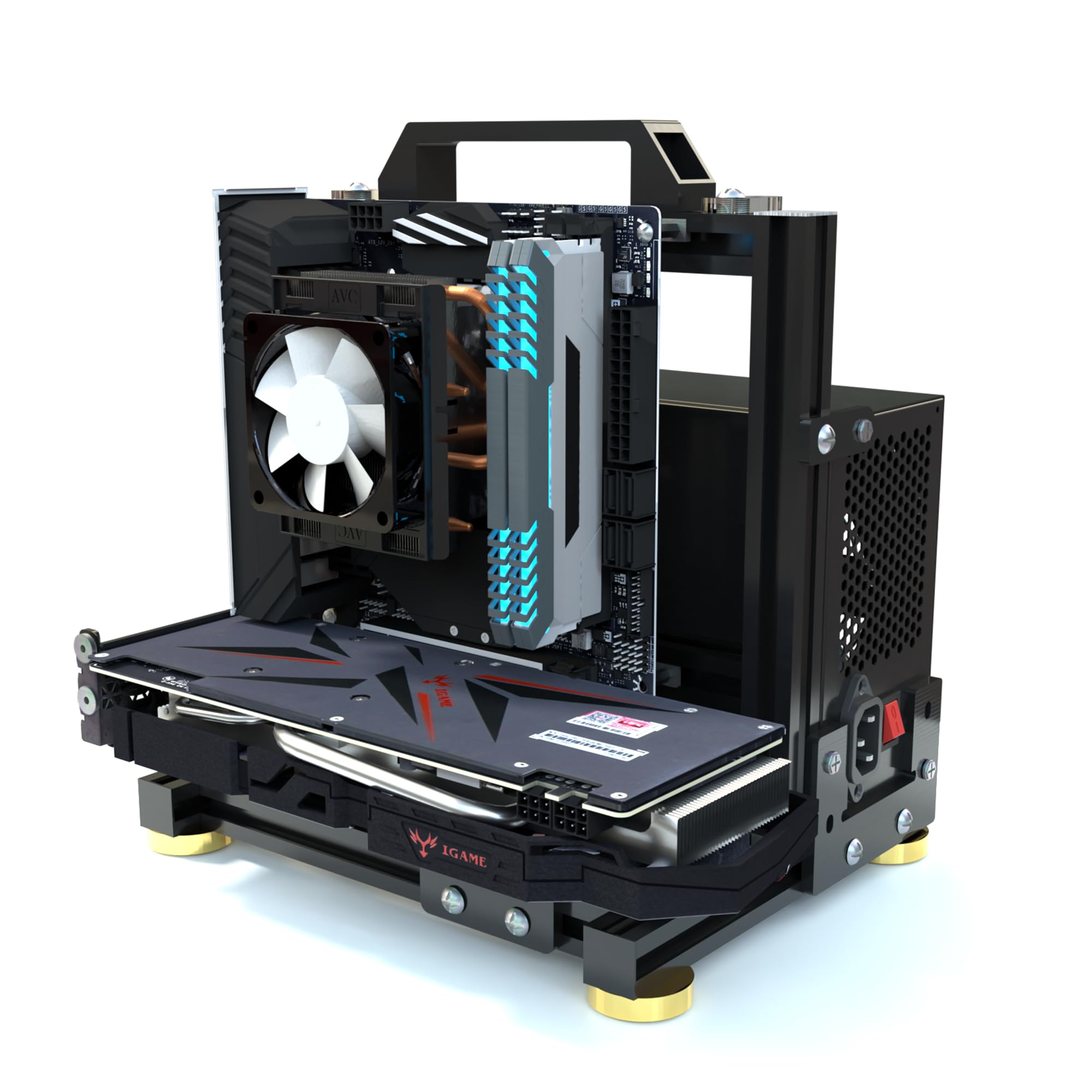
Best Overall

JOYJOM Open Air PC Case
Key details
- Drive Mounts
- 1 HDD, 1 SSD
- Power Supply
- Standard ATX, 150 x 86 x 140-250mm
- Assembled Size
- 440 x 265 x 128mm
- Motherboard Support
- ATX, Micro ATX, Mini ITX up to 305 x 245mm
Three of the frames here cost about the same, and the JOYJOM is the one that goes together without a fight. The motherboard standoffs land where an ATX board expects them, the hardware bag covers the board, the power supply, and a drive, and the holes are drilled cleanly enough that you are not chasing a screw sideways through paint. At this end of the market that is the whole recommendation, because a cheap frame that makes you fight it is not a bargain.
The rest of the spec sheet holds up. The 0.8mm SPCC frame weighs 1.15 kg, so a half-built rig moves from workbench to desk in one hand, and there is no length or width limit on the graphics card, which is the reason to buy an open frame in the first place. It assembles to 440 x 265 x 128mm, about 17 inches wide, and grows to 160mm tall once an ATX power supply hangs underneath. ATX, microATX, and ITX boards up to 305 x 245mm fit, and a full 305mm board sits inside the frame rather than overhanging an edge, which we appreciate more than any marketing line about airflow.
What it will not do is grow with you. There is one 3.5-inch position and one SSD, so a two-drive media box or a mirrored pair is out, and 305 x 245mm is the ceiling for boards. If either of those is the plan, the Yeiwenl rack takes 330 x 330mm boards and six drives, and the ALAMENGDA adds a second 3.5-inch bay for similar money. Nothing about the JOYJOM asks for a second look once it is assembled, which is the highest compliment a test bench can get.
Pros
- Standoffs and included hardware line up with an ATX board
- Light 1.15 kg steel frame that still feels rigid
- No limit on graphics card length or width
- Fits ATX, microATX, and ITX boards up to 305 x 245mm
Cons
- One 3.5-inch drive and one SSD position only
We recommend the JOYJOM as the default open frame: its standoffs, screws, and steel behave the way a test bench should, and an ATX board plus a long GPU drop straight in.