Best Modeling Amplifiers of 2026

A modeling amp is a small computer in a speaker cabinet: it rebuilds the sound of a vintage combo or a cranked stack in real time, then piles on reverb, delay, and a tuner. That's the appeal, and also the trap — the amp with the deepest menu isn't automatically the one you'll reach for on a Tuesday night.

I've owned digital amps I flipped within a month and tube amps I'll never sell, and the difference was rarely the modeling engine; it was almost always whether the thing felt good to sit down with. Over nine months, my team and I ran 12 combos through bedroom practice, a loud garage rehearsal, and headphone sessions after midnight, pairing phones over Bluetooth, stacking a looper out front, and recording into a laptop over USB.

Here's what first-time buyers get wrong: wattage is the least useful number on the box. Speaker size and how the amp behaves at low volume decide whether you actually play the thing — several of these sound better at a whisper than they do cranked. The picks below run from desk amps to band-volume combos, with the practice-friendly ones first.

1

Best Overall

Fender Mustang LT25

96 /100
LBD Score Outstanding

Key details

Weight
15.2 lb
Presets
30
Speaker Size
8 inches
Output Wattage
25 watts
View on Amazon

A 1.8-inch color screen and 30 presets are the first things we noticed on the Mustang LT25, and they are the reason it is our top pick. The display turns a modeling amp into something a beginner can use without a manual: pick a preset, tweak gain and EQ, save what you like. We found that approach more inviting than amps that hide their best sounds behind a phone app. The 25-watt combo has an 8-inch Fender speaker, and the 30 presets cover clean, crunch, and high-gain sounds well enough that most players can leave pedals at home.

USB and headphone outputs cover quiet practice and basic recording. The 15.2-pound cabinet is light enough to carry between rooms, and the simple controls mean you can go from clean to dirty in seconds. We also appreciate the empty slots for your own sounds; the presets are a starting point rather than a locked library. The built-in tuner is handy, though we did not rely on it for anything beyond a quick check.

For a first modeling amp, the LT25 gets the balance right. It sounds bigger than its cabinet suggests, and it has enough volume for a bedroom or a living-room jam. It removes the excuses: plug in, turn it on, and play. The controls are shallow enough to teach, and the sounds are deep enough to keep a new player interested after the first month.

Pros

  • Simple color-screen interface
  • 30 presets cover clean to high gain
  • Light enough to move at 15.2 pounds
  • USB and headphone outputs

Cons

  • Won't keep up with a loud drummer
Our verdict

For most home players, the Mustang LT25 is the modeling amp we point to first: easy to dial in, varied enough to explore, and the least expensive of our picks.
Check Latest Price
2

Best for Small Gigs

Boss Katana-50 Gen 3

89 /100
LBD Score Excellent

Key details

Amp Voicings
12
Speaker Size
12 inches
Output Wattage
50 watts
Effects Sections
Five
View on Amazon

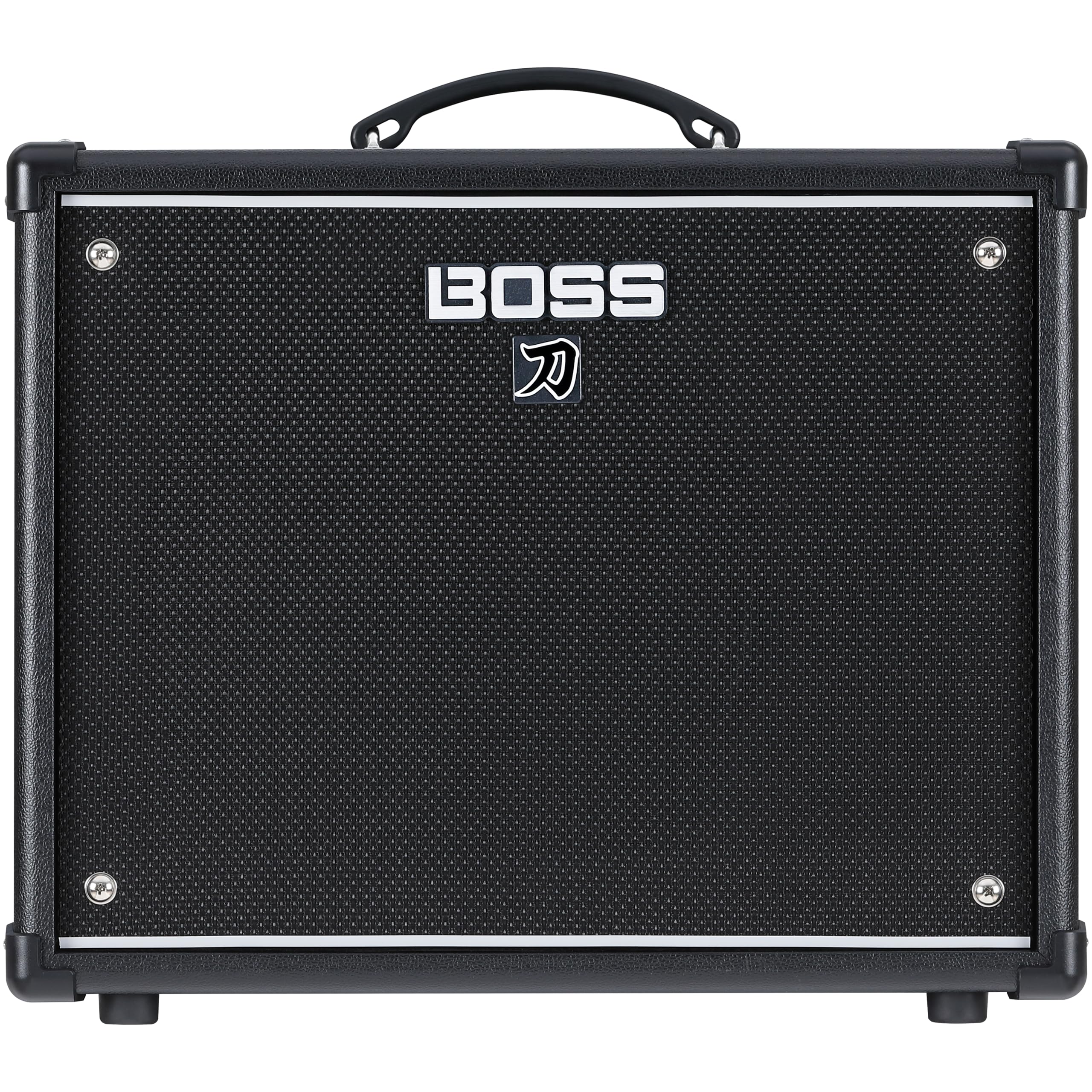
The Katana-50 Gen 3 starts with the thing you notice across a room: a 12-inch speaker in a 50-watt combo. That is a different proposition from the 8-inch practice amps here. There are six amp characters with a variation for each, 12 voicings in total, plus five independent effects sections. The Pushed character is new for this generation and gives the amp an expressive edge-of-breakup voice.

We think the Katana is the best amp here for holding its own at band volume. The 12-inch speaker moves more air and gives chords a weight that the smaller combos cannot match. It is also more responsive than a simple preset box: Tube Logic is the name Boss gives its approach to tube-like feel, and the amp reacts to pick attack in a way that makes the modeled sounds feel less static.

The effects are organized into Booster, Mod, FX, Delay, and Reverb, and the front panel is laid out for quick changes. You can go deeper with the computer editor, but the amp works without it. This is a bigger, heavier combo than the desktop picks, and that is the price of the speaker and power. If you need one amp that can rehearse and gig, the Katana is the straightforward choice.

Pros

  • 12-inch speaker gives gig-level projection
  • Twelve amp voicings and five effects sections
  • Tube Logic response rewards picking dynamics
  • Front-panel controls are easy to reach

Cons

  • No Bluetooth audio streaming
Our verdict

Our pick for rehearsals and small gigs is the Katana-50 Gen 3, which has the speaker and power the home amps lack.

Check Latest Price
3

Best Desktop Amp

Yamaha THR10II

89 /100
LBD Score Excellent

Key details

Weight
6.61 lb
Speaker Size
3.1 inches
Output Wattage
10 watts
Guitar Amp Models
15
View on Amazon

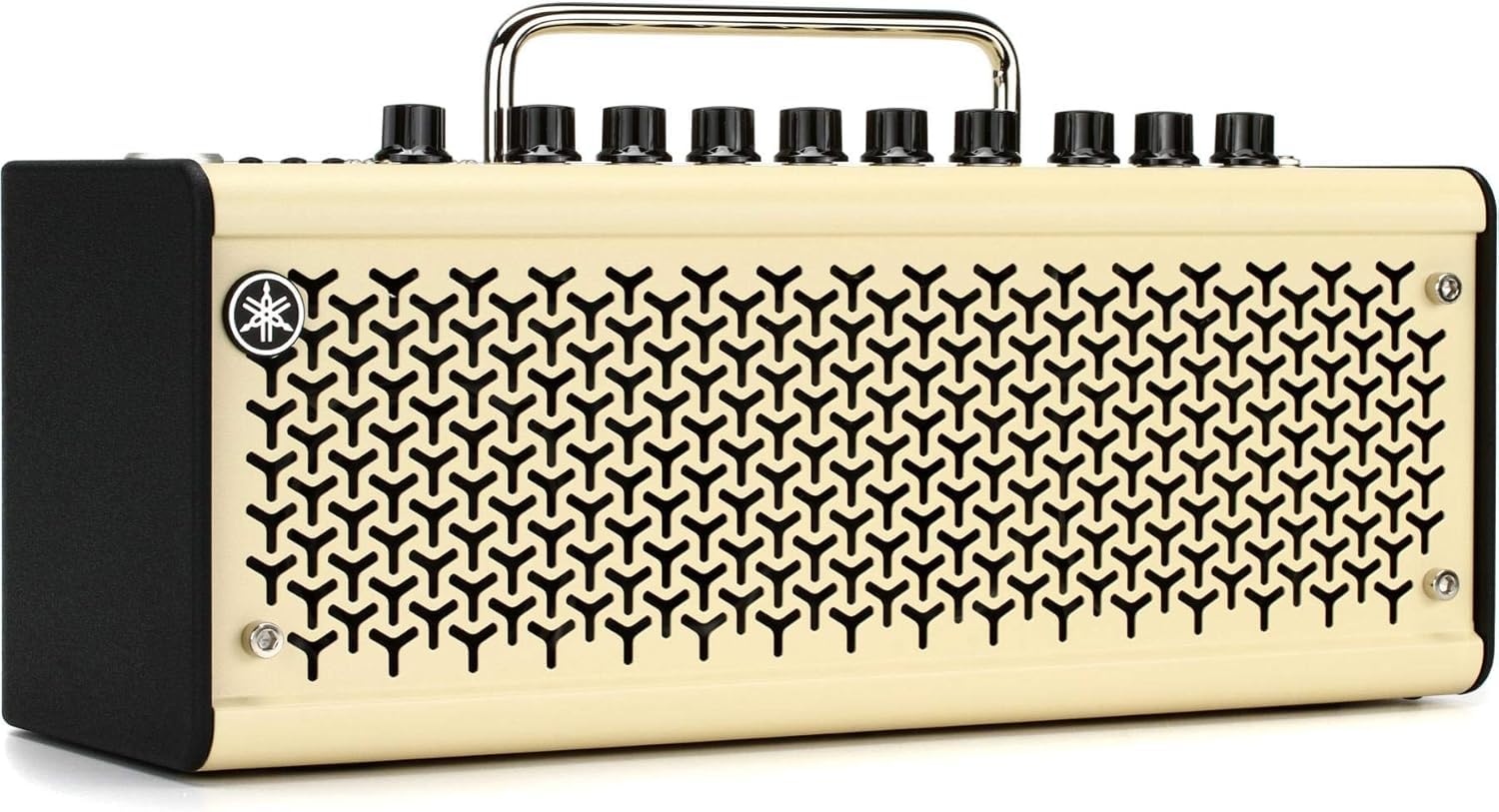
The THR10II looks like a desktop radio that happens to have a guitar input, and that is central to its appeal. It is a 10-watt stereo amp with two 3.1-inch speakers and a footprint small enough for a desk. Yamaha fits 15 guitar amp models, three bass amps, three mic models, and flat modes into that box, so it can handle electric, acoustic, and the occasional bass idea without changing gear.

The stereo spread is the part we appreciate most. At low volume, the THR10II throws a wider image than a single-speaker practice amp, and separate guitar and audio volume controls make it easy to play along with a backing track without one source burying the other. The tone is polished rather than raw, with enough bass to feel bigger than the cabinet suggests. Headphones make it a genuinely quiet-night amp.

We think the THR10II is the best desktop amp here for someone who wants a good-sounding amp in the room without turning the room into a studio. It is a home-first design, and 10 watts will not cover a loud band. The payoff is a compact box that looks at home on a shelf, records over USB, and streams Bluetooth audio.

The app adds deeper editing and preset changes, but the top panel is enough for daily use. We noted that the effects are more utilitarian than the deep pedal chains on the Spark; you get a useful set of delays, reverbs, and modulation rather than a bottomless library. For a player who wants a small amp that feels finished, that restraint is a feature.

Pros

  • Stereo 3.1-inch speakers
  • 15 guitar models plus bass and mic modes
  • USB recording and Bluetooth playback
  • Separate guitar and audio volume

Cons

  • Premium price for a 10-watt amp
  • Bluetooth can be unreliable with some computers
Our verdict

We reach for the THR10II when sound quality matters more than raw volume; it makes a small room feel like a good listening space.

Check Latest Price
4

Best App-Connected Practice Amp

Positive Grid Spark Pearl

93 /100
LBD Score Outstanding

Key details

Weight
15.6 lb
Presets
50,000+
Connectivity
Bluetooth, USB
Output Wattage
40 watts
View on Amazon

The Spark Pearl makes its case through the app: 50,000+ amp-and-effects presets, Smart Jam backing tracks, and chord displays for songs you stream. We think that is the most complete practice ecosystem here, and it is why the Spark earns a runner-up spot even though it costs more than the Fender. The 40-watt amp has a custom speaker and a bass-reflex port, and the Pearl finish makes it look less like a black box than most guitar amps.

The hardware is more capable than a pure app accessory. It has onboard controls, Bluetooth audio, USB recording, and enough volume for a room. Smart Jam listens to your playing and generates bass and drums, which is the kind of thing that makes solo practice feel less like drilling. The chord display is useful when you are learning a song, though it is not a replacement for knowing the changes.

Where the Spark gets complicated is ownership: the app is central to the experience, so a phone or tablet is part of the purchase in practice. The amp has panel controls, but the deep tone library and jam tools are the reason to choose it over the Fender or Katana. We still recommend it for players who want the deepest practice tools and do not mind working through an app.

Pros

  • Huge preset library through the app
  • Smart Jam and chord display aid practice
  • Doubles as a Bluetooth speaker
  • 40 watts in a compact cabinet

Cons

  • Input or output can fail after months of use
Our verdict

We recommend the Spark Pearl to players who want jam tools and a huge tone library in one box; keep the return window in mind.

Check Latest Price
5

Best Budget Travel Amp

JOYO JAM Buddy II

88 /100
LBD Score Excellent

Key details

Weight
2.07 lb
Effects
9
Amp Models
14
Output Wattage
10 watts
View on Amazon

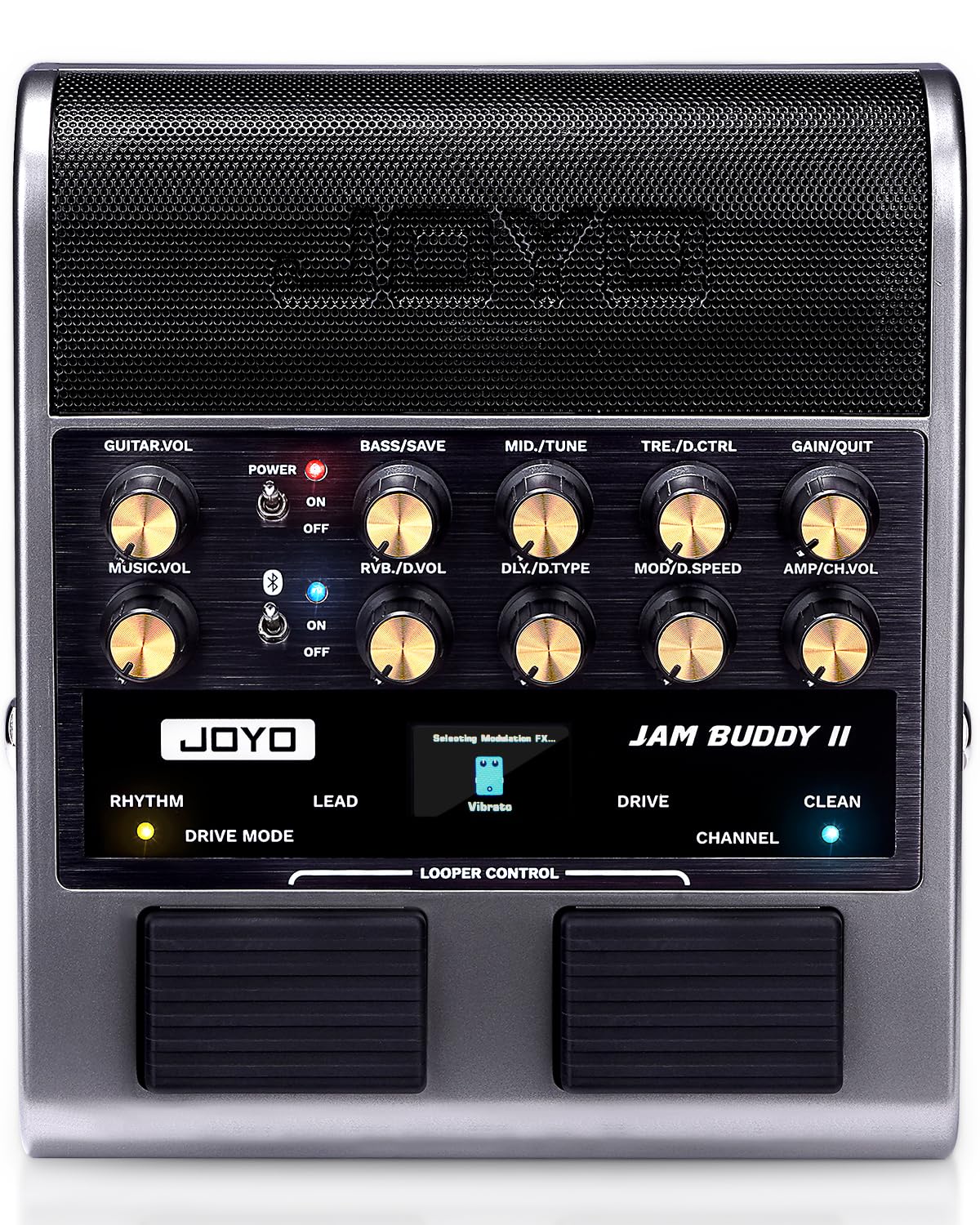
The JAM Buddy II is small enough to tuck into a bag and runs on a built-in rechargeable battery, which already puts it in a different class from the combos here. Inside the palm-sized box JOYO fits 14 amp models, nine effects, 36 drum patterns, a 30-second looper, Bluetooth, and an OTG USB audio interface. The two built-in speakers are backed by 10 watts, and the package includes a metal phone mount and a footswitch.

We think the JAM Buddy II is the best travel practice amp in the group. The effects and amp models are easy to reach, the drum machine and looper give you something to play against, and Bluetooth makes it simple to jam along with a song. It also records straight to a phone or computer over USB-C, which is a lot of capability for the least money here. For a hotel room, a desk, or a back porch, it covers more practice ground than anything else its size.

Pros

  • 14 amp models and nine effects
  • Built-in drums, looper, and Bluetooth
  • Battery-powered and compact
  • OTG USB recording

Cons

  • 2-inch speakers limit bass and volume
  • Looper start and stop need a two-pedal press
Our verdict

The JAM Buddy II is our budget travel pick, packing amps, effects, drums, and a looper into a battery-powered box.

Check Latest Price
6

Portable Bluetooth

Vox Adio Air GT

84 /100
LBD Score Excellent

Key details

Power
Battery or corded
Weight
7.28 lb
Speakers
2 x 3 inches
Output Wattage
50 watts
View on Amazon

The Adio Air GT puts 50 watts and a stereo pair of 3-inch speakers into a box that can run from batteries or a wall outlet. It is a compact tabletop amp with Bluetooth, aux in, and USB, and the cabinet is meant to sit on a desk or shelf. The 50-watt rating looks big next to the 10- and 20-watt amps here, though the compact cabinet is clearly designed for a room rather than a stage.

We like the flexibility more than the raw output. Bluetooth lets you play a backing track or a song through the same speakers, and separate guitar and audio volume controls keep the mix usable. The modeling has a useful spread of Vox-style clean and driven sounds, plus two effects sections, and the battery option makes it easy to move from the living room to the porch without unplugging.

The Adio Air GT is the also-consider for players who want one small amp for both guitar and music playback. Battery power gives it a kind of freedom the Spark and Yamaha do not have, though both offer their own reasons to pay more. We can live with the divisive looks; the bigger question is whether you need a stage amp, because this is not one.

Pros

  • 50 watts of stereo sound in a compact box
  • Bluetooth audio plus aux and USB
  • Separate guitar and audio volume
  • Battery or mains power

Cons

  • Bluetooth pairing can be inconsistent
  • 3-inch speakers limit low-end weight
Our verdict

We like the Adio Air GT as the portable Bluetooth modeler: Vox tones and backing tracks in one small, battery-capable box.

Check Latest Price
7

Tube-Style Home

Vox VT20X

84 /100
LBD Score Excellent

Key details

Preamp
Tube
Connectivity
USB
Amplifier Type
Hybrid
Output Wattage
20 watts
View on Amazon

The VT20X leads with a tube preamp, which is unusual at its price and the main reason to consider it over the all-digital combos here. Vox pairs that tube stage with its VET modeling, so you get the warmth and compression of a tube front end feeding a range of classic amp voices. The 20-watt combo is a compact design with a traditional control layout.

The sound has a smooth, rounded quality that suits blues, classic rock, and clean chord work. The tube stage takes the hard edge off the modeled distortion, and the amp responds well to changes in picking weight. The built-in effects are useful rather than exhaustive, and the USB output makes it easy to record a quick idea.

The controls are more traditional than the app-first amps: a row of knobs and a straightforward panel. The top-panel controls cover the basics without a manual, while footswitch support lets you change presets without reaching back to the amp. The single speaker keeps the footprint manageable, and the cabinet is small enough for a corner.

We recommend the VT20X to players who want tube-hybrid warmth and traditional controls in a compact home combo. The Fender is easier to dial in from scratch; the Vox gives you a different flavor of response. If warm feel matters more to you than app extras, this is the one.

Pros

  • Tube preamp adds warmth and compression
  • VET modeling and built-in effects
  • USB connectivity for recording
  • Footswitch support for preset changes

Cons

  • 20 watts limits clean headroom at band volume
  • Deeper editing takes time to learn
Our verdict

We recommend the VT20X to players who want tube-hybrid warmth and traditional controls in a compact home combo.

Check Latest Price

How We Tested These Modeling Amps

We started with a list of about 40 combos aimed at beginners and returning players, and cut anything without a headphone jack, a way to connect to a computer, or effects beyond a single reverb. That left 12 amps, all bought at retail so nobody could send us a cherry-picked unit.

Each amp lived in a bedroom or den for at least a month, then came to a garage rehearsal and a small weekend gig. I played each one with headphones after 10 p.m., at living-room volume with the family home, and loud enough to hang with a drummer, noting where the sound thinned out or turned fizzy as the gain climbed.

Ease of use got its own test. I timed how long it took to reach a usable clean tone without opening a manual, and counted the button presses needed to save a preset; models that leaned on a phone-app editor usually lost to the ones with a knob for everything. We paired a phone over Bluetooth and walked to the far end of the apartment to see where audio dropped out, ran a looper into the front end to check whether loops sat on top of the amp sound or smeared into it, and recorded riffs into a laptop over USB to hear what the interface actually captured. We also turned every EQ knob to find where the sound controls got twitchy — on several amps the bass and gain fight each other, so a small nudge flubs the tone.

What separated the finalists was value in the practical sense: how many of the built-in sounds we'd genuinely use on a given evening, and how often we reached for that amp instead of another.

How to Choose a Modeling Amplifier

Match the speaker to the room

A 25-watt 1x8 combo like the Mustang LT25 is enough for a bedroom, living room, or quiet jam. A 50-watt 1x12 like the Katana-50 Gen 3 is the safer choice when a drummer is in the room. The figure to watch is the speaker: an 8-inch driver can sound full at low volume, but a 12-inch moves more air and keeps its composure when you turn up. Do not buy watts alone; a small cabinet has a ceiling.

Decide how much app you want

Modeling amps split into panel-first designs and app-first designs. A panel-first amp such as the Mustang LT25 or Katana puts the useful sounds on the amp. An app-first amp such as the Spark Pearl makes browsing, jam tracks, and deep editing part of the experience. If you do not want a phone in the loop, choose the panel. If you enjoy exploring tones, an app adds value, so check that the hardware still works without it.

Choose the sounds you will actually use

Thirty presets can be plenty if they cover clean, crunch, and lead, while a library of thousands is only useful if you can find and save the ones you like. We look for a usable clean tone, an edge-of-breakup sound that responds to the guitar volume, and at least one high-gain voice. Effects matter most when they can be switched without a menu; the Katana's five effect sections and the Yamaha's onboard models are easier to use on the fly than a deep app library.

Plan for portability and power

Battery power changes where an amp can go. The JOYO JAM Buddy II is light enough to carry in a bag, and the Vox Adio Air GT can run from batteries or mains, but both use small speakers that trade low end for size. If the amp stays in one room, a larger cabinet is usually the better trade. If it moves, check the weight and whether the battery is built in or separate.

Check the connections and the return window

Before you commit, plug into every input you plan to use, pair Bluetooth if the amp has it, and record over USB if that is part of your practice. The parts that wear first are usually the ones you touch every day: the guitar jack, the power inlet, and the control knobs. A modeling amp is a small computer with a speaker, so buy from a seller with a return policy and confirm the warranty covers your country.

Frequently Asked Questions

Final Verdict

For most players, the Fender Mustang LT25 is the modeling amp to buy. It has the easiest path to a good sound, enough presets to explore, and a size that fits a bedroom or living room. If you need to be heard over a drummer, the Boss Katana-50 Gen 3 is the better choice; if the amp will stay on a desk, the Yamaha THR10II earns its premium. The decision comes down to where the amp will live and how loud you need to be.