Best Mobile Hotspots of 2026

The worst part of working from a rental with bad Wi-Fi isn't the slow page loads — it's the moment your video call freezes and you start apologizing to the person on the other end. A mobile hotspot solves that: a pocket-sized device that broadcasts its own LTE or 5G signal to your laptop, tablet, and whatever else needs internet. The catch is that these gadgets are only as good as the network behind them and the data plan baked into them, so a cheap one with a stingy plan can strand you just as thoroughly as having no hotspot at all.

I've watched a data top-up evaporate in a single morning of meetings, and one long drive through the mountains taught me that a strong-signal claim means nothing without a fallback carrier. For the past seven months, my team and I have lived with 12 hotspots — some with data built in and no SIM required, some tied to one carrier, some that hop between networks on their own — using them in hotel rooms, parked cars, coffee shops, and at my own kitchen table the week my home internet died. Ease of use mattered more than raw speed: if a device takes ten minutes and a support call to get online, nobody cares how fast it is.

The other thing first-time buyers underestimate is how fast data disappears — a long video call can eat a gigabyte without you noticing — which makes a clear data dashboard and flexible day passes or pay-as-you-go plans as important as speed. Battery life and a truly pocketable shape round it out, since this thing lives in a jacket pocket and one that quits at hour four is a paperweight. The picks below are the ones that held a connection when it counted and told us honestly what it cost.

1

Best Overall

RoamWiFi R10

88 /100
LBD Score Excellent

Key details

Network
4G LTE, 150 Mbps
Coverage
170+ countries
Included Data
1 GB US/CA/MX, 30 days
Connected Devices
10
View on Amazon

The first time we switched it on, the R10 was already on a network — no SIM tray, no account to create, no code to type into a browser. Its bundled gigabyte of U.S. data is live out of the box, and that single decision is why it holds the top spot: the worst moment to be configuring a hotspot is the one where you have just landed and need a map.

Coverage carries the rest of the argument. The R10 is sold for 170-plus countries, with data bought through the app as you need it rather than tied to a contract, so the same device works on your next trip without a new SIM. Ten devices can share the connection, which covers a family's phones plus a laptop.

The radio is 4G LTE with a listed 150 Mbps ceiling, the lowest here alongside the BNBDE. Maps, email, messaging, video calls and an evening stream all sit comfortably inside that; uploading photo sets or working in a browser all day is where the GlocalMe's 5G begins to justify itself.

Two things are worth knowing before you order. The included gigabyte is a taster — roughly an hour or two of video and it is gone — so treat data as part of the cost rather than an afterthought. And at just under 10 ounces and about five inches square, it slides into a jacket pocket rather than disappearing into jeans.

Pros

  • Works out of the box with data loaded
  • 170+ countries without changing SIMs
  • Ten devices on one connection
  • Flat body, USB-C charging, no contract

Cons

  • 4G tops out at a listed 150 Mbps
  • Bundled 1 GB is quickly spent
Our verdict

The one we hand to most people: the data is already loaded when it arrives, it covers 170-plus countries, and there's no contract to sign.
Check Latest Price
2

Best for Speed

GlocalMe Numen Air 5G

83 /100
LBD Score Excellent

Key details

Display
2.4-inch touchscreen
Network
5G, up to 2.5 Gbps
Coverage
200+ countries
Connected Devices
16
View on Amazon

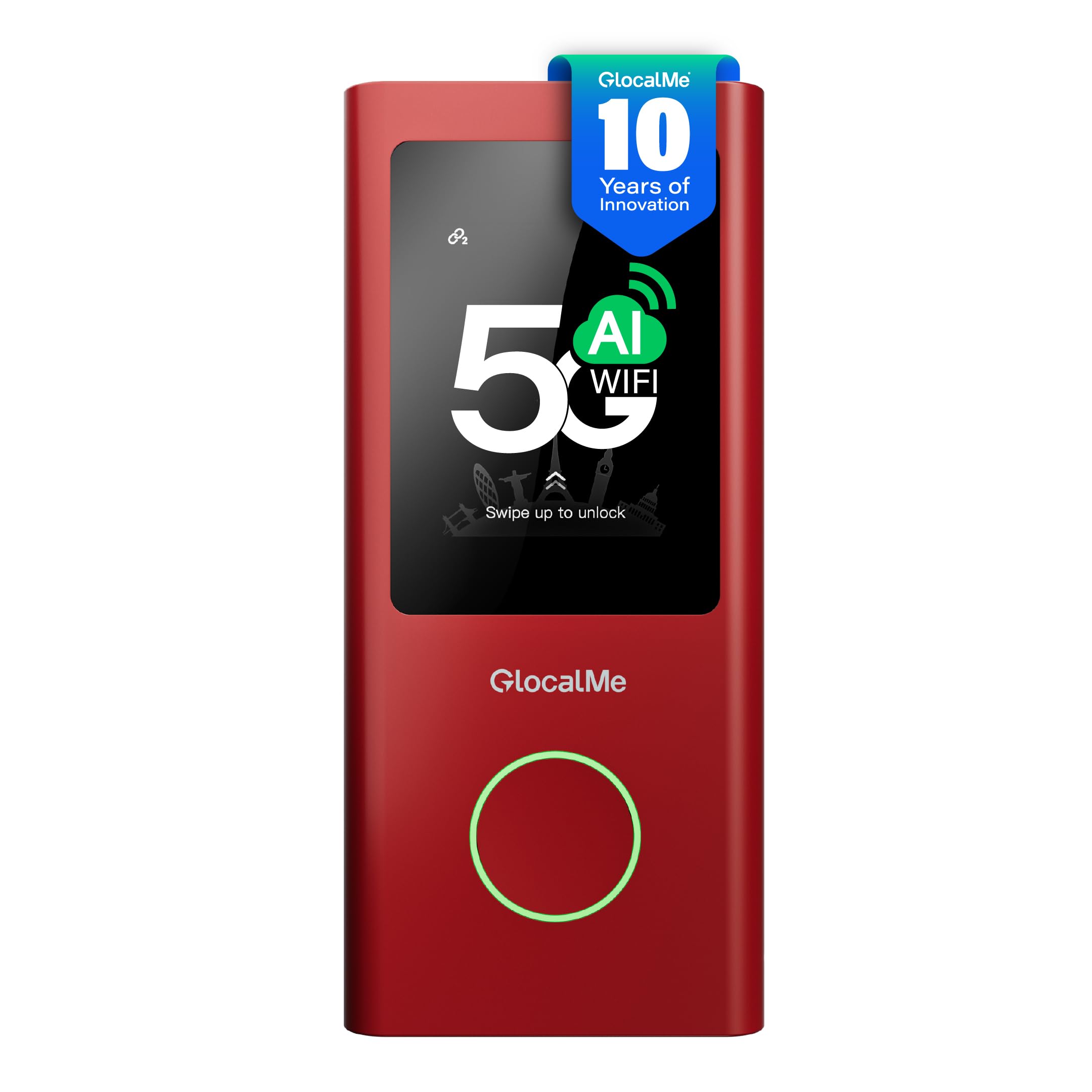
This is the most expensive hotspot here, and the data behind it is priced to match, which is exactly why it is not our default. It is the one to look at when the connection has to carry work: a 5G radio rated up to 2.5 Gbps, coverage in 200-plus countries with 5G in more than 90 of them, and CloudSIM handling the carrier choice so you never open a SIM tray.

Speed is the whole reason to buy it, and it is why we choose it over the 4G picks for anyone uploading, taking video calls, or tethering a laptop for a full day. Sixteen devices can share the connection, enough for a family or a small work group. The 2.4-inch touchscreen mattered more than we expected: it shows signal strength, data used and connected devices at a glance, so you can tell whether the hotspot or the local tower is the problem without unlocking a phone.

CloudSIM is what makes border-hopping painless, and there is a physical SIM slot if you prefer to run a local card. That second path takes more steps — bring-your-own-SIM setup is the fiddliest part of the device — but it is there for anyone who already owns a prepaid card.

Cost is what holds it back. Plans are less flexible than the pay-as-you-go menus on the SIMO and RoamWiFi, and North American data is the expensive part, so a week of maps and messages means paying for speed you never use. Where 5G is in range and you need the bandwidth, nothing else in this group comes close.

Pros

  • 5G radio rated to 2.5 Gbps
  • Touchscreen shows live data use
  • 16 devices across 200+ countries
  • CloudSIM switches carriers automatically

Cons

  • Plans cost more and flex less
  • Top speed needs 5G in range
Our verdict

We buy this one for speed: real 5G, 16 devices and a touchscreen that shows what's happening — if you work from the road, it earns the premium.

Check Latest Price
3

Best Bundled Data

SIMO Solis Hero

82 /100
LBD Score Excellent

Key details

Battery
5,250 mAh power bank
Network
4G LTE
Coverage
140+ countries
Included Data
1 GB monthly + 30 GB global
View on Amazon

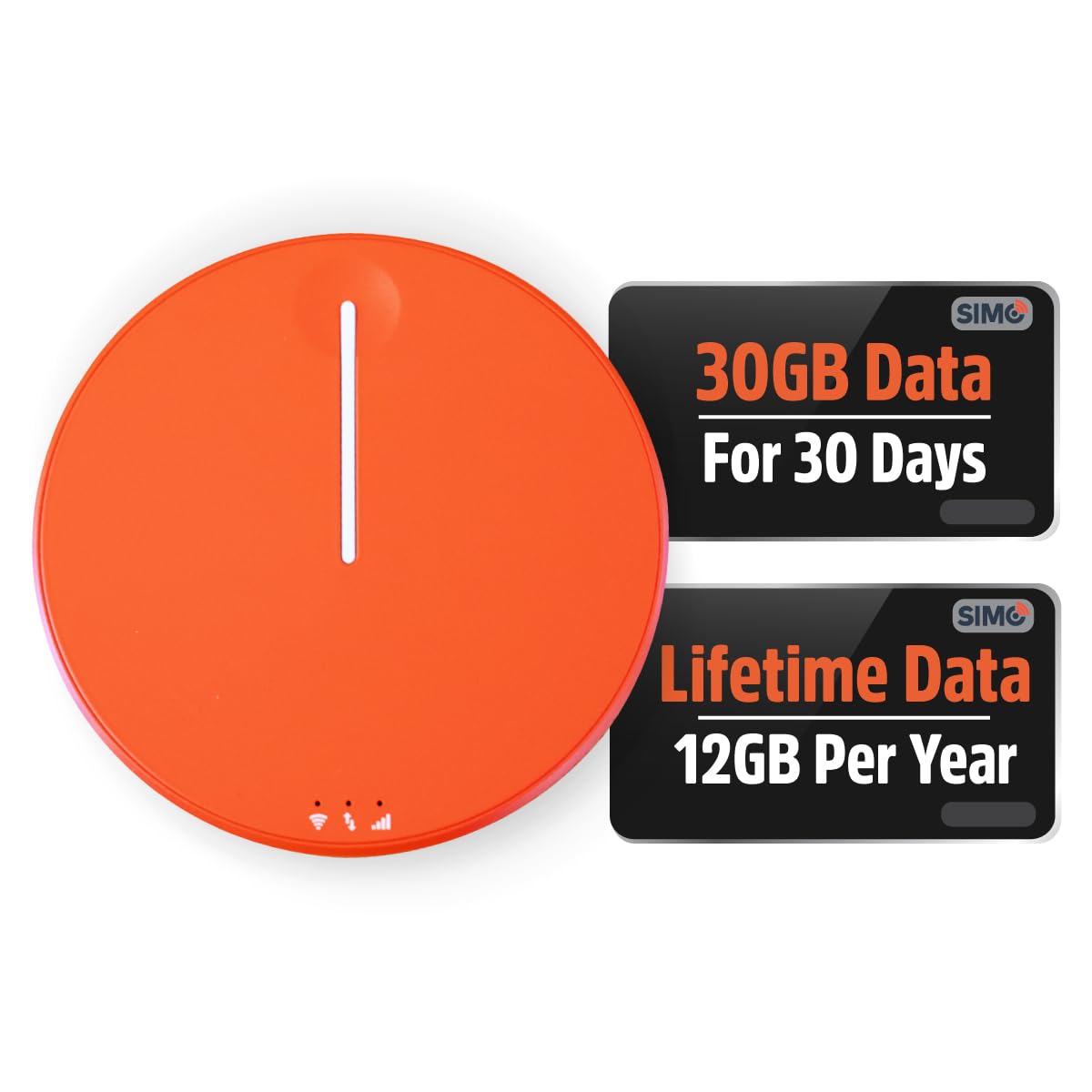
SIMO built a power bank and put a hotspot inside it. The 5,250 mAh cell is the largest battery in this group by a clear margin, and it charges a phone as readily as it runs a network — the sort of thing that sounds like a bonus until you are on a long travel day with a dead phone and one outlet.

The data is what actually sells it. Every month the device comes with a gigabyte at no extra charge, and the box includes a one-time 30 GB global pack usable across 140-plus countries. SignalScan picks the strongest carrier in range across 300-plus networks, so you land, switch on, and the device does the negotiating.

For a long trip abroad, this is the one we reach for. The RoamWiFi is simpler and cheaper to own, but its bundled data is a U.S. starter pack and international top-ups are a separate purchase; the Hero arrives with 30 GB already attached and a monthly allowance that keeps a backup line alive for messages and maps. Ten devices connect at once, and the app sells day passes through monthly plans.

Consistency is the catch. Speeds vary with whichever carrier wins the scan, a connection can need a restart in weak coverage, and heavy use burns through data faster than the monthly gigabyte covers. The radio is also 4G, a step behind the GlocalMe — this is a coverage-and-convenience pick, not a speed one.

Pros

  • 1 GB free monthly plus a 30 GB global pack
  • 140+ countries with automatic switching
  • 5,250 mAh battery charges a phone
  • Ten devices on one connection

Cons

  • 4G only, with no 5G tier
  • Speed depends on the carrier it selects
Our verdict

Our pick for a long trip abroad: a monthly gigabyte, 30 GB of global data in the box, and a battery that charges your phone as well as the hotspot.

Check Latest Price
4

Best Budget

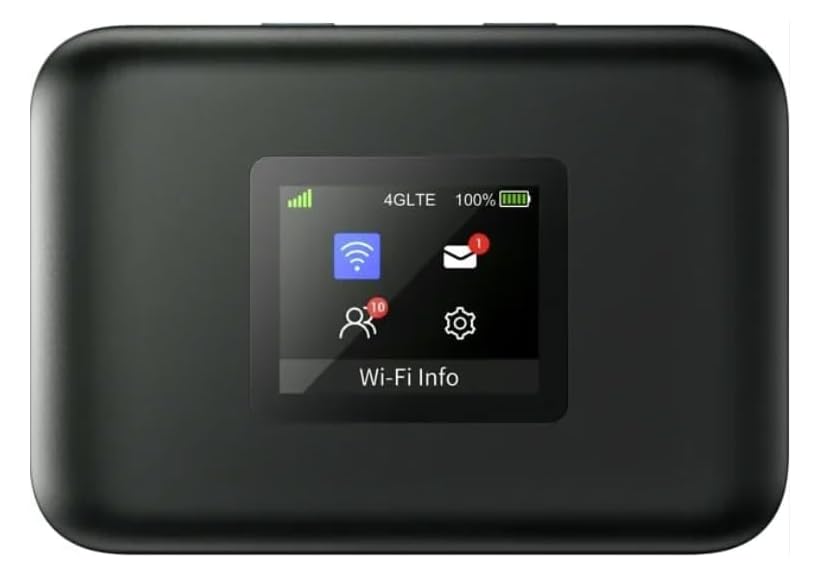
AT&T Turbo Hotspot 3

76 /100
LBD Score Very Good

Key details

Wi-Fi
Dual-band
Battery
3,000 mAh, 15+ hours
Display
1.77-inch color LCD
Connected Devices
16
View on Amazon

A 1.77-inch color screen, a power button, and a browser page for settings: that is the entire interface, and it tells you what kind of device this is. Nothing here is trying to be an app ecosystem or a travel companion. It is a hotspot, it costs less than anything else in this group, and the money went into the battery rather than the software.

That battery is rated past 15 hours on a 3,000 mAh cell — the longest stated runtime here by a wide margin, and enough to leave the thing in a bag for a week between charges and still have it wake up. Sixteen devices connect over dual-band Wi-Fi, and the web manager is enough to rename the network and set a password from a laptop.

The constraint is data. This is an AT&T prepaid hotspot, so service comes from AT&T and you arrange a plan separately — check that the network reaches the places you actually use before you buy, because a cheap device on a carrier that stops at the county line is money wasted. It is built around domestic prepaid data rather than international roaming, so it is not the one for a trip abroad.

Where it earns its place is the second-line job: a hotspot that lives in a glovebox or a laptop bag, costs little to own, and runs long enough that you are never nursing it. For one device that goes everywhere, the no-SIM options cover more ground; for a dependable spare on a network you already know, this is the one we pick.

Pros

  • 15+ hours of stated battery life
  • 16 devices on dual-band Wi-Fi
  • Lowest up-front cost here
  • Simple screen and web settings

Cons

  • Data service comes from AT&T prepaid
Our verdict

For a cheap second line, this is the one: lowest up-front cost here, longest stated battery life, and AT&T prepaid data behind it.

Check Latest Price
5

Vehicle Installs

BNBDE TD20

76 /100
LBD Score Very Good

Key details

Power
5V, no battery
Coverage
150+ countries
Included Data
10 GB US
Connected Devices
16
View on Amazon

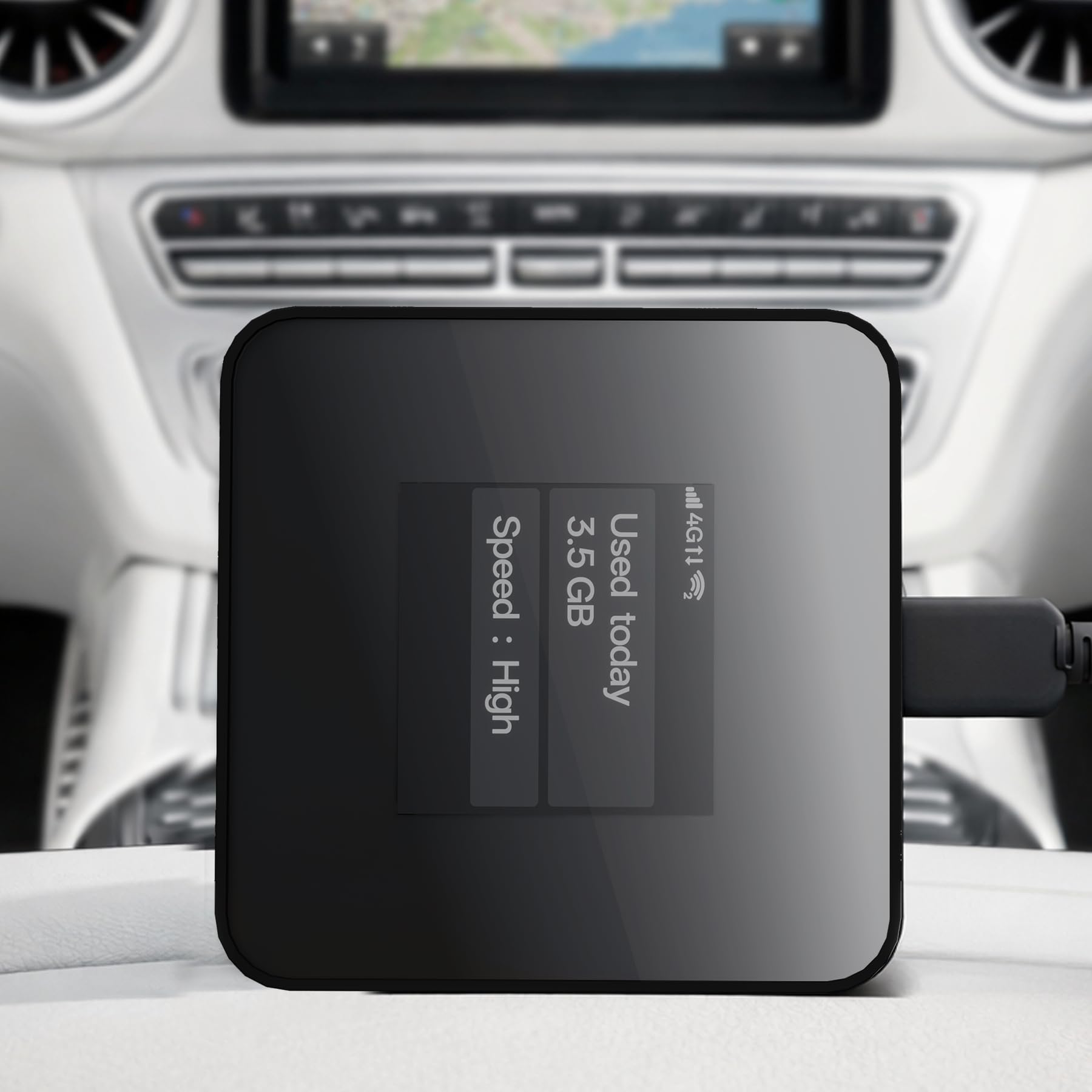
There is no battery in this thing, and that is the design. The TD20 runs on 5 volts from a car outlet or a USB adapter, so it can live wired into a center console for months without a lithium cell cooking in a hot cabin. For a work van, a delivery car, or a family vehicle that needs a connection for back-seat tablets, that beats dropping a pocket hotspot into the glovebox.

Size is what convinced us it belongs in a car: about 2.4 inches square and half an inch thick, it disappears into a console or tucks behind a trim panel, and Wi-Fi 6 with 16-device support means every screen in the vehicle can share it. Coverage is quoted for 150-plus countries through a virtual SIM that selects a local network on its own, and a 10 GB U.S. data pack is included, with pay-as-you-go options running from a few days to a year.

What you give up is the thing most hotspots exist for. Unplug it and it stops, so it is not the device you take on a hike or to a café. The modem is 4G Cat4, the most modest radio in this group — fine for maps, browsing, streaming and back-seat video, not for uploading a day's shoot. Treat it as vehicle equipment: wire it into the car it lives in, and keep a battery-powered unit for everything else.

Pros

  • No battery to overheat in a parked car
  • Small enough to hide in a console
  • 16 devices over Wi-Fi 6
  • 10 GB U.S. data included

Cons

  • Only works while plugged into power
  • 4G Cat4 is the slowest radio here
Our verdict

We recommend it for one job only: a hotspot that lives in a vehicle, where a battery-free design and 10 GB of U.S. data beat a pocket device.

Check Latest Price

How We Tested Mobile Hotspots

We started by gathering every hotspot we could find from both carriers and independent brands — roughly 40 models — then cut the list by checking which ones actually publish their coverage, plan pricing, and device limits, and which ones only advertise them. That left 12 units, which we tested over seven months.

Every device got the same first trial: I opened the box, handed it to someone who had never used it, and timed how long it took to get a laptop online with no instructions allowed. Then I weighed each one and carried it in a jacket pocket and a tote bag for a week to see whether it was genuinely pocketable or just small on paper.

Speed and connectivity we checked in three fixed spots — a living room, a parked car in a busy shopping center, and a coffee shop at lunch — running the same speed test morning and evening, and keeping a log of every dropout, including whether the device reconnected by itself after we drove through a dead zone. We also stacked a video call, a tablet streaming, and phones scrolling at once, adding a few more devices on the roomier models, to see what performance looked like under a full house.

Battery testing was deliberately boring: full charge, video on a loop, stopwatch until it died, then a repeat run with three devices attached. For data, we watched each dashboard through a normal day and noted whether it was clear how much a call or a movie had just cost us, then compared the price of built-in plans against picking up a local SIM on arrival.

How to Choose a Mobile Hotspot

Coverage and carriers come first

If you cross borders, look for a device that switches carriers on its own. The GlocalMe covers 200-plus countries, the RoamWiFi 170-plus, the BNBDE 150-plus and the SIMO 140-plus. Read the destination list rather than the headline number, because a country count says nothing about the one country you are visiting.

If your travel stays domestic, a carrier unit like the AT&T Turbo Hotspot 3 costs less to buy and is simpler to run. Confirm the network reaches the places you go before you commit, since a bargain on a carrier that thins out past the suburbs is no bargain.

Work out what the data will cost you

Bundled allowances are a taster. A gigabyte is roughly an hour or two of video, not a month of browsing, so treat the included data as a starter and price the plan you will actually need. The pay-as-you-go menus on the SIMO and RoamWiFi let you buy a few days at a time; the GlocalMe's plans are broader but cost more per gigabyte, especially in North America.

Estimate one day of your own use before you choose: maps, messages and email are light, while video calls, cloud uploads and streaming are not. Multiply that by the length of the trip and compare it with the plan tiers on offer.

Battery, or a cable

Runtime separates these devices more than speed does. The AT&T is rated past 15 hours, the SIMO's 5,250 mAh cell doubles as a phone charger, and the BNBDE has no battery at all, running only from vehicle power. Buy for where the device will live rather than for a spec sheet.

Anything that travels needs to work while charging, so check that it runs from a USB-C adapter rather than only from its own cell. A battery-free unit that never leaves the car is the safer installation there; a pocket hotspot with a big battery is the one that saves a travel day.

How many devices, and how fast

Ten devices covers a family; 16 covers a small group or a car full of screens. Speed figures are ceilings rather than promises: the BNBDE's 4G Cat4 modem and the RoamWiFi's listed 150 Mbps handle browsing, maps and video calls comfortably, and what you get on the day depends on the tower you are on.

Paying for 5G only makes sense if you upload large files, tether a laptop for real work, or stream in high definition. For a week of messages and navigation, a 4G device at half the price leaves money for data.

The screen matters when something breaks

A display you can read at a glance earns its keep the moment a connection misbehaves. The GlocalMe's 2.4-inch touchscreen shows signal, data used and connected devices without a phone, and the AT&T's smaller LCD covers the basics. Everything else runs through an app or a browser page.

The no-SIM devices are the quickest to get working out of the box, largely because there is no card to seat and no carrier settings to enter.

Frequently Asked Questions

Final Verdict

There is no single hotspot that suits everyone, but the RoamWiFi R10 is the one we buy first. It sits in the middle on price, works in more than 170 countries, and arrives with data already loaded, so the first day of a trip is not spent troubleshooting.

Spend more on the GlocalMe Numen Air if 5G speed carries your work. Spend less on the AT&T Turbo Hotspot 3 if you stay domestic and want the longest runtime. And if the hotspot is going to live in a vehicle, take the battery-free BNBDE TD20 instead of any of them.