Best Chess Computers of 2026

I spent one winter evening playing chess against a phone propped on a coffee mug before realizing I hadn't looked at a board in an hour. That's usually the moment people start shopping for a chess computer: they want pieces under their fingers and a board that answers back. The snag is that a machine too gentle bores you and one too strong dismantles you, and either way it ends up in a drawer.

We've spent the past eight months playing on 10 of them, from wooden boards that recognize every piece you set down to folding magnetic sets that live in a backpack. What separates a keeper from a closet ornament is rarely the rating on the box. It's whether the difficulty scales, whether the move lights point where you expect, and what happens when the Wi-Fi drops.

New buyers also underestimate how a board senses moves: piece recognition knows exactly what's on which square, while pressure-sensitive squares just register a touch. That difference shapes how the game feels.

1

Best Overall

DGT Centaur

86 /100
LBD Score Excellent

Key details

Power
Rechargeable battery
Board Size
17.5 x 15.8 in (444.5 x 400.5mm)
Move Indicators
LEDs lit in the board squares
Playing Strength
Adjusts to your level
View on Amazon

The Centaur is a chess computer in the old sense, and that is the appeal. There's no app to pair, no account to create, no Wi-Fi to fight with: you switch it on, set up the weighted pieces, and the board's own engine answers. It adjusts to your level as you play, and the move it expects lights up inside the square itself rather than on a display off to the side.

Of the standalone boards here, this is the one we keep coming back to. The adaptation is the reason. Rather than stepping between fixed settings, it settles into a game that meets you where you are, and the result feels like a person across the table. The board is 17.5 by 15.8 inches with 1.9-inch squares and a 3 3/8-inch king, so it's a proper set rather than a toy, and the rechargeable battery means it moves from desk to kitchen table without a cable.

What it won't do is go online. There's no Chess.com, no post-game analysis in an app, no way to send a game to a coach, so the Centaur is a closed loop between you and its engine. At the top of the price range here, that's a real trade rather than a rounding error, and the ChessGenius Pro does the standalone job in a smaller package for less.

Where it pulls ahead is the feel of the thing. The e-paper display is minimal and quiet, the pieces are regulation Staunton plastic with spares included, and nothing about the setup asks for your attention once the game starts. The ChessGenius Pro gets close for a good deal less money; the Centaur is the one that feels finished.

Pros

  • Adapts to your level with no settings to fiddle
  • Lit squares show the move on the board itself
  • Full-size weighted pieces and 1.9-inch squares
  • Rechargeable battery, no cable at the table

Cons

  • Board lights can stop working after a year
  • Pieces slide if the board gets bumped
Our verdict

We think the Centaur is the board to buy if you want a strong opponent on the table and no screen in the room, and beginners and club players can share it.
Check Latest Price
2

Best for Guided Coaching

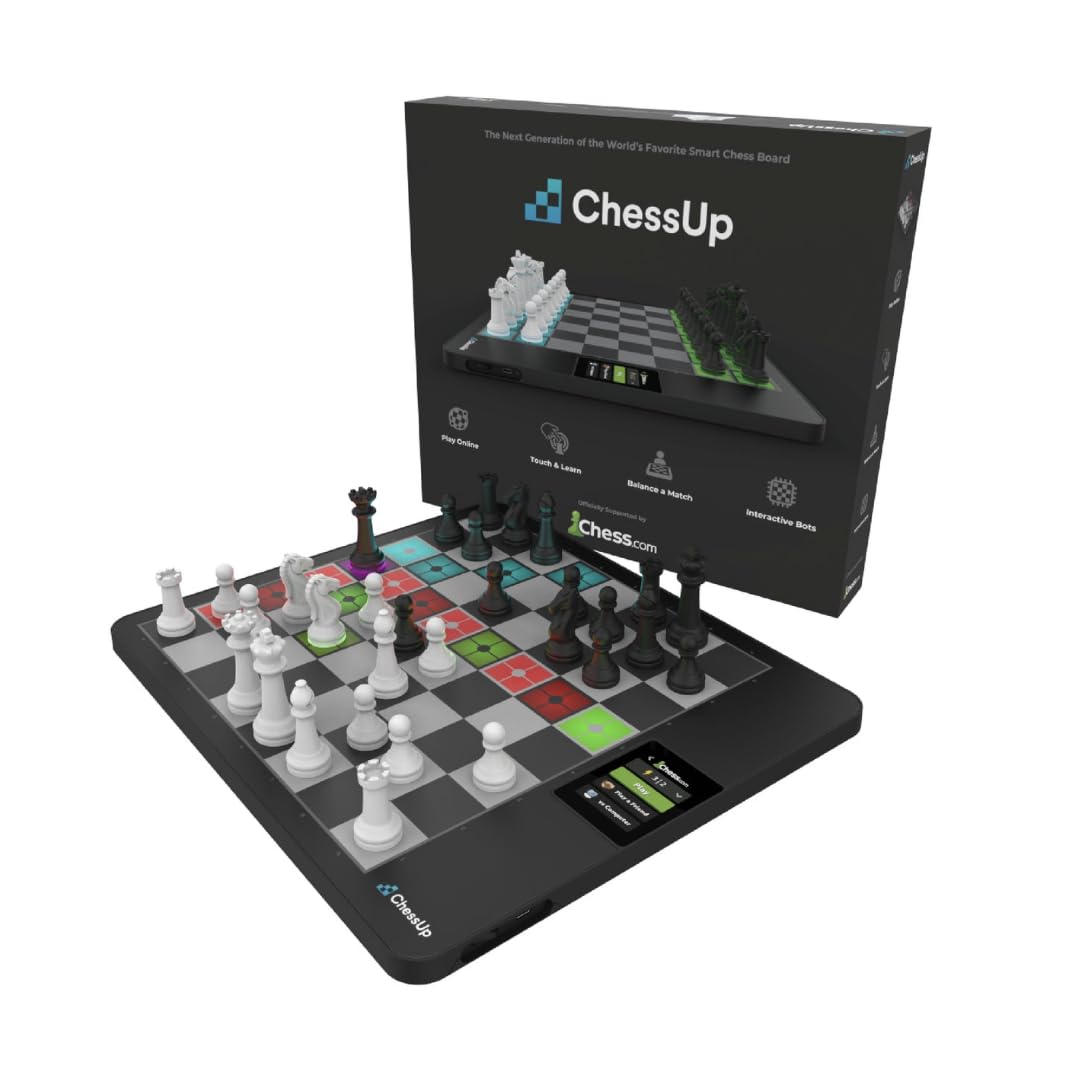
ChessUp 2

86 /100
LBD Score Excellent

Key details

Board Size
15.5 x 13.5 in
Connectivity
Wi-Fi; Chess.com and Lichess
Move Feedback
Light-up TouchSense squares
Playing Strength
Built-in AI, assistance set per player
View on Amazon

The feature that earns ChessUp 2 its place is easy to miss: the coaching lights are set per player. A parent and a child can play on the same board with hints glowing under the child's pieces and a clean game under the parent's, and as far as we can tell no other board here splits the assistance that way. It changes who can play whom.

The rest of the hardware holds up. Built-in Wi-Fi means ranked games on Chess.com and Lichess run from the board with no phone in the room, and the app is for lessons and review rather than for playing. Touch-sense pieces register on light-up squares, and the 15.5 by 13.5-inch board is big enough for two adults to sit at comfortably.

The caveat is price. This is the second most expensive board here, and what you're paying for is the coaching and the Wi-Fi. Check the playing surface when it arrives, too: a warp in the board stops pieces reading reliably, and that's worth catching inside the return window.

Pros

  • Per-player coaching lets mixed pairs play together
  • Built-in Wi-Fi, no phone needed to play
  • Light-up squares guide a beginner move by move
  • App adds lessons and post-game review

Cons

  • Pieces feel light for the price
Our verdict

For two people of different strength sharing a board, or a kid learning while a parent plays properly, ChessUp 2 is the one we recommend.

Check Latest Price
3

Best for Club-Level Play

Millennium ChessGenius Pro M815

85 /100
LBD Score Excellent

Key details

Display
Color LCD
Board Size
11.6 x 8.3 in
Playing Strength
2200 ELO, adaptive
Piece Recognition
Automatic
View on Amazon

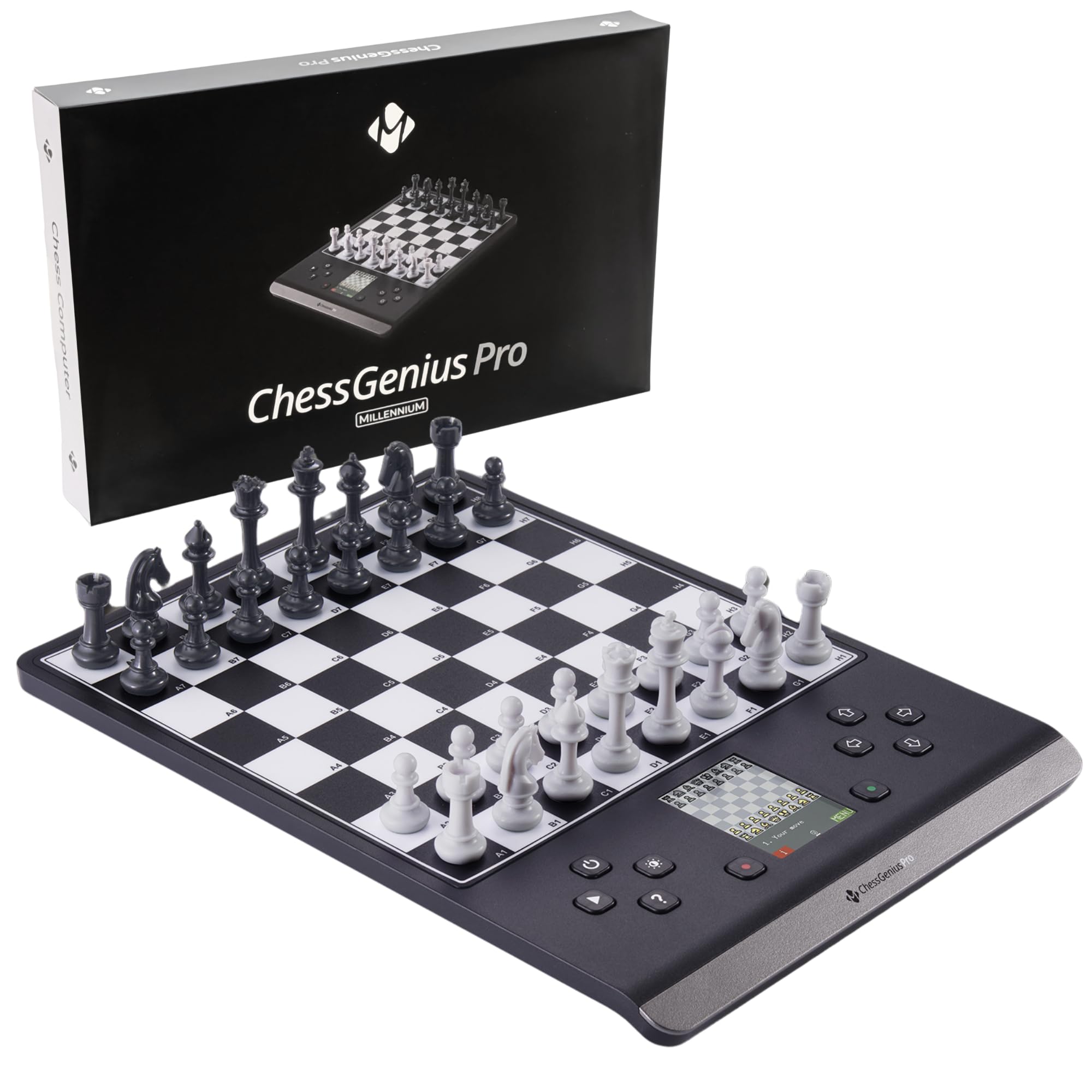
A stated 2200 ELO makes the ChessGenius Pro the strongest board in this group on paper, and it's worth being precise about what that means. It's the maker's figure for the engine, not a measurement of how the games will feel, and the board scales down to a beginner at the other end of the range.

In use, the pieces are recognised automatically, so you move them and the board follows, and the color LCD carries the moves, the coaching and the game data. The built-in trainer gives hints and takebacks and shows why a move works, which is the part that turns a strong opponent into a useful one. It's 11.6 by 8.3 inches with magnetic pieces and a storage bag, so it goes to a club night or a hotel room without much fuss.

Where it sits in this group is between the budget teaching boards and the Centaur: less money than the DGT, more strength on paper, and a screen doing the job the Centaur does with lights. For a player who has outgrown a beginner machine and wants to study away from a computer, that's a sensible place to land. The trade is the shorter track record, since there's far less long-term use to draw on here than with the Centaur, so you're buying on design and stated strength.

Pros

  • 2200 ELO engine that scales down to beginners
  • Color LCD shows moves, hints and game data
  • Automatic piece recognition, no manual entry
  • Magnetic pieces and a bag-sized board

Cons

  • Runs on 4 AA batteries that aren't included
Our verdict

We recommend the ChessGenius Pro to the improving player who wants club-strength resistance and a coach on the screen, with no app in the loop.

Check Latest Price
4

Best for Online Play

Chessnut Air

84 /100
LBD Score Excellent

Key details

Pieces
34 sensor-chip pieces (2 extra queens included)
Board Size
13 x 13 x 0.7 in
King Height
2.7 in
Online Play
Chess.com and Lichess through the app
View on Amazon

The Chessnut Air is a board rather than a computer, and that distinction is the whole purchase. The opponent comes from the app: you pair the board with your phone and play on Chess.com, Lichess or against a bot, while the board's job is turning real pieces into digital moves.

For anyone whose chess already happens online, we think it's the best value in smart boards here. Moving real pieces while the game runs on Chess.com changes how a session feels, because you look at a board instead of a screen. Full piece recognition means no tapping squares or confirming moves, and the board stores up to 20 over-the-board games for export, which quietly makes it useful for face-to-face play too.

The 13-inch board with a 2.7-inch king looks better on a table than the money suggests; the wood-look finish and ivory-toned pieces read as a proper set from across the room. The app does more than drive the board, since it stores and analyzes your games, though it takes a few minutes to learn where everything lives. The settings you want are in there, just not where you expect to find them.

Pros

  • Full piece recognition, no manual move entry
  • Plays Chess.com and Lichess with real pieces
  • Records up to 20 over-the-board games
  • Wood-look board that looks pricier than it is

Cons

  • Tight 13-inch board suits a desk, not a tournament hall
  • Wireless dropouts can interrupt a game
Our verdict

For a player who already lives on Chess.com, we recommend the Chessnut Air: real pieces and a real board, driven by the app you already know.

Check Latest Price
5

Best Budget Smart Board

Vonset P6

82 /100
LBD Score Excellent

Key details

Power
USB-C rechargeable
Levels
18 levels
Puzzles
200
Square Size
1.1 inches (28 x 28mm)
View on Amazon

The P6 is built around teaching and it doesn't hide it. Press the hint button and the board suggests a move; lights show where a piece can go; a voice tells you when a move is a mistake. For a beginner, that turns the first twenty games from a beating into a lesson.

Under the lights it's a 12.6-inch board with 1.1-inch squares, 18 levels, 200 puzzles and three modes, so it keeps working as a two-player set once the lessons are done. The pieces are strongly magnetic and stay put when the board is carried, the 34-piece set includes two extra queens, and it recharges over USB-C instead of eating batteries.

Of the budget-minded boards here, this is the one we point beginners to. The teaching is layered rather than gimmicky, the puzzles are worth working through, and the magnets make it the pick for a house with young players. It's the board we hand over when a child asks to learn.

Pros

  • Hint button and lights teach as you play
  • Magnetic pieces stay put in transit
  • 200 puzzles and three playing modes
  • USB-C rechargeable with batteries included

Cons

  • Tops out at 18 levels
  • 1.1-inch squares are small for adult hands
Our verdict

We recommend the P6 as a first chess computer for a child or a complete beginner: it teaches while you play, and the magnetic pieces survive being carried around.

Check Latest Price
6

Best for Travel

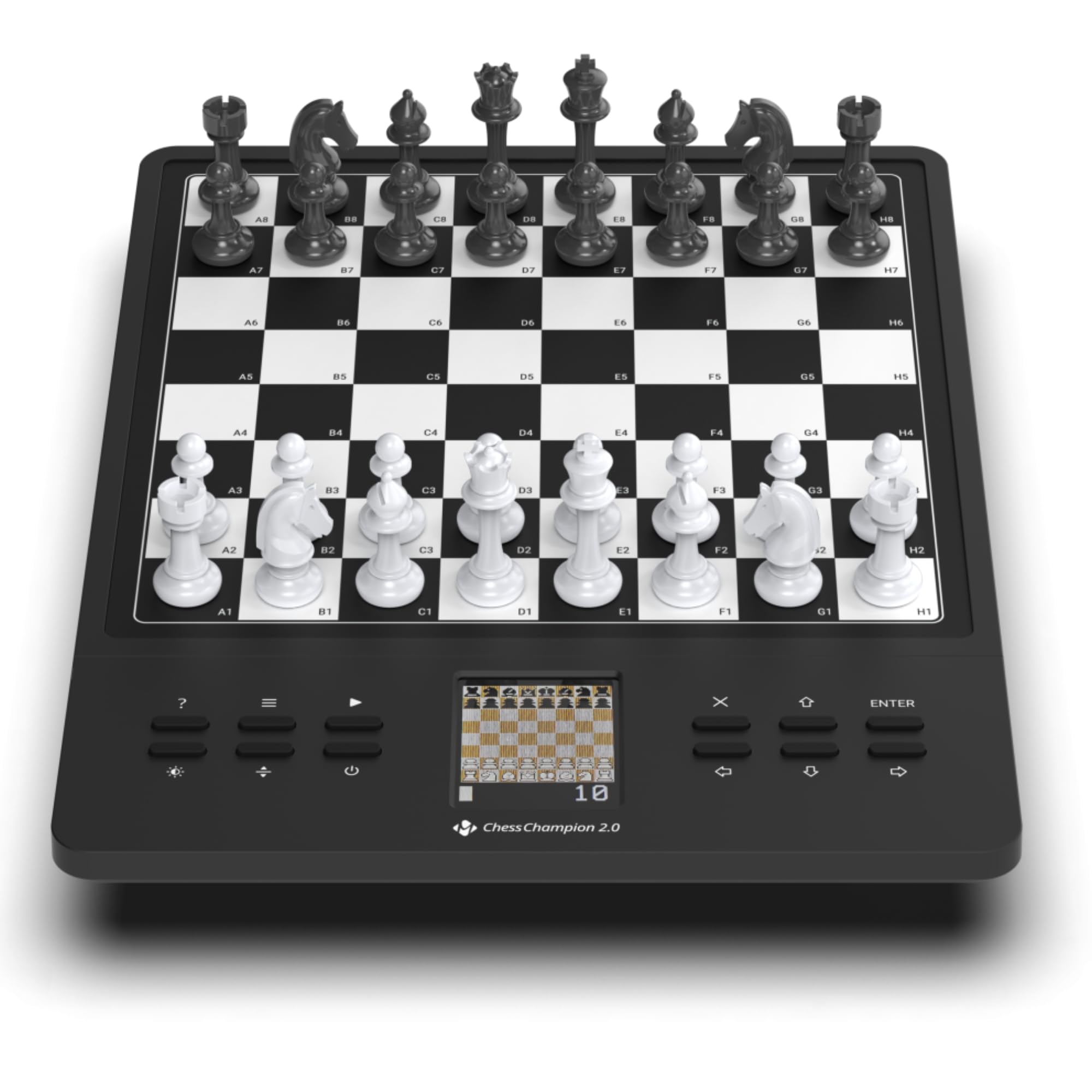
Millennium ChessChampion 2.0

83 /100
LBD Score Excellent

Key details

Weight
12.3 oz
Training
100 exercises and mini-games
Board Size
8.03 x 6.06 x 0.98 in
Playing Strength
Beginner to 1600 ELO
View on Amazon

At 8.03 by 6.06 by 0.98 inches and 12.3 ounces, the ChessChampion 2.0 is the only board here that genuinely disappears into a bag, and we think that's the whole argument for it. The playing area is 5.91 inches, the pieces are magnetic, and the illuminated color LCD carries the moves and the coaching.

The coaching is the part that surprised us at this size. It follows the game in real time, warns you about a weak move, suggests a stronger one and flags anything illegal, so a beginner gets corrected during the game rather than after it. There are 100 exercises and mini-games built in for the same purpose, and the engine adapts from a true beginner up to about 1600 ELO.

It runs on AA or AAA cells, which is the right call for something built to travel: no charger to forget, and nothing to pair in a hotel room or on a train. That is also the honest limit of what it is, since this is a training and travel board rather than a machine for a strong player.

Pros

  • Fits in a bag at 12.3 ounces
  • Coaches you during the game, not after
  • No app, Wi-Fi or subscription
  • 100 exercises and mini-games built in

Cons

  • 1600 ELO ceiling limits stronger players
  • Cramped 5.91-inch playing area
Our verdict

If the board has to travel, we recommend the ChessChampion 2.0: 12.3 ounces, magnetic pieces, and a coach that corrects you mid-game.

Check Latest Price
7

All-In-One Play

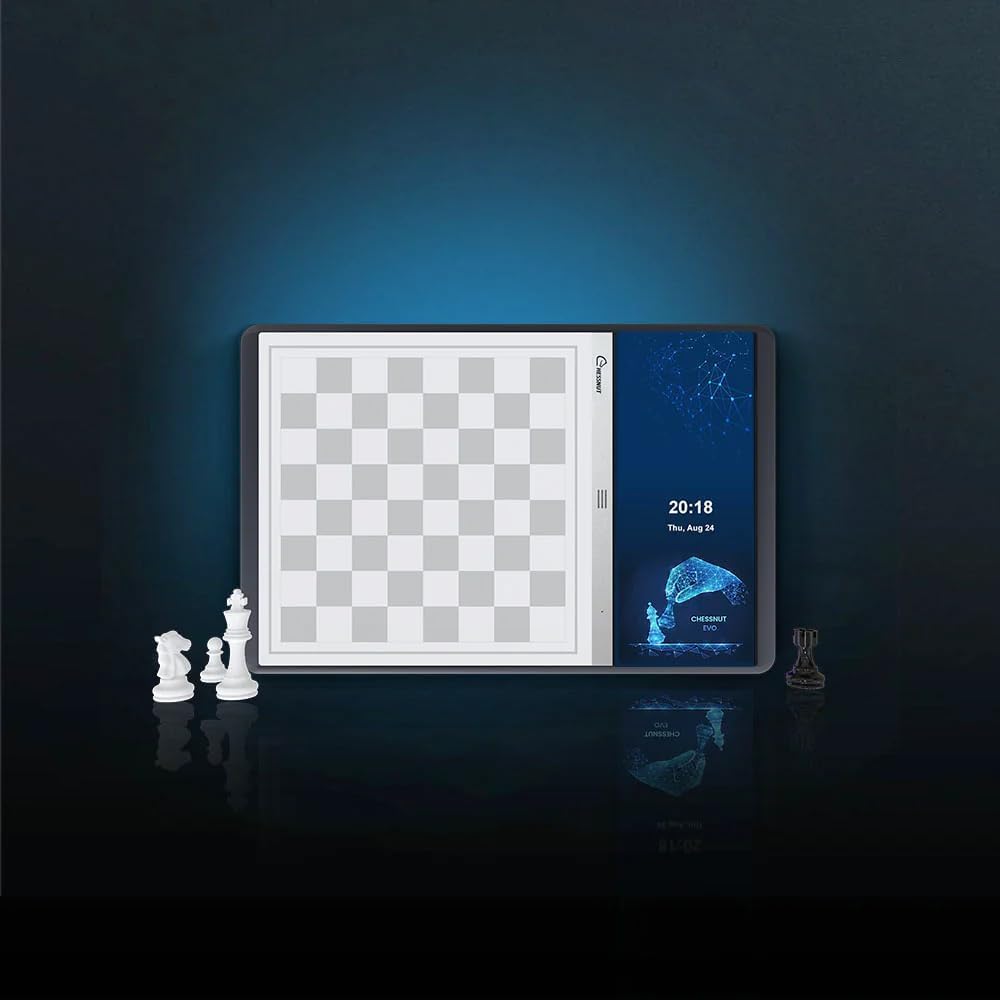
Chessnut Evo

82 /100
LBD Score Excellent

Key details

Pieces
34 RFID pieces (2 extra queens included)
Screen
12.3 in touchscreen
Engines
Stockfish and Maia
Online Play
Chess.com and Lichess from the board
View on Amazon

The Evo solves the problem every app-driven board here shares: it puts the screen in the board. A 12.3-inch touchscreen sits where your phone would be, and with built-in Wi-Fi you're on Chess.com or Lichess without pairing anything to anything.

Underneath, it's the most complete board here. Full RFID recognition tracks every move, the Maia engine plays more like a person than an engine, Stockfish is there when you want to be punished, and the multicolor LEDs handle recording and review. The 34 pieces include two extra queens.

The trouble is reliability. Some units freeze, hang on boot or stop responding, and on a board at this price that's a return rather than a quirk to live with. Buy it where the return is simple, and treat the first fortnight as a check rather than a formality.

When it's working, it's the best all-in-one here by a distance: one board that plays offline, plays online, records, analyzes and teaches without a phone. We still rank the Chessnut Air above it for most buyers, because the Air does the parts that matter with less to go wrong, but nothing else here folds this much into one piece of furniture.

Pros

  • 12.3-inch screen built into the board
  • Plays online over Wi-Fi with no phone
  • Maia engine plays more like a human
  • Full RFID piece recognition

Cons

  • Costs more than any other pick here
Our verdict

The Evo is the board we recommend when one device has to do everything, playing, recording, analyzing and coaching, and the phone stays in the drawer.

Check Latest Price
8

Budget First Board

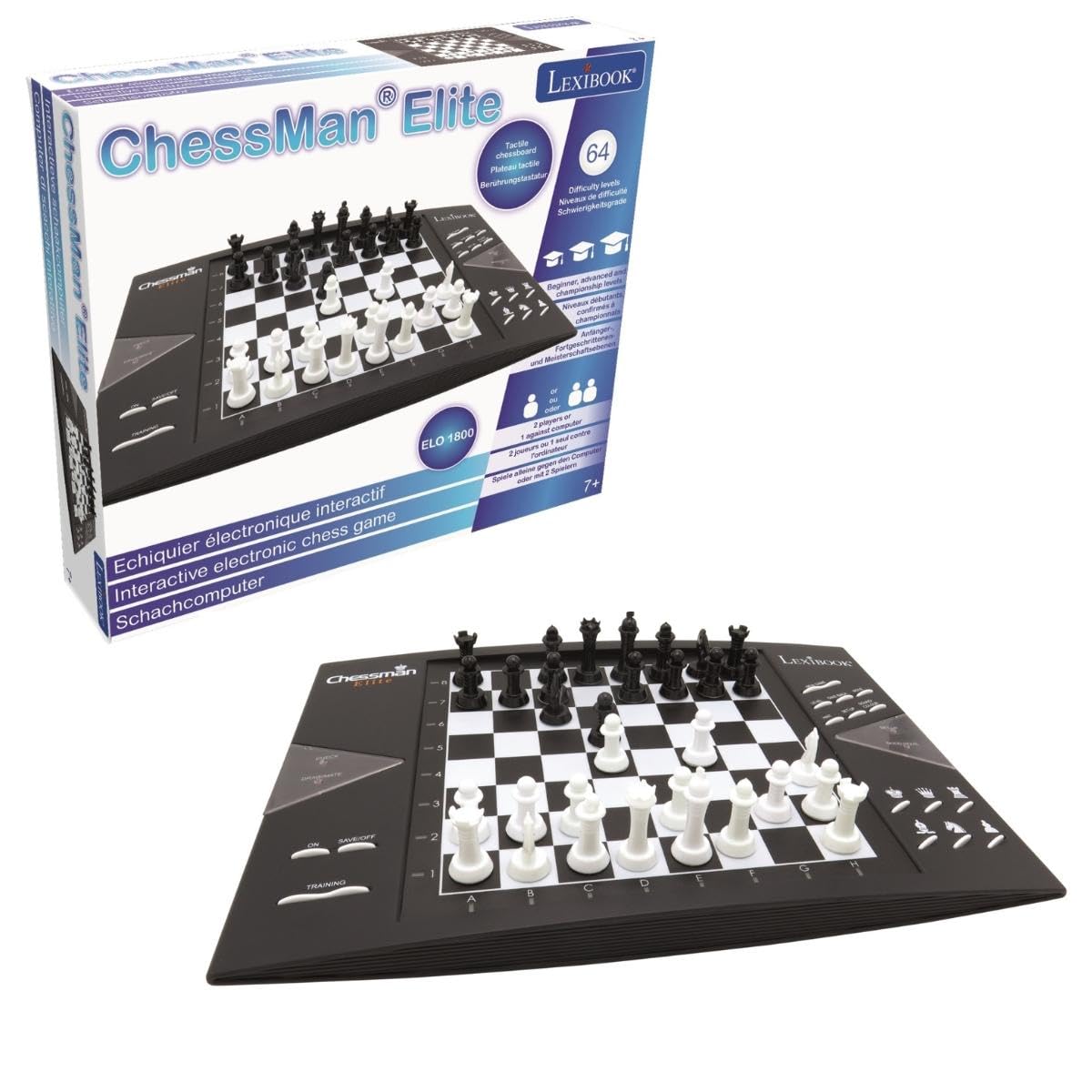
Lexibook Chessman Elite

83 /100
LBD Score Excellent

Key details

Levels
64 across 4 game modes
Board Size
13.66 x 9.37 in
Move Indicators
16 LEDs
Playing Strength
ELO 1800
View on Amazon

Sixty-four levels, 16 LEDs to follow the moves, and a training mode that tells you whether the move you just played was the best one: on paper the Chessman Elite is a lot of chess computer for the least money here.

It covers the ground a beginner needs. Four game modes split those 64 levels into progressive sets, the engine carries an Elo 1800 rating, and it handles the awkward rules, including en passant, promotion, the 50-move rule and draws by repetition, plus mate-in-5 puzzles. It's 13.66 by 9.37 inches, takes AA batteries or an adapter, and is marked for ages seven and up.

The bigger risk is the electronics. Boards that stop registering moves partway through a game, or stop working altogether, are the risk you take at this end of the market, and the training mode is only as good as the sensor underneath it. Buy from somewhere with a return policy you trust, and treat the first few weeks as a trial.

As a cheap way to find out whether a dedicated board suits you, the Chessman Elite is fine: the beginner levels are gentle, the training feedback is genuinely instructive, and the lit squares keep a new player oriented through the first dozen games. The four game modes give it more range than the price suggests.

Pros

  • 64 levels across four game modes
  • Training mode flags weak moves
  • Least expensive board here

Cons

  • Light hollow pieces topple easily
  • Sold without a warranty
Our verdict

We recommend the Chessman Elite only as a low-cost first board for a casual beginner, and we advise buying it somewhere you can return it.

Check Latest Price

How We Tested 10 Chess Computers Over Eight Months

We built the shortlist from spec sheets, filtering by skill range, board footprint, whether the board can play a full game without an app, and how it gets power. Ten made the cut, and we played them for eight months — mostly the way these boards actually get used: an hour after dinner at the kitchen table, a lazy Sunday game with someone else taking the other side, and, for the compact magnetic sets, a train ride and a few hotel nights to see whether the pieces stayed where we put them.

Difficulty was the first thing we judged. On every board we started at the lowest setting and played until we could beat it, then climbed a level and did it again, noting whether the machine got harder in a way we could feel — longer thinks, sharper replies — or just moved faster. The coaching and hint functions got handed to a friend who'd played maybe a dozen games, and we watched whether the advice made sense to him.

Then the hardware. On boards with move lights we watched the indicators through full games, checking whether they pointed at squares we'd have guessed wrong about, and whether they stayed readable from across the table. We lifted and re-seated pieces mid-game, nudged one off its square on purpose, and paired the connected boards with phones to play a few online games, watching for drift between the board and the screen.

At the end we packed each one back into its box, ran the batteries flat to see how long a charge lasted, and, in one case, knocked a board off the table onto a rug. Weighing all of that against what each one costs is how the final order came together.

How to Choose an Electronic Chess Computer

Where the engine lives

A chess computer and a smart chess board sound like the same thing and aren't. The Centaur, the ChessGenius Pro and the ChessChampion 2.0 hold their own engine and play with nothing else in the room. The Chessnut Air runs the game through your phone, the Evo puts a screen in the board, and the ChessUp 2 carries its own Wi-Fi. If you don't want a phone at the table, your shortlist is the Centaur, the ChessGenius Pro, the ChessChampion 2.0 and the ChessUp 2.

Strength, not level counts

Sixty-four levels sounds more thorough than 32, but level count is arithmetic. What a player feels is the top of the range and whether the bottom is genuinely gentle. A 1600 ELO ceiling suits a beginner and a casual player; 2200 ELO leaves room for a club player; the Centaur's approach of adjusting to how you play, rather than stepping between fixed settings, is the most comfortable version of the same idea. Treat every ELO figure as the maker's claim about the engine, not a forecast of your results.

Board size and power

Square size is what separates a proper set from a travel toy. The Centaur's 1.9-inch squares and 3 3/8-inch king make it something you sit at for an hour; the P6's 1.1-inch squares and the ChessChampion's 5.91-inch playing area are built to be carried. Bigger is more pleasant and harder to store. Then check power: the Centaur and the P6 recharge over a cable, while the Millennium boards take AA or AAA cells, which matters on a trip because one needs a charger and the other needs spare batteries.

What the coaching actually does

Coaching covers three different things and the price doesn't always track them. A hint button gives you a suggestion when you ask, which the P6 and the ChessGenius Pro both do. A live coach warns you about a weak move while you're still deciding, which is the ChessChampion 2.0's trick. Post-game analysis, in an app or on the Evo's screen, is a third thing and the most useful once you're past the basics. Decide which one you'll use, and if two players of different strength share the board, only the ChessUp 2 splits the help between them.

Frequently Asked Questions

Final Verdict

Our pick is the DGT Centaur. It gives you a full-size board, weighted pieces, an engine that meets you where you are, and nothing to pair, charge by cable or subscribe to, and that combination is why it earns the recommendation first.

The ChessUp 2 is the better buy if two players of different strength share a board, and the ChessChampion 2.0 is the one to pack. If online play is the whole point, the Chessnut Air does it for less than the Evo with fewer ways to fail.