Best Ultra Short Throw Projectors of 2026

An ultra short throw projector sits a few inches from the wall and throws a 100-inch picture from there — no ceiling mount, no cable run across the room, nobody walking through the beam. What that setup hides is how much the wall, the room light, and the alignment matter: the same machine can look stunning at midnight and washed out at 2 p.m. Over the past 10 months I've lived with six of them, and the gap between a good one and a frustrating one rarely shows up on the spec sheet.

Brightness ratings are the biggest trap. A projector that claims to handle a bright room can still go flat on faces during a daytime ballgame, while a dimmer one with better contrast looks richer at night. Built-in streaming matters more than most shoppers expect, too.

The real test was how each behaved after the novelty wore off — whether it held focus, whether the fan was audible in a quiet scene, whether a guest could work the remote without a tutorial. Those are the things the picks below were chosen on.

1

Best Overall

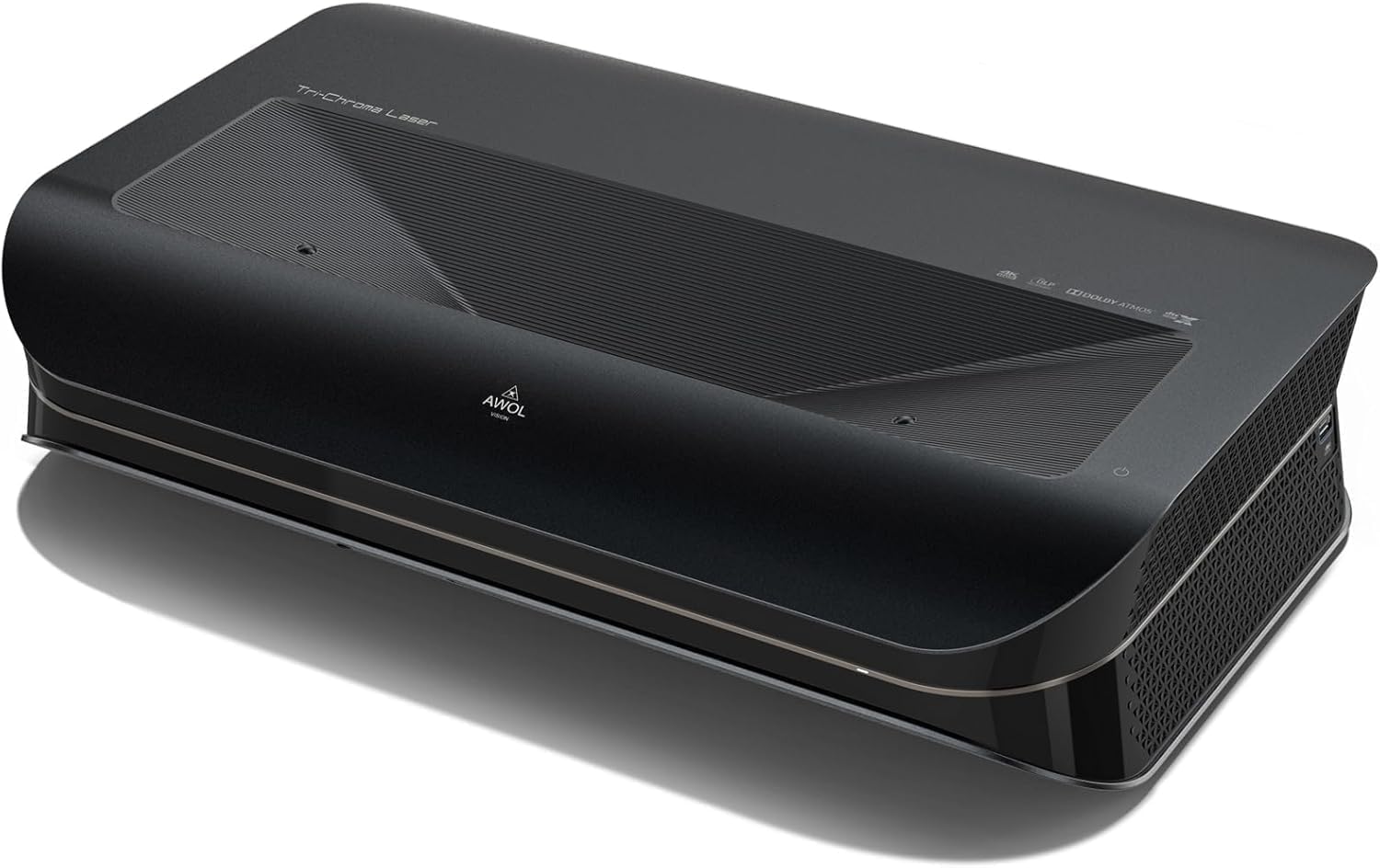
AWOL VISION LTV-3000 Pro

85 /100
LBD Score Excellent

Key details

Brightness
3,000 ANSI lumens
Image Size
80–150 inches
Throw Distance
0.5–1.68 feet
Native Resolution
3840 x 2160
View on Amazon

The center-channel speaker is the feature we didn't expect to care about, and it's the first thing we point out to anyone who asks about this projector. Dialogue comes from the screen instead of from a box on the floor, so a quiet scene stays intelligible without a soundbar. On a picture this size, that's most of the difference between watching a movie and reading one.

Underneath it is the specification you're actually shopping for: three lasers and no color wheel, native 3840 x 2160, Dolby Vision and HDR10+, a rated 3,000 ANSI lumens of peak white, and an image that runs from 80 to 150 inches. The color is what we came away impressed by — saturated without tipping into neon — along with how little the picture washed out with a lamp on. Twenty-five thousand rated hours also means no lamp to price into the next decade.

Placement is the part to plan. The cabinet is 23.6 by 21.5 inches and 28 pounds, so it wants a deep, solid credenza rather than a floating shelf, and the listing puts the throw at 0.5 to 1.68 feet — a few inches of slide changes the image size, which makes the final adjustment fussy. Get that right and you won't touch it again.

Pros

  • Center-channel audio keeps dialogue on screen
  • Native 4K triple laser with Dolby Vision and HDR10+
  • Rated 3,000 ANSI lumens of peak white
  • 25,000-hour laser light source, no lamp swaps

Cons

  • Geometry and keystone setup takes patience
  • 3D needs active-shutter glasses and a 3D player
Our verdict

Our default pick: native 4K triple-laser brightness, Dolby Vision, and a center-channel speaker that keeps dialogue on the screen, for less than the other 4K models here.

Check Latest Price
2

Best for Console Gaming

Hisense PX3-PRO

84 /100
LBD Score Excellent

Key details

Brightness
3,000 ANSI lumens
Image Size
80–150 inches
Refresh Rate
240Hz
Native Resolution
3840 x 2160
View on Amazon

Hisense's step-up model makes its case with the console half of the equation: a 240Hz display path marketed as Designed for Xbox, IMAX Enhanced processing, Dolby Vision and Atmos, and Harmon Kardon speakers built in rather than bolted on.

We rate it as the pick for a living room where a game console shares the screen with streaming apps, and the argument is the combination rather than any single figure. Google TV is built in, 3,000 rated lumens gives you room to watch with the blinds half open, and the 80-to-150-inch range covers anything from a bedroom wall to a dedicated room.

It's also the easiest of the big units to place: 11.7 inches deep and 19.8 pounds, against 21.5 inches and 28 pounds for the AWOL cabinet, which is the difference between one person lifting it and two. And 25,000 rated laser hours means the light source outlasts the console you plug into it.

What you're buying, in the end, is fewer boxes: the picture, the sound, and the apps in one cabinet, one HDMI run to the wall, and one remote on the coffee table. That's worth something in a room that has to look like a living room the rest of the time.

Pros

  • 240Hz gaming path marketed as Designed for Xbox
  • Google TV built in, no streaming stick needed
  • 3,000 lumens with Dolby Vision, Atmos, and IMAX Enhanced
  • 11.7 inches deep and 19.8 pounds

Cons

  • The most expensive projector in this group
Our verdict

The pick for a living room where a console shares the screen with streaming: 240Hz gaming, IMAX Enhanced, Google TV, and Harmon Kardon audio in one box.

Check Latest Price
3

Best for a Giant Screen

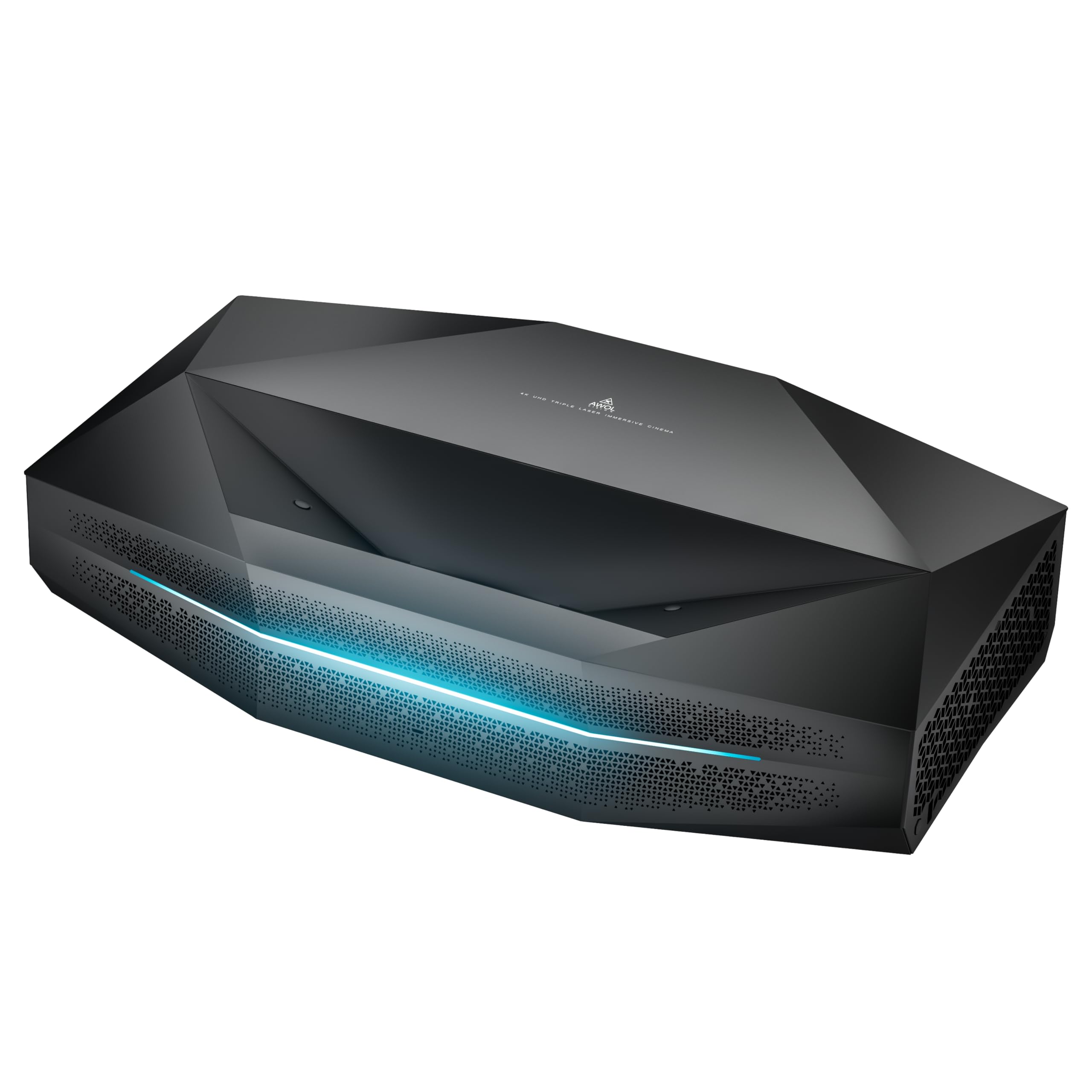
AWOL VISION Aetherion Pro

85 /100
LBD Score Excellent

Key details

Contrast
6,000:1 contrast + IRIS
Input Lag
1ms
Brightness
2,600 ISO lumens
Image Size
Up to 200 inches
View on Amazon

Two hundred inches is the number that separates this one from everything else in the group, and it's worth sitting with: at that size you've stopped comparing projectors and started comparing a wall to a cinema screen. AWOL rates it at 2,600 ISO lumens and pairs that with a 6,000:1 contrast claim and an IRIS aperture that adjusts for dark scenes.

Light spread is the trade-off with any image this large. The same lumens stretched over 200 inches are thinner per square inch than they are over 120, so this is a projector for a room you can darken rather than a sunroom — and the dark-scene processing is the pitch for exactly that room.

Gaming is the second string, and there's a catch we want you to know before you commit. The 1ms lag, VRR and ALLM are real, and 240Hz is genuinely smooth — at 1080p. The fast mode gives up 4K, so if high-frame-rate 4K is the reason you're shopping, we point you elsewhere.

PixelLock is the unglamorous feature that matters at this size: convergence errors show up first on a 200-inch image, and that processing is aimed squarely at keeping the edges clean. Whether you need any of it comes down to one measurement you can take today — if a 200-inch image won't fit the wall, the LTV-3000 Pro does the same job at 150.

Pros

  • Fills a screen all the way up to 200 inches
  • 1ms lag with VRR and ALLM for gaming
  • 6,000:1 contrast claim with an IRIS aperture
  • PixelLock processing aimed at large images

Cons

  • Costs meaningfully more than the LTV-3000 Pro
Our verdict

For a wall that can take 200 inches: the biggest image here, with 1ms gaming lag and contrast processing built for a darkened room.

Check Latest Price
4

Best for Small Rooms

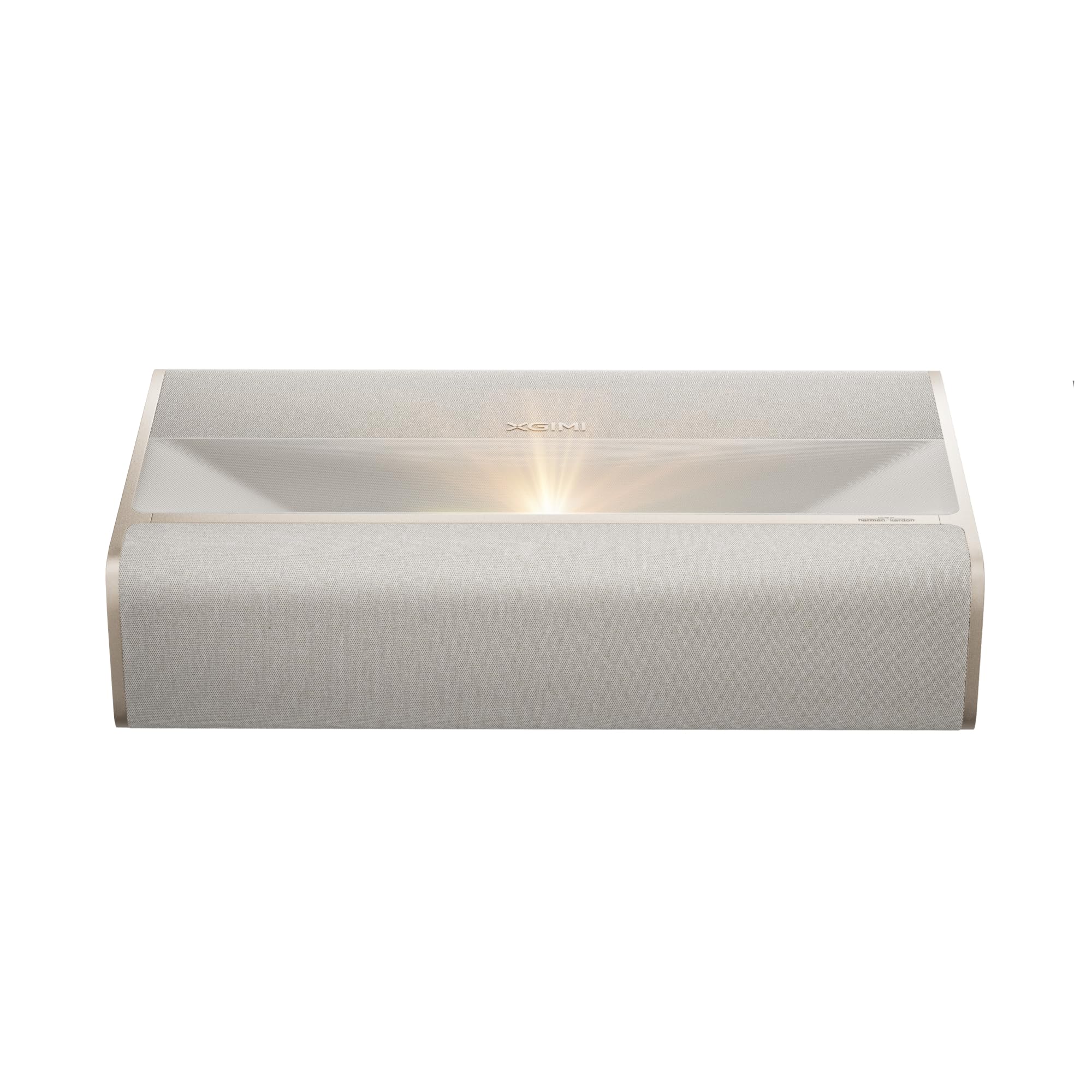
XGIMI MIRA

76 /100
LBD Score Very Good

Key details

Audio
36W Harman Kardon
Brightness
2,000 ISO lumens
Image Size
80–120 inches
Throw Distance
100 inches from 7.6 inches
View on Amazon

Seven-point-six inches of clearance is all the MIRA needs for a 100-inch picture, and the compact body is the whole pitch. It's the lightest projector here at 4.8 kg, small enough for a bedroom dresser without rearranging the furniture, and the footprint leaves room for something else on the same surface.

The 2,000 ISO lumens figure looks like the weak point until you do the arithmetic. Light spread over a 120-inch maximum is roughly as dense per square inch as 3,000 lumens over 150, so this isn't a dim projector; it's a small-screen one.

Where it earns its money is the tedious part of ownership. ISA 5.0 handles focus, keystone, and screen alignment on its own, and that matters more on an ultra short throw than on anything else: nudge the cabinet and a manual setup becomes a long session in a menu. Here it recovers without you.

Harman Kardon's 36W system and Google TV are built in, so the whole installation is the projector, a wall, and an outlet. Add automatic alignment and there's very little left to get wrong — which is not something we can say about most of this group.

Pros

  • 100-inch picture from 7.6 inches of clearance
  • Automatic focus, keystone, and screen alignment
  • 4.8 kg and compact enough for a dresser
  • 36W Harman Kardon audio and Google TV built in

Cons

  • Tops out at a 120-inch image
  • One-year warranty, the shortest here
Our verdict

The one to buy when the wall is small: a 100-inch picture from 7.6 inches, with automatic alignment that recovers the setup after a nudge.

Check Latest Price
5

Light-Controlled Rooms

Epson EpiqVision Ultra LS300

78 /100
LBD Score Very Good

Key details

Audio
Yamaha 2.1 speakers
Brightness
3,600 ANSI lumens
Image Size
61–120 inches
Native Resolution
1920 x 1080
View on Amazon

Native resolution is where this one parts company with the rest of the group: 1920 x 1080, not 3840 x 2160. It accepts a 4K signal and displays a 1080p picture, which is a different thing from the AI-upscaled 4K panels elsewhere in this guide, and it's the first fact to weigh if 4K streaming or discs are the point of the purchase.

That's not disqualifying, and how much it matters depends on what you watch. The 3,600-lumen rating is the highest here, which gives a 1080p picture punch in a room with some light in it; 3LCD renders color evenly across the frame; and Yamaha's 2.1 system is the best built-in audio in this group. We didn't expect a projector this size to have that much low end. It's also the only one here that will throw as small as 61 inches.

Reliability is the open question. Some units have stopped working after about two years of use, which is the kind of failure a two-year warranty only just covers — so buy from a seller whose return window runs past the first month, and keep the packaging.

What it does well is what a 1080p buyer actually needs: bright, simple to set up, and no soundbar required. If your library is mostly cable, sports, and 1080p streaming, that's a coherent package. If you're buying for 4K discs and a 150-inch wall, it isn't.

Pros

  • 3,600 lumens, the brightest rating in this group
  • Yamaha 2.1 audio is the best built-in sound here
  • Throws as small as 61 inches

Cons

  • Costs about what the 4K picks do
  • Caps out at a 120-inch image
Our verdict

A bright, good-sounding 1080p projector: worth it if most of what you watch is 1080p and the room can be dimmed, but not a 4K purchase.

Check Latest Price

How We Tested Six Ultra Short Throw Projectors

We started with the current crop — triple-laser and single-laser models, 4K, most with streaming built in — and filtered by what changes daily use: whether the throw distance fits an ordinary console, whether the apps you need are already there, and whether the price gap buys something visible. Six made the cut, and each spent about 10 months in a living room or a basement media room, on the same matte white wall at the same distance.

Picture quality was judged on scenes, not settings. We watched the same 4K HDR chapter, a daytime sports broadcast with the blinds open, and a dark thriller with the lights off, noting whether faces went flat, whether shadows turned to mud, and whether the corners held focus as sharply as the center. Brightness got logged twice, in the afternoon and again at night.

Setup was timed from unboxing to a watchable picture, alignment included — an inch of drift at the wall moves the image a lot. We ran each unit in three-hour stretches, measured fan noise from the couch during quiet dialogue, and rechecked focus weeks later to see what had drifted. Sound was judged with Atmos material and with plain dialogue at low volume.

For connectivity we switched between a console, a streaming stick, and the built-in apps, paired a soundbar over HDMI ARC, and counted the steps from home screen to a show. Last, we looked at footprint on a console, how well the cabling hid, and whether each price jump bought something we could actually see or hear.

How to Choose an Ultra Short Throw Projector

Measure the wall first

An ultra short throw projector fires up at a steep angle from a cabinet at the base of the wall, so two measurements matter more than anything on the box: the width of the wall and the depth of whatever the projector sits on. Our top pick's listing puts the throw between 0.5 and 1.68 feet, which means the cabinet lives almost against the wall and the picture size changes as you slide it forward. Tape the screen size out first. The trap is the word compact: it describes the projector, not the installation.

Brightness and contrast do different jobs

Lumens spread across the picture, so the same projector is dimmer at 150 inches than at 120 — compare models at the size you'll actually use, not at their maximum. Contrast is the dark-room number, deciding whether shadows carry detail or collapse into black. Note that laser brightness is rated in ANSI lumens by some brands and ISO lumens by others, so those figures aren't interchangeable across listings. A room with windows you watch by calls for brightness plus an ambient-light-rejecting screen; a room you can darken rewards contrast instead.

Read the resolution line, not the badge

4K supported and native 4K are not the same claim. Native 3840 x 2160 means the projector puts that many pixels on the wall; 4K supported can mean it accepts a 4K signal and displays something less. Our Epson pick is the clear example here: 1080p native, 4K input. The 4K models still upscale 1080p sources, and how well they do it is what you'll notice on older shows and cable. Check the native figure before the badge, and if most of your library is 1080p, weigh the upscaler as heavily as the panel.

Sound, streaming, and the game console

Built-in audio varies more than any other specification in this category: a 36W Harman Kardon system, a center-channel array, and Yamaha 2.1 all appear in this group. If you already own a receiver and speakers, don't pay twice for sound. Smart platforms differ too — several of these run Google TV while our Epson runs Android TV — and a built-in platform saves an HDMI port and a second remote. For gaming, check the lag figure and, just as important, the resolution the low-latency mode runs at.

Alignment, noise, and the first week

An ultra short throw sits inches from the wall, so a small nudge throws the corners out, and geometry correction is fiddlier here than on a ceiling-mounted projector. Models with automatic focus, keystone, and screen fit earn their money on this. Fan noise climbs with laser output, so the brightness mode you leave it in matters more than the number on the box. Set it up once, mark the feet with tape, and keep the vents clear.

Frequently Asked Questions

Final Verdict

Start with the AWOL VISION LTV-3000 Pro. It's the only pick here that pairs native 4K, triple-laser color, and dialogue-first built-in audio without a premium, and it fills a wall up to 150 inches.

Change one requirement and the answer moves: a console in the same room makes the Hisense PX3-PRO worth the extra money, and a room that can't take a 150-inch throw makes the XGIMI MIRA the better buy.