Best Short Throw Projectors of 2026

The pitch for a short throw projector is simple: a 100-inch picture from a box sitting a foot or two from the wall, no cable stretched across the rug. What that pitch leaves out is that the picture is only half the job. The rest is whether it holds up with a lamp on, whether the fan is audible under quiet dialogue, and whether you can square the image without a second person and a ladder.

I've had eight of these running for six months — in my living room, on a basement wall, and on a bedsheet in the backyard — and the differences showed up fast. Two things worth knowing: throw ratio matters more than resolution in most rooms, and a rated lumen count tells you surprisingly little about how a projector handles a lamp being switched on.

The picks below are the ones that set up without help, stayed sharp in the corners, and didn't need a separate soundbar and streaming stick to be watchable. Your room will pull you toward different ones; the notes on each say which and why.

1

Best Overall

BenQ TH671ST

87 /100
LBD Score Excellent

Key details

Lamp Life
10,000 hours
Brightness
3,000 lumens
Native Resolution
1920 x 1080
Distance For 100 Inches
5 feet
View on Amazon

Five feet. That is how far the TH671ST sits from the wall to fill a 100-inch screen, and it is the number that makes this the projector we recommend first to most people. A typical living room does not put the couch fifteen feet back, so a long-throw projector either shrinks the picture or ends up on a ceiling mount nobody wants to install. The BenQ just needs a shelf. At 3,000 lumens it also stays watchable with a lamp on in the corner, which is more than the small LCD models here can manage.

Gaming is the second reason it holds the top spot. Input lag is low enough that a controller feels wired to the picture, and the refresh rate keeps up with modern consoles, so fast pans in a shooter stay readable. There is a hint of judder on the widest horizontal pans — a DLP trait at this level more than a fault — but we stopped noticing it once we were watching something instead of watching for it. Two HDMI ports mean a console and a streaming stick can both stay connected.

What it does not do is apps. The BenQ expects a source plugged into the back, so a cheap streaming stick belongs in the budget, and the built-in speaker is enough for a sitcom and not much more. The lamp is rated for 10,000 hours and will need replacing eventually, which is the trade for a projector this bright at this money; a laser rated for 25,000 hours or more is the alternative, and you pay for it. Set against the ultra short throws below, it is still a much smaller outlay for a picture most people will be perfectly happy with.

The three-year warranty is the longest in this group and the part first-time buyers should weigh most. Lamp projectors are the mature end of this market, and BenQ backs this one for three years while most of the 4K ultra short throws settle for two. Native 1080p is the honest limit — a 4K model resolves more detail across a 120-inch screen — but at 100 inches, on a wall in a normal room, the difference is smaller than the price gap suggests.

Pros

  • 100-inch picture from five feet
  • 3,000 lumens holds up with lamps on
  • Low input lag for consoles
  • Three-year warranty, longest here

Cons

  • Needs a streaming stick for apps
  • Lamp light source, native 1080p only
Our verdict

For a first home theater in a normal-size room, this is the one we tell people to buy: genuinely short throw, bright with the lights on, and quick enough for games.

Check Latest Price
2

Best Ultra Short Throw

Hisense PX3-PRO

84 /100
LBD Score Excellent

Key details

Brightness
3,000 lumens
Image Size
80 to 150 inches
Light Source Life
25,000 hours
Native Resolution
3840 x 2160
View on Amazon

If the projector is meant to replace the television, start here. The PX3-PRO sits on a console a few inches beneath the wall and throws 80 to 150 inches, so the screen occupies the same real estate the TV did and nothing hangs from the ceiling. The triple-laser light engine makes the rest of the case: red, green, and blue lasers with no color wheel, 3,000 lumens of it, which is why this one is watchable with the blinds half open instead of only after sunset.

The picture is the part we keep coming back to. Dolby Vision and IMAX Enhanced processing earn their keep on 4K discs, and the 110% BT.2020 coverage shows in reds that stay red instead of sliding toward orange. A 240Hz mode built around the Xbox makes a big-screen game feel responsive in a way projectors usually do not, and Google TV means the apps are there the moment you plug in — no stick, no second remote, no input-switching ritual.

Two things to accept. It weighs close to 20 pounds and it does not want to move; an ultra short throw lives on one shelf aimed at one wall, permanently. And like every projector of this type, it looks its best on an ambient-light-rejecting screen — on a plain white wall in a bright room you will see the wash that screen exists to prevent.

What surprised us is how quiet it stays in the cinema picture modes, where dialogue never competes with a fan. The 4K upscaler deserves a mention too, since most streaming arrives at 1080p or lower and still lands on a 150-inch screen looking crisp. Light source life is rated at 25,000 hours, comfortably past the two-year warranty.

Pros

  • 4K triple-laser picture with Dolby Vision
  • Sits inches beneath the wall
  • Google TV built in, no streaming stick
  • 240Hz mode for gaming

Cons

  • Premium price
  • Close to 20 pounds, fixed in place
Our verdict

The ultra short throw we point at a bright living room: 4K triple laser, Dolby Vision, Google TV, and enough brightness to watch in daylight.

Check Latest Price
3

Best 4K UST Value

AWOL VISION LTV-3000 Pro

85 /100
LBD Score Excellent

Key details

HDR
Dolby Vision, HDR10+
Image Size
80 to 150 inches
Light Source Life
25,000 hours
Native Resolution
3840 x 2160
View on Amazon

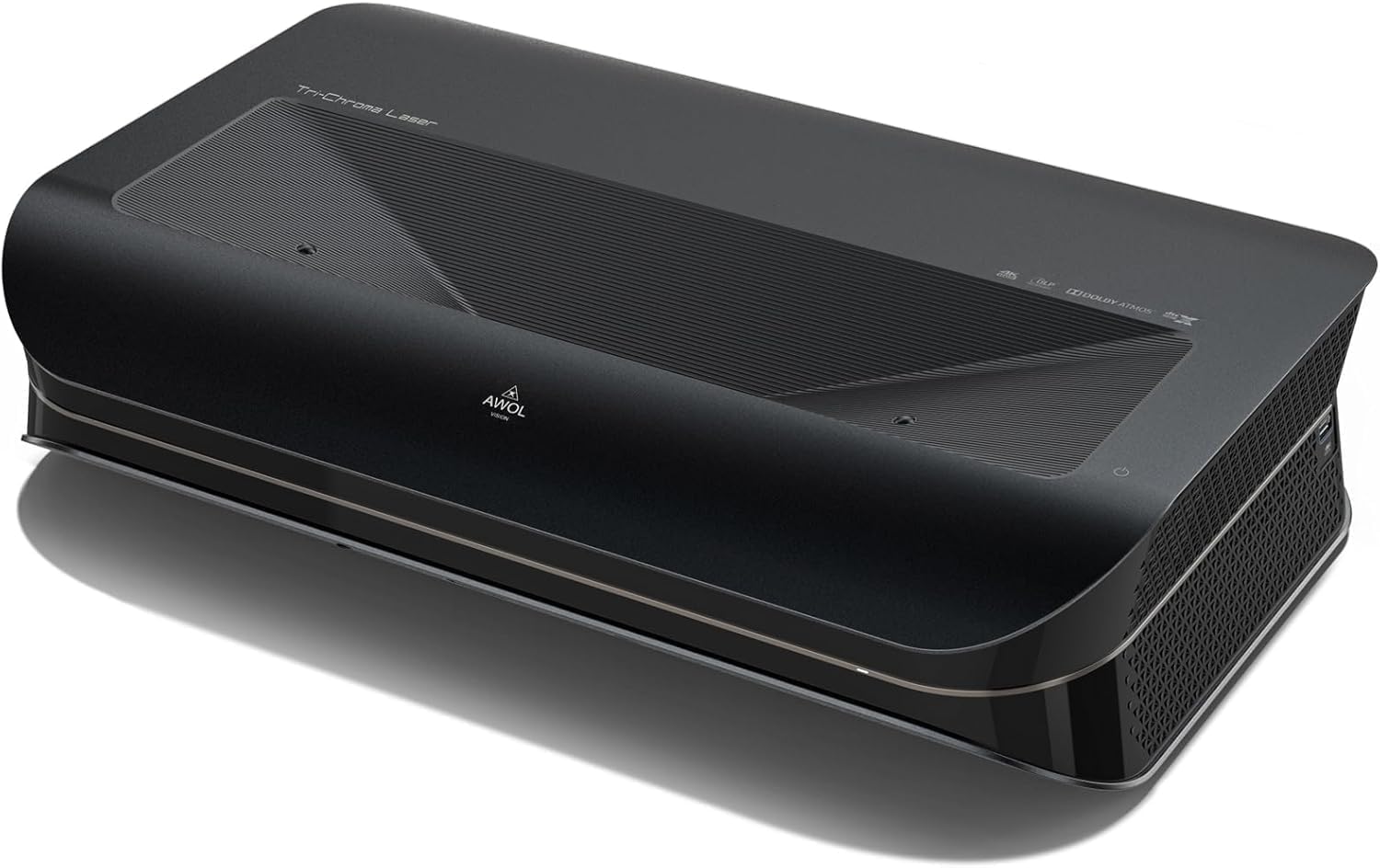
The LTV-3000 Pro is the answer to the Hisense's price. Same 4K triple-laser formula, same 80-to-150-inch range, meaningfully less money. What you give up is the built-in Google TV and some light output; what you keep is Dolby Vision, HDR10+, and 3D, which nothing else in this group offers.

Our favorite detail is the center-channel speaker mapping, which puts dialogue at the screen instead of under it. In a dark room that small bit of anchoring does more for the illusion than a bigger subwoofer would, and it is the kind of idea that comes from treating projection as a TV replacement rather than a slide show. Color is the other strength: 107% of BT.2020 with 147% of DCI-P3 behind it, and shadow detail that holds together instead of collapsing into gray.

The trade is bulk and setup. It is 28 pounds of furniture on a console, and it assumes you already have sources — the integration story is PJ Link and Control4 rather than an app screen, so plan on a streaming box or a console as the brain. Alignment takes an evening of coaxing keystone until the corners are square, and then you never touch it again, which is the bargain every ultra short throw makes in exchange for a picture you cannot get from a shelf.

Pros

  • Center-channel dialogue mapped to the screen
  • 4K triple laser with Dolby Vision and HDR10+
  • Less money than the other 4K USTs here
  • 3D support nothing else here offers

Cons

  • 28 pounds, console-bound
  • Keystone alignment takes patience
Our verdict

A dedicated theater room on a tighter budget is exactly what this is for — 4K triple laser, Dolby Vision, and 3D for the least money of the ultra short throws here.

Check Latest Price
4

Best Laser Short Throw

Optoma GT2000HDR

79 /100
LBD Score Very Good

Key details

Weight
9.6 lb
Brightness
3,500 lumens
Light Source Life
30,000 hours
Native Resolution
1920 x 1080
View on Amazon

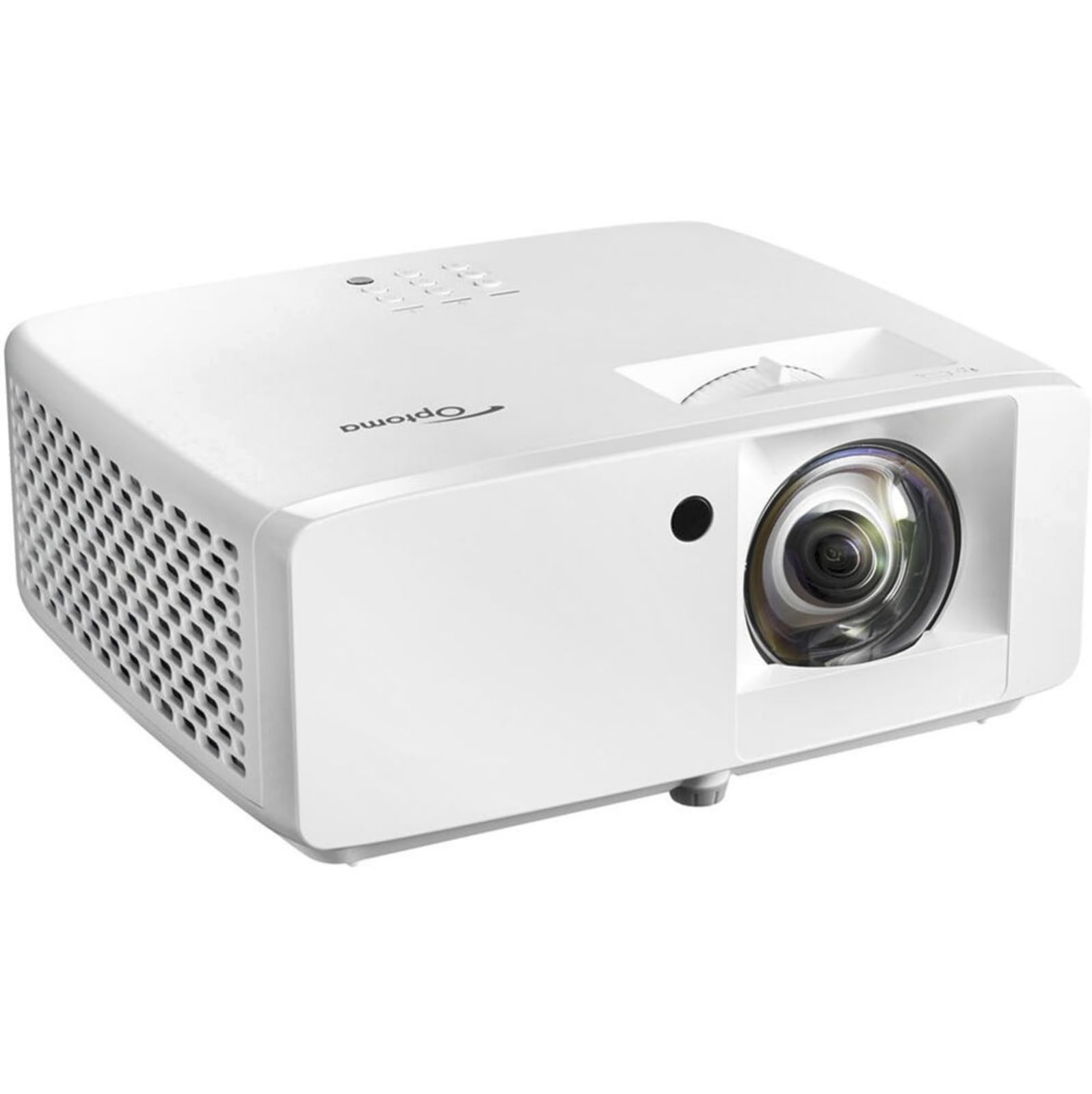
A 1080p projector with no smart platform needs a reason to exist, and the GT2000HDR's reason is the laser. There is no lamp to replace for the life of the machine — 30,000 hours, backed by a five-year or 12,000-hour light-source warranty — and 3,500 lumens is more light than anything here short of the ultra short throws.

We were pleasantly surprised by how much that matters day to day. In a room where you cannot fully kill the light it stays watchable, and that is the difference between a projector you switch on for a weekend and one you use on a Tuesday night. Under 10 pounds, it moves between a ceiling mount and a side table without drama, and its contrast is high enough that letterbox bars stay black rather than glowing.

Geometry is where it asks for patience. Set it off-axis and the image distorts into a trapezoid that takes real work to square up, and not every universal mount fits — check the hole pattern before you buy hardware. Mount it once on a ceiling and none of that matters for the rest of its life. The one-year warranty on the projector body is the thing you live with, and it is the shortest in this group next to five years of light-source coverage.

What you get for the trouble is a projector that behaves like equipment rather than an appliance: no lamp budget, no bulb lottery, 3,500 lumens on tap, and a 3.5mm output that makes a soundbar a one-cable fix. For a bright room, a golf sim, or anywhere the projector runs for hours at a stretch, that is the case for it.

Pros

  • 3,500 lumens of laser light
  • 30,000-hour laser, no lamp swaps
  • Compact 9.6-pound body
  • 1-year body / 5-year light source warranty

Cons

  • 1080p with no smart platform
  • One-year warranty on the projector
Our verdict

We like this one for rooms you can't darken: 3,500 lumens, 30,000 laser hours, and a compact body that moves when you do.

Check Latest Price
5

Best Sound Out of the Box

Epson EpiqVision LS300

78 /100
LBD Score Very Good

Key details

Speakers
Yamaha 2.1
Brightness
3,600 lumens
Image Size
61 to 120 inches
Native Resolution
1920 x 1080
View on Amazon

Sound by Yamaha is the reason to look at the LS300. The 2.1 system built into the front of this thing is a genuine step up from the mono speakers most projectors hide behind the lens, and paired with Android TV it means the whole setup can be the projector and a power cable. Place it, plug it in, watch something — that is the pitch, and it is the least fussy ultra short throw here.

It is a 3-chip 3LCD design, which matters if you are the person who sees rainbow fringing on DLP projectors when your eyes cross a bright scene; 3LCD does not produce it. At 3,600 lumens it is the brightest 1080p model in this group, enough to watch with the room lights dimmed rather than off — a real advantage in a room that has to do more than one job.

Longevity is the one caution worth carrying into the purchase: some of these stop working after a couple of years, and the two-year warranty is what stands between you and a dead projector. Run it near full brightness and the fan makes itself heard as well. Neither is a dealbreaker in a den where the projector runs a few hours a night, but both are reasons to buy it for a room rather than for a whole-house installation.

What it does well, it does without help. The picture is evenly lit corner to corner — the 3LCD signature — and the sound is the first thing we noticed, with dialogue sitting forward of the music instead of behind it. For a basement, a spare room, or anywhere you would rather not run a receiver and five speakers, that one-box competence is worth more than a sharper chip.

Pros

  • Yamaha 2.1 sound built in
  • Android TV, no stick needed
  • 3,600 lumens, brightest 1080p here
  • 3LCD, no rainbow fringing

Cons

  • Some units fail after a couple of years
  • 1080p, not 4K
Our verdict

For a one-box setup, this is the simplest answer here: Yamaha 2.1 sound and Android TV are already inside.

Check Latest Price
6

Best Budget Smart Short Throw

TOPTRO A2

87 /100
LBD Score Excellent

Key details

Speakers
36W Dolby
Brightness
650 ISO lumens
Image Size
100 to 200 inches
Native Resolution
1920 x 1080
View on Amazon

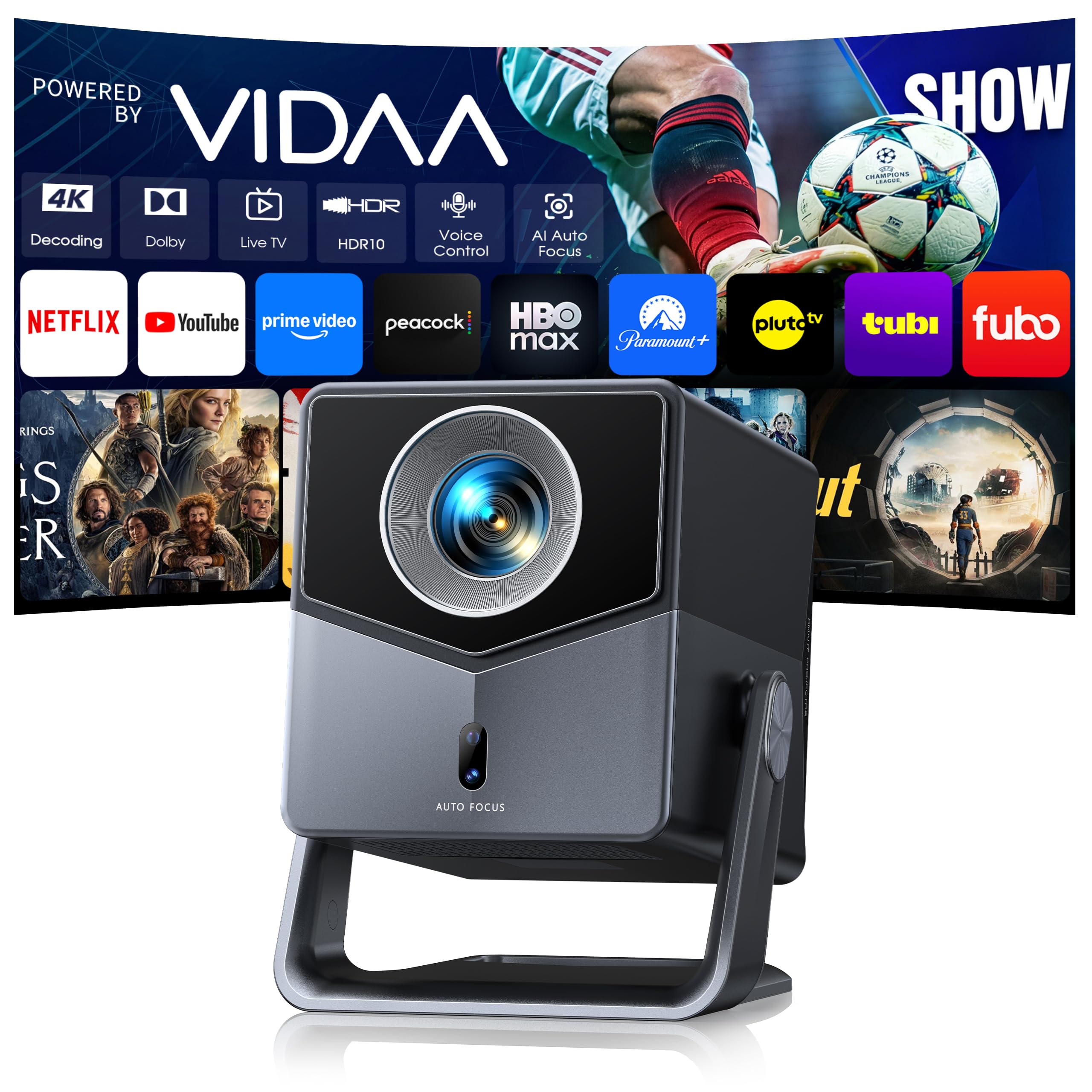
The A2 is the least expensive projector here that behaves like a modern television. It is a 1080p LCD with 650 ISO lumens that puts a 100-inch picture roughly seven feet from the wall, and it arrives with the VIDAA smart system, live channels built in, and 36 watts of Dolby-tuned speakers in a 4.2-pound body.

We expected to be underwhelmed and were not. Seven feet is short enough to work in a normal living room without a ceiling mount, and 650 lumens is an honest figure rather than a hopeful one — in a dim room the picture is bright and sharp, and the autofocus and auto-keystone have it squared up in seconds. The speakers are the surprise: dialogue is clear, music has some body, and you can get through a movie without adding a soundbar.

The limit is light. 650 ISO lumens disappears in a bright room, so this is an evenings-and-closed-curtains projector, and VIDAA — quick, and full of live channels — is not Google TV, which means an app or two you rely on may need casting from your phone. The 4K claim is decoding only; the panel is 1080p, which at this size and this end of the market is a fair trade.

Pros

  • VIDAA smart system with live TV
  • 36W Dolby speakers
  • Autofocus and auto-keystone setup
  • Least expensive smart projector here

Cons

  • 650 lumens needs a dark room
  • 1080p panel, 4K decoding only
Our verdict

If you want real apps and real sound without spending much, this is our budget pick — give it a dim room and about seven feet of space.

Check Latest Price
7

Bedrooms

PUTRIMS P66

88 /100
LBD Score Excellent

Key details

Weight
2.2 lb
Brightness
500 ISO lumens
Throw Ratio
1.17:1
Native Resolution
1920 x 1080
View on Amazon

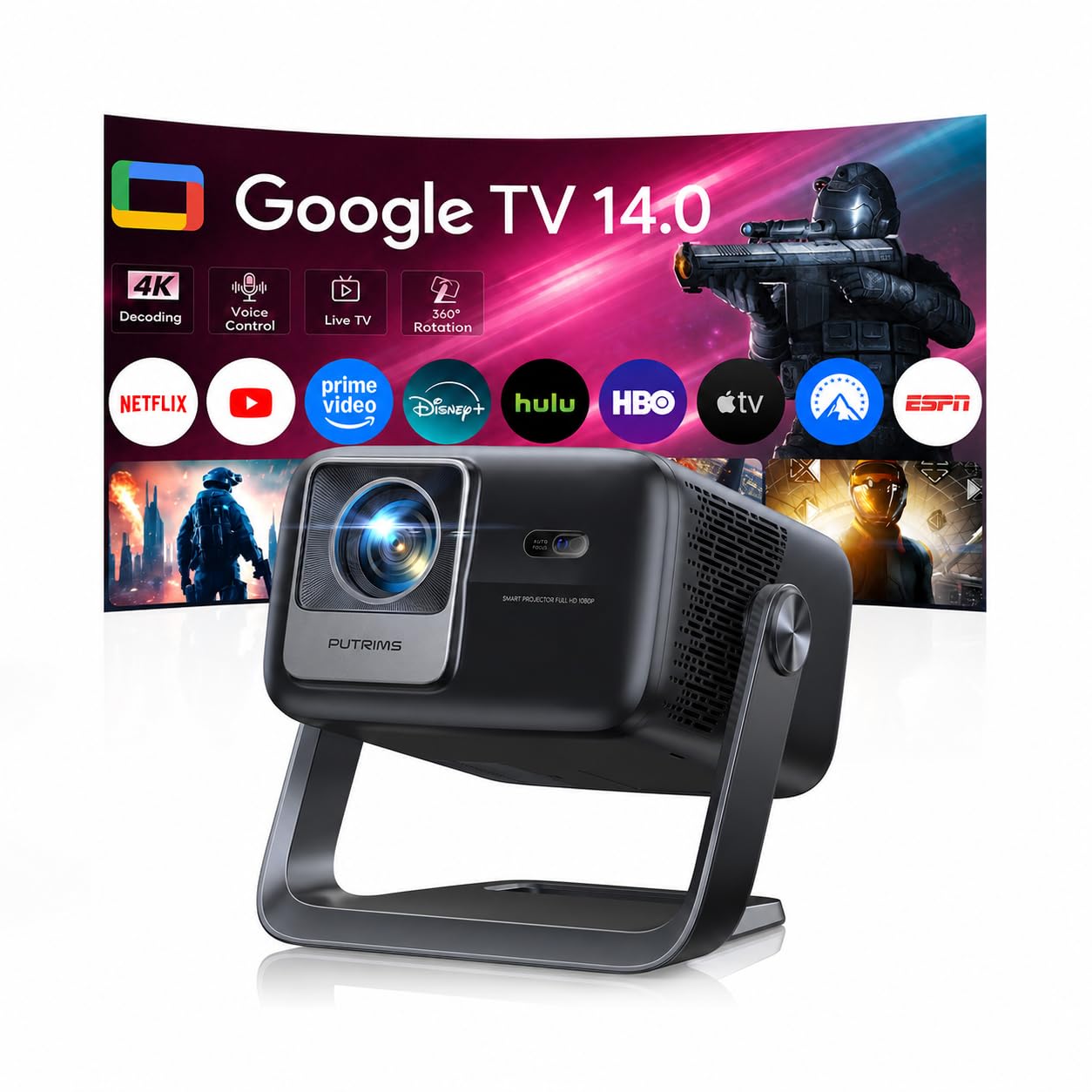
The rotating stand is the good idea here. Set the P66 on a nightstand, tilt the head, and it throws at the wall or straight up at the ceiling — a trick most projectors this size cannot manage, and the one people actually use in a bedroom. At 2.2 pounds it moves between rooms in one hand, which is how we ended up using it more than the bigger units.

Google TV 14 is the real thing, not a lookalike: Netflix, Hulu, and Chromecast built in, with a voice remote that works. The 30W speakers are loud enough that a bedroom needs nothing else, and the autofocus and auto-keystone do their job in a couple of seconds even when the projector is angled up at the ceiling.

The number to understand before buying is 1.17:1. That is shorter than a typical home projector and nowhere near the few inches of an ultra short throw — 100 inches needs roughly nine feet of room. In a small bedroom that is a stretch, and 80 inches is the more realistic target. 500 ISO lumens also means lights off or nearly so; this is not a projector for a sunny afternoon.

What it does, it does at a price that makes the compromises reasonable: a sharp 1080p image, real streaming apps, and sound that fills a small room. It is an entry point rather than a theater — but a well-chosen one for a first apartment, a dorm, or a bedroom where a television would be in the way.

Pros

  • 360-degree stand reaches the ceiling
  • Google TV 14 built in
  • 2.2 pounds, easy to move
  • 30W speakers

Cons

  • 1.17:1 needs about nine feet for 100 inches
  • 500 lumens, dark rooms only
Our verdict

Our choice for a bedroom or first apartment: Google TV and a ceiling-filling picture in a two-pound package you can move with one hand.

Check Latest Price
8

Travel and Dorms

Sainyer Q100

78 /100
LBD Score Very Good

Key details

Image Size
30 to 200 inches
Throw Distance
2.5 to 16.5 feet
Light Source Life
50,000 hours
Native Resolution
720p
View on Amazon

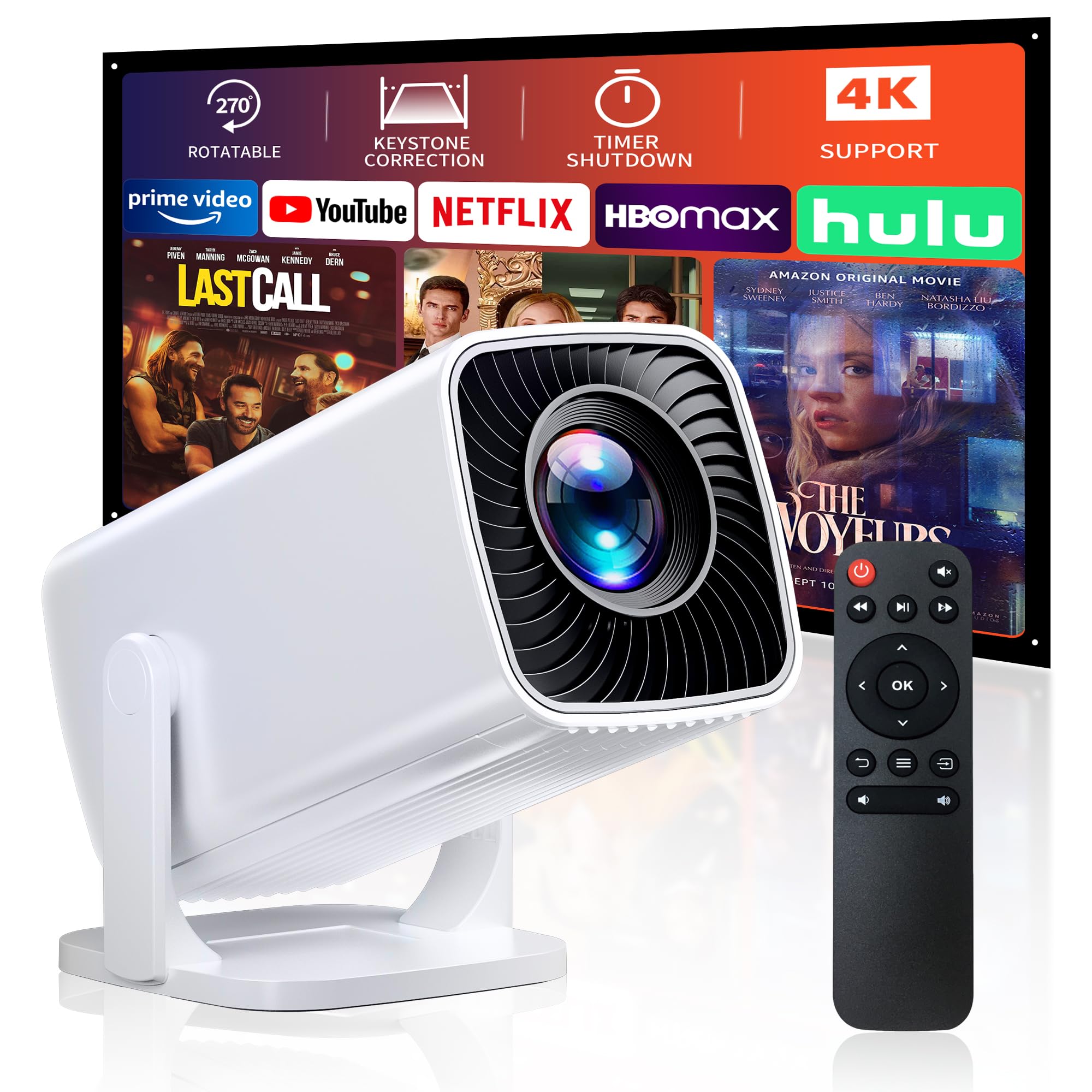
The Q100 is a projector you can throw in a backpack and forget about. It is small, light, and built around a 270-degree arm that lets it aim at a wall, a ceiling, or the side of a tent without a tripod.

That arm is the best thing about it. Swing it up and the picture lands on the ceiling from a nightstand; set it on a table and it throws across a room. Electric focus and keystone mean you square the image from the remote rather than fumbling with a wheel — a small thing we appreciated every time we moved it. The light source is rated for 50,000 hours, longer than anyone will keep the projector.

What it is not is a home theater projector. The panel is 720p, so a 1080p stream gets downscaled and will not look sharp next to the 1080p picks here, especially past 80 inches. There is also no Wi-Fi or Bluetooth on board, so a streaming stick in the HDMI port, or a cable from your phone, is how content gets in.

For a kids' room, a dorm, a camping trip, or a first projector you are not sure you will use, that is enough. Set expectations at big picture rather than big cinema and it delivers exactly that, which is the whole job at this level.

Pros

  • Fits in a backpack
  • 270-degree stand aims anywhere
  • Electric focus and keystone
  • Least expensive pick here

Cons

  • 720p native panel
  • No Wi-Fi or Bluetooth
Our verdict

Buy it for a backpack, a dorm room, or a kid's first projector: it throws big, aims anywhere, and asks almost nothing of your budget.

Check Latest Price

How We Tested Short Throw Projectors in Real Rooms

We started by rounding up every short throw and ultra short throw model we could find, then cut anything without HDMI, without a built-in streaming platform, or priced in a way that made no sense next to a 75-inch television. That left eight projectors, and we lived with them for six months in three rooms: a living room wall at 100 inches, a dim basement, and a bedsheet in the backyard.

Setup began with a tape measure. I marked the floor at the distance each one needed to fill a 100-inch image, because that number decides whether it sits on your console or eats your coffee table. I nudged each projector off-axis on purpose and timed how long auto focus and keystone took to square the picture again, then checked corner sharpness on a text-heavy slide. A light meter read the center and corners with the blinds open and the lamps on, and I watched the same HDR night scene and the same daytime football broadcast on every unit to see which ones crushed shadows or blew out the field.

Noise got measured with a decibel meter three feet away during a quiet dialogue scene, since a fan you can hear over explosions is a different problem from one you can hear over conversation. I plugged a streaming stick, a console, and a soundbar into each HDMI port, paired Bluetooth headphones, and switched inputs mid-episode to see what dropped. Every unit was unboxed solo and timed from box to watchable image, then tried on a media console and, where practical, a ceiling mount. Long Sundays of football plus a movie back-to-back showed which ones ramped their fans, dimmed, or shut down, and the final ranking came down to picture and brightness first, then whether the extras saved you from buying anything else.

How to Choose a Short Throw Projector

Start With the Throw Ratio

Throw ratio is the distance to the screen divided by the width of the image. A true short throw runs roughly 0.4 to 0.7, so a 100-inch picture lands four to six feet from the wall. An ultra short throw sits near 0.2 and lives on the console directly beneath the screen, which is why it can replace a television without any ceiling work.

The trap is the word itself. Plenty of models sold as short throw sit close to 1.0, and the TOPTRO A2 and PUTRIMS P66 show what that means in practice: about seven to nine feet of room for a 100-inch picture. Measure the distance you have, divide it by the image width you want, and shop from that number rather than the title.

Brightness, Light Source, and the Room

Lumens only mean something relative to the light around them. Around 500 to 700 is an after-dark projector; 3,000 is comfortable with lamps on; 3,500 and a laser is what you want if the room has windows you refuse to cover. Light source matters for the long run: a lamp is bright and inexpensive to build but rated around 10,000 hours and replaceable, while lasers run 20,000 to 30,000 hours and hold their brightness.

Ratings are not comparable across brands. A number in a product title, a number on a spec sheet, and an ISO lumen figure can describe very different amounts of light, so compare models in the same rating system and treat the marketing headline as a ceiling rather than a measurement.

Plan the Placement and the Screen

Ultra short throws are unforgiving. The unit has to be level, square to the wall, and near the exact height the screen expects, or the image becomes a trapezoid you correct with keystone — which costs resolution, because the projector is digitally reshaping the picture. Budget for an ambient-light-rejecting screen if the room is not dark; it is the single biggest upgrade to a UST in daylight.

Short throws on a shelf or ceiling mount are far more tolerant, and an inexpensive mount is fine as long as the hole pattern matches the projector. Check the pattern before you buy hardware, not after.

Sound, Streaming, and Gaming

Assume you will add one thing. Most built-in speakers handle dialogue and nothing else, and the exceptions are worth paying for — the Epson's Yamaha 2.1 system is the reason to choose it. A streaming stick solves the projectors with no app platform, and a soundbar on the audio output solves the rest.

For gaming, look for a low-latency mode and, on the 4K ultra short throws, 120Hz or 240Hz input. The difference between a projector with a real game mode and one without is more noticeable than the gap between 1080p and 4K on a 100-inch screen.

Frequently Asked Questions

Final Verdict

The BenQ TH671ST is the projector we recommend to most people, and the reason is geometry: 100 inches from five feet, so it fits a room you already own. It is bright enough for a lamp-lit living room, quick enough for a console, and covered for three years.

Spend more only if the projector is replacing the television rather than supplementing it. The Hisense PX3-PRO is the better living-room citizen — 4K, triple laser, Google TV, and enough output to survive daylight — and the AWOL LTV-3000 Pro gets you most of that for less if you already have sources and a dark room.