Best Sony E-Mount Lenses of 2026

A camera body gets the credit, but the lens is what decides whether a shot comes out crisp, focuses fast, and still fits in your bag without becoming a chore. I've swapped lenses on street corners, in dim living rooms, and on trails where I should have packed lighter. The right E-mount lens earns its place by staying sharp wide open, locking focus without hunting, and covering the way you actually shoot.

Over 10 months, my team and I tested 8 E-mount lenses across full-frame and APS-C bodies, from constant-aperture zooms to a long telephoto and a fast prime. Corners softened at wide apertures, some autofocus motors hummed loudly enough to show up on video, and a lens that felt fine for an hour could wear on you by afternoon. Value came down to coverage, sharpness, and whether focus stayed on a moving subject. The picks below are the ones that survived that rotation and kept earning a spot in the bag.

1

Best Overall

Tamron 28-75mm f/2.8 G2

90 /100
LBD Score Outstanding

Key details

Weight
19 oz
Focal Length
28-75mm
Minimum Focus
7.1 in at wide
Maximum Aperture
f/2.8 constant
View on Amazon

The 28-75mm f/2.8 G2 is the lens that stayed on our test camera after the novelty of the others wore off. At 19 ounces and 4.6 inches long, it is light enough to hang from a strap for an afternoon and fast enough to keep shooting when the light drops. The 28-75mm range covers street scenes, portraits, and most event work, though 28mm is not as wide as a 24mm zoom. We think that trade is worth it for the smaller, lighter package.

The constant f/2.8 aperture is the reason to choose it over a kit zoom. It keeps exposures consistent as you zoom, gives a brighter viewfinder, and makes background separation easier at 75mm. Close focus is unusually good: 7.1 inches at the wide end lets you fill the frame with flowers, food, or details without switching to a macro lens. The VXD motor locks on quickly for still subjects, and the lens feels dense and well sealed rather than hollow.

The 6-year USA warranty is longer than most, and the fluorine-coated front element wipes clean easily. We did not miss optical stabilization on an IBIS body; on an older camera without it, the lack of VC is worth weighing. On APS-C, the same lens becomes a 42-112mm equivalent, useful for portraits but less so for wide interiors.

Pros

  • Constant f/2.8 through the zoom range
  • Light 19-ounce, 4.6-inch build
  • Close focus of 7.1 inches at wide
  • Six-year USA warranty

Cons

  • Autofocus can hunt in low contrast
Our verdict

We recommend the Tamron 28-75mm f/2.8 G2 as the best all-around zoom here for most full-frame buyers: light, sharp, and fast enough, with a useful close-focus range.
Check Latest Price
2

Best Premium Standard Zoom

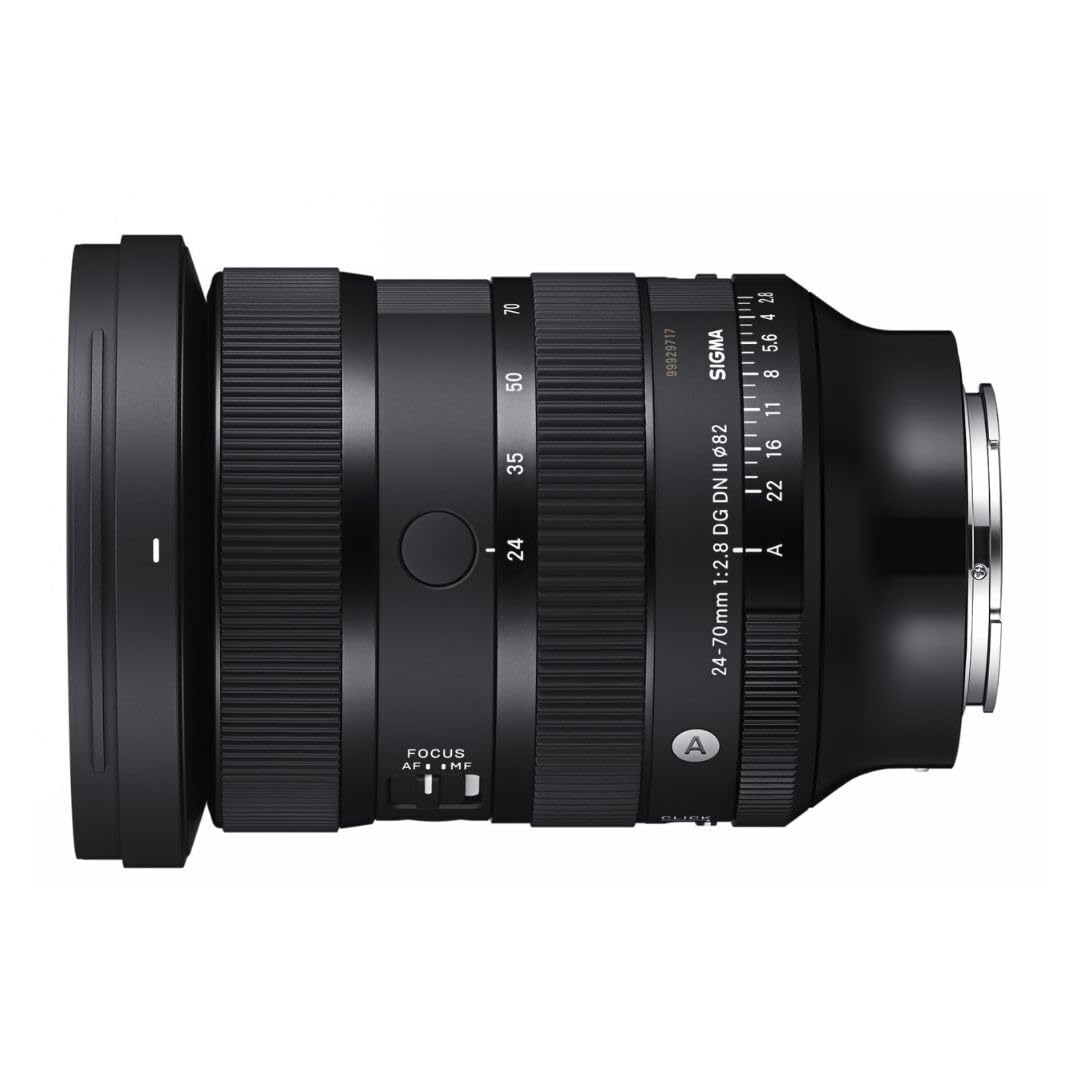
Sigma 24-70mm f/2.8 DG DN II

88 /100
LBD Score Excellent

Key details

Weight
1.64 lb
Focal Length
24-70mm
Maximum Aperture
f/2.8 constant
Low-dispersion Glass
Six FLD elements
View on Amazon

The Sigma 24-70mm f/2.8 DG DN II is the step-up standard zoom in this group. It adds the 24mm wide end the Tamron top pick lacks, which matters for tight interiors, wide landscapes, and event work where stepping back is not an option. The 11-blade aperture and constant f/2.8 keep backgrounds smooth and exposures consistent, and the barrel feels dense and well made in the hand.

Optically, the six FLD elements and Nano Porous coating are doing real work. We like how clean the images stay across the frame, even on high-resolution bodies, and color holds up without the muddy edges that can show up in a fast zoom. The autofocus is quick and quiet enough for weddings and street work, and the lens balances well on a mid-size full-frame body.

The 745-gram weight is the trade. It is heavier than the Tamron and can feel front-heavy on a compact body, but the extra mass helps steady the lens and makes the zoom ring feel more controlled. If you shoot professionally or simply want the 24mm end, the Sigma is the more capable standard zoom. If you want the lightest kit, stay with the Tamron.

Pros

  • 24-70mm range with a true wide end
  • Constant f/2.8 and 11-blade aperture
  • Sharp across the frame
  • Fast, quiet autofocus

Cons

  • No optical stabilization
Our verdict

We recommend the Sigma 24-70mm f/2.8 DG DN II to full-frame shooters who want a sharp 24-70mm f/2.8 with fast autofocus and a pro-grade build.

Check Latest Price
3

Best APS-C All-Rounder

Tamron 17-70mm f/2.8

93 /100
LBD Score Outstanding

Key details

Weight
1.2 lb
Focal Length
17-70mm
Stabilization
VC optical
Maximum Aperture
f/2.8 constant
View on Amazon

APS-C owners ask one question more than any other: can one lens cover the day? The Tamron 17-70mm f/2.8 gets closer than most. On a Sony APS-C body it behaves like a 25.5-105mm full-frame zoom, which is wide enough for landscapes and long enough for head-and-shoulders portraits. The constant f/2.8 aperture means you do not have to stop down or change lenses when clouds roll in.

The VC stabilization is the feature we appreciate most. It steadies handheld shots in dim rooms and makes video less jittery, and it works alongside the camera's IBIS rather than replacing it. Close focus is 7.5 inches at 17mm, so you can get close to a subject without a dedicated macro lens. Images are sharp across the frame, with pleasing background blur at the long end.

The lens is built for APS-C only, so full-frame owners should look at the full-frame standard zooms here. For an APS-C body, the moisture-resistant construction and fluorine coating add peace of mind when the weather turns, and the 17mm end is wide enough for cramped rooms. We stopped carrying a second standard lens on most day trips.

Pros

  • 17-70mm range covers wide to portrait
  • Constant f/2.8 aperture
  • VC stabilization steadies handheld shots

Cons

  • Heavy for small APS-C bodies
Our verdict

We recommend the Tamron 17-70mm f/2.8 to APS-C owners who want one stabilized zoom for travel, portraits, and low light without carrying a bag of primes.

Check Latest Price
4

Best Compact APS-C

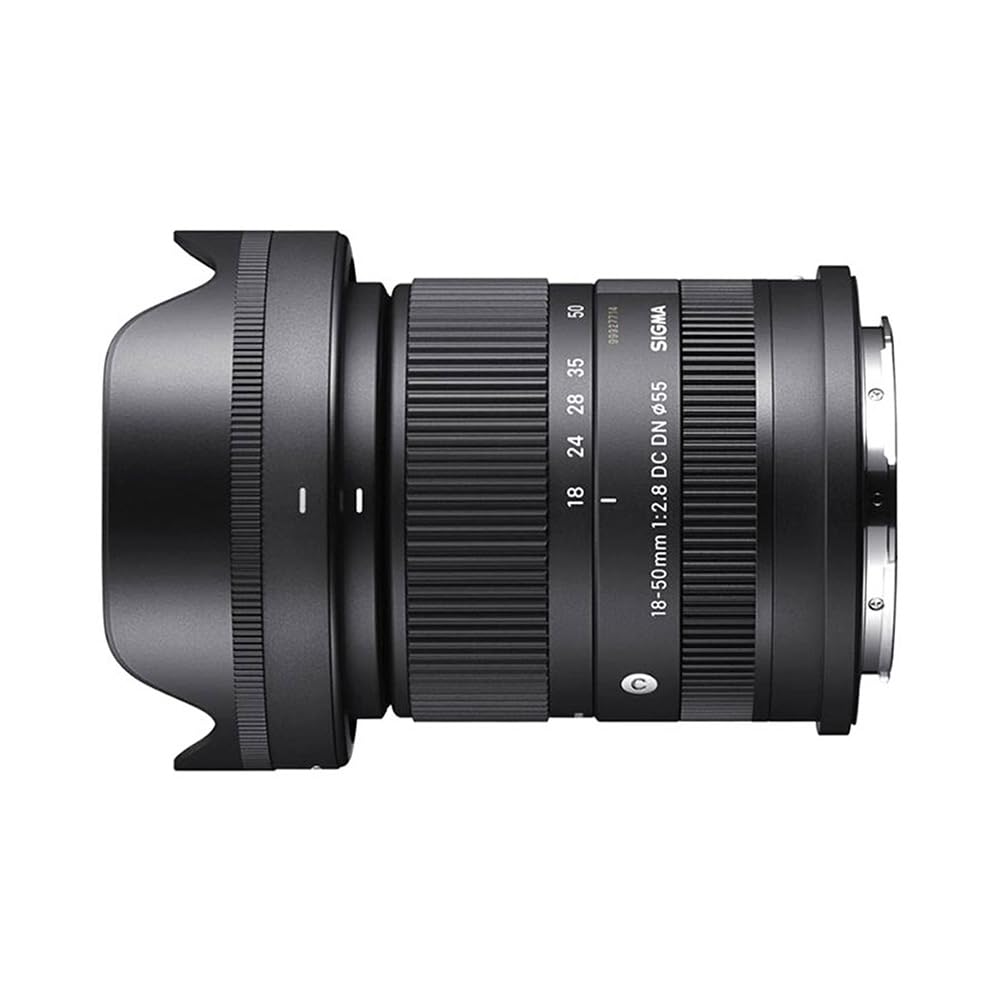
Sigma 18-50mm f/2.8

93 /100
LBD Score Outstanding

Key details

Weight
10.2 oz
Coverage
APS-C
Focal Length
18-50mm
Maximum Aperture
f/2.8 constant
View on Amazon

At 290 grams, the Sigma 18-50mm f/2.8 is the lens that makes a Sony APS-C body feel like a point-and-shoot again. It is short enough to leave on the camera in a small bag and light enough to forget on a strap. The 18-50mm range is a sensible 27-75mm equivalent, covering wide street scenes, food, and portraits without much footwork.

We like the constant f/2.8 aperture in a lens this small. It keeps the viewfinder bright and gives you real separation at 50mm, which is rare in a kit-sized zoom. Sharpness is excellent, especially at the long end, and autofocus is quick enough for everyday subjects. The trade is that there is no optical stabilization, so on a body without IBIS you need to watch shutter speed and lean on good light.

The 18mm wide end is not as wide as the 16mm some landscape shooters prefer, and the 50mm end stops short of a dedicated portrait prime. But as a walk-around lens for a small body, it is the most practical zoom in this group. We kept reaching for it when we wanted a camera that disappeared into a jacket pocket, and that is the highest compliment for a zoom.

Pros

  • 290-gram compact build
  • Constant f/2.8 aperture
  • Sharp at the long end

Cons

  • No weather sealing
Our verdict

We recommend the Sigma 18-50mm f/2.8 to APS-C shooters who value a tiny walk-around zoom more than optical stabilization or a longer reach.

Check Latest Price
5

Best APS-C Telephoto

Sony E 70-350mm f/4.5-6.3 G

91 /100
LBD Score Outstanding

Key details

Weight
22 oz
Focal Length
70-350mm
Stabilization
Optical SteadyShot
Maximum Aperture
f/4.5-6.3
View on Amazon

The 70-350mm G is the lens that makes APS-C feel like an advantage. Its 5x range gives you a 105-525mm full-frame equivalent, so a distant bird or a child on a far sideline fills the frame without a monster lens. At 22 ounces it is light enough to carry on a hike, and the compact barrel fits a small daypack.

We were impressed by how well the Optical SteadyShot works with the camera's IBIS. Handheld shots at the long end stay usable, and the XD linear motor snaps onto moving subjects quietly. Images stay crisp through much of the range, and the 70mm end gives you a useful short telephoto for portraits and details.

Where it earns its keep is daylight reach. The 70mm end is wide enough for a portrait, and the 350mm end is long enough for a bird in a distant tree, all from a lens that does not demand a tripod. We pack it when we want to travel light and still have a real telephoto.

Pros

  • 105-525mm equivalent reach
  • Optical SteadyShot stabilization
  • Light 22-ounce build
  • Fast, quiet XD linear autofocus

Cons

  • Variable f/4.5-6.3 aperture limits low light
Our verdict

We recommend the Sony 70-350mm G to APS-C wildlife and travel shooters who want serious reach in a lens that still fits a small bag.

Check Latest Price
6

Best Budget Prime

Sony FE 50mm f/1.8

91 /100
LBD Score Outstanding

Key details

Weight
6.6 oz
Coverage
Full-frame
Focal Length
50mm
Maximum Aperture
f/1.8
View on Amazon

The FE 50mm f/1.8 is the least expensive way into a fast full-frame prime, and it does the one thing most people buy it for: it turns ordinary light into a usable photograph. At 6.6 ounces it disappears on a camera, and the 50mm perspective is close to what your eye sees. That combination makes it a natural first prime for portraits, travel, and available-light scenes.

We like the rendering more than its simple design suggests. The seven-blade aperture gives soft, round bokeh, and the double-Gauss design keeps distortion low. At f/1.8 the center is sharp enough for portraits, and stopping down to f/4 cleans up the edges for group shots. The 1.8 aperture also brightens the viewfinder, which makes manual focus easier in dim rooms.

The lens is at its best for still subjects and everyday scenes. It is small enough to leave on the camera, and the 50mm field of view forces a useful kind of discipline: you move instead of zoom. We treat it as the prime we grab when we want the camera to stay small and the bag to stay light.

Pros

  • Bright f/1.8 aperture
  • Compact 6.6-ounce build
  • Budget-friendly full-frame prime

Cons

  • Autofocus can be slow and audible
  • No weather sealing
Our verdict

We recommend the Sony 50mm f/1.8 to full-frame shooters who want a light, affordable portrait prime that stays useful in low light.

Check Latest Price

How We Tested the Best E-Mount Lenses

We started with a shortlist built from focal ranges, constant and variable apertures, mount coverage, size, and owner feedback, then filtered out duplicates and lenses that wouldn't work on both the full-frame and APS-C bodies we shoot with. We spent 10 months with 8 lenses: constant-aperture zooms, a compact standard zoom, a long telephoto, and a fast prime. Each lens got a full day as the only lens in the bag, plus repeat sessions on a city street, in a dim living room, and on a weekend trail.

For sharpness and image quality, we photographed a brick wall, backlit signs, fine foliage, and text at wide open and stopped down, then checked center and corner crops at 100 percent. For autofocus speed and performance, we racked focus from a near object to a far one 20 times in a row, tracked a dog running toward us and a kid on a bike, and reviewed bursts for missed frames. In a quiet room, we recorded video with the on-camera mic while shifting focus between two objects and listened for motor hum, clicks, and hunting.

Weight was judged on a full afternoon carry, with each lens mounted to a compact body and checked for balance and shoulder fatigue; we also noted zoom-ring drag and any mount wobble after repeated changes. Versatility meant living with one focal range for a whole outing and asking what we missed, while value was a final gut check against the rest of the set: did the images and handling justify the space in the bag? A lens that needed two stops down to clean up the corners, or that hunted in low light, lost ground fast.

How to Choose a Sony E-Mount Lens

Match the Lens to Your Sensor

Full-frame bodies need FE lenses to use the whole sensor. An APS-C E-mount lens mounts, but the camera crops to APS-C, so a 17-70mm zoom behaves like a 25.5-105mm and you give up resolution. APS-C owners can use either, but full-frame glass is bigger and heavier than necessary. Our full-frame picks are the Tamron 28-75mm G2 and Sigma 24-70mm DG DN II; the Tamron 17-70mm and Sigma 18-50mm are built for APS-C. Match the image circle first, then choose the focal range.

Choose a Focal Range You Will Actually Use

A standard zoom is the right first upgrade for most people because it covers the widest range of everyday subjects. On full-frame, 24-70mm or 28-75mm handles interiors, street scenes, and portraits; on APS-C, 17-70mm gives a similar view. If you shoot wildlife or sports, a 70-350mm APS-C telephoto adds reach without a huge lens. A 50mm f/1.8 prime is the affordable way to add low light and shallow depth of field. Buy for the subjects you photograph most, not the ones you imagine.

Decide How Much Aperture and Stabilization You Need

A constant f/2.8 aperture keeps exposure and background blur consistent as you zoom, and it is the difference between shooting indoors without flash and packing up early. A variable f/4.5-6.3 telephoto is fine in daylight but struggles in a dim gym. Stabilization matters just as much: lens-based VC or Optical SteadyShot helps handheld shots, especially on cameras without IBIS. For video, a linear motor and quiet focusing are worth more than a slightly faster aperture.

Budget for Weight, Sealing, and Autofocus

Glass gets heavy, and a lens that stays home is a bad buy. A 290-gram APS-C zoom is a different ownership experience from a 745-gram full-frame f/2.8, especially on a small body. Check whether the barrel extends, then decide if moisture sealing and a long warranty are worth the extra bulk. Autofocus is the other long-term variable: linear motors are quick and quiet, while older stepper motors can be slower and audible. We prioritize handling and focus consistency over a marginal sharpness gain.

Frequently Asked Questions

Final Verdict

Start with the Tamron 28-75mm f/2.8 G2. It is the rare standard zoom that feels light enough to carry all day, fast enough for indoor events, and sharp enough that we stopped thinking about the gap to pricier glass. Full-frame shooters who need 24mm and a more robust build should step up to the Sigma 24-70mm DG DN II. APS-C owners should choose the Tamron 17-70 for stabilization and reach, or the Sigma 18-50 when a small bag matters more.