Best RV TV Antennas of 2026

You've leveled the rig, plugged in the TV, and run a channel scan — and all you get is a blue screen and one fuzzy PBS station. A good RV TV antenna is the difference between a movie night and staring at the ceiling. It pulls in local broadcasts over the air, so you're not relying on campground cable or a data plan that fades with the scenery.

I've spent enough nights in campgrounds to know the antenna is an afterthought until it quits. Over the past six months, my team and I tested eight RV TV antennas at sites ranging from open desert to dense tree cover, paying attention to installation, channel count, reception, build quality, and value. We also looked at whether each one is a genuine upgrade or just a fresh replacement. One thing I wish more shoppers knew: a taller mast and a rotatable head often beat a fancy amplifier, because amplification helps only when the antenna is aimed well. Below are the ones that made the cut.

1

Best Overall

Winegard Sensar IV RVW-395

92 /100
LBD Score Outstanding

Key details

Range
55 miles
Aiming
Crank-up, rotate from inside
Weight
10.2 lb
Amplifier
Built-in
View on Amazon

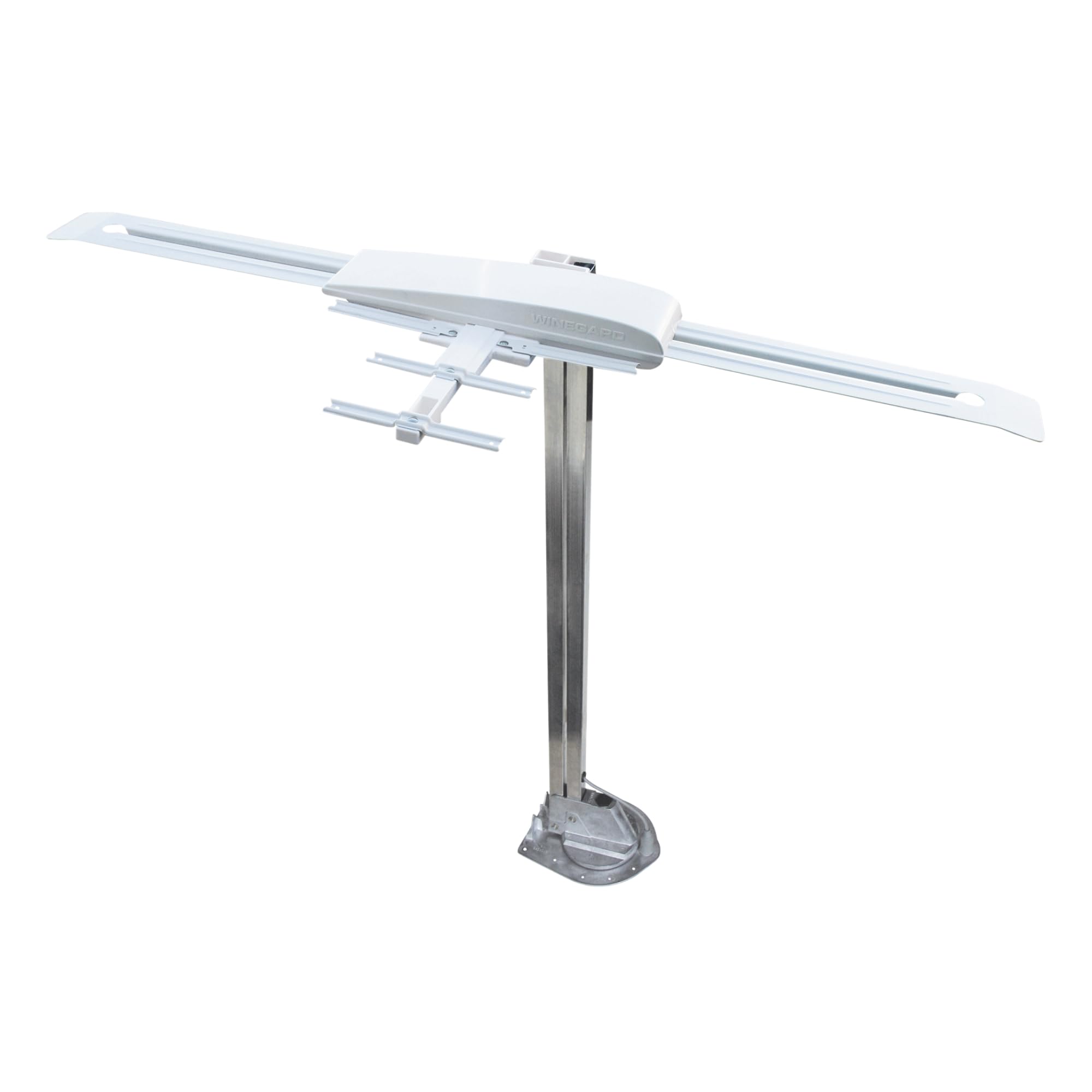
The Sensar IV does two jobs from a single handle inside the coach: it raises the batwing roughly four feet above the roof and rotates it until the picture locks. Aiming is the whole point. A directional antenna concentrates its gain on one heading, so when you're parked a long way from the transmitters with a ridge in between, you can hunt for the angle that works instead of accepting whatever arrives. Of the two antennas we recommend here, this is the one that goes on the trips where reception is the reason you brought a TV.

Behind that handle, the built-in amplifier and the Wingman UHF element do the quieter work. Most digital stations sit in the UHF band, and the Wingman is a reflector-and-director set that sharpens the head's UHF response rather than just turning up the volume on everything, noise included. We paid attention to that distinction, because a dumb amplifier makes a clean weak signal louder and a dirty one worse. Pointed at the towers, this is the antenna in this group that holds a lock on channels a fixed dome drops.

The head is the one part that feels lighter-duty than the mast it rides on. The crank gear and the powder-coated boom feel like the substantial half of the assembly; the wing itself is thin, and if you're the sort who leaves an antenna standing through a storm, that's the piece to think about. Winegard covers parts for two years and labor for one, which is a fair floor for something that lives outdoors year-round.

The practical numbers are easy enough to plan around. Range is listed at 55 miles in the specifications and 65 in the headline, so plan on the smaller figure and treat anything beyond it as a gift. At 10.2 pounds, most of the mass in the base and boom, a swap is a two-hands-on-a-ladder job rather than something you do one-armed. Winegard's RV Halo app adds an augmented-reality aiming assist — the kind of feature that sounds like a gimmick until you're on a roof at dusk, phone out, trying to work out which stand of trees the towers are behind.

Pros

  • Aiming squeezes out stations fixed antennas miss
  • Built-in amp plus a UHF-optimized wing
  • Reuses existing crank hardware and coax
  • NextGen TV and 4K compatible

Cons

  • Wing head feels lighter-duty than the mast
Our verdict

Buy this one if your camping takes you away from cities: it's amplified, it aims, and that combination pulls in stations a fixed antenna simply won't hold.
Check Latest Price
2

Best Set-And-Forget

Winegard Air 360 A3-2000

84 /100
LBD Score Excellent

Key details

Mount
RV roof
Range
50 miles
Pattern
Omnidirectional 360 degrees
Dimensions
17.25"L x 17.25"W x 6.9"H
View on Amazon

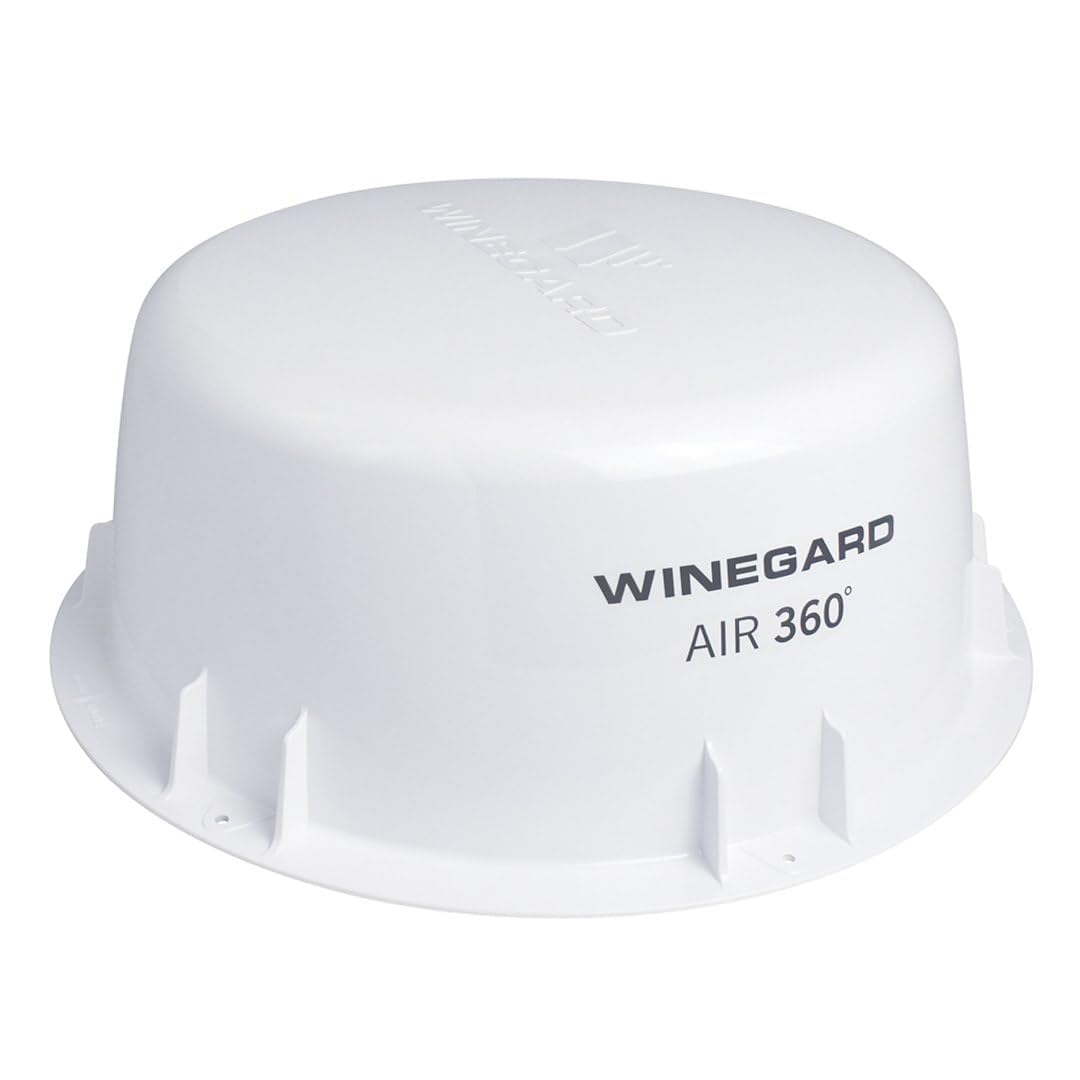
The Air 360 costs a fraction of our top pick, and it asks almost nothing of you: no crank, no aim, no trip to the roof before you pull out. It's a low dome that sits flat against the roof and pulls VHF and UHF from every direction at once. That omnidirectional pattern is also the catch. Splitting sensitivity across 360 degrees means no single heading gets the focus a pointed batwing can put on it.

Reception is where the trade shows up, and it tracks with the 50-mile rating. Parked within reach of a city, the Air 360 is a pleasure: one scan, the majors, done, and nothing to remember when you leave. Push past 30 or 40 miles with hills or heavy timber in the way and the channel list thins out quickly. We rate it the better antenna for weekend sites near home and the wrong one for boondocking a long way out.

The install is the friendliest part. The dome bolts down, wires into the same coax an old antenna used, and has no aiming mechanism to align, grease, or forget. It also reads as part of the coach rather than a piece of gear bolted to it, which is more than a raised batwing can claim. The flat, fixed shape keeps wind drag down on the highway, and that same shape is why there's nothing to remember at the dump station.

Pros

  • Nothing to crank, aim, or lower
  • Low profile cuts wind drag on the road
  • Fits over existing roof wiring

Cons

  • Nothing to aim when a station comes in weak
Our verdict

We recommend it for campers who stay near towns and would rather never touch an antenna again — you give up reach, not convenience.

Check Latest Price

How We Tested the Best RV TV Antennas

We started by researching the RV antenna market — crank-up batwings, low-profile omnidirectional domes, amplified and unamplified models — and narrowed the field by mounting style, signal range, and price. We landed on eight units and tested them over six months, with each antenna spending time on actual rigs rather than a lab bench.

At each campsite, I installed the antenna myself, timing the job from opening the box to the first channel scan. I noted whether the mount needed a second person, how the cable routed through the roof, and whether the hardware felt sturdy enough to survive highway vibration and UV exposure. After each trip, I checked the crank gears, housing seams, and mounting brackets for looseness or cracking.

For reception, we parked in three kinds of sites: open desert with a clear line to the towers, a wooded campground with heavy canopy, and a fringe area where the signal was weak. At each spot, I raised the antenna, rotated it toward the broadcast towers, and ran a channel scan. I counted the channels that came in cleanly, noted which ones dropped during a rainstorm, and compared the results with a fixed omni antenna to see how much aiming actually mattered.

To judge value, I weighed the price against the number of stable channels and the build quality, not just the spec sheet. For upgrade shoppers, I checked whether the new antenna could reuse the existing coax and mount, or whether it required drilling new holes and running new cable. The units that scored best were the ones that installed cleanly, held their aim on the road, and pulled in more channels than the old antenna they replaced.

How to Choose an Rv Tv Antenna

Directional, Omnidirectional, or Automatic

A directional antenna, the crank-up batwing on most RVs, concentrates its gain on one heading. That's why it can hold a station 40-plus miles out, and why it does nothing useful until you point it. An omnidirectional dome splits the same sensitivity across the whole horizon: no aiming, no cranking, and a shorter effective reach. Both of our picks illustrate the split — the Sensar IV is the one you aim, the Air 360 is the one you don't.

Automatic models motorize the aiming and hunt for the strongest heading at the push of a button, which is genuinely welcome at a strange campground after a long drive. You pay for that up front, and you still run a channel scan afterward. Whatever you mount, a crank-up comes down before the wheels roll: a raised mast meets branches, canopies, and pump canopies, and the repair is never just the antenna.

What a Range Rating Really Means

Those mile figures assume flat, open ground and a clear line to the transmitters. Hills, timber, buildings, and even a wet canopy of leaves cut into them, which is why one campground hands you 40 channels and the next hands you four. Our top pick is billed at 65 miles in its headline and 55 in its own specifications; the smaller number is the one to plan around.

An amplifier helps a weak but clean signal survive a long coax run. It cannot invent signal that never reached the roof. If your regular spots sit more than 45 miles from the towers, put your money into directionality and mounting height before you put it into amplification.

Power, Wiring, and the Amplifier Switch

An amplified antenna needs 12 volts, usually delivered through the wall plate where the coax terminates. That plate has a small switch or button, and it has to be on for the amplifier to do anything at all. When a new antenna underperforms, rule out a dead amplifier and a loose coax connector before you blame the antenna.

So confirm you have a powered plate before you buy an amplified model. Replacing an old crank-up almost always means you do, and the existing coax run is usually reusable. Starting from scratch means adding the plate and the cable run to the job, not treating them as an afterthought.

Roof-Mount or Portable — and the Install Behind It

Bolting anything to an RV roof means drilling a hole and sealing it properly, and that's the part people underestimate. A replacement is far easier than a first install: the old base plate, the old hole, and the old wiring are all where you need them. Measure the old footprint before you order, because base plates are not universal.

Portable antennas exist for anyone who won't put a hole in the roof. They trade setup time at every stop, and a weaker indoor position near a window, for the ability to pack up and move. That can be the right answer for a small trailer or a rented coach — just don't expect a tabletop unit to match a roof-mounted one for reach.

Frequently Asked Questions

Final Verdict

The Winegard Sensar IV is the antenna we tell people to buy. It's the only one here that lets you point the gain where the transmitters actually are, and at a campsite with real distance on it, that's what turns a marginal signal into a watchable one. Plan around its 55-mile figure and it does what you bought it for.

The Air 360 is the right buy for a different camper: someone who stays within reach of a city, hates fiddling, and wants a roof they never think about. It gives up reach to get there, and for a lot of weekenders that's the correct trade. Buy the dome for convenience, the batwing for stations.