Best Overall

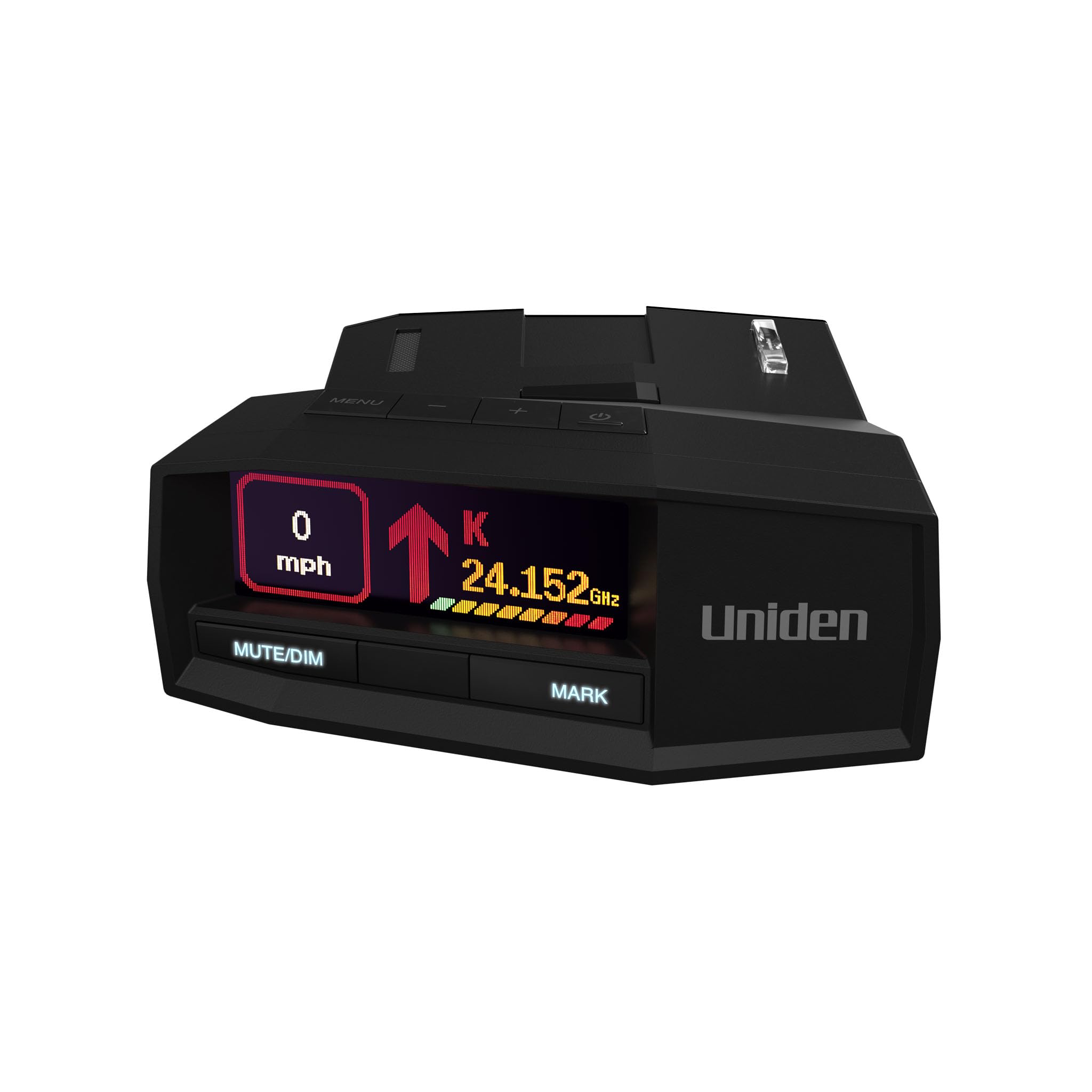
Uniden R7
Key details
- Weight
- 6.72 oz
- Display
- Multi-color OLED
- Directional Arrows
- Yes, dual antennas
- False-alert Filtering
- GPS auto-mute memory
Two antennas, one facing forward and one facing back, are what put arrows on the R7's screen, and they change how you read every alert. A Ka hit pointing ahead means check your speed and stay off the throttle. The same hit pointing behind means the cruiser is already past and the alert will fade on its own. That is far more useful than a beep with no direction attached to it.
Arrows plus GPS lockout memory are why the R7 is the detector we recommend first. It remembers the store door and the fixed speed sign on your commute and mutes them after a pass or two, so what is left is worth looking up for. It costs a good deal less than the flagships here and gives up very little that a normal driver will notice week to week.
The hardware holds up its end. The multi-color OLED shows as many as four signals at once with band and strength, and the 6.72-ounce body tucks behind the mirror without eating your view of the road. The menu runs deeper than most people need, and one session with the K-band filtering settings before a long trip is the difference between a quiet detector and a chatty one.
The one piece of housekeeping is the mount. The suction cup holds on clean glass, but a windshield that bakes in a parking lot will eventually drop it, and a detector lying on the dash is not detecting anything; an adhesive mount fixes that for good.
Pros
- Arrows show whether the threat is ahead or behind
- GPS auto-mute memory quiets your regular routes
- Up to four signals at once on a color screen
- Long reach without flagship money
Cons
- Deep settings menu takes a session to tune
Our default recommendation: arrows, GPS lockouts, and long reach for a good deal less than the flagships.