Best Prime Lenses of 2026

The day I swapped my kit zoom for a cheap 50mm, my pictures improved before I did. That's the bargain a prime offers: one fixed focal length, no zoom ring, and an aperture wide enough to shoot indoors without a flash and melt a background into something that looks deliberate. It fixes the two things kit lenses handle worst — dim rooms and portraits where the fence behind your subject fights with their face.

My team and I have spent the past six months shooting with 12 primes, from budget 50mms to ultra-wide glass, and the pattern has been stubbornly consistent. The lens you keep is the one that's sharp with the aperture wide open and focuses quickly and quietly, not the one with the prettiest spec sheet. Focal length is the choice that matters most and the one people make last: a 50mm on a crop sensor behaves like a short telephoto, while a 20mm swallows a whole room and flatters nobody's nose.

A lens that only sharpens up at f/5.6 has thrown away the aperture you paid for, which is why so much of what follows came down to how these behaved wide open — in low light, at portrait distance, and with a moving subject.

1

Best Overall

Canon EF 50mm f/1.8 STM

96 /100
LBD Score Outstanding

Key details

Mount
Canon EF
Close Focus
1.15 ft (0.35 m)
Focal Length
50mm
Max Aperture
f/1.8
View on Amazon

A lamp-lit living room is where this lens makes its case. At f/1.8 the Canon pulls in enough light that you can shoot indoors without flash and still hold a shutter speed that stops people moving, and the background behind your subject falls away instead of competing with them. It weighs 5.6 ounces, so it stays on the camera rather than in the bag, and on an APS-C body it frames like an 80mm portrait lens.

Close focus is the underrated part. The minimum focusing distance is 1.15 feet with 0.21x magnification, which means you can fill the frame with a coffee cup, a flower, or a ring on a hand and still get soft falloff behind it. Seven diaphragm blades keep out-of-focus highlights round rather than pentagonal. Focusing comes from a stepping motor that stays quick in good light and quiet enough for most video work.

What you give up is not much. There's no stabilization, though at 50mm in decent light you won't miss it, and the 49mm filter thread makes a polarizer or an ND an inexpensive addition rather than a second lens purchase. We kept reaching for it instead of heavier glass sitting in the same bag, which is the entire argument for a nifty fifty.

Pros

  • 5.6 ounces, so it lives on the camera
  • f/1.8 makes indoor light usable without flash
  • Focuses to 1.15 ft at 0.21x

Cons

  • EF mount, so RF bodies need an adapter
  • Autofocus hunts in low-contrast light
Our verdict

The lens we recommend first to Canon EF shooters: fast, sharp, and versatile enough to cover portraits, dim rooms, and close-ups without a second thought.
Check Latest Price
2

Best Image Quality

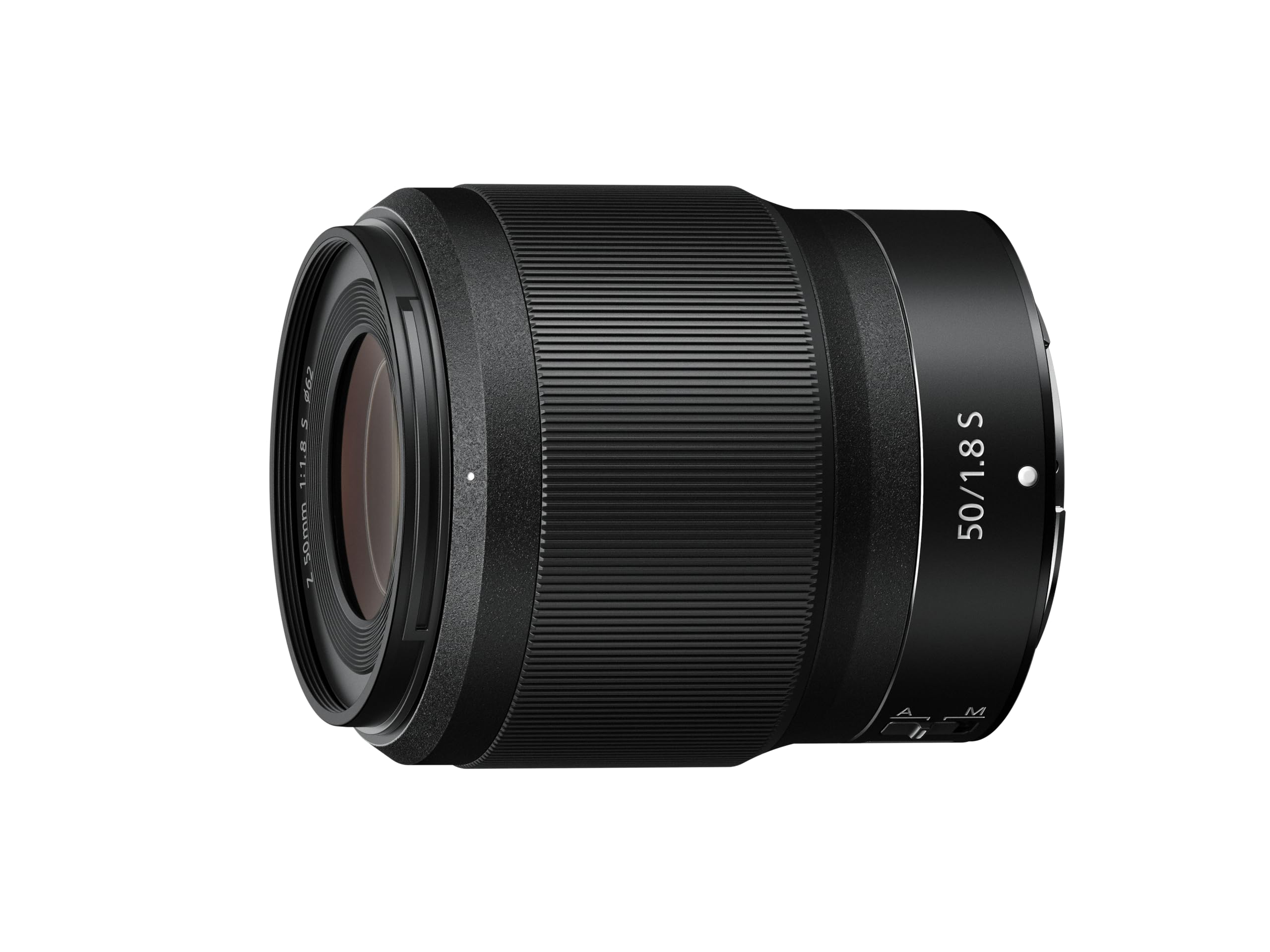
Nikon NIKKOR Z 50mm f/1.8 S

94 /100
LBD Score Outstanding

Key details

Mount
Nikon Z
Weight
14.6 oz
Max Aperture
f/1.8
Stabilization
Optical VR
View on Amazon

Set this next to the Canon and the difference isn't subtle. The Nikon is a bigger, heavier, more expensive lens built to a different standard: 14.56 ounces and a 62mm filter thread put it closer to a small zoom than to the plastic fifties most of us started on.

What the extra buys is resolution. Files come out crisp wide open at f/1.8, corners included, with almost no chromatic aberration and flare held firmly in check — the kind of performance that lets you shoot at the widest aperture instead of stopping down out of caution. Focus is handled by an ultra-quiet stepping motor, and the optical VR works with the body's stabilization for handheld shots as the light fails.

Video is the quieter argument for it. Focus pulls don't visibly shift the framing, the motor stays out of your soundtrack, and the VR steadies handheld clips in dim rooms. If your work ends up on a screen rather than a print, that matters as much as the resolution does.

Pros

  • Sharp wide open, edge to edge
  • Silent stepping motor suits video
  • Optical VR in a 50mm is rare
  • Almost no chromatic aberration or ghosting

Cons

  • Priced above every other standard prime here
Our verdict

For Nikon Z shooters who want the sharpest files a 50mm can give, this is the lens: wide-open detail, silent focus, and stabilization built in.

Check Latest Price
3

Best for Nikon DX DSLRs

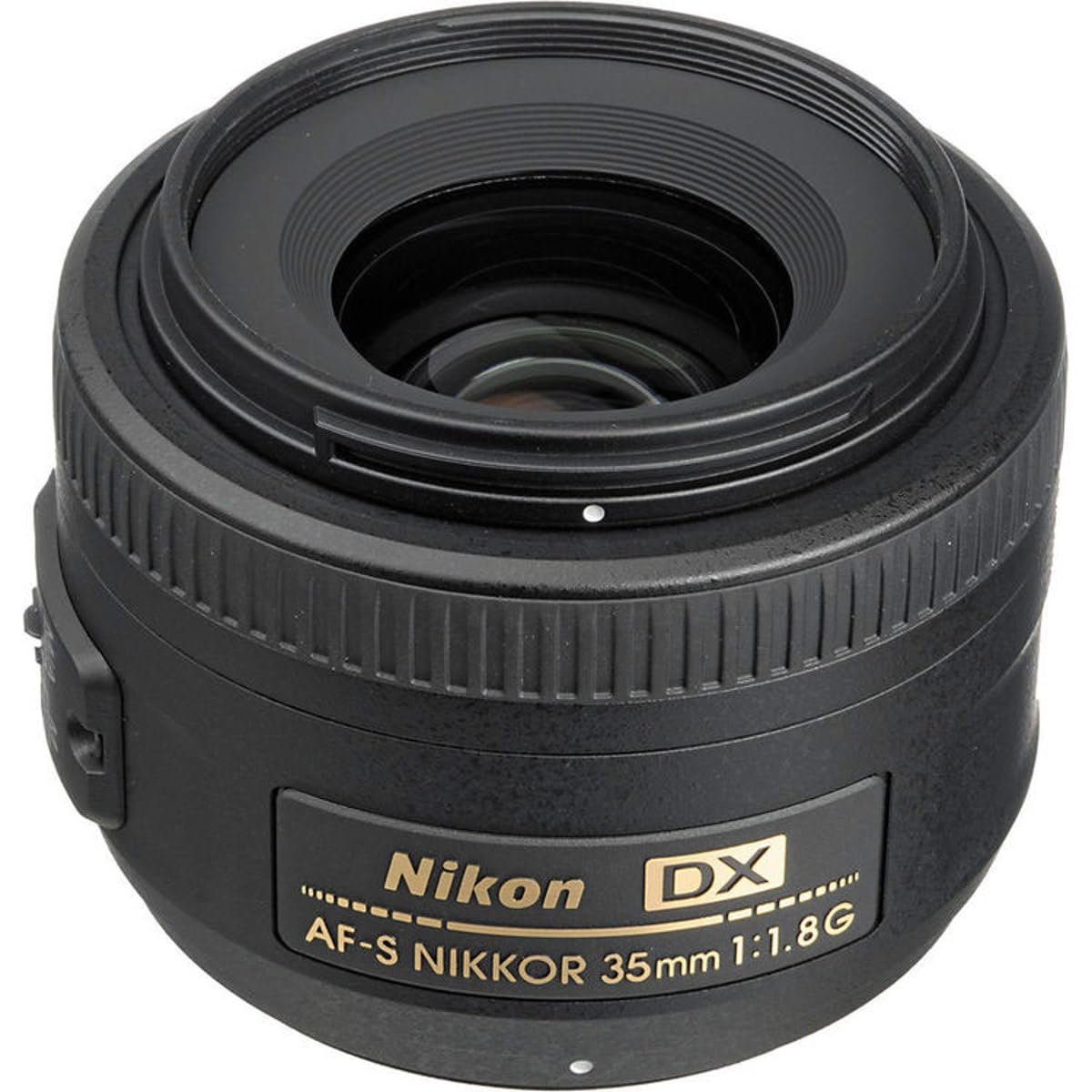
Nikon AF-S DX 35mm f/1.8G

96 /100
LBD Score Outstanding

Key details

Mount
Nikon F (DX)
Weight
7.04 oz
Focal Length
35mm (52.5mm equiv.)
Max Aperture
f/1.8
View on Amazon

Thirty-five millimetres on a DX body is 52.5mm, which is about the closest thing to the angle your eye expects — not wide, not telephoto, just the scene in front of you. That's the whole reason this lens ends up staying on the camera for entire afternoons: it makes a crop-sensor DSLR feel less like a compromise and more like a camera you chose.

The numbers are modest in the right way. It's 7.04 ounces, built from eight elements in six groups, and focuses down to 0.16x — close enough for food, flowers, and details. Focus comes from a silent wave motor with manual override, so you can grab the ring without flipping a switch on the body. Wide open at f/1.8 the center is genuinely sharp, and the seven-blade blur behind a subject is smooth rather than busy.

Format is the thing to understand before you order. This is a DX lens, so on a full-frame F-mount body it works only in DX crop mode, using the middle of the sensor and throwing the rest away. On the DX bodies it was designed for, that's irrelevant — and it's exactly why the lens stays this small and this reasonably priced.

Pros

  • Sharp wide open at f/1.8
  • Only 7.04 ounces on the camera
  • Silent wave motor with manual override
  • Close focus at 0.16x magnification

Cons

  • DX only
  • Focus can be slow to settle in dim light
Our verdict

For Nikon DX shooters this is the first prime to buy: small, sharp at f/1.8, and perfectly happy indoors without flash.

Check Latest Price
4

Best Wide-Angle

Sony FE 20mm f/1.8 G

93 /100
LBD Score Outstanding

Key details

Mount
Sony E
Weight
13.2 oz
Focal Length
20mm
Max Aperture
f/1.8
View on Amazon

A 20mm f/1.8 that weighs 13.2 ounces is a rarity, and it's the reason this one comes along on hikes. A fast ultra-wide usually means a bulbous front element, a heavy barrel, and a tripod. At 94 degrees this one takes in a whole room or a whole ridge line without the stretched, smeared corners that make wide-angle pictures look like wide-angle pictures.

Sharpness holds out to the edges, which is precisely what architecture and night skies demand, and the two XD linear motors focus fast and silently — useful in a street scene where you'd rather the camera didn't announce itself. Focus also gets close enough to fill the frame with a foreground subject while the background stretches away, the trick that makes a wide shot look deliberate.

It's premium glass at a premium price, and it's not weather sealed, which is the one thing we minded while carrying it through wet weather. For a landscape, interiors, or astro specialist it's still the wide lens we recommend here, because nothing else in this group gets you this much angle and this much aperture at a weight you'll forget about.

Pros

  • Sharp corner to corner wide open
  • 13.2 ounces for an f/1.8 ultra-wide
  • Fast, near-silent linear motors
  • Close focus with very little distortion

Cons

  • Premium price for a wide prime
  • Not weather sealed
Our verdict

For Sony E bodies pointed at landscapes, interiors, or night skies, this is the wide prime we point you to — sharp, light, and genuinely fast.

Check Latest Price
5

Best Budget Portrait

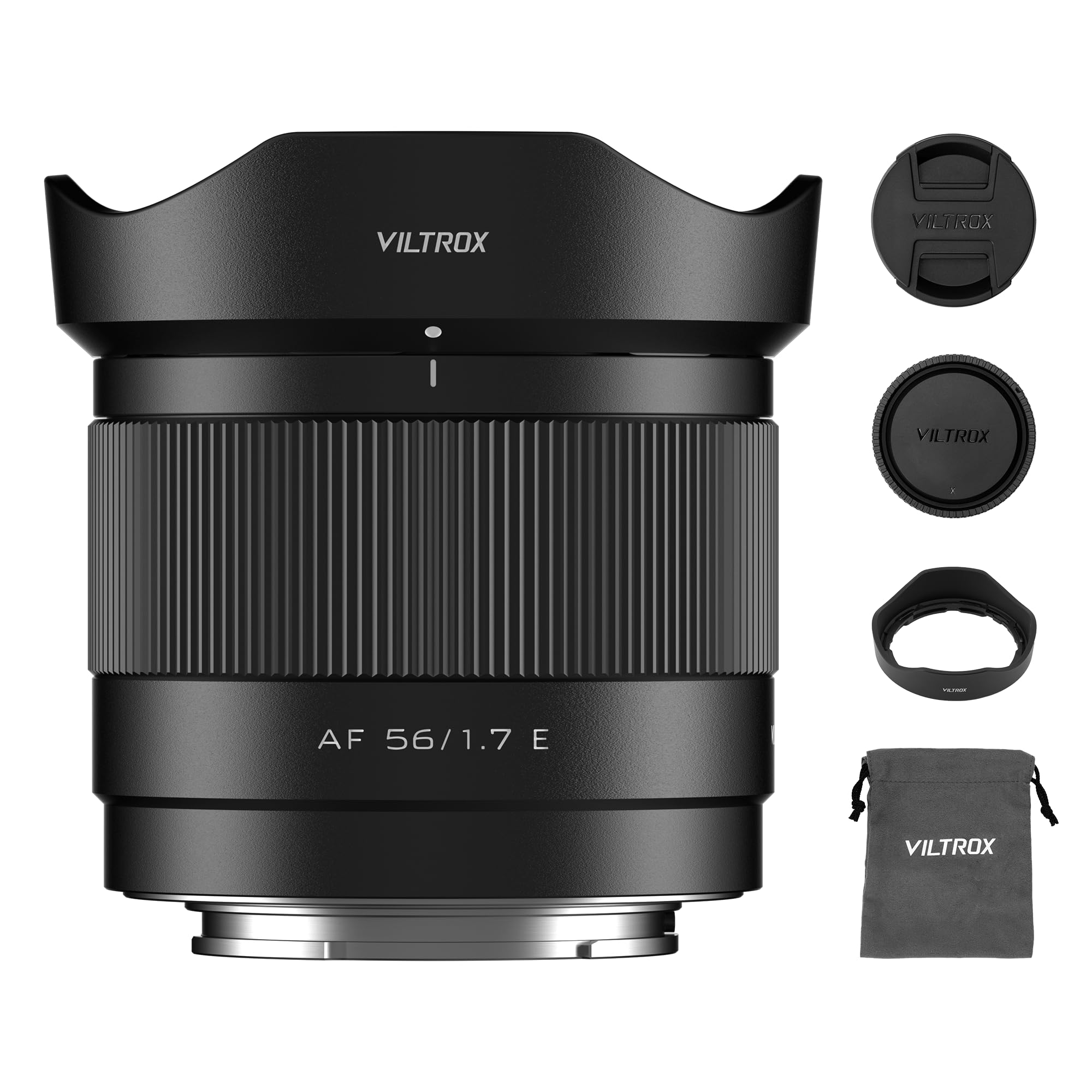
Viltrox AF 56mm f/1.7 Air

89 /100
LBD Score Excellent

Key details

Mount
Sony E (APS-C)
Weight
6 oz
Focal Length
56mm (85mm equiv.)
Max Aperture
f/1.7
View on Amazon

Fifty-six millimetres on Sony APS-C frames like 85mm on full frame — the length portrait photographers reach for because it flatters a face without flattening it. Viltrox gets there in a lens that weighs 170g and is roughly a palm wide. That's the part that surprised us: an 85mm-equivalent f/1.7 you can drop into a jacket pocket and forget about until you need it.

The optical formula is more ambitious than the rest of the lens suggests: 11 elements in nine groups, four of them ED glass, and nine rounded aperture blades. In practice that means clean, sharp files wide open and background blur that stays smooth rather than smeary. The STM motor works alongside the camera's eye and face detection, so the body does the aiming and you can watch the expression instead of the focus point.

Two limits come with the small size: it's built for APS-C bodies, and it isn't weather sealed. Neither is unusual for a lens this affordable, and neither touches the job it's for — photographing people, indoors or out, with the background falling away behind them.

Pros

  • 85mm-equivalent portrait framing on APS-C
  • 170g and palm-sized
  • Sharp wide open with smooth bokeh
  • Nine rounded aperture blades

Cons

  • APS-C format only
  • No weather sealing
Our verdict

Sony APS-C shooters who want flattering portraits without spending much should start here: 85mm-equivalent framing in a 170g lens.

Check Latest Price
6

Light Stills Kit

Sony FE 50mm f/1.8

91 /100
LBD Score Outstanding

Key details

Mount
Sony E
Weight
6.6 oz
Focal Length
50mm
Max Aperture
f/1.8
View on Amazon

The first thing you notice about this lens is the noise. The focus motor is loud enough to hear across a quiet room, and it's the one lens here we stopped using for video with the built-in mic on. That's not a small thing if you shoot both, but it's also the only real complaint we have.

At 6.6 ounces it's among the lightest full-frame options in this group, and on an A7 body the combination disappears into a small bag. The optical layout uses an aspherical element in a double-Gauss arrangement with Nano AR coating, and the practical result is a lens that's decent wide open and genuinely sharp by f/4. Seven blades keep highlights round, and the 39.6-degree view is the familiar, unfussy 50mm look.

For stills it does the job without drama: f/1.8 buys you indoor light, the price sits at the low end of the full-frame choices here, and the lens is small enough that you stop thinking about it. Plan around the motor rather than fighting it — manual focus for video, or an external mic — and it makes a fine first prime for an E-mount body.

Pros

  • 6.6 ounces on a full-frame body
  • f/1.8 with pleasing background blur
  • Low price for full-frame E-mount

Cons

  • Audible focus motor ruins on-camera audio
Our verdict

For Sony full-frame stills on a tight budget, this is a sensible first prime — light, sharp enough, and easy to carry all day.

Check Latest Price
7

Cheap Nikon F Fifty

Yongnuo YN50mm f/1.8N

92 /100
LBD Score Outstanding

Key details

Mount
Nikon F
Weight
7.2 oz
Focal Length
50mm
Max Aperture
f/1.8
View on Amazon

The gap between this and a brand-name fifty is the first thing anyone asks about, and the honest answer is that the glass is closer than the gap suggests. The 50mm f/1.8N covers both full-frame and APS-C Nikon F bodies, passes EXIF data through to the camera, and uses a seven-blade diaphragm to keep out-of-focus highlights from turning angular.

Images come out sharp and contrasty with the shallow depth of field you bought an f/1.8 lens for, and the bokeh holds up well behind a portrait subject. Expect some colour fringing on hard high-contrast edges, which is easy enough to clean up afterward. Focused manually, the ring is smooth enough to place focus precisely.

The barrel is plain rather than plush, with gold-plated contacts at the mount and a simple finish. One specification worth noticing: the aperture stops down to f/16 rather than the f/22 most fifties reach, which only matters if you're chasing maximum depth of field in bright sun.

On a Nikon DSLR this is the least expensive route to a fast fifty, and the files hold up next to the brand-name options. It's the sort of lens that makes the case for putting your money into a second focal length instead of a fancier version of the one you already have.

Pros

  • Sharp, high-contrast images for very little
  • Works on Nikon full-frame and APS-C bodies
  • Seven-blade diaphragm and real bokeh

Cons

  • Slow autofocus
  • Audible focus motor
Our verdict

Nikon DSLR owners who want a fast fifty without spending much get sharp pictures and real background blur from this one.

Check Latest Price
8

Entry 85Mm Portraits

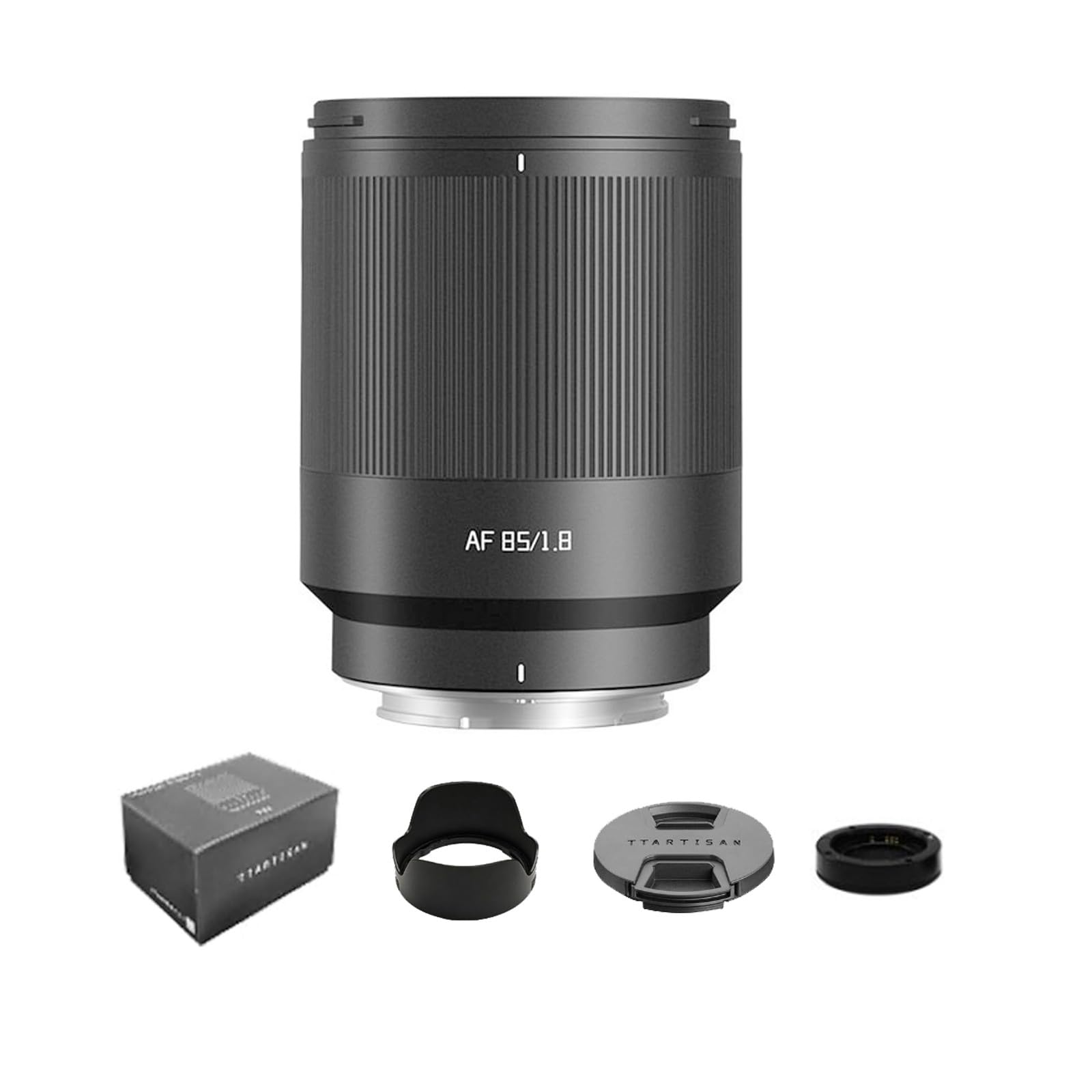
TTArtisan AF 85mm f/1.8 Neo

86 /100
LBD Score Excellent

Key details

Mount
Sony E
Close Focus
0.8 m
Focal Length
85mm
Max Aperture
f/1.8
View on Amazon

Twelve elements in eight groups, including ED and high-index glass, is a lot of optical engineering for a lens this inexpensive. TTArtisan's 85mm f/1.8 Neo is a full-frame E-mount portrait prime built from reinforced fiberglass composite, and it weighs about 332g — light enough that a compact body doesn't feel nose-heavy.

Eighty-five millimetres is the length people mean when they say a lens flatters. It compresses the distance between a face and the background, which is how you get that soft, uncluttered backdrop without standing in the next room. Wide open at f/1.8 the subject stays detailed while the background dissolves, and stopping down a little sharpens the whole frame nicely.

Close focus is 0.8m, near enough for a head-and-shoulders frame without crowding anyone, and the simple barrel keeps the weight down. What you don't get is stabilization or sealing, so treat it as fair-weather glass that lives on a body with in-body stabilization or on a bright day.

On a full-frame Sony body this is the easiest way to find out whether you're an 85mm photographer, and the files are good enough that the answer ends up being about the focal length rather than about the lens.

Pros

  • Full-frame 85mm at the low end of this set
  • About 332g of composite body
  • Twelve elements including ED glass
  • Close focus at 0.8m

Cons

  • Autofocus slows in low light
  • No weather sealing
Our verdict

A light, low-cost 85mm for full-frame Sony that delivers the flattering framing and soft background portraits need.

Check Latest Price

How We Tested the Best Prime Lenses

We began with a list of about 30 current primes across full-frame mirrorless, APS-C mirrorless, and the DSLR mounts that still have plenty of shooters, then narrowed it to 12 based on mount compatibility, maximum aperture, price, and whether the focal length fills a gap a real photographer would notice. Everything was then mounted and used for six months.

Most of that time was spent in ordinary situations rather than on a test bench: golden-hour portraits in the backyard, a dimly lit restaurant dinner, an indoor birthday party with kids running straight at the camera, and handheld walks at dusk. For each lens we also taped newsprint to a wall and shot it at every full stop from wide open to f/8, then looked at the center and all four corners at 100 percent.

Sharpness got judged at the aperture people actually buy the lens for. We counted keepers out of a 20-frame burst of a child running toward us, listened to the focus motor in a silent room and recorded video to hear whether it landed on the soundtrack, and checked how often the lens hunted in near-darkness. Portraits were shot at the same subject distance against the same leafy background with string lights, so bokeh could be compared honestly rather than by vibe. Each lens was weighed on a kitchen scale and carried on a four-hour walk, since a prime that stays home is money wasted.

Value came last, after we'd lived with the images: what the same budget buys from a smaller third-party maker versus a first-party lens, and whether the difference shows up in a print or only in a spec comparison. We're still shooting with several of these and will update as we go.

How to Choose a Prime Lens

Start With What the Lens Covers

There are two format questions and they get confused constantly. A full-frame lens on an APS-C body is fine — it simply behaves like a longer lens than the number on the barrel. An APS-C or DX lens on a full-frame body is the problem case: the Nikon AF-S DX 35mm f/1.8G works on an F-mount full-frame camera only in DX crop mode, using the middle of the sensor and discarding the rest.

So if a move to full frame is anywhere in your plans, buy full-frame glass now. You spend a little more up front and skip a lens that stops pulling its weight the day the body changes.

Pick the Focal Length for the Distance You Work At

The number on the barrel means different things on different sensors. Nikon DX and Sony APS-C both crop by roughly 1.5x, so 35mm frames like 52.5mm, 50mm like 75mm, and Viltrox's 56mm like 85mm — the classic portrait length. On full frame, 20mm swallows a room or a ridge line, 50mm sits close to human vision, and 85mm flatters faces.

Decide the angle you want first, then divide by your crop factor to find the number to shop for. Buying a 50mm for an APS-C body expecting a normal lens is the single most common mismatch we see.

Read Aperture as a Light Decision First

Between f/1.4 and f/1.8 there's a little over half a stop; between f/1.8 and f/2, about a third. That's nothing in bright sun and a great deal at dusk, which is why aperture is the first thing to settle rather than the last.

Blur is a separate question. It depends as much on how close you stand and how far the background sits as on the number itself, and a nine-blade diaphragm keeps out-of-focus highlights rounder than a seven-blade one does.

Autofocus Is Where Budget Lenses Show Their Age

Motors are the least glamorous part of a lens and the part you notice every day. A modern stepping motor focuses quietly enough to sit beside on-camera audio; cheaper or older designs can be audible across a quiet room and slow to settle when contrast drops.

The test that tells you most takes thirty seconds: in a dim room, focus on a plain wall, then on a face, and listen. If it hunts and grinds there, it will do the same at a birthday party.

Buy the Weight You'll Actually Carry

At one end of this group the Viltrox 56mm f/1.7 weighs 170g; at the other the Nikon Z 50mm f/1.8 S runs to 14.56 ounces. That gap decides which lens leaves the house. A heavy prime on a small body also changes how the camera hangs on a sling strap — it tips forward and wants a hand on it.

If you shoot in short sessions near home, buy the optics. If the camera lives in a bag all day, buy the lighter lens and stop apologizing for it.

Frequently Asked Questions

Final Verdict

The Canon EF 50mm f/1.8 STM is the lens we point almost everyone to first. At 5.6 ounces it goes everywhere, f/1.8 makes indoor light usable without flash, and the close focus at 0.21x means it handles more than portraits. It's the least you can spend for a genuine step up in image quality.

If you shoot Nikon Z and wide-open sharpness is the priority, the 50mm f/1.8 S is the better lens and worth the extra outlay. Sony APS-C shooters who mostly photograph people should start with the Viltrox 56mm f/1.7, which delivers 85mm-equivalent portraits from a 170g barrel.