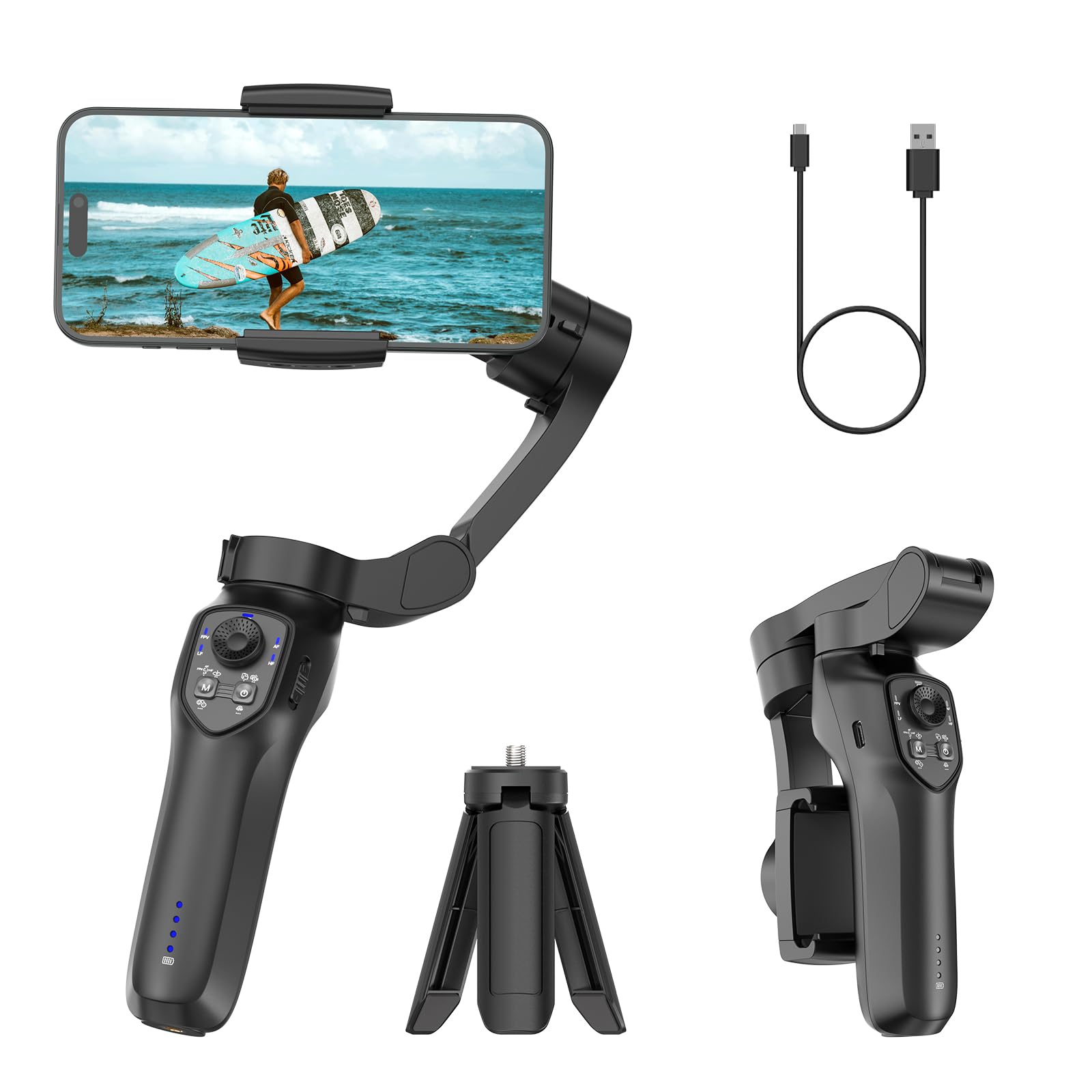
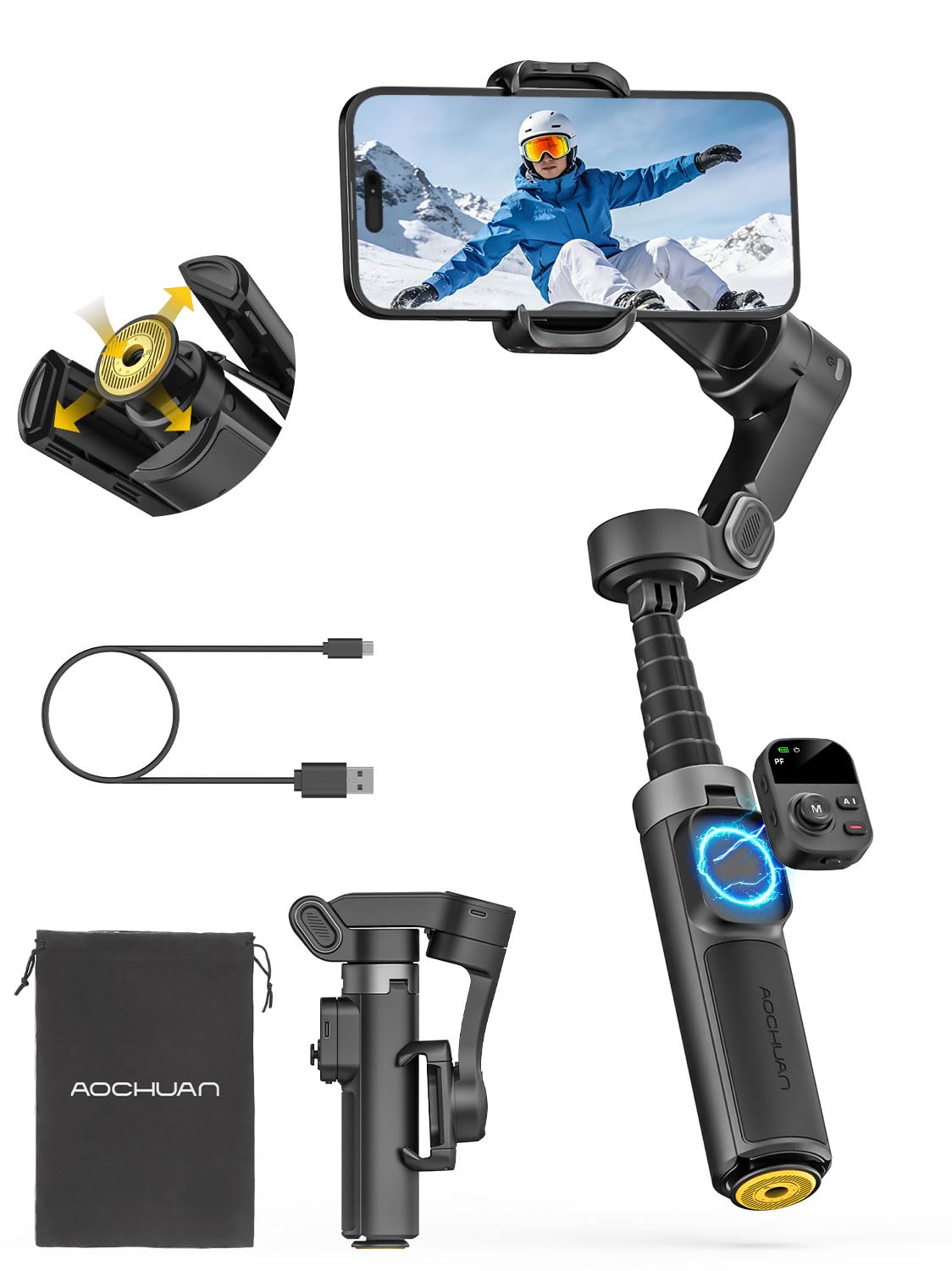
Best Phone Gimbals of 2026

The footage always looks better in your head. You follow your kid through a birthday party or trail a friend through a farmers market, then play it back and the whole thing wobbles like it was shot from a rowboat. A phone gimbal fixes that with three motors that hold the phone level while your hand does whatever it does. The wrinkle is that these rigs now run from pocket-size clamps to folding arms with extension rods, fill lights, and removable remotes — and the app you're made to shoot through matters as much as the motors do.

I've carried a stabilizer on walks and trips for years, and my team has spent the past eight months putting 11 of them through the same paces, not gently. Here's what nobody tells a first-time buyer: the make-or-break moment is setup. A gimbal you can balance and start shooting with in half a minute gets used; one that fights you for five minutes lives in a drawer. Below are the seven we kept reaching for, sorted by who they suit best.

1

Best Overall

DJI Osmo Mobile 7

89 /100
LBD Score Excellent

Key details

Weight
10.6 oz
Folded Size
179*95*39 mm
Battery Life
10 hours
Max Phone Weight
10.6 oz
View on Amazon

Three hundred grams is the number that explains the Osmo Mobile 7. It weighs roughly what the phone it carries weighs, and DJI caps the payload at the same figure — a matched pair rather than a small gimbal hauling around a phone twice its size. Folded, it's 179 by 95 by 39 millimeters, which is a jacket pocket rather than a bag.

For most people shooting phone video, this is the gimbal we hand over first. The tripod is built into the handle — three legs fold out of the grip — so a solo shot of you talking to camera doesn't need a second piece of gear in your bag. The magnetic clamp snaps on without counterweight fiddling, ActiveTrack 7.0 holds a face or an object while you walk, and ShotGuides walks you through a sequence when you'd rather be told what to shoot than invent it. Ten hours is the rated runtime, which covers a full afternoon of stop-start filming.

Stabilization is the one place we're not unconditional. The horizon can drift when you turn fast or change height quickly, and it takes a beat to settle. Tracking also lives inside the DJI Mimo app rather than your phone's camera app, so if your workflow starts in Instagram or TikTok, this isn't the gimbal that skips that step.

What makes it the default is the arithmetic: lighter than everything else on this list, half the price of the premium picks, and a tripod you can't leave at home. A chunky case and a clip-on lens will push you toward the hohem M7; a bare phone or a slim case will not.

Pros

  • Tripod folds out of the handle
  • 300 g body with a magnetic clamp
  • ActiveTrack 7.0 and ShotGuides in Mimo
  • Ten hours of rated runtime

Cons

  • Horizon drifts on fast moves
  • Tracking only inside the DJI Mimo app
Our verdict

We recommend the Osmo Mobile 7 to almost anyone filming phone video: it's the lightest gimbal here, it has a tripod in the handle, and it costs less than the premium picks.
Check Latest Price
2

Best for In-App Tracking

Insta360 Flow 2 Pro

84 /100
LBD Score Excellent

Key details

Weight
12.6 oz
Folded Size
97.9x178.4x36.7mm
Zoom Tracking
Up to 15x
Native App Tracking
200+ apps
View on Amazon

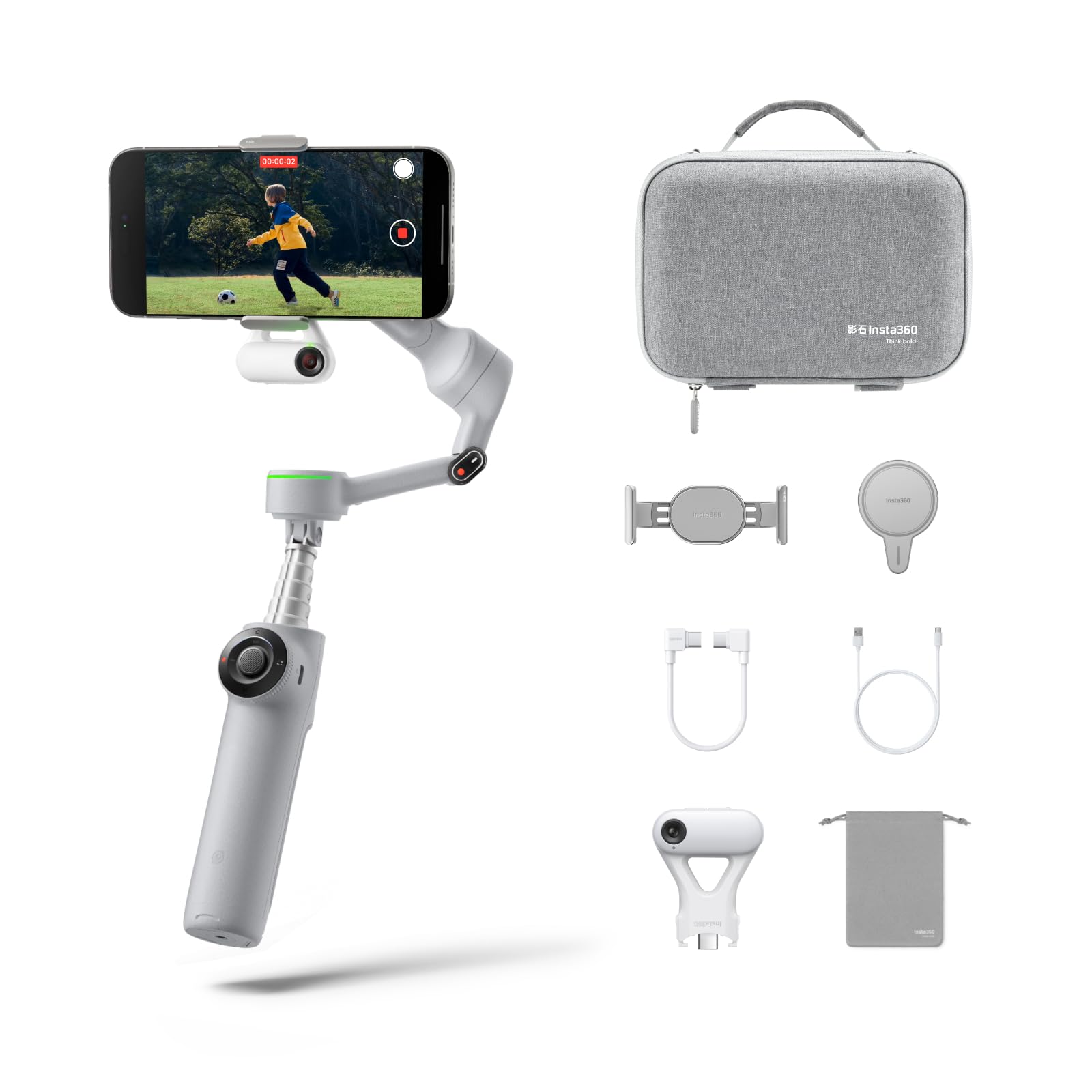
The Flow 2 Pro costs more than every pick here bar one, and the reason is narrow and useful: it tracks you inside the apps you already shoot in. Native tracking works in more than 200 apps on iOS, so the subject lock lives in the camera you opened rather than a separate gimbal app — no footage to export, no workflow to learn. If your clips start and finish in a social app, that's the feature worth paying for.

The spec sheet backs it up. Tracking holds through 15x zoom, and the multi-person mode reframes to keep a group in shot, which is what we noticed most at family-and-friends distances. There's 360-degree infinite pan, 3-axis stabilization, a free tilt mode, and a folding body of 357 grams and 97.9 by 178.4 by 36.7 millimeters. Android phones use the included AI Tracker module for the same native tracking, so it isn't an iPhone-only trick.

It's heavier than the Osmo Mobile 7 and denser to learn: the shooting modes reward an afternoon of practice and punish a cold start. The AI Tracker is one more small module to keep track of, and this is a bag gimbal rather than a pocket one.

Pros

  • Native tracking in 200+ apps
  • Multi-person tracking for group shots
  • 360-degree infinite pan
  • AI Tracker included for Android

Cons

  • Heavier than the top pick
  • Dense mode set takes practice
Our verdict

Buy the Flow 2 Pro if your footage has to come out of Instagram, TikTok or another app — its native tracking is the one thing no other pick here does.

Check Latest Price
3

Best for Solo Filming

hohem iSteady V3 Ultra

85 /100
LBD Score Excellent

Key details

Weight
15.1 oz
Battery Life
9 hours
Extension Rod
8 inches
Max Phone Weight
14.1 oz
View on Amazon

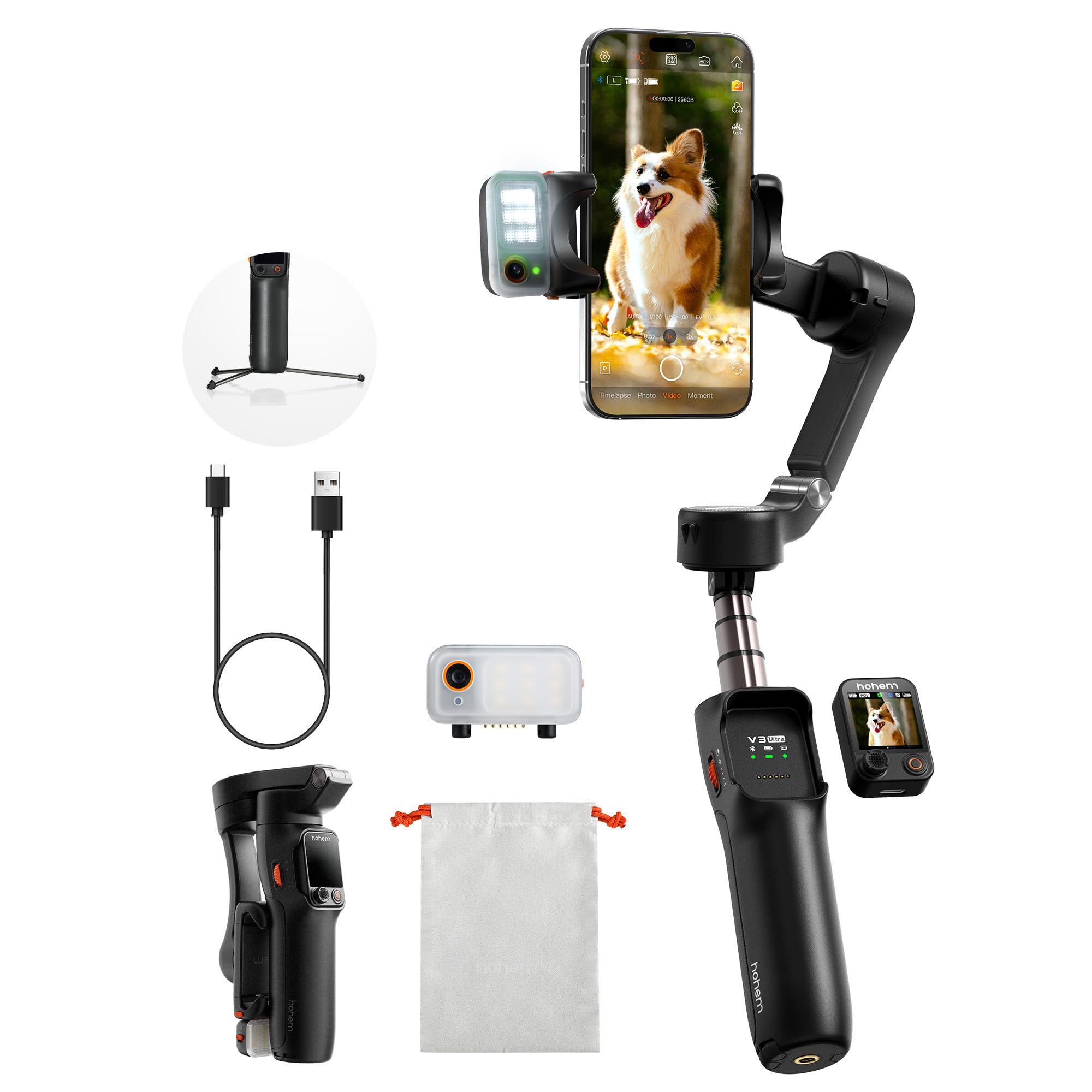
Picture the shoot where nobody is holding the camera: you set the gimbal on its tripod, walk out, and check your own framing on a screen in your hand. That's the case the iSteady V3 Ultra is built around, and the giveaway is the remote — a 1.22-inch touchscreen that detaches from the handle and works from up to 33 feet away.

We came away liking that remote more than the spec sheet suggests. It changes the rhythm of a solo shoot, because you stop guessing whether you're in frame and start directing yourself. The rest of the kit is aimed at the same person: an 8-inch extension rod and built-in tripod, a magnetic AI tracker that follows faces, pets and objects, and a fill light with adjustable brightness and color temperature. It folds to 3.9 by 1.7 by 6.3 inches at 15.1 ounces, and carries up to 14.11 ounces of phone.

The trade is muscle. With a large phone the motors can stall on fast moves and shut down, so keep the load light rather than stacking a case, a lens and a filter — and nine hours is the shortest battery rating among the pricier gimbals here. Within those limits it's the most comfortable solo-filming kit in this set.

Pros

  • Detachable touchscreen remote with live view
  • Fill light on the AI tracker
  • 8-inch rod and built-in tripod
  • Folds small for travel

Cons

  • Motors can stall with a heavy phone
  • Nine-hour battery is short for the money
Our verdict

For filming yourself with nobody behind the camera, the V3 Ultra's detachable screen remote makes it our pick — just keep the phone light.

Check Latest Price
4

Best for Big Phones

hohem iSteady M7

86 /100
LBD Score Excellent

Key details

Weight
1.4 lb
Battery Life
12 hours
Extension Rod
7.6 inches
Max Phone Weight
1.1 lb
View on Amazon

One point one pounds of payload is the reason the iSteady M7 belongs here. That's more than any other pick will carry, and well beyond the 300-gram class most of them sit in — which matters the moment your phone stops being bare: a big handset in a rugged case, a clip-on wide lens, a filter on a magnetic mount. If you've watched a cheaper gimbal sag under your setup, this is the answer.

The kit is unusually complete. A 1.4-inch touchscreen controller detaches from the handle for remote work, the aluminum rod extends 7.6 inches, an RGB fill light sits on the magnetic AI tracker, and the battery is rated at 12 hours with reverse charging for the phone. It ships with a carrying case rather than a pouch, which tells you what hohem expects you to do with it.

Size is the cost. At 1.4 pounds and 13.22 inches folded, the M7 lives in a backpack, and a long handheld take will remind you why. The controls are also the busiest here — the menus reward an afternoon of practice and punish button-mashing. For a heavy phone and a full rig, though, nothing else in this set carries the load.

Pros

  • 1.1-pound payload for rigged phones
  • 12-hour battery with reverse charging
  • Touchscreen controller detaches
  • 7.6-inch rod and RGB fill light

Cons

  • Busy menus take practice
  • Priciest pick in this set
Our verdict

Choose the iSteady M7 when your phone is heavy or rigged, and you want the payload, battery and remote to stop being something you think about.

Check Latest Price
5

Best Budget Pick

COMITOK L7C Pro

80 /100
LBD Score Excellent

Key details

Weight
12.8 oz
Battery
2600 mAh
Folded Size
6*4.3*1.8 inches
Max Phone Weight
9.92 oz
View on Amazon

The L7C Pro skips the step that makes most people give up on gimbals. There's no balancing ritual before the first shot: clamp the phone, power on, and the motors sort themselves out. For a first gimbal, that's worth more than any creative mode.

It's the least expensive gimbal here, and the hardware doesn't give it away. A 2600 mAh battery, a body that folds to 6 by 4.3 by 1.8 inches at 12.8 ounces, and the usual bag of tricks — inception, dolly zoom, slow motion, time-lapse, panorama — with face and object tracking running through the Comitok app.

What you give up is polish. Stabilization is decent on a walk and less convincing when you push the pace, and the tracking is only ever as good as the app driving it. As a first gimbal, or a second one that lives in a bag, it earns its place.

Pros

  • No leveling before the first shot
  • Cheapest gimbal in this set
  • 2600 mAh battery
  • Folds flat for a bag

Cons

  • 9.92-ounce payload limits big phones
  • Tracking depends on the Comitok app
Our verdict

The L7C Pro is the gimbal we point first-timers to: no leveling, steady enough for a walk, and the least money of anything here.

Check Latest Price
6

Vertical Video

FUNSNAP Capture 2S

83 /100
LBD Score Excellent

Key details

Charge Time
2 hours
Battery Life
11 hours
Video Resolution
4K (3840 x 2160)
View on Amazon

A focus wheel on a budget gimbal is the detail worth knowing about the Capture 2S. It gives your thumb a physical control instead of a tap target in an app, and it's the kind of thing you notice missing only after you've shot with it.

The rest is a sensible starter kit: 11 hours of rated battery on a two-hour charge, a one-button switch between landscape and portrait for short-form video, 4K capture, and face tracking, gesture control and time-lapse modes inside the Capture2 app.

Two things to know first. The motors cut out when they sense strain, which protects the gimbal but ends the take, so balance the phone properly before you press record. And pairing is where the largest Samsung and iPhone models get fussy — an app problem rather than a hardware one, but one that costs you a shoot when it shows up.

None of that stops it being the value pick for someone learning vertical video. If most of what you shoot is a face on a screen, the focus wheel and the one-button flip cover the two moves you'll actually use, and the money went into the parts that matter.

Pros

  • Physical focus wheel at a low price
  • One-button landscape-to-portrait flip
  • 11 hours on a two-hour charge
  • 4K capture

Cons

  • Motors cut out when they sense strain
  • Pairing can be fussy with the largest phones
Our verdict

If you shoot vertical video on a normal-sized phone, the Capture 2S gives you a focus wheel and a one-button flip for very little.

Check Latest Price
7

Hands-Free Panning

AOCHUAN Smart X3

79 /100
LBD Score Very Good

Key details

Weight
14.4 oz
Folded Size
4.4*1.73*6.89 inches
Extension Rod
20 inches
Video Resolution
4K (3840 x 2160)
View on Amazon

Twenty inches of extension rod and a tripod that opens with one button make the Smart X3 the closest thing here to a camera you can walk away from. Set it down, pair the magnetic remote — good to about 34 feet — and the head pans a full 360 degrees to keep you in frame.

The rest of the package is conventional but complete: 3-axis stabilization, six shooting modes, 4K capture, a body of 14.4 ounces and a folded size of 4.4 by 1.73 by 6.89 inches.

The remote-and-tripod combination is what sells it: for tutorials, cooking shots or anything that needs both hands, it does the job of a second person. Two things temper that. The handle is small — with the remote clipped on, a larger hand ends up gripping the base to reach the buttons — and the controls are crowded enough that the first few shoots are trial and error.

Pros

  • 20-inch rod with one-touch tripod
  • 360-degree pan with magnetic remote
  • Six shooting modes and 4K capture
  • Folds small enough for a side pocket

Cons

  • Small handle with the remote clipped on
  • Crowded controls take practice
Our verdict

Get the Smart X3 if you need to set the camera down and still be tracked — its rod and 360-degree pan do a second person's job.

Check Latest Price

How We Tested (and Lived With) 11 Phone Gimbals

We started with every stabilizer sold for both iPhones and Androids, then cut anything that couldn't hold a large phone in a case, anything whose app hadn't been updated in the past year, and anything locked to a single operating system. That left 11 gimbals, which we've lived with for eight months. Each was clamped to a big iPhone Pro Max first and then a smaller Android, and we timed how long it took to get from bag to balanced and recording, including whether the clamp gripped a case or had to come off.

Most of the testing happened where people actually film: a school soccer sideline, a farmers market, a birthday party, evening walks, and one long weekend trip. We shot the same three sequences with every gimbal — a slow walk forward, a jog up brick stairs, and a slow pan around a subject — then watched the files back on a full-size screen for wobble, horizon drift, and motor noise creeping into the audio. Tracking got its own pass: we walked a subject out of frame and back, waved a hand in front of the lens, and noted whether the gimbal picked the face up again or quit.

Since all of these record through an app, each app became our only camera for a week, which is how we caught dropped connections, laggy previews, and clips saved at lower resolution than the phone shoots natively. Extension rods and fill lights were used for overhead shots and dusk footage rather than admired on a spec sheet, and we counted what came in the box against what you'd have to buy separately. The hardware got treated like hardware, too: each one rode loose in a tote with keys and a water bottle, was folded and unfolded daily, and had its battery drained and recharged until we knew which hinges developed play.

How to Choose a Phone Gimbal

Payload Is the Spec That Ends Most Returns

Payload is quoted for the phone alone, which is where buyers get caught: a case, a magnetic grip plate, a clip-on lens or a filter all count against the limit. Across the picks here the range runs from 9.92 ounces on the budget COMITOK to 1.1 pounds on the hohem M7, so the spread is real rather than cosmetic.

Weigh your phone with the case you actually use and leave headroom. A gimbal working near its ceiling is the one that wobbles, stalls or shuts down mid-take, and the most common cause isn't a defective unit — it's a phone that got heavier than the rating.

Tracking: Inside the Maker's App or Inside Yours

Every gimbal here can follow a face, but most do it inside their own app — DJI Mimo, Hohem Joy, Comitok, Capture2 — which means your footage has to come out of that app afterwards. The Insta360 Flow 2 Pro is the exception, tracking natively inside more than 200 apps on iOS.

That's the decision: if you post straight from Instagram or TikTok, native tracking saves a step on every clip and is worth paying for. If you already edit elsewhere, the cheaper in-app route costs you nothing but one import.

What Portable Means Once It's Folded

Folded size matters more than folded weight on a gimbal. The lightest pick here is 300 grams and folds to 179 by 95 by 39 millimeters, which is a jacket pocket; the heaviest is 1.4 pounds and 13.22 inches long, which is a backpack and a considered decision.

The trap: compact in a listing often means it fits a bag rather than a pocket. Check the folded length against the bag you actually carry, not against the idea of a pocket you might have.

Tripods, Rods and the Solo-Shooting Kit

If you film alone, the accessories matter more than the shooting modes. A tripod built into the handle — the top pick and the V3 Ultra both have one — takes a separate piece of gear out of your bag, and a detachable remote with a screen lets you check your own framing instead of guessing at it.

An extension rod adds reach for group shots and high angles. We happily trade three creative modes for one of those three things.

Battery Ratings, Phone Charging and Reliability

Rated runtime across these picks runs from 9 to 12 hours, and that's with the gimbal working alone. Pass-through phone charging, which the DJI models offer, spends that budget noticeably faster — plan on the low end if you're powering a phone at the same time.

Reliability is the honest caveat for the whole category: motors and batteries are the parts that fail, and they tend to fail early. Buy where returns are easy, run a full charge-and-shoot cycle in the first week while you can still send it back, and register the warranty the day it arrives.

Frequently Asked Questions

Final Verdict

For most people, the DJI Osmo Mobile 7 is the phone gimbal to buy: 300 grams, a tripod folded into the handle, tracking that holds, and ten hours of rated battery, for less than the premium picks. Choose the Insta360 Flow 2 Pro if your clips are born inside Instagram or TikTok and you want tracking without leaving the app.

If you're just starting out and your phone is a normal size, the COMITOK L7C Pro gets you steady footage for the least money here — and if your phone is heavy or rigged, skip both and go straight to the iSteady M7.