Best Open-Back Headphones for Gaming of 2026

Open-back headphones do something no noise-cancelling pair can: they turn a game into a room instead of a corridor. The trade is that the earcups are basically speaker grilles, so all that width and detail leaks out into your room while everything in your room leaks straight in. What you're really shopping for is the pair that keeps the soundstage without making your ears, your head, or your wallet pay for it.

I've played on open-backs for years, and over the past six months my team and I have worn 14 pairs through ranked matches, co-op nights, and calls that ran well past midnight. The pattern that came out of it: weight and clamping force matter far more than any spec sheet lets on, and a detachable cable will rescue a headset that a fixed one would eventually ruin.

Only some of these include a boom mic, and only a handful of those mics beat a standalone — worth knowing before you buy. The eight below are the ones we kept reaching for, judged on sound, comfort, build, and what you actually get for the money.

1

Best Overall

Drop PC38X

83 /100
LBD Score Excellent

Key details

Weight
8.96 oz
Impedance
28 ohm
Connection
3.5 mm jack
Microphone
Flip-to-mute boom mic
View on Amazon

The Drop PC38X is the easiest recommendation for most gamers because it already has the microphone sorted. The boom flips up to mute, so you can kill chat with a thumb instead of hunting through software, and the 28-ohm load runs from a PC jack or a console controller without a dedicated amp. That combination is rarer than it should be: most open-back headphones here make you supply your own mic.

The open cups give it the wide, airy stage that makes open-back gaming worth the trade. In a quiet room, footsteps and distant gunfire sit outside your head with room to separate, and the tuning favors clarity over a bass hit. We wore it through long sessions without the pads turning into a heat trap, and the sub-10-ounce weight kept pressure from building on the top of the head. The velour is soft rather than plush, which suits a desk headphone.

The 3.5mm connection keeps the signal path simple: the PC or controller does the processing, and there's one cable to manage. If your desk is quiet and you want a built-in mic with a soundstage that doesn't fight your ears, this is the default. If you need a lighter frame or a USB-C audio box, the Sony is the alternative.

Pros

  • Built-in flip-to-mute boom mic
  • Easy 28-ohm load for PC or console
  • Light enough for long sessions
  • Wide open-back stage for positional cues

Cons

  • No USB audio or virtual surround
Our verdict

Buy the PC38X if you want one wired open-back headset with a mic that works and an easy load for PC or console.
Check Latest Price
2

Best Lightweight Headset

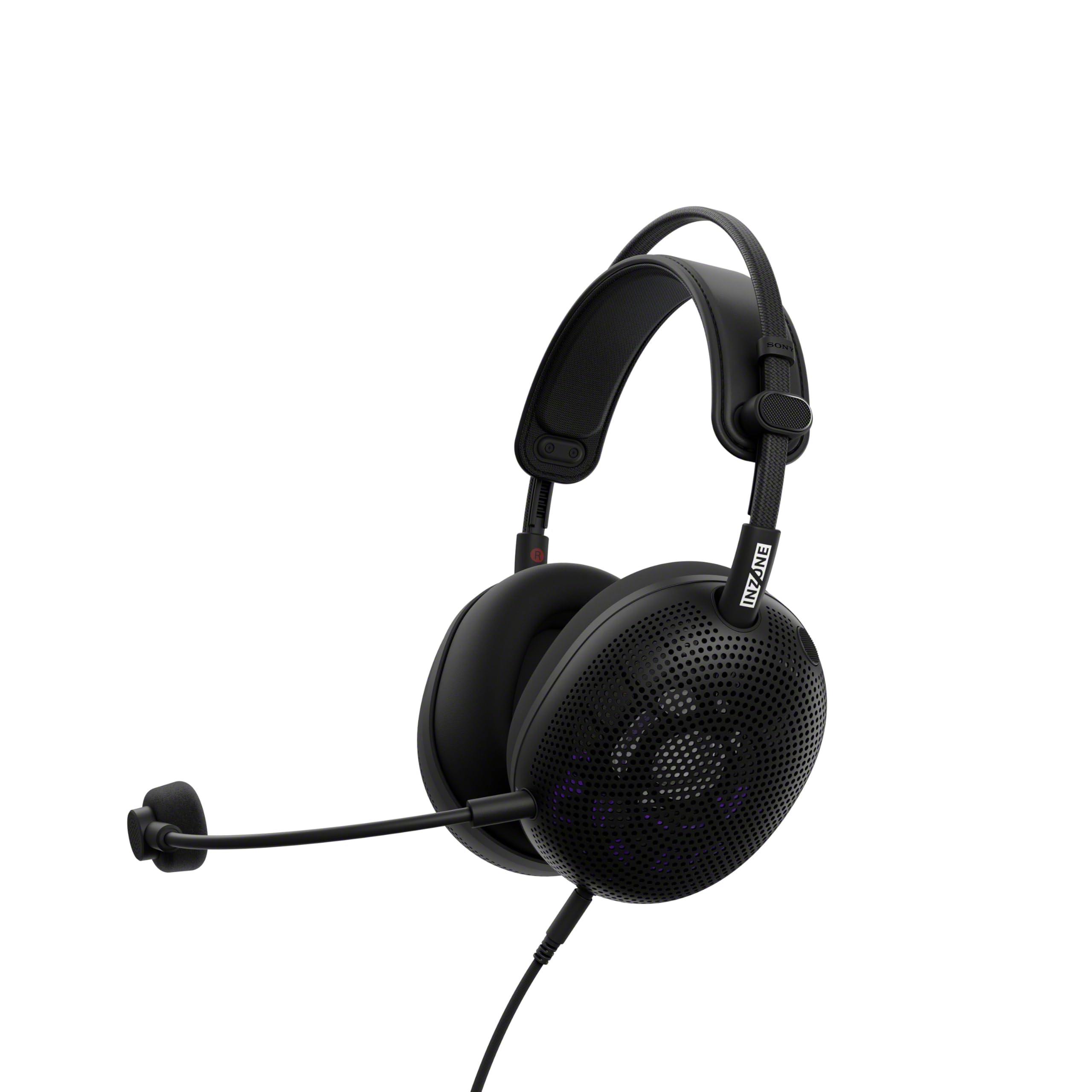
Sony INZONE H6 Air

78 /100
LBD Score Very Good

Key details

Weight
7.02 oz
Connection
USB-C audio box
Microphone
Detachable cardioid boom
Driver Size
40 millimeters
View on Amazon

At 199 grams, the INZONE H6 Air is the pair we hand to someone who hates the pressure of a gaming headset. The 40mm drivers are adapted from Sony's open-back monitor line, and the cups sit lightly enough that a long session doesn't turn into a neck workout. The detachable cardioid boom mic is a smart choice at this level: leave it off for solo play, clip it on for chat.

The USB-C audio box is the feature that makes it more than a lightweight headphone. It gives PC and PS5 players a clean digital connection and Sony's 360 Spatial Sound processing, and the open-back stage is wide enough to place footsteps without feeling artificially stretched. We found the tuning more natural than bass-forward, which suits atmospheric games and music between matches. The aluminum build also feels more substantial than the low weight suggests.

If your setup is USB-C and you want a mic plus low weight, this is the premium way to get it. The H6 Air is less flexible than a plain 3.5mm headphone, but it's the one we reach for when a long session needs to feel like nothing at all.

Pros

  • Just 199 grams
  • Detachable cardioid boom mic
  • USB-C audio box with spatial processing
  • Aluminum build

Cons

  • USB-C-only headset connection
  • Extra audio box to keep track of
Our verdict

The H6 Air is the lightest way into a premium open-back headset, with a detachable mic and USB-C processing for PC and PS5.

Check Latest Price
3

Best Budget Headset

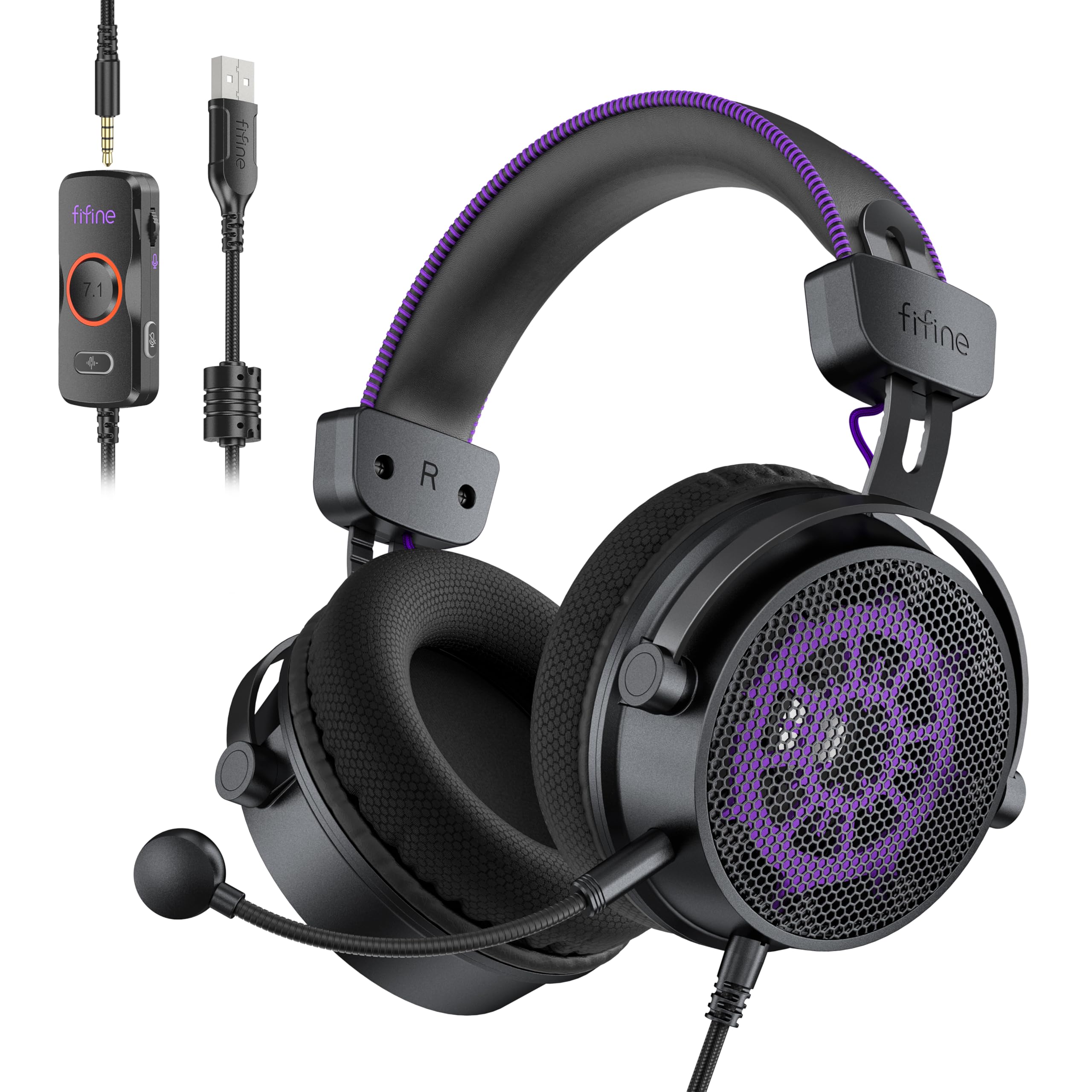
FIFINE H18V Lite

82 /100
LBD Score Excellent

Key details

Impedance
32 ohm
Connection
3.5 mm and USB-A
Microphone
Boom mic with inline mute
Driver Size
53 mm
View on Amazon

The FIFINE H18V Lite is the budget headset that doesn't feel like a compromise on paper. You get 53mm drivers, virtual 7.1 surround, a boom mic, and both 3.5mm and USB connections. The inline control box puts volume, mic mute, and the surround toggle on the cable, which is genuinely useful when you're mid-match and don't want to alt-tab.

We used it as a plug-in-and-go headset for PC and console. The open-back cups keep ears cooler than closed cups, and the 32-ohm load is easy to drive. The surround button makes a noticeable difference to positional cues, and the mic is clear enough for chat. The dual connection means you can use USB where you have it and 3.5mm where you don't.

For a first headset or a spare for a console in a quiet room, it covers the essentials. The open cups keep heat down and the dual connection gives you options. It won't replace the detail or build of the pricier picks, but it doesn't ask you to.

Pros

  • Dual 3.5 mm and USB connections
  • Inline volume, mute, and 7.1 controls
  • 53 mm drivers and virtual 7.1
  • Open mesh cups stay cool

Cons

  • Inline control box adds cable bulk
  • Virtual surround can color music
Our verdict

For a first open-back headset on a tight budget, the H18V Lite covers chat, surround, and dual connections without fuss.

Check Latest Price
4

Best for Competitive Positioning

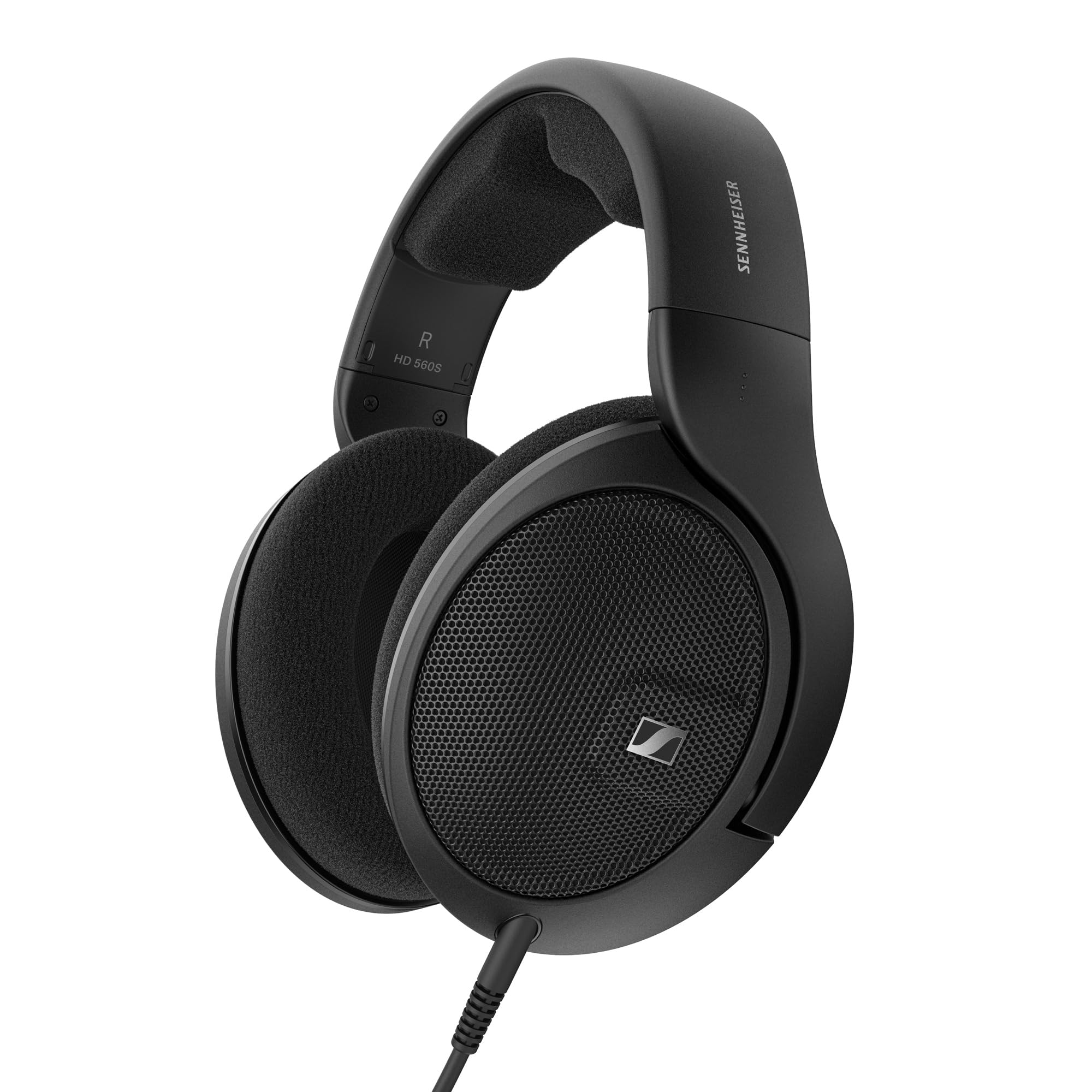
Sennheiser HD 560S

91 /100
LBD Score Outstanding

Key details

Impedance
120 ohm
Connection
3.5 mm with 6.3 mm adapter
Driver Size
38 millimeters
Frequency Response
6 Hz to 38 kHz
View on Amazon

The HD 560S is the one we grab when the game matters more than the chat. There's no mic and no inline control, just a 120-ohm open-back headphone with angled 38mm drivers and a tuning that refuses to flatter bad recordings. In a quiet room, that restraint is a weapon: the stage is wide, instruments and effects have space, and directional cues come through without a bass boost smearing them.

The oval pads and firm headband make it feel like a desk tool rather than a pillow; after a break-in the pressure evened out for us. The bigger adjustment is the 120-ohm load, which wants a decent desktop output. A motherboard or USB interface is fine; a weak controller jack can leave it short of volume.

For players who already have their chat sorted, this is the cleanest competitive listen here. It's more neutral than the HD 599SE and more precise than the SHP9500, and it doesn't add processing you didn't ask for. Pair it with a desk mic and a decent source, and it gets out of the way.

Pros

  • Wide, neutral open-back stage
  • Angled 38 mm drivers
  • Strong positional cues for competitive games

Cons

  • No microphone or inline controls
Our verdict

Choose the HD 560S if you already have a mic and want the cleanest, widest competitive soundstage here.

Check Latest Price
5

Best for Wide Soundstage

beyerdynamic DT 990 Pro X

88 /100
LBD Score Excellent

Key details

Cable
Detachable 3 m mini-XLR
Weight
10.3 oz
Impedance
48 ohm
Driver Size
45 millimeters
View on Amazon

The DT 990 Pro X is the version of beyerdynamic's studio classic that makes sense for gaming. The standard DT 990 Pro is 250 ohms and wants an amp; this one is 48 ohms, so a laptop, motherboard, or console controller can drive it to a usable volume. You still get the wide open-back stage and the velour pads, but the detachable 3m mini-XLR cable means you can replace it instead of living with a worn fixed cable.

We used it for both games and music and found the stage the main event. Sounds sit further outside your head than with the Drop PC38X, and the separation makes spotting a shooter's angle easier. The trade-off is brightness: the DT 990 family leans lively in the treble, and poorly recorded game effects can turn sharp. The velour pads are comfortable, but the clamp is firmer than the Sennheisers, so glasses wearers should factor in a break-in period.

For a desk setup with a separate mic, this is the widest-stage pick that doesn't demand an amp. If you want a softer treble, the HD 599SE is less hassle.

Pros

  • 48-ohm load runs without an amp
  • Wide open-back stage
  • Detachable 3 m mini-XLR cable
  • Velour pads and light frame

Cons

  • No microphone or inline controls
Our verdict

The DT 990 Pro X gives you beyerdynamic's wide stage with a 48-ohm load and a detachable cable, no amp required.

Check Latest Price
6

Best for Long Sessions

Sennheiser HD 599SE

93 /100
LBD Score Outstanding

Key details

Cable
Detachable 3 m and 1.2 m
Weight
9.17 oz
Impedance
50 ohm
Connection
3.5 mm and 6.3 mm
View on Amazon

The HD 599SE is the comfort play. It weighs a little over nine ounces, uses plush velour pads, and has a 50-ohm load that a phone, controller, or PC jack can handle. The two detachable cables are a genuinely useful touch: a long 3m cable for a desk and a short 1.2m cable for a controller, so you're not coiling a garden hose every time you move.

We wore it for an evening of single-player and voice chat and it disappeared in the way a good open-back should. The sound is warmer and fuller than the HD 560S, with a wide stage but a gentler treble, which makes it easier to live with for hours. It's not the most precise pick for competitive shooters; the HD 560S and DT 990 Pro X put positional cues under a sharper lens.

For long sessions where comfort matters more than analysis, this is the one we keep coming back to. It's the least fussy about source quality of the high-end picks, and the two cable lengths make it easy to move between desk and couch.

Pros

  • Lightweight velour comfort
  • Easy 50-ohm load
  • Two detachable cables
  • Warm, wide sound

Cons

  • No microphone
Our verdict

The HD 599SE is for long, comfortable sessions on an easy-to-drive open-back, with two cables and no mic.

Check Latest Price
7

Best Studio-Style Pick

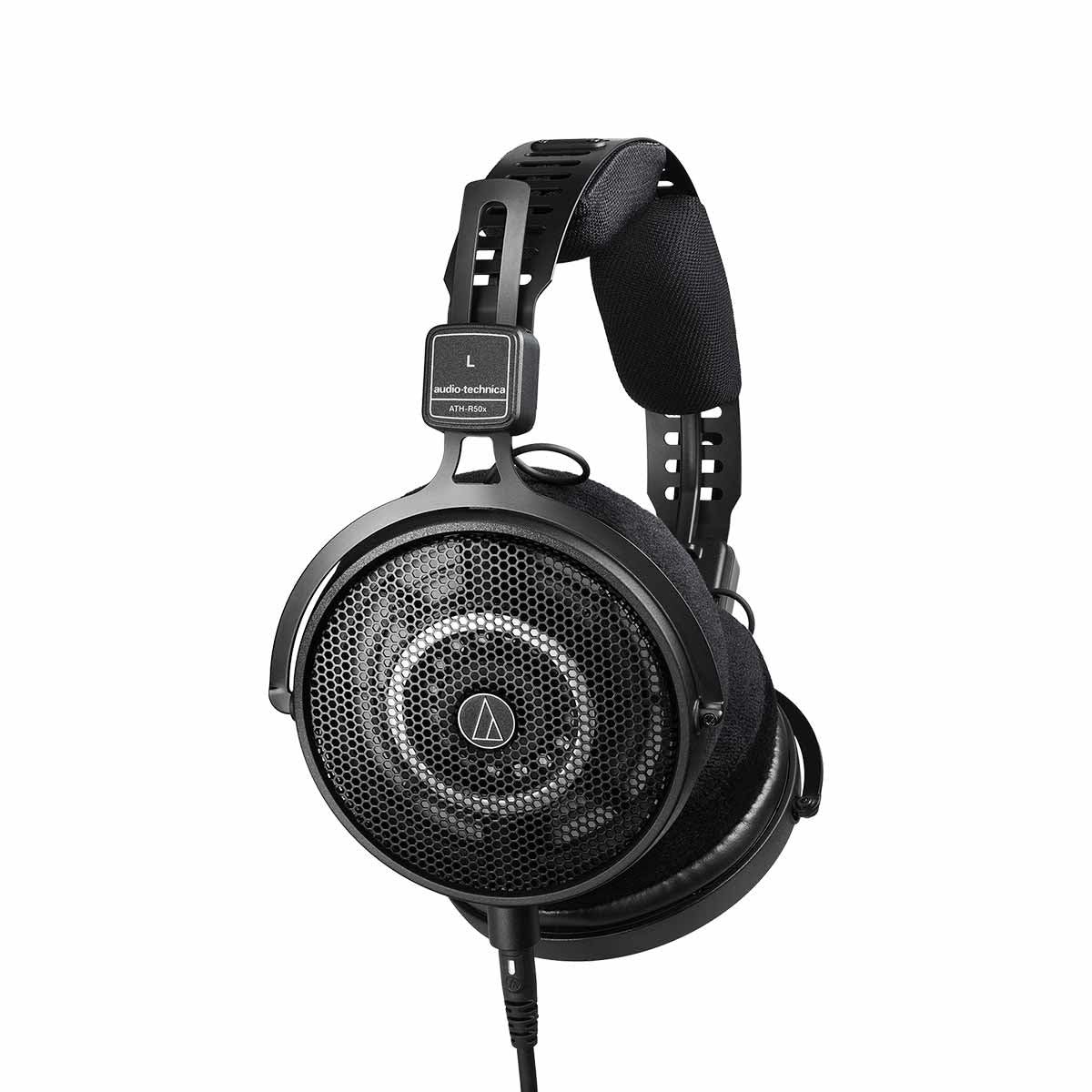
Audio-Technica ATH-R50X

88 /100
LBD Score Excellent

Key details

Cable
Detachable 3.0 m and 1.2 m
Weight
7.3 oz
Impedance
50 ohm
Connection
3.5 mm with 1/4-inch adapter
View on Amazon

The ATH-R50X is a studio headphone that happens to game well. At 207 grams it's one of the lightest open-backs here, and the two detachable cables (3m and 1.2m) plus a 1/4-inch adapter cover desk and controller setups. The 50-ohm load is easy enough for a PC, and the velour pads stay comfortable without feeling bulky.

The sound is the reason to choose it over the SHP9500. It's more detailed and a little more forward in the upper mids, which makes voice cues and environmental effects easy to pick out. The open-back stage is wide and airy, and the bass is controlled rather than boosted.

We did notice the earcups are on the narrow side; if you have larger ears, the pads may press on the outer edge. The fit is otherwise light and stable, and the two cable lengths cover a desk or a controller without a mess.

For a light, wired open-back that handles competitive games and critical listening, this is a strong middle path between the budget Philips and the more expensive Sennheisers. The sound is detailed enough to make the extra outlay over the SHP9500 feel worthwhile.

Pros

  • Light 207-gram frame
  • Two detachable cables
  • Detailed open-back sound
  • Comfortable velour pads

Cons

  • No microphone
  • 1.2 m cable is short for desk use
Our verdict

The ATH-R50X is a light, detailed open-back for gamers who want studio sound and don't mind adding a separate mic.

Check Latest Price
8

Budget Open-Back

Philips SHP9500

93 /100
LBD Score Outstanding

Key details

Cable
Detachable 1.5 m
Impedance
32 ohm
Driver Size
50 mm
Frequency Range
12 Hz to 35 kHz
View on Amazon

The SHP9500 has been the budget open-back answer for years, and the formula still works. The 50mm drivers and open cups create a wide stage, while the double-layer headband and breathable pads keep the weight off the top of your head. The 1.5m detachable cable is a sensible length for a controller, and the 32-ohm load means almost anything with a headphone jack can drive it.

What we didn't love is the clamp. The SHP9500 sits loosely, and if you move your head the cups can shift; listeners who want a secure feel may find themselves adjusting it. The upside is that it doesn't crush your ears or build heat, which is why it works for long sessions.

The sound is clear and open rather than bass-heavy, so explosions lack punch but positional cues come through. It's not the most refined headphone here; the ATH-R50X and HD 560S resolve more detail. For a quiet desk and a tight budget, the trade is easy to understand.

For a first open-back gaming headphone, it's hard to argue with the basics: wide stage, low weight, and a cable you can replace. It remains an easy way to hear what open-back gaming is about.

Pros

  • Wide 50 mm open-back stage
  • Low weight and breathable pads
  • Detachable 1.5 m cable
  • Easy 32-ohm load

Cons

  • No microphone or inline controls
Our verdict

The SHP9500 is the budget open-back we still recommend for a quiet desk, as long as you can live with a loose fit.

Check Latest Price

How We Tested 14 Pairs of Open-Back Gaming Headphones

We started with roughly three dozen open-back models, read through spec sheets and owner reviews, and cut anything with closed cups, anything that needed a dedicated amp to reach a usable volume, and anything with pads you couldn't replace. Fourteen pairs made it to testing; eight are on this list.

Each pair spent at least two weeks in rotation. I weighed every one on a kitchen scale before the first session, then wore them in two-hour blocks — a tactical shooter, a story game, a co-op night — noting where the headband pressed and whether my temples ached at the ninety-minute mark. We also checked how far the cups flexed and whether the clamp eased after a few weeks stretched over a stand.

Cables went into a controller's 3.5mm jack, a USB-C audio box, and a PC's front panel; I walked to the far side of the desk to see whether a fixed cable snagged or a detachable one popped loose, then coiled each to check for memory. Volume wheels got tested at low levels, where an inline control often pulls one channel louder than the other. Value came down to what shipped in the box — a spare cable, a pouch, a quarter-inch adapter, a mic — and whether the pair needed extra gear to sound right.

Isolation is the open-back tax, so a colleague sat six feet away and told us how much of a firefight they could hear, and we wore each pair beside a desk fan to hear what got in. For sound, we ran the same three tracks and three game sequences through one source, listening for whether footsteps landed left or just loud, whether gunfire turned harsh, and whether the treble wore us down after an hour. Durability was hands-on: flex the headband, twist the cups, swap pads twice, knock them off the desk onto carpet, and listen for creaks.

How to Choose Open-Back Gaming Headphones

Headset or headphones?

A built-in boom mic is the difference between a headset you can use for chat without extra gear and a headphone that needs a desk mic. The Drop PC38X and Sony H6 Air solve chat in the box; the Sennheiser HD 560S and Philips SHP9500 do not. If you already own a USB or XLR mic, put the money into the headphone. If you play on a couch or console and don't want a second cable, a headset is the cleaner choice. Check whether the mic detaches, too, because a fixed boom gets in the way when you're listening to music.

Match impedance to your source

Impedance is the number that decides whether your PC, controller, or phone can drive a headphone to a satisfying volume. The 28- to 50-ohm models here, including the PC38X, SHP9500, and HD 599SE, are easy loads. The 120-ohm HD 560S wants a decent desktop output, and a 250-ohm studio headphone really wants an amp. Beyerdynamic's 48-ohm DT 990 Pro X is the version to choose if you want that family's wide stage without adding a DAC. Don't assume a controller jack will drive every open-back headphone well; above roughly 100 ohms, plan for a better source.

Treat open-back as a room-sharing design

Open-back cups are not a noise-isolation feature. They let air move, which is why the stage feels wide and your ears stay cooler, but they also let game audio out and room noise in. In a quiet room, that's a fair trade for positional clarity. Next to a TV, a roommate, or a street-facing window, it can be the wrong tool. If you need to hear chat, a baby monitor, or a doorbell, the leakage can be useful; if you need to block a noisy fan or a busy household, choose a closed-back pair instead.

Comfort is a fit problem

Weight gets the attention, but clamp and pad shape decide whether you keep a headphone on. The Sony H6 Air is the lightest pick here at 199 grams, and the ATH-R50X is close at 207 grams, yet a heavier pair with a wide headband can feel easier over three hours. The SHP9500 sits loosely and may shift when you move; the HD 560S clamps more firmly and can press on larger ears. Adjust the headband before judging, and if you wear glasses, favor a lower clamp and pads that clear the arms.

Check the cable and connection

The simplest gaming setup is a 3.5mm plug into a controller or PC, which is what the PC38X, DT 990 Pro X, and SHP9500 use. USB-C audio boxes, like the one with the Sony H6 Air, add processing and a cleaner digital link on PC and PS5, but they are one more thing to keep track of. Detachable cables are worth paying for if you move between desk and couch: the HD 599SE includes long and short cables, while the ATH-R50X uses a twist-lock connector that limits your spare-cable options. Inline controls are handy, but they add bulk.

Frequently Asked Questions

Final Verdict

The Drop PC38X is the one we recommend first: it has the mic, the easy 28-ohm load, and the open-back stage that makes positional audio worth hearing. If you want a lighter USB-C headset for PC or PS5, the Sony H6 Air is the upgrade; if you already own a mic and want the cleanest competitive sound, the Sennheiser HD 560S is the one to audition. Start with your mic and source, and the choice settles quickly.