Best Open-Ear Headphones of 2026

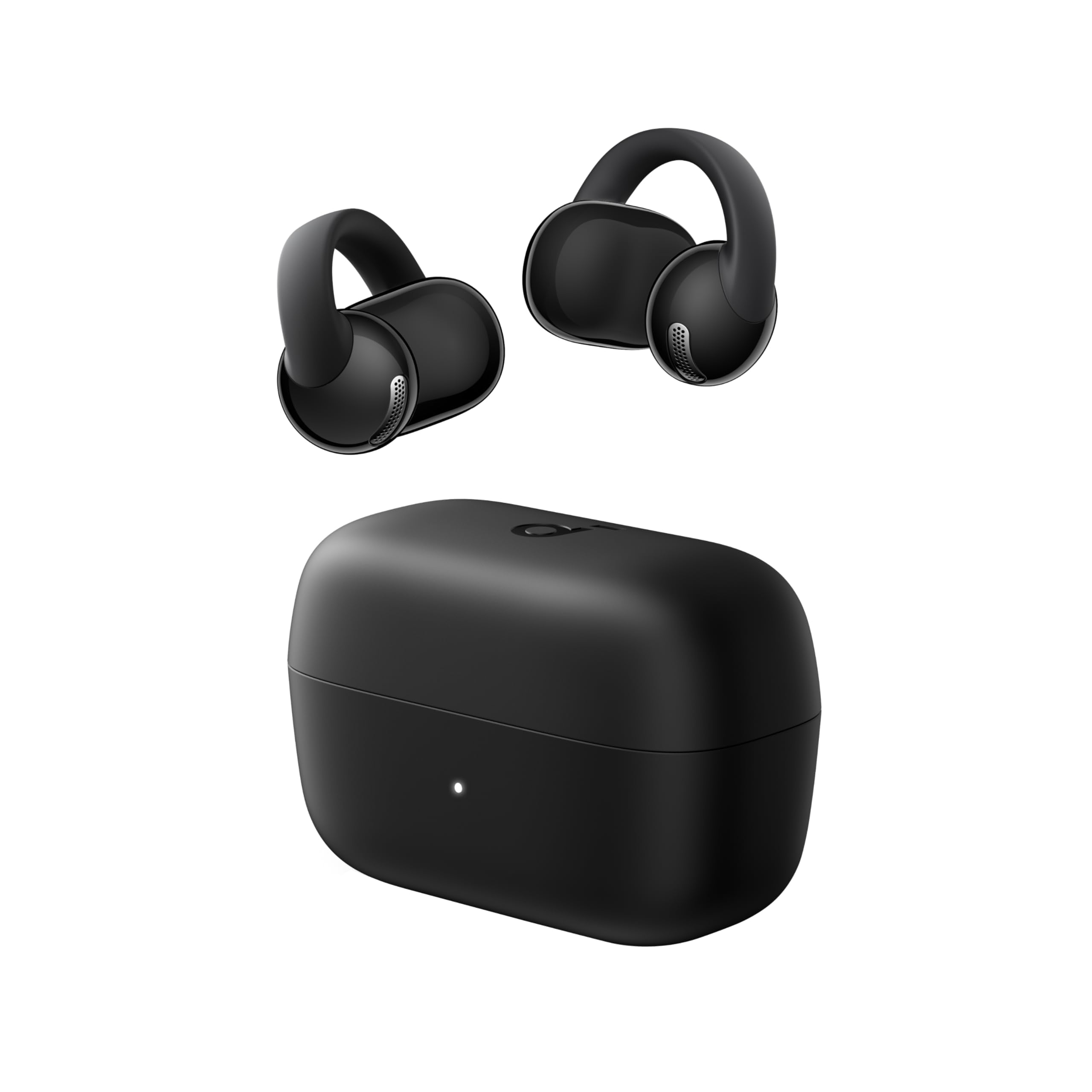
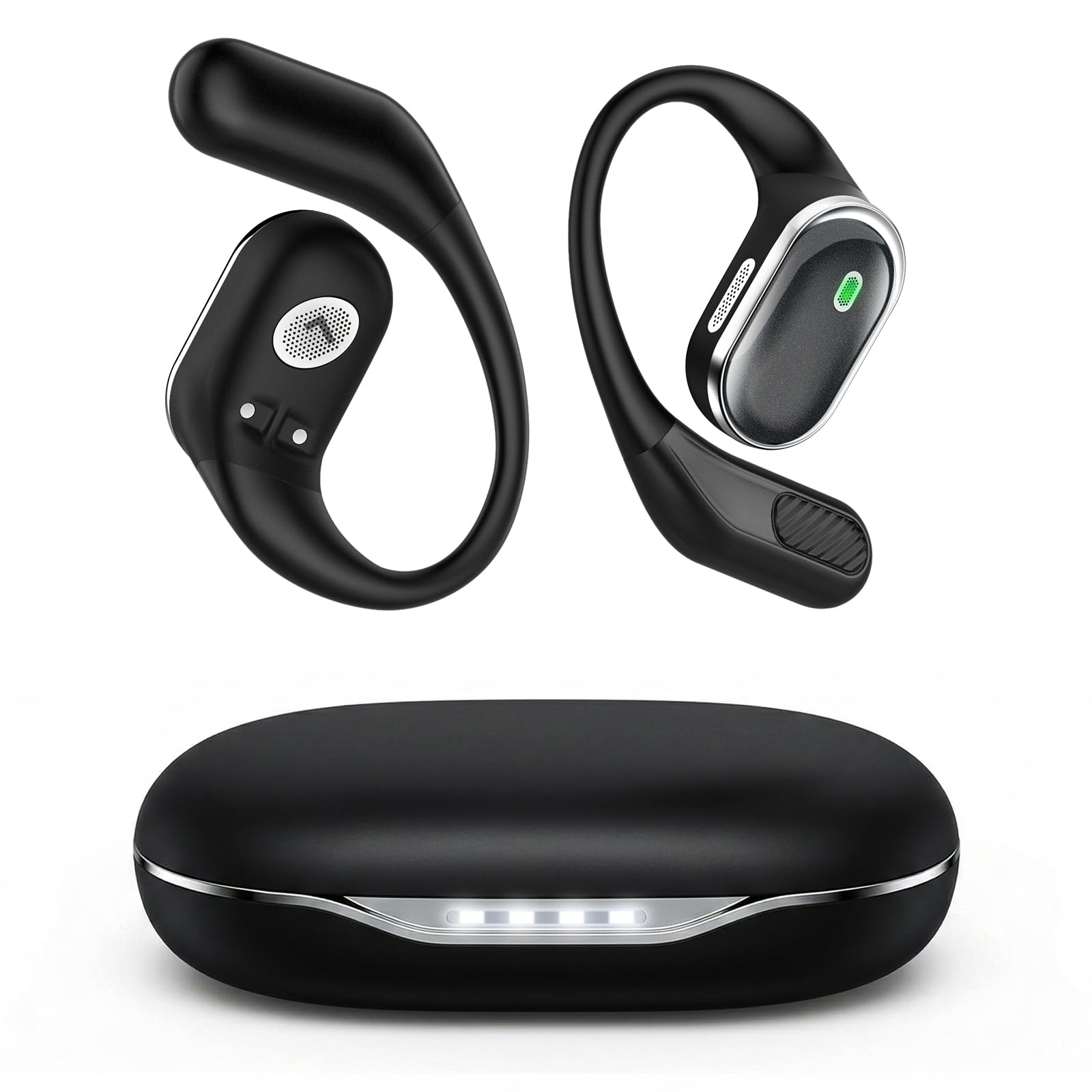
Open-ear headphones rest outside your ear canal — a hook over the top of the ear, or a clip on the outer cartilage — and send sound toward you rather than sealing it in. That's the appeal: your playlist or a call with nothing wedged in your ear, and traffic, a bike bell, or a coworker still getting through.

The catch is physics. Sound aimed at a room leaks, bass goes missing, and a hook that feels fine at your desk can slip by mile three. Over the past six months my team and I wore 14 pairs through runs, rides, gym sessions, commutes, and long days of desk calls, comparing how each one sat, how much sound escaped at arm's length, and whether the battery lasted a week of mixed use.

Here's what I'd tell a first-time buyer: fit is what you're actually shopping for. Every pair sits a little differently, and the ones that match your ears will sound better than the ones that don't, whatever the driver specs claim. The list below is where to start.

1

Best Overall

Soundcore V20i

89 /100
LBD Score Excellent

Key details

Fit
Four hook positions
Playtime
8 hrs, 36 hrs with case
Bluetooth
5.4 with multipoint
Water Resistance
IP55
View on Amazon

Four hook positions is the detail that makes the V20i the open-ear pair we reach for first. Each earbud rotates to sit the speaker where it needs to be, which is the difference between a bud that stays put on a run and one you keep nudging. The 16mm drivers give it more body than we expect from an open design, and the 36-hour case means charging is a weekly chore rather than a daily one.

Sound is clear for podcasts and calls, and Bluetooth 5.4 multipoint keeps a laptop and phone connected without re-pairing. The open design lets traffic and voices in, as it should; these are not the pair for drowning out a noisy gym. Calls are decent in still air, but wind is the weak spot for any open mic.

The case is what makes the total playtime useful: it tops the buds up between sessions, so the eight-hour single charge rarely becomes a problem. Keep the charging contacts clean, and buy from a seller with easy returns. The V20i is the pair that makes open-ear awareness feel like a normal daily habit rather than a niche accessory.

Pros

  • Four hook positions for a secure fit
  • 36 hours total with the charging case
  • Bluetooth 5.4 with multipoint
  • Strong value for open-ear awareness

Cons

  • One earbud can fail over time
  • Sound can get lost in heavy wind or traffic
Our verdict

We recommend the V20i for most runners and commuters: adjustable hooks, 36 hours with the case, and a budget-friendly price that leaves room for a spare.

Check Latest Price
2

Best Premium Bone Conduction

SHOKZ OpenRun Pro 2

88 /100
LBD Score Excellent

Key details

Weight
1.07 oz
Bluetooth
5.3
Battery Life
12 hours
Water Resistance
IP55
View on Amazon

Twelve hours is the number that separates the OpenRun Pro 2 from most bone-conduction headphones. That is a full week of hour-long runs, or a long ride without a recharge, and it comes in a 30.3g frame that still leaves your ears completely open. IP55 covers sweat and rain, though not a swim.

The dual-driver setup is what we noticed first in use: a bone-conduction driver for the upper range and an air-conduction driver for bass. It gives these more low-end than older open designs, but the effect is still bone conduction—clear and controlled rather than room-filling. Calls are a strong point, with dual wind-resistant mics and AI noise reduction doing useful work when you take a call mid-run. The app's EQ modes let you shift between more bass and a more classic bone-conduction balance.

What you pay for is the combination of longer battery, lighter build, and better bass in a bone-conduction package. Durability is the reservation: the electronics and power button are the parts to watch, and the two-year warranty matters here. The OpenRun Pro 2 is the most polished training tool in this group, provided the premium fits your budget.

Pros

  • 12 hours on a single charge
  • Dual drivers add bass to bone conduction
  • Light 30.3g frame stays open
  • Two-year warranty

Cons

  • Premium price compared with the rest
  • IP55 is less sealed than IP67
Our verdict

We choose the OpenRun Pro 2 when bone-conduction awareness matters and you want the longest single charge, more bass, and a light frame.

Check Latest Price
3

Best Budget Clip-On

TOZO OpenEarRing

88 /100
LBD Score Excellent

Key details

Design
Clip-on
Playtime
10 hrs, 40 hrs with case
Bluetooth
5.4
Driver Size
10 mm
View on Amazon

The OpenEarRing's clip-on shape is the reason to consider it: nothing enters the ear canal, and the ring sits around the outer ear rather than hooking over the top. That makes it easy to forget during desk work or a walk, and the 10mm drivers give it a fuller sound than the price suggests. The charging case has a digital display that shows remaining power, so you're not guessing.

The claimed 10 hours per charge and 40 total are generous for the money; the case is what keeps a week of commutes covered. Bluetooth 5.4 pairs quickly, and the touch controls are simple once you learn them. The app adds 32 EQ presets, which is more customization than we expect at this price.

For a cheap second pair for calls and podcasts, it's an easy recommendation. It's not the pair we choose for hard training, where a more locked-in hook matters more. The clip-on design is best for desk work, walking, and errands; if you need a set that disappears under a helmet, the C50i is the better fit.

Pros

  • Clip-on design keeps the canal clear
  • 10 hours per charge, 40 with case
  • Digital battery display
  • 32 EQ presets in the app

Cons

  • Fit can feel loose on some ears
  • Charging and durability can be inconsistent
Our verdict

We like the OpenEarRing as a cheap clip-on for calls and podcasts, where its 40-hour case and clear sound make it an easy second pair.

Check Latest Price
4

Best for Bass

Soundcore C50i

85 /100
LBD Score Excellent

Key details

Playtime
7 hrs, 28 hrs with case
Bluetooth
6.0
Driver Size
12 mm
Water Resistance
IP55
View on Amazon

Bass is the reason the C50i exists. The 12mm drivers and 86dB max output are tuned to give open-ear listening more low-end than the typical bone-conduction set, and the clip-on FlexiClip stays put without entering the canal. At 7 hours per charge and 28 with the case, it covers workouts and a commute between charges.

We found the fit system more adaptable than a fixed hook: the memory titanium clip bends to the ear and keeps pressure light. IP55 handles sweat and rain, and Bluetooth 6.0 is a generation ahead of the older Shokz models. Calls are clear in still air, though wind is the enemy of any open design.

The bass push is not noise cancellation, and in a loud gym the open design lets plenty in. If you want a clip-on that feels lively for music and disappears on a run, this is the pick. If you need a single charge that lasts a full day, the OpenRun Pro 2's 12 hours are the better fit.

Pros

  • 12mm drivers deliver fuller bass
  • FlexiClip adapts to ear shape
  • IP55 and Bluetooth 6.0
  • 28 hours total with case

Cons

  • Seven hours per charge is short for all-day use
  • Bluetooth can drop out intermittently
Our verdict

We pick the C50i for bass-forward workouts: the clip-on fit stays secure, the 12mm drivers add body, and 28 hours with the case covers a week.

Check Latest Price
5

Best for Sweat

SHOKZ OpenRun

91 /100
LBD Score Outstanding

Key details

Weight
0.92 oz
Bluetooth
5.1
Battery Life
8 hours
Water Resistance
IP67
View on Amazon

IP67 is the headline for the OpenRun: this is the bone-conduction pair we trust for the sweatiest runs and the wettest commutes. At 26g, the wraparound titanium frame sits lightly and stays put, and the open-ear design keeps traffic, teammates, and trail users audible. Eight hours of battery is enough for most training weeks, and the 10-minute quick charge is genuinely useful when you forgot to plug it in.

Sound is clear and voices come through well; the tuning favors speech and midrange, which suits podcasts and calls. The open design means bass is never the main event; the Pro 2 is the better choice if you want more low-end. The magnetic charging cable is easy to align, though it is one more cable to keep track of. Pairing has been stable.

The long-term picture is mixed. The headband and power button are the parts that can fail, and battery capacity can fade after a year or more. The two-year warranty takes some of the sting out of that.

Pros

  • IP67 sweat and rain protection
  • Light 26g wraparound frame
  • 10-minute quick charge
  • Two-year warranty

Cons

  • Proprietary magnetic charging cable
Our verdict

We reach for the OpenRun when sweat and rain are the priority: IP67 protection, a light 26g frame, and enough battery for most training weeks.

Check Latest Price
6

Glasses Wearers

DECHOYECHO O2

92 /100
LBD Score Outstanding

Key details

Weight
0.93 oz
Bluetooth
5.3
Battery Life
12 hours
Water Resistance
Sweat-resistant
View on Amazon

At 26.4g, the O2 is the pair we point to for glasses wearers. The flexible titanium frame sits outside the ear rather than pressing behind it, and the 15mm air-conduction drivers aim sound inward without a plug. The 12-hour battery is a full workday plus a run, and Bluetooth 5.3 pairs with two devices.

The trade-off is evidence. This is a small, inexpensive model, and the long-term durability record is not as deep as the bigger names here. What we can say is that the design is coherent: light, simple buttons, sweat-resistant, and a 12-month warranty. For a second pair kept in a gym bag, that is often enough.

It is not the pick for maximum bass or the most polished calls; the 15mm driver gives more body than bone conduction without the same cheekbone pressure. The frame is the reason to try it: it leaves the glasses arm alone, and that is rarer than it should be.

Pros

  • Light 26.4g frame for glasses
  • 12 hours on a charge
  • Dual-device Bluetooth 5.3
  • Simple button controls

Cons

  • Moisture-resistant, not fully waterproof
  • Leaks sound at higher volume
Our verdict

We recommend the O2 for glasses wearers who want a light, cheap open-ear pair and prioritize comfort over bass and call polish.

Check Latest Price
7

All-Day Comfort

OHAYO T10

87 /100
LBD Score Excellent

Key details

Playtime
10 hrs, 40 hrs with case
Driver Size
15 mm
Earbud Weight
0.28 oz
Water Resistance
IPX6
View on Amazon

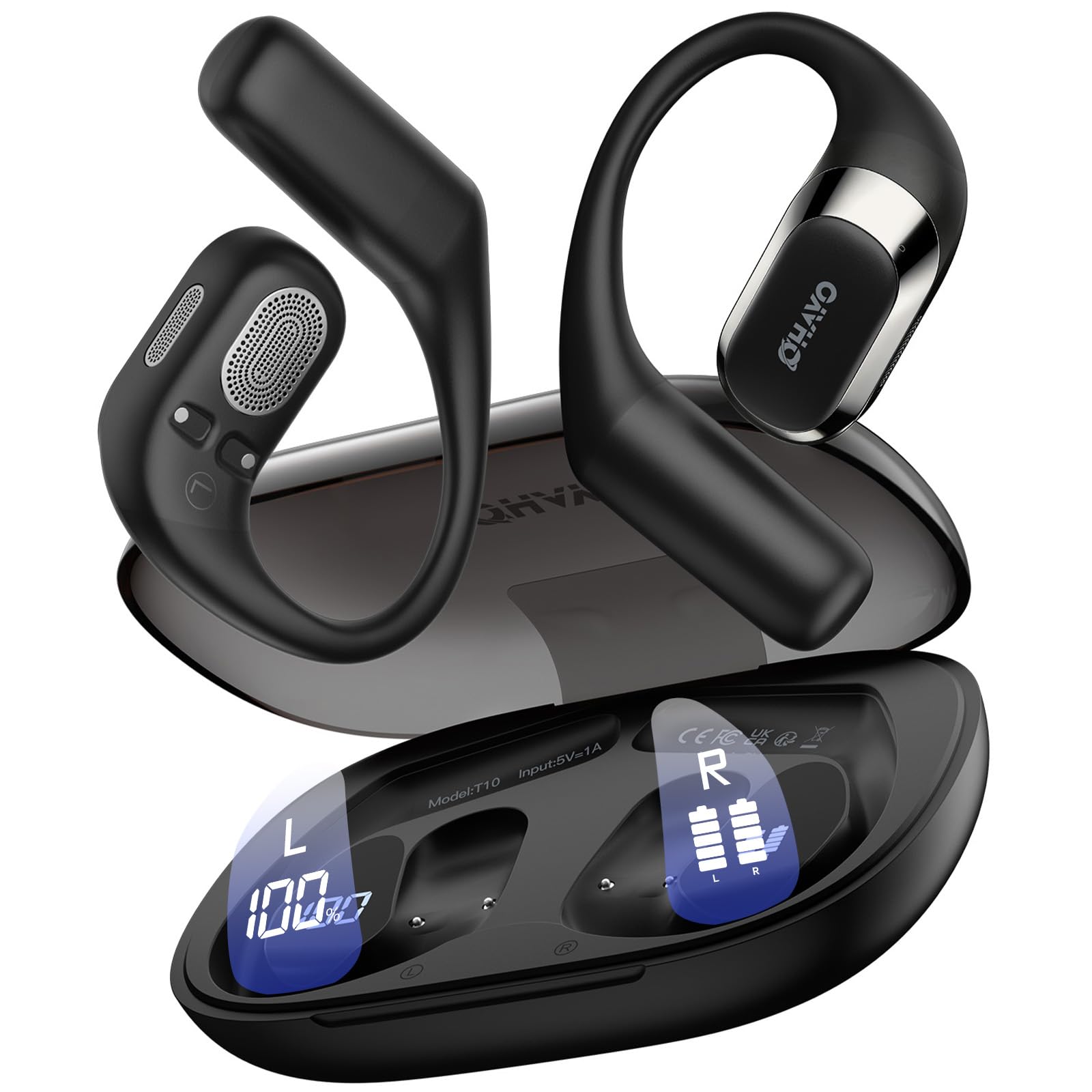
Eight grams per earbud is the number that matters on the T10. That is light enough to forget during a long commute, and the over-ear hook keeps the speaker outside the canal without clamping. The charging case adds up to 40 hours total, with 10 hours in the buds themselves.

The quad-speaker design—dual drivers in each earbud—gives these a fuller, more cinematic sound than the tiny drivers suggest. The touch controls are responsive, and Bluetooth 5.4 pairs quickly. IPX6 handles sweat and rain, though the case itself should stay dry.

The hook is comfortable but not adjustable, so it suits some ears better than others. That is the main fit difference from the V20i, which lets you rotate each bud into place. The T10's 8g weight helps, but a secure clip-on still has the edge for sprint intervals.

For all-day desk or commute use, the T10 is a strong alternative at a low price. The case is the part that makes the 40-hour figure practical, because the buds alone are a 10-hour proposition.

Pros

  • 8g per earbud for light wear
  • 10 hours, 40 with case
  • Dual drivers in each earbud
  • IPX6 sweat and rain resistance

Cons

  • Battery and charging can become inconsistent
  • Sound can distort at high volume
Our verdict

We like the T10 for all-day desk and commute wear: 8g per earbud, a 40-hour case, and a fuller sound than its size suggests.

Check Latest Price
8

Long Battery Life

TRAUSI T6

87 /100
LBD Score Excellent

Key details

Bluetooth
5.4
Total Playtime
80 hours
Wireless Range
15 m
Water Resistance
IPX7
View on Amazon

Eighty hours is the claim that gets the T6 noticed. That is total playtime with the charging case, not a single charge, but it still means you can leave the charger at home for a week of workouts. The IPX7 rating covers sweat and rain, and the ear hook sits outside the canal without pressure.

Sound is clear for calls and podcasts, and Bluetooth 5.4 connects quickly. The hook sits comfortably with glasses, and the open design keeps announcements and traffic audible. Pairing is quick, and the connection has been stable in our use.

The T6 is better for errands, travel, and indoor sessions than for chasing a personal best. The case is the part that keeps it useful for a week away from a charger, and the hook is comfortable for long walks.

For a pair to live in a bag, it earns its place. The long case life is the reason to choose it, and the low price makes it easy to keep as a spare. It is a backup pair, not a race-day pair.

Pros

  • 80 hours total with case
  • IPX7 waterproofing
  • Bluetooth 5.4
  • Budget-friendly price

Cons

  • Hook can feel loose on some ears
  • 90-day warranty is short
Our verdict

We keep the T6 as a budget backup for travel and errands, where its 80-hour total playtime and IPX7 rating matter more than a locked-in race fit.

Check Latest Price

How We Tested Open-Ear Headphones

We built the shortlist from listings and customer reviews rather than spec sheets, sorting the field into the three designs that matter — hooks that loop over the ear, clips that pinch the outer cartilage, and bone-conduction bands that bypass the canal altogether — then narrowed by water-resistance rating, claimed playtime, and price so the final 14 pairs covered budget through premium. We wore them for six months, rotating them through the same week of runs, rides, gym sessions, commutes, and desk work.

Fit came first, since nothing else matters if they slide. We ran five miles in each pair, rode through traffic, shook our heads, pulled hoods and sunglasses on and off, and noted where the hook or clip pressed after three hours of wear. For sound, we played the same three tracks in a quiet room and on a busy sidewalk, listening for whether bass held up and whether voices got buried under street noise. To check leakage, we set our normal volume, stood an arm's length away, and had a colleague describe what they could hear.

Battery testing was a stopwatch, not a claim: we ran each pair at roughly 60 percent volume until it died, then timed the recharge. We paired every set to both a phone and a laptop, walked two rooms away, and kept a log of dropouts and clumsy handoffs between a call and laptop audio. Call quality got tested on a windy sidewalk and in a café, then listened back through the recording. Finally, we got them sweaty, rinsed the pairs rated for it, and watched for buttons going soft or hinges loosening.

How to Choose Open-Ear Headphones

Bone Conduction vs. Air Conduction

Bone conduction sends vibration through the cheekbone and leaves the ear canal completely open; air-conduction open-ear designs aim a small speaker at the ear from outside. Bone conduction usually gives up bass, while air conduction can sound fuller but leaks more. If you cycle in traffic and want maximum awareness, bone conduction is the safer default. If you want more bass for the gym, a clip-on or hook-style air-conduction model such as the C50i or V20i makes more sense.

Fit and Helmet Clearance

Security matters more than weight. A fixed hook can fit one head perfectly and press on another; adjustable hooks and flexible clips let you tune the angle. For cycling, check that the frame sits below the helmet's rear cradle and does not press behind the ear. We prefer a model with at least one adjustment point, like the V20i's four hook positions, if you plan to wear it for more than an hour.

Battery: Single Charge vs. Case

Look at two numbers, not one. The single-charge figure decides whether a long run or ride ends with silence; the case total decides how often you need a cable. Eight hours is fine for most daily training, while 12 hours suits long rides and double sessions. A charging case with 28 to 40 hours is convenient for commuting, but it does not help if the buds die mid-run. Match the single-charge number to your longest session first.

Water, Sweat, and Durability

For sweat and rain, IPX4 is the minimum, IP55 adds dust protection, and IP67 survives brief immersion. The OpenRun's IP67 is the most sealed pick here; the OpenRun Pro 2's IP55 is enough for rain and sweat but not a swim. None of these are swim headphones unless the maker says so. Also check the warranty: two years from Shokz is the longest here, while the budget models are shorter.

Sound, Volume, and Calls

Open designs leak sound and lose impact in wind, so volume and mic placement matter as much as driver size. Bone conduction prioritizes awareness and speech; air conduction can add bass but often leaks more. If calls matter, look for dual mics and wind-noise reduction, and test the mic in a breeze before you rely on it. We treat a comfortable, secure fit as more important than a big driver number, because a loose speaker loses more sound than a small one.

Frequently Asked Questions

Final Verdict

Our pick for most people is the Soundcore V20i: the adjustable hooks make open-ear awareness easy to live with, and the 36-hour case removes daily charging anxiety. If your priority is the longest single charge and better bass in a bone-conduction design, the SHOKZ OpenRun Pro 2 is the upgrade. For a cheap clip-on second pair, the TOZO OpenEarRing is the value alternative.