Best Wired Headphones of 2026

Wired headphones make a quiet, unglamorous promise: no charging, no pairing, no lag between the picture and the sound. The catch is the cable. Most pairs I've ruined died the same way — a crackle at the plug that turns a song into a fight — so when we rounded up 14 pairs, I wasn't only listening for detail. I was watching for which ones survive a backpack, a coat pocket, and being yanked off a desk.

Over six months, the differences came down to fit and finish more than spec sheets. Some sets are built for a mixing desk, with flat, honest sound and a screw-on adapter for a quarter-inch jack; others are tiny in-ears you forget you're wearing; a few push bass hard for the bus. The plug decides more than you'd expect, too — one set here only fits phones with a Lightning port, and everything else needs a headphone jack or an adapter.

Whichever you land on, you're buying one less thing to charge before a flight. Below are the sets that held up for studio work, classrooms, commutes, and calls.

1

Best Overall

Sony MDR-7506

95 /100
LBD Score Outstanding

Key details

Weight
8 oz
Impedance
63 ohm
Cord Length
9.8 ft
Driver Size
40 mm
View on Amazon

The soft case is the detail that sold us on the MDR-7506 for desk life, but the sound is why it stays. The 40mm drivers and closed-back cups give a clean, detailed read on a recording; we heard separation between instruments that cheaper pairs smear together. These are the wired headphones we recommend first for editing, focused listening, or anyone who wants a pair that feels like a tool rather than an accessory.

Comfort runs on the snug side. The earcups seal well, and the 8-ounce weight is easy to forget for an hour or two, but the clamp is firm enough that a larger head or thick glasses may need a break. The 1/4-inch adapter and gold-plated plug are welcome for studio gear.

The 9.8-foot cord is the practical catch. At a desk it is freedom; on a train it is a leash. The closed-back design keeps late-night listening from leaking into the next room, and the case makes it easy to move between desk and shelf.

Pros

  • Detailed, balanced closed-back sound
  • Folds into a soft case for storage
  • Comfortable for long desk sessions
  • Includes a 1/4-inch adapter

Cons

  • Cable is not detachable
Our verdict

Our top pick for wired over-ear listening is the MDR-7506: detailed closed-back sound, a folding case, and pro-grade build for desk and studio work.

Check Latest Price
2

Best Value Over-Ear

Audio-Technica ATH-M20x

93 /100
LBD Score Outstanding

Key details

Weight
7.41 oz
Impedance
47 ohm
Driver Size
40 mm
Frequency Response
15 Hz–20 kHz
View on Amazon

The ATH-M20x keeps the closed-back over-ear shape, uses 40mm drivers tuned for stronger low end, and exits the cable on one side. It is the step-down model from our top pick, built for the same desk-and-studio work.

The bass tuning is the point. Kick drums and bass lines have weight without smothering vocals, which makes these more fun than a flat monitor and still clear enough for editing. The closed-back cups keep sound from leaking into the next room, and the 210-gram frame is light enough for an afternoon.

The pads sit around the ear rather than on it. We liked the single-side cable exit for keeping a desk tidy, and the two-year warranty is longer than most at this price.

Pros

  • Bass-forward sound with clear vocals
  • Closed-back cups limit leakage
  • Light 210 g frame
  • Two-year warranty

Cons

  • Firm clamp may bother glasses wearers
Our verdict

For a lower-cost over-ear, the ATH-M20x is the one we recommend: bass-forward closed-back sound and a light frame for desk and studio work.

Check Latest Price
3

Best Budget On-Ear

Sony MDR-ZX110

91 /100
LBD Score Outstanding

Key details

Weight
4.76 oz
Impedance
24 ohm
Cord Length
3.94 ft
Driver Size
1.38 in
View on Amazon

The ZX110's earcups swivel flat, and the whole thing weighs 135 grams, so it disappears into a laptop bag in a way the bigger over-ears here do not. The 3.94-foot cord ends in an L-shaped plug, which keeps the cable from sticking straight out of a phone in a pocket.

The 1.38-inch drivers and 24-ohm impedance make it easy to drive from a phone or laptop. Sound is punchy rather than neutral, with enough bass for pop and podcasts; the closed-back cups take the edge off office noise, though they are not active noise cancellation.

For a commute or a shared desk, this is the pair we reach for. The on-ear pads are comfortable for a train ride, but the clamp is snug for larger heads, and the short cord limits how far you can move from the jack.

Pros

  • Swiveling cups fold flat
  • Light 135 g frame
  • Easy to drive at 24 ohm
  • Punchy sound for everyday listening

Cons

  • No inline mic for calls
Our verdict

For a laptop bag, we reach for the ZX110: light, swiveling, and easy to drive for everyday plug-in listening.

Check Latest Price
4

Best for Lightning iPhones

Apple EarPods (Lightning)

91 /100
LBD Score Outstanding

Key details

Weight
1.37 oz
Controls
Inline remote and mic
Connector
Lightning
Compatibility
Lightning devices with iOS 10 or later
View on Amazon

The EarPods are here for one reason: the Lightning plug. If your iPhone or iPad still uses that port, these are the simplest wired earbuds you can buy, with no adapter and no charging case to keep track of.

We like the shape for casual listening. The earbuds sit loosely rather than sealing, so you can hear a bit of the room, and the inline remote handles volume, calls, and Siri without reaching for the phone. Sound is clear and balanced rather than bass-heavy; for podcasts, calls, and everyday music, that is the right trade.

The fit is the variable. The hard plastic shape stays put for some ears and works loose for others, especially when you move; if you need isolation for a noisy commute, a silicone-tip earbud is the better shape. We treat them as a casual pair, not a running companion.

Pros

  • No charging or pairing
  • Inline mic and remote
  • Clear, balanced sound
  • Works with Lightning devices

Cons

  • Cable can split with daily pocket use
Our verdict

Lightning owners should start with the EarPods: plug-and-play earbuds with a mic, remote, and no charging to think about.

Check Latest Price
5

Best Budget Earbuds

Skullcandy Jib

89 /100
LBD Score Excellent

Key details

Ear Tips
Two sizes
Connector
3.5 mm
Impedance
16 ohm
Cable Length
48 in
View on Amazon

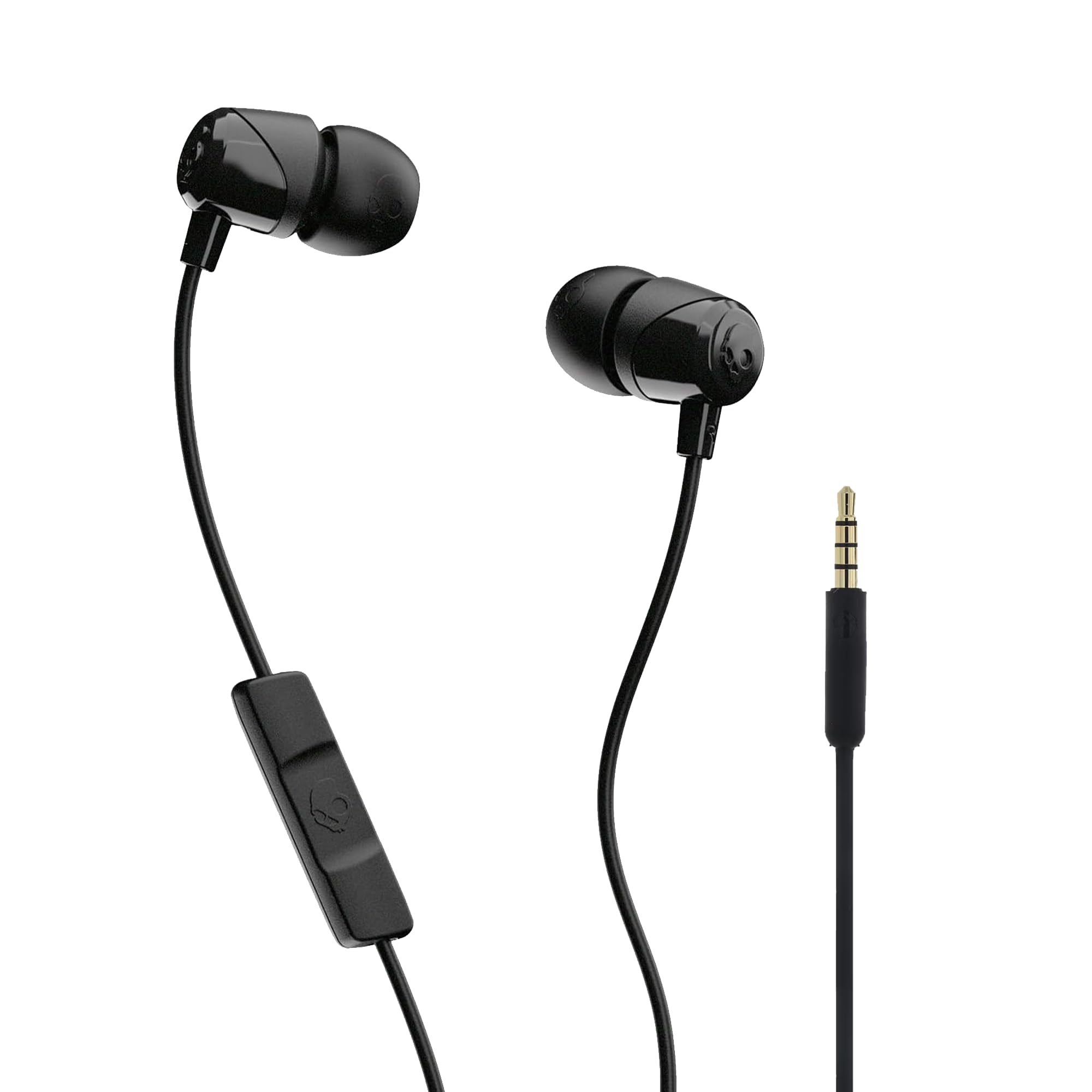
A 48-inch cable, two sizes of ear gel, and an inline mic: the Jib covers the wired-earbud basics without making you think about them. The silicone tips seal in the ear for passive isolation, and the 16-ohm impedance is easy for a phone to drive. We like them for a commute because they disappear into a pocket and don't need a charging case.

The sound is warm and bass-friendly rather than neutral. That works for podcasts and pop, and the sealed fit keeps the volume low enough to stay aware of traffic. The inline control handles play, pause, and track skip.

The cable is the part that decides how long these last; the thin wire and molded plug are the weak points, and a sharp tug is what ends a pair. Treat them as a budget, comfortable backup rather than a buy-once pair, and they make sense.

Pros

  • Comfortable silicone seal
  • Inline mic for calls
  • Easy to drive at 16 ohm
  • Light and pocketable

Cons

  • No inline volume control
Our verdict

The Jib earns its place as our budget earbud pick: comfortable, isolating, and easy to drive for commutes and calls.

Check Latest Price
6

Best for DJs and Sharing

OneOdio Pro-10

89 /100
LBD Score Excellent

Key details

Jacks
3.5 mm and 6.35 mm
Weight
14.6 oz
Impedance
32 ohm
Driver Size
50 mm
View on Amazon

The 90-degree swiveling cups are the reason to look at the Pro-10: you can flip one ear off for cueing while the other stays on the mix. The dual 3.5mm and 6.35mm jacks mean the same pair works with a laptop, an amp, or a keyboard, and the share port lets a second pair plug into the same source.

The 50mm drivers give the low end weight, and the 32-ohm impedance is easy enough for a phone, though these are happiest at a desk. The self-adjusting headband and padded cushions spread the load, but the clamp is firm and you will feel them after a long session. The detachable cable is a real advantage because the cable is the part that fails first.

This is a specialist pair, not the default. We like the swiveling cups, dual jacks, and share port for a home studio; if you mainly listen on a couch, the Sony on-ear is easier to live with.

Pros

  • Swiveling cups for single-ear monitoring
  • Dual 3.5mm and 6.35mm jacks
  • Share port for a second pair
  • Detachable cable

Cons

  • Heavy 415 g frame
Our verdict

DJs and home-studio tinkerers should look at the Pro-10: swiveling cups, dual jacks, and a share port for flexible wired work.

Check Latest Price
7

Best Wired Headset for Calls

Botesty Sound Headset

89 /100
LBD Score Excellent

Key details

Mic
Built-in
Impedance
40 ohm
Cord Length
4.9 ft
Driver Size
40 mm
View on Amazon

The built-in microphone is the reason the Botesty is here. Most of the over-ears in this guide are designed for listening, not talking; this one lets you take a call or join a class without switching to earbuds.

The 40mm drivers and closed-back cups give it a warm, easy sound, and the 4.9-foot nylon-braided cord is longer than the average earbud cable without turning into a trip hazard. The folding frame and rotating cups make it easy to stuff into a backpack. We appreciated the soft pads on a long call.

The controls are the catch: volume lives on the connected device, not the cable, so you still reach for your phone. The pads are not going to block a noisy bus. It is a school-and-travel headset, not a daily commuter for critical listening.

For a budget headset, the mic and folding frame are the features that matter, and they are the ones we keep coming back to. The Botesty makes the most sense for a student, a traveler, or anyone who takes calls at a desk and wants a cable instead of a battery.

Pros

  • Built-in mic for calls
  • Folds for a backpack
  • Long 4.9-foot nylon cord
  • Comfortable pads

Cons

  • Plastic frame feels less sturdy than the price suggests
Our verdict

For calls and schoolwork, the Botesty is our budget over-ear headset: a built-in mic, folding frame, and long nylon cord.

Check Latest Price
8

Ultra-Budget Backup

Koss KPH7

88 /100
LBD Score Excellent

Key details

Warranty
Lifetime
Connector
3.5 mm
Impedance
32 ohm
Cord Length
4 ft
View on Amazon

At 2.88 ounces, the KPH7 is the pair that disappears into a bag until you need it. The on-ear cups are adjustable, the 3.5mm plug fits the widest range of devices, and the 4-foot cord is short enough to avoid a tangle.

The 32-ohm impedance and 91 dB sensitivity make it easy to drive from a phone or laptop. Its 80 Hz–18 kHz range suits podcasts and audiobooks, and the adjustable headband bends to fit without much fuss. The plastic frame feels basic, but Koss backs the KPH7 with a lifetime warranty.

The foam pads are the first part to show wear, and the sound is not going to satisfy anyone chasing deep bass or isolation. That is the trade for a headphone this light and this inexpensive.

We see this as a backup or a first pair for a kid, not a replacement for the Sony or Audio-Technica. The lifetime warranty and low weight make it easy to justify, as long as you treat it as a casual listen rather than a main pair.

Pros

  • Very light at 2.88 oz
  • Lifetime warranty
  • Easy to drive at 32 ohm
  • Adjustable on-ear fit

Cons

  • Short 4-foot cord
Our verdict

Keep the KPH7 as an ultra-budget backup: light, simple, and backed by a lifetime warranty for casual listening.

Check Latest Price

How We Chose and Tested These Wired Headphones

We built the shortlist from wired sets across the range most people actually shop, then filtered by the things that decide a purchase: connector type, whether the cable is fixed or reinforced where it meets the jack, and whether a set is meant for a mixing desk or a commute. Anything with a plug that wouldn't survive a daily bag toss didn't make the cut.

Fourteen pairs went into daily rotation for six months. They came on commutes, sat through open-plan afternoons and video calls, flew on two long-haul trips, went into a classroom, and spent plenty of evenings on the couch.

We measured every cord with a tape measure and counted how often it knotted in a coat pocket. Each set got plugged into a phone, a laptop, and a mixing desk to check that the jack seated snugly and the sound didn't cut out when the cable moved, and we screwed quarter-inch adapters on and shook them loose in a bag to see whether they held. Daily coiling and stuffing into a backpack showed us where strain relief bent first and which earpads started flaking.

Comfort got tested the honest way: eight-hour workdays, with and without glasses, noting where the headband clamped and whether our ears got hot. For isolation, we stood beside a running dishwasher and walked a busy street to hear how much leaked in. We left voicemails through each inline mic, listened to the same three tracks on every set to compare bass, vocals, and cymbal fizz, and noted what actually arrived in the box against what the listing promised.

How to Choose Wired Headphones

Start With the Connector

A 3.5mm plug is still the universal option, but a phone that dropped the jack needs either a Lightning or USB-C headset or an adapter with a built-in DAC. Do not assume a passive dongle will work with every phone; check the adapter's compatibility before you buy. If you are choosing for an iPhone with Lightning, the EarPods are the least fuss; for a laptop or desktop, a 3.5mm pair moves between devices without an adapter. The connector decides which of these picks can even be on your shortlist.

Over-Ear, On-Ear, or In-Ear

Over-ear cups surround the ear and usually seal better, but they are bulkier and can clamp. On-ear models are lighter and pack smaller, though the pressure point is the ear itself. In-ear buds isolate the most for their size and are easiest to carry, but the fit is personal. If you wear glasses or listen for hours, give the clamp and pad material more weight than the driver size. The ZX110 is the easy travel shape here; the MDR-7506 is the desk one.

Sound, Impedance, and Isolation

For phone and laptop listening, look for low impedance—roughly 16 to 63 ohms in this group—so the headphones are easy to drive. Higher impedance is not automatically better; it usually means more power is needed. Closed-back designs seal in sound and keep office noise out, but they are not active noise cancellation. If you need to hear announcements, an earbud that sits loosely is safer than a sealed over-ear. Match the isolation to the room, not to the spec sheet.

Cable, Controls, and the Long Haul

Wired headphones fail at the cable more often than at the driver, so look at the strain relief at the plug and whether the cable detaches. A detachable cable is a real advantage on a studio pair; a fixed thin cable is a consumable. Length matters too: a 4-foot cable is fine at a desk, while a 9.8-foot cable is a trip hazard on a commute. If you take calls, check for an inline mic and remote; many full-size studio models leave them out.

Frequently Asked Questions

Final Verdict

For most people, the Sony MDR-7506 is the wired headphone we recommend first: it has clear, detailed sound, a comfortable long-session fit, and a folding case that makes it easy to keep. If the price is too much, the Audio-Technica ATH-M20x gives you the closed-back over-ear experience for less; if calls are the point, choose the Botesty; if you need Lightning, the EarPods. Start with the plug and the job, and the rest follows.