Best Closed-Back Headphones for Gaming of 2026

The best gaming happens after the rest of the house goes to bed, which is also when a leaky pair of headphones stops being a minor annoyance. Closed-back cups seal around your ears: the game stays in your head, the room stays out, and you can catch a footstep at 1 a.m. without waking anyone down the hall. That seal is why near-identical specs can feel completely different by hour three.

I've spent six months wearing a dozen of them through late-night ranked matches, weekend co-op, long campaigns, and work calls, while my team ran its own sessions alongside. What separated the good ones wasn't driver size — it was clamp force at hour three, whether the pads made my glasses dig in, how much of a box fan or the TV next door bled through, and whether a controller could drive them without an amp.

Two things shoppers underrate: detachable cables, since a permanently attached short cord is a nuisance on the couch, and impedance, which quietly decides whether your gear gets these loud enough. Both shaped the picks below.

1

Best Overall

Audio-Technica ATH-M50x

95 /100
LBD Score Outstanding

Key details

Cable
Detachable
Driver
45 mm dynamic
Weight
10.2 oz
Impedance
38 ohm
View on Amazon

The three-cable kit and 38-ohm load are what make the ATH-M50x our default for gaming. You can plug it into a controller, laptop, or desktop without an amp, and if a cable snags you replace it instead of the headphones. The 45 mm drivers deliver a full, clear sound with enough bass for explosions and enough midrange for dialogue. The sealed cups also keep room noise out, which is the point of a closed-back. We especially like the 90-degree swiveling earcups for pulling one side off when someone speaks to you.

The M50x is not the widest-sounding closed-back here; the HD 620S and DT 770 Pro both feel more open. But it is the easiest to live with across PC, console, and handheld. The fold-flat design and included pouch make it a reasonable travel headphone too, and the detachable cable means you can swap in a shorter one for a controller. The 20 Hz to 28 kHz frequency range and 99 dB sensitivity are not magic numbers, but they explain why it sounds loud and complete from ordinary gear. For a first serious headphone, that combination is hard to beat.

Pros

  • Runs from a controller or laptop
  • Detachable cable is easy to replace
  • Folds flat for storage
  • Sealed cups block room noise

Cons

  • Clamp can feel tight for larger heads
  • Earpads are a wear item
Our verdict

The ATH-M50x is the default we point most gamers to: 38 ohms, a detachable cable, and sealed cups make it easy to drive and live with.

Check Latest Price
2

Best for Long Sessions

Beyerdynamic DT 770 Pro

93 /100
LBD Score Outstanding

Key details

Cable
Fixed 3 m
Weight
9.5 oz
Ear Pads
Velour
Impedance
80 ohm
View on Amazon

Velour pads are the first thing that separates the DT 770 Pro from the rest of this group. They sit soft and breathable against the ears, and the spring-steel headband spreads weight rather than pinching one spot. For a desk gamer who settles in for a long session, that matters more than a slight tuning difference. The closed cups block keyboard and room noise, and the 80-ohm version is the all-rounder of the line: a laptop can get it loud, but an interface or headphone amp gives it more control.

The 80-ohm load is the number that decides whether your setup is ready. A laptop can get it loud, but an interface or amp gives it more control, and a controller is not the place for it. That makes the DT 770 Pro a desk headphone first. The 96 dB sensitivity helps, but it does not turn an 80-ohm load into a controller-friendly one. If you already have a DAC/amp and want the most comfortable long-session closed-back here, this is the one we choose. The replaceable velour pads and steel headband are built for years of daily sessions, not a quick tournament.

Pros

  • Velour pads stay comfortable for hours
  • Strong passive isolation for a desk
  • Spring-steel headband spreads weight

Cons

  • Fixed 3 m cable cannot be swapped
  • No microphone or inline controls
Our verdict

If you game at a desk with an amp and want velour-pad comfort for hours, we think the DT 770 Pro is the better long-session choice.

Check Latest Price
3

Best Premium Soundstage

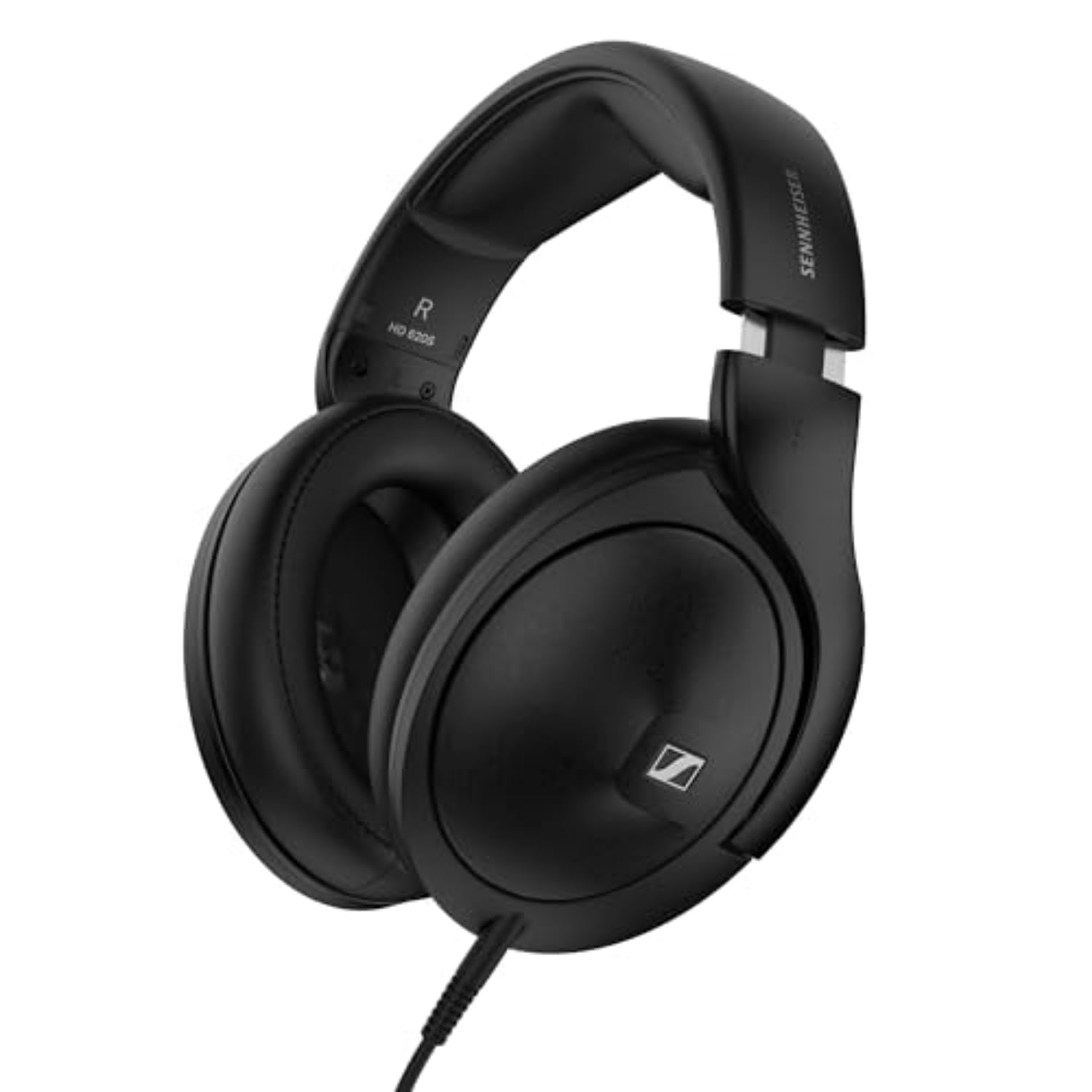
Sennheiser HD 620S

84 /100
LBD Score Excellent

Key details

Cable
1.8 m detachable
Driver
42 mm angled
Weight
14.1 oz
Impedance
150 ohm
View on Amazon

The angled 42 mm drivers and open-like baffle are the reason the HD 620S feels different from every other closed-back here. Most sealed cups put you in a small room with the band; this one pushes the mix wider and places sounds with more precision. For atmospheric single-player games and for picking out footsteps in a busy mix, that is the upgrade you are paying for. The 150-ohm load also means it wants a proper desktop chain, not a controller.

Comfort is built for long sessions: soft leather pads, internal venting, and a steel-reinforced headband slider. The 400 g weight is noticeable compared with the M50x, but the weight is spread well, and the pads are large enough to avoid pressing on the ears. The detachable 1.8 m cable is a practical length for a desk. Noise isolation is strong for a closed-back, though the seal depends on fit. We rate its imaging at the top of this set for immersive games, and the open feel is the reason to pay the premium. The cable is detachable, so a snag does not end the session. That matters on a desk.

Pros

  • Angled drivers widen the stage
  • Strong isolation with an open feel
  • Comfortable for long sessions

Cons

  • 150-ohm load needs a dedicated amp
  • 400 g is heavy next to the others
Our verdict

For a premium closed-back that images like an open pair, the HD 620S is our strongest immersive pick here.

Check Latest Price
4

Best Plug-And-Play Chat

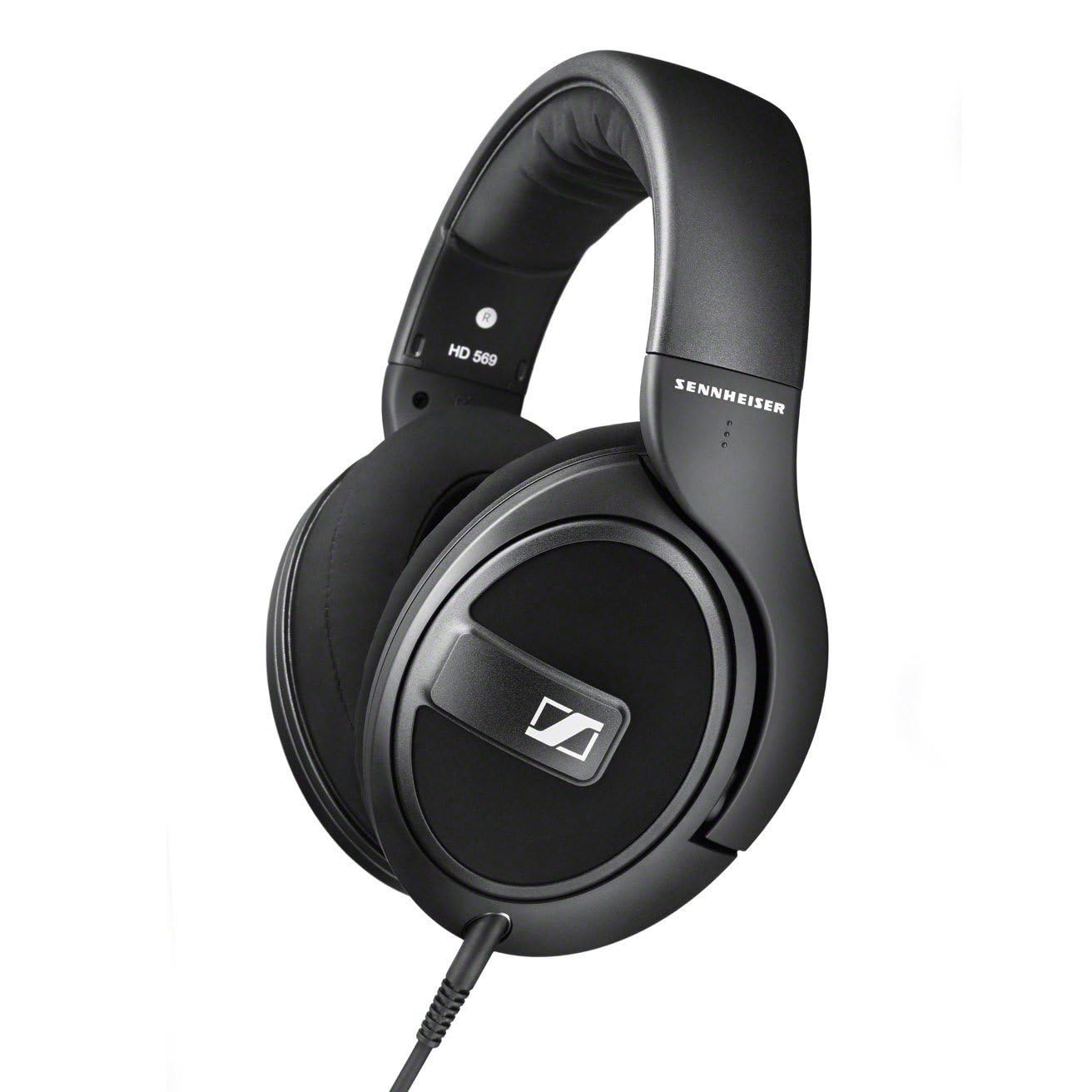
Sennheiser HD 569

90 /100
LBD Score Outstanding

Key details

Cable
Two detachable
Driver
38 mm
Ear Pads
Replaceable
Impedance
23 ohm
View on Amazon

The 23-ohm load is the quiet hero of the HD 569. It lets a PlayStation or Xbox controller drive the headphones to a sensible volume without a DAC, which is not true of the 80- and 150-ohm picks here. The 1.2 m cable with an inline mic and remote is the one we leave attached for chat; the longer 3 m cable is for a desk. That makes the HD 569 the least fussy way to get closed-back game audio and voice chat from one jack.

The 38 mm drivers are tuned warm and easy rather than forensic. Dialogue and effects come through clearly, and the bass has enough weight for action without swallowing the mids. Soft replaceable pads and a light clamp make long sessions comfortable for most ears. The seal is decent, but it is not the strongest isolation in this set; a loud room will still get through. If you wear glasses, the arms can break the seal and cut the bass.

We keep the HD 569 on the shortlist for controller players because it solves the two practical problems at once: drive and chat. It is not the most detailed headphone here. But for a living-room setup where one cable runs to the controller, that simplicity is worth more than another layer of resolution.

Pros

  • 23-ohm load runs from a controller
  • Includes a mic cable for chat
  • Replaceable pads extend life

Cons

  • Inline mic is basic next to a boom mic
  • Earpads can flake over time
Our verdict

We send controller players to the HD 569: its 23-ohm load and included mic cable make voice chat nearly plug-and-play.

Check Latest Price
5

Best Budget Wired

FIFINE HD8

89 /100
LBD Score Excellent

Key details

Cable
Two detachable coiled
Driver
50 mm
Weight
9.35 oz
Impedance
32 ohm
View on Amazon

Two detachable coiled cables is a lot of cable for a budget headphone. One ends in a 3.5 mm plug, the other in a 6.35 mm plug, so the HD8 moves between a controller, laptop, and mixer without an adapter hunt. The 50 mm drivers give it a big, clear sound with more low-end weight than the price suggests. The closed cups and circumaural pads block high-frequency noise, and the 9.35 oz weight is easy to forget during a long session.

Passive isolation is decent rather than dramatic; it takes the edge off a room but does not silence it. We still think the HD8 is the budget wired pick because the detachable cables and 32-ohm load make it so easy to live with. It is a sensible first closed-back for a desktop gamer who wants to add a mic later. The coiled cable keeps the desk tidy, and the two plug sizes cover most gear without a drawer full of adapters.

The sound is not neutral in the way a studio monitor is; it leans warm and full, which suits games better than critical listening. If you want a flat response for mixing, look at the M50x or HD 620S. For game audio, the extra body is a feature.

Pros

  • Two detachable coiled cables in the box
  • 50 mm drivers deliver clear, full sound
  • Light enough for long sessions

Cons

  • Clamp runs tight for larger heads
  • No carry case included
Our verdict

We rate the HD8 as the budget wired pick to beat if you want detachable cables and a big, clear sound without spending much.

Check Latest Price
6

Best Gaming Headset

EPOS H3

78 /100
LBD Score Very Good

Key details

Weight
1.3 lb
Impedance
25 ohm
Connection
3.5 mm wired
Microphone
Noise-cancelling boom
View on Amazon

The flip-to-mute boom mic is the reason the EPOS H3 earns a place here. Raise the arm and you are muted; lower it and you are back in chat, with no software or button hunt. The mic is clear and does not sound like a speakerphone, and the closed cups keep some room noise out. The 25-ohm load means a controller or laptop can drive it, and the volume wheel on the right cup is easy to find mid-match.

The H3 is a gaming headset first. Its 3.5 mm connection is simple across PC, PS5, Switch, and Xbox. The 1.3 lb weight is not heavy for a headset, but it is not a feather either. The hinged cups and stainless-steel slider adjust in click stops, so the fit is easy to repeat after someone else borrows it.

For team chat on a budget, the H3 solves the microphone problem that plain headphones leave open. We like it for a younger player or a secondary console setup where one cable and a boom mic matter more than audiophile detail. If you already have a desk mic, put the money toward the M50x or FIFINE instead; the H3's advantage is the all-in-one chat solution.

Pros

  • Flip-to-mute boom mic is clear
  • 25-ohm load works from a controller
  • Volume wheel on the earcup

Cons

  • Tight fit for larger ears
  • Sound lags the best headphones here
Our verdict

We recommend the H3 to gamers who want a real boom mic and closed cups in one inexpensive wired headset.

Check Latest Price
7

Immersive Bass

FiiO FT1

87 /100
LBD Score Excellent

Key details

Cups
Solid wood
Cable
Two detachable
Driver
60 mm
Impedance
32 ohm
View on Amazon

The wood cups and 60 mm driver are the FT1's personality. It has a warm, bass-forward sound with a wider sense of space than its sealed cups suggest, and the wood gives it a look that stands apart from the black-plastic crowd. The 32-ohm load is easy to drive from a laptop or dongle, and the two detachable cables, one 3.5 mm and one 4.4 mm balanced, cover most desktop setups.

Comfort is good for long sessions. The pads are soft, the headband uses a ball-slide rail, and the weight is manageable. The two cables cover desktop and portable gear, and the 4.4 mm balanced option is a nice bonus for a desktop DAC. The storage bag is a small extra that makes it easier to keep the wood cups from knocking around.

For immersive single-player games, the FT1's bass weight and wood-cup warmth are genuinely appealing. It is not the most neutral closed-back here, but it is one of the more characterful. If you want a headphone that makes a big game feel big, it is worth a listen.

We see the FT1 as a specialist rather than a default. The M50x is easier to recommend for mixed use, and the HD 620S is more precise. The FT1 earns its spot for players who want a warm, spacious closed-back with a bit of craft to the design.

Pros

  • Warm, bass-forward sound with a wide stage
  • Wood cups and 60 mm driver stand out
  • 32-ohm load is easy to drive

Cons

  • Build quality is less rugged than it looks
  • Stock cable is stiff and microphonic
Our verdict

We like the FT1 for players who want a warm, bass-forward closed-back with wood cups and will treat a less rugged build carefully.

Check Latest Price
8

Entry-Level Gaming

Audio-Technica ATH-M20x

93 /100
LBD Score Outstanding

Key details

Cable
Single-side fixed
Driver
40 mm
Weight
7.41 oz
Impedance
47 ohm
View on Amazon

The M20x is the entry point for a reason. At 210 g, it is the lightest headphone in this set, and the 47-ohm load is easy enough for a controller or laptop. The 40 mm drivers are tuned with more low-frequency weight than the M50x, which gives explosions and soundtracks some body without asking for an amp. The single-side cable exit keeps the desk side clean.

The sound is clear but not as refined as the step-up models. The closed cups block some room noise, and the circumaural pads sit around the ears rather than on them. The build is plastic and light, so it rewards careful handling. The 15 Hz to 20 kHz frequency range and 96 dB sensitivity are ordinary on paper, but they are enough for game audio and music at a desk.

For a first gaming headphone, the M20x gets the basics right: low cost, low impedance, and a closed-back design that keeps the room out. It does not have the wider stage of the M50x, and it is not the one to choose if you need chat built in. But as a starter pair for a desk or a second setup, it is hard to argue with.

We keep the M20x in the also-consider tier because it is outclassed by the M50x on refinement. It still earns attention for the player who wants a simple, light closed-back and does not need the extras. If the budget is tight, this is the sensible first step.

Pros

  • 47-ohm load is easy to drive
  • Light 210 g frame
  • Clear sound with extra low-end

Cons

  • Fixed cable is a wear point
  • Clamp and pads can feel snug
Our verdict

For a first pair, our pick is the M20x: low cost, low impedance, and a closed-back design that keeps the room out.

Check Latest Price

How We Tested Closed-Back Gaming Headphones

We built the shortlist from review threads, spec sheets, and the forums where people argue about this category, then filtered by price band, whether the pads and cables could be replaced, and whether a model offered more than one connection option. Twelve pairs made the cut.

Testing ran six months, mostly at night in a shared apartment with a box fan, a TV through the wall, and a roommate on calls. Each pair got at least three three-hour sessions — a ranked run, a long single-player stretch, and an afternoon of music and voice chat — where I noted where the headband pressed, whether my ears got hot, and whether the pads pushed my glasses into my temples after an hour.

For isolation, I played a box fan and a TV at normal volume and rated how much of each disappeared once the cups were on. For leak, a colleague sat three feet away while I ran game audio at roughly my normal level and told me what he could hear.

Cables got the most handling: we detached and reattached every removable cord a few dozen times, checked whether inline volume controls worked with a PC, a console controller, and a laptop jack, and walked around with each pair to see where a long cord snagged on a chair arm. Durability testing was unglamorous — pairs went into backpacks, got hung by one cup, and had their pads pulled off and refitted. Anything that rattled or loosened its jack didn't make the list, and each pair got one last gut check: would we recommend it at full price, and to whom.

How to Choose Closed-Back Headphones for Gaming

Match Impedance to Your Gaming Setup

A 23- or 38-ohm headphone like the HD 569 or ATH-M50x will run from a controller or laptop without fuss. An 80-ohm DT 770 Pro or 150-ohm HD 620S wants a dedicated interface or amp to sound its best. That does not make higher impedance better; it just changes who should buy it. If you play on a couch with a controller, stay low. If you sit at a desk with a DAC/amp, higher impedance is viable. We check the controller output before assuming any headphone will get loud enough.

Treat Comfort as a Gaming Spec

Clamp force and pad material matter more over a four-hour session than a small tuning difference. Velour pads, as on the DT 770 Pro, breathe better; leather pads, as on the HD 620S, seal more but can warm up. Weight is the other half: the HD 620S is 400 g, while the M20x is 210 g. If you wear glasses, the arms break the seal and press the pads against your head. Look for replaceable pads and a headband that spreads pressure rather than focusing it.

Balance Isolation Against Soundstage

Closed cups keep game audio in and room noise out, but they can also make the mix feel boxed in. Angled drivers and an open-like baffle, as on the HD 620S, are the clearest remedy in this set. Bigger drivers, like the 50 mm FIFINE or 60 mm FiiO, can add bass weight, but size alone does not guarantee better positional cues. For competitive games, imaging and a clean midrange matter more than a bass boost. For immersive single-player, warmth is a fair trade.

Decide Whether You Need a Mic and a Detachable Cable

A detachable cable is a repair-friendly feature: the M50x, HD 569, FIFINE HD8, and FiiO FT1 all offer one, while the DT 770 Pro and M20x are fixed. If you already have a desk mic, plain headphones are better value. If you want one cable for chat, the EPOS H3's boom mic is the simplest solution, and the HD 569's inline mic is a quieter alternative. A boom mic usually sounds clearer than an inline one, but it adds a part to adjust.

Plan for Wear and Replacement Parts

Earpads and headband pads are the first parts to go, and the difference between a two-year headphone and a five-year one is often whether those parts come off. The HD 569 and DT 770 Pro use replaceable pads; the M50x's pads are wear items too. Check the hinge and cable entry as well, because those are the failure points in this category. A detachable cable and replaceable pads are worth more than a cosmetic finish.

Frequently Asked Questions

Final Verdict

For most gamers, the Audio-Technica ATH-M50x is the safest place to start: 38 ohms, a detachable cable, and sealed cups make it easy to drive and repair without fuss. If you game at a desk with an amp and value velour comfort, the DT 770 Pro is the long-session alternative. For a premium step up in imaging, the HD 620S is the one we reach for when the game's atmosphere matters as much as the score.