Best Mirrorless Cameras for Wildlife Photography of 2026

The bird is never the problem; the branch behind it is. Anyone who has aimed a camera at a warbler knows the half-second of dread when focus locks onto a twig two inches left of the eye and the moment is gone. A body built for wildlife fixes exactly that: it finds the animal, sticks to it, and holds on while the bird turns, dips, and launches.

I shot a DSLR and a long lens for years, and the upgrade that actually raised my keeper rate wasn't megapixels — it was autofocus that recognizes animals. Nine months and eight cameras later, the differences that matter show up in the burst, not the spec sheet. Here's the tradeoff nobody explains to a first-time buyer: full-frame gives you cleaner files at dawn and dusk, while APS-C gives you more reach from a shorter, lighter, cheaper lens, and reach is most of wildlife photography.

The picks below run from a body a beginner can grow into to one that will still be tracking kingfishers in five years. All of them survived the same feeder-and-wetland testing; what separates them is how hard they make you work.

1

Best Overall

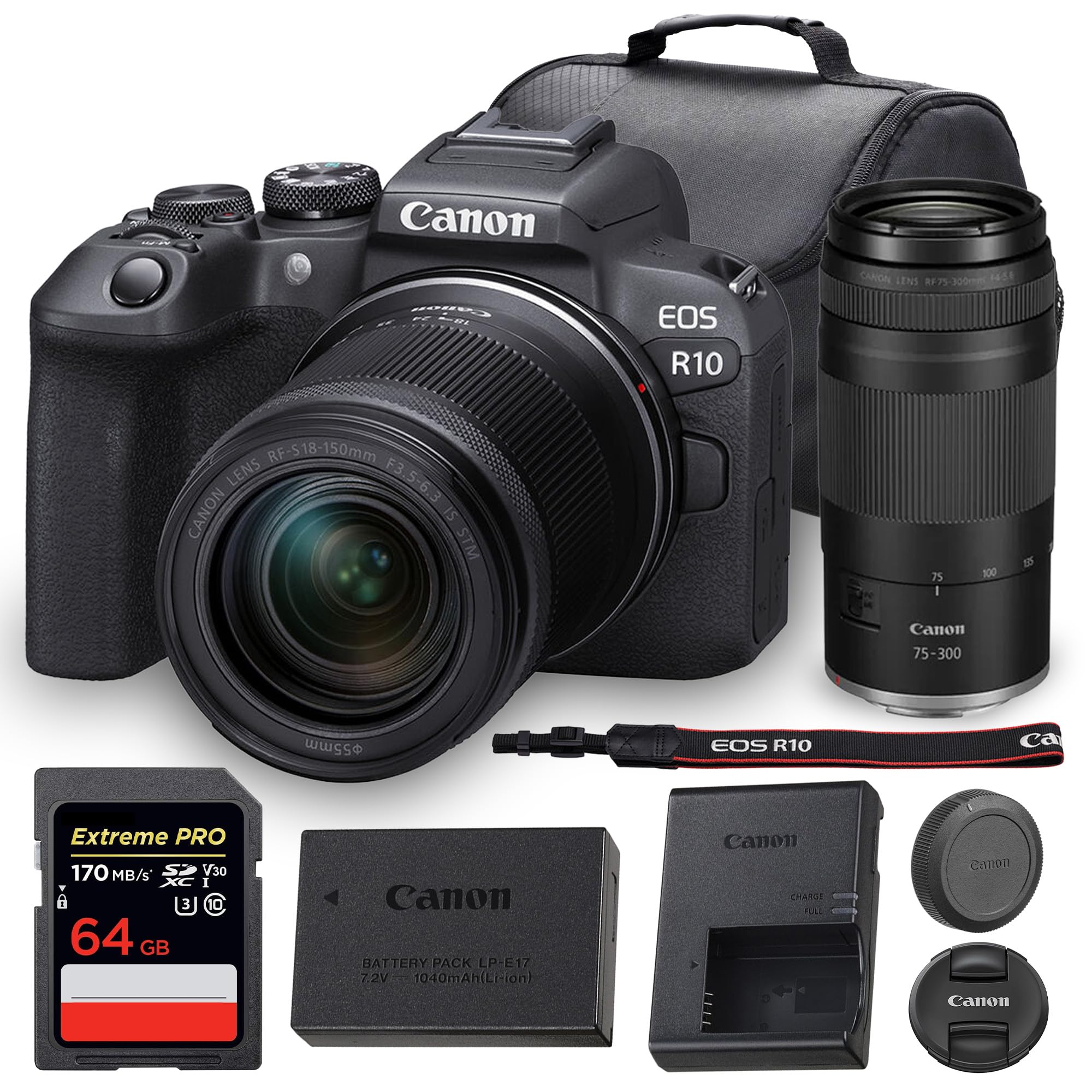
Canon EOS R10 Bundle

87 /100
LBD Score Excellent

Key details

Sensor
24.2MP APS-C
Autofocus
Dual Pixel CMOS AF II
Burst Rate
23 fps electronic
Included Lenses
18-150mm and 75-300mm
View on Amazon

The number that decides this one is 480. Mount the included 75-300mm on the R10's APS-C sensor and you're covering about 480mm in full-frame terms straight out of the box — enough for a heron on the far bank, which is more than most starter kits manage. We hand the top spot to this bundle for that reason, and then the 18-150mm covers everything from the trailhead to the bird at the feeder, so a full day needs one small bag rather than a case of lenses.

The second reason is speed. The R10 shoots at up to 23 fps, and Dual Pixel CMOS AF II tracks animals as well as people and vehicles, so the burst rate and the subject detection arrive together rather than as a fast body hunting for focus. That pairing is what we look for first in a wildlife camera: not the biggest sensor, but the one that keeps a running deer in the frame. It records oversampled 4K at 60 fps too, which we were glad of on the days when the light was better than the wildlife.

In the hand it behaves like a small DSLR, which we mean as a compliment. The grip balances the 75-300mm so the lens doesn't feel bolted onto an afterthought, and the controls are the sort you learn in an afternoon rather than a weekend. Against the full-frame Nikon Z5 II it gives up low-light headroom and gains reach, a trade we make without hesitation for birds and distant mammals.

Pros

  • Roughly 480mm of reach from the box
  • 23 fps with animal-tracking autofocus
  • Two zooms cover wide angle to supertelephoto
  • Oversampled 4K60 when you want video

Cons

  • Long lens is slow at f/5.6
  • 23 fps needs the electronic shutter
Our verdict

We make the R10 the default because the bundle solves the two hardest parts of wildlife at once: roughly 480mm of reach and 23 fps of animal-tracking autofocus, in a body you can carry all day.

Check Latest Price
2

Best for Bird Detection

Nikon Z50 II Two-Lens Kit

87 /100
LBD Score Excellent

Key details

Sensor
20.9MP APS-C
Burst Rate
5 fps
Included Lenses
16-50mm and 50-250mm
Subject Detection
9 types, including birds
View on Amazon

Nikon gave the Z50 II a bird mode you select directly, alongside eight other subject types, and that single setting is why it's here. Instead of asking the autofocus to find a subject, you tell it to find a bird, and it goes looking for a body and an eye in reeds, branches, and sky. On a morning when the target keeps disappearing behind foliage, that's most of the battle won before your finger reaches the shutter.

We like how the kit splits the work: a 16-50mm for the walk in and a 50-250mm for the bird, both stabilized, reaching roughly 375mm equivalent on the 20.9MP DX sensor. That's less reach than the Canon bundle offers, and we noticed it on open water, but it's a lighter, quieter package to carry — and 231 autofocus points do not feel like a small camera's autofocus.

The 3.2-inch tilting screen is the detail we appreciated most in a hide: drop the body to grass level and you can still frame without lying down. Add 4K at 60 fps and a pop-up flash for the walk home after dark, and this becomes the camera for someone who wants the autofocus to do the finding so they can do the watching.

Pros

  • Dedicated bird mode among nine subject types
  • Two stabilized zooms reach about 375mm
  • Bright tilting screen for low angles
  • 4K60 video from the same body

Cons

  • 5 fps burst is slow for birds in flight
  • 20.9MP is the lowest resolution here
Our verdict

If birds are what you chase, the Z50 II is the one: a dedicated bird mode plus two stabilized zooms that reach about 375mm and ride comfortably on a shoulder strap.

Check Latest Price
3

Best for Fast Action

Sony Alpha a6700 (Body Only)

89 /100
LBD Score Excellent

Key details

Sensor
26MP APS-C
Burst Rate
11 fps
Stabilization
Sensor-shift
Autofocus Points
759
View on Amazon

Sony sells this one as a body, and that's the whole decision in a sentence. If you already own E-mount glass, the a6700 is the most capable autofocus system on this page. If you don't, the telephoto you need costs more than the gaps between any two cameras here, and that changes the arithmetic of the purchase.

The hardware earns the hassle for anyone shooting movement. A dedicated AI processor handles real-time recognition, 759 autofocus points cover the frame, and 11 fps with tracking holds a subject that changes direction mid-run. Sensor-shift stabilization sits in the body rather than the lens, which is what makes adapted or unstabilized long glass usable, and the 26MP sensor is the highest resolution in this group.

It's also the smallest body here at 14.5 ounces, and we noticed that most on the walk back to the car with a long lens mounted. The trade is balance: there's less grip to wrap around a big telephoto than the Canon and Nikon bodies offer, so the lens ends up carrying the weight rather than the camera. Video is the bonus — 4K at up to 120 fps from a 6K oversample, with 10-bit recording for anyone who grades their clips.

Pros

  • 759 autofocus points with real-time recognition
  • 11 fps tracking plus in-body stabilization
  • 26MP, the highest resolution in this group
  • 14.5-ounce body for long days out

Cons

  • Some units have shut down mid-session
Our verdict

For fast, unpredictable movement the a6700's subject recognition is the best here, and its 759-point coverage is the reason — just budget for the telephoto Sony leaves out.

Check Latest Price
4

Best Full-Frame for Low Light

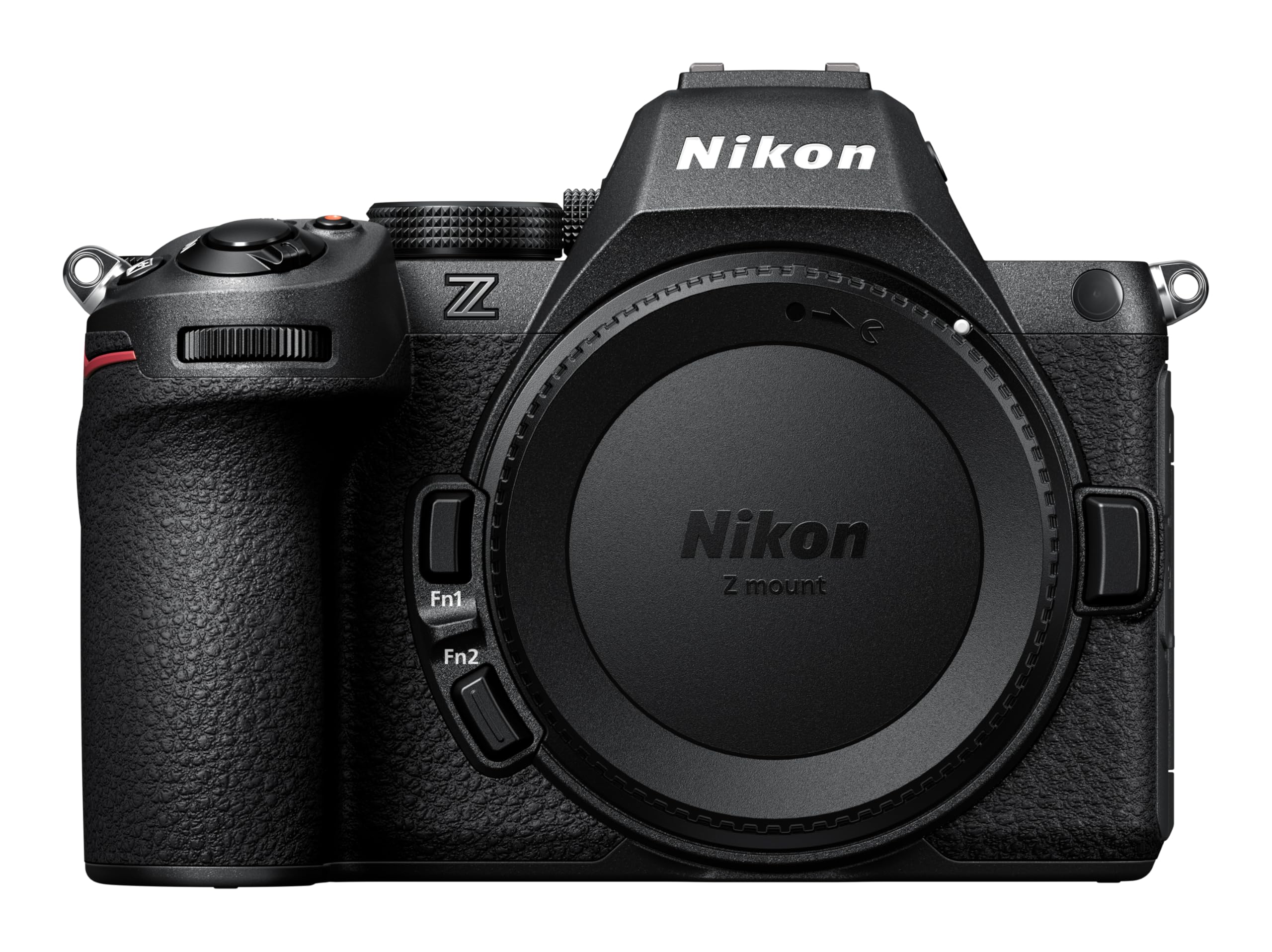
Nikon Z5 II (Body Only)

93 /100
LBD Score Outstanding

Key details

Sensor
24.5MP full frame
Burst Rate
30 fps
Stabilization
5-axis VR, 7.5 stops
Subject Detection
9 types, including birds
View on Amazon

Seven and a half stops is Nikon's own figure for the stabilization, and we won't pretend a spec sheet settles anything. What we can say is that this is the body here for someone who wants to hand-hold a long lens at dusk instead of carrying a tripod up a hill. The five-axis system works with whatever you mount, which is the practical part: you don't have to buy stabilized glass to get the benefit.

The autofocus is where it surprised us. Detection covers nine subject types including birds, sensitivity reaches -10EV, and 299 autofocus points sit across a 24.5MP BSI sensor that stays clean as the light drops. Thirty frames per second is the fastest burst in this group, and it comes from EXPEED 7 processing rather than a mode hidden three menus deep.

The 3000-nit viewfinder is the other thing we came away appreciating: framing a distant subject through it is easier in flat midday light than through the dimmer panels on the crop bodies. Set against the Canon R10, this is the camera for the hour before sunrise rather than the bird on the far bank.

Pros

  • 7.5 stops of in-body stabilization
  • Bird detection and focus down to -10EV
  • 30 fps, the fastest burst here
  • Bright 3000-nit viewfinder

Cons

  • Same lens gives less reach than on APS-C
  • 1.5-pound body weighs on a long hike
Our verdict

The Z5 II is the low-light answer: 7.5 stops of stabilization and autofocus that works near dark, in a full-frame body that asks you to buy your own glass.

Check Latest Price
5

Tight Budgets

Canon EOS R100 with 18-45mm Lens

90 /100
LBD Score Outstanding

Key details

Sensor
24.1MP APS-C
Burst Rate
6.5 fps
Included Lens
18-45mm
Autofocus Points
143
View on Amazon

Every list needs a floor, and this is ours. The R100 gets you a 24.1MP APS-C sensor and Canon's Dual Pixel autofocus with animal and vehicle detection for less than any other body here, which means a beginner can practice the actual skill of wildlife photography — finding, framing, and holding a subject — without financing a flagship.

The screen is the compromise we noticed first. It's fixed rather than hinged, so shooting from ground level or over a crowd means guessing through the viewfinder instead of tilting the camera and looking down at it. Everything else about the body is entry level in the way that phrase usually means: fine to learn on, quick to outgrow.

We still put it on the list because the money it saves belongs in glass, and glass is what actually photographs wildlife. If your budget is fixed and the choice is between a better body with a short lens and this body with a long one, take the long one.

Pros

  • Animal-detection autofocus at the lowest outlay here
  • 24.1MP APS-C sensor on the RF mount
  • Small, light body for a first kit

Cons

  • 6.5 fps is slow for moving subjects
  • 18-45mm kit lens can't reach wildlife
Our verdict

Buy the R100 as a first body you plan to grow: animal detection for the least money here, with a screen and a burst you'll want to upgrade later.

Check Latest Price

How We Chose and Tested Wildlife Mirrorless Cameras

We started with a running list of about 20 bodies, assembled from spec sheets, from what working wildlife shooters actually carry, and from how far each brand's affordable lenses reach. Anything without animal subject-detection autofocus, anything that couldn't hold a sustained burst, and anything whose long lens would cost more than the camera itself got cut. That left eight, which we bought at retail and used for nine months.

Testing happened where the pictures get taken. Most sessions started before sunrise at a backyard feeder; the rest were at a coastal wetland over three seasons, a ridge during fall hawk migration, and a dusty trail on a hot afternoon. We counted how many frames of a long burst kept the bird's eye sharp, and logged when the buffer stalled and how long it took to clear. Batteries were counted per morning rather than per charge, and long 4K clips on warm days told us whether the grip got uncomfortable.

Since plenty of buyers are new to a system, we handed each camera to someone who'd never used the brand and timed how long it took to find animal detection in the menu, which ranged from under a minute to genuinely maddening. Each one also went out for a weekend in auto and scene modes to see what a beginner gets without touching a dial. Every freeze, dropped wireless transfer, and card error went into a log, and we carried them in rain and dust to watch the finish and the sealing.

At the end we judged files the way a wildlife shooter does: tight crops of feather detail, shaded birds at high ISO, and dawn shots pushed a stop in editing. Then we weighed each body's price against the lens you'd realistically need to put on it.

How to Choose a Mirrorless Camera for Wildlife

Start with Reach, Then Resolution

Canon's APS-C bodies multiply a lens by 1.6 and Nikon's DX bodies by 1.5, so a 250mm zoom behaves like 375mm to 400mm before you buy anything longer. That crop is free reach, and it's why two of our picks are crop bodies with kit telephotos rather than full-frame cameras with nothing to mount on them.

The trap is the body-only price. The cheapest camera here stops being the cheapest the moment you add a long lens, and a two-lens bundle that already covers 480mm can undercut a body plus the glass you actually need. Count the lens before you count megapixels.

Autofocus: Look for Named Subjects

Point counts sell cameras; subject detection is what finds a bird in a hedge. What you want to know is whether the body names animals or birds specifically. The Nikon Z50 II has a dedicated bird mode among nine subject types, Canon's Dual Pixel system tracks animals as well as people, and Sony's AI processor recognizes subjects in real time.

A modest point spread that knows what a bird looks like is more useful than a wide one that doesn't. If birds are the point of the purchase, this is the specification worth paying for.

Burst Rate and Shutter Type

Bursts separate the action bodies from the rest: 23 fps on the Canon R10, 30 fps on the Nikon Z5 II, 6.5 fps on the Canon R100. The biggest numbers usually require the electronic shutter, which can bend fast wings and panning backgrounds, so a strong mechanical burst still has value for a moving subject.

For perched and slow-moving subjects, a deeper buffer and a faster card matter more than another five frames per second. Match the burst to what you actually photograph.

Weight and Stabilization on a Long Day

A long lens turns a light body into a heavy bag, and the difference between a 14.5-ounce body and a 1.5-pound one is real after five miles of trail. Weigh the body and the lens you intend to carry, not the body alone.

In-body stabilization helps you hand-hold a still subject at dusk, and it makes adapted, unstabilized glass far more usable. It does not freeze a moving animal; only shutter speed does that. Treat stabilization as a support for your technique, not a replacement for it.

The Mount Is the Long-Term Decision

Bodies come and go; the telephoto stays. Canon RF, Nikon Z, and Sony E each have their own long lenses, and the one you want may not exist in the mount you're eyeing. Check that the reach you need is available in that system before you commit to a camera.

Crop bodies can mount full-frame lenses from the same maker, which is why kits mix the two — the Canon R10's 75-300mm is a full-frame RF lens that works on the smaller body.

Frequently Asked Questions

Final Verdict

The Canon R10 bundle is our pick. It puts the most reach in the box, fires at 23 fps, and tracks animals while it does it, so the two things that most often ruin a wildlife shot — distance and focus — are handled in one purchase. Nothing else here arrives with that much reach without a second lens.

If birds are the obsession, the Nikon Z50 II's dedicated bird mode is worth the slower burst. If your outings happen at dawn or in deep cover, the Nikon Z5 II's stabilization and -10EV autofocus are the better trade, even after you add a long lens.