Best Mirrorless Cameras of 2026

A camera body is the cheap part. The mount you buy into is the commitment — lenses outlive sensors and firmware updates alike — which is why the full-frame-versus-APS-C question deserves more thought than any spec sheet gives it. A bigger sensor buys cleaner shadows at a dim reception and softer backgrounds; a smaller one buys a bag you'll actually carry all day, plus room in the budget for a second lens. What any of these fixes is the gap between the photo you saw and the photo you got.

Autofocus is where the marketing runs furthest ahead of reality, so I stopped reading the claims and started chasing my dog around the park with each camera instead. Over eight months my team shot with seven mirrorless bodies, from a body-only full-frame hybrid to a two-lens kit small enough to live in a tote, and the differences showed up fast in low light and fast action. A body that fits your hands and your lens budget beats one with better paper specs every time — the picks below are the ones we kept reaching for after the testing was technically over.

1

Best Overall

Canon EOS R6 Mark II

92 /100
LBD Score Outstanding

Key details

Mount
Canon RF
Sensor
24.2MP full-frame CMOS
Stabilization
5-axis in-body
Continuous Shooting
40 fps electronic
View on Amazon

Forty frames per second is the number that gets attention, but the R6 Mark II's real trick is how ordinary it makes difficult shots feel. The 24.2MP full-frame sensor, Dual Pixel CMOS AF II, and 5-axis in-body stabilization work together so that a moving subject stays locked and a handheld pan looks steadier than it has any right to. We pointed it at the kind of messy, fast action that usually produces a card full of near-misses, and the number of keepers was the reason it became our top pick.

The body is compact for full-frame, with a 3-inch articulating touchscreen and a grip that gives you something to hold when a longer lens is mounted. Canon's RF mount is the long game here: the kit lens gets you started, but the system's fast primes and telephotos are what you are buying into. The body-only listing is the catch; you need to budget for glass, and that can cost as much as the camera.

Compared with the Sony a7 V, the R6 Mark II gives up resolution and the newest AI subject recognition, but it costs less and its 24.2MP files are easier to handle. Compared with the R50, it is heavier and more expensive, but the full-frame sensor and stabilization are the reasons to step up. For a one-camera kit that has to cover a wedding, a track meet, and a handheld video, the R6 Mark II is the most balanced choice here.

Pros

  • 40fps burst catches fast action
  • 5-axis IBIS steadies handheld video
  • Dual Pixel AF II tracks people and animals
  • Full-frame sensor performs in low light

Cons

  • Body-only price excludes a lens
  • Resolution trails the 33MP a7 V
Our verdict

The R6 Mark II is the mirrorless camera we recommend to most enthusiasts: fast enough for sports, stable enough for handheld video, and backed by Canon's RF lens system.

Check Latest Price
2

Best for Beginners

Canon EOS R50

90 /100
LBD Score Outstanding

Key details

Screen
3-inch articulating touchscreen
Sensor
24.2MP APS-C CMOS
Autofocus
651-point Dual Pixel AF II
Continuous Shooting
15 fps electronic
View on Amazon

A first camera has to do two jobs: make the automatic mode trustworthy and make the manual controls worth learning. The R50 handles the first with Canon's Advanced A+ Assist and a 3-inch articulating touchscreen that flips forward for selfies and vlogging. The second comes from the 24.2MP APS-C sensor, DIGIC X processor, and 651-point Dual Pixel AF II, which are the same foundations that make the more expensive Canon bodies feel responsive.

What makes the R50 our beginner pick is how little it punishes a mistake. The autofocus finds faces and eyes without fuss, the 15fps electronic burst is fast enough for kids and pets, and 4K video oversampled from 6K looks sharper than the camera's size suggests. We also appreciate that the controls are simple without being stripped down; you can move to manual when you are ready, and the screen makes framing from odd angles easy.

The 18-45mm kit lens is the weakest part of the package. It is fine in daylight, but the f/4.5-6.3 aperture struggles indoors and will not give you much background blur, so plan on adding a fast prime. The body is also small enough that larger hands may feel cramped, though that is the same trait that makes it easy to carry all day. For a first camera or a lightweight second body, the R50 makes the next step obvious rather than intimidating.

Pros

  • Beginner-friendly auto modes and articulating screen
  • 24.2MP APS-C sensor with 651-point AF
  • 4K30 oversampled from 6K
  • Lightweight and easy to carry

Cons

  • Small grip may cramp larger hands
  • Kit lens is slow in low light
Our verdict

The R50 is the camera we hand to a first-time buyer who wants good photos without a steep learning curve, and it leaves room to grow into RF lenses.

Check Latest Price
3

Best Compact Travel Camera

Sony Alpha a6400

91 /100
LBD Score Outstanding

Key details

Video
4K
Sensor
APS-C CMOS
Autofocus
425 phase-detect points
Continuous Shooting
11 fps
View on Amazon

The a6400's trick is fitting a 425-point phase-detect autofocus system and a tilting screen into a body that disappears into a day bag. Real-time eye AF is the headline: it locks onto a subject's eye and holds through movement, which is why the camera still earns a place here years after its release. At 11fps with 4K video, it covers the travel and vlogging jobs that a phone cannot.

The 16-50mm kit lens is a big part of the appeal. It collapses into a compact package, covers a 24-75mm equivalent range, and has optical stabilization to steady handheld video. The compact package is the point: it fits in a small shoulder bag, which is the difference between carrying a camera and leaving it at home. The body has no in-body stabilization, so adapted lenses without optical stabilization will be shakier for handheld video.

Against the R50, the a6400's autofocus is the reason to choose it, but the Canon's articulating screen and newer processor are easier for beginners. Against the a7 V, the Sony is smaller and much cheaper, with a sensor that gives up low-light depth and resolution. The a6400 is the camera we take when the priority is a small body that can track a moving subject, not the newest menu system.

Pros

  • Real-time eye AF locks onto moving subjects
  • 425 phase-detect points cover most of the frame
  • Compact body fits in a day bag
  • 4K video and 11fps burst

Cons

  • No in-body stabilization
Our verdict

The a6400 is the compact APS-C camera we reach for when autofocus and portability matter more than the newest body design.

Check Latest Price
4

Best Full-Frame Value

Nikon Z6 II

93 /100
LBD Score Outstanding

Key details

Sensor
24.5MP full-frame BSI CMOS
Card Slots
Dual CFexpress/XQD + SD
Stabilization
Sensor-shift in-body VR
Continuous Shooting
14 fps
View on Amazon

Two card slots and in-body stabilization are usually flagship privileges; the Z6 II puts both in a full-frame body that costs less than the Canon and Sony flagships here. The 24.5MP backside-illuminated sensor is the other draw: it holds detail in low light and gives you clean files at higher ISOs, which matters more than a resolution bump for most event and portrait work.

The 3.2-inch tilting screen and deep grip make the camera comfortable with longer lenses, and the 14fps burst is quick enough for moderate action. It shoots 4K UHD at up to 60p with full pixel readout, so video is not an afterthought. The body is heavier than the APS-C picks, but that is the cost of the larger sensor and the dual slots.

What keeps it from the top spot is autofocus. The 273-point phase-detect system is accurate and the eye detection works well, but it does not have the same subject-recognition intelligence as the R6 Mark II or a7 V. For portraits, landscapes, and events where you can place the focus point, that is a fair trade for the price. The FTZ adapter also opens up Nikon's F-mount lenses, which makes the switch cheaper if you already own them.

Pros

  • Dual card slots add backup security
  • Sensor-shift stabilization steadies handheld shots
  • 24.5MP full-frame BSI sensor excels in low light
  • 14fps continuous shooting

Cons

  • Autofocus trails newer subject-recognition systems
  • Heavier than APS-C picks
Our verdict

The Z6 II is the full-frame bargain here for photographers who want dual card slots and in-body stabilization without paying flagship money.

Check Latest Price
5

Best Two-Lens Kit

Nikon Z50 II Two-Lens Kit

87 /100
LBD Score Excellent

Key details

Video
4K 60p
Lenses
16-50mm and 50-250mm
Sensor
20.9MP APS-C CMOS
Autofocus
9 subject types
View on Amazon

A 16-50mm and a 50-250mm in the same box cover roughly 24-375mm equivalent, which is the difference between a snapshot and a wildlife shot. That range is the reason this kit earns a spot: you get wide and long without buying a second lens later. The Z50 II's 20.9MP APS-C sensor, 4K60 video, and nine-subject detection make it a more capable camera than the original Z50, and the 31 picture controls are there for people who want a look straight out of camera.

We like this kit because it solves the lens question at checkout. The 16-50mm collapses for travel, and the 50-250mm gives you real reach without buying a second lens later. The body is a little larger than the R50, which we do not mind when the telephoto is mounted; the grip gives you something to hold. For a first safari, a kid's soccer season, or a trip where you want both wide and long, the two-lens bundle is the point.

The trade-offs are the lenses. Both are variable-aperture and dim at the long end, so indoor sports will push the ISO, and the 20.9MP sensor trails the 24MP APS-C rivals on paper. Neither is a dealbreaker for daylight travel, which is what this kit is built for. If you need a fast prime for low light, budget for one; the kit lenses will not replace it.

Pros

  • Two lenses cover wide to telephoto
  • 4K60 video and nine-subject detection
  • 31 picture controls for out-of-camera looks
  • Built-in flash helps indoors

Cons

  • Slow variable-aperture lenses limit low light
  • 20.9MP sensor trails 24MP rivals
Our verdict

The Z50 II two-lens kit is the one we pack for a trip where we want both wide and telephoto reach without carrying a second camera.

Check Latest Price
6

Best Premium

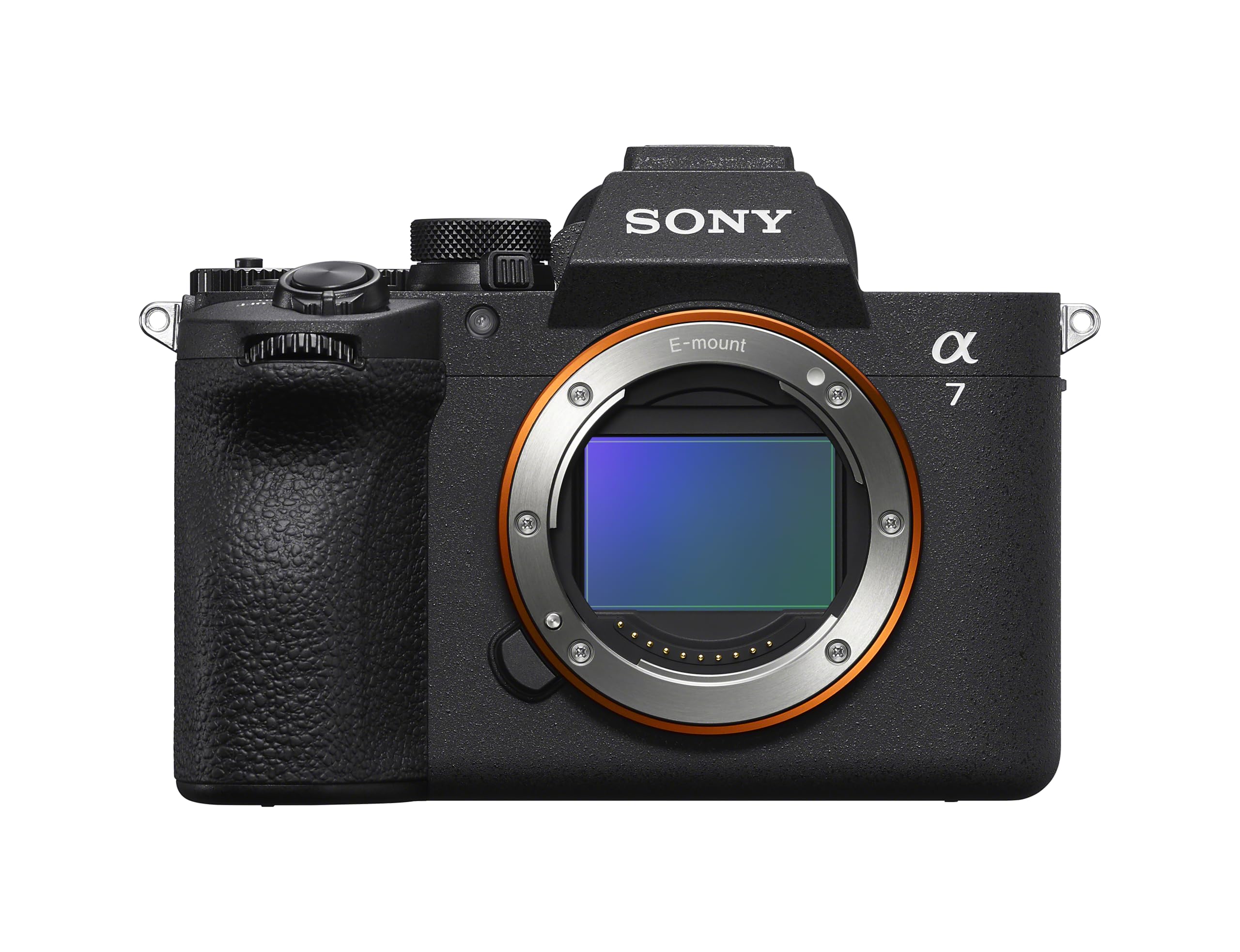
Sony Alpha a7 V

89 /100
LBD Score Excellent

Key details

Sensor
33MP full-frame stacked CMOS
Autofocus
AI subject recognition
Stabilization
7.5-stop in-body
Continuous Shooting
30 fps
View on Amazon

A 33MP full-frame sensor that can still shoot 30fps is the kind of overlap that used to require two cameras. The a7 V's partially stacked Exmor RS sensor and BIONZ XR2 processor deliver both, along with 7.5-stop in-body stabilization and AI recognition that tracks people, animals, birds, vehicles, and insects. It is the most capable camera in this group on paper.

We think the a7 V earns its premium for hybrid shooters who crop. The 33MP files give you room to recompose in post, the 30fps burst catches action, and the AI autofocus is the most confident here when a subject is moving unpredictably. It is also the camera that demands the best glass; a kit lens will not show what the sensor can do.

The price is the obvious barrier, and the menu still takes time to learn; the customization is deep, but the default layout is not as friendly as Canon's. If you do not need 33MP or 30fps, the R6 Mark II is the better-value full-frame, and the a6400 is the smaller travel body. The a7 V is for the photographer who wants one camera that can do resolution and speed, and is willing to pay for both.

Pros

  • 33MP full-frame sensor gives room to crop
  • 30fps burst with AI subject recognition
  • 7.5-stop in-body stabilization
  • Dual card slots

Cons

  • Highest price in the group
  • Menu has a learning curve
Our verdict

The a7 V is the premium pick for photographers who need high resolution and 30fps in one body and will pay for the newest autofocus.

Check Latest Price

How We Picked and Tested the Best Mirrorless Cameras

We started by pulling together every current mirrorless body we could reasonably get our hands on — about 40 candidates — and sorting them by sensor size, price, mount, and whether the lens catalog behind them gave a new shooter room to grow. That cut the field to seven, which we borrowed and lived with for eight months, shooting stills and video onto the same cards we use for work.

Testing happened where cameras actually get used: a dim wedding reception, Saturday morning soccer games, a windy overlook at dusk, my desk during video calls, and one long, dusty hike.

For autofocus, we photographed a dog sprinting straight at the lens, a singer half-hidden behind a microphone stand, and a backlit subject in front of a bright window, then culled at 100 percent and counted keepers. We also held the shutter down through each approach to see how fast the buffer filled and how long the camera took to clear it. Image quality we compared in the same dim hallway, shooting the same shelf at high ISO to see how much color survived in the shadows and whether skin tones held up under mixed indoor light.

Battery life we measured the unglamorous way — shooting until each camera died on a cold morning with the screen on and the EVF set to auto. Ease of use meant handing a body to a friend who had never shot mirrorless and timing how long it took her to find exposure compensation without help. Value came down to whether the included lens was worth carrying or just something to replace in a month.

How to Choose a Mirrorless Camera

Start With the Sensor, Not the Megapixels

APS-C bodies are smaller and their lenses cost less, which is why the Canon R50 and Sony a6400 are the easy first-camera choices. Full-frame sensors like the ones in the Canon R6 Mark II and Nikon Z6 II give you more low-light headroom and shallower depth of field, but the bodies and lenses are larger and more expensive.

If you mostly shoot outdoors and travel light, APS-C is not a compromise. If you shoot events, portraits, or available light, full-frame earns its cost. Megapixels matter less than sensor size for most people; 24MP is plenty for prints and cropping.

Autofocus Is the Feature That Changes Your Hit Rate

Phase-detect autofocus with subject detection is the difference between a camera that finds the eye and one that hunts. The R6 Mark II, R50, a6400, and a7 V all use phase-detect systems with eye and face tracking; the Z6 II's 273-point system is accurate but less intelligent with moving subjects.

If you shoot people, pets, or sports, prioritize the newest autofocus you can afford. If you shoot landscapes and still lifes, you can save money here and put it toward a better lens.

Stabilization and Video Are Separate Decisions

In-body stabilization helps handheld video and slow shutter speeds with any lens; lens-based stabilization only helps the lens it is built into. The R6 Mark II, Z6 II, and a7 V have in-body stabilization, while the R50 and a6400 rely on lens stabilization.

For video, check whether 4K is cropped and whether the screen flips forward. The R50's 4K is oversampled from 6K, the Z50 II shoots 4K60, and the a7 V adds 10-bit files. If you vlog, a forward-facing screen and clean audio input matter more than an 8K badge.

Budget for the Lens, Not Just the Body

Kit lenses are designed to cover the basics cheaply, and they are usually the first thing you outgrow. The 18-45mm on the R50 and the 16-50mm on the a6400 are fine in daylight but slow indoors. The Z50 II's two-lens kit solves the range question up front, while the R6 Mark II and a7 V are body-only and need a lens from day one.

A fast prime, roughly a 35mm or 50mm equivalent, will do more for your photos than a body upgrade. Check the mount's used-lens market before you commit; that is often where the real savings are.

Handling and Battery Life Are Part of the Purchase

Mirrorless batteries are small, and rated shots flatter real use. Budget for a spare, and prefer a body that charges over USB-C so you can top up from a power bank. The grip matters too: the R50 is tiny and easy to carry, but a larger hand may prefer the Z50 II or R6 Mark II.

Try to hold the camera with the lens you plan to use. A compact body with a long telephoto is a different balance, and the viewfinder or screen you choose affects how you shoot more than a spec sheet suggests.

Frequently Asked Questions

Final Verdict

For most people, the Canon EOS R6 Mark II is the mirrorless camera to buy. It pairs a full-frame sensor and in-body stabilization with autofocus that can handle people, pets, and sport, and it costs less than the Sony a7 V while leaving more budget for lenses.

If you are just starting, the R50 saves money and weight; if you need the smallest travel body, the a6400; if you want the highest resolution and 30fps, the a7 V. The Z6 II is the full-frame value pick, and the Z50 II kit is the easiest way to get wide and telephoto reach in one purchase.