Best Metal Detectors of 2026

The first time I dug a signal that turned out to be a silver dime, I understood why people plan vacations around metal detectors. But the machine decides how often that happens. A detector that can't tell a coin from a bottle cap, or that chatters over mineralized ground, turns a morning in the park into an exercise in patience.

I've spent eight months digging with 11 detectors — in my backyard, in wet and dry sand at the beach, and through a couple of trashy local parks — and the gap between them is wide. Beginners need something quiet and stable out of the box; anyone who sticks with it wants target ID they can trust, a coil that handles surf, and a shaft that fits their height. Battery life matters more than the box says, and a speaker you can't turn down gets old fast.

My advice to a first-time buyer: pay for stability and honest target identification before you pay for depth claims. The picks below run from a machine you can hand a kid to a relic hunter's upgrade, and each one earned its spot.

1

Best Overall

Minelab X-Terra PRO

92 /100
LBD Score Outstanding

Key details

Weight
2.9 lb
Search Modes
3 preset (Park, Field, Beach)
Waterproof Rating
IP68
Switchable Frequencies
4 options
View on Amazon

The switchable frequency control is what separates the X-Terra PRO from the budget kits here. Instead of one fixed frequency, you choose among four to suit the ground, which matters when a park full of modern trash gives way to wet beach sand. The three preset modes—Park, Field, and Beach—give you a sensible starting point before you touch the advanced settings.

At 2.9 pounds and 25 inches collapsed, it is easy to carry and easy to live with. The three-piece shaft is a travel-friendly detail, and the control-pod flashlight and red backlight are small touches that matter when a hunt runs past sunset. The 12-inch coil covers ground quickly, and the 30 discrimination segments give you room to sort iron from keepers.

It is fully waterproof, not just the coil, so rain and shallow water are not automatic reasons to turn back. The advanced settings are there when you want them, but the preset modes keep the first few hunts from turning into a menu exercise.

That combination of frequency flexibility, waterproofing, and low weight is why we make it our top pick. It is not the cheapest way to try the hobby, but it is the detector most people can grow into without immediately wanting another. The three-year coverage on the control box and coil is a useful backstop at this level.

Pros

  • Four switchable frequencies for different ground
  • Fully waterproof IP68 build
  • Light 2.9 lb package folds to 25 in
  • Three preset modes simplify setup

Cons

  • Settings take some practice to master
  • 12-inch coil is broad for tight brush
Our verdict

We recommend the X-Terra PRO as the best all-around detector for most hobbyists: it is waterproof, light, and switchable across four frequencies without demanding an expert's learning curve.

Check Latest Price
2

Best Premium

Minelab Manticore

88 /100
LBD Score Excellent

Key details

Weight
2,340 g
Search Modes
10
Folded Length
24.8 in
Waterproof Rating
IP68
View on Amazon

The Manticore is the most expensive detector in this group, and it is unapologetic about who it is for. This is a machine for the detectorist who already reads ground and wants the most information before digging, not a first purchase for someone who wants to turn on and go.

The 2D target ID map is the feature we kept coming back to. It plots targets on a screen instead of giving a single number, which makes a deep coin easier to separate from a rusty nail. Ten search modes, including Beach and Goldfield, let it follow you from saltwater to nugget country, and the Multi-IQ+ system is the most powerful in this set.

It is also a substantial tool at 2,340 grams, and it folds to 24.8 inches for transport. If you want a detector that explains itself, the X-Terra PRO is the better fit; if you want the deepest, most adjustable machine here, the Manticore earns its price. The battery lives in the handle, which keeps the balance tidy and saves fumbling with a separate pack.

Pros

  • 2D target ID map adds visual discrimination
  • Ten search modes cover beach, field, gold
  • Multi-IQ+ power for deep targets
  • Folds to 24.8 in for transport

Cons

  • Advanced target map takes experience
  • Heavier than the lightweight picks
Our verdict

For the serious detectorist who wants the deepest, most adjustable machine here, the Manticore is the premium pick—provided you will use its 2D target map and ten modes.

Check Latest Price
3

Best Lightweight

SAKOBS Metal Detector

90 /100
LBD Score Outstanding

Key details

Coil Size
11 in DD
Search Modes
4
Adjustable Length
26 to 47 in
Waterproof Rating
IP68 coil
View on Amazon

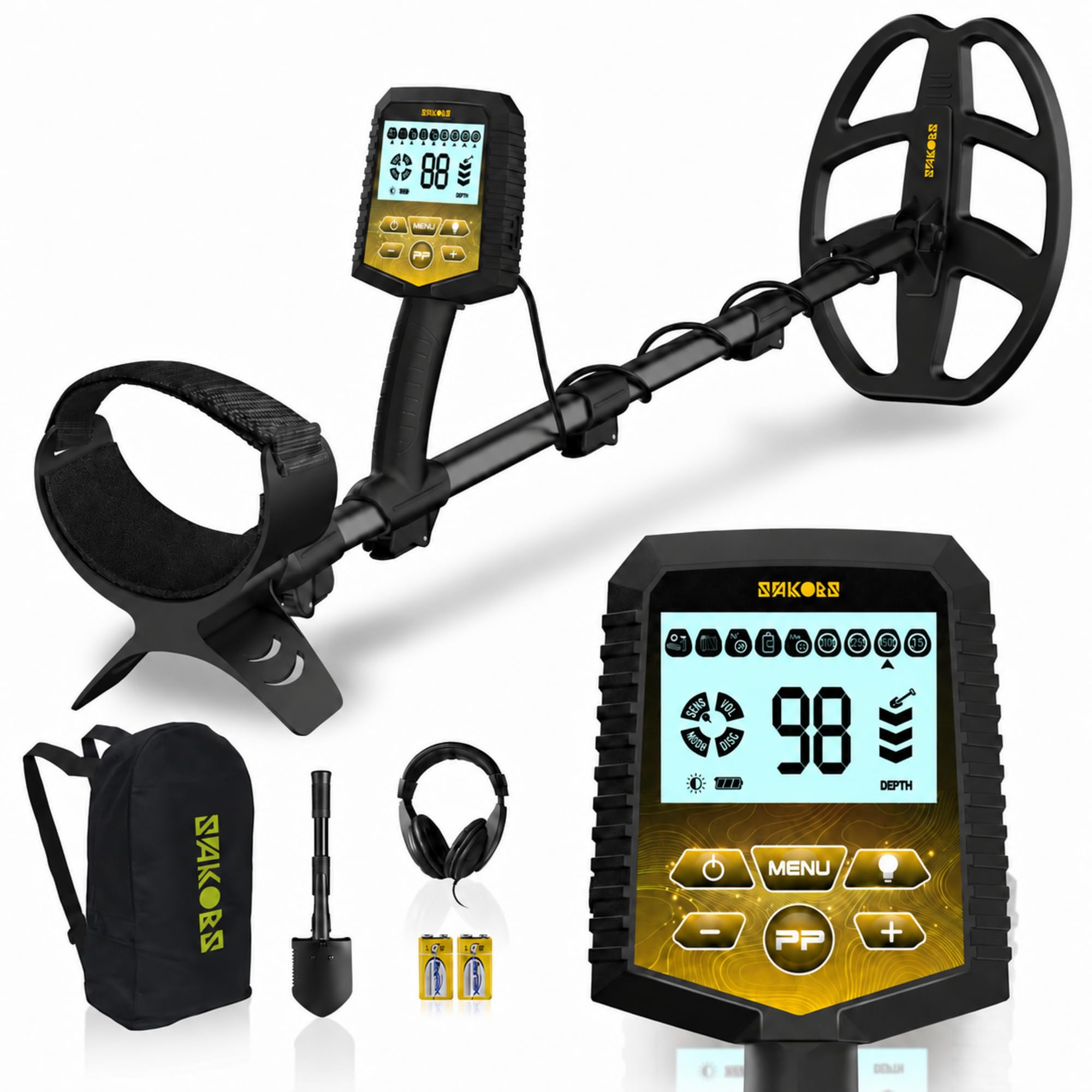
Fold it down and the SAKOBS takes up about as much room as a walking stick, which is why it earned a place in our travel kit. At 2.7 pounds and 26 inches collapsed, it slips into the included backpack and is easy to carry to a beach, a park, or a friend's yard. That compact package is the reason to choose it over a full-size detector.

The 11-inch DD coil is IP68 waterproof, so wet sand and shallow water are fair game. Four search modes and nine target types give a beginner enough to work with without a manual full of jargon. The single operating frequency is the main compromise: it is less versatile on difficult ground than the switchable Minelabs, and the included headphones and shovel round out a complete first kit.

Pros

  • Folds to 26 in and weighs 2.7 lb
  • IP68 11-inch DD coil for wet sand
  • Four modes and nine target types
  • Complete kit with backpack, shovel, headphones

Cons

  • Short 47-inch maximum length for tall detectorists
Our verdict

The SAKOBS is the one we take when space is tight: it folds small, weighs 2.7 pounds, and still packs an IP68 coil and a useful four-mode control set.

Check Latest Price
4

Best Starter Kit

ULHUND Metal Detector

87 /100
LBD Score Excellent

Key details

Coil Size
10 in
Search Modes
4
Adjustable Length
45 to 60 in
Waterproof Rating
IP68 coil
View on Amazon

The first thing we noticed about the ULHUND is the length: it adjusts to 60 inches, which is rare among the budget kits here and makes it one of the few that fits a taller detectorist without a stoop. The kit arrives with a carrying bag, shovel, headphones, and two 9-volt batteries, so there is no scramble for accessories.

The 10-inch IP68 coil and four modes cover parks, yards, and wet sand, and the backlit LCD is readable in low light. We found the controls simple enough to hand to a first-timer, and the 60-inch shaft is the standout for tall users.

For a first detector, that simplicity is a fair trade. If you are shopping for a shorter adult or a child, the SAKOBS is easier to pack and adjust. The ULHUND is the one to pick when reach matters more than packing small.

Pros

  • 60-inch shaft fits taller detectorists
  • Complete kit with bag, shovel, headphones, batteries
  • 10-inch IP68 coil for land and shallow water
  • Simple controls suit first-timers

Cons

  • Basic target ID in heavy trash
Our verdict

The ULHUND is the easiest full kit to recommend to a tall beginner: it reaches 60 inches, weighs little, and includes the bag, shovel, and headphones you need to start.

Check Latest Price
5

Best for Coins and Relics

Garrett ACE 400

91 /100
LBD Score Outstanding

Key details

Iron Audio
Yes
Search Modes
5
Waterproof Rating
IP54
Operating Frequency
10 kHz
View on Amazon

Iron audio is the feature that keeps the ACE 400 relevant: it lets you hear iron before you dig, so bottle caps and rusty nails announce themselves instead of wasting a plug. That is a genuinely useful thing on a park or field hunt where trash is constant.

The 10 kHz operating frequency and five programs are a sensible middle ground for coins, jewelry, and relics. The included searchcoil cover is a small thing that saves the coil from rocks and gravel. The electronic pinpointing helps you narrow a target before you cut a plug, and the adjustable frequency helps when another detector or power line is causing interference.

This is a land-first detector. If your hunting is mostly parks, fields, and old yards, that is an easy compromise; for wet beach work, the X-Terra PRO is the better tool. The ACE 400 is also the one here we hand to someone who wants a familiar, uncomplicated control layout rather than a screen full of options.

Pros

  • Iron audio signals iron before digging
  • 10 kHz frequency and five programs
  • Electronic pinpointing narrows targets
  • Includes searchcoil cover

Cons

  • IP54 rating limits surf use
  • Audio can run loud without headphones
Our verdict

The ACE 400 remains a strong coin-and-relic choice for land hunters who want iron audio and simple Garrett controls, but it is not a fully waterproof beach machine.

Check Latest Price
6

Best Budget

Bounty Hunter TK4

89 /100
LBD Score Excellent

Key details

Weight
2 lb
Warranty
5-year limited
Coil Size
8 in waterproof
Search Modes
3
View on Amazon

The TK4 is not trying to compete with the digital machines here, and that is exactly why it works as a first detector. Three modes, a pair of knobs, and an 8-inch waterproof coil keep the learning curve short. We appreciate the five-year limited warranty on a detector at this end of the range; it is the kind of coverage that makes a casual purchase feel less disposable.

It is light at 2 pounds and easy to pass between adults and kids, which makes it a natural backyard or beach toy. If you want a screen full of target information, spend more; if you want to learn the sounds and swing something simple, the analog layout is the point. There are no menus to explain, which is why it is so easy to hand over.

Pros

  • Five-year limited warranty
  • Simple analog controls
  • Light 2 lb with 8-inch waterproof coil
  • Three modes for different targets

Cons

  • Can false-signal in trashy ground
  • Limited depth on small targets
Our verdict

The TK4 is the low-cost way into the hobby: simple analog controls, a waterproof 8-inch coil, and a five-year warranty make it a low-risk backyard and beach starter.

Check Latest Price
7

Budget Large Coil

Gbnryg M55Z-SX8

86 /100
LBD Score Excellent

Key details

Coil Size
12 in
Search Modes
5
Waterproof Rating
IP68 coil
Included Accessories
Backpack, shovel, headphones, batteries
View on Amazon

A 12-inch coil at this end of the range is the Gbnryg's calling card: it covers more ground per swing and comes with a backpack, shovel, headphones, and two batteries. The five modes and IP68 coil make it a versatile first setup for parks, fields, and shallow water.

We found the screw-free search head and collapsible cam-lock make assembly quick. The backlit LCD is large and easy to read, and the package is ready to use without a separate accessory run. That is the value here: a big coil and a full kit for a casual hunter.

The catch is accuracy: this is not a precision machine, and it can struggle in wet sand or highly mineralized ground. For a casual hunter who wants coverage and does not mind digging a few extra holes, it is a reasonable value. For a beach hunter who needs stable saltwater performance, spend more and get the X-Terra PRO.

Pros

  • 12-inch coil covers more ground
  • Five modes and IP68 coil
  • Complete kit with backpack, shovel, headphones, batteries
  • Quick cam-lock assembly

Cons

  • Battery life can vary
  • Large coil is awkward in tight brush
Our verdict

The Gbnryg is a budget kit for the shopper who wants a big 12-inch coil and a backpack full of accessories without paying for a premium brand.

Check Latest Price

Our Eight-Month Field Test

We started with a list of about 40 detectors from brands like Minelab, Garrett, and Bounty Hunter, then narrowed it by the things that actually change a hunt: coil size and whether it's waterproof, whether the machine offers more than one frequency, whether there's a target ID screen, how the shaft adjusts, and how much it weighs. Price mattered too — we wanted a spread from entry-level to a genuine upgrade pick. Eleven made the cut.

In my backyard I planted a test garden: coins, a ring, nails, and pull tabs at depths from two to ten inches. Every detector ran the same line, and I noted whether it separated a coin sitting beside a nail, whether the ID number held steady or bounced, and how far I had to back off sensitivity to keep it quiet — then repeated the check in a local park where the ground was full of real junk. Each unit got a one-hour swing so I could feel the balance at the end, and I noted how loud the speaker and headphone output were and whether they could be turned down.

The beach was the real separator. I ran each coil over dry sand and then wet sand at low tide, watching for the false signals salt produces, and dunked every waterproof coil to check the seals. Battery life was timed rather than guessed: fresh cells in, hunt until the low-battery alert, plus a note on whether it runs on AAs or a rechargeable pack. Finally, I handed each one to a friend who had never detected before and timed how long it took to go from box to first dig — that, along with a season of digging, is where our calls on accuracy, ease for beginners, fun, and value came from.

How to Choose a Metal Detector

Start With the Ground, Not the Gadget

A detector that is stable in a dry park can turn noisy on wet sand, and the reverse is also true. If you plan to hunt beaches, prioritize a machine with a dedicated beach mode and a search coil rated for water; if you mostly hunt parks and fields, a land-focused detector with good discrimination is money better spent. Check whether the waterproof claim covers the whole detector or only the coil. Many budget models protect the coil but expect you to keep the control housing dry, so read that line before you picture yourself wading in.

Match the Coil and Frequency to Your Targets

A larger coil covers more ground per swing but is clumsier in brush and less precise in trash. A smaller coil separates targets better and is easier to swing for a long time. Frequency matters too: switchable models like the Minelab X-Terra PRO can move between settings for different ground, while a single-frequency detector is simpler and often cheaper. Advertised depth figures assume a favorable target and soil, so treat them as a ceiling rather than a promise.

Learn the Target ID and Dig Repeatable Signals

Target ID is a conductivity estimate, not a label. A gold ring can read like a pull-tab, and a deep coin can jump around as you move the coil. Spend your first sessions digging repeatable signals from different directions instead of chasing every chirp. Iron audio, like the Garrett ACE 400's, lets you hear iron before you dig, which is a real time-saver in trashy parks. A 2D target map on a premium model gives more context, but it is only useful if you practice with it.

Weight, Length, and the Kit Around It

A detector you can swing for two hours is better than a heavier one with a spec sheet advantage. Check the assembled weight, the maximum shaft length, and the collapsed length if you plan to travel. Tall detectorists should look for a shaft that reaches 60 inches; packable models often stop closer to 47. A complete kit with headphones, a shovel, and a carry bag saves a second shopping trip, and a five-year warranty on a budget model like the Bounty Hunter TK4 is worth noting.

Frequently Asked Questions

Final Verdict

For most people, the Minelab X-Terra PRO is the detector we point to first. It has the frequency flexibility, full waterproofing, and low weight that make the difference between a detector that stays in the closet and one that goes on every trip.

If your budget is tighter, the SAKOBS is the travel-friendly alternative; if you hunt coins and relics on dry land and want iron audio, the Garrett ACE 400 is the specialist choice.