Best Overall

Sekonic Flashmate L-308X
Key details
- Weight
- 2.82 oz
- Flash Range
- f/1.0 to f/90.9 at ISO 100
- Ambient Range
- 0 to 19.9 EV at ISO 100
- Metering Types
- Incident and reflected
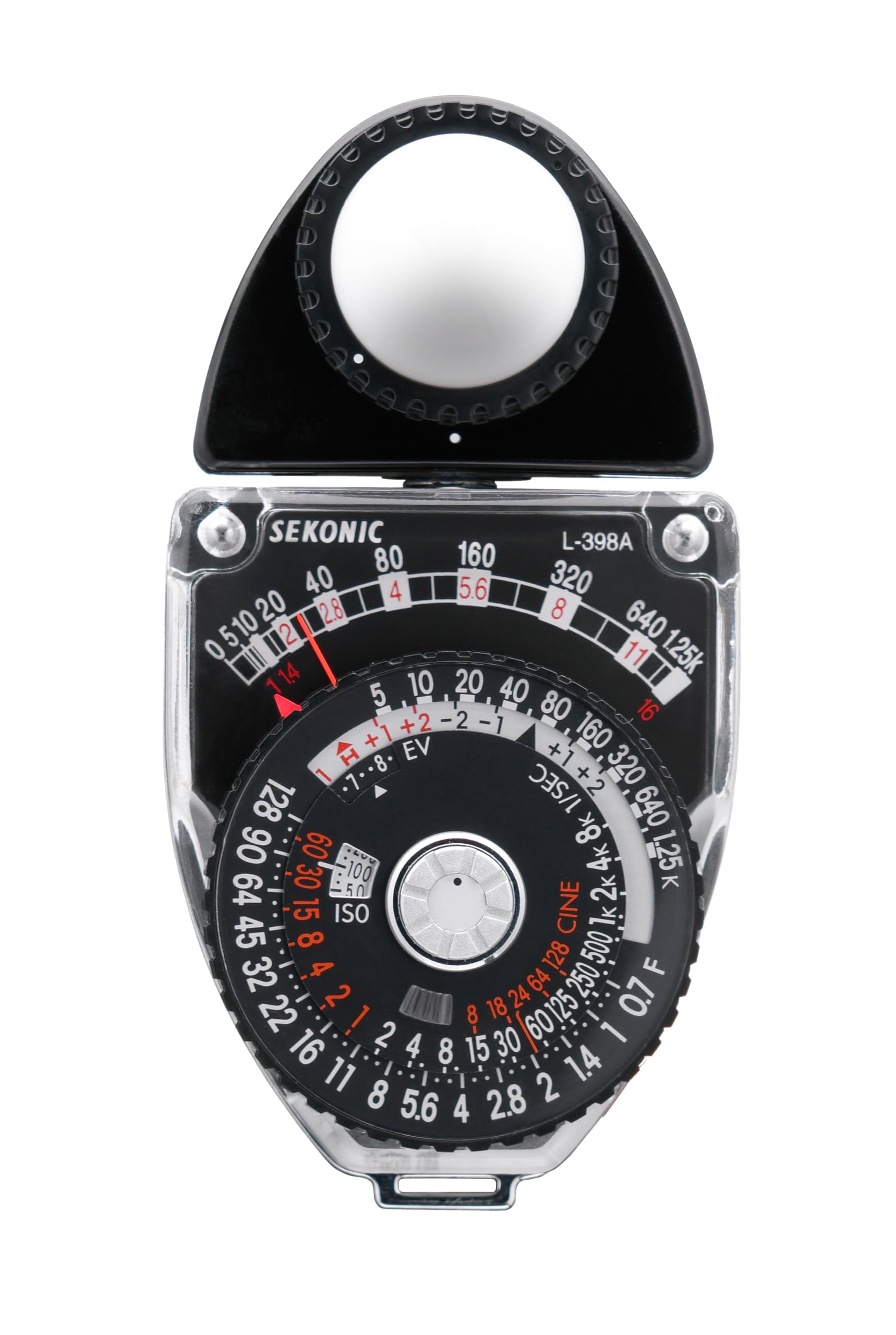
Every film exposure comes down to two readings: the light falling on your subject and the light bouncing off it. The Flashmate L-308X takes both. Slide the lumisphere across and it becomes an incident meter; slide it back and it reads reflected light through a 40-degree lens. That single switch is why it's our top pick here.
What settled it for us is how much it covers without asking for anything extra. Ambient metering runs from 0 to 19.9 EV at ISO 100, flash from f/1.0 to f/90.9 at ISO 100, and dedicated Cine and HD Cine modes handle frame rate and shutter angle if you also shoot motion. There's even a lux and foot-candle readout for scouting a location before you unpack a camera.
Where it stops is spot metering. The reflected reading is a 40-degree average, so if you work the Zone System with a large-format camera and want a one-degree read on a shadow across the street, this isn't your meter. For everything else, the incident dome is the reading that saves the frame, because a white shirt or a dark coat can't fool it the way it fools a camera's built-in meter.
What it doesn't do is talk to your camera. You set the ISO, take the reading, and transfer the pair to the lens yourself. That's the right division of labor for film: the meter's job is the light, and the exposure gets made at the camera's dials.
Pros
- Incident and reflected metering from one sliding dome
- Meters ambient and flash, with dedicated cine modes
- 2.82 ounces, small enough for a shirt pocket
- Wide 0 to 19.9 EV ambient range at ISO 100
Cons
- No spot metering for Zone System work
- Runs on AA cells rather than USB-C charging
One meter for incident and reflected light, ambient and flash, in a body light enough to forget — this is the pick we recommend to most film shooters.