Best Kids Headphones of 2026

Any parent knows the real test of kids headphones isn't the spec sheet — it's whether they survive a week in a backpack and fit comfortably on the way to school. I've watched my kid yank a pair off by the cord and hand them to a friend, and that's before the volume question even comes up. A good pair fixes three things at once: it keeps volume at a kid-safe ceiling, stays comfortable through a movie or homework session, and doesn't feel like a toy that will crack by Friday.

Over the past six months, we've tested 14 pairs with kids from preschool age up, in wired and wireless versions. We weighed sound quality and suitability first — whether voices in an audiobook stayed clear, whether controls made sense to small hands, and whether the volume cap held. Comfort, fit, and size got equal attention through car rides, tablet time, and sibling sharing on a flight. Durability, reliability, color, and value showed up later, after the novelty wore off — and those are the differences that separated the picks below.

1

Best Overall

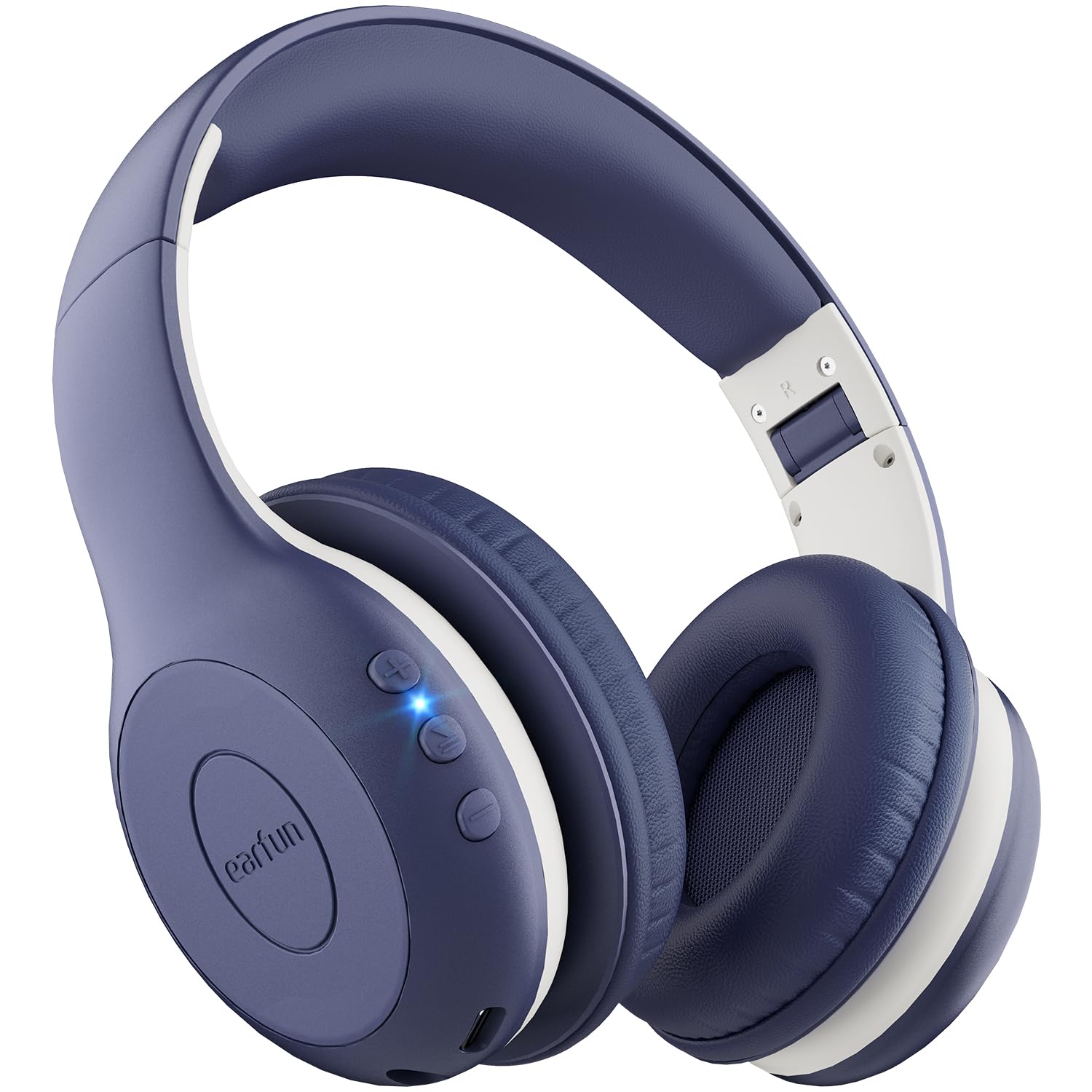
EarFun K1 Kids Headphones

93 /100
LBD Score Outstanding

Key details

Weight
6.98 oz
Sharing
Share port
Connection
3.5 mm wired
Volume Limit
85/94 dB
View on Amazon

Two lines on the EarFun K1's spec sheet decided it for us: the headphones are certified to CPC and CPSIA standards, and the volume limiter has an 85 dB setting alongside a 94 dB one. Almost every pair in this group claims to be kid-safe, and those two details are the ones a parent can actually verify — which is why this is the set we hand to most families first.

The rest of the design holds up its end. The 40 mm drivers are the same size as the ones in pairs that cost more here, the braided nylon cord resists the knots that finish off thinner cables by October, and there's an inline mic plus a single button for answering a teacher or pausing a video. At 198 g it isn't the lightest set in this group — the iClever BTH22 takes that — but it stayed comfortable through a full morning of use.

Head size is the one place it wobbles. It fits small and mid-size kids well, and the band tops out earlier than the rest of this group; a ten-year-old with a bigger head will have the sliders at their limit and the cups pressing. Buy it before a child turns eleven and that never comes up.

The share port is the detail we didn't expect to lean on as much as we did: a second pair plugs into the K1 and two kids split one tablet without a dongle. Add the fold-flat hinge and an 18-month warranty, and it's the pair that covers a school bag and a back seat without asking anything of you.

Pros

  • Certified to CPC and CPSIA standards
  • Switchable 85/94 dB volume limiter
  • Share port for a second pair
  • Braided cord resists tangling

Cons

  • Band runs out of adjustment for bigger kids
Our verdict

For most families this is the pair to buy: certified to CPC and CPSIA standards, with a real 85 dB cap, a share port and a braided cord, at the lowest price tier here.

Check Latest Price
2

Best Wireless

iClever BTH22 Kids Headphones

92 /100
LBD Score Outstanding

Key details

Weight
5.26 oz
Battery
60 hours
Connection
Bluetooth 5.4, 3.5 mm
Volume Limit
74/85 dBA
View on Amazon

At 149 grams, the iClever BTH22 is the lightest pair in this group, and that single figure does more for comfort on a long drive than any amount of padding. The ear cups rotate to sit flat against a small head, and the band adjusts through ten positions, so the same set fits a four-year-old and a nine-year-old without pinching either.

Battery and connection are the other reasons it's the wireless set we recommend first. The 60-hour rating is the longest here, USB-C charging means one cable for the tablet and the headphones, and Bluetooth 5.4 paired without fuss in our testing. The ceiling sits at 74 or 85 dBA, the shell is ABS without BPA or PVC, and a 3.5 mm cable comes in the box for the day the battery doesn't make it.

The top band is where this one gives out. It's the plastic above the ear cups that cracks, and a cracked band takes the whole set out of service. Ours came through testing intact, but the 12-month warranty is on the short side next to the EarFun's 18, so a rough kid and a tight budget are a slightly awkward mix here.

For travel, though, it's the pair that ended up living in the car. It folds flat, it doesn't need charging every night, and at this weight a kid is far less likely to yank it off in the first place.

Pros

  • Lightest pair here at 149 g
  • 60-hour battery with USB-C charging
  • 74/85 dBA volume ceiling
  • AUX cable included for wired use

Cons

  • Top headband can crack
Our verdict

Our wireless pick: the lightest set here at 149 g, with a 74/85 dBA ceiling, 60 hours of battery and an AUX cable for the day it runs flat.

Check Latest Price
3

Best for Mixed Ages

EarFun K2 Kids Headphones

92 /100
LBD Score Outstanding

Key details

Weight
6.17 oz
Battery
40 hours
Connection
Bluetooth 5.4
Volume Limit
74/85/94 dB
View on Amazon

Three volume settings are the EarFun K2's whole argument: 74 dB for a three-year-old, 85 dB for a six-year-old, and 94 dB for the ten-year-old who insists everything is too quiet. Switchable ceilings are rare at this price tier, and they're the reason this is the pair we point to when one set has to cover a wide age spread.

The rest is solid rather than remarkable. Bluetooth 5.4 held its connection across two rooms, the 40 mm drivers keep dialogue clear, and at 175 g it sits in the middle of the weight range here. CPC certification puts it in the same safety bracket as our top pick, and the padding on the band and cups is soft enough for a two-hour drive.

Battery life is the number to read carefully. It's rated at 40 hours and charges in about two, which is generous for a kid's listening habits but well short of the 60-hour figure on the box — treat the bigger number as aspiration. Even so, a month of school days between charges isn't something you'll think about.

Pros

  • Three volume ceilings, 74 to 94 dB
  • CPC-certified kid-friendly materials
  • Bluetooth 5.4 with easy pairing

Cons

  • 74 dB setting is too quiet for cars and planes
Our verdict

The one to buy when a single pair has to serve a preschooler and a nine-year-old: three volume ceilings, CPC certification and a stable Bluetooth 5.4 connection.

Check Latest Price
4

Best for Siblings

iClever HS22 2-Pack

93 /100
LBD Score Outstanding

Key details

Pack
Two pairs
Drivers
40 mm
Sharing
Audio splitter included
Connection
3.5 mm wired
View on Amazon

Two pairs of headphones and a splitter in one box solves a specific, loud problem: two kids, one tablet, one flight. The HS22 is the only pick here that ships with the splitter, and on a long drive that's the difference between one screen and an argument.

As headphones they're competent rather than special. The 40 mm drivers and nylon-wrapped cord are the same recipe as most of this group, the cups fold flat for a backpack, and the 3.5 mm plug works with a Chromebook, a Fire tablet or a seat-back screen. Comfort gets no complaints, which in this category counts as praise.

Volume is modest: fine in a quiet room, thin in a plane cabin where a kid will ask for more than the limiter gives. That's the trade for a safe ceiling, and it points the HS22 at school-age siblings rather than toddlers who need the cups to grip.

The splitter outlives the headphones, too. When a pair eventually gives out, keep the little Y-cable in a drawer — it will do the same job with whatever you buy next.

Pros

  • Two pairs plus a splitter in one box
  • Nylon-wrapped, tangle-resistant cord
  • Folds flat for backpacks
  • 3.5 mm plug works with school devices

Cons

  • Band does not cinch small enough for toddlers
  • Volume cap is not stated in decibels
Our verdict

Two pairs and a splitter in one box, which makes it the simplest way here to keep siblings on one tablet during a long trip.

Check Latest Price
5

Backpack Spares

noot products K11

95 /100
LBD Score Outstanding

Key details

Cord
5 ft, tangle free
Weight
8 oz
Headband
Foldable
Connection
3.5 mm wired
View on Amazon

The noot K11 is the one pair here with no volume limit at all, and that's the first thing to know. There's no inline mic, no remote and no controls on the headphone either, so the only volume control is the one on the tablet. What you get instead is a 3.5 mm plug, a five-foot tangle-free cord and a hinge that folds flat.

For a kid who is hard on belongings, that trade makes sense. The long cord reaches from a seat-back to a child in the next row, the braided cable holds up better than the thin rubber cords on cheaper sets, and at eight ounces it's light enough to forget. The 24-month warranty is the longest of any pick here, and the navy-and-teal finish is the least shouty colorway in the group.

Sizing is where it's most opinionated: it fits small heads very well and runs tight on anyone much past ten, with the cups pressing on bigger ears. For a headphone built to a price, that's a fair set of compromises — it does one job, plainly, and two years of coverage means a failure in month nine isn't the end of the conversation.

It's the pair to buy twice: one for the backpack, one for the drawer, and no hard feelings when one disappears in February.

Pros

  • Five-foot tangle-free cord
  • 24-month warranty, longest here
  • Folds flat and weighs 8 ounces

Cons

  • No volume limiter or inline microphone
  • Tight fit for kids past ten
Our verdict

A plain wired pair with a long cord, a fold-flat hinge and the longest warranty here — the one to buy for a kid who loses things.

Check Latest Price
6

Sensitive Ears

JoySpark T5 Kids Headphones

92 /100
LBD Score Outstanding

Key details

Weight
6 oz
Battery
40 hours
Connection
Bluetooth 5.3, 3.5 mm
Volume Limit
85/94 dB
View on Amazon

The memory foam cushions are what make the JoySpark T5 worth a look. They feel like the plushest of the pairs here, and on a kid who complains that everything squishes their ears, that's the difference between a set that gets worn and one that gets abandoned in a drawer. At 170 g it's light too — heavier than the iClever BTH22, but not by enough to notice.

The specifications are competitive without being special. Volume is capped at 85 or 94 dB, Bluetooth 5.3 is stable, the 40 mm drivers handle dialogue fine, and there's a mic in there for school calls. The cable detaches and the 3.5 mm jack means it can go wired when the battery is flat — worth knowing, because a chewed cable is the cheapest thing on a headphone to replace.

Against the rest of the field it lands in the middle: heavier than the iClever BTH22, one volume setting short of the EarFun K2, and softer on the ears than either. If your kid pulls headphones off after twenty minutes, start here.

Pros

  • Memory foam cushions are the plushest here
  • 85/94 dB volume settings
  • Detachable cable keeps it usable
  • 40-hour battery with fast charging

Cons

  • Can stop accepting a charge
Our verdict

The softest cushions here, with 85/94 dB limits, a 40-hour battery and a detachable cable, for buyers who want comfort before features.

Check Latest Price
7

Older Kids

AILIHEN I35 Kids Headphones

89 /100
LBD Score Excellent

Key details

Weight
5.92 oz
Connection
3.5 mm wired
Microphone
Inline
Volume Limit
93 dB
View on Amazon

A 93 dB ceiling is both the reason to look at the AILIHEN I35 and the reason to skip it. It's the highest limit in this group, and for a twelve-year-old trying to follow a lesson over a room full of Chromebooks, that headroom matters. For a five-year-old it's more than we want on their ears.

The hardware is straightforward: on-ear cups, a braided cable with an inline mic, a folding hinge, a 3.5 mm plug, and just under six ounces on the head. It also comes in more colors than anything else here, and the brighter finishes are the ones kids pick out for themselves.

Fit is inconsistent. The band presses across the crown on some heads and sits loose on others, which is the sort of thing you only find out by wearing them. If you can get them on before the school year starts, do.

Longevity is the real caveat, and it's the weakest in this set — the band and hinges are where these give out, and more of them fail than anything else on this list. Buy them for an older kid who looks after their things, keep the receipt, and plan on replacing them before the next school year rather than after it.

Pros

  • Highest volume ceiling here at 93 dB
  • Braided cable with inline mic
  • Light on-ear build under six ounces
  • Available in several colors

Cons

  • Durability is the weakest in this set
  • ⚠️ 93 dB ceiling is loud for young children
Our verdict

The loudest pair here at a 93 dB ceiling, which suits older kids in noisy classrooms and rules it out for small ears.

Check Latest Price

How We Tested Kids Headphones

We started by pulling together roughly 40 listings and narrowing them to 14 pairs that covered wired and wireless designs, on-ear and over-ear fits, volume-limiting claims, built-in mics, sharing options, and a range of sizes for preschool through elementary-age kids. Over six months, those 14 pairs lived in school backpacks, car seats, carry-on bags, and at the kitchen table during tablet time.

Setup was the first check. Kids unboxed and put them on themselves while we timed how long Bluetooth pairing took and whether they could manage it without an adult. We plugged each wired pair into a tablet and a laptop, tried the sharing splitter or shareport with two kids on a flight, and on pairs with a built-in mic, made a video call to hear how it picked up a child’s voice. For volume limiting, we had kids press every button and turn the volume up while we listened for whether the cap held and whether the controls were easy for small hands to find.

Comfort, fit, and size came from longer wears: a 30-minute cartoon, a 45-minute car ride, and a homework session. We noted squeezing at the temples, slipping off smaller heads, and whether the earcups felt hot. Sound quality was judged on audiobook dialogue, music, and video calls — clear voices versus muddy or tinny. Durability and reliability were slower: we dropped each pair from kid height, yanked cords, folded hinges, and stuffed them into bags daily; after six months we checked for cracked pads, frayed cables, dead Bluetooth, and how many school days a charge lasted. Color got a real-world test too — kids picked favorites, then we looked at scuffs after a week in a backpack. Value came down to whether the basics worked without extra accessories.

How to Choose Kids Headphones

Start With the Volume Ceiling

Every pair worth buying here limits output, and the differences are real: 74 dB for a toddler, 85 dB for a school-age kid, 94 dB for an older child in a noisy room. A fixed 93 dB cap, like the AILIHEN I35, is the loudest we'd go —

Wired, Wireless, or Both

Most classrooms still ask for a 3.5 mm plug: nothing to pair, nothing to charge, nothing to lose. Wireless is what makes a flight bearable and lets a kid listen while the tablet is on the charger. Dual-mode sets such as the iClever BTH22 and the JoySpark T5 cover both, and that flexibility is worth paying a little more for.

The trap is the battery. A wireless pair that dies at hour three becomes a paperweight unless there's a cable in the bag, so check that an AUX lead ships in the box — several here do, and the ones that don't are strictly home-and-car headphones.

Fit Is a Range, Not a Size

Kids headphones run from about six ounces to eight, and on a small head that difference shows up by the second hour. Look at the adjustment range rather than the age on the box: a ten-position band will outlast a three-notch one as a child grows, and rotating ear cups sit flatter against a narrow head.

The common mistake is buying for the child you have rather than the one you'll have in eighteen months. If the smallest setting doesn't grip, the cups slide forward and the seal breaks; if the largest doesn't clear the crown, the band presses. Try both ends before you commit.

Expect the Headband to Fail Before the Drivers Do

Almost nothing in this category dies of sound. Hinges crack, sliders snap, cords fray at the plug. Braided or nylon-wrapped cable lasts noticeably longer than thin rubber, folding hinges survive backpacks better than fixed ones, and a detachable cable turns the most common failure into a cheap fix.

Warranty length is a fair proxy for how much faith a maker has in its own plastic: 24 months on the noot K11 and 18 on both EarFun sets, against 12 on the iClever models. For a rough kid, buy the cheaper pair and treat it as a school-year consumable.

Classroom Extras Worth Paying For

An inline mic earns its keep for video lessons, reading practice and calling a grandparent; without one, a kid has to talk into the tablet. A share port or a bundled splitter turns one screen into two, which is the single best purchase for siblings on a long trip. Physical buttons beat touch controls for younger children — fewer accidental pauses mid-lesson.

Frequently Asked Questions

Final Verdict

For most families the EarFun K1 is the pair to buy. It's the only set here certified to both CPC and CPSIA standards, the 85 dB setting is the one we want a school-age kid on, and the share port saves you buying a dongle for the second child. The braided cord is what keeps it out of the bin past Christmas.

If your kid needs wireless, go to the iClever BTH22: 149 grams, 60 hours, and an AUX cable in the box for the day it runs flat. And when one pair has to cover a three-year-old and a nine-year-old, the EarFun K2's three volume ceilings are the reason to choose it instead.