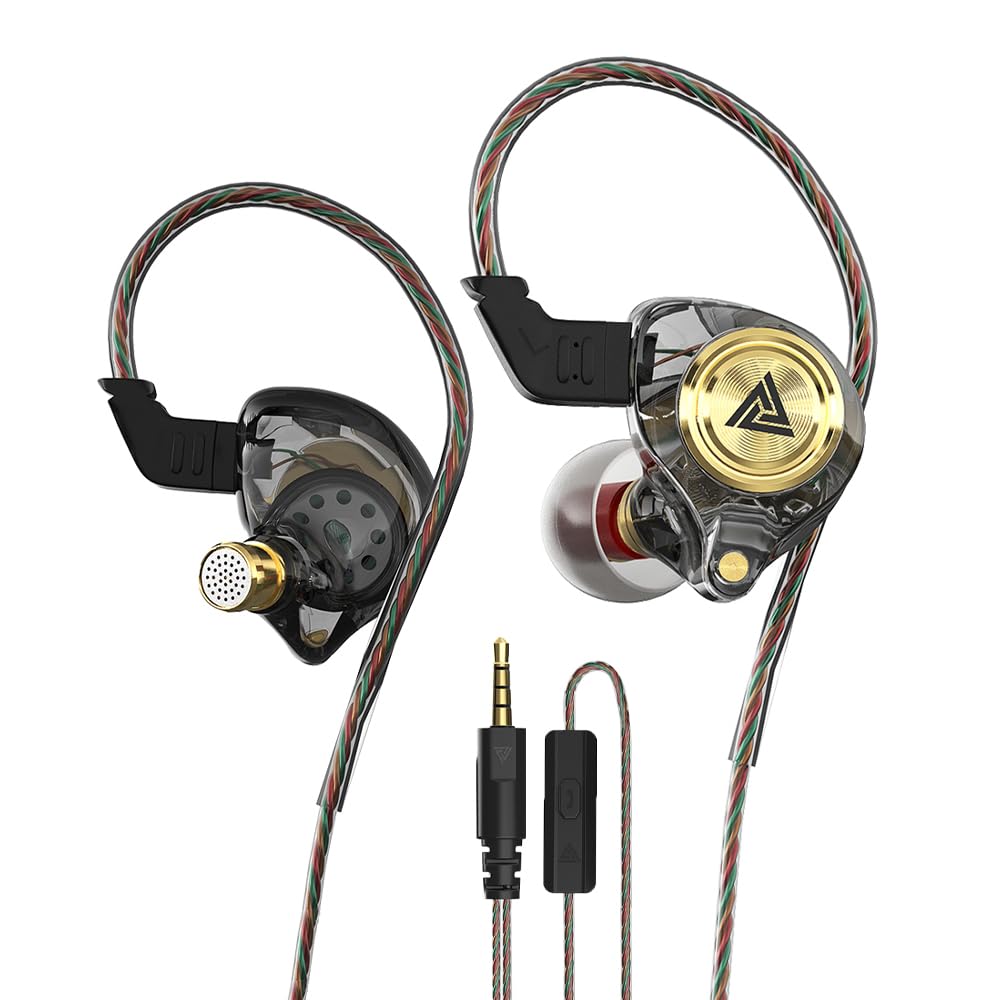
Best In-Ear Gaming Headsets of 2026

Over-ear headsets win on soundstage, but four hours in, that advantage shows up as a hot, aching band across the top of your head. In-ear gaming headsets get you most of the way there without the clamp; the catch is that the category runs from genuinely impressive to outright tinny, and the listing photos won't tell you which is which.

My team and I have spent the past three months rotating 14 pairs through real sessions — a desktop PC, a handheld console, and a phone on the train. Two things first-time buyers get wrong: ear tip fit does more for bass and outside noise than any driver count on the box, and several of these are mic-free monitors, so check for a built-in mic before you fall for a pretty face.

What the keepers share is unglamorous. They disappear into your ears after an hour, their cables survive being balled into a pocket, and they don't force you to choose between hearing footsteps and hearing your teammate. The picks below are sorted by who each one actually suits.

1

Best Overall

HyperX Cloud Earbuds II

83 /100
LBD Score Excellent

Key details

Plug
3.5 mm, 90-degree low-profile
Driver
14 mm dynamic
Ear Tips
Four sizes, XS to L
Microphone
Built-in, in cable
View on Amazon

Four pairs of ear tips, a hard-shell case, and a plug that bends at 90 degrees: the Cloud Earbuds II is the only set here that arrives looking like someone thought about how you'll carry it. The tip range runs from large down to extra small, and that extra-small pair is the reason it fits people who normally give up on in-ears.

That completeness is why it's our top pick. HyperX built an in-ear that behaves like a gaming headset: a mic in the cable, a multifunction button for calls and party chat, and a single 3.5mm plug that moves between a Switch, a PS5 controller, a laptop, and a phone without a dongle or a pairing step. The 14mm drivers give a warm, full sound with enough low end to make an explosion land, and dialogue stays clear, with a tuning that stays lively rather than flat.

Two practical notes. At 65 ohms it asks more of a weak output than the 16-ohm sets here, so a controller jack leaves less headroom than a laptop or a USB DAC, which is worth knowing if you play loud. And the rounded tip shape doesn't seal for every ear; if the medium sits loose, drop to the small rather than pushing deeper.

What we kept noticing is the plug. It's flat, angled, and resists twisting, which is exactly the part that fails first on cheap earbuds, and the case clips shut so the whole thing survives a bag. Twenty grams on the ear, and three hours into a session we had stopped thinking about them.

Pros

  • Mic and controls built into the cable
  • Four tip sizes, including extra small
  • Hard case and snag-resistant angled plug
  • One plug for consoles, PC, and handhelds

Cons

  • Not as detailed as the KZ ZS10 Pro
Our verdict

Our default in-ear for gaming: a working mic, four tip sizes, a hard case, and sound that holds up across consoles, PC, and handhelds.

Check Latest Price
2

Best for Game Audio

Linsoul KZ ZS10 Pro

89 /100
LBD Score Excellent

Key details

Drivers
4BA + 1DD hybrid
Impedance
24 ohm
Microphone
None in this variant
Sensitivity
111 dB
View on Amazon

Five drivers in each shell, four balanced armatures and a 10mm dynamic, and the detail is the first thing that lands. In a shooter the ZS10 Pro pulls footsteps, reloads, and distant gunfire into separate pieces instead of one smear, and that separation is why it's the pick we reach for when the game matters more than the conversation.

It's easy to drive, too. At 24 ohms and 111 dB it plays loud straight from a controller, which the 65-ohm HyperX doesn't do as generously, and the 304 stainless faceplate over a resin cavity feels more considered than the plain plastic of most gaming earbuds. The cable loops over the ear, the shape that keeps an IEM in place through a long session.

The catch is printed in the model name. This version ships without a microphone, so party chat means a clip-on mic or a separate desktop mic, a real cost if you were hoping for one cable and done. The other thing to watch is the join between cable and earpiece, which is where these eventually give out; because the cable detaches, that is a cheap fix rather than a new pair.

The finish earns its mention here: stainless steel on the faceplate, a dividing board giving each driver its own slice of the signal, and a look that reads as audio gear rather than a toy. It is the set that makes the case for spending on the earphone and solving chat some other way.

Pros

  • Most detailed game audio in this set
  • 111 dB sensitivity plays loud from a controller
  • Stainless faceplate and detachable cable
  • Comfortable over long sessions

Cons

  • Ships without a microphone
  • Large circular shells defeat a seal in small ears
Our verdict

The best game audio in this set, and the one to buy if you already have a mic, with five drivers that separate footsteps from gunfire.

Check Latest Price
3

Best for Console Chat

Turtle Beach Battle Buds

84 /100
LBD Score Excellent

Key details

Weight
0.8 oz
Controls
Inline volume and mic mute
Ear Tips
Three sizes plus stabilizers
Microphone
Removable boom mic
View on Amazon

A microphone on a stalk is the thing no other set in this group offers. The Battle Buds' boom detaches when you don't need it, aims at the corner of your mouth, and mutes from a button on the cable, which is why on a console it's the closest thing here to an actual gaming headset.

Turtle Beach got the headset half right. Master volume, mic mute, and a multifunction button sit inline, and the single 3.5mm plug covers PS5, PS4, Xbox Series X and One, PC, and mobile. The 10mm speakers are clear and loud enough for chat-led play, and each of the three tip sizes comes with a matching stabilizer, which does more for staying power than a fourth tip size would.

The weight is where it costs you. At 22.68 g it's the heaviest set here, the left side carries the mic on top of that, and an hour in you feel it; the stabilizers help but they don't make it disappear. We think that trade is worth it when you talk more than you listen, and not worth it when you don't.

Play to what it's designed for. Fit the boom for squad nights, pull it off and use the inline mic for solo sessions, and the set does two jobs without a second cable in your bag.

Pros

  • Removable boom mic with inline mute
  • Inline volume and multifunction button
  • Runs on PlayStation, Xbox, PC, and mobile
  • Three tip sizes plus stabilizers

Cons

  • Jack and mic are the parts that fail
  • No noise isolation
Our verdict

The only pick here with a boom mic on a stalk, and the one to get if you chat on a console and want your voice at your mouth, not your collar.

Check Latest Price
4

Best Value

CCA CRA

87 /100
LBD Score Excellent

Key details

Cable
Detachable, tangle-free
Driver
Single dynamic, 3.8μ diaphragm
Weight
0.78 oz
Impedance
25 ohm
View on Amazon

A 3.8-micron diaphragm is the sort of number that usually turns up in a listing and never in a conversation. Here it's doing real work: the CRA's single dynamic driver punches well past what the rest of the package suggests, with sub-bass you feel in a racing game and a top end that keeps gunfire from turning into hiss.

The seal is the underrated part. With a tip that fits, the CRA shuts out a room, and isolation that good does two things for games: it drops the fan and the traffic, and it gives the bass somewhere to live. It is also the quietest-looking set here, a plain shell you can wear on a train without anyone noticing.

What the money doesn't buy is chat. There's no mic and no inline controls, so it's a listening set, and the cable runs short enough that a tower under the desk may want an extension. Neither matters if you already have a mic on your desk, and both are part of why it undercuts the hybrids.

The CRA is also the set we hand to someone who says they can't hear footsteps without spending much: the mids are clean enough to pick them out, and the metal-and-resin shell is sturdier than the plastic on the cheapest options here. The detachable cable is the difference between a repair and a replacement.

Pros

  • Strong sub-bass and clean treble
  • Excellent passive isolation
  • Detachable, tangle-free cable

Cons

  • Cable runs short for a desktop tower
  • No microphone or inline controls
Our verdict

The best sound per dollar here: a single well-tuned driver, a genuine passive seal, and a detachable cable, as long as you bring your own mic.

Check Latest Price
5

Best Budget

Yeabomy AK3FILE

84 /100
LBD Score Excellent

Key details

Cable
Detachable, memory wire
Driver
10 mm dynamic
Impedance
16 ohm
Microphone
Inline, in cable
View on Amazon

This is the least expensive set here, and it gets the two things that matter at that end of the market right: it sounds clear, and it doesn't start to ache after an hour. A 10mm driver and 16-ohm impedance mean it plays loud from almost anything with a headphone jack, including a controller.

The ergonomics are more thought-through than the price suggests. A memory wire in the cable hooks over the ear and holds the shell steady, the cable detaches at the earpiece, and there are three pairs of tips in the box. The inline remote doubles as a mic, and it's clearer than we expected: teammates hear you without asking you to repeat yourself.

Where it earns its place is as a second set, the pair that lives in a laptop bag, gets handed to a kid, or stays plugged into a console you use occasionally. Judged as a spare rather than someone's only headset, it is the easiest purchase on this list.

Pros

  • Clear sound and easy to drive
  • Memory-wire hooks hold the shell steady
  • Inline mic usable for party chat
  • Detachable cable and three tip sizes

Cons

  • Build is the weak point, with channels dying early
  • Angular shell fits some ears and not others
Our verdict

The cheapest way into game audio with a mic, with clear sound and a steady fit for a spare bag or a first set.

Check Latest Price
6

Glasses Wearers

BlueFire MS073B

79 /100
LBD Score Very Good

Key details

Cable
1.2 m
Driver
10 mm dynamic
Impedance
16 ohm
Microphone
Detachable boom mic
View on Amazon

Glasses and in-ears are usually a bad pair: the shell presses on the arm of the frame and after an hour there's a sore spot behind it. The BlueFire's shallow, contoured shells and PU-covered ear hooks sit against the ear instead, which is the detail we appreciated most, and the light build means they mostly disappear.

The feature list reads like a gaming headset shrunk down: a detachable boom mic, a volume dial on the cable, a 1.2 m cord, and a 3.5mm plug listed for PS4, PS5, PC, and phones. The 16-ohm, 10mm driver is bass-forward, so explosions and engine noise get weight while voices stay intelligible.

Two things to settle before ordering. Chat over an Xbox controller is the case to check, because the set is listed for the PlayStation and PC side of the fence and the wiring that carries a mic on one doesn't always on the other. And the mic is serviceable rather than good: fine for callouts, thin for anything you would want to record.

Where it fits is the second bag, the spare desk, the set you don't mind losing. It costs about as little as anything here with a real boom attached, and for a glasses wearer who wants to talk to their squad, that combination is hard to beat at this end of the list.

Pros

  • Detachable boom mic and inline volume
  • Light shells that sit well with glasses
  • Ear hooks keep it steady through a session

Cons

  • Mic is thin for anything beyond chat
Our verdict

The least expensive route here to a detachable boom mic, light enough for glasses, and adequate for callouts.

Check Latest Price
7

Comfort and Looks

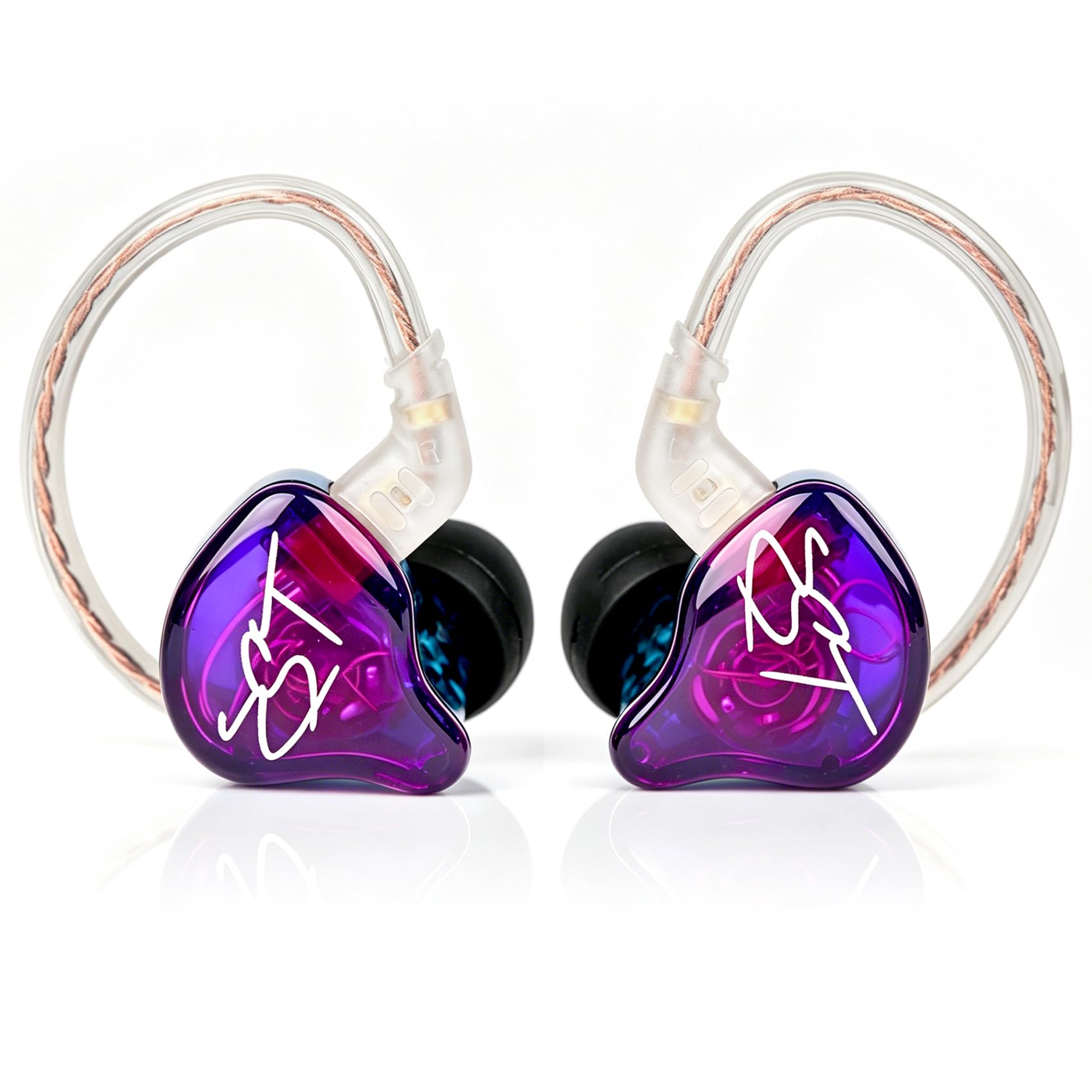
YINYOO KZ ZST

91 /100
LBD Score Outstanding

Key details

Cable
Detachable, 3.5 mm L-plug
Drivers
1BA + 1DD hybrid
Impedance
18 ohm
Sensitivity
106 dB
View on Amazon

The ZST is the best-looking set here by a distance: a multicolour shell and a braided cable that look nothing like the black plastic most gaming earbuds settle for. It is also one of the more comfortable hybrids we wore for long stretches, with a shell that sits in the ear rather than on it.

Sound is bright and detailed rather than bass-heavy. The 1BA+1DD hybrid puts clarity in the mids, which is where footsteps and voice lines live, and the isolation is genuinely good once a tip seals. At 18 ohms it plays loud from a controller or a phone without an amp.

Two absences to plan around. This version has no microphone, so chat needs a separate solution, and the shell is big, so small ears may not get a seal however the tips are fitted. The detachable cable and L-shaped plug are the practical details that make it easier to live with than the price would suggest.

Pros

  • Striking multicolour finish and braided cable
  • Comfortable over long sessions
  • Easy to drive at 18 ohms
  • Good isolation with a sealed tip

Cons

  • Ships without a microphone
  • Large shells can slip out of small ears
Our verdict

The pick for anyone who wants an IEM that looks good and stays comfortable for hours, as long as chat isn't on the list.

Check Latest Price

How We Tested the Best In-Ear Gaming Headsets

We built the shortlist from roughly 40 listings and cut by three practical things: whether the plug was a standard 3.5mm that moves between a PC, a console, and a phone; whether the cable detached or stayed fixed; and whether a microphone was built in. That left 14 pairs, which we bought at retail and lived with for three months.

Testing happened where people actually play — at a desk, on the couch with a handheld, and on a phone during commutes. Each pair got at least one two-hour session so we could feel where the sore spots landed, and we swapped ear tips on every set to see how much of the bass and the outside world depended on a good seal.

We also balled each pair into a bag with keys, pulled the plug out at an angle a few dozen times, and checked whether detachable cables stayed seated. Microphones were recorded and played back through speakers so we could hear how much room noise rode along with the voice. For game audio we listened for direction — whether footsteps held their position when the camera turned — and whether a busy mix turned to mush.

How to Choose In-Ear Gaming Headsets

Start with how you talk

There are four ways an in-ear handles chat: a mic in the cable, a boom on a stalk, a detachable boom, or nothing at all. The difference isn't cosmetic. An inline mic hangs at your collar, so it picks up cable rustle and sounds distant, while a boom sits at your jaw and is the only type that sounds like a headset. If you play ranked with a squad, pay for the stalk: the Turtle Beach Battle Buds and the BlueFire are here for exactly that. If the earphone matters more, buy a mic-less IEM and a desk mic.

Fit decides the sound

An in-ear is only as good as its seal. A tip that leaks loses the bass first and the isolation second, which turns a well-tuned driver into something thin and shouty. Count the tip sizes, since the HyperX's four down to extra small cover more ears than the usual three, then think about shell shape. Ear hooks and memory wire hold a shell steady but add pressure behind the ear. Small-eared players should treat a large circular shell as a likely problem rather than a spec footnote.

Don't shop by driver count

Five drivers a side, as on the KZ ZS10 Pro, can buy genuine separation, but the number alone predicts nothing. A single dynamic driver tuned properly, like the CCA CRA's, beats a badly integrated hybrid, and what actually helps you in a game is midrange clarity: footsteps and voice lines live there, not in the bass. Read the tuning description instead of the driver count, and expect the bass-heaviest sets to be the ones that bury a quiet sound cue.

Cables, plugs, and what breaks first

The jack and the join at the earpiece are what fail on wired sets, and a detachable cable turns that from a replacement into a repair. A flat, right-angled plug resists the twisting that kills jacks, and the HyperX's is the best of this group. Routing the cable over the ear also takes the weight off the connection. If you are hard on gear, detachable is the one feature worth paying extra for.

Frequently Asked Questions

Final Verdict

Buy the HyperX Cloud Earbuds II if you want one in-ear that does the whole job: a mic that works, four tip sizes, a case, and a plug that survives a bag. If chat isn't part of your setup, the KZ ZS10 Pro is the better listen and the pair to buy, and on a tighter budget the CCA CRA gets you most of that sound without a mic.

When the mic has to sit at your mouth rather than your collar, the Battle Buds are still the only set here that puts it there, and that single design choice outweighs the weight and the fit for anyone who talks more than they listen.