Best Wireless Gaming Headsets of 2026

A wireless gaming headset is a stack of small compromises, and most of them surface after the first hour: a clamp that aches behind the ears, a mic that catches every keystroke, a battery that quits mid-match. The current crop hides those flaws better than it used to, so the real difference between an entry-level set and a flagship is how long it stays comfortable and how honest it is about battery life.

The feature doing the most work right now is dual wireless — a 2.4GHz dongle for low-latency play plus Bluetooth for everything else. Once you've had it, a dongle-only headset feels half-finished. We've spent six months with 12 headsets on PC, PS5, and Switch, and the ones worth keeping got the unglamorous things right: clamp force, mic pickup, and battery numbers that match the box.

If you mostly play solo, you can be pickier about sound. If you're in a party every night, comfort and mic quality matter more than any driver spec. The picks below are the ones we kept reaching for.

1

Best Overall

SteelSeries Arctis Nova 5

84 /100
LBD Score Excellent

Key details

Mic
Retractable ClearCast 2.X
Weight
9.88 oz
Battery
60 hours
Wireless
2.4GHz + Bluetooth 5.3
View on Amazon

Voice chat is where wireless headsets quietly fall apart, and the mic is the first reason the Arctis Nova 5 is our top pick. The retractable ClearCast 2.X carries a 32kHz/16-bit signal, high-bandwidth by headset standards, and in our sessions it was the one nobody on the other end asked about — no clipping, no keyboard, no room. It slides back into the earcup when you're playing alone, so you're not staring at a boom arm all evening.

Sixty hours of battery is the second reason. Fifteen minutes on USB-C buys roughly six more hours, which is the difference between finishing the evening and hunting for a cable at the worst moment. One button swaps the headset between 2.4GHz and Bluetooth 5.3 and back, so a call pulls you out of the game and returns you without unplugging anything.

It covers PC, PS5, PS4, Switch, and phone, and at 0.28 kg the headband stops registering after the first hour. The companion app adds more than 100 game presets, and that matters more than it sounds: the stock tuning doesn't flatter everything, and picking the preset for the game in front of you does more than nudging an EQ slider.

The one thing we can't call solved is fit. The earcups run small and clamp firmly — fine on an average head, noticeable by hour three on a wide one or through thick frames. That's the compromise we accepted for the mic and the battery, and for most players it's the right trade.

Pros

  • Clearest mic of the picks here
  • 60 hours of battery, six more from a 15-minute charge
  • One-button switch between 2.4GHz and Bluetooth
  • Light at 0.28 kg

Cons

  • Not compatible with Xbox
Our verdict

Our top pick for PC and PlayStation: the clearest mic in the group, 60 hours of battery with fast top-ups, and a button that switches to your phone.
Check Latest Price
2

Best Value

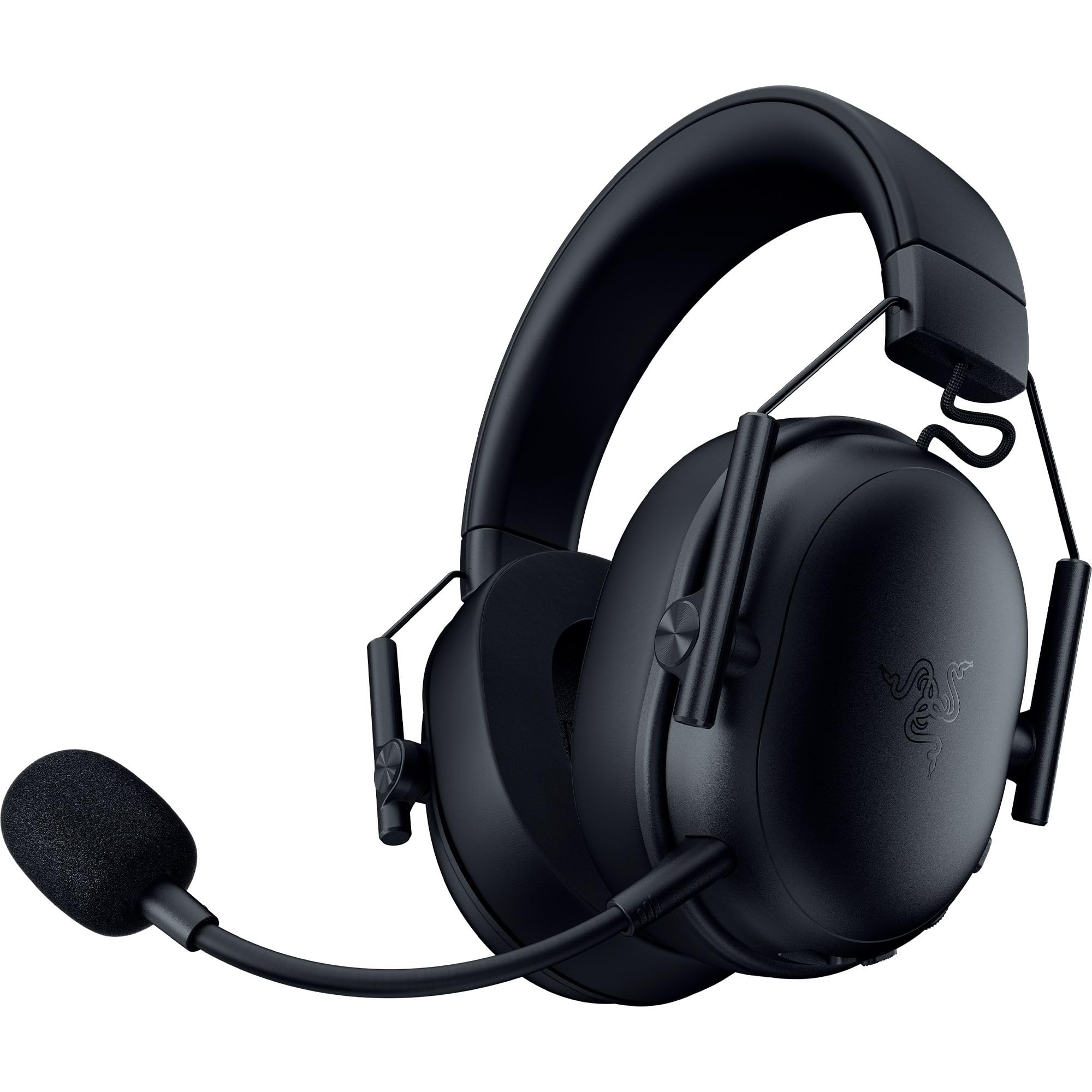
Razer BlackShark V3 X HyperSpeed

83 /100
LBD Score Excellent

Key details

Mic
Detachable cardioid
Battery
70 hours
Drivers
50mm TriForce Gen-2
Wireless
2.4GHz, Bluetooth 5.3, USB
View on Amazon

The BlackShark V3 X costs a lot less than our top pick, and the surprising part is how little it gives up. Three connection modes — 2.4GHz through a USB-C dongle, Bluetooth 5.3, and a plugged-in USB mode — is more flexibility than most headsets here offer at any price.

Seventy hours of battery is the number we kept coming back to. That's weeks of evenings between charges, and it's why the dongle stays in the PC and the charging cable stays in a drawer. The transmitter being USB-C stops being a small detail the first time you plug it into a laptop or a Steam Deck without hunting for an adapter.

The mic detaches completely, which we appreciate nearly as much as the battery. The cardioid capsule aims at your mouth rather than the room, so a mechanical keyboard stays out of chat, and you can pull it off altogether and use the headset as plain headphones for music.

The 50mm Gen-2 drivers are tuned toward positional cues — footsteps, reloads, the direction a grenade came from — and switching on 7.1 surround sharpens that on a PC. Plush oval earcups and modest clamp make it an easy all-evening headset, and at this price the combination is the whole argument.

Pros

  • 70 hours of battery between charges
  • Detachable cardioid mic rejects keyboard noise
  • 2.4GHz, Bluetooth, and USB audio in one headset
  • USB-C dongle needs no adapter

Cons

  • Mic gain can run low out of the box
  • PS5 pairing can be temperamental
Our verdict

The value pick: three ways to connect, a detachable cardioid mic, and 70 hours of battery for PC and PlayStation players who don't need Xbox.

Check Latest Price
3

Best Battery Life

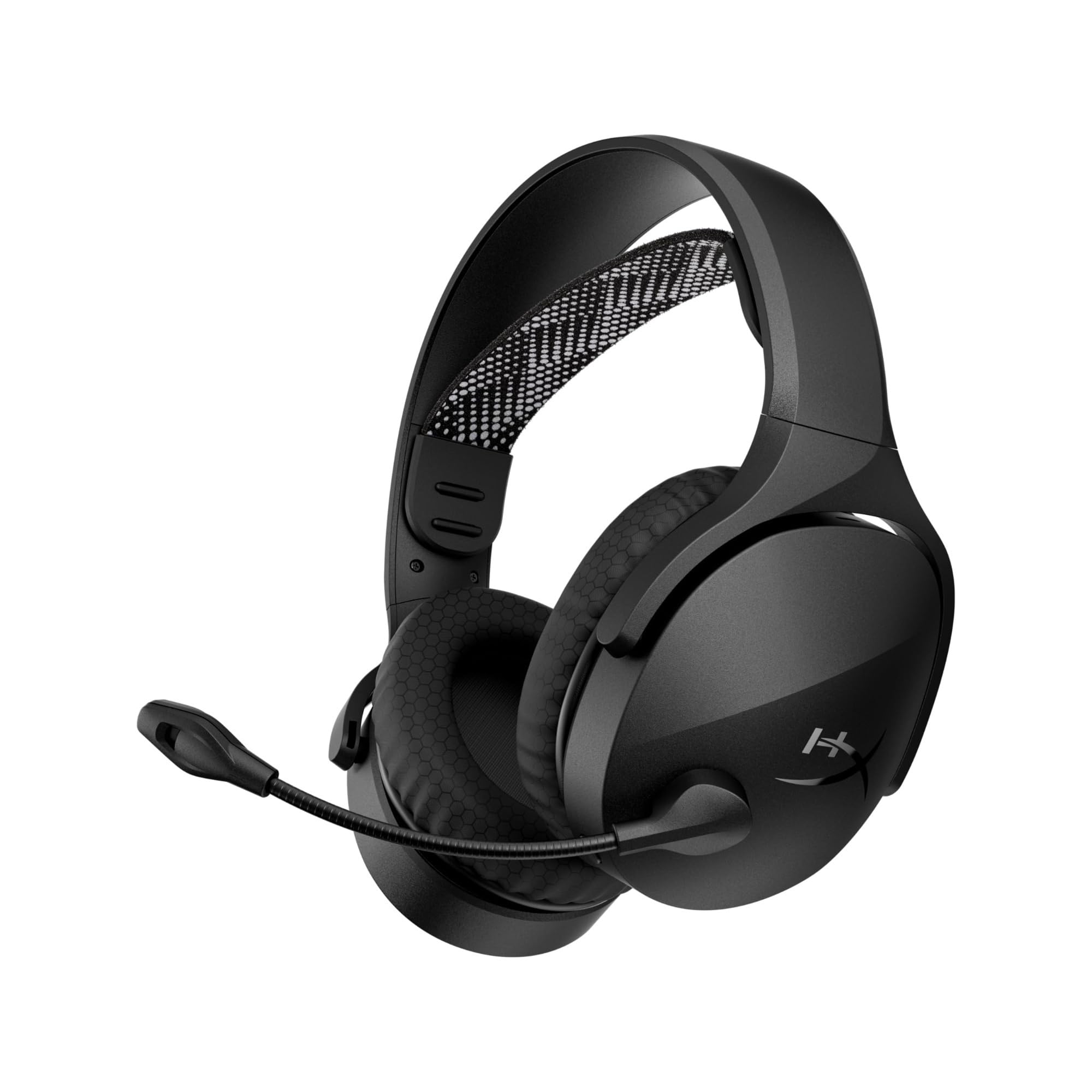
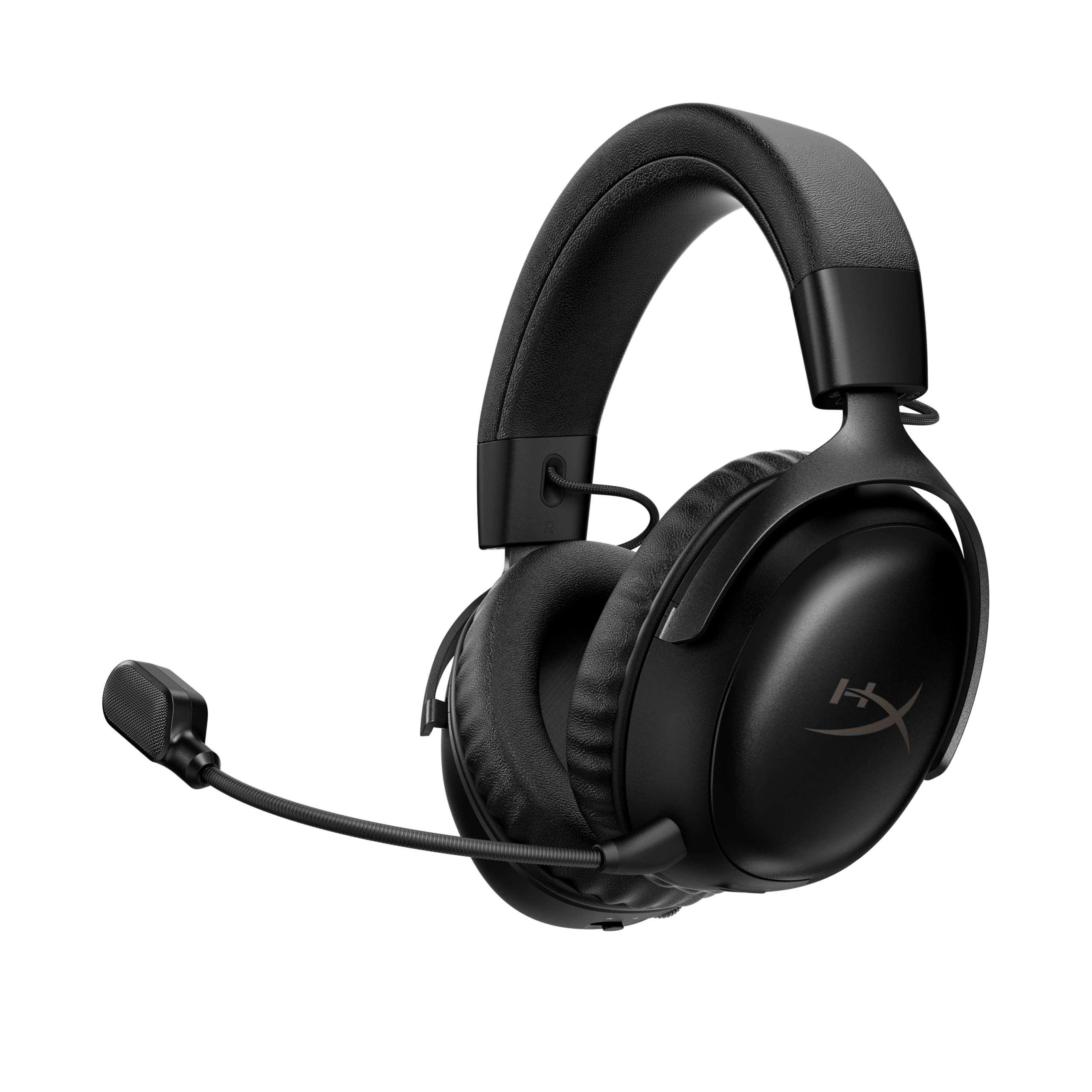
HyperX Cloud III S Wireless

87 /100
LBD Score Excellent

Key details

Weight
12.6 oz
Battery
120 hours (200 Bluetooth)
Drivers
53mm angled
Wireless
2.4GHz + Bluetooth
View on Amazon

Two hundred hours is the Bluetooth figure and 120 is the 2.4GHz one, so charging stops being part of your routine. We went in expecting the battery to be the whole story and came out more interested in everything HyperX didn't cut to get there.

The frame is what surprised us. Steel and aluminium, memory foam under leatherette, and a 356 g weight that reads as solid rather than heavy. Angled 53mm drivers are the largest in this guide, tuned to push the parts of game audio that carry information — footsteps, reloads, dialogue — and the mic detaches cleanly when you want plain headphones.

HyperX includes both a USB-C and a USB-A dongle, so a PS5, a Switch dock, a laptop, and a phone are each one plug away, and the compatibility list covers PC, PS5, PS4, Switch, Mac, and mobile. Instant Pair with select OMEN laptops is a bonus rather than a reason to buy.

It sits at the top of the mid range here and earns it with the three things that outlast the novelty of a new headset: the battery, the frame, and a mic you can take off. That's a rarer combination than the spec list makes it look.

Pros

  • 120 hours on 2.4GHz, up to 200 in Bluetooth
  • 53mm angled drivers tuned for game audio
  • Steel and aluminium frame with memory foam
  • USB-C and USB-A dongles both included

Cons

  • Not compatible with Xbox
  • Clamp runs tight for wider heads
Our verdict

If you want to charge a headset twice a season instead of twice a week, this is it: 120 hours on 2.4GHz, a detachable mic, and the sturdiest frame here.

Check Latest Price
4

Best for Long Sessions

Logitech G733 Lightspeed

89 /100
LBD Score Excellent

Key details

Mic
Blue VO!CE
Weight
9.81 oz
Battery
29 hours
Wireless
LIGHTSPEED 2.4GHz
View on Amazon

The G733's suspension band is the design detail we keep coming back to. Two thin straps run over the top of your head instead of a padded arch, spreading the load over a wider area, and the band reverses if you want a different color facing up.

At 278 g it's the lightest headset in this guide, and the combination is why it's our pick for long sessions and for anyone in glasses. Clamp is what sends most headsets back to their box after hour four; this is the one here we minded least at the end of a long evening.

Battery is 29 hours, and the link is LIGHTSPEED 2.4GHz with a 20-metre range that survives a walk to the kitchen. There's no active noise cancellation, just the passive seal of the memory-foam cups, which is fine in a quiet room and noticeable beside an air conditioner.

The mic is where it asks for patience. Blue VO!CE filters do genuinely good work, but they live in Logitech's PC software, so on a console you get the raw capsule, and it's the weakest link in an otherwise comfortable headset. Buy it for the fit and the battery, and treat the mic as a bonus that's better on PC than anywhere else.

Pros

  • Lightest headset here at 278 g
  • Suspension band eases pressure for glasses wearers
  • Blue VO!CE mic filters on PC
  • 29 hours of battery

Cons

  • No Bluetooth, dongle only
  • Earcups run small for larger ears
Our verdict

The comfort pick: 278 g, a suspension band that plays well with glasses, and 29 hours of battery — best on PC, where the mic filters work.

Check Latest Price
5

Best for Xbox

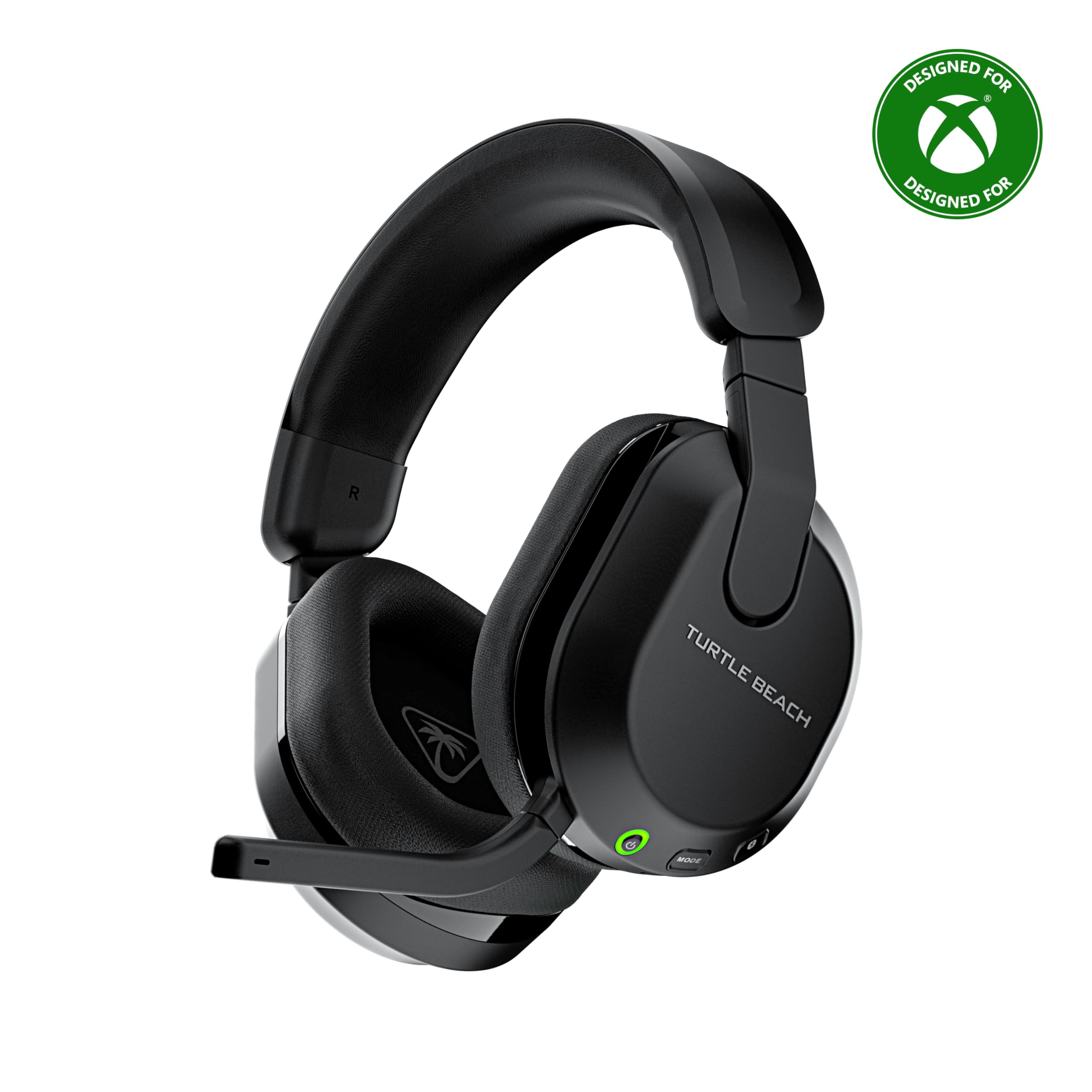
Turtle Beach Stealth 600

88 /100
LBD Score Excellent

Key details

Mic
Flip-to-mute, AI noise reduction
Battery
80 hours
Drivers
50mm Nanoclear
Wireless
2.4GHz + Bluetooth 5.2
View on Amazon

Xbox is the reason this one is in the guide. Most picks here either skip Microsoft's console or reach it through a 3.5mm cable; the Stealth 600 pairs its own transmitter with Xbox Series X|S and Xbox One, and does the same job on PS5, PS4, and PC.

It also carries Bluetooth 5.2 alongside the 2.4GHz link, with a QuickSwitch button that hops between them mid-session: console audio, a call from your phone, then back. Eighty hours of battery means you switch because you want to, not because the headset is dying.

What we like most is that the multiplatform claim doesn't turn it into a committee design. The 50mm Nanoclear drivers throw a big, cinematic soundstage, the flip-to-mute mic beats hunting for a mute button mid-firefight, and the memory-foam cushions have a channel for glasses arms that keeps frames off your temples.

The 2.4GHz link is the part to plan around. Dropouts are the weak spot, so put the transmitter in a front-panel port rather than a hub behind the desk and keep it clear of a crowded USB strip. Do that and it's the most flexible headset here for a house with more than one console.

Pros

  • Wireless on Xbox, PlayStation, and PC
  • 80 hours of battery with Bluetooth QuickSwitch
  • Flip-to-mute mic with AI noise reduction
  • Glasses-friendly memory-foam cushions

Cons

  • Earcups and pads are the first parts to wear
Our verdict

The simplest way to cover Xbox and PlayStation with one headset: an 80-hour battery, a flip-to-mute mic, and a QuickSwitch button for your phone.

Check Latest Price
6

Best Premium

Logitech G Astro A50

82 /100
LBD Score Excellent

Key details

Battery
24 hours
Drivers
40mm PRO-G Graphene
Charging
Dock with PLAYSYNC
Wireless
2.4GHz + Bluetooth
View on Amazon

The A50 isn't a headset you charge so much as one that lives on a stand. The dock sits on the desk, the headset drops onto it at the end of the night, and the same dock is the switch: PLAYSYNC holds three systems over USB-C and moves you between Xbox, PlayStation, and PC with a button.

That makes it a desk accessory as much as an audio one, and it's why we point it at people with three machines and one pair of ears. The 40mm PRO-G graphene drivers give the most detailed positional audio in this group, and the 48kHz full-bandwidth boom mic is the closest any of these come to a broadcast mic.

Bluetooth runs alongside the game link, so Discord or music from your phone mixes into console audio without a second device. Comfort holds across a long session — 363 g on a wide headband with earpads that stay comfortable past midnight. Dolby Atmos on Xbox and Windows needs G HUB and an internet connection to set up once, which is worth the ten minutes.

Against our top pick, the extra money buys the dock, the third system, and the mic — not battery or portability. If the setup never leaves the desk, that's an easy trade to make; if the headset travels, it isn't.

Pros

  • Dock switches between three systems
  • Broadcast-grade 48kHz boom mic
  • Bluetooth mixes phone audio into the game
  • Graphene drivers deliver detailed positional audio

Cons

  • Dock contacts need deliberate placement
  • 24-hour battery is short for the price
Our verdict

The premium pick for a desk with more than one console: a dock that switches between three systems, a broadcast-grade mic, and the most detailed positional audio here.

Check Latest Price
7

Best Budget

Valorise UG-08S

89 /100
LBD Score Excellent

Key details

Mic
Retractable ENC
Dongle
USB-A and USB-C
Battery
45–100 hours
Wireless
2.4GHz dongle, Bluetooth 5.4, 3.5mm
View on Amazon

We expected to make excuses for the Valorise, and we didn't have to make many. It's the least expensive headset in this guide and the only one whose dongle flips between USB-A and USB-C, so the same transmitter moves from a desktop to a laptop to a PS5 without an adapter hunt.

Battery is quoted at 45 to 100 hours, with the top end reserved for Bluetooth with the lighting off, and it plays while charging over USB-C. That last part is the practical bit: a cheap headset that dies mid-session and can't run plugged in is a cheap headset that ends up in a drawer.

The retractable ENC mic tucks into the earcup and mutes with one touch, which is the right design for something that doubles as a work-call headset, and the cushions are breathable enough for a warm room. Simulated 7.1 surround won't convince anyone there are six drivers in there, but it does help place footsteps, and at this price that's the job.

There's a 3.5mm cable in the box as a last resort, the controls are physical buttons where your thumb expects them, and nothing about the headset asks you to install anything. For a first wireless setup, or a second one for a laptop, that's the whole pitch.

Pros

  • Dongle switches between USB-A and USB-C
  • 45 to 100 hours, plays while charging
  • Retractable noise-canceling mic with one-touch mute
  • 3.5mm cable included as a backup

Cons

  • Not compatible with Xbox
  • Build is the weak point over time
Our verdict

The budget pick that gets the basics right: a dongle that fits USB-A or USB-C, a retractable noise-canceling mic, and a week of battery.

Check Latest Price
8

Light Everyday Use

HyperX Cloud Jet

86 /100
LBD Score Excellent

Key details

Mic
Swivel-to-mute boom
Weight
10.5 oz
Battery
25 hours
Wireless
2.4GHz + Bluetooth 5.3
View on Amazon

At 298 g the Cloud Jet is the second-lightest headset in this guide, and it's the one that behaves most like a pair of headphones that happens to have a mic on a swivel.

That swivel mutes when you flip it up, and there's always-on sidetone, so you hear your own voice at low level in the cups. None of the other budget picks here do that, and it's the detail that stops you shouting into a quiet lobby at midnight.

Simplicity is where it wins with us: one USB-A dongle, one Bluetooth 5.3 pairing, a button between them, and volume and mute on the earcup rather than buried in software. Setup is a dongle and a power button, and the closed 40mm cups block enough room noise that you don't miss active cancellation.

Magnesium alloy and ABS, a closed back that folds flat enough for a bag, and a mic that's above average for the money without flattering anyone into thinking it's a studio. It's the headset we hand to someone who plays a few nights a week and wants the mic to just work.

Pros

  • Light at 298 g with a closed-back cup
  • Always-on sidetone at a budget price
  • Swivel-to-mute boom mic
  • 2.4GHz and Bluetooth 5.3 with a switch button

Cons

  • 25-hour battery is the shortest here
  • Not compatible with Xbox
Our verdict

The sensible cheap one: 298 g on your head, sidetone in your ears, and a dongle that just works on PC and PlayStation.

Check Latest Price
9

Budget All-Rounder

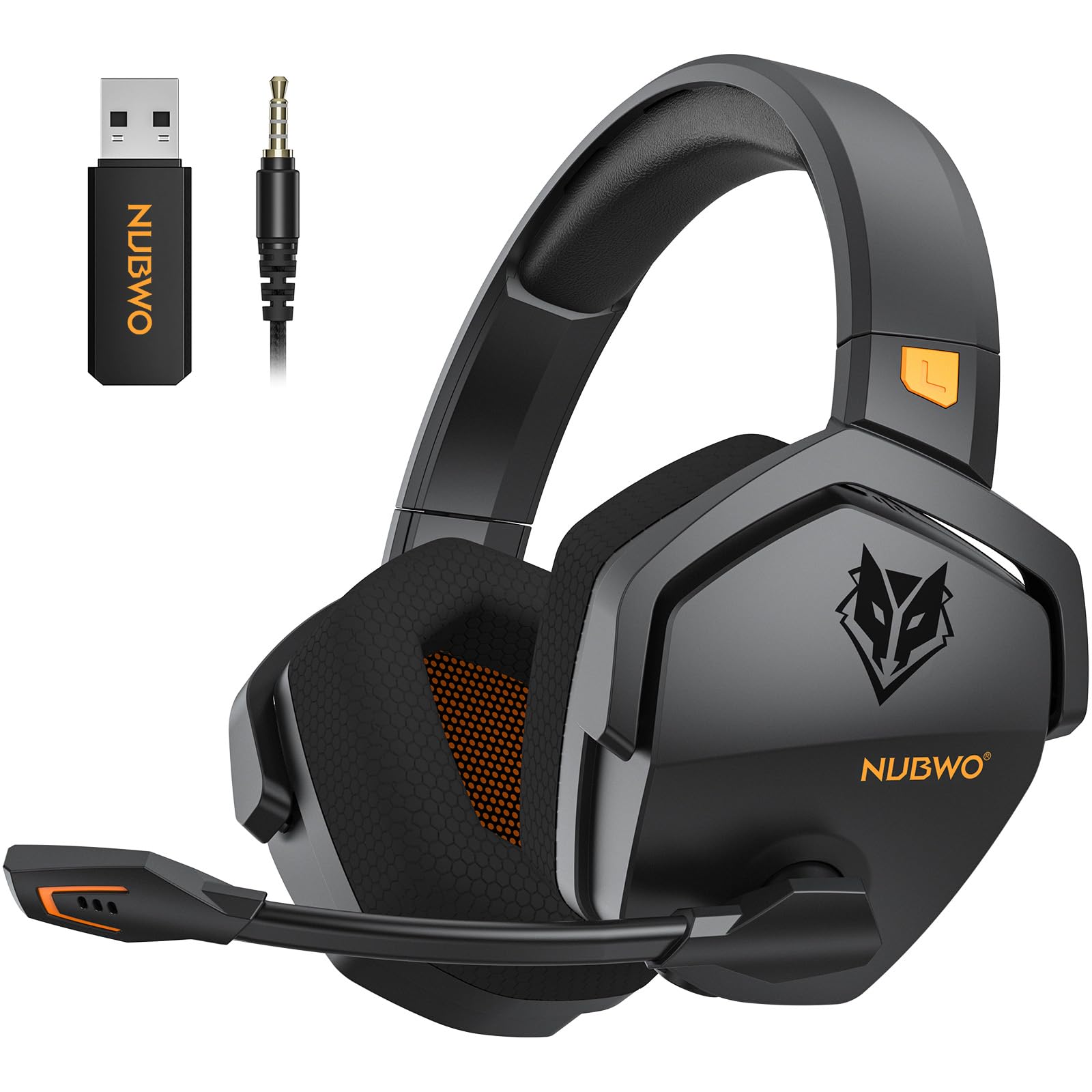
NUBWO G06

88 /100
LBD Score Excellent

Key details

Weight
12.3 oz
Battery
100 hours
Drivers
50mm
Wireless
2.4GHz, Bluetooth 5.3, 3.5mm
View on Amazon

The cable in the box is the interesting part. The G06 runs 2.4GHz and Bluetooth 5.3 wirelessly, and when you plug in the 3.5mm lead it becomes an ordinary wired headset, which is how it works on an Xbox, where the wireless side doesn't reach.

A 1200mAh battery is quoted for 100 hours, and the practical translation is that charging stops being part of your routine. In a headset at this end of the market, a battery that holds up is what keeps it in service after the novelty wears off.

What we appreciate is that the savings don't land in the places you notice first. The 50mm drivers give it more low end than the money suggests, the headband adjusts far enough for a smaller head, and the controls are physical buttons you can find without looking. The quoted 23ms of latency is the highest in this group — a gap you feel in a rhythm game more than a shooter.

At 350 g it's heavier than the G733 or the Cloud Jet, but the weight sits in the cups rather than the band, so a four-hour session doesn't leave a hot spot. As a second headset for a laptop, a spare room, or a first setup, it asks very little and gives most of what the expensive picks give.

Pros

  • 100 hours from a 1200mAh battery
  • 2.4GHz, Bluetooth 5.3, and 3.5mm in one headset
  • 50mm drivers with real low end
  • Physical controls on the earcup

Cons

  • 2.4GHz link can drop out
  • Mic is the weakest part in voice chat
Our verdict

The cheapest way into tri-mode wireless: 100 hours of battery, 50mm drivers, and a cable in the box that gets it onto an Xbox.

Check Latest Price

What Six Months With 12 Headsets Taught Us

We started with every wireless headset we could find that ran on a 2.4GHz dongle, a Bluetooth connection, or both, then filtered by connectivity, weight, mic design, and how each maker described its battery. That left 12 headsets, which we've lived with for six months across PC, PS5, and handheld Switch sessions.

Comfort got checked twice: once out of the box with a kitchen scale and a ruler across the earcups, and again by wearing each headset for a four-hour session and writing down exactly where it started to press, including with glasses on. Build quality came from living with them, not looking at them. We twisted headbands, packed each one into a backpack with a laptop and a water bottle for a week of commutes, then checked the pads for flattening and the hinges for play.

Battery was the humbling part. We charged each to full and ran audio on a loop until it died, logging the real hours against the claim. For the mic, we recorded the same paragraph twice — once quiet, once with a mechanical keyboard clacking and a fan running — and had a second person listen blind. We walked each headset to the far end of the house to count dropouts, switched between dongle and Bluetooth mid-session, and sat with a TV going to hear how much of it leaked in. Sound got judged over days: whether footsteps were locatable, and whether a long session left our ears ringing. Then we asked the blunt question — did the extras change how we actually used it?

How to Choose a Wireless Gaming Headset

Check the platform before anything else

Xbox is the trap. Microsoft's consoles don't accept a generic 2.4GHz dongle, so a headset either carries an Xbox-licensed transmitter or falls back to a 3.5mm cable, and the small print is where that gets decided. The HyperX Cloud Jet and Cloud III S don't support Xbox at all, the Valorise skips it too, and the NUBWO G06 reaches an Xbox only through its cable.

PlayStation and Switch are easier — any USB dongle works. Check the shape of that dongle as well: a USB-C transmitter, like the Razer's, saves an adapter on a laptop or a Steam Deck, and headsets that ship both USB-C and USB-A versions (the Cloud III S) remove the question entirely.

2.4GHz for the game, Bluetooth for everything else

2.4GHz is the low-latency link that carries game audio; Bluetooth is the convenient one, best for pulling a call or a podcast off your phone mid-session. What separates the picks here is how fast you move between them. The Arctis Nova 5 and the Stealth 600 use a single button, the Razer does the same with SmartSwitch, and the Astro A50 goes further by mixing phone audio into the game feed so both run at once.

One warning about dongles: a transmitter plugged into a hub behind a monitor is the usual cause of dropouts. Put it in a front port, or use an extension cable — the Arctis Nova 5 ships one.

The mic is where cheap headsets give themselves away

A cardioid or unidirectional capsule picks up your voice and rejects the keyboard; an omnidirectional one picks up the room. Detachable mics (Razer, HyperX Cloud III S) let the headset double as plain headphones, a flip-to-mute boom (Stealth 600) is faster to kill in a hurry, and sidetone — hearing yourself at low level — is the feature that stops you shouting. The Cloud Jet is the only budget pick here with it.

If you play solo, spend your money elsewhere; the microphone is the part that benefits most from the jump out of the budget tier.

Match battery life to your charging habits

The range here runs from 24 hours to 200, and the useful question isn't which number is biggest but when you'll plug in. A dock (the A50) turns charging into something you don't think about; USB-C fast charge (the Nova 5, roughly six hours from a 15-minute top-up) rescues the evening you forgot; and play-while-charging (the Valorise) means a flat battery doesn't end the session.

Anything past about 60 hours mostly buys forgetfulness rather than extra play. If you charge a controller every night anyway, a shorter battery isn't the compromise it looks like on paper.

Weight, clamp, and pads decide whether it stays on

The picks here run from 278 g to 363 g, and past roughly 350 g you start to notice it in the last hour of a long session. A suspension band (the G733) spreads pressure differently from a padded arch, and glasses wearers should look for a channel in the cushion rather than simply softer foam.

Expect the pads to be the first part to go. They take the wear that the electronics never see, and on several headsets here they're the reason a working unit gets replaced.

Frequently Asked Questions

Final Verdict

Our recommendation is the SteelSeries Arctis Nova 5 for PC and PlayStation players. The mic is the clearest in this group, 60 hours of battery with 15-minute top-ups keeps charging off your mind, and the Bluetooth button handles the call that interrupts the raid.

If there's an Xbox in the house, the Turtle Beach Stealth 600 covers it wirelessly. And if the budget decides the purchase, the Valorise UG-08S gets the dongle, the mic, and the battery right at the bottom of the range.