Best Gaming Headsets for Big Heads of 2026

If you've ever pulled a headset off after a long session and found a red line pressed into your temples, you know the problem usually isn't your head — it's the clamp. Most gaming headsets are built around an average skull, and no amount of memory foam rescues a frame that doesn't open wide enough. What you actually want is a headset that spreads pressure instead of concentrating it.

Mine is bigger than average, and I have a bad habit of wearing a headset well past the point I should. Over the past six months, my team and I logged serious hours in a dozen headsets — weeknight matches, long weekend grinds, voice chat with friends who will absolutely tell you if you sound bad — and the differences only reveal themselves after hour three. Fit is the spec nobody prints: headband travel, cup depth, whether the pads rest on your ears or squash them.

A headset that fits but crackles, leaks your game audio into the room, or makes you sound like you're calling from a tunnel isn't a bargain either, so those got weighed too. Below are the ones that stayed on our desks, and on our oversized heads, long after testing ended.

1

Best Overall

HyperX Cloud III

88 /100
LBD Score Excellent

Key details

Mic
Detachable, noise-cancelling
Weight
10.9 oz
Fit Design
Flexible aluminum frame
Connectivity
USB-C, USB-A, 3.5 mm
View on Amazon

A headset can have great drivers and still lose a big-headed player at the headband. The Cloud III is the one we recommend first because its flexible aluminum frame and memory foam pads give it more room and more give than the stiff plastic shells that pinch at the temples. At 308 grams, it is not the lightest pick here, but the weight sits low and the band flexes instead of fighting back. We also liked that the oval cups leave room for glasses arms without a hard pressure point.

The 53mm angled drivers have a clear, competitive edge for games: footsteps and directional cues are easy to place, and the DTS spatial audio is a real upgrade on PC. We found the mic clear enough for Discord and party chat, though it is a chat mic rather than a broadcast setup. The connection set is the practical part: USB-C, USB-A, and 3.5mm mean you can move between PC, PS5, Xbox, and a phone without an adapter. The detachable mic also lets you use the Cloud III as plain headphones when you are not gaming.

The detachable cable and detachable mic also make the headset easier to pack and repair. We kept coming back to the Cloud III because it makes the big-head problem feel solved without asking you to give up platform flexibility, and the red mute LED on the mic is a small detail we appreciated: you can see at a glance whether your voice is live without opening a menu.

Pros

  • Flexible aluminum frame eases pressure
  • Memory foam pads suit long sessions
  • USB-C, USB-A, and 3.5 mm connections
  • Detachable noise-cancelling mic

Cons

  • Headband can feel tight at first
  • Ear pads are a wear point
Our verdict

The HyperX Cloud III is our top pick for big heads because its flexible aluminum frame and memory foam pads balance room with support, and its USB-C, USB-A, and 3.5mm connections keep it useful across PC and console.

Check Latest Price
2

Best Wireless

Logitech G733

89 /100
LBD Score Excellent

Key details

Weight
9.81 oz
Battery
Up to 29 hours
Fit Design
Reversible suspension headband
Connectivity
Lightspeed wireless
View on Amazon

Suspension headbands are the closest thing this category has to a universal fit, and the G733's reversible strap is why it earns a place for big heads. It spreads weight across the top of your head instead of relying on a tight side clamp, and at 278 grams it barely registers. The memory foam ear cups are soft, and the band has enough slack that glasses arms do not get pinned against your temples.

We liked the freedom of the G733's Lightspeed wireless connection and its 29-hour battery; it is the pair we reached for when we wanted to play from the couch without a cable tugging at the cups. The PRO-G drivers are clear and positional rather than bass-heavy, which suits shooters and party games. Blue VO!CE is a genuine advantage on PC, where you can tune the mic to sound fuller; it is the setup we preferred for Discord and calls.

The reversible strap is a small design detail we appreciated: you can swap the look without buying a new headset. The 20-meter range is enough to walk to the kitchen and back without dropping chat, which is the kind of freedom that makes the suspension band worth the trade-off.

Pros

  • Suspension band spreads weight
  • Light 278 g build
  • Up to 29 hours of battery
  • Reversible strap changes the look

Cons

  • Ear cups run small for broad ears
  • Mic tuning is PC-only
Our verdict

The Logitech G733 is our wireless pick for big heads because its suspension band spreads weight and its 278-gram build stays light, though broad ears should check the cup size.

Check Latest Price
3

Best Budget

Razer BlackShark V2 X

89 /100
LBD Score Excellent

Key details

Weight
8.47 oz
Cushions
Memory foam
Surround
7.1 on Windows
Connectivity
3.5 mm wired
View on Amazon

At 240 grams, the BlackShark V2 X is the lightest headset in this group, and that is the whole argument for a big head: less mass hanging off your skull means less pressure at the top of the headband and less fatigue around the ears. The memory foam cushions are soft and the closed cups seal well enough to block some room noise. We were surprised by how much sound Razer gets out of the 50mm titanium-coated drivers at this price point; it is lively and loud, not flat or tinny.

The 7.1 surround is a genuine extra on Windows, where the software opens up positional cues for shooters, but it is not a console feature. The HyperClear cardioid mic is fine for chat; we kept it close and had no trouble being understood, though it is not the cleanest microphone here. The 3.5mm cable is fixed, and Razer includes a splitter for older PCs with separate mic and headphone jacks. That splitter is the kind of small inclusion that saves a trip to the store.

We liked the BlackShark V2 X most as a second headset or a first upgrade from a cheap pack-in: it is light enough to forget about, and the price leaves room for a stand or a replacement pad set. The 1.3-meter cable is short enough for a controller but long enough for a desktop, and the fixed 3.5mm plug works with everything. That cable length is the detail that makes it feel purpose-built for controller play.

Pros

  • Lightest at 240 g
  • Memory foam cushions
  • 7.1 surround on Windows
  • Splitter included for older PCs

Cons

  • Pleather cushions trap heat
  • 7.1 surround is Windows-only
Our verdict

The Razer BlackShark V2 X is our budget pick for big heads because it weighs just 240 grams and uses memory foam, making it the lightest way into this group without giving up gaming sound.

Check Latest Price
4

Best Plush Fit

HyperX Cloud II

91 /100
LBD Score Outstanding

Key details

Mic
Detachable
Weight
11.3 oz
Fit Design
Aluminum frame, memory foam
Connectivity
USB, 3.5 mm
View on Amazon

The Cloud II earns its place on plushness: the memory foam pads and leatherette headband are the softest combination here, and the aluminum frame gives it a sturdy feel that has aged well. The oval cups sit around the ears rather than on them, which is the right shape for a big head, and the detachable mic means you can strip it down for music or movies. It is an older design, but the fundamentals are still right.

The 53mm drivers give explosions weight and voices body, and the hardware-driven 7.1 surround through the USB control box is still a convincing positional tool on PC. We liked the detachable mic for calls and the inline volume controls on the PC cable; the 3.5mm connection also works with a controller when you do not want the USB box. The mic is clear for chat but not especially rich, and the closed cups block a fair amount of room noise.

We kept the Cloud II in the mix because it is the plusher alternative to the Cloud III. The memory foam and aluminum frame make it feel more substantial, and the detachable mic adds everyday versatility. If you want the softest wired fit and a classic, sturdy build, this is the one; if you want the newer connection set, the Cloud III is the better default.

Pros

  • Plush memory foam pads
  • Sturdy aluminum frame
  • Detachable mic
  • Hardware-driven 7.1 surround

Cons

  • Heavier at 11.29 ounces
Our verdict

The HyperX Cloud II is our plush wired pick for big heads: memory foam pads, an aluminum frame, and a detachable mic make it a soft, sturdy alternative to the Cloud III.

Check Latest Price
5

Console Chat

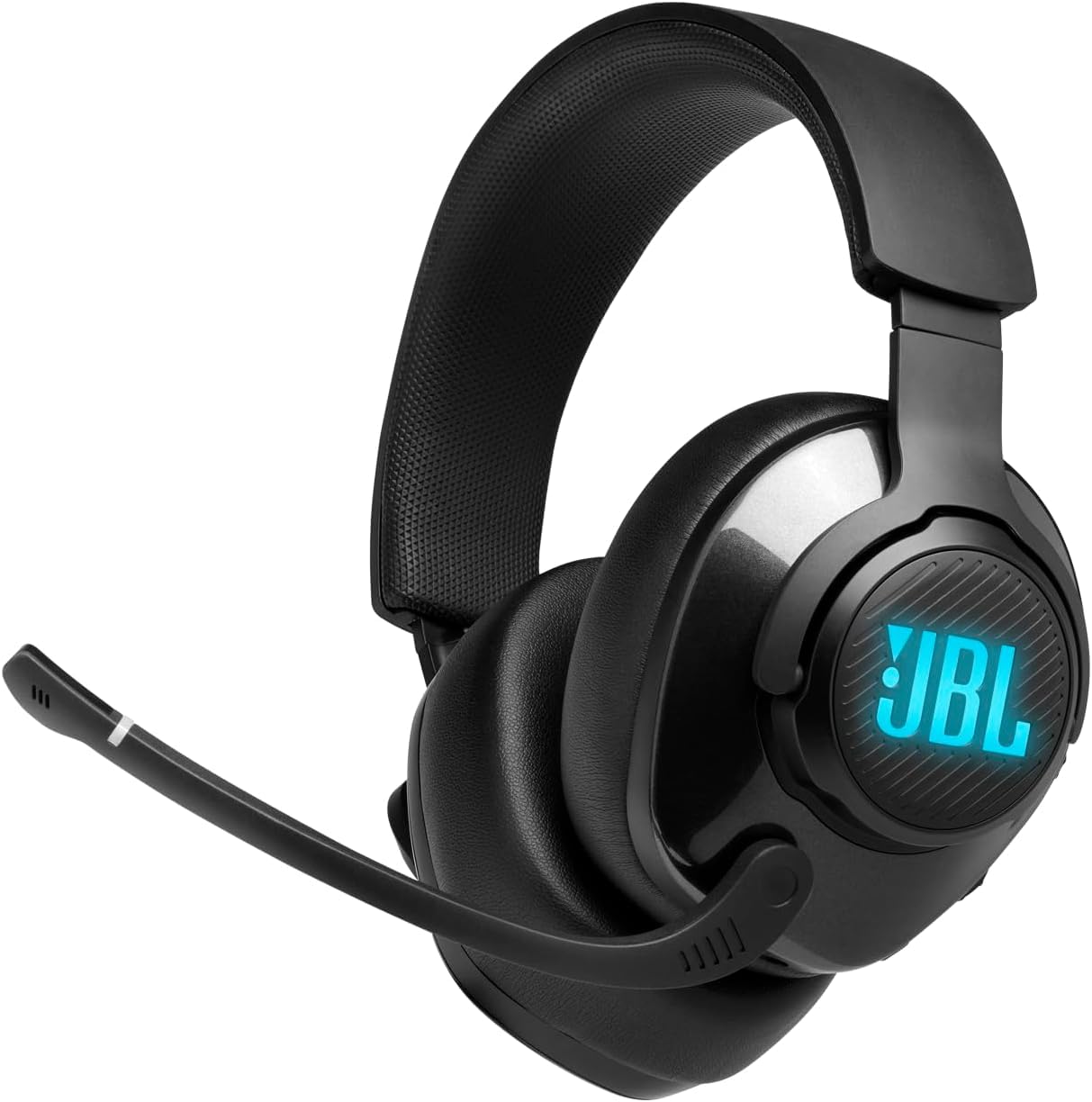
JBL Quantum 400

87 /100
LBD Score Excellent

Key details

Audio
QuantumSURROUND and DTS
Weight
9.7 oz
Fit Design
Memory foam ear cushions
Connectivity
USB, 3.5 mm
View on Amazon

The Quantum 400's game-chat balance dial is the feature that makes it worth a look for big-headed console players who also take calls or listen to music. The dial sits on the earcup and lets you tilt the mix toward game audio or chat without opening a menu, which is a small convenience that quickly becomes habitual. The memory foam pads and 50mm drivers give it a comfortable, full-bodied feel, and the flip-up mic mutes when you raise it.

We liked the wide, positional sound on PC, where the QuantumSURROUND and DTS modes add a sense of place for shooters and open-world games. The 3.5mm and USB connections cover PC, console, and mobile, and the USB-C to USB-A cable in the box means you do not need an adapter for a modern laptop. The memory foam pads are soft, and the flip-up mic is easy to get out of the way.

The mic is the part we were less excited about: it is clear enough for party chat, but it is not detachable, so you cannot strip it off for music. The flip-to-mute hinge is handy, though, and the ear cups rotate flat for storage. We kept the Quantum 400 in the mix because it solves the chat-balance problem better than anything else here, and the storage-friendly cups are a small bonus for a headset that moves between rooms.

Pros

  • Game-chat balance dial
  • Memory foam ear cushions
  • QuantumSURROUND and DTS
  • USB and 3.5 mm connections

Cons

  • Surround needs PC software
  • 9.7 ounces is on the heavy side
Our verdict

The JBL Quantum 400 is our console-chat pick for big heads because its game-chat balance dial and memory foam padding make long sessions easier, especially when you switch between party chat and game audio.

Check Latest Price

How We Found Headsets That Actually Fit

We started with the specs most listings bury: how far the headband actually adjusts, how deep the ear cups sit, how much the set weighs, and how it connects. Anything with a fixed band or a slider that topped out early got cut before it reached a desk, as did headsets whose cups looked shallow enough to rest on an ear. That left twelve sets, which we lived with for six months.

The panel was chosen on purpose — every tester measured a hat size of 7 3/8 or larger, and a couple of us were well past that. We wore each headset at a desk for weeknight sessions of two to four hours, on the couch for weekend marathons, and packed several into bags for trips to see how they held up shoved next to a laptop.

Comfort was judged by the clock rather than the first impression: we noted exactly when a hotspot appeared, whether our ears touched the drivers, and whether the band bottomed out before the cups sat level. We twisted and flexed each frame, dropped them on carpet, and gave the cables a tug to see how the joints held. For the microphones, we recorded the same paragraph on every set and had teammates rate the clips blind mid-match, then sat an arm's length away to hear how much game audio leaked out.

Sound was judged in games, not on a test track — whether footsteps landed behind and to the left, whether explosions swallowed dialogue. None of these cancel noise actively, so we also noted how much a loud room got muffled and how much of your own voice came back through the cups. Finally, we weighed what each set asks against what it delivers, because the cheapest fit is no bargain if the mic or the frame gives out in a year.

How to Choose a Gaming Headset for a Big Head

Start With the Headband, Not the Drivers

A big head needs extension and a band that spreads load. A suspension band such as the G733's self-adjusts across the top of your head, while a flexible aluminum frame such as the Cloud III's gives at the temples instead of pinching. Short plastic sliders and fixed bands are the ones to avoid. Check the return window before you commit, because a headset that leaves a hot spot after twenty minutes will not improve with a different EQ setting.

Weight and Clamp Beat Cushion Depth

The BlackShark V2 X is the lightest here at 240 grams; the Cloud II is the heaviest at 11.29 ounces. That spread matters more than a few millimeters of foam. The BlackShark V2 X and G733 are the ones we point to when every ounce is felt; the Cloud III sits in the middle with better platform flexibility. Thick pads can soften a clamp, but they cannot fix a band that is too short. If you play for hours, prioritize low weight and a band that spreads pressure, then look at pad depth.

Ear-Cup Room Is Separate From Head Size

A headband can fit your skull and still pinch your ears. Look for oval over-ear cups with enough depth that your earlobes do not touch foam, and prefer pads that can be replaced. The G733's cups run smaller than the Cloud III's, so broad ears should check that first. If your ears touch the driver housing, the cup is too small; no amount of band adjustment will fix it. A detachable mic and replaceable pads also extend the useful life of the headset.

Wired or Wireless Changes the Trade-Off

Wireless removes the cable but adds electronics, charging, and often weight. The G733 is the wireless pick here because its 29-hour battery and 278-gram build keep the trade-off manageable. Wired headsets such as the Cloud III, Cloud II, and BlackShark V2 X are simpler across PC and console, and they do not need a charge before a session. If you mainly play at a desk or on a controller, a 3.5mm cable is still the least fussy connection. Choose wireless for movement, not because it promises a better fit.

Microphone and Build Are Long-Term Comfort

A failing mic or a cracked headband ends the relationship faster than a slightly dull driver. Detachable mics on the Cloud II and Cloud III make repairs and music listening easier, and metal frames generally survive more handling than thin plastic. Check that replacement ear pads are sold for the model, because pads wear out first. We kept durability in view when choosing this list; a headset that needs replacing in a year is not comfortable, no matter how soft the foam feels on day one.

Frequently Asked Questions

Final Verdict

The HyperX Cloud III is the headset we recommend first for a big head. Its flexible aluminum frame, memory foam pads, and 308-gram build strike the best balance of room and support in this group, and the USB-C, USB-A, and 3.5mm connections keep it useful across PC and console. If you want to cut the cable, the Logitech G733 is the alternative, with a suspension band and a 29-hour battery; just check that its smaller ear cups clear your ears. The Razer BlackShark V2 X is the budget route when weight is the main concern.