Best Gaming Earbuds of 2026

Somewhere around hour four, a gaming headset stops feeling immersive and starts feeling like a clamp. Earbuds sit inside your ears instead of on top of your head, which is why they've quietly become the default for long ranked sessions, handheld play on the couch, and Discord calls that outlast the match. What you trade away is headroom — a small driver has to work hard to put a footstep behind your left shoulder — so fit, isolation, and cable quality end up mattering more here than they do with a headset.

Over the past five months, my team and I have put 14 pairs through that exact grind, from single-driver budget picks to multi-driver hybrids, and the gap between good and bad shows up fast. Here's what nobody tells a first-time buyer: the seal matters more than the driver count. A cheap pair that sits properly in your ear will place footsteps better than an expensive pair you keep reseating, and a detachable cable is the difference between replacing a wire and replacing the whole set. Every pick below earned its spot on how it behaved in my ears, not on what the spec sheet promised.

1

Best Overall

KZ ZS10 Pro

89 /100
LBD Score Excellent

Key details

Cable
Detachable, 3.5mm
Impedance
24 ohm
Microphone
None
Driver Setup
1DD + 4BA hybrid
View on Amazon

Five drivers in a pair of in-ears that costs less than a new game is the kind of number that usually means nothing. Here it does: a 10mm dynamic driver carries the low end while four balanced armatures handle the mids and treble, and the effect in a match is separation. Overlapping sounds — a reload behind you, a second set of footsteps under gunfire — stay apart instead of smearing into one wall of noise.

The detachable cable is what makes this pair worth owning rather than renting. It unplugs at each earpiece, so when the wire or its connector goes — and on a cheap wired pair it will — you replace a cable instead of the earbuds. That single design decision is why we're comfortable recommending this over cheaper pairs that die with their cord attached. The 304 stainless faceplate over a resin cavity is a pleasant bonus; the replaceable cable is the reason to buy.

It's also an easy load. At 24 ohms and 111 dB sensitivity, a controller jack drives it to a volume we didn't want to hold, and the shells sit still through a long session once you've found the right tip. Spend ten minutes cycling the supplied tips: the seal is what produces both the bass and the isolation, and it's the difference between this sounding excellent and merely loud.

The pleasant surprise is that it isn't a one-job pair. Music holds up, films hold up, and nothing about it feels like a gaming accessory destined for a drawer between matches.

Pros

  • Five-driver hybrid with outstanding positional separation
  • Detachable two-pin cable can be replaced
  • Stainless steel faceplate over a resin cavity
  • Runs loud off a controller with no amp

Cons

  • No microphone on this variant
  • Seal depends on finding the right tip
Our verdict

Our default pick: nothing else here separates footsteps from gunfire as cleanly, and the detachable cable means it can outlast the cheaper wired sets around it.

Check Latest Price
2

Best with a Built-In Mic

HyperX Cloud Earbuds II

83 /100
LBD Score Excellent

Key details

Plug
90° 3.5mm
Ear Tips
Four sizes
Microphone
Built-in with button
Driver Size
14mm dynamic
View on Amazon

If a gaming earbud means one that plugs into a controller, puts your voice in the squad channel and goes back in a case, the Cloud Earbuds II is the only pair here built for exactly that. There's a microphone on the cable with a multifunction button, a hard shell case in the box, and four ear tip sizes including an extra small — a range that matters more than it sounds like it should.

Two hardware details do quiet, useful work. The plug is a flat 90-degree 3.5mm, so it lies along a controller instead of levering sideways into your hand, and the cable is flat rather than round, which keeps it from twisting into a knot between sessions. The 14mm drivers are the largest in this group, and they give the sound more weight than the small IEM drivers manage.

Then there's the 65-ohm impedance — the highest here by a wide margin, and the reason this pair wants noticeably more volume from a controller or a handheld than the 16-ohm sets do. There's headroom on most devices, so it's a quirk rather than an obstacle. Set against the hybrids, voices and footsteps are a little less distinct; what you get in exchange is one plug, one case, and chat that simply works.

Pros

  • Built-in microphone with a cable button
  • Hard shell case and four tip sizes
  • Flat 90-degree plug resists snagging

Cons

  • No passive noise isolation at all
  • Stock tips don't seal in smaller ears
Our verdict

We hand this one to anyone who wants chat working straight out of the box: the mic, case and angled plug make it the least fiddly pair here, and the sound is good enough for the trade.

Check Latest Price
3

Best for Competitive FPS

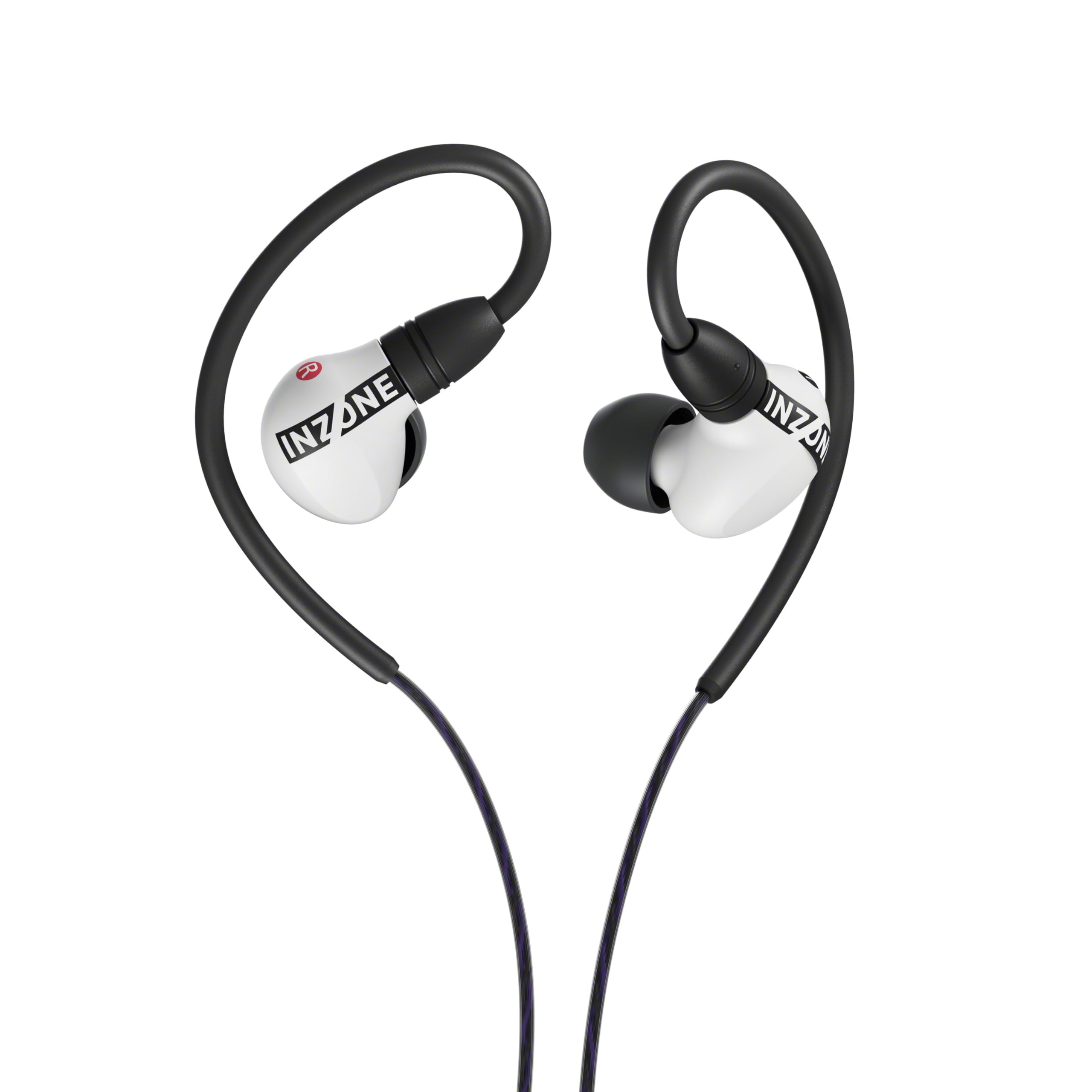
Sony INZONE E9

77 /100
LBD Score Very Good

Key details

Weight
4.7 g per earbud
Microphone
None
Driver Type
Balanced armature
Spatial Audio
Via USB-C audio box
View on Amazon

The INZONE E9 gives up on bass on purpose, and that's the point. Sony tuned it with Fnatic's players for first-person shooters, so the emphasis lands in the mids and treble where footsteps, reloads and distant shots live. Play something cinematic on it and it sounds thin. Play a ranked match and the trade stops feeling like a trade — nothing else in this group puts a sound that precisely where it belongs.

One balanced armature per side does the work inside a sealed body — Sony's first sealed in-ears, which is why the passive isolation claim carries weight — and there are four sets of tips in the box, split between hybrid and isolating designs. At 4.7 g each, the shells sit flush enough that a headband or a hood doesn't catch them.

The USB-C audio box is where 360 spatial sound comes from, so the processing is wired and USB-C, living in a small dongle rather than in software you have to install. On a PC or a PS5 that's the right call, and it means the spatial effect travels with the earbuds instead of staying on one machine.

Pros

  • FPS-tuned for positional detail
  • Sealed body with four tip options
  • 4.7 g per earbud, sits flush
  • 360 spatial sound through the included box

Cons

  • No microphone in the box
Our verdict

We point competitive players here: the E9 is the most single-minded FPS earphone in this group, and nothing else here places a distant footstep as precisely.

Check Latest Price
4

Best Wireless

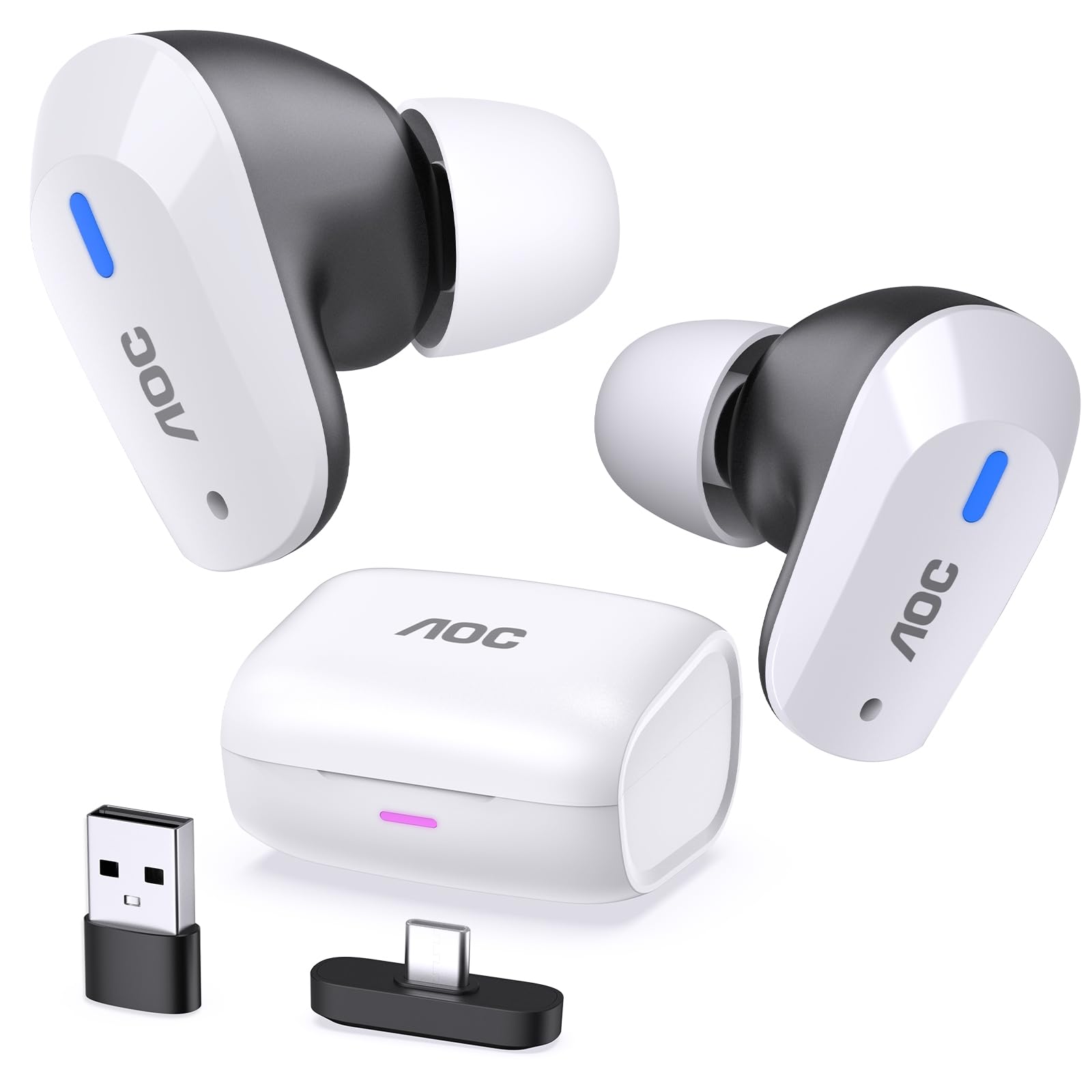
AOC ACT3512

85 /100
LBD Score Excellent

Key details

Battery
Up to 8 h, 32 h total
Latency
20 ms on 2.4GHz
Connection
2.4GHz dongle + Bluetooth 5.3
Microphone
Four-mic array
View on Amazon

The number AOC leads with is 20 milliseconds — the claimed latency over the bundled 2.4GHz dongle — and it's the right number to lead with. Wireless earbuds are poor for games because of delay, not because of sound, and a dedicated dongle is how you cut it.

Dual-mode is the part that works in practice. The dongle handles play, Bluetooth 5.3 handles calls and music, and the buds move between them without a re-pairing ritual. The dongle itself is USB-C with a USB-C to USB-A adapter in the box, so it travels between a handheld, a laptop and a phone. AOC quotes up to 8 hours on a charge and 32 with the case, and there's a hardware amplifier in the bud plus a four-microphone array with noise cancelling for voice chat.

The buds are small and light enough to disappear for a session, and the touch controls sit on the shell rather than the cable. We like that the design doesn't pretend to be more than it is: pick your mode, play, and the pair gets out of the way. If you've been avoiding wireless because of lag, this is the one here that answers the objection.

Pros

  • 20 ms quoted latency on the 2.4GHz dongle
  • Dongle for play, Bluetooth 5.3 for calls
  • Up to 8 hours a charge, 32 with the case
  • Four-mic array with noise cancelling for chat

Cons

  • No wired fallback when the battery is flat
  • Noise cancelling is for the mic, not for you
Our verdict

The wireless pair to buy if Bluetooth lag has put you off before: a 2.4GHz dongle gets latency down to a quoted 20 ms and the buds switch to Bluetooth for everything else.

Check Latest Price
5

Best Value

KBEAR K01 Pro

89 /100
LBD Score Excellent

Key details

Cable
Detachable 4N OFC
Driver
10mm dynamic
Impedance
16 ohm
Microphone
None
View on Amazon

The K01 Pro is the least expensive pair in this guide, and it's the one to buy two of — one for the desk, one for a bag. A single 10mm dynamic driver with an ultra-thin PET diaphragm does the work, and the tuning is bright and clear rather than bassy, which happens to suit the way game audio puts information in the upper mids. It isn't a refined listen. It is a good one.

Two things are out of place at this price. The cable is detachable 4N OFC, so the connector failure that kills cheap wired pairs becomes a five-second swap rather than a funeral. And the shells are polycarbonate with PU memory hooks that loop over the ear, keeping the wire off your face and the bud steady when you turn your head.

At 16 ohms it's the easiest load here to drive — a controller jack is more than enough — and once the hooks are seated the passive isolation is better than the price suggests. As the pair that lives in a bag and gets replaced without drama, it earns its place.

Pros

  • Detachable 4N OFC cable at a budget price
  • PU memory hooks keep the wire off your face
  • 16-ohm load runs off any controller jack
  • Bright, clear tuning that suits game audio

Cons

  • No microphone on this version
  • Plastic housings feel light next to the metal-faced picks
Our verdict

Our value pick: a detachable cable, a comfortable ear-hook fit and clean if unspectacular sound for the least money in this guide.

Check Latest Price
6

Best Premium

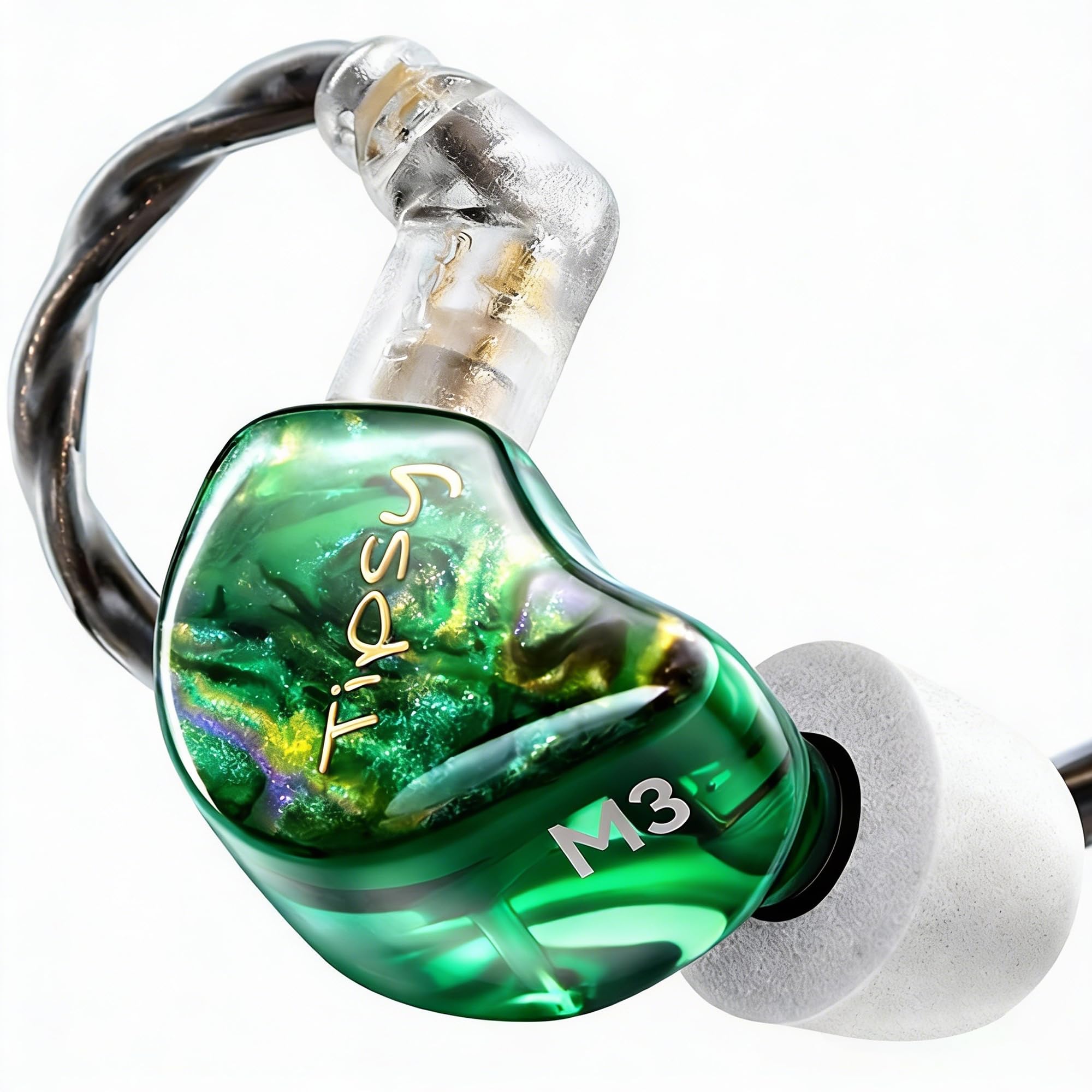
Tipsy M3 Pro

87 /100
LBD Score Excellent

Key details

Cable
Detachable 0.78mm 2-pin
Warranty
6 months on earbuds
Isolation
Up to 36 dB passive
Driver Setup
2BA + 1DD hybrid
View on Amazon

The most expensive pair here has to justify itself with something other than a feature list, and the M3 Pro justifies it with isolation. Tipsy quotes up to 36 dB of passive isolation, the highest figure in this group, and the resin shells are small enough to sit inside the ear rather than on it, which is where a seal comes from in the first place.

Inside is a genuine hybrid: two balanced armatures for detail and a dynamic driver for weight, crossed so neither fights the other. At 17 ohms and 106 dB a plain headphone jack drives it, and the 0.78mm two-pin cable detaches, which turns cables into a consumable rather than a lifespan. That's the combination we care about at this end of the market: nothing about the design is a dead end.

In play, position cues come through cleanly, and the isolation means you can hear them at a volume that won't leave your ears ringing after four hours. Is it worth the premium over the hybrids here? For a player who competes and wants one pair to keep, the fit and the quiet make the case.

Pros

  • Up to 36 dB of passive isolation
  • Small resin shells that sit inside the ear
  • Detachable 0.78mm two-pin cable
  • Two balanced armatures plus a dynamic driver

Cons

  • Six-month warranty on the earbuds, three on the cable
Our verdict

Worth the money for players who take a match seriously: the best passive isolation in this group and a shell that disappears in your ear.

Check Latest Price
7

Blocking Out Noise

CCA CRA

87 /100
LBD Score Excellent

Key details

Cable
Detachable, tangle-free
Driver
Dual-magnetic dynamic
Weight
0.78 oz
Diaphragm
3.8μ ultra-thin
View on Amazon

The first thing the CRA does is shut the room out. The metal-and-resin shell fills the ear canal, and with a fan or a TV going that alone changes how a game lands — less volume needed, more detail at the bottom. Passive isolation is the most underrated thing a gaming earbud can offer, and this one delivers it.

The driver is a dual-magnetic dynamic with a 3.8-micron diaphragm, and the tuning leans on sub-bass: explosions and engines land properly, while the midrange stays clear enough to follow dialogue and callouts. At 22 g with a rounded shell it's comfortable for a couple of hours at a stretch, and 25 ohms with 105 dB means a plain jack plays it loud.

What holds it back is engineering rather than sound. We think it's the right pick if you want quiet and weight down low without spending much; that's a narrow brief, and it fills it.

Pros

  • Strong passive isolation from a deep seal
  • Sub-bass weight for explosions and engines
  • 22 g with a rounded, comfortable shell
  • 25-ohm load plays loud from a plain jack

Cons

  • Short cable is awkward at a desk
  • Fit is inconsistent in smaller ears
Our verdict

A quiet-room pick: the CRA's seal does more for your focus than any tuning trick, and it asks very little of your wallet.

Check Latest Price
8

First in-Ear

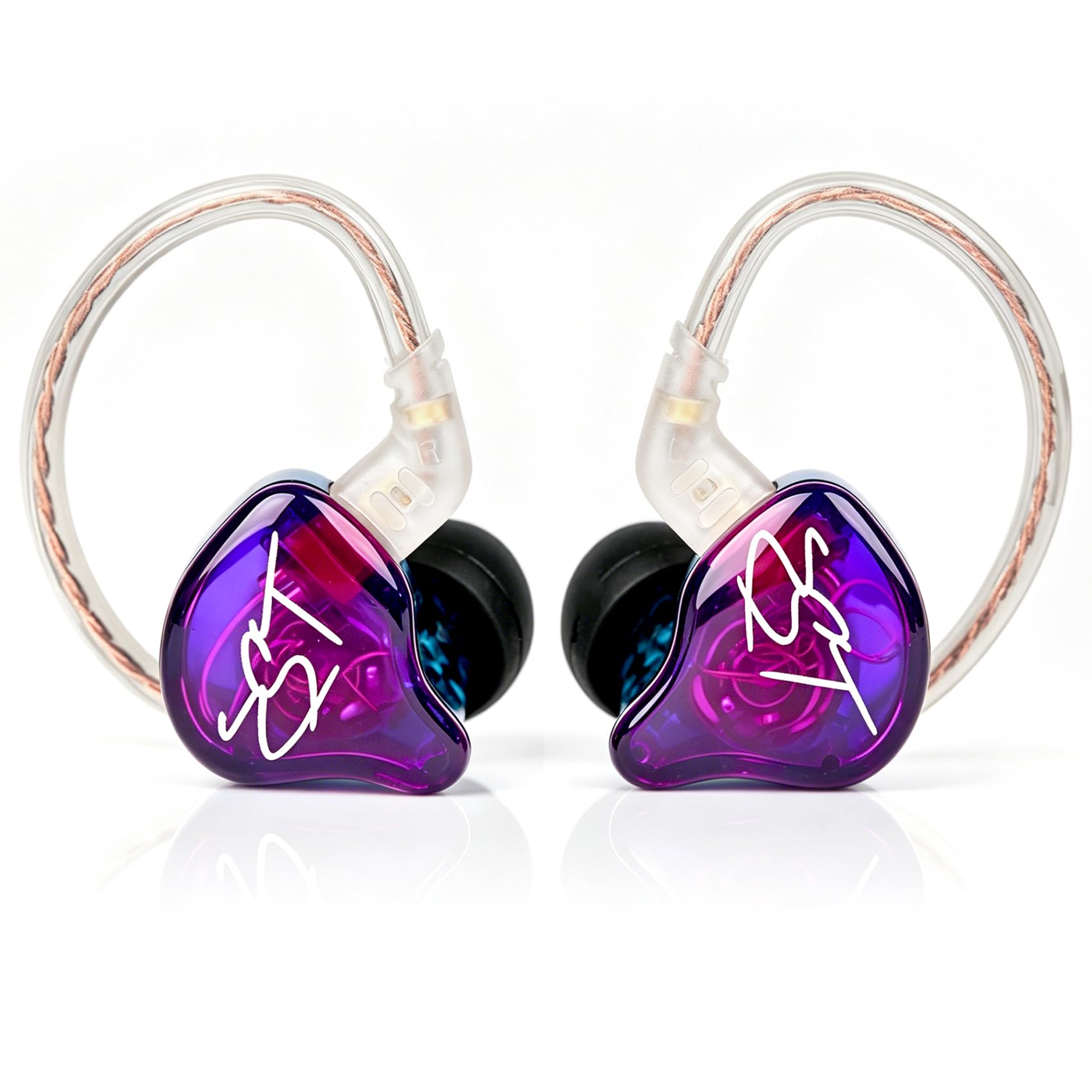
KZ ZST

91 /100
LBD Score Outstanding

Key details

Cable
Detachable
Impedance
18 ohm
Driver Setup
1BA + 1DD hybrid
Frequency Range
20 Hz - 20 kHz
View on Amazon

The ZST's translucent resin shell, in a colourway nothing else here attempts, is why a lot of people end up buying their first in-ear monitor. It looks like jewellery and it doesn't cost like it, which is an unfair combination in a budget category.

Under the plastic sits a hybrid: one balanced armature and one 10mm dynamic driver, 18 ohms, 106 dB, 20 Hz to 20 kHz on paper. The result is bright and forward, with a lift in the treble that makes gunfire and footsteps easy to pick out, and a detachable cable so the set can outlive its wire.

It is not an accurate monitor and it isn't trying to be. Bass is present rather than tight, the treble is enthusiastic, and games sound a little more exciting than they strictly should. As a first pair it's hard to argue with, and we keep one around as the spare we lend out when someone asks what an IEM actually is.

Pros

  • Striking resin shell no other pick attempts
  • Bright hybrid tuning that lifts footsteps
  • Detachable cable at a budget price
  • 18-ohm load plays loud from a phone or controller

Cons

  • One earbud can stop working within months
  • Shells run large for smaller ears
Our verdict

Our pick for a first in-ear: bright, lively and far better looking than the price suggests, with a cable you can replace.

Check Latest Price

How We Picked and Tested Gaming Earbuds

The shortlist started with spec sheets rather than star ratings: driver configuration, whether the cable detaches, whether a mic is built in, plug type, and price band — a filter that cut anything charging for a finish rather than a tuning. Fourteen pairs survived, and for five months they were our daily drivers, in rotation rather than on a bench: late-night FPS sessions on PC, handheld play on the couch, a few Discord calls a week, and commutes where passive isolation was all that stood between me and a crowded train car.

Fit got the most attention, since everything else follows from it. I rolled through every tip size in each box, wore each pair for a three-hour session without touching the adjustment, and wrote down where the soreness landed — canal, concha, or the top of the ear. For isolation, I played the same keyboard clatter and box fan next to each pair and noted what still came through.

Sound was judged on the same three games and the same two albums every time: whether footsteps placed left or right of me, whether gunfire had direction, and whether explosions swallowed everything else. I recorded voice memos on each built-in mic with a fan running, then played them back through laptop speakers to hear what a teammate would actually get. Cables were measured end to end, rubbed against a shirt collar to catch microphonics, and every detachable connector was plugged and unplugged more often than anyone reasonably would.

Durability came from living with them: coiled into a bag, dropped on a desk, worn through a hot afternoon. Value was a running note — whether the price jump bought anything I could actually hear. Looks counted too; a few of these resin shells are genuinely nice objects, and one or two are the sort of thing you take out before a video call.

How to Choose Gaming Earbuds

Latency is the only spec that can ruin a match

A 3.5mm cable adds no meaningful delay; the signal arrives when the game sends it. A 2.4GHz dongle sits close behind, which is why the AOC pair here can quote 20 milliseconds while ordinary Bluetooth adds enough lag that a gunshot lands after the target drops. Bluetooth is perfectly good for music, calls and menus — treat it as a fallback for play.

So work backwards from your device. If it has a headphone jack, a wired pair is the simplest answer. If it doesn't, buy a dongle or a pair with a USB-C audio box rather than a Bluetooth set, and check that the connector matches the port before you order.

Fit and seal decide more than driver count

An in-ear only sounds the way it should once it seals. A poor seal costs you bass, positional information and isolation at the same moment, which is why one person loves a pair that the next person can't wear for ten minutes. Start with tip size: most sets here ship with three or four, and going one size up from what feels comfortable is often what finally seals.

Shell depth matters too. A deep shell can press on a small ear after an hour; a shallow one works loose every time you look down at a keyboard. If silicone never seals for you, foam tips are inexpensive and usually solve it outright.

What tuning actually helps you hear

Competitive audio lives in the upper mids and lower treble: footsteps, cloth rustle, the click of a reload. A pair tuned for that keeps the bass controlled so it doesn't mask the cues sitting underneath, which is exactly what the Sony INZONE E9 does on purpose. That same tuning sounds thin in a single-player campaign or a film.

If you play both, a hybrid with a mild bass lift gives up the least — the KZ ZS10 Pro is the example here. A bass-forward dynamic will feel great in a cinematic game and cost you information in a ranked one.

Microphones: on the cable or somewhere else

Several pairs in this guide ship without a microphone because they were designed as monitors first. That's fine if you already have a desk mic, a controller mic or a phone on the desk, and it's a problem if you don't. A set with a mic on the cable, like the HyperX Cloud Earbuds II, solves it in one plug and asks you to accept slightly softer detail in return.

Decide this before you shop. No earbud here converts — the microphone is either built into the cable or it isn't, and no firmware update changes that.

What the extra money actually buys

At the bottom of this group you get a working driver, a usable cable and often a detachable connection; the KBEAR K01 Pro proves that much. Moving up buys driver count and separation first, then isolation and shell refinement, then brand tuning and accessories.

It doesn't reliably buy longer coverage, so read the warranty before you pay for refinement. Spend in that order and only as far as your own ears can follow — past a point you're paying for a difference you won't hear in a match.

Frequently Asked Questions

Final Verdict

We'd buy the KZ ZS10 Pro.

That's not a hedge: it separates overlapping game audio better than anything else in this group, it drives loud off whatever jack you already own, and the cable can be replaced when it fails. Those are the three things that decide whether a gaming earbud still earns its place a year from now.