Best Fujifilm X Lenses of 2026

The dials pull people into the X-mount system; the lenses are why they stay. Photographers buy a small body on a whim, shoot the kit zoom for a month, then quietly start budgeting for glass — because the lens is what decides whether the camera leaves the house with you or sits on a shelf while your phone does the work.

Over the past six months, our team shot with nine X-mount lenses, from pancakes that slip into a jacket pocket to a telephoto zoom that only comes out on purpose. We judged them like a photographer would: sharpness in bad light, autofocus speed when something's moving, weight on a long walk, and whether the price holds up against the rest of the mount.

One thing first-time buyers rarely expect: on APS-C a 35mm frames like a 50mm, so plenty of people shopping for a wide-angle end up happiest with what sounds like a normal lens. The bigger surprise is autofocus — two lenses that look identical on paper can feel a generation apart once the light drops.

1

Best Overall

Fujinon XF35mm F2 R WR

94 /100
LBD Score Outstanding

Key details

Focal Length
35mm (53mm equivalent)
Minimum Focus
13 inches
Weather Sealing
8 sealing points
Maximum Aperture
f/2
View on Amazon

A 35mm lens on Fujifilm's APS-C sensor gives roughly the same view as a 53mm lens on full frame, and that is why it makes such a strong default. It is wide enough for a street scene or a tabletop, tight enough for a head-and-shoulders portrait, and bright enough at f/2 to keep working indoors. We kept it on the camera when we did not know what the day would bring, and it rarely felt like the wrong choice. The eight sealing points and 14°F rating give it a practical advantage over the third-party primes here.

The inner-focus motor is rated at 0.08 seconds by Fujifilm, and the near-silent operation matters more than the number. We could focus without drawing attention in quiet rooms, and the lens did not hunt distractingly in ordinary light. The aperture ring has firm, distinct stops, which makes the lens feel more deliberate than a camera-dial-only design. That control is a large part of why we enjoyed using it.

At 13 inches, close focus is good enough for food and flowers but not a substitute for a macro lens. The compact barrel balances well on a small X body, and the 43mm filter thread keeps accessories easy to find. We did not miss a zoom during everyday shooting, because the 53mm view covers more than its single focal length suggests.

The f/2 aperture keeps the barrel small and the lens within reach of most first-prime buyers. It is not the most dramatic lens in this group, but it is the one we trust to deliver in more situations. The lens gets out of the way, and that is why it stayed on the camera after the novelty wore off.

Pros

  • 53mm-equivalent all-purpose view
  • Fast, nearly silent inner focus
  • Eight-point weather sealing
  • Solid value among Fujinon primes

Cons

  • Not the brightest prime here
Our verdict

We recommend the XF35mm F2 as the default Fujifilm lens: it pairs a useful 53mm view with fast, quiet autofocus, weather sealing, and a sensible price.

Check Latest Price
2

Best Standard Zoom

Sigma 18-50mm F2.8 DC DN

85 /100
LBD Score Excellent

Key details

Mount
Fujifilm X
Weight
10.1 oz
Focal Length
18-50mm (29-80mm equivalent)
Maximum Aperture
f/2.8
View on Amazon

A standard zoom has to earn its place by covering enough without making the camera feel like a burden. The Sigma 18-50mm does that with a 29-80mm equivalent range and a constant f/2.8 aperture. We found that combination useful for a whole day: wide enough for a street corner or a group, long enough to isolate a face, and bright enough that we were not constantly reaching for a prime when the light dropped. It is the most practical one-lens travel choice in this group.

The 285g body is the other half of the argument. It keeps an X-T or X-S body reasonably compact, and the zoom does not feel like a cudgel on a neck strap. In our testing, the center was sharp wide open and the lens held useful detail across the frame when stopped down. It is not a macro lens, but it is a strong showing for a compact f/2.8 zoom.

The missing aperture ring is the adjustment. You set aperture on the camera, and after a day we missed the direct control of the Fujinon primes. That is a handling preference, not an image-quality problem. For travel where one lens has to do everything, the Sigma's range and speed outweigh that compromise. It is the zoom we recommend when swapping lenses is the thing you most want to avoid.

Pros

  • Constant f/2.8 zoom
  • 29-80mm-equivalent range
  • Light 285g body
  • Sharp, useful image quality

Cons

  • No weather sealing
Our verdict

We reach for the Sigma 18-50 when one lens has to cover a whole day: its constant f/2.8 aperture and compact body make it the zoom to beat here.

Check Latest Price
3

Best Telephoto

Fujinon XF70-300mm F4-5.6

89 /100
LBD Score Excellent

Key details

Weight
1.75 lb
Focal Length
70-300mm
Maximum Aperture
f/4-5.6
Weather Resistance
Yes
View on Amazon

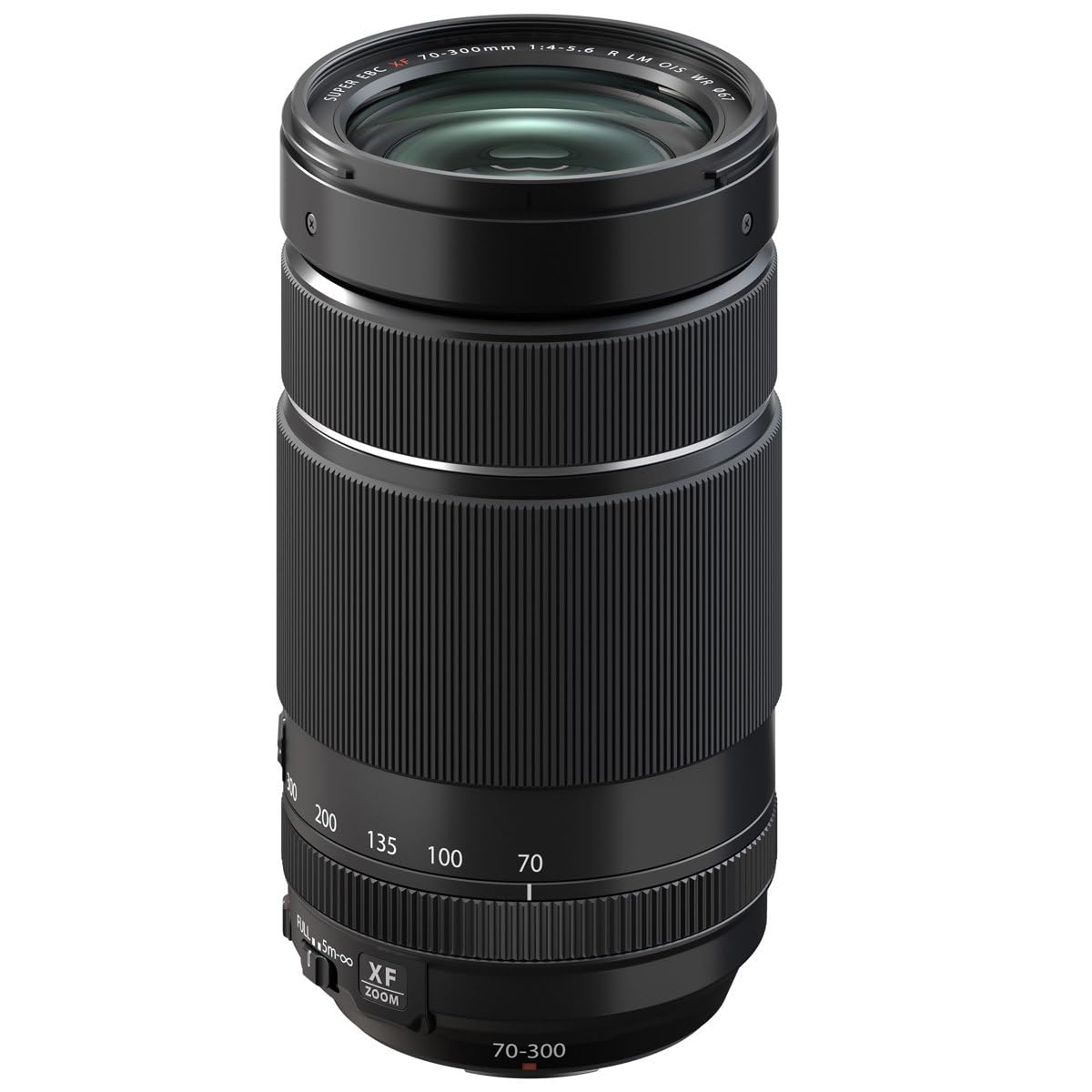
The 70-300mm zoom gives 105-450mm equivalent framing, which is the range that makes distant subjects feel close without turning the kit into a tripod-only affair. We found it most useful for wildlife, field sports, and the kind of travel where you cannot walk closer. It is also compatible with Fujifilm's 1.4x and 2x teleconverters, so the reach can grow if you need it.

Optical stabilization and weather sealing are the two features that make the lens worth carrying outdoors. We could handhold at the long end with more confidence than an unstabilized telephoto would allow, and the sealed barrel meant we did not have to retreat at the first drizzle. At 795g it is not a featherweight; after a few hours on a hike we felt the mass, but that is the cost of the reach and the sealing.

The autofocus is quick enough for most outdoor subjects, and close focus adds flexibility for flowers and insects when a long lens is already on the camera. This is not a dedicated macro, but it covers a huge amount of ground. If distance is occasional, a smaller telephoto zoom makes more sense; if you shoot long often, the 70-300mm is the one we reach for.

Pros

  • 105-450mm-equivalent reach
  • Optical stabilization
  • Weather-sealed barrel
  • Teleconverter compatibility

Cons

  • Premium price
  • f/4-5.6 aperture limits low light
Our verdict

We choose the XF70-300 when the subject is far away and the weather is not cooperating; its reach, stabilization, and sealing justify the premium.

Check Latest Price
4

Best Budget Portrait

Viltrox 56mm F1.7

87 /100
LBD Score Excellent

Key details

Weight
6.03 oz
Focal Length
56mm (85mm equivalent)
Aperture Blades
9
Maximum Aperture
f/1.7
View on Amazon

Portrait lenses do not have to be expensive to look the part. The Viltrox 56mm f/1.7 gives an 85mm equivalent field of view, which is the classic head-and-shoulders perspective, and the bright aperture produces the soft background separation that portraits want. The 11-element, 9-group design includes four ED elements, and the nine-blade aperture helps keep out-of-focus highlights round.

At 171g, it barely registers on the camera. We found the bokeh pleasing and the sharpness at f/1.7 more than usable, especially for the money. The STM motor is quiet, but it is not the fastest focuser here; for posed portraits and low-light stills that is fine, while fast-moving kids will ask more of it. We liked the light carry and the way the lens balanced on a small X body.

The lens relies on the camera for aperture control, which felt natural enough during portrait sessions. It is a fair-weather lens in spirit, but the portraits do not suffer for it. For a modest outlay, the Viltrox delivers the portrait look that usually costs much more. We kept it in the bag for posed work and indoor gatherings, and it earned its place.

Pros

  • 85mm-equivalent portrait view
  • Bright f/1.7 aperture
  • Light 171g body
  • Strong portrait value

Cons

  • No weather sealing
Our verdict

We point portrait shooters to the Viltrox 56mm F1.7: it delivers the 85mm-equivalent look, pleasing bokeh, and a light carry for very little money.

Check Latest Price
5

Best Budget Prime

Viltrox 35mm F1.7

89 /100
LBD Score Excellent

Key details

Weight
6 oz
Focal Length
35mm (53mm equivalent)
Minimum Focus
0.33 m
Maximum Aperture
f/1.7
View on Amazon

The Viltrox 35mm f/1.7 covers the same 53mm-equivalent view as our top pick, but it opens to f/1.7 instead of f/2 and costs far less. That combination makes it the budget prime we recommend for low light and shallow depth of field. It is not a Fujinon, but it does not ask you to shoot like one.

The 170g body is compact enough to live on the camera, and the 0.33m minimum focus distance adds flexibility for close-up details. We found the images sharp wide open, with pleasing color and none of the obvious aberrations that make budget glass feel cheap. The STM motor is quick and quiet in ordinary use.

The build feels solid, and the lens does not make the camera feel front-heavy. We liked the directness of a fast prime that keeps the whole kit small. It is a simple lens in the best sense: point it, open the aperture, and the background falls away without a lot of fuss.

That simplicity is the appeal, and the missing sealing is the main reason it is not our top pick. If you shoot mostly in dry conditions, it gives you a faster aperture and a lower entry point without giving up everyday sharpness. We kept it in the bag for evening walks and indoor gatherings, where the extra light matters more than outright refinement. It is a convincing budget alternative rather than a compromise you notice every time you focus.

Pros

  • Bright f/1.7 aperture
  • 53mm-equivalent view
  • Light 170g body
  • Close 0.33m focus

Cons

  • No weather sealing
Our verdict

We like the Viltrox 35mm F1.7 as the budget path into a fast normal prime, though its lack of weather sealing keeps it behind our top pick.

Check Latest Price
6

Pocketable Street

TTArtisan 27mm F2.8

84 /100
LBD Score Excellent

Key details

Weight
3.28 oz
Autofocus
STM
Focal Length
27mm (41mm equivalent)
Maximum Aperture
f/2.8
View on Amazon

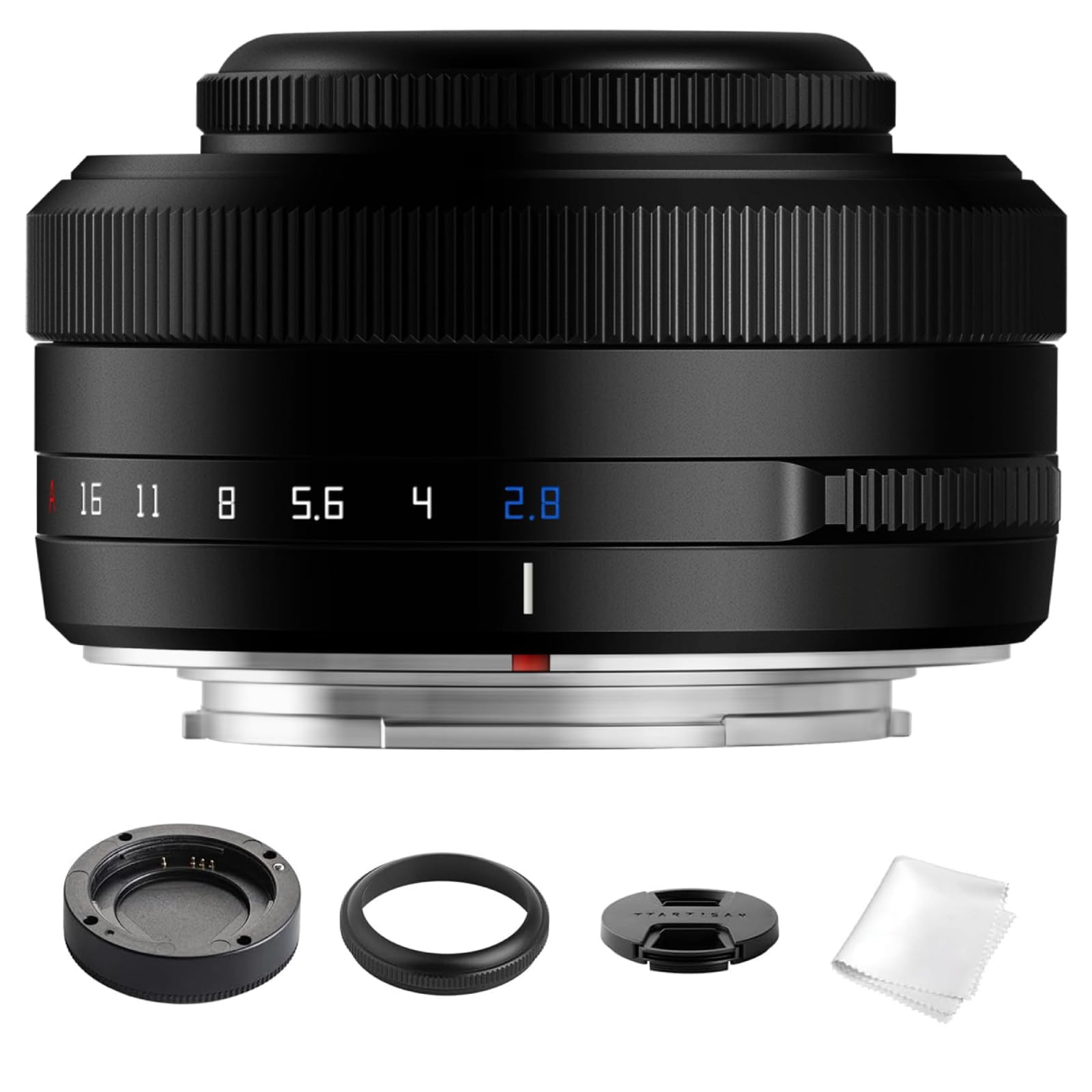
The TTArtisan 27mm f/2.8 is the lens we put on when we want the camera to disappear. At 93g, it turns a small X body into something close to pocketable, and the 41mm-equivalent view is a natural everyday framing. The aperture ring is a welcome tactile touch at this price, and the pancake shape makes it an easy lens to leave on the camera. We found the images sharp and contrasty, with enough character to make snapshots feel intentional.

The USB-C rear cap is a small but useful detail: firmware updates happen through the cap instead of a separate dock. The STM autofocus is quick enough for street and still subjects, and the lens balances well on a compact body. We did not find it silent, and it is not the most decisive focuser in this group. The autofocus is the compromise, not the image quality. If you need a sealed everyday prime, the Fujinon XF35mm is the safer step up, though its view is tighter. We kept the TTArtisan in a jacket pocket and forgot it was there, which is the highest compliment for a pancake.

Pros

  • 41mm-equivalent everyday view
  • 93g pancake body
  • Aperture ring and USB-C updates
  • Sharp, contrasty images

Cons

  • No weather sealing
Our verdict

We keep the TTArtisan 27mm F2.8 around as a tiny, affordable everyday lens that makes a small Fujifilm body pocketable.

Check Latest Price
7

Manual Street

TTArtisan 25mm F2

83 /100
LBD Score Excellent

Key details

Focus
Manual
Focal Length
25mm (37.5mm equivalent)
Minimum Focus
0.25 m
Maximum Aperture
f/2
View on Amazon

The TTArtisan 25mm f/2 is the odd one out here because it is fully manual, and that is exactly why it earns a place. The 25mm focal length gives a 37.5mm equivalent view, close to the way the eye sees a scene, and the f/2 aperture plus 0.25m close focus make it a fun lens for street, food, and everyday details. We liked the all-metal build and the smooth, well-damped focus ring; it feels more expensive than it is.

Manual focus changes the rhythm of a shoot. We set the aperture, focused by feel, and used focus peaking on the camera to confirm the plane of focus. That is slower for moving subjects, but it is satisfying for deliberate work and for learning how depth of field behaves. The lens is compact enough to leave on a small body, and the aperture ring is easy to find without looking.

The lens rewards a deliberate pace. On a moving subject, it is the wrong tool. For a cheap, compact prime that makes you slow down, it is a rewarding one. We kept it for walks where the point was to look rather than to spray frames, and it made us think about focus in a way the autofocus lenses do not.

Pros

  • 37.5mm-equivalent natural view
  • Bright f/2 aperture
  • Smooth manual focus ring
  • Compact all-metal build

Cons

  • Manual focus only
  • No weather sealing
Our verdict

We recommend the TTArtisan 25mm F2 for photographers who want a compact, low-cost prime that makes them slow down.

Check Latest Price

How We Tested Nine X-Mount Lenses Over Six Months

We started by pulling together every X-mount lens we could reasonably recommend — first-party primes, third-party autofocus glass, and a couple of zooms — then cut anything that duplicated a focal length or only made sense on a spec sheet. That left nine lenses, which we mounted on the same two bodies and shot with for six months. Most of that shooting happened where these lenses actually live: a Saturday morning downtown, a birthday party in a dim living room, a dog sprinting across a park, and one long weekend on a trail.

Autofocus got the most attention, because it's the part of the mount that has changed fastest. I half-pressed on a subject walking toward me in good light, then repeated it in a hallway lit by a single lamp, fired bursts both times, and counted how many frames came back sharp. A few locked on instantly and stayed locked; one hunted for a beat and gave up when the light fell.

For image quality, I shot the same backlit branches and brick wall at every aperture, then compared corners, color fringing, and flare wide open versus stopped down, and looked at how the out-of-focus background held up behind a subject. Lens quality came down to feel: whether the focus ring turned smoothly, whether the barrel wobbled when extended, whether the aperture ring clicked where I wanted it.

Size and weight I measured on a kitchen scale with caps and hoods on, then carried each lens for a full day — in a jacket pocket, in a small shoulder bag, on a six-mile hike with the zoom. Value was the last call: what the same money buys elsewhere in the mount, and whether the pricier lens was actually better or just bigger.

How to Choose a Fujifilm X Lens

Pick a focal length before a feature list

A 35mm lens on Fujifilm's APS-C sensor gives about a 53mm view, the safest all-around choice for a first prime. A 27mm or 25mm is wider and easier to pocket for street and travel; a 56mm is a portrait lens with a narrower, more flattering perspective. We start most first-time buyers with the standard prime, because it is the one that stays on the camera while you learn what you like. If you already know one lens must cover everything, an 18-50mm zoom is more practical than collecting primes.

Balance aperture against autofocus behavior

A bright f/1.4 or f/1.7 lens buys low-light headroom and softer backgrounds, but it often adds size and can slow autofocus. We pay more attention to focus behavior than to a fraction of an f-stop: a quiet, decisive f/2 is easier to live with than a faster lens that hunts. An aperture ring is a genuine handling preference, not a requirement. If you shoot video, listen for focus noise before you commit; some compact primes are chattier than their specifications suggest.

Treat sealing and size as daily-use features

Weather sealing matters if you shoot in rain, snow, or dust, but it is not the only kind of protection. The larger practical question is whether the lens is small enough to bring. A compact prime that lives in a jacket pocket gets used more than a sealed zoom left at home. We treat weather resistance as a priority for travel and outdoor work, and as a nice-to-have for indoor portraits. Check the camera body too: a sealed lens only helps if the body is sealed.

Choose reach with stabilization in mind

A standard zoom covers the most ground with one purchase, while a telephoto zoom earns its weight when your subjects are genuinely far away. For long lenses, stabilization is not optional: it is the difference between handholding and packing a tripod. We also look at teleconverter support, since it can extend reach without a second lens. But do not buy a 70-300mm for the occasional distant snapshot; if you rarely go long, the weight and cost are hard to justify.

Know what third-party lenses trade away

Third-party X-mount lenses can be sharp, compact, and considerably less expensive, but they tend to give up weather sealing, aperture rings, or the last bit of autofocus polish. That is a fair trade if those features do not affect your work. Before buying, confirm the lens has the mount, autofocus, and firmware support your camera needs; a cheap manual lens is a different tool from an autofocus everyday prime. We judge third-party picks on the same image and handling questions, not on brand alone.

Frequently Asked Questions

Final Verdict

We recommend the Fujinon XF35mm F2 R WR as the first lens for most Fujifilm owners. Its 53mm-equivalent view handles street, family, and portraits; the fast, quiet focus and weather sealing make it a genuine all-weather everyday lens.

If one lens must cover a whole trip, choose the Sigma 18-50mm F2.8 for its range and constant aperture. If distant subjects are the point, the XF70-300mm is the clear step up. Each answers a different job, and the XF35mm remains the safest default.