Best Food Processors of 2026

A food processor earns its counter space in about ten seconds — the time it takes to turn a pile of carrots, onions, and nuts into something that looks like an hour with a knife. The other twenty minutes go to the bowl, the lid, the blade, and the base. That gap between how fast a machine chops and how much fuss it leaves behind is where most of them live or die.

We ran 12 food processors through six months of real cooking, from drawer-sized three-cup choppers to 16-cup batch machines, and the split was rarely about price. Wattage is the spec everyone compares and the one that explains the least — a well-shaped bowl and a sharp blade beat a bigger motor more often than not, and a preset you'll never press isn't worth paying for.

The motor is almost never what fails first; it's the plastic work bowl and the lid latch, which is why durability got as much attention here as speed or power. Everything below earned a spot on a real counter.

1

Best Overall

Ninja Professional Plus BN601

93 /100
LBD Score Outstanding

Key details

Motor
1000 peak watts
Programs
4 Auto-iQ presets
Bowl Capacity
9 cups
Blades And Discs
Chopping blade, dough blade, reversible slice/shred disc
View on Amazon

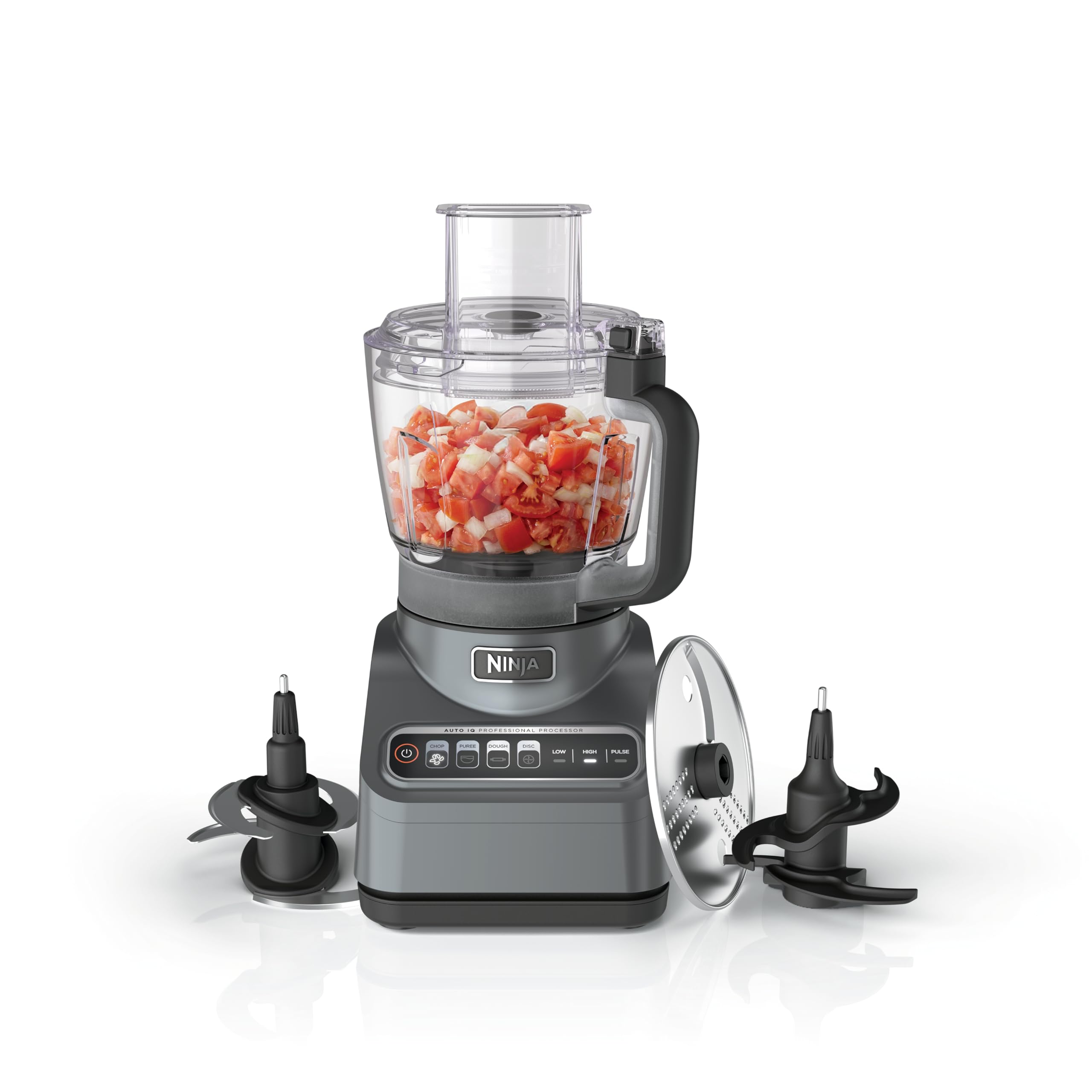
Nine cups, a 1000-peak-watt motor, four one-touch programs, and a dough blade for less than most of the machines here — that's why the Ninja BN601 is the one we point most people toward. The bowl size is the quiet genius of it: big enough for a double batch of hummus or a pile of onions for a braise, small enough that a single shallot still finds the blade instead of getting chased around the bottom.

What sold us is how little thought it asks for. The Auto-iQ programs time themselves — press chop and the machine pulses in bursts, then shuts off when the work is done, so you aren't standing over it counting between pulses. Dough is one button as well, and the motor didn't bog down on pizza or pie dough, which is the job that separates a real processor from a chopper.

Cleanup is three blades, a bowl, and a lid, all listed as dishwasher safe. Treat that as permission rather than a promise: the lid and the disc hub are the plastic that ages on a machine like this, and a hot dry cycle is harder on them than a rinse and a hand-dry. Ours goes on the top rack and comes out to finish drying on the counter.

Pros

  • Nine-cup bowl suits everyday batches
  • 1000 peak watts handles dough and nut butter
  • Auto-iQ presets remove the guesswork
  • Dishwasher-safe parts break down easily

Cons

  • One slice thickness, one shred size
  • One-year warranty on the whole machine
Our verdict

We recommend the BN601 to most people because nine cups and four one-touch programs cover everyday chopping, pureeing, and dough without a learning curve or a big spend.

Check Latest Price
2

Best for Big Batches

Cuisinart DFP-14BCNY 14-Cup

91 /100
LBD Score Outstanding

Key details

Discs
4mm slicing disc, medium shredding disc
Motor
720 watts
Weight
18 lb
Bowl Capacity
14 cups
View on Amazon

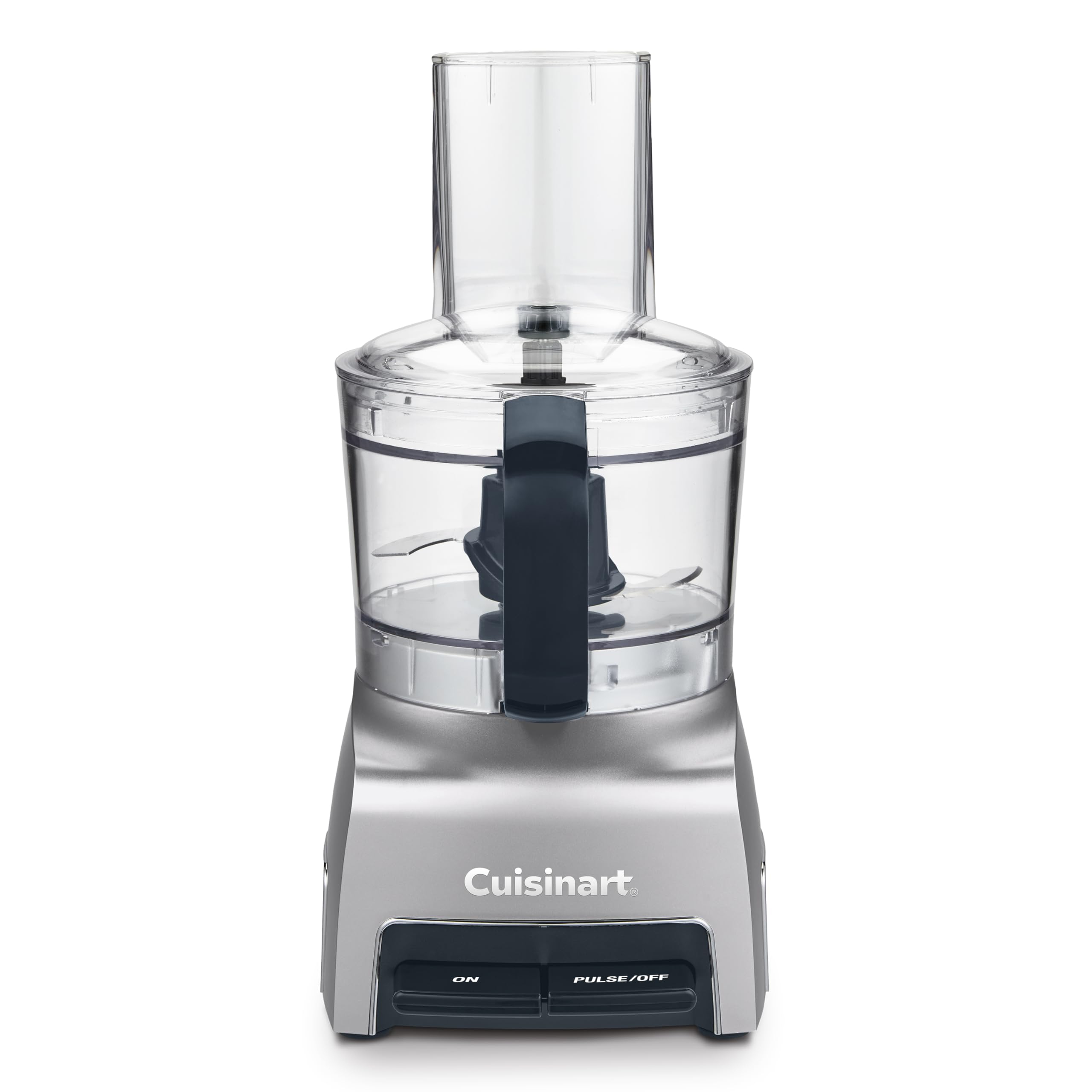
Fourteen cups is a lot of bowl, and that's the whole argument. A head of cabbage, a pot's worth of soup vegetables, enough sliced apples for two pies — the Cuisinart DFP-14BCNY does them in one pass instead of three, and the 720-watt motor pushes the blade through semi-soft cheese and pizza dough without straining.

We like it most for what it doesn't do: fuss. Two buttons, on and pulse, no menus to learn and no programs second-guessing your timing. It's also the quietest of the big machines here — you hear the food, not the motor — and the base stays planted when a stiff dough starts pushing back. After a few weeks of use, that stillness is what we noticed most.

The mass is the trade. At 18 pounds and 14.8 inches tall, this is a machine you find a permanent home for; lifting it in and out of a cupboard gets old by the second week. What you get back is stability, suction cups that grip a granite counter, and a stainless body that shrugs off the knocks a counter appliance takes.

The warranty is the other tell: three years on the machine and five on the motor, against the single year the Ninjas offer. That's a company betting on its own motor, which is the part you can't replace.

Pros

  • 14-cup bowl does big jobs in one pass
  • Quiet 720-watt motor stays planted
  • Two buttons, no programs to learn
  • Five-year motor warranty

Cons

  • 14-cup bowl is oversized for small jobs
Our verdict

Our pick for big batches: the 14-cup bowl and 720-watt motor handle a holiday's worth of prep in one pass, and the two-button control is the entire interface.

Check Latest Price
3

Best for Less Prep Work

Ninja Professional XL NF701

93 /100
LBD Score Outstanding

Key details

Motor
1200 peak watts
Shredding
Reversible fine/coarse disc
Feed Chute
XL with 3-part pusher
Bowl Capacity
12 cups
View on Amazon

The feature that changes your routine on the Ninja NF701 isn't the motor — it's the lid. The XL feed chute takes a three-part pusher, and the opening is wide enough that a whole potato or a halved onion drops straight in, so you stop pre-cutting before you start processing. That's the difference between slicing being faster than a knife and it not being worth getting the machine out.

Underneath it's the same playbook as the 9-cup Ninja: four Auto-iQ programs, a chopping blade, a dough blade, and a reversible disc that shreds fine on one side and coarse on the other. The bowl holds 12 cups, so a bigger batch fits before you have to empty it, and 1200 peak watts is the most power in the Ninja pair here.

We reach for this one when the job is volume — a pile of cucumbers for pickles, a bag of carrots, cheese for a crowd — and it earns its counter space for that. For an onion and a clove of garlic it's more machine than the job needs, and 17.5 inches of height makes it picky about where it lives. If most of your processing is big batches, the extra outlay over the 9-cup buys real time; if it isn't, it doesn't.

Pros

  • XL three-part chute takes whole ingredients
  • Reversible disc shreds fine or coarse
  • 12-cup bowl for larger batches
  • 1200 peak watts, the most in the Ninja pair

Cons

  • Same four presets as the cheaper 9-cup Ninja
  • Step-up price buys capacity and chute only
Our verdict

If you cook in volume, we think the XL feed chute and 12-cup bowl justify the step up from the 9-cup Ninja: less pre-cutting, more processing.

Check Latest Price
4

Best Premium

Breville Sous Chef 16

88 /100
LBD Score Excellent

Key details

Motor
1450 watts induction
Slicer
24-position adjustable
Weight
30.6 lb
Bowl Capacity
16 cups
View on Amazon

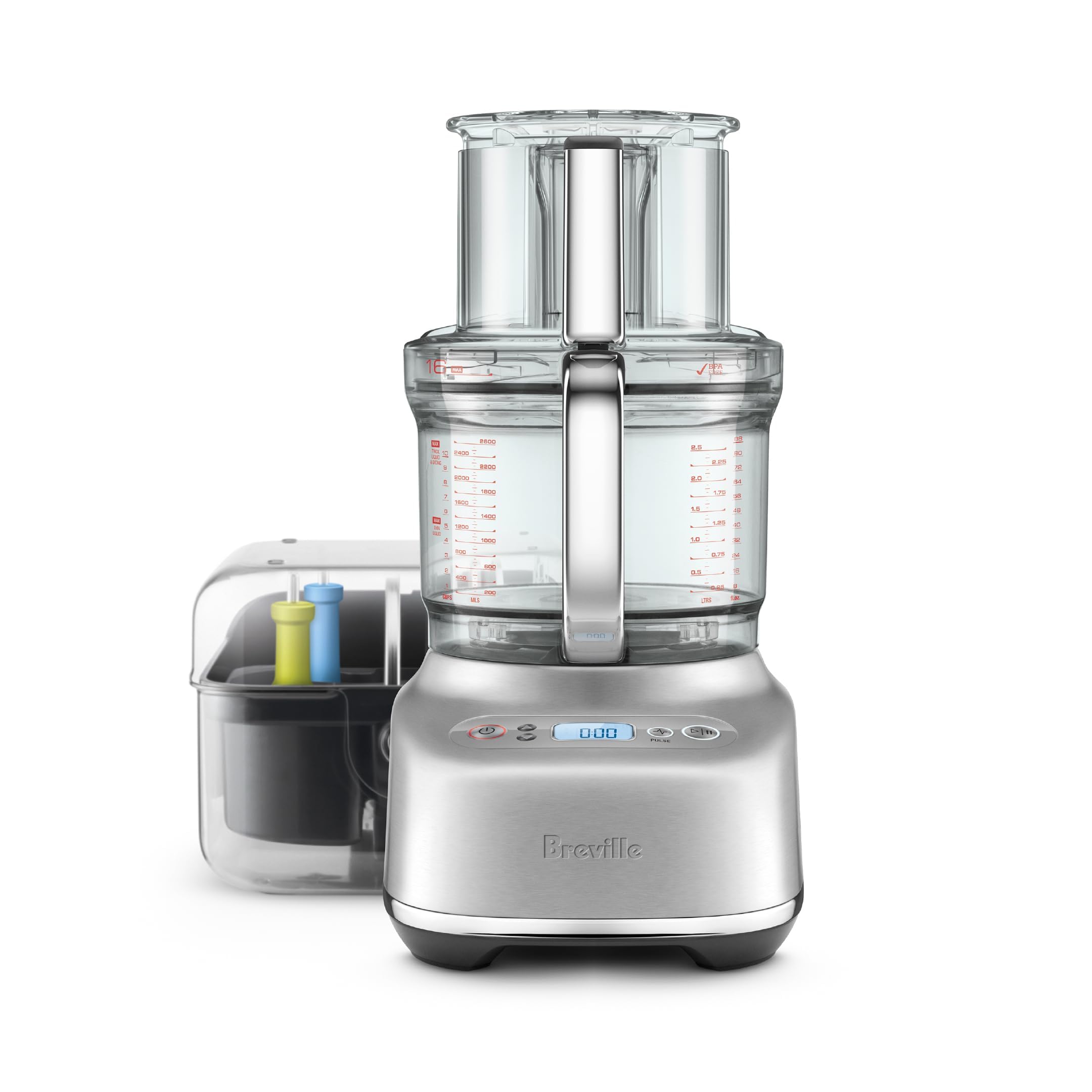
Twenty-four slicing positions is not a gimmick. Dial the thickness you want on the Breville Sous Chef 16 and every cucumber coin comes out the same — thin for pickles, thick for a gratin — which is the difference between a salad that looks made and one that looks chopped. No other machine in this group lets you set a number and repeat it.

The rest of the package is built to match: a 1450-watt direct-drive induction motor, a 16-cup bowl, a 5.5-inch three-in-one feed chute, a French-fry disc, and a dough blade. What struck us first was how little the machine seems to work — the blade holds its speed through a full bowl of carrots, which is exactly what the extra power buys.

Where it stumbles is the practical stuff. At 30.6 pounds it isn't a machine you lift; it lives where it's installed, and it needs a deep counter. This is a specialist's purchase — for a cook who processes in volume and cares about the cut, not for someone chopping an onion for a weeknight sauce. The motor warranty runs 30 years, which says where Breville expects the wear to be.

Pros

  • 24-position adjustable slicer for even cuts
  • 1450-watt direct-drive induction motor
  • 5.5-inch three-in-one feed chute
  • 30-year motor warranty

Cons

  • Far more expensive than anything else here
Our verdict

We keep this one for the cook who wants restaurant-even slices: the 24-position slicer and 1450-watt induction motor are unmatched in this group, and the price reflects it.

Check Latest Price
5

Best Mini

Hamilton Beach 3-Cup Chopper

93 /100
LBD Score Outstanding

Key details

Motor
350 watts
Weight
2.1 lb
Controls
Stack-and-press lid
Bowl Capacity
3 cups
View on Amazon

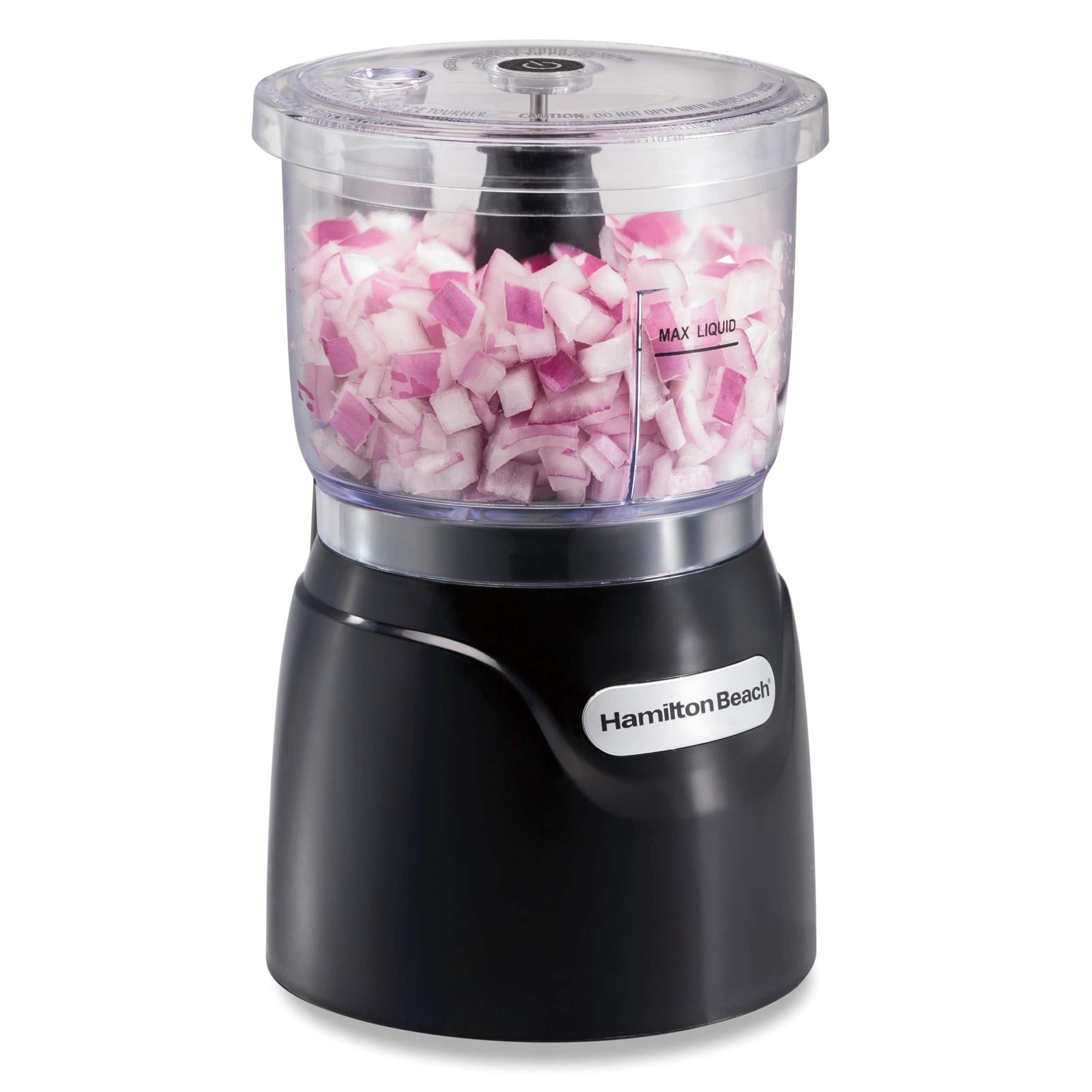
There's no bowl to twist and lock and no lid to seat and click: stack the bowl, drop in the blade, fill it, press the lid down. Release and it stops. The Hamilton Beach 3-cup is the least ceremonious machine here, and for one onion or a handful of parsley that's exactly the right amount of ceremony.

Three cups covers the jobs a mini is actually for — an onion, garlic, herbs, nuts, breadcrumbs, a small tub of hummus — and 350 watts gets through them quickly. Three pieces come apart for the dishwasher, which is why it's the one we don't dread cleaning. Holding the lid down takes a minute to get used to; the payoff is a machine with no latch to break, and the latch is what usually kills small choppers.

The plastic bowl and lid are thin, and that's the half of this machine to watch — the motor is the strong part. Given what it costs, that's a fair trade: it's a replace-in-a-few-years tool rather than a hand-it-down one, and it will still be the most-used thing in the drawer.

Pros

  • Stack-and-press lid, nothing to latch
  • Three pieces to wash
  • 350 watts in a 2.1-pound body

Cons

  • No slicing or shredding discs
  • 3-cup bowl means processing in relays
Our verdict

The 3-cup Hamilton Beach is the one we reach for when there's a single onion to chop — it's the fastest machine here to set up, run, and wash.

Check Latest Price
6

Small Kitchens

Cuisinart FP-5 5-Cup

87 /100
LBD Score Excellent

Key details

Disc
Reversible fine/medium shred
Motor
300 watts
Storage
Parts nest in the bowl
Bowl Capacity
5 cups
View on Amazon

Storage is the design here. The 5-cup Cuisinart's blade and disc nest inside the bowl, the cord winds into the base, and the whole unit is under six inches wide — which is why it's the one that fits a galley kitchen, a camper, or the sliver of counter between the sink and the stove and still slices and shreds.

Compact doesn't mean toy. There's a wide-mouth feed tube, a reversible disc that shreds fine on one side and medium on the other, and a universal chopping blade, so coleslaw, cauliflower rice, grated cheese, and salsa are all in scope. The 5-cup bowl sets the rhythm of the thing: you prep a meal's worth rather than a week's.

The 300-watt motor is the honest limit — it chops, shreds, and purees without drama, and stiff bread dough isn't its job. For a small kitchen where a full-size processor would live in a cupboard and never come out, we think that's the right trade: the machine you don't mind setting up is the one that gets used.

Pros

  • Parts nest in the bowl for storage
  • Reversible fine and medium shredding disc
  • Under six inches wide

Cons

  • 300 watts is light for dough and hard cheese
Our verdict

We like this one for small kitchens: it slices, shreds, and chops in a footprint that suits a two-person household and actually stays on the counter.

Check Latest Price
7

Vegetable Prep

Hamilton Beach 70730 10-Cup

91 /100
LBD Score Outstanding

Key details

Motor
450 watts
Extras
Built-in bowl scraper
Controls
2 speeds plus pulse
Bowl Capacity
10 cups
View on Amazon

A scraper built into the lid sounds like a gimmick until you've stopped a processor mid-batch, lifted the lid, and scraped the bowl down with a spatula. On the Hamilton Beach 70730 you slide a lever side to side and the food comes off the wall while the machine runs. We used it far more than we expected to.

The rest is a sensible 10-cup machine: 450 watts, two speeds plus pulse, a slicing/shredding disc, a chopping blade, and a large feed chute that saves some pre-cutting. At 6.2 pounds it's the lightest full-size machine here, which matters if the alternative is leaving it in a cupboard.

Ten cups is a family-sized bowl, and the wide chute means cabbage and peppers go in without being quartered first. Suction-cup feet keep it from skating when the disc is under load, and 16 inches of height is about average for the group.

For vegetable prep — slaw, salsa, sliced peppers, grated cheese — this is the best value in the group, and the scraper is the reason: you keep the machine running instead of stopping to spatula the bowl. If most of what you process is vegetables, that one lever is worth more than another few hundred watts.

Pros

  • Built-in scraper works while it runs
  • 10-cup bowl with a large feed chute
  • 6.2 pounds, light for a full-size machine
  • Suction-cup feet keep it steady

Cons

  • Lid can weep with thin sauces
  • 450 watts is modest for stiff dough
Our verdict

We think this is the best value in the group for vegetable prep — ten cups, a light body, and a lid scraper that keeps the machine running instead of stopping.

Check Latest Price

How We Tested the Best Food Processors

We started by rounding up every food processor we could find between the mini-chopper end of the market and the full-size batch machines, then filtered by bowl capacity, wattage, footprint, and what actually comes in the box. Reviews mentioning cracked work bowls or lids that quit latching took a model off the list fast. Twelve machines made it to the counter, and we've been cooking with them for six months.

Most of the work happened on weekends, during the kind of cooking that justifies hauling out a processor in the first place: four onions and a pound of carrots, a block of cheese and half a cabbage for slaw, hummus, and pie and pizza dough. We timed how long each machine took to break down two pounds of carrots and counted the pulses needed for a coarse chop, watching whether the pieces came out even or collected in half-moons against the bowl. Raw wattage turned out to matter less than how quickly the blade caught the food. The small choppers got their own weeknight run on garlic, herbs, and breadcrumbs, and we compared each machine's price against its bowl size and included discs to judge value.

After every session we washed everything by hand and then ran it through the dishwasher, noting where food packed into the blade hub or hid under the lid gasket. Each machine repeated the same dough and puree jobs month after month, which is where we saw bowls cloud, lids stiffen, and motors start to smell under a heavy load.

How to Choose a Food Processor

Match the bowl to your usual batch

Capacity here runs from 3 cups to 16, and the right number is the one you fill on a normal Tuesday, not at Thanksgiving. A 14-cup bowl has a minimum: a single shallot or a handful of herbs sits below the blade and gets chased around instead of chopped.

If you cook for two most nights, a 5- to 9-cup machine will come out more often than a big one. If you batch cook, preserve, or entertain, the big bowl earns its footprint and its weight.

The feed chute saves more time than the wattage

Peak wattage gets printed largest on the box, but the chute tells you more about your evening. Pre-cutting is where food processors lose time: a narrow tube means quartering onions and halving potatoes before the machine can start, while a wide three-part chute takes them whole.

A 450-watt machine with a generous chute can clear a pile of onions faster than a 1000-watt machine you have to feed in pieces. Look at the opening first and the motor second.

Buy the discs you'll actually use

The chopping blade does most of the work in most kitchens — hummus, pesto, breadcrumbs, chopped onion. Slicing and shredding discs are what turn a chopper into a processor, but they are also where money goes to die if you never use them.

Fixed discs give you one slice thickness and one shred size. An adjustable slicer gives you a dial and identical cuts every time, which is the one feature the Breville Sous Chef 16 has that nothing else in this group does — worth paying for if you make pickles, gratins, or slaw, and easy to skip if you don't.

Cleaning and storage decide how often it comes out

Count the pieces before you buy: bowl, lid, pusher, blade, disc is five things to wash, and a machine that takes four minutes to break down gets used less often than one that takes one.

Dishwasher-safe claims are worth reading closely. Plastic lids and feed tubes survive a rinse and a top-rack cycle, but a hot dry cycle is what ages them, so hand-drying the lid is cheap insurance. If the machine has to go back into a cupboard, weight and height matter as much as capacity.

What breaks, and what the warranty covers

Motors tend to outlast the plastic around them. The parts that fail are lids, feed tubes, and blade hubs, so read the warranty structure rather than the headline: three years on the machine with five on the motor is a different promise from one year on everything.

A long motor warranty does not cover the bowl you are most likely to replace, and it is worth knowing whether bowls and lids are sold separately before you commit to a model you plan to keep for a decade.

Frequently Asked Questions

Final Verdict

Most people should buy the Ninja BN601. Nine cups and four one-touch programs cover chopping, pureeing, and dough at a price that leaves room for a mini on the shelf beside it, and nothing here is easier to live with day to day.

Change the requirement and the answer changes. If you process in volume, the Cuisinart DFP-14BCNY's 14-cup bowl and quiet 720-watt motor make it the better long-term buy; if your kitchen is small enough that a big machine would stay in the cupboard, the 5-cup Cuisinart will earn more use.