Best Digital Pianos of 2026

On an acoustic piano, the weight under your finger is real machinery — a felt hammer on the end of a lever. A digital piano fakes all of that with weights, springs, and sensors, and how convincingly it fakes it is the whole ballgame. A keybed that's too light teaches habits that fall apart the first time you sit at a real instrument; a good one lets you run scales at 11 p.m. in an apartment without a word from the neighbors.

I've spent the past nine months with 12 digital pianos in my living room and spare bedroom, playing them the way people actually play: twenty minutes before work, a long Sunday afternoon, headphones on after everyone else has gone to bed. Along the way the beginner extras mattered less than I expected — nobody in my house touched all 700 sounds — while the pedal, the speakers, and the key action decided whether I wanted to keep playing.

Below are the ones that earned their floor space, whether you're at your first lesson or coming back after twenty years.

1

Best Overall

Yamaha P71

95 /100
LBD Score Outstanding

Key details

Voices
10
Weight
25 lb
Key Action
88 weighted
Connections
USB; 3.5mm headphone
View on Amazon

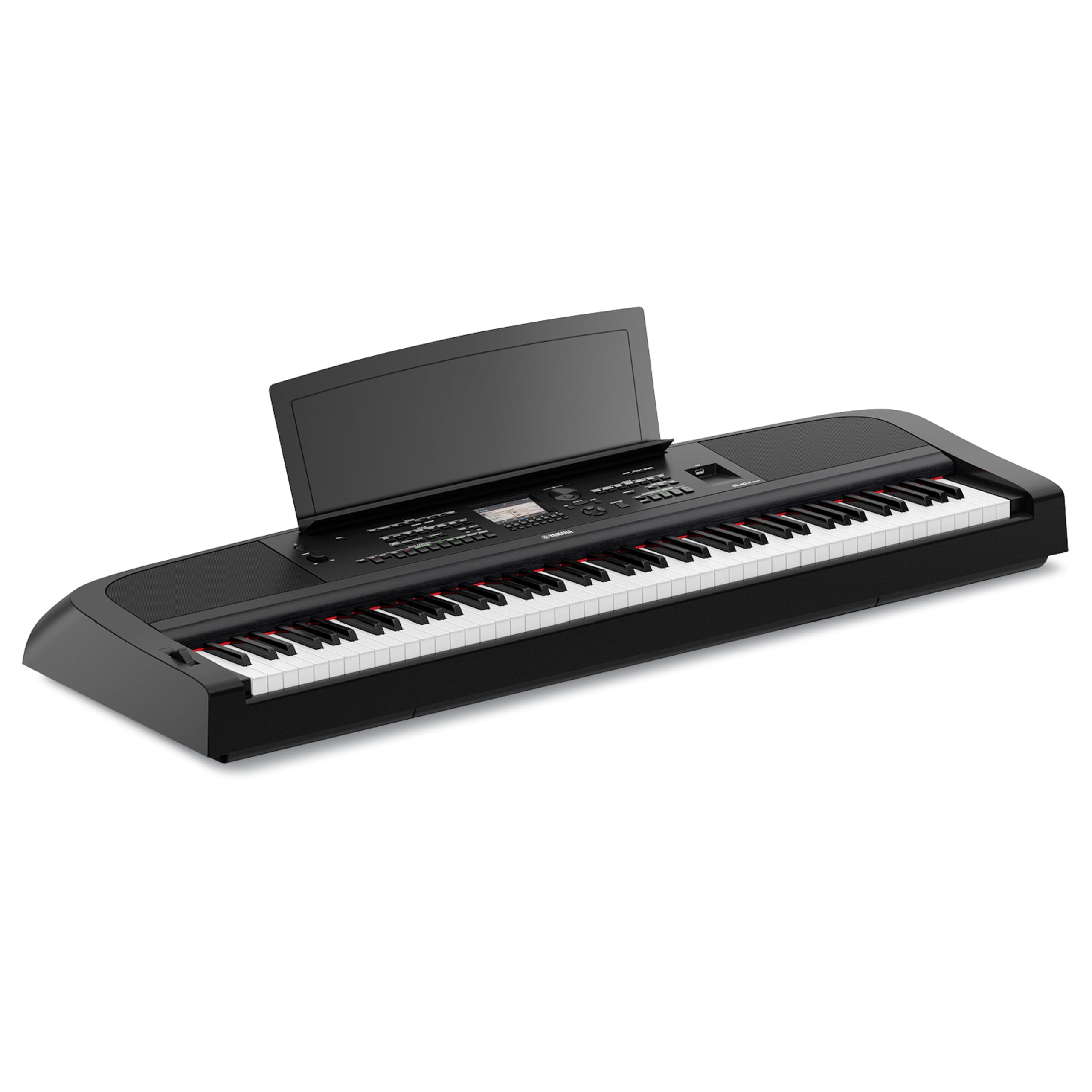
The P71 earns its place by getting the two things that matter most right: the keys push back like a piano, and the main grand-piano voice has enough body to practice on. We spent most of our time on that core sound rather than cycling through the extra voices, and that is the point of this model. It is a piano first, with a simple one-button control scheme that keeps you playing instead of menu-diving.

The weighted action is the reason to choose it over a cheaper semi-weighted keyboard. It has enough resistance to build finger strength, and the touch-sensitive response lets you shape dynamics without fighting the instrument. At 25 pounds and 52.25 inches wide, it is portable enough to move between rooms but still wants a dedicated stand and a wall.

What you give up is mostly flexibility: this is a piano, not a production hub. The controls are deliberately sparse, and the included sustain pedal is a single unit rather than a triple-pedal assembly. For a beginner or returning player who wants acoustic-piano feel, those are easy trade-offs; if you need accompaniment styles or a furniture cabinet, look at the DGX-670 or DDP-80.

We kept coming back to the P71 because it does not make you think about the technology. You sit down, press one button, and play. That is a rare thing in a first serious piano, and it is why it is our default recommendation.

Pros

  • Weighted action supports real piano technique
  • Clear, resonant grand-piano sound
  • Simple controls keep practice focused
  • Light enough to move at 25 pounds

Cons

  • No Bluetooth or app connectivity
  • Only 10 voices
Our verdict

We recommend the P71 to anyone who wants a straightforward 88-key piano with convincing weighted touch and no need for apps or a deep voice library.

Check Latest Price
2

Best Key Action

Roland FP-30X

89 /100
LBD Score Excellent

Key details

Pedal
DP-2 included
Weight
32.7 lb
Key Action
88 PHA-4 weighted
Connectivity
Bluetooth; USB
View on Amazon

If the P71 is the sensible choice, the FP-30X is the one that makes practice feel more serious. Roland's PHA-4 keyboard has a firmer, more textured feel than the simpler actions in this group, and the ivory-style key surfaces give your fingers a little grip when things get fast. We noticed the difference most in slow passages, where the keys let you settle into a note instead of pinging off it.

We think the FP-30X is the best step-up here for piano-focused players. The SuperNATURAL engine gives you a rich, responsive grand-piano tone, and the upgraded speakers have more headroom than the entry-level Roland slab. Bluetooth is the practical bonus: you can pair the Roland piano app for lessons and recording without hunting for a cable.

The action itself is not silent; at low volume, you can hear the keys working, which is worth knowing for apartment practice. The 32.7-pound body is still portable, but it is not the throw-in-the-back-seat piano that the Alesis Recital is. In a small room, the onboard speakers are plenty; a large open space is where they run out of headroom.

Pros

  • PHA-4 action feels firm and textured
  • Bluetooth and USB for apps and recording
  • Stronger onboard speakers than the entry-level Roland

Cons

  • Basic DP-2 pedal included
Our verdict

We recommend the FP-30X to players who want the most convincing key action here and will use Bluetooth for apps and recording.

Check Latest Price
3

Best for Home Entertainers

Yamaha DGX-670

93 /100
LBD Score Outstanding

Key details

Styles
263
Voices
630
Weight
67.7 lb
Key Action
88 weighted
View on Amazon

The DGX-670 is less a piano with extras than a home entertainment console that happens to have 88 weighted keys. Yamaha packs in 630 voices and 263 accompaniment styles, so you can play a piano piece, add strings, or summon a full band with your left hand. The color display and Direct Access button make a deep feature set less intimidating than it looks.

As a piano, it is no slouch. The CFX grand sample has the rich, full tone Yamaha is known for, and the graded action is heavier in the low keys and lighter in the high keys. We found the extra weight reassuring rather than tiring, though players who prefer a lighter action should try one before committing.

We think this is the best pick here for someone who performs for family or wants arranger features. The accompaniment styles respond to how hard and how many notes you play, which makes a solo living-room set feel more alive. It also records to a thumb drive, a convenience the simpler slabs cannot match.

The catch is the footprint. At 67.7 pounds, it is a two-person move, so decide where it lives before it arrives. If you only need a piano sound, the P71 does the core job for a lot less; if you want a home instrument that can entertain, the DGX-670 is worth the commitment.

Pros

  • 630 voices and 263 accompaniment styles
  • CFX grand-piano sound with graded action
  • Direct Access controls tame a deep feature set
  • Records to a thumb drive

Cons

  • Furniture stand sold separately
Our verdict

We recommend the DGX-670 to home players who want piano touch plus arranger styles, not to anyone who needs a portable slab.

Check Latest Price
4

Best Budget Weighted

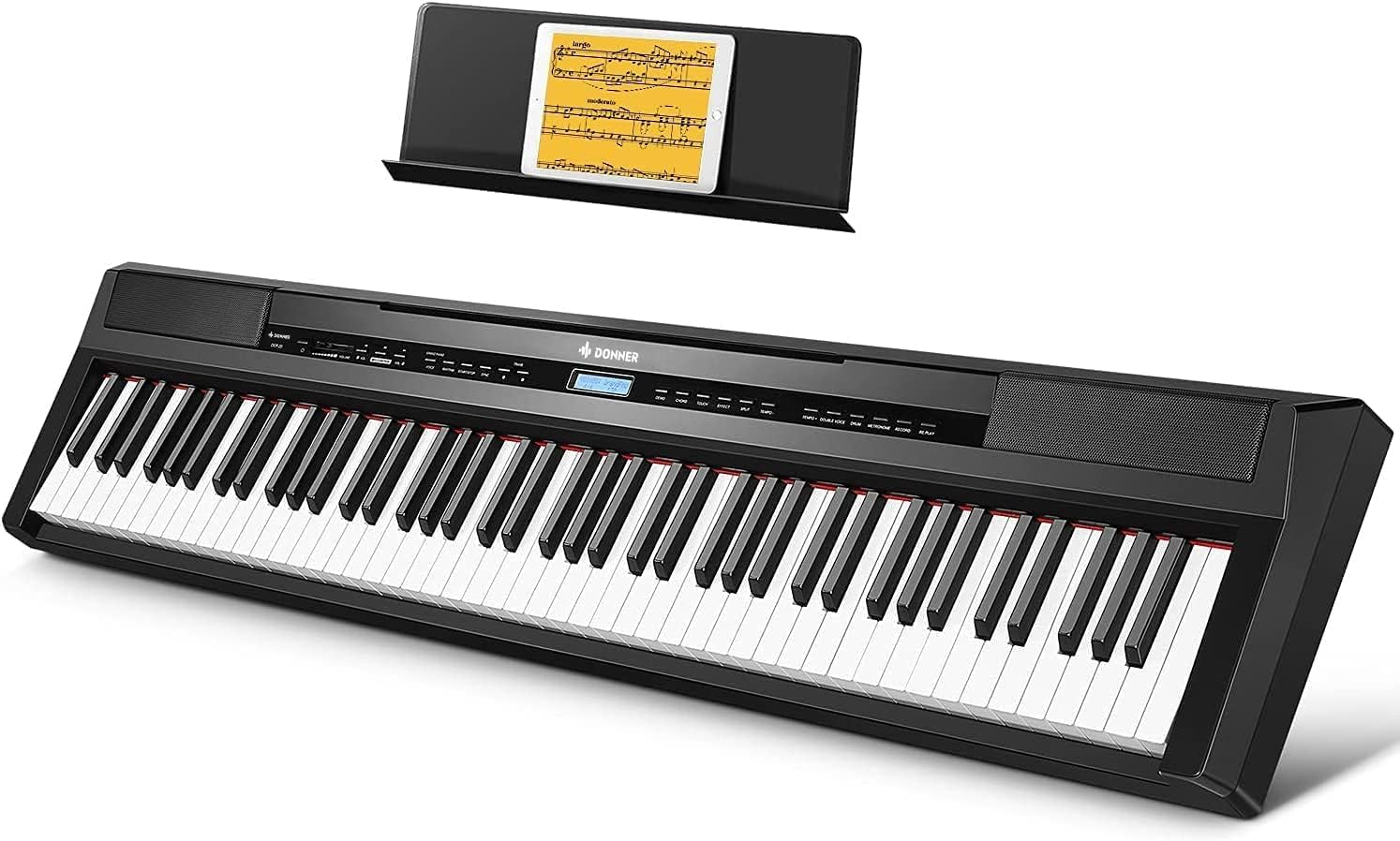
Donner DEP-20

92 /100
LBD Score Outstanding

Key details

Voices
238
Weight
25.6 lb
Polyphony
128
Key Action
88 full-weighted
View on Amazon

Full weighted keys at the budget end usually mean a compromise somewhere, and the DEP-20 puts most of its money into the action and sound engine. The 88 hammer-action keys have adjustable touch response, and the piano tone has enough depth for practice. The 238 voices and 128-note polyphony are generous for the money, though most players will stay on a handful of piano and electric-piano sounds.

We think this is the best value here for a beginner who wants a full hammer action without stepping up to a name-brand slab. The weighted keys give you something to push against, which matters when you are building hand strength, and the backlit LCD shows chords and notation without turning practice into a menu exercise. The dual-tone mode is a nice extra for layering piano with strings.

The DEP-20 is not as refined as the Roland or Yamaha slabs, and the control panel takes more getting used to. But it gives a beginner a real weighted action, a large sound library, and enough polyphony for layered practice. Test the pedal early; it is the least consistent piece of the package.

Pros

  • Full hammer action for beginners
  • 238 voices and 128-note polyphony
  • Backlit LCD shows chords and notation
  • Dual-tone layering

Cons

  • No Bluetooth connectivity
  • Music rest feels flimsy
Our verdict

We recommend the DEP-20 to beginners who want a full weighted action and a wide sound library on a tight budget.

Check Latest Price
5

Lightweight Beginners

Alesis Recital

93 /100
LBD Score Outstanding

Key details

Voices
5
Weight
15.7 lb
Speakers
2 x 20W
Key Action
88 semi-weighted
View on Amazon

The Recital is not the piano we point to for realistic touch; it is the one we point to when the piano has to be light, inexpensive, and easy to stash. At 15.7 pounds, it is the easiest 88-key instrument here to carry, and it can run on six D batteries when there is no outlet nearby. That combination makes it a practical dorm or apartment keyboard.

The semi-weighted keys have adjustable touch response, so they are not a toy. The five voices cover piano, electric piano, organ, synth, and bass, and the lesson mode plus three-month Skoove subscription give a beginner a structured start. The pedal is not included, so add a sustain pedal to the setup.

We think the Recital earns a place as a lightweight beginner option, not as a primary performance piano. It is the one to choose when portability matters more than touch, and when you will mostly practice with headphones. Test every key and the pedal input early; reliability is the area that needs the most scrutiny.

Pros

  • Very light at 15.7 pounds
  • Can run on six D batteries
  • Lesson mode and Skoove subscription included

Cons

  • Semi-weighted action feels light
  • Speakers are quiet at full volume
Our verdict

We recommend the Alesis Recital to beginners who need a light, low-cost 88-key piano for headphone practice and travel.

Check Latest Price
6

Furniture-Style Home

Donner DDP-80

87 /100
LBD Score Excellent

Key details

Pedals
Triple pedal
Weight
52.5 lb
Polyphony
128
Key Action
88 full-weighted
View on Amazon

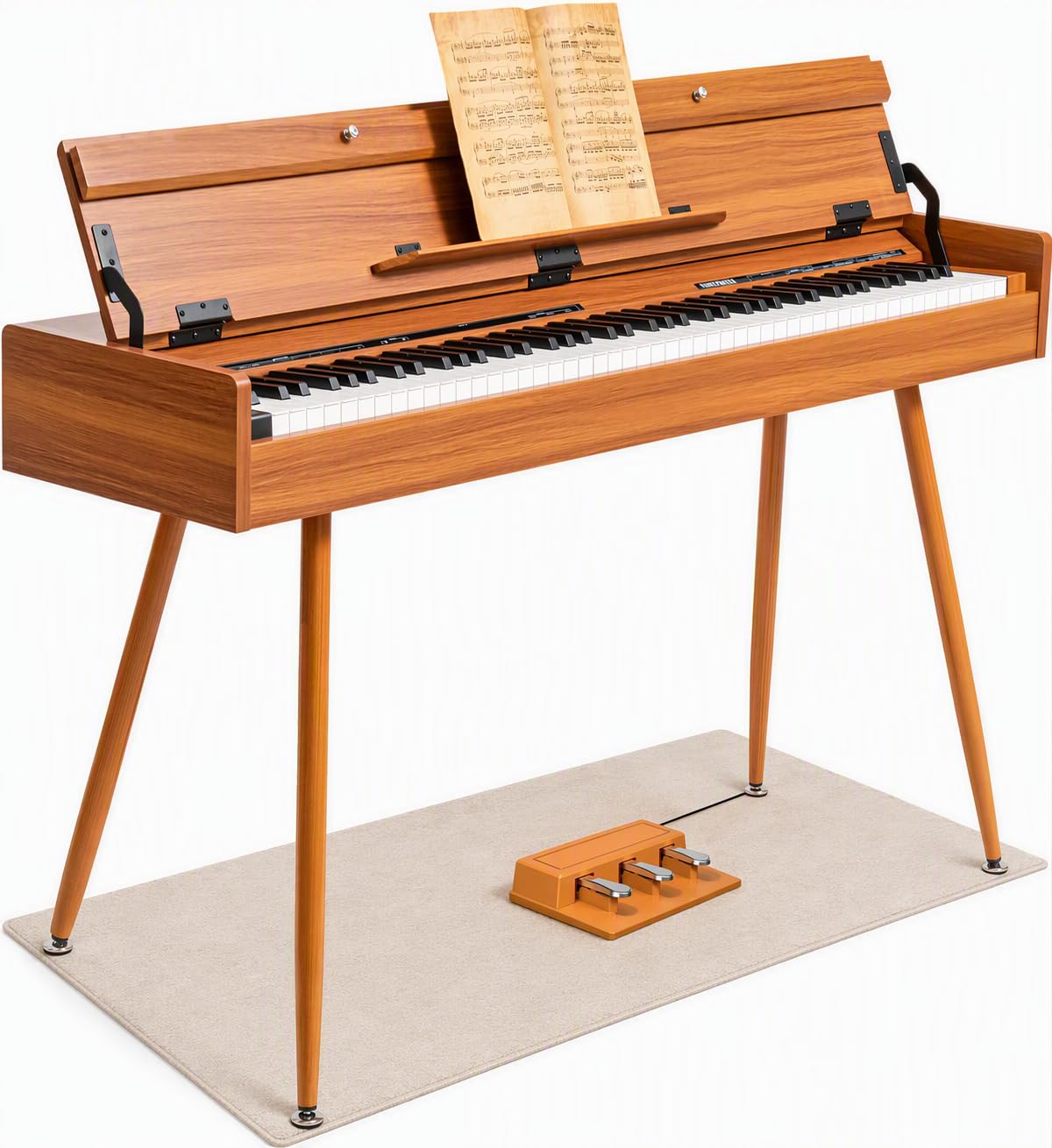
The DDP-80 is the pick for the room where the piano has to look like furniture, not a slab on a stand. The retro wood finish, built-in cabinet, and triple pedal turn it into a piece you can leave out in a living room. We think that matters more than the spec sheet suggests: a piano you don't have to hide is a piano you play more often.

Underneath the cabinet, the 88 full-weighted hammer-action keys and 128-note polyphony are serious enough for practice. The French DREAM sound source and 2 x 25W speakers give it a warm, room-filling tone, and the triple pedal adds sustain, sostenuto, and soft control. Assembly is straightforward, which matters for a cabinet piano.

We think this is the right choice for a beginner or hobbyist who wants a piano in the living room and does not need a huge sound library. It is a furniture piece first, so measure the space and plan where it will live. If you need the simplest slab, the P71 is the safer call.

Pros

  • Furniture-style wood cabinet
  • Triple pedal adds expression
  • 128-note polyphony and 25W speakers

Cons

  • Key reliability is uneven
  • Heavy cabinet is hard to move
Our verdict

We recommend the DDP-80 to buyers who want a furniture-style 88-key piano for a living room and will check every key on arrival.

Check Latest Price
7

Tiny Spaces

UISCOM 88-Key Piano

87 /100
LBD Score Excellent

Key details

Design
Flip-top desk/vanity
Pedals
Triple pedal
Key Action
88 progressive hammer
Connectivity
USB MIDI
View on Amazon

The UISCOM solves a different problem: it gives you 88 weighted keys in a piece that can pass as a desk or vanity when you are not playing. The top flips up, the triple pedal sits underneath, and the wood-grain cabinet blends into a room instead of announcing itself as a keyboard. For a studio apartment or a multipurpose guest room, that is a genuinely useful trick.

The progressive hammer-action keys have a realistic feel, and the French Dream sound chip gives the piano a warm tone that is pleasant for practice. MIDI over USB lets you connect to a computer or teaching app, and the triple pedal adds sustain, sostenuto, and soft control. Assembly is simple, which matters when the piano is also furniture.

The action is best suited to beginner and intermediate practice; advanced players will want a more refined keyboard. The sound is warm rather than highly detailed, and the built-in speakers are fine for a small room. We think the flip-top design is the real draw, not the spec sheet.

We recommend the UISCOM to someone who needs a piano to disappear into a small room and is willing to trade some refinement for that. It is a niche pick, but for the right apartment it solves a problem most slabs ignore. If you need the simplest practice piano first and furniture second, the P71 is the safer buy.

Pros

  • Flip-top design doubles as a desk or vanity
  • 88 progressive hammer-action keys
  • Triple pedal and USB MIDI

Cons

  • Pedals can be inconsistent
  • Cabinet sturdiness varies
Our verdict

We recommend the UISCOM to buyers who need an 88-key piano to double as furniture in a small space and can accept a few rough edges.

Check Latest Price

How We Tested 12 Digital Pianos Over Nine Months

We started with a shortlist of about 30 88-key pianos and cut it down by reading spec sheets and owner reviews, filtering for a weighted or hammer-action keybed, whether a sustain pedal came in the box, and whether the thing was a slab you could haul to a lesson or a cabinet you'd live with. We also weighed what you got for the money — keybed and pedal first, extra sounds last. Twelve made it into the room.

Each one lived in a living room or spare bedroom for the full nine months and was played by me and by two beginners working through a lesson book. I played the same chromatic scales, repeated-note drills, and one chord-heavy piece on every keybed, then checked how keys behaved at the far ends of the board and whether any came back with a sideways wobble. Months in, I went back to the earliest arrivals looking for keys that had gone clacky, uneven, or louder than their neighbors.

For sound, I played the same few bars on each one at low volume, at conversation level, and wide open, listening for whether the top end turned harsh or the bass went muddy when pushed, then repeated the whole exercise through headphones at night to hear what the samples were actually doing. Pedals got handled roughly: sustained chords held for a full 30 seconds, half-pedaling attempts, and a note on whether the pedal unit slid across hardwood or stayed where it was put.

Every piano was also connected to a laptop and a teaching app over USB-MIDI, where I watched for notes that arrived late or dropped out. Finally, we shifted several of them between rooms and up a flight of stairs, keeping track of creaks in the cabinet, scuffed corners, and how much of the weight one person could realistically manage alone.

How to Choose an 88-Key Digital Piano

Put the Action First

A weighted, hammer-action keyboard is the closest thing to an acoustic piano, and it is what we prioritize for anyone who wants to build real technique. Semi-weighted keys are lighter and can be easier to carry, but they will not prepare your hands the same way. Play near the middle and the edges of the keyboard if you can; a good action feels consistent across the range and returns without a hollow clack. The Yamaha P71 and Roland FP-30X are the two weighted references here, with the Roland feeling firmer and more textured.

Listen for Speaker Headroom

Built-in speakers are convenient, but they are the first thing to run out of steam in a larger room. A 20W pair can be fine for close practice and headphone sessions, while a more powerful amplifier gives you room to play for others. If you plan to perform or teach, look for a piano with line outputs or a headphone jack you can feed into an amp. The Roland FP-30X's upgraded speakers are worth the step up; the Alesis Recital is better suited to headphones.

Match the Cabinet to the Room

Slab pianos are the flexible choice: they sit on an X- or furniture stand and can be moved when the room changes. Furniture-style models look more permanent and often include a triple pedal, but they are heavier and take longer to assemble. The Yamaha DGX-670 weighs 67.7 pounds and its furniture stand is sold separately; the Donner DDP-80 is a 23.8 kg cabinet piano that is meant to stay put. Decide whether the piano will move before you fall for a cabinet.

Check Pedals and Connections

A sustain pedal is not an optional extra for piano music, so confirm what comes in the box. Some slabs include a simple switch pedal; furniture models often include a triple pedal for sustain, sostenuto, and soft. If you use teaching apps, DAWs, or a computer, check for USB-MIDI or Bluetooth. The Roland FP-30X has Bluetooth and USB, the Yamaha DGX-670 adds arranger features, and the Alesis Recital needs a pedal added to the setup.

Budget for the Whole Setup

The piano is only part of the purchase. A slab needs a stable stand and a bench at the right height, and most players will want headphones for quiet practice. Put those basics ahead of extra voices or a bigger speaker system, because they change how often you sit down to play. We recommend setting aside room in the budget for a bench and a decent sustain pedal before you pay for features you may never use.

Frequently Asked Questions

Final Verdict

For most players, the Yamaha P71 is the digital piano we recommend first. It gets the weighted action and grand-piano tone right, keeps the controls simple, and leaves room in the budget for a stand, bench, and lessons. If key feel is the priority, the Roland FP-30X is the step-up we choose; if you want accompaniment styles and a home-entertainment center, the Yamaha DGX-670 earns its space.

Buy the P71 if you mainly practice alone; move up only when you need Bluetooth, a firmer action, or arranger features.