Best Digital Pianos for Kids of 2026

A kids' keyboard is usually one of two things: a plastic toy with 25 keys that sounds like a doorbell, or a real instrument a seven-year-old can't comfortably reach around. The good ones live in the gap between, and what you're buying isn't keys and voices — it's the chance the thing is still being played in March.

I've had 12 of them in my house and my team's over the past six months, from palm-sized toys to full 88-key boards. Two things surprise first-time buyers: key count matters more than tone count, since a 25-key toy can't play a two-handed piece, while 61 keys carries a kid through a couple of years of lessons. And the headphone jack is the most underrated thing on the box — it's the difference between practice happening and not happening after bedtime.

Weighted keys are worth it for an older kid headed toward an acoustic piano, but the action is heavy for small hands; a touch-sensitive 61-key is often the better call at five. Below are the ones we'd buy again, and who each of them suits.

1

Best Overall

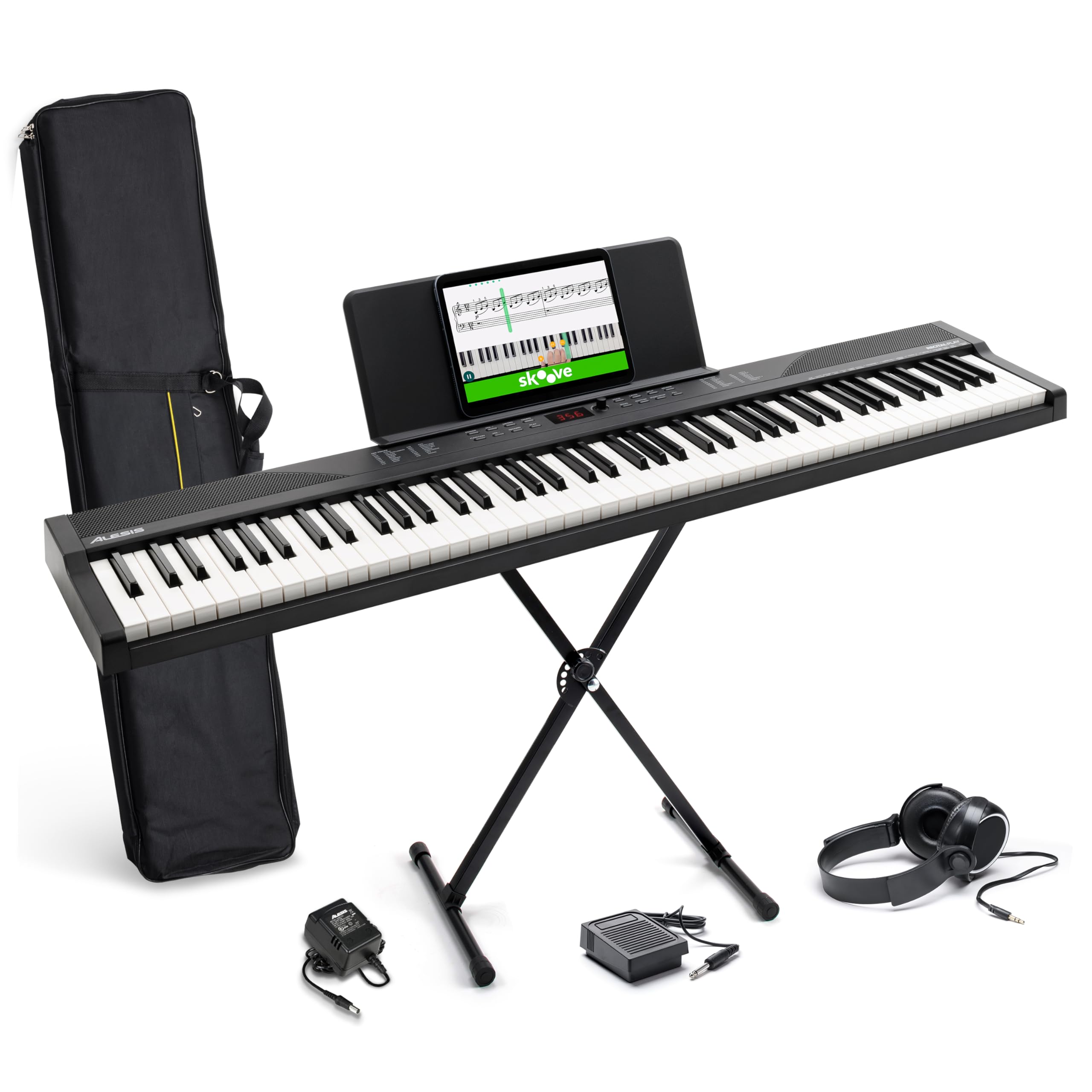
Alesis Recital Play 88-Key Bundle

92 /100
LBD Score Outstanding

Key details

Key Action
Touch-sensitive, full-size
Number Of Keys
88
Learning Support
Split, lesson, and record modes; Skoove and Melodics lessons
Included Accessories
Stand, sustain pedal, headphones, carry bag, music stand
View on Amazon

The Recital Play is the bundle we recommend first because it removes the usual first-piano shopping list. You get 88 full-size touch-sensitive keys, a stand, sustain pedal, headphones, carry bag, and music stand in one box. That matters for a child: the keyboard can go from the living room to a lesson and back without a separate stand or a second trip to the store. The keys are full-size and touch-sensitive, which is the more important starting point for most young beginners.

The 88-key range is the other reason it earns the top spot. A child can start with five-finger pieces and stay on the same instrument as hands and repertoire grow. The built-in lesson, split, and record modes give a beginner something to do beyond scales, and the included Skoove and Melodics lessons are a useful nudge for families who are not ready to commit to a teacher. At 5.5 kg, it is light enough for an adult to move and for an older child to help set up.

If your child is already practicing seriously and you want weighted action, the Yamaha P71 is the better instrument. The carry bag is the detail that makes the Recital Play useful for lessons: the keyboard can leave the house without being treated like furniture.

Pros

  • Complete 88-key setup with stand and headphones
  • Full-size touch-sensitive keys suit beginners
  • Light enough to move between rooms
  • Lessons and practice modes included

Cons

  • Keys are not weighted
Our verdict

For most families, this is the kids' piano we point to first: 88 full-size touch-sensitive keys, a complete stand-and-headphones bundle, and a build light enough to move around.

Check Latest Price
2

Best for Real Piano Feel

Yamaha P71 88-Key Digital Piano

95 /100
LBD Score Outstanding

Key details

Weight
25 lb
Key Action
Weighted, touch-sensitive
Number Of Keys
88
Included Accessories
Sustain pedal, power supply, music rest
View on Amazon

The P71 is the one we choose when piano feel is the priority. Its 88 keys are weighted and touch-sensitive, so a child learns to control volume with finger pressure rather than a volume knob. The sound is built around a Yamaha grand piano voice, and the simple one-button layout keeps a beginner from disappearing into menus. That focus is the point: fewer distractions, a more acoustic-like response.

The trade-off is that this is a piano first and a keyboard second. The 10 voices and dual mode are there when they want them, but most of the time a child will use the piano sound. We think that is a fair exchange for an action that will not need replacing when they start playing harder repertoire. The included sustain pedal means they can practice pedaling from the start, and the 3.5mm headphone jack keeps the house quiet.

If your child needs a keyboard that moves between rooms, the Casio CT-S300 is easier to live with. The P71 is for the family that has a corner for a piano and wants the most realistic action in this group. It asks a little more finger strength from the first lesson, and that is exactly why we keep it in the serious-beginner slot.

Pros

  • Weighted 88-key action builds proper technique
  • Grand piano sound and focused controls
  • Sustain pedal included for proper practice

Cons

  • Heavy at 25 pounds; no stand included
Our verdict

The P71 is the one we choose when a child is serious about piano: weighted 88-key action, a focused piano sound, and a sustain pedal for proper practice.

Check Latest Price
3

Best Portable

Casio Casiotone CT-S300

93 /100
LBD Score Outstanding

Key details

Power
6 AA batteries or AC adapter
Weight
10.9 lb
Key Action
Touch-sensitive, full-size
Number Of Keys
61
View on Amazon

Portability is the CT-S300's best argument. It has a built-in carry handle and runs on six AA batteries, so it can move from the bedroom to the kitchen table or a grandparent's house without hunting for an outlet. The 61 full-size keys are touch-sensitive, which gives a beginner room to learn dynamics, and the 400 tones and 77 rhythms are more than most kids will exhaust. We like that it does not feel like a toy: the keys are standard size, and the controls are laid out for actual playing.

The smaller cabinet is easier to fit into a shared room, and the Casio Music Space app adds lessons and MIDI file playback if your child learns well with a screen. The built-in speakers are fine for practice, and the headphone jack makes quiet practice easy. The layout is simple enough that a child can turn it on and choose a piano sound without a parent.

The option to power it from an adapter at home is another small convenience, and the battery compartment makes lessons away from a desk possible. It is the one we take when the piano has to share a room with everything else.

Pros

  • Battery power and carry handle
  • 61 touch-sensitive full-size keys
  • 400 tones and 77 rhythms
  • Headphone jack for quiet practice

Cons

  • 61 keys limit advanced repertoire
  • Sound can be thin
Our verdict

We like the CT-S300 for families who need a piano that travels: battery power, a carry handle, and 61 touch-sensitive keys in a compact frame.

Check Latest Price
4

Best Compact Bundle

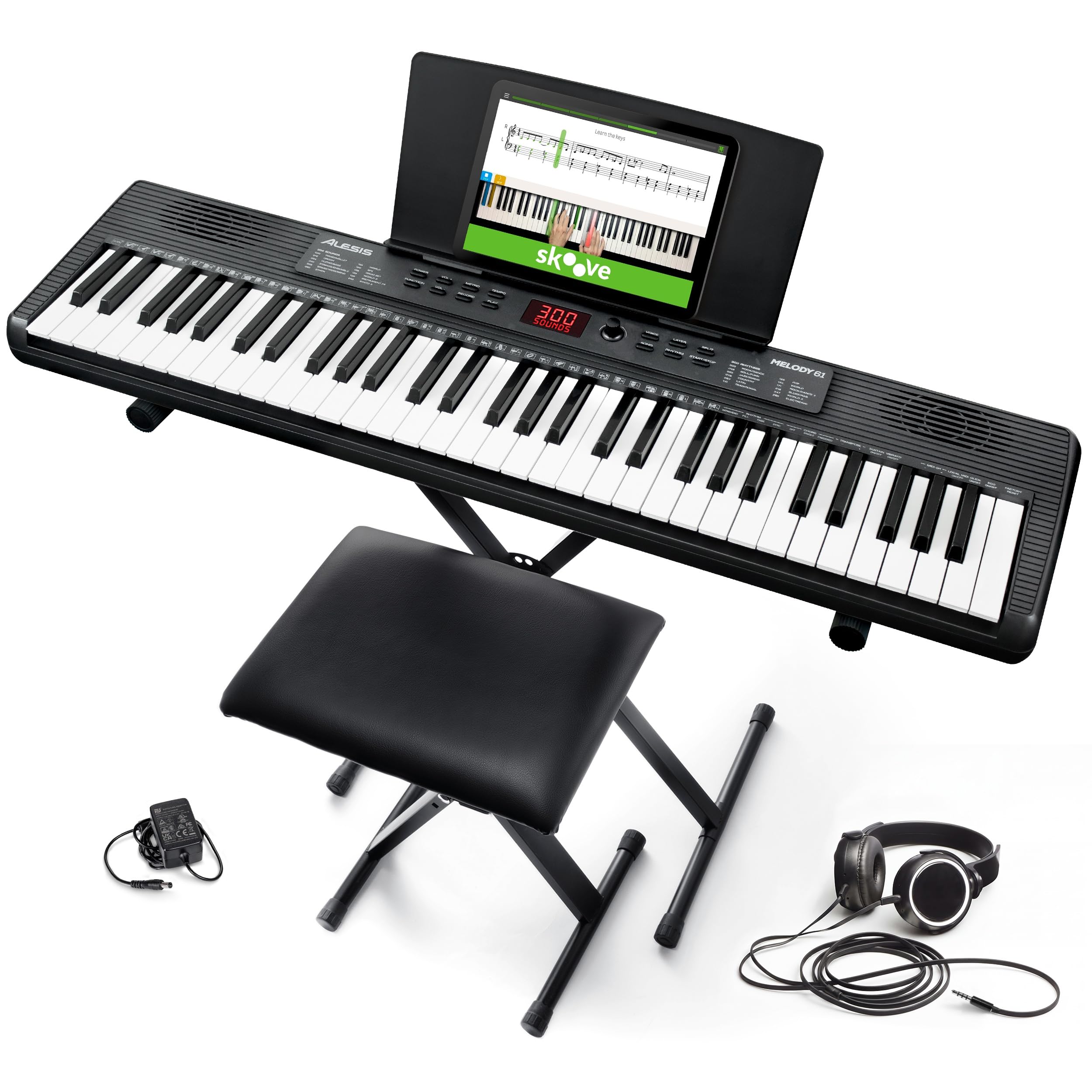
Alesis Melody 61-Key Keyboard

87 /100
LBD Score Excellent

Key details

Weight
6.6 lb
Key Action
Full-size
Number Of Keys
61
Included Accessories
Stand, bench, headphones, music rest, power adapter
View on Amazon

The Melody 61 is the bundle we point to when space is tight but you still want a real keyboard under your child's hands. The 61 keys are standard size, not mini keys, so a beginner learns the same hand shape they will use on a piano. At 6.6 pounds, the keyboard is light enough to lift onto the stand without help, and the bundle includes the stand, bench, headphones, music rest, and power adapter.

The sound set is generous for a starter keyboard, with 300 tones and 300 rhythms, plus Skoove and Melodics lessons. We do not treat the extra voices as the main event; a child needs a piano sound and a clear action first. The built-in speakers are fine for a bedroom, and the layout is simple enough that a child can turn it on and choose a piano sound without a parent.

What makes it a runner-up is the balance of size and completeness. It is smaller than an 88-key piano and easier to fit beside a bed or desk, and the included stand and bench mean there is no extra furniture to buy. The standard-size keys are the detail that matters most: a child can move to a teacher's piano without relearning the keyboard. The headphone jack is the detail that makes it livable in a small house: practice can happen while someone else is watching TV.

Pros

  • Standard-size keys in a compact frame
  • Complete bundle with stand and headphones
  • Light enough to move easily
  • Lessons and 300 sounds included

Cons

  • Keys are not weighted
Our verdict

This is the compact bundle we suggest for a small bedroom: standard-size keys, a stand, bench, and headphones, and a light build that is easy to move.

Check Latest Price
5

Budget Starter Kit

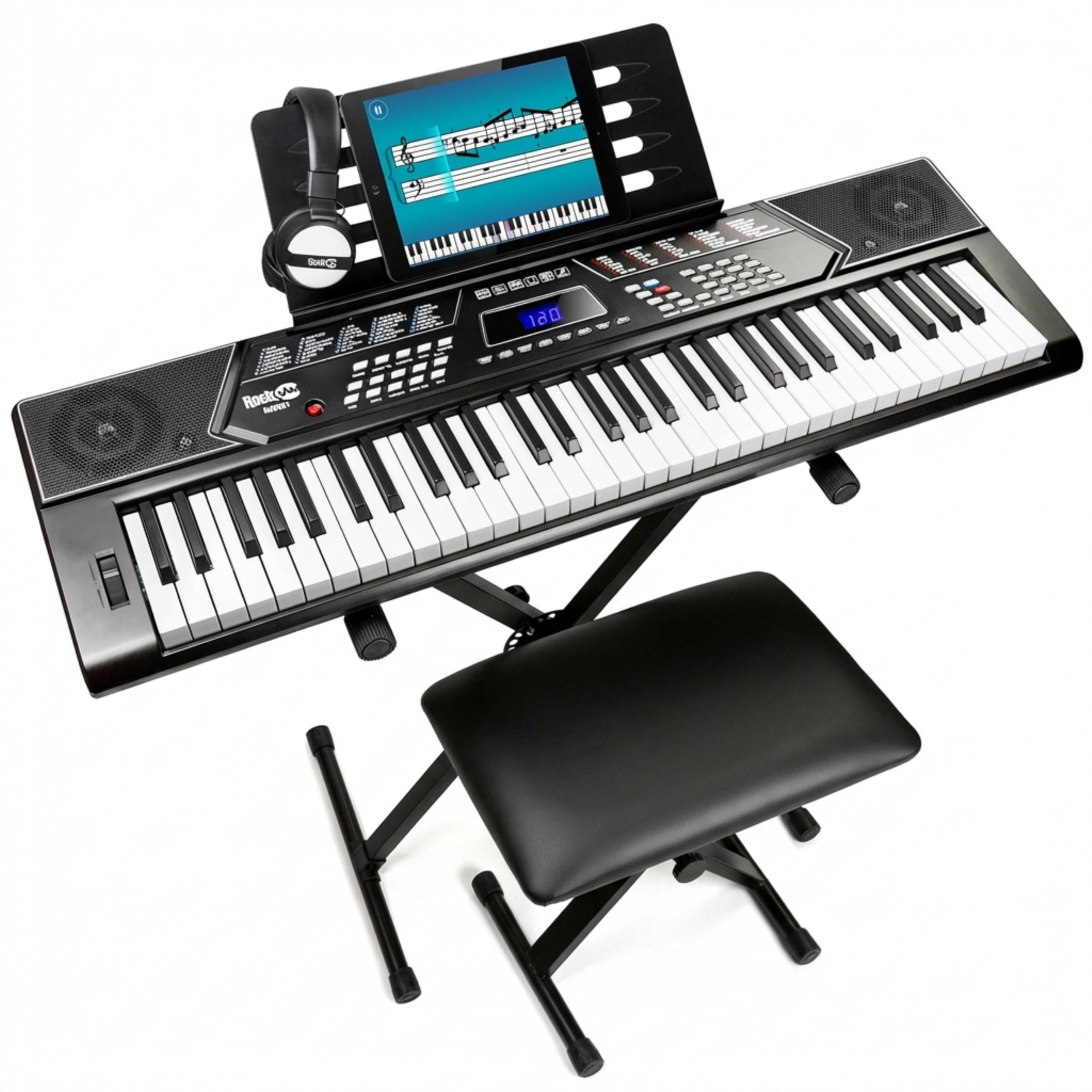
RockJam RJ5061 61-Key Kit

91 /100
LBD Score Outstanding

Key details

Weight
7.28 lb
Key Action
Full-size
Number Of Keys
61
Included Accessories
Stand, bench, headphones, note stickers
View on Amazon

The first thing to check on the RJ5061 is the stand. The keyboard itself is a 61-key, full-size instrument with a pitch bend wheel, 200 tones, 200 rhythms, and a headphone jack, and the kit adds a bench, headphones, and note stickers. The stand is the weak link: it can wobble, especially when a child leans on the keyboard. Plan to set it on a desk or budget for a sturdier stand if this is going in a young child's room.

As a first instrument, the RJ5061 covers the basics. The keys are full-size, the layout is simple, and the included stickers and Simply Piano lessons give a beginner a path in. The rhythms and extra tones keep a child engaged. The headphone jack is a real convenience in a shared house.

The bigger concern is reliability. Some units develop dead keys or stop working, and the included headphones are not the reason to buy the kit. That is the risk with a low-cost keyboard: the first few months tell you whether you got a good one. The keyboard itself is simple enough for a beginner to use without help.

We see the RJ5061 as a low-cost way to find out whether a child will stick with piano before spending more on a weighted instrument. The note stickers do more for early progress than the extra rhythms, and the pitch bend wheel is a fun extra for a child who likes to mess with sounds. If you want a kit that feels more solid out of the box, the Alesis Melody 61 is the better small-room bundle.

Pros

  • Complete kit with stand, bench, and headphones
  • Full-size 61 keys and pitch bend
  • Simple setup for beginners

Cons

  • Sound can be thin
  • 61 keys limit advanced repertoire
Our verdict

The RJ5061 is a low-cost way to test a child's interest, but we treat the included stand as a placeholder and watch the keys closely.

Check Latest Price
6

Toddlers

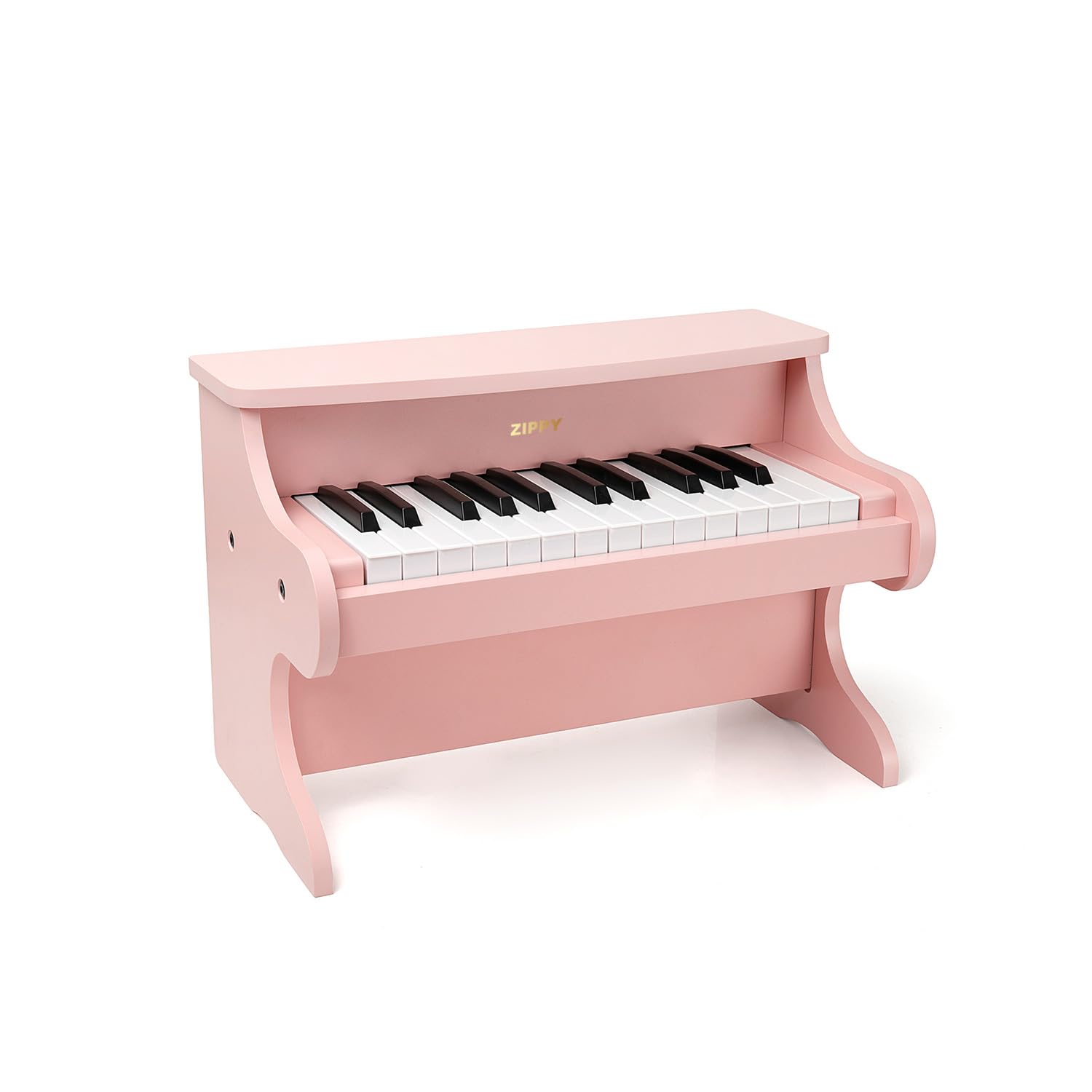
ZIPPY 25-Key Kids Piano

91 /100
LBD Score Outstanding

Key details

Material
MDF
Number Of Keys
25
Recommended Age
3 years and up
Included Accessories
Songbook, color-coded key stickers, assembly kit
View on Amazon

The ZIPPY is a toy piano in the best sense: a small wooden upright with 25 keys, two octaves, and a look that makes a toddler want to sit down and play. It arrives with a color-illustrated songbook and color-coded stickers, so a parent can turn a random banging session into a simple matching game. The MDF cabinet feels more substantial than the plastic keyboards at this size, and the assembly is straightforward.

It works best as a first instrument for a 3- or 4-year-old. The sound is good for a toy, the build is sturdy enough for daily play, and the songbook gives it a longer life than a pure noise toy. A child can sit on the floor and reach the keys, which is not true of every mini piano.

If your child is already comfortable with standard-size keys and wants to learn real pieces, the Alesis Melody 61 is the better next step. The ZIPPY is for the stage before lessons, when the goal is familiarity and fun rather than technique. We appreciate that the 25 keys are spread over two octaves, which is enough for nursery songs and for a child to hear high and low without a wall of keys.

Pros

  • Wooden upright design looks like a real piano
  • Good sound and sturdy build for a toy
  • Songbook and color-coded stickers included

Cons

  • No volume control for quiet hours
  • 25 keys limit formal lessons
Our verdict

Our pick for a toddler's first piano is the ZIPPY: a wooden 25-key upright with good sound, a songbook, and a build that takes daily play.

Check Latest Price

How We Tested a Dozen Kids' Pianos

We started with every current model we could find between budget toy keyboards and entry-level 88-key pianos, then cut anything without touch-sensitive keys, a headphone jack, or the option of a stand. That left 12 units, from a 25-key toddler toy up to two full-size weighted boards.

Those 12 lived in our homes for six months — on kitchen counters, in bedroom corners, beside the couch — played by kids aged four to eleven, most of them beginners, after school, before dinner, and on weekend mornings with headphones on so the rest of the house could sleep. We pressed every key hard to listen for rattles, leaned on each stand to see whether it swayed, and pushed keys down slowly to feel whether the action pushed back or just clicked.

For sound, we played the same short pieces on each unit and recorded them through a phone mic to compare tone side by side, then pushed the volume to its loudest and quietest to hear where it distorted or faded out. We kept notes on what wore down — dead keys, scratchy sliders, a pedal that slid across the floor — and counted what actually came in the box, since a bundled stand and bench changes what a starter kit really costs.

How to Choose a Digital Piano for a Child

Start with the key action

We put touch-sensitive, full-size keys ahead of a long list of voices. A child who learns on unweighted mini keys will have to relearn hand shape and dynamics later. Touch-sensitive keys respond to how hard they are pressed, which is the beginning of musical control. Weighted action, like the Yamaha P71, goes further and builds finger strength closer to an acoustic piano, but it costs more and makes the keyboard heavier. For most beginners, full-size touch-sensitive keys are the sensible minimum.

Choose the key count for the next few years

An 88-key piano covers the full range a child will eventually need, and it is the safer choice if you want one instrument to last through lessons. A 61-key keyboard like the Alesis Melody 61 or Casio CT-S300 takes up less width and is easier to fit in a shared room, but some classical pieces will run out of keys. For a toddler, a 25-key toy like the ZIPPY is a first introduction, not a practice instrument. Match the key count to the next two or three years, not to a passing phase.

Plan for quiet practice and a complete setup

A keyboard in the middle of the house gets played more when a child can use headphones without feeling isolated. A stand, bench, and sustain pedal also matter more than most extra voices: they put the instrument at the right height and let a beginner practice pedaling. Bundles save time and usually cost less than buying the pieces separately, but check the stand. A wobbly stand is the weak point in several budget kits, including the RockJam RJ5061, so plan to use a desk or replace it if your child leans on the keyboard.

Check the build and the warranty before you buy

Kid-sized gear takes a beating, and the most common long-term problem in this category is not sound but reliability: dead keys, crackling speakers, or a keyboard that stops turning on. Look for a manufacturer with a published warranty and a retailer with an easy return window. A one-year warranty is more useful than a long list of tones if something fails in month four. We treat a kids' keyboard as a first instrument, not a disposable toy, and the support behind it should match that.

Match the piano to your child's age and attention span

A 3- or 4-year-old needs a sturdy, simple instrument that rewards exploration; a 7- or 8-year-old who has started lessons needs standard-size keys and enough range to follow a method book. Light-up keys and teaching modes can help a young beginner follow a song, but they are not a substitute for key size or a responsive action. Sit with your child for the first few sessions, then let the instrument be available rather than mandatory. The best piano is the one they can reach and turn on themselves.

Frequently Asked Questions

Final Verdict

For most families, the Alesis Recital Play is the piano we recommend first. It gives a child 88 full-size touch-sensitive keys, a stand, pedal, headphones, and lessons in one package, and it is light enough to move when the room changes. If your child is already serious about technique, the Yamaha P71's weighted action is worth the extra weight and setup. If the piano has to travel, the Casio CT-S300 is the easier choice. Start with the one that fits your space and your child's attention span, not the longest feature list.