Best Chest Strap Heart Rate Monitors of 2026

Your watch says 148 beats per minute. Your legs are filing a complaint. That gap — between what a wrist sensor estimates through skin, sweat, and arm swing, and what your heart is actually doing — is why a chest strap still earns its spot in a gear bag. Instead of guessing from blood flow at the wrist, it picks up the electrical signal of each beat, so interval sessions, tempo blocks, and easy aerobic days all get numbers you can train off instead of argue with.

I've worn 12 chest straps over the past six months, through treadmill intervals, indoor trainer sessions, and cold-weather long runs, and the pattern that surprised me most is that the strap usually fails before the pod does. A stretched or dried-out band gives you the flatlines and wild spikes people blame on the sensor, so band fit and comfort deserve as much attention as the electronics. The other thing worth knowing: nearly every strap now talks to both Bluetooth and ANT+ devices, but how many it can hold at once — watch, phone, and gym equipment together — is where cheap ones quietly fall apart.

Comfort matters more than it sounds like it should, since a strap you dread clipping on is a strap that stays in the drawer. Below are the ones we'd actually keep wearing.

1

Best Overall

Garmin HRM 200

86 /100
LBD Score Excellent

Key details

Data
Heart rate and HRV
Battery
Up to 1 year, user-replaceable
Strap Sizes
XS–S and M–XL
Water Rating
3 ATM
View on Amazon

The strap we point most people toward is also the least dramatic one here. The HRM 200 costs less than the premium straps on this page and more than the budget ones, and what the difference buys is everything you stop noticing: a coin cell rated at a year, a 3 ATM water rating, and a band that unclips from the pod and goes in the washing machine.

Wearing it is a non-event, which is the highest compliment a chest strap can get. Two strap sizes — XS–S and M–XL — rather than the single band most of this group ships with means a narrow ribcage is not stuck shortening an elastic cut for a linebacker. Readings held their line as effort climbed instead of drifting, and pairing finished before we had the strap sitting where we wanted it. Of everything here, this is the one we stopped thinking about mid-run.

Garmin aimed the compatibility list at its own hardware: watches, Edge computers, gym equipment, plus phone apps. For most runners and riders that covers the whole setup. If your head unit is a Wahoo and your watch is a Coros, the TRACKR below is the friendlier buy; on a Garmin watch, this is connected by the time you have tightened the band.

Two things to know before you order. There is no running dynamics and no watch-free recording — that is the HRM 600's job — so if you want ground contact time or a stored session from a match, this is not the strap. And check the cell on day one: a strap that shows up flat is a return in week one rather than a mystery in week six.

Pros

  • Pairs quickly and holds the connection
  • Two strap sizes instead of one
  • A year per coin cell, no charging
  • Band comes off and goes in the wash

Cons

  • No running dynamics or watch-free recording
  • Costs more than the budget straps here
Our verdict

We recommend it to almost everyone: a year of battery, two strap sizes, a washable band, and readings that hold steady when you push. It is the least fussy strap here.

Check Latest Price
2

Best for Training Data

Garmin HRM 600

89 /100
LBD Score Excellent

Key details

Data
Heart rate, HRV, running dynamics
Extras
Watch-free workout recording
Battery
Rechargeable, cable included
Strap Sizes
XS–S and M–XL
View on Amazon

Two things separate the HRM 600 from everything else on this page, and accuracy is not one of them. It records a session on its own when a watch cannot come along — a match, a swim, a circuit where a wrist device is in the way — and syncs the file afterwards. It also charges from a cable instead of a coin cell, which removes a purchase and adds a habit.

What the premium actually pays for is data. Garmin adds running dynamics: stride length, vertical oscillation, ground contact time, and step speed loss, plus daily step and calorie tracking that syncs to Connect. If you read those numbers and change your form because of them, we think the money is well spent — that is coaching you cannot get from a bare heart rate line. If you want a pulse on your watch face, it is not, and the HRM 200 does the same core job for a lot less.

The friction sits in the small parts. The pod snaps onto rivets, and pulling it off to charge is where this strap fights back; when it sticks, it sticks hard enough to make you nervous about the band. Bluetooth pairing to a phone has been less sure-footed than pairing to a Garmin watch, and Garmin rates the rechargeable cell in months rather than the year a coin cell gives, so it joins the pile of things you plug in.

Pros

  • Records workouts with no watch in range
  • Running dynamics and daily metrics
  • Rechargeable, no coin cells to buy
  • Two strap sizes and a washable band

Cons

  • Pod rivets can be stiff to detach
  • Phone Bluetooth pairing can take a few tries
Our verdict

Buy it if you will use the data. Running dynamics plus watch-free recording justify the premium for form-focused runners; everyone else gets the same heart rate from the HRM 200.

Check Latest Price
3

Best for Multi-Device Setups

Wahoo TRACKR Heart Rate

83 /100
LBD Score Excellent

Key details

Strap
One size
Battery
Rechargeable
Connections
ANT+ and Bluetooth, 3 Bluetooth at once
Water Rating
IPX7
View on Amazon

Three simultaneous Bluetooth connections is the number that decides this one. Add ANT+, and the TRACKR feeds a trainer app, a phone log, and a watch at the same time without making you choose — which is exactly the tangle of an indoor Saturday. If your setup is one watch and nothing else, you are paying for headroom you will not use.

The band is slim and soft and holds the pod flat against the sternum, which is why it stays put through hard efforts rather than creeping. It is one size, though, and it runs snug: at full extension there is not much band left for a broad chest, and a smaller frame will have tail to tuck away. The pod charges by cable, and the LEDs tell you it is awake, paired, and charged — trivial until you are in a cold garage wondering why the trainer shows nothing.

The thing to watch is charging. A TRACKR that stops taking a charge is this strap's failure mode, and it tends to happen early, so put a handful of sessions on it inside the return window. Readings have otherwise been solid in our use, with the odd session that needed a restart before the numbers settled. That is a fair trade for the connection count.

Pros

  • Three Bluetooth links plus ANT+ at once
  • Slim band that stays put under effort
  • LEDs confirm pairing and battery
  • Rechargeable, no coin cells

Cons

  • One-size band runs snug
  • Charging failure shows up early on some units
Our verdict

Our pick when one chest has to feed a trainer, a phone, and a watch at once. Three Bluetooth links plus ANT+ do the work without you juggling.

Check Latest Price
4

Best Value

Coospo H6

82 /100
LBD Score Excellent

Key details

Battery
300 hours, replaceable
Connections
Bluetooth and ANT+
Water Rating
IP67
View on Amazon

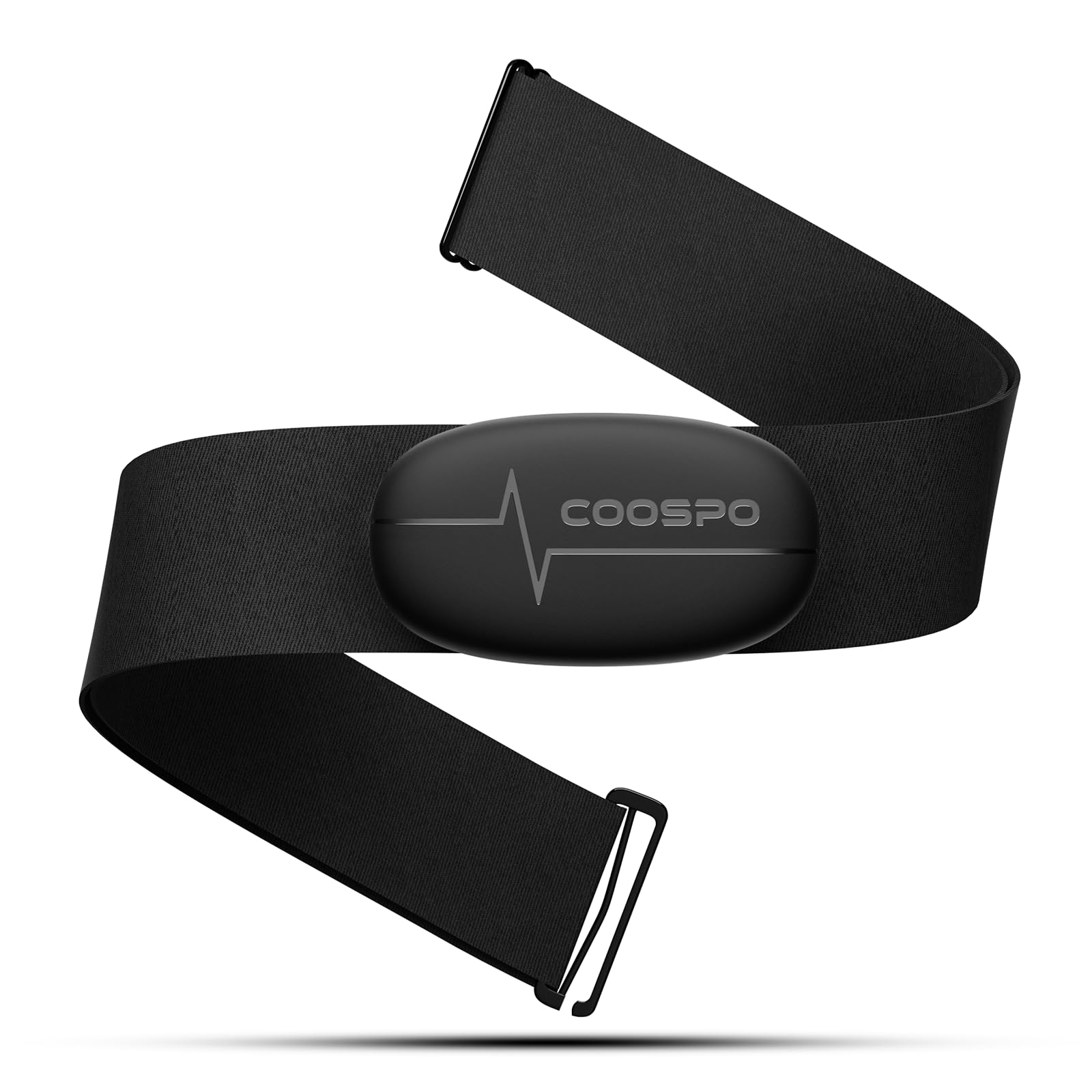
The H6 is a plastic pod, an elastic band, Bluetooth and ANT+, and not a great deal else. It sits near the bottom of this group on price and makes no attempt to justify more: no running dynamics, no HRV pitch, no sensor platform to buy into.

What it does have is a 300-hour cell, an IP67 rating, and readings that kept zone training honest. We ran it alongside a watch and the numbers tracked closely, without the lag a wrist sensor gives you when you surge. The band is soft and adjusts easily, the pod sits flat under a shirt, and the CoospoRide app is basic but does the job; it also talks to Zwift, Polar Beat, and Wahoo Fitness.

Where it gets awkward is pairing. Most of the time it connected on the first try; when it did not, the fix was in the app rather than the pod, and no amount of re-wetting the pads helped. Test your exact combination inside the return window. Do that, and this is the buy for a first strap, a spare that lives in a gym bag, or anyone who wants the data without paying for an ecosystem.

Pros

  • Bluetooth and ANT+ at a budget price
  • 300-hour replaceable cell
  • IP67 sweat and rain resistance
  • Soft band that stays in place

Cons

  • Pairing can be hit or miss with some apps
Our verdict

A first strap or a bag spare we are happy to recommend: dual protocol, a 300-hour cell, and a soft band, with pairing the one thing to test early.

Check Latest Price
5

HRV on a Budget

CYCPLUS H2Pro

79 /100
LBD Score Very Good

Key details

Sensor
ECG algorithm with beat-to-beat HRV
Battery
500 hours, replaceable
Connections
Bluetooth and ANT+
Water Rating
IPX7
View on Amazon

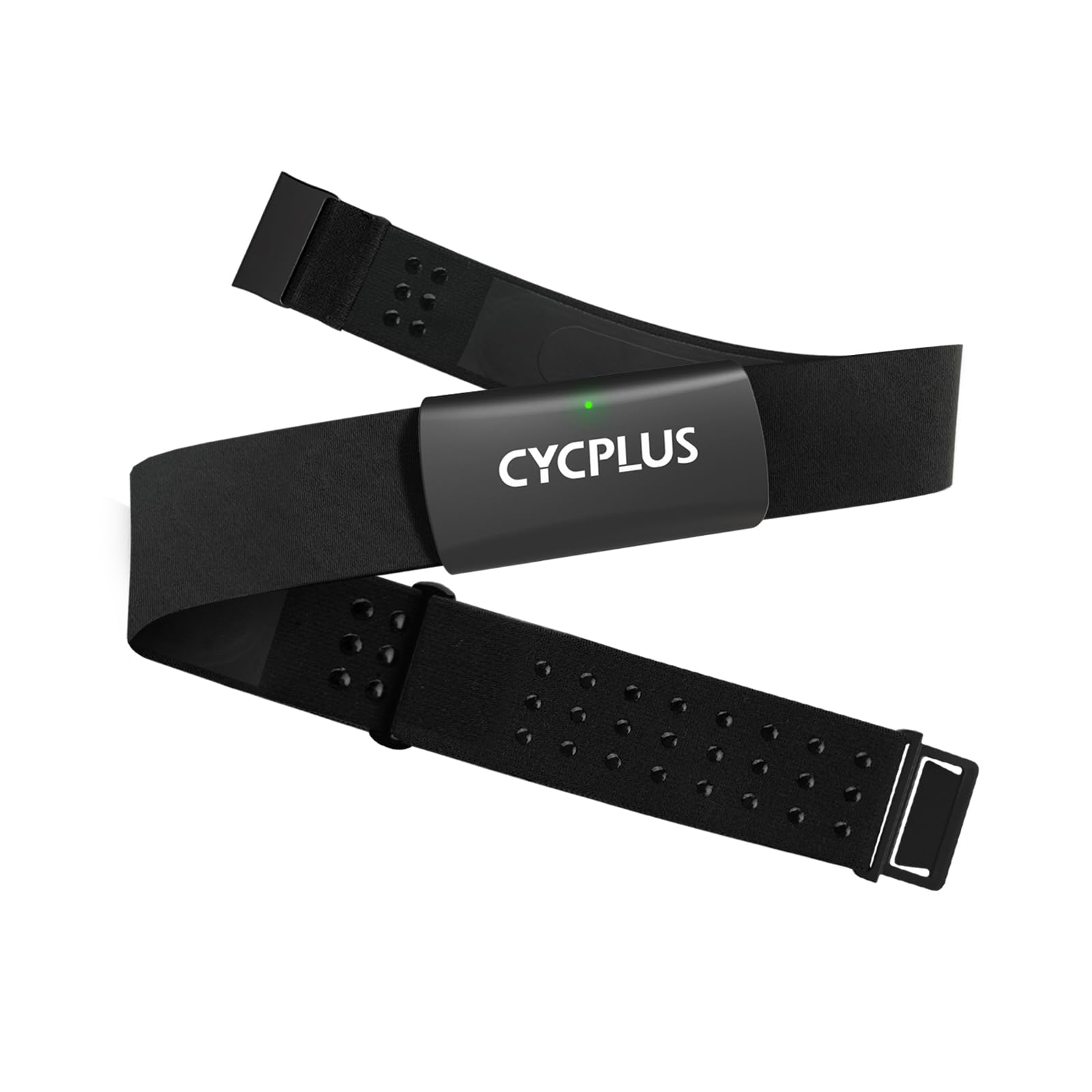
CYCPLUS sells the H2Pro on the ECG algorithm inside it and the beat-to-beat data that comes out: R-wave peaks identified closely enough for heart rate variability work rather than just a number for a watch face. Around that sit a 500-hour coin cell, IPX7, Bluetooth and ANT+, and a snap clasp that takes a second to close.

That combination makes it the budget strap for one specific person — the one feeding an app that reads beat-to-beat intervals for recovery or breathing work. We point those buyers here because it is the cheapest strap in this group that actually markets that data, and it stayed exactly where we put it on long sessions besides. If you only want a heart rate line, you are buying precision you will not look at, and the Coospo is the simpler choice. The risk is pairing: some units never connect at all, so buy where a return is easy.

Pros

  • Beat-to-beat HRV data at a budget price
  • 500-hour replaceable cell
  • IPX7 with a secure snap clasp

Cons

  • Some units never pair at all
Our verdict

We point HRV-focused buyers here — it is the cheapest strap in this group that markets beat-to-beat data — but buy it somewhere returns are simple.

Check Latest Price
6

Gym Bag Spare

GEOID HS500

84 /100
LBD Score Excellent

Key details

Extras
LED status light
Battery
800 hours, replaceable
Connections
ANT+ and Bluetooth
Water Rating
IP67
View on Amazon

A small red light pulses on the HS500's pod when it is awake and connected. That sounds like a gimmick until you have stood at the start of a run watching a blank heart rate field, wondering whether the strap is asleep, too dry, or dead — check the light before you pull your shirt down and you have answered the question.

Past the light it is a plain budget strap done reasonably: ANT+ and Bluetooth, IP67, a cell rated at 800 hours, and a wake-up time under a second. For a rower, a spin bike, or a bag that gets pulled out twice a week, there is plenty of strap here, and it is one of the cheapest ways onto this page with both radios.

The catch is the top end. The reading can stall above roughly 80% effort and sit there, and we saw it once during a hard interval set — steady work is fine, but intervals are exactly where you want to watch the number come back down between efforts. That is the trade for the price. Buy it for zone 2, gym machines, and long steady rides, not for the session you will analyse afterwards.

Pros

  • LED confirms it is awake and paired
  • 800-hour replaceable cell
  • ANT+ and Bluetooth with IP67
  • One of the lowest prices here

Cons

  • Reading can stall above roughly 80% effort
Our verdict

For steady sessions and gym machines we think it is fine value, as long as you are not relying on it for intervals where the reading has to come back down.

Check Latest Price
7

Second Strap

Magene H64

80 /100
LBD Score Excellent

Key details

Battery
Up to 1,000 hours, replaceable
Warranty
1 year
Connections
ANT+ and Bluetooth at the same time
Water Rating
IP67
View on Amazon

A thousand hours is the headline on the H64, and Magene prints the asterisk beside it: the figure comes from a laboratory test and real use will vary. Even discounted heavily, an hour a day four days a week turns that into years from one replaceable cell, which is the sort of number that makes a budget strap easy to say yes to.

The other trick is simultaneous output. ANT+ to a bike computer and Bluetooth to a phone app at the same time means the head unit records the ride while the app does whatever the app does, and that is a genuinely useful capability at this price rather than a spec-sheet flourish.

Where it gets shaky is the number itself. Readings that spike to implausible values, or drop to single digits mid-effort, turn up often enough to matter, and a strap that lies is worse than no strap at all. The strap clip is the other weak point: it holds, but it feels like it will not forever.

So we treat it as a second sensor — the bag that goes to the gym, the bike bolted to the trainer — where a bad reading costs you a session rather than a season. As the only strap your race file depends on, it is a gamble on a number that occasionally is not real.

Pros

  • Up to 1,000 hours from one cell
  • ANT+ and Bluetooth output at once
  • IP67 and a one-year warranty
  • Lowest price in this group

Cons

  • Readings can spike to implausible values
  • Strap clip feels flimsy
Our verdict

We like it as a second strap for the gym bike or the travel bag, not as the only sensor your training file depends on.

Check Latest Price

How We Tested the Best Chest Strap Heart Rate Monitors

We started with a long list of around 30 straps and cut it down by the things that decide whether one survives daily use: whether it paired with both Bluetooth and ANT+ devices, whether the battery was a rechargeable cell or a coin cell you swap, whether replacement bands were sold separately, how water-resistant the pod was, and how many devices it could hold at once. That filtering got us to 12 straps, each worn for six months.

Every strap went through the same rotation: treadmill intervals, indoor trainer sessions on a bike, outdoor long runs in cold mornings, and circuit-style gym work. I clipped each one on dry, the way you would on race morning, to see which ones needed wetting before they'd read reliably, and I paired each to a GPS watch and two phone apps simultaneously to check whether the third connection dropped or the numbers stuttered.

Through each session I logged the average and max readings against a second reference strap worn at the same time, noted seconds-long dropouts and spikes, and checked under a base layer mid-run for chafing, slipping, and band roll. After sweaty sessions I rinsed each strap the way the instructions say to and watched for stretching and salt crust over the months, since that's what kills these long before the electronics do. I also ran every battery down to dead — timing rechargeable pods from full to empty and coin cells from first pairing to the last beep — because a claimed battery life and a real one are rarely the same number.

How to Choose a Chest Strap Heart Rate Monitor

Settle the radio question first

Every strap here speaks ANT+ or Bluetooth, and most speak both, but your display has to be listening on the same channel. Garmin watches and bike computers lean on ANT+; phones and most training apps use Bluetooth. If one chest has to feed a trainer app, a head unit, and a watch at once, count the connections rather than assuming they will all get in.

The Wahoo TRACKR takes three Bluetooth links plus ANT+ simultaneously; several budget straps manage one pairing at a time. Write down what your watch, your computer, and your two favorite apps actually use before you buy, because no strap adds a protocol it does not ship with.

Fit, straps, and the part you will replace

The pod is the durable half; the band is a consumable. Look for one that detaches so it can be washed and, eventually, replaced on its own — a replacement band is far easier to swallow than a new sensor. Sizing matters more than most listings admit: the Garmin straps come in XS–S and M–XL, while the Wahoo and several budget straps are one size, and one size usually means snug on a broad chest and loose on a narrow one.

If you sit between sizes, favor the strap that offers two.

Coin cell, rechargeable, or a dead strap mid-run

A coin cell is a wonderful thing. The ratings in this group run from 300 hours to 1,000, which for most people is a season or several, the decline is gradual, and you can carry a spare. Rechargeable pods — the Garmin HRM 600 and the Wahoo TRACKR — remove the battery purchase but add a cable and a habit, and a pod that is out of charge is a pod with no data.

Check how the pod wakes, too: the ones that come alive on contact are the ones you never think about, and the ones you switch on manually are the ones you find asleep at the start line.

Sweat, salt, and keeping the reading clean

A chest strap reads the electrical signal of your heart, so it needs decent contact. Dry skin on a cold morning is the classic reason a strap shows nothing for the first few minutes; a drop of water on the electrode pads before you start fixes most of it.

Afterwards, rinse the band and hang it to dry instead of leaving it in a gym bag. Salt from sweat attacks the conductive pads, and that, rather than the electronics, is usually what ends a strap's life. The pods here are IP67 or better, which covers sweat and rain rather than repeated submersion.

The extras, and which ones you will actually use

HRV and beat-to-beat data matter if an app is reading them for recovery or breathing work; on a watch face they are invisible. Running dynamics — ground contact time, vertical oscillation, stride length — are worth the premium only if you are actively changing your form, which is the case the Garmin HRM 600 makes. Standalone recording, where the strap stores a session you cannot wear a watch for, solves a problem nothing else will.

Beyond those, an LED that tells you the pod is awake is genuinely useful, and everything else is decoration.

Frequently Asked Questions

Final Verdict

Buy the Garmin HRM 200. It gave us the least to think about of anything here: a year from a coin cell, a band that goes in the wash, two strap sizes, and readings that held their line as effort climbed. That is the recommendation for almost every runner, rider, and gym-goer reading this.

Spend more only for a specific reason. The HRM 600 earns its price if you will use running dynamics or need a session recorded with no watch on your wrist; the Wahoo TRACKR is the one to take if a trainer app, a phone, and a watch all need feeding at once; and on a tight budget the Coospo H6 does the core job without complaint.