Best Baby Monitors of 2026

The best baby monitor is the one that still works when the house is dark, the Wi-Fi drops, and you're half-asleep. That sounds obvious until you compare screens, apps, and parent units and realize how differently they behave overnight. I wanted a clear picture of the crib, trustworthy sound, controls I could use without turning on a light—and a pan-and-tilt camera or split-screen view when two rooms needed watching. Over six months, my team and I tested eight baby monitors, from no-WiFi parent-unit models to app-connected cameras, through naps, overnight sleep, middle-of-the-night feeds, and a weekend trip.

More features don't always mean better monitoring. A sharp daytime picture can fall apart in low light, a long range claim can stumble through a wall, and a big screen is useless if it freezes or the battery dies before morning. We weighed picture quality and night vision against battery life, sound quality, reliability, connectivity, and how easy each monitor was to set up and live with. The picks below stayed dependable when we were too tired to troubleshoot.

1

Best Overall

GoodBaby SM663

91 /100
LBD Score Outstanding

Key details

Camera
Remote 355° pan, 120° tilt
Screen
5-inch LCD
Battery
Up to 30 hrs (VOX), 10 with screen on
Connection
2.4GHz FHSS, no WiFi
View on Amazon

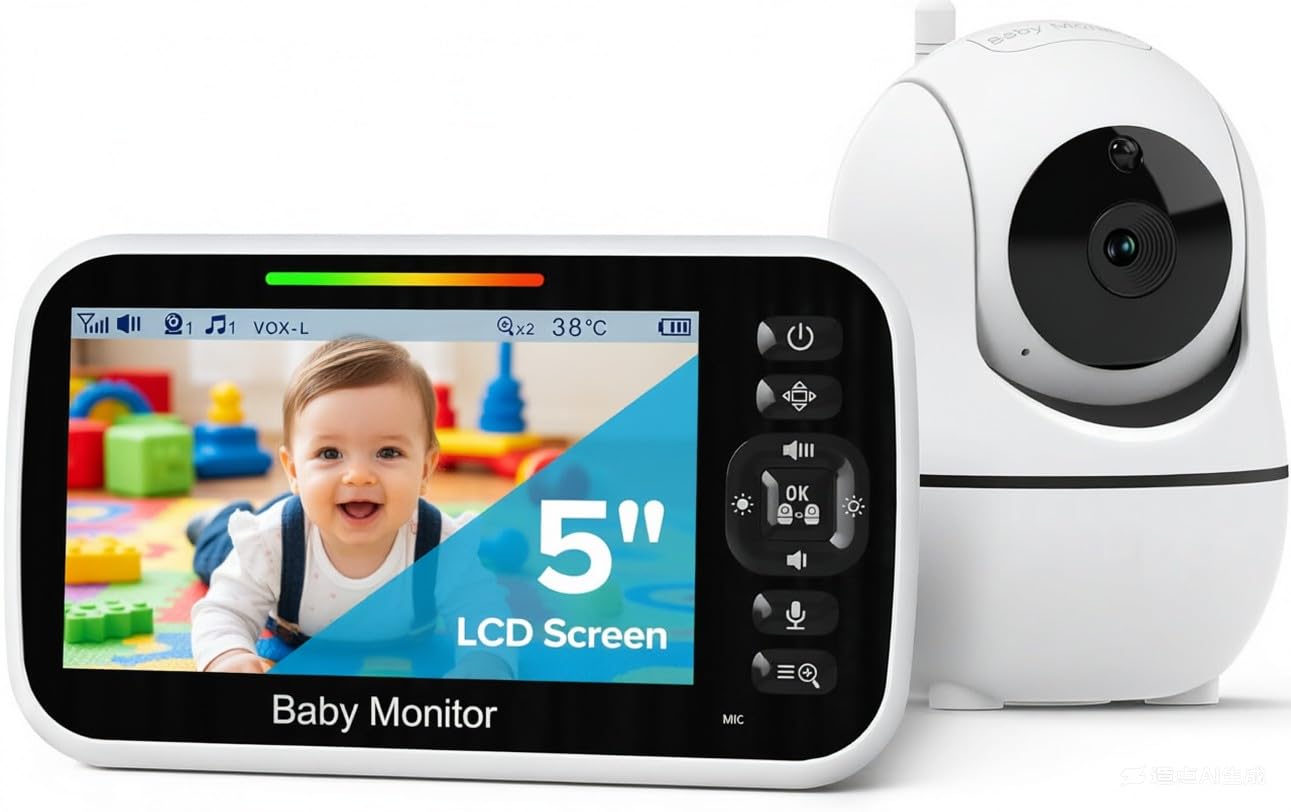
Five inches of screen, a camera that pans the whole nursery from the parent unit, and no internet connection anywhere in the chain — that combination at the lower end of midrange is why this is the monitor we point most parents toward. Nothing about it needs an account, a password, or a phone, and the night picture is the part we kept coming back to: dark rooms stay readable.

Panning is remote, 355 degrees side to side and 120 up and down, so you can follow a baby who has rolled into the far corner without walking back in. The camera itself has to stay plugged in — it's the screen that carries the battery — so plan on a spot near the crib with an outlet. And read the battery claim carefully: 30 hours is a VOX figure, with the screen asleep until it hears something. With video running you're closer to 10 hours, which is why the parent unit lives on its charger overnight in our experience.

Two-way talk, room temperature on screen, and a feeding alarm are the extras you stop noticing until you depend on them. The only reason to step up to HelloBaby's 6-inch model is a parent unit that sits across a dark room from your pillow; on a nightstand, five inches is plenty.

Pros

  • Five-inch screen with remote 355° pan and tilt
  • No WiFi, no app, and no account
  • Readable night vision in a fully dark room
  • Room temperature and feeding alarm built in

Cons

  • 480p video, softer than the 720p picks here
Our verdict

The monitor most families should buy: a clear 5-inch screen, remote pan, room temperature, and a private no-WiFi link at a midrange price below the big-screen names.
Check Latest Price
2

Best Big Screen

HelloBaby HB6550 Plus

91 /100
LBD Score Outstanding

Key details

Camera
One plug-in, 355° pan
Screen
6-inch IPS
Battery
18 to 33 hours in ECO mode
Connection
2.4GHz FHSS, no WiFi
View on Amazon

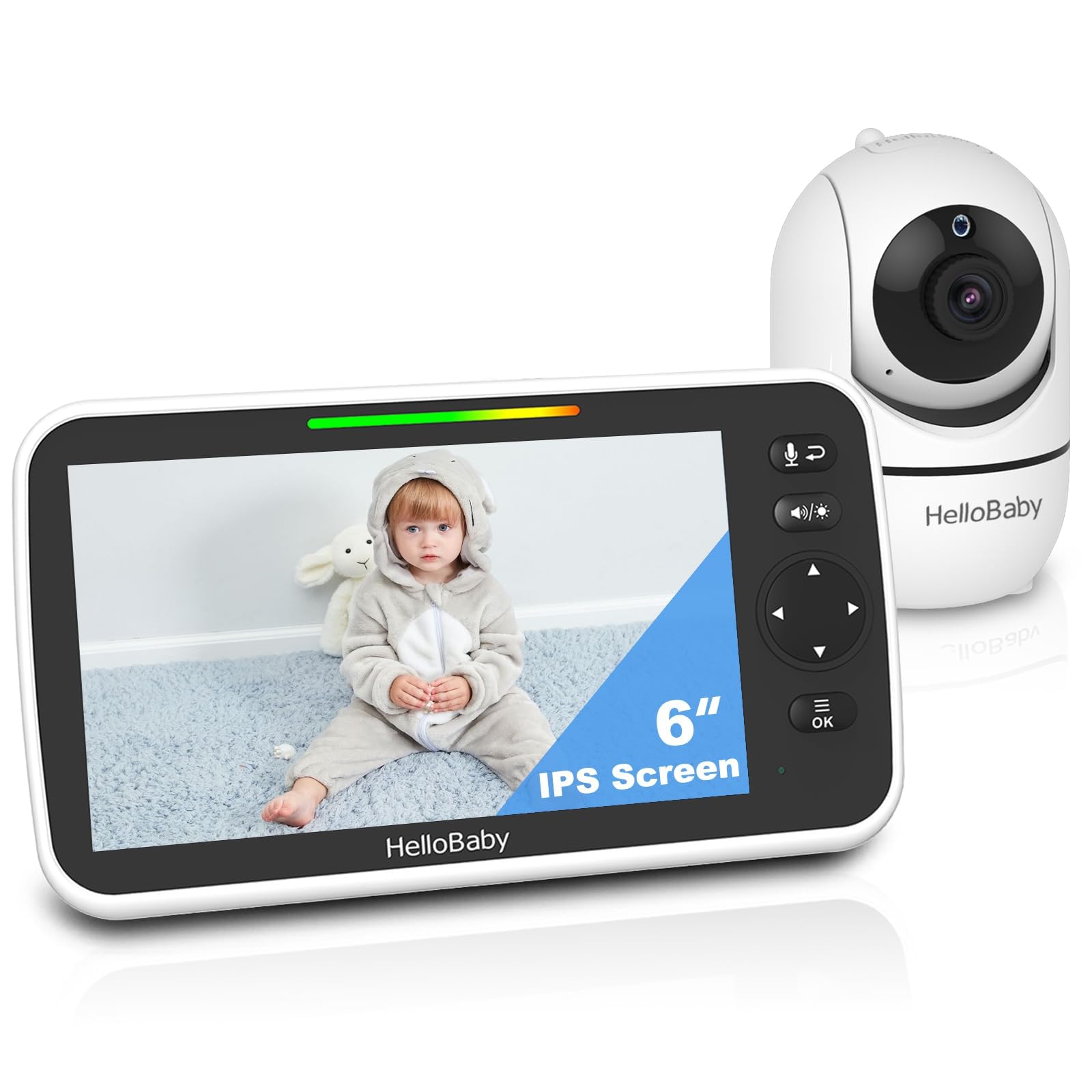
HelloBaby built this one around a 6-inch IPS screen, the largest display in this guide, and it changes where the parent unit can live: on a kitchen counter or a dresser across the room, you can read a sleeping position without picking it up. Invisible infrared keeps the camera from glowing red in the corner of a dark nursery.

The screen is the reason to choose it over our top pick, and the only reason. Everything else is familiar ground — pre-paired camera, 355-degree pan, two-way talk, room temperature, no WiFi — done well and without fuss. If the parent unit spends its nights within arm's reach, save the difference and take the GoodBaby.

The battery figure runs 18 to 33 hours, and that upper number is ECO mode with the screen mostly asleep. In practice the unit wants a charger most nights. HelloBaby's two-camera version, further down, is the simpler route to covering a second room.

Pros

  • Six-inch screen, the largest here
  • 18 to 33 hours of battery in ECO mode
  • Remote pan, tilt, and two-way talk without WiFi
  • Invisible infrared keeps the nursery dark

Cons

  • Split-screen view needs a second camera you buy separately
Our verdict

Buy it if the parent unit sits across the room: the biggest screen here, a battery that gets through the night, and no app to babysit.

Check Latest Price
3

Best for Two Rooms

HelloBaby HB6550-2

91 /100
LBD Score Outstanding

Key details

Screen
5-inch IPS
Battery
Up to 30 hours in ECO mode
Cameras
Two plug-in, 355° pan
Connection
2.4GHz FHSS, no WiFi
View on Amazon

Two children, two rooms, one parent unit: that's the household this version of HelloBaby's monitor is built for, and it's common enough that the second camera earns its place. Both are plug-in domes with the same 355-degree pan and 120-degree tilt, and both appear on the same 5-inch screen.

Setup is the part we appreciate most. The cameras arrive paired, both chargers are UL-listed, and each camera comes with wall-mount screws, so a nursery and a toddler's room can be covered in an afternoon without an app, an account, or a password. The FHSS link stays off your network entirely, which is the whole appeal of this family of monitors.

Panning both cameras from the parent unit keeps this useful past the newborn stage; once a toddler is out of the crib, sweeping the room without opening a door is worth more than any alert. One thing to know before you buy: the screen shows one camera at a time and you tap to switch. At bedtime that's a button press. At 3 a.m. it's the difference between seeing both children and seeing one.

What you're paying for is the second camera and the polish around it, and for a two-child household that's a fair trade. If seeing both rooms at once matters more than build and support, iFamily's 43E does it for less.

Pros

  • Two cameras paired to one 5-inch screen
  • Both cameras pan 355° and tilt 120°
  • No WiFi, no app, pre-paired setup
  • Wall-mount hardware included for both

Cons

  • Premium price, largely for the second camera
Our verdict

The two-room pick: two panning cameras on one parent unit, and none of it touches your WiFi.

Check Latest Price
4

Best Compact

VTech VM819

91 /100
LBD Score Outstanding

Key details

Camera
Fixed, 55° view
Screen
2.8-inch LCD
Battery
Up to 19 hrs video, 29 hrs audio
Connection
2.4GHz FHSS, no WiFi
View on Amazon

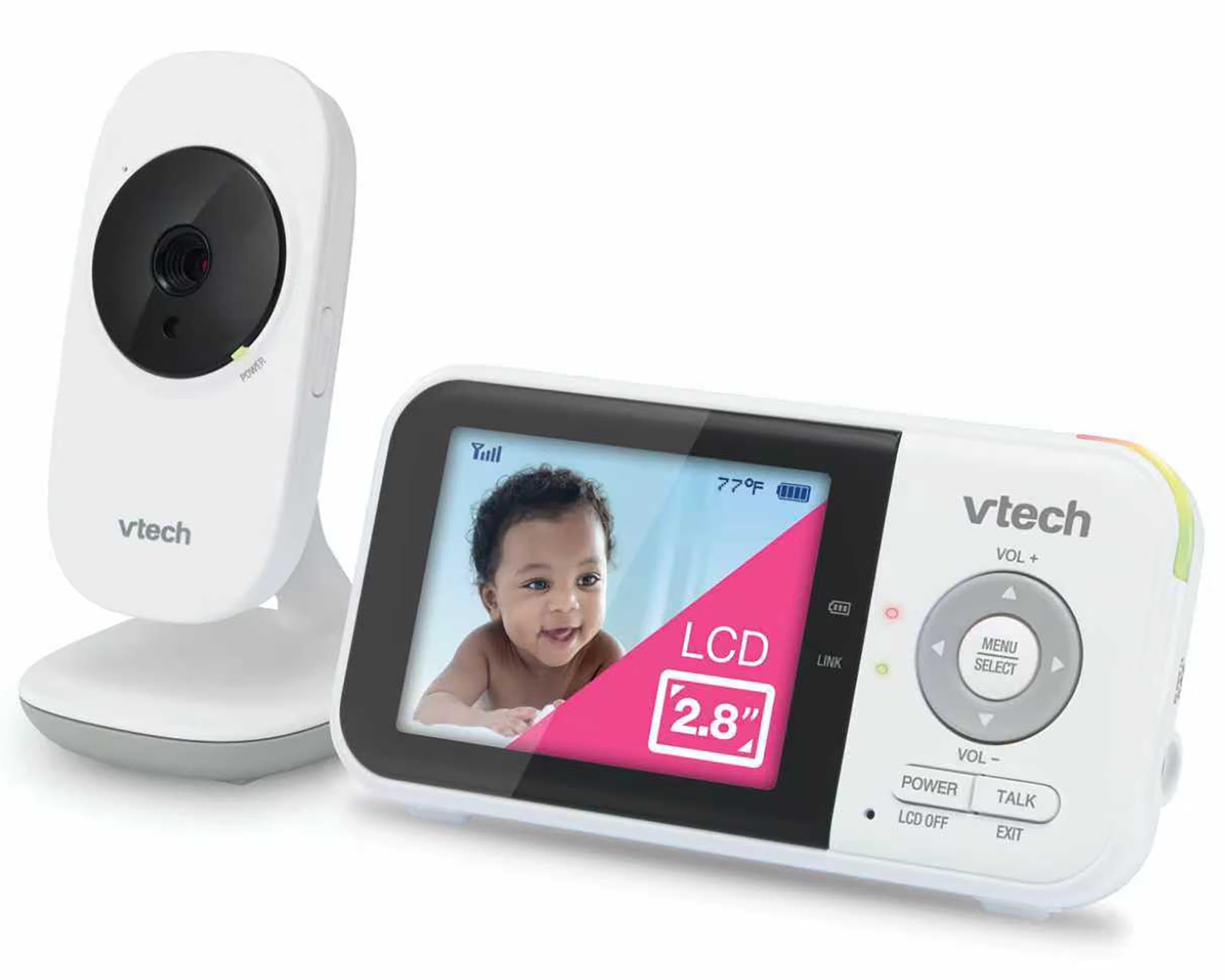
A 2.8-inch screen looks like a step backward next to the 5- and 6-inch units here, and VTech clearly built the VM819 for the parent who carries the monitor rather than walking back to it. The parent unit is small, and its 2,600mAh battery is rated for 19 hours of video or 29 hours of audio — the rare figure in this guide that is measured with the screen on.

What we like most is the sound-activated screen: when the nursery is quiet the parent unit goes dark instead of glowing at you all night, then wakes the moment there's a noise. That's the setting that makes a bedside monitor livable, and it's why we take this over a bigger screen in a small apartment.

The camera is the compromise, and it's a placement problem more than a hardware one: fixed, with a 55-degree view, so wherever you aim it before bedtime is where it stays all night. Two lullabies, white noise, a stream sound, and a temperature reading round it out, and the controls are push-button simple with no app in sight.

Pros

  • 19 hours of video on a single charge
  • Screen stays dark until it detects sound
  • No WiFi, no app, simple push-button controls
  • White noise and temperature sensor built in

Cons

  • Small 2.8-inch screen to read in a dark room
Our verdict

For the parent who carries the monitor from room to room: 19 hours of video, a screen that stays dark until the baby stirs, and no app.

Check Latest Price
5

Best WiFi Monitor

VTech VM901

84 /100
LBD Score Excellent

Key details

Video
1080p
Camera
Pan, tilt, 10x digital zoom
Screen
5-inch parent unit plus free app
Connection
WiFi and free app
View on Amazon

This is the only monitor here that will show you your baby from a different zip code. VTech pairs a 1080p camera with a free app and, unusually, a 5-inch parent unit, so the phone is an extra rather than the only way in. For a parent who travels, works late, or wants a grandparent to be able to look in, that's the whole decision.

At home the parent unit behaves like the others — pan, tilt, zoom, night vision, two-way talk, temperature and motion alerts — without you unlocking a phone at 4 a.m. The app is where the extra detail pays off: 1080p is sharper than the 480p units in this guide, and you can move the camera from wherever you are.

The trade is the network. Everything the app does depends on your home WiFi and a VTech account, and a router that drops takes the remote view with it — the thing the no-WiFi picks never have to think about. If you don't need to look in from elsewhere, the GoodBaby does the same in-room job for a good deal less.

Pros

  • 1080p video in the app, sharpest here
  • Pan, tilt, and 10x zoom from your phone
  • Dedicated 5-inch parent unit at home
  • Motion and temperature alerts

Cons

  • Highest price in this guide
Our verdict

The one to buy if you need to look in from somewhere else: 1080p in the app, remote pan and zoom, and a real parent unit for home.

Check Latest Price
6

Best Audio-Only

Motorola AM21

85 /100
LBD Score Excellent

Key details

Type
Audio only, DECT 6.0
Power
AAA batteries, not included
Range
Up to 1,000 ft
Alerts
Cry detection, LED sound lights
View on Amazon

No screen, no camera, no night vision: the AM21 is a pair of DECT handsets, one for the nursery and one for your pocket, and it does what an audio monitor should. The link is private, the range is rated to 1,000 feet, and the parent unit runs on AAA batteries, so there's no charging cable to lose.

Sound is where it earns its keep. The microphone picks up the small things — a shift, a sigh, the crib creaking — and cry detection raises an alert when the volume crosses a threshold, so you aren't interpreting white noise at 3 a.m. LED lights show the sound level with the speaker muted, which is how we ended up using it: lights on the nightstand, speaker off.

This is the monitor for a grandparent's house, a travel bag, or a second setup downstairs, and the one we hand to anyone who doesn't want another screen in the bedroom. What it can't do is tell you why a quiet baby is quiet; when you want to see, you need one of the video picks.

Pros

  • DECT audio with no static and no WiFi
  • Cry detection plus LED sound-level lights
  • Plug in and it's working within a minute
  • Small enough to carry between rooms

Cons

  • AAA batteries aren't included and don't last long
Our verdict

The sound-only choice: DECT clarity, cry detection, and a parent unit small enough to carry, for parents who don't want another screen at bedtime.

Check Latest Price
7

Split-Screen Viewing

iFamily 43E

87 /100
LBD Score Excellent

Key details

Video
720p
Screen
4.3-inch split screen
Battery
3,500mAh, 16 hrs screen-on
Cameras
Two, 355° pan and 120° tilt
View on Amazon

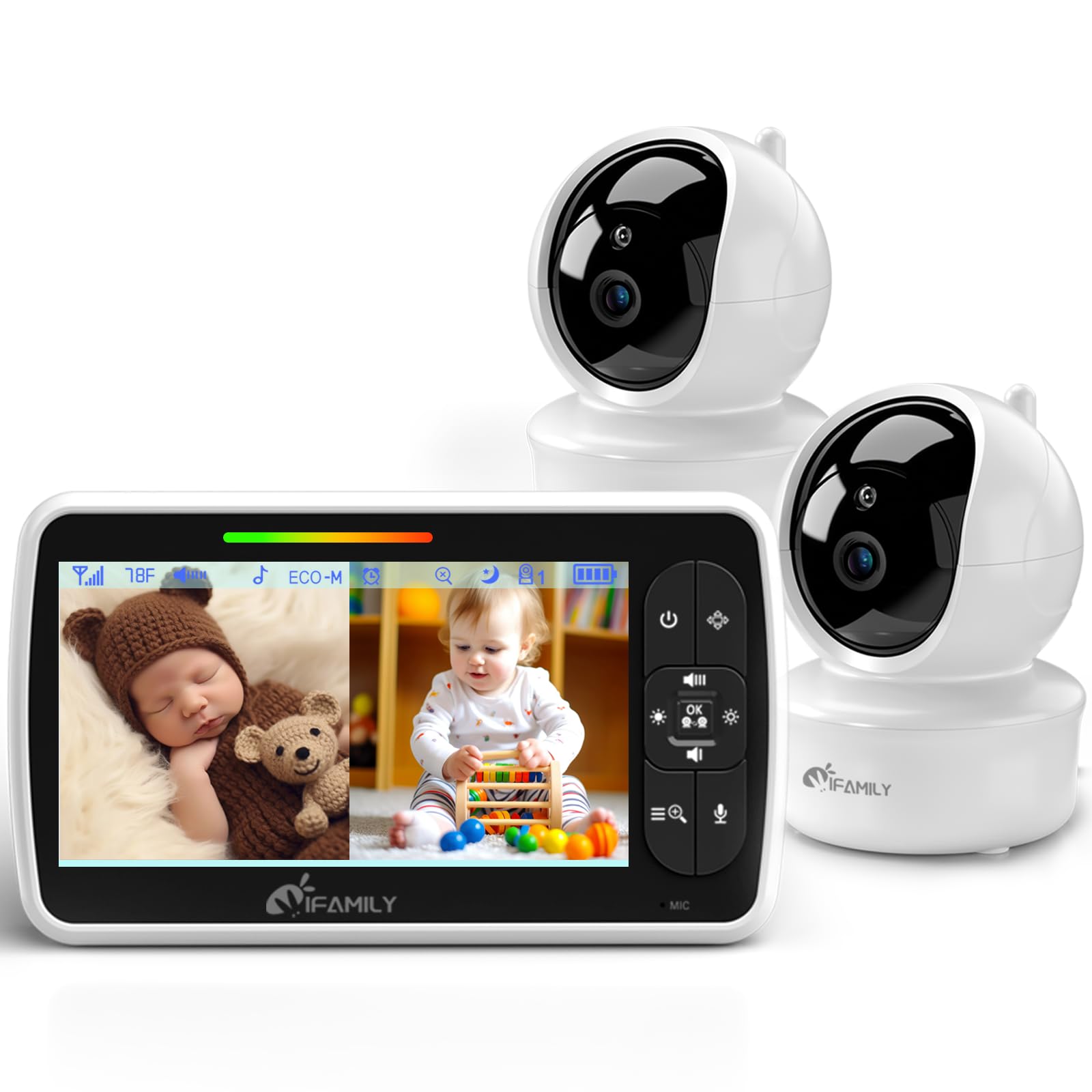
Two cameras, two live pictures, one 4.3-inch screen: the 43E is the only monitor here that shows both rooms at once instead of making you tap between them. That single difference is why it's on this list — for twins, or a baby and a toddler, it matches the way you actually check on them.

Both cameras pan 355 degrees and tilt 120, both shoot 720p, and the parent unit adds room temperature, a feeding clock, and lullabies. The link is 2.4GHz FHSS, so nothing here touches your WiFi, and each camera mounts on a wall or sits on a shelf.

It's also the cheaper way to cover two rooms in this guide: HelloBaby's two-camera version costs more and still shows one feed at a time. What you give up is screen real estate. Split across two feeds, each picture is small, so this is a check-the-position monitor rather than a count-the-fingers one.

For two children, we take the split screen over a bigger single view. The whole point is seeing both at a glance, and no amount of resolution makes up for a tap you have to make at 3 a.m.

Pros

  • True split screen with two live feeds
  • Both cameras pan 355° and tilt 120°
  • 720p video with no WiFi connection
  • Costs less than the two-camera HelloBaby

Cons

  • Night vision is grainy in a dark room
  • Battery needs a nightly charge
Our verdict

The pick for two children: both rooms live on one screen at once, for less than the two-camera alternative that makes you switch.

Check Latest Price
8

Budget Video

AnKeKe ABM570

81 /100
LBD Score Excellent

Key details

Camera
355° pan, 95° tilt, 4x zoom
Screen
5-inch 720p IPS
Battery
3,500mAh, up to 100 hrs standby
Connection
2.4GHz FHSS, no WiFi
View on Amazon

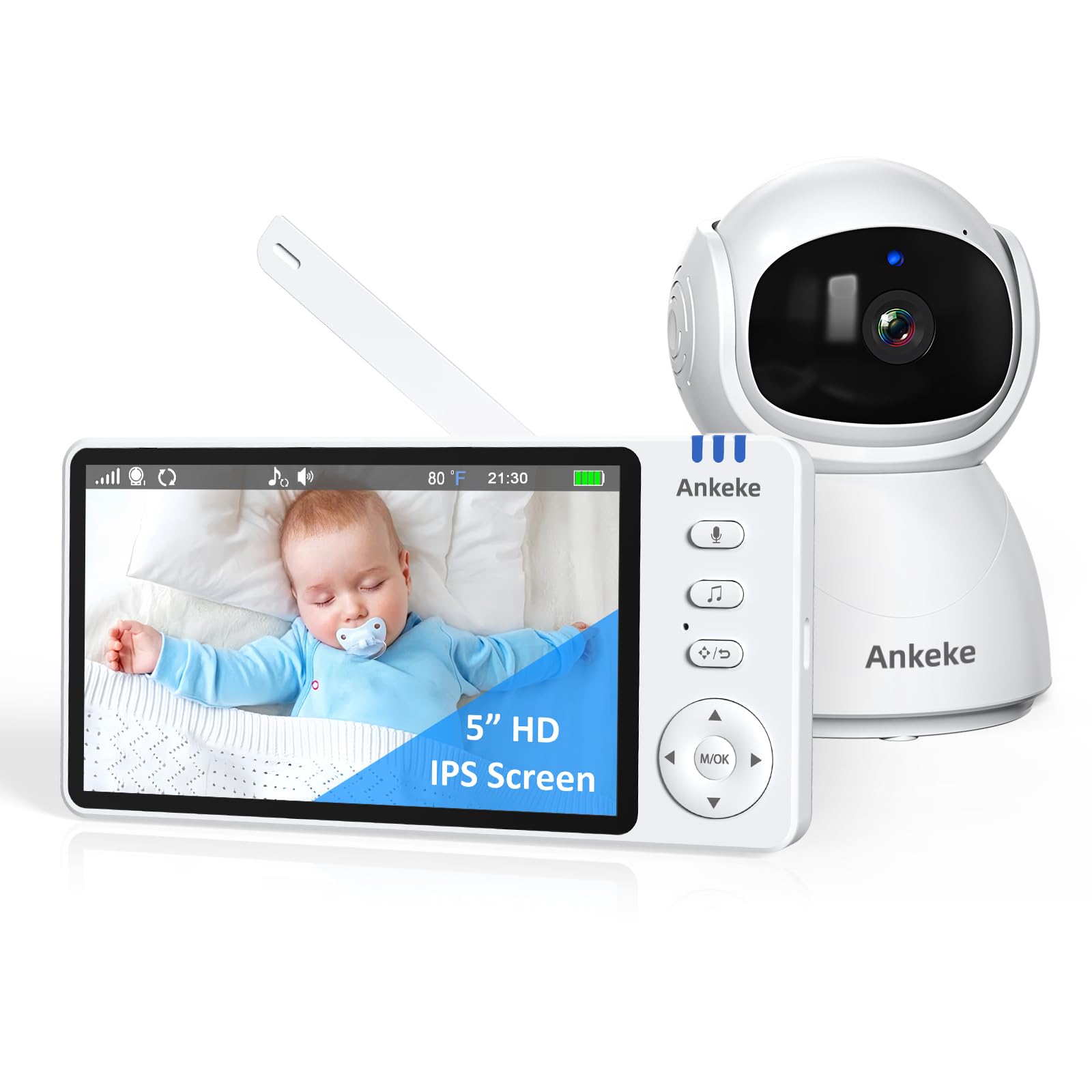
At the bottom of the video range, the ABM570 still lists a 5-inch 720p screen, a 355-degree pan, 4x zoom, and nine infrared LEDs — the kind of spec sheet that makes you check the price twice. It's the least expensive way into a panning video monitor here.

Setup is genuinely plug-and-play: camera and screen arrive paired, and a thermal alarm and feeding reminder sit alongside the usual lullabies and two-way talk. Daylight picture is fine for the money, and night vision is bright enough to read a sleeping position.

The saving shows up in the audio and the link rather than the picture, which is the right place to cut corners on a second monitor and the wrong place on an only one. As a spare-room or travel unit, it's a lot of hardware for the least money here; it has no business being the only monitor in a house where a false alarm wakes everyone.

Pros

  • Least expensive video monitor in this guide
  • 5-inch 720p screen with 355° pan and 4x zoom
  • Pre-paired, with no WiFi or app needed
  • Thermal alarm and feeding reminder

Cons

  • Link drops can trigger a loud alert beep
  • 100-hour figure is standby, not screen time
Our verdict

The budget pick for a spare room or a travel bag: a 5-inch 720p screen, remote pan, and 4x zoom for the least money in this guide.

Check Latest Price

How We Tested the Best Baby Monitors

We started by sorting through the specs parents actually compare—Wi-Fi versus no-Wi-Fi, parent-unit battery, range, screen size, night vision, pan-tilt-zoom, and whether the monitor supports one camera or two—then narrowed the field to eight units. Each one lived in a real nursery for part of a six-month testing period, not a lab bench. We mounted cameras over the crib and changing table, kept parent units on nightstands, and carried them into the kitchen, laundry room, and backyard during naps.

Overnight was where most monitors showed their true colors. We checked the screen at 2 a.m. and 5 a.m., fed and changed a baby in dim light, and noted whether the picture stayed clear enough to see a chest rise or a pacifier without switching on a lamp. We panned and tilted remotely when a baby rolled to the corner, set up split-screen views for two rooms, and timed how long the parent unit ran from a full charge to shutdown. We also watched for frozen screens, dropped signals, static, lag in two-way talk, and volume that was either too quiet or jarringly loud.

Ease of use got tested one-handed, half-awake: how quickly the menu opened, whether the buttons made sense in the dark, and how much setup it took to pair a second camera or reconnect after a router restart. For Wi-Fi monitors, we watched app connectivity during router reboots and phone notifications; for no-Wi-Fi models, we walked the range through walls and listened for audio dropouts. After each session we packed the portable units for a weekend at grandparents and checked whether the stands, clips, and cables still felt solid. The monitors that rose to the top did not just look good in daylight—they stayed reliable through the boring, repetitive work of overnight checks.

How to Choose a Baby Monitor

No-WiFi or App-Connected

Closed-system monitors using FHSS or DECT talk directly between camera and parent unit, with no router, account, or cloud in the path. That's why they set up in minutes and keep working when the internet doesn't. The cost is reach: you can't look in from work.

Only one monitor here crosses that line, VTech's VM901, which pairs a 1080p camera with a free app and a parent unit. If remote viewing isn't a requirement, staying off the network removes a whole category of hassle.

Screen Size, and One Room or Two

Screen size is about viewing distance, not specmanship: 2.8 inches is a unit you carry in a pocket, 5 to 6 inches is one that lives on a nightstand across the room.

If you have two children, check whether the monitor shows both feeds at once or switches between them. "Split screen" is used loosely: iFamily's 43E genuinely shows two live pictures, while HelloBaby's two-camera unit shows one and taps to the other. Decide which of those you're buying before you pay for a second camera.

Battery Claims Are Screen-Off Numbers

Almost every headline hour figure in this category is measured in VOX or ECO mode, when the screen sleeps until the microphone hears something. With video running continuously, expect a fraction of that: the GoodBaby's 30 hours becomes roughly 10 with the screen on.

Treat the parent unit like a phone and park it on a charger overnight. The charging port is a common failure point on these units, so a real warranty and a seller who answers messages matter more than an extra hour of runtime.

Fixed Camera or Pan and Tilt

A fixed lens like the one on VTech's VM819 has a 55-degree view: wherever you aim it before bedtime is what you get all night. Pan and tilt models let you sweep a room from the parent unit, which matters most once a child can move around the crib and later the room.

Either way, place the camera high and angle it down, and check the view on the screen once the room is dark rather than trusting a daytime test.

When Audio-Only Is Enough

An audio monitor tells you what you need at 3 a.m. — that something is happening — without a glowing screen in the nursery or a unit to charge every night. DECT sets like Motorola's AM21 add cry detection and LED sound meters so you can check without unmuting.

What it can't do is show you a quiet baby, so it suits a second setup, a grandparent's house, or a parent who'd rather not have video in the bedroom at all.

Frequently Asked Questions

Final Verdict

The GoodBaby SM663 is the monitor we recommend for a first nursery: five inches of clear screen, remote pan, room temperature, and a private link that never asks for a password, at a midrange price. Step up to HelloBaby's 6-inch model if the parent unit sits across a dark room from your bed — the bigger screen is the entire upgrade.

And if you need to look in from somewhere else, VTech's VM901 is the only pick here that leaves the house.