Best Smart Baby Monitors of 2026

A baby monitor is supposed to give you back a little of your own evening. Instead, the smart ones can hand you a fresh worry: a feed that freezes the second the baby finally settles, a night-vision picture that turns to gray soup, a battery that quits halfway through a nap. What you're really buying is a screen you trust enough to leave the room.

Here's what nobody tells a first-time buyer: resolution is the number shoppers compare and the least useful one. A 1080p camera that handles a dark room well beats a 2K one that goes grainy at lights-out, and a monitor with no subscription fee will usually outlast a fancier one that puts sleep tracking behind a monthly charge. We've spent the past six months living with 12 smart monitors — overnight, through naps, through a router reboot and a babysitter who'd never touched the app — and the gap between them comes down to connection, picture, and whether the thing works at 3 a.m. The picks below are the ones I'd hand to a friend.

1

Best Overall

Dr.Care VistaView 5-Inch

86 /100
LBD Score Excellent

Key details

Battery
5000mAh, removable
Connection
FHSS plus 2.4 GHz Wi-Fi
Parent Unit
5-inch, 1080p
Cameras Included
1
View on Amazon

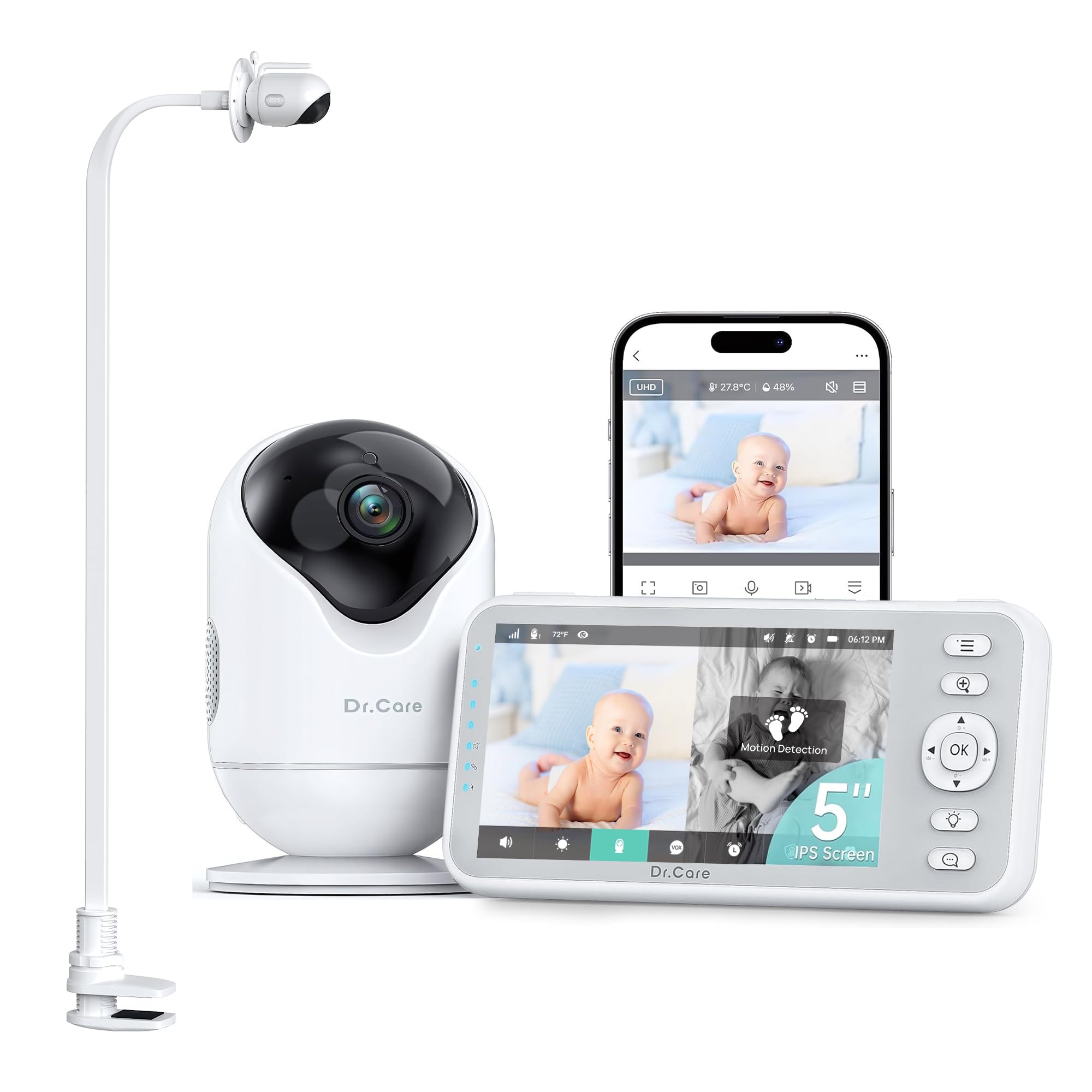
Very few monitors here give you a parent unit and an app at the same time without making one of them feel like an afterthought. The Dr.Care VistaView runs both off the same camera, on a 5-inch 1080p screen, with the picture carrying over to your phone the moment you leave the room.

The detail that won us over is the battery. It's a 5000mAh pack that lifts out of the parent unit, so a long night doesn't hinge on remembering a charging cable — you drop in a fresh cell and keep going. In a category where a dead parent unit at 4 a.m. is the thing everyone worries about, that's a small piece of design doing real work.

The camera side is just as practical. It swivels a long way around the room, and the box includes a clip that grabs the side of the crib, which is worth more than it sounds: you get a downward view of the mattress without putting up a shelf or drilling a wall. Recording goes to a microSD card up to 128GB or to the cloud, footage splits across two cameras on one screen, and there's a Wi-Fi-off mode if you'd rather the nursery camera never touch the internet at all.

Two limits are worth knowing before you order. The box holds one camera, so a second room means a second purchase, and the Wi-Fi radio is 2.4 GHz only — fine, but put it on that band deliberately instead of letting the router decide for you.

Pros

  • Parent unit and app run at the same time
  • Removable 5000mAh battery beats a sealed cell
  • Crib clip, wall and shelf mounting included
  • Works with Wi-Fi switched off

Cons

  • One camera; a second room costs extra
  • 2.4 GHz Wi-Fi only
Our verdict

Our default recommendation: a parent unit that keeps working with the Wi-Fi off, plus a battery you can swap instead of charging at midnight.
Check Latest Price
2

Best for Sleep Insights

Nanit Pro Smart Baby Monitor

82 /100
LBD Score Excellent

Key details

Mount
67-inch floor stand
Video
1080p
Viewing
App only
Tracking
Sleep and breathing motion
View on Amazon

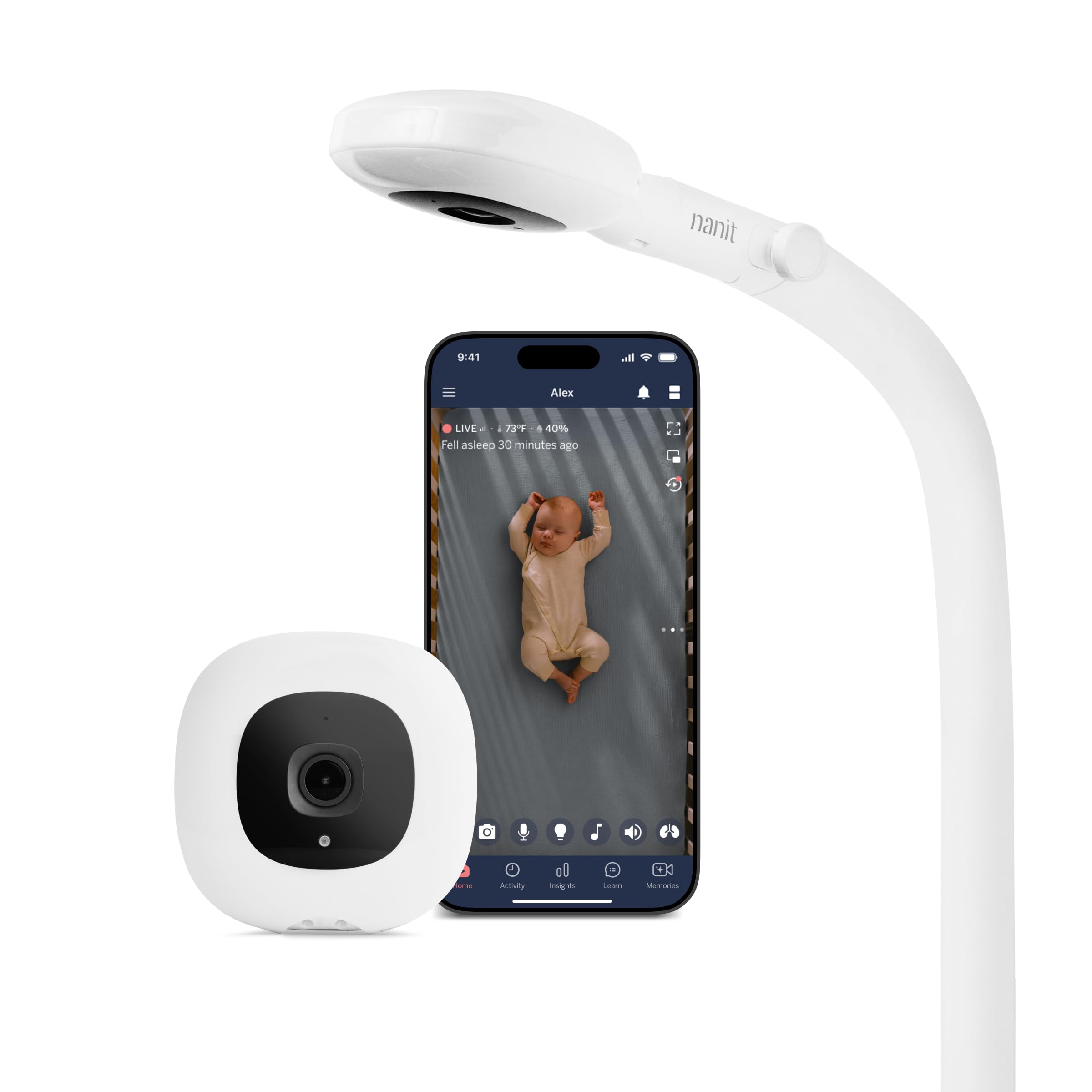
Some parents want a picture of the crib; others want a record of the night. The Nanit Pro is built for the second group. It tracks sleep and breathing motion, logs wake-ups and visits, and puts the 1080p feed, the timeline, and the alerts into one app, so at 7 a.m. you can see how the night actually went instead of reconstructing it.

The floor stand is the part we appreciate most. At 67 inches it lifts the camera over the crib for a top-down view, it needs no drilling, and it moves between rooms — which matters more than it sounds when a baby spends three months in your bedroom and then moves down the hall.

Night video is the strength. The overhead angle plus a clear low-light picture lets you tell a sleeping baby from a stirring one without opening the door, and setup is short enough that you aren't reading a manual at midnight. Multiple caregivers can share the account, so a partner away for work sees exactly what the person in the house sees.

What it doesn't have is a parent unit. Your phone is the monitor, which is fine until the phone is charging in the kitchen, and the optional subscription is where longer video history lives — without it, clips reset after a day. That's the trade for the deepest sleep data in this set.

Pros

  • Overhead floor-stand view without drilling
  • Sleep and breathing-motion tracking
  • Shared access for multiple caregivers

Cons

  • No parent unit; viewing is phone-only
  • Premium price for a single camera
Our verdict

Buy it if you want to know how the night went, not just see it live — the sleep data here is the richest on the page, as long as a phone is your screen.

Check Latest Price
3

Best Big Screen for Two Kids

Babysense TOUCH 7-Inch

83 /100
LBD Score Excellent

Key details

App
US only
Lenses
4MP dual-lens, 6x zoom
Screen
7-inch IPS touchscreen
Cameras Included
2
View on Amazon

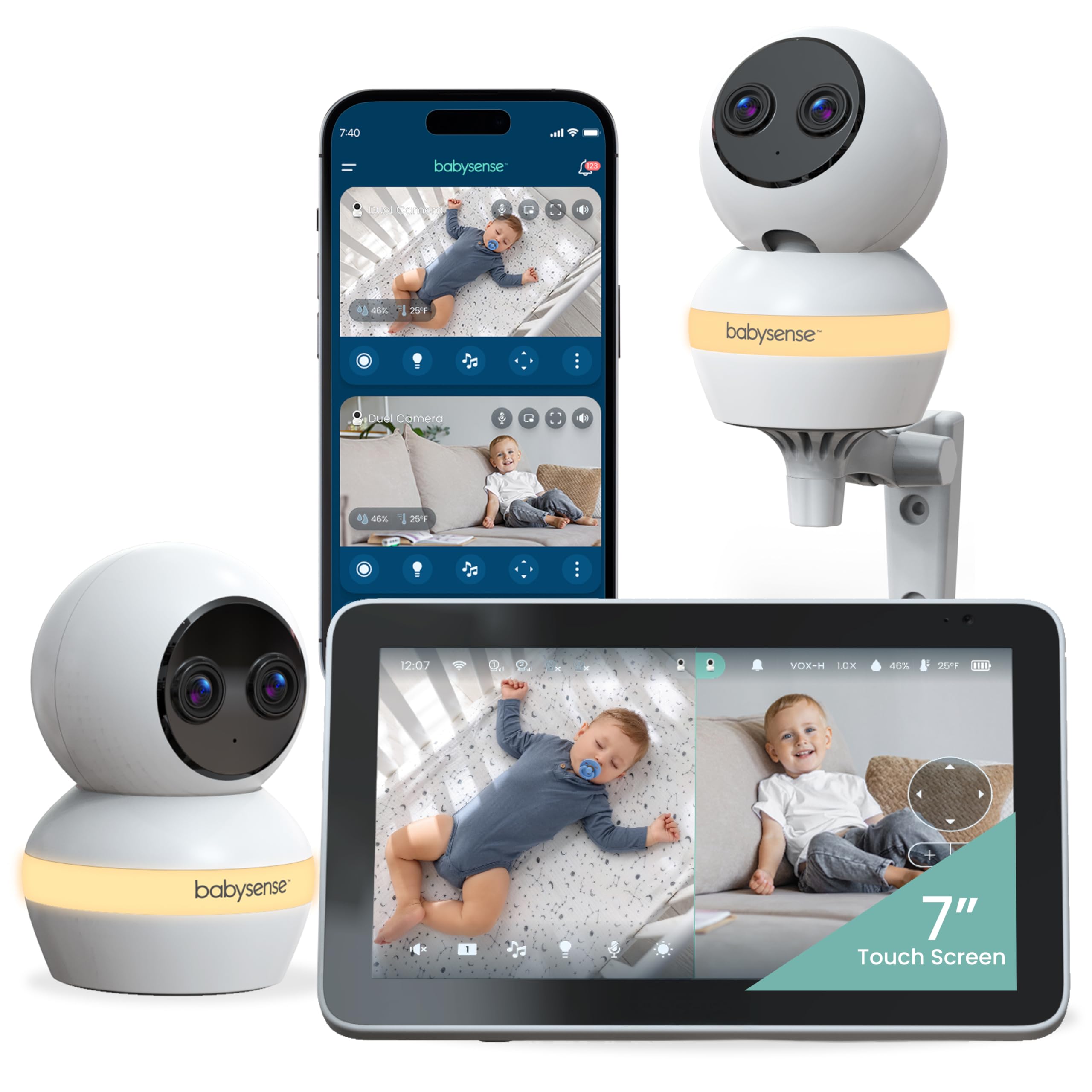
Set the Babysense TOUCH next to the Nanit and the arithmetic is hard to argue with: two cameras and a 7-inch touchscreen for less than the Nanit charges for a single camera and a stand.

Both cameras use a dual-lens arrangement — wide plus telephoto — with 6x hybrid zoom, and the touchscreen splits into a side-by-side view of two rooms. Auto tracking follows movement, a sound-activated mode keeps the display dark until something happens, there's an adjustable night light, and a local mode runs the parent unit with no app involved at all.

The screen is where this one earns its spot. Seven inches of split view is the difference between a glance and a squint, and nothing else here shows two rooms that comfortably. The picture is good in daylight and noticeably softer after dark, which is the one place it gives ground to the Nanit.

Range is a genuine strength — the parent unit reaches across a house and out into the yard — and the system takes up to four cameras if the family keeps growing. Check app availability before ordering, though: it's US-only, and outside the States the parent unit is all you get.

Pros

  • Two cameras and a 7-inch split screen
  • Dual-lens zoom with auto tracking
  • Local mode works without the app

Cons

  • Parent-unit battery is the weak point
Our verdict

For two children in two rooms, this is the shape of system to buy: two cameras, a 7-inch split screen, and a parent unit that works with the app switched off.

Check Latest Price
4

Best for Overnight Vital Tracking

Owlet Dream Duo 3

85 /100
LBD Score Excellent

Key details

App
One app for both
Fit
1-18 months, 6-30 lb
Sock
Pulse rate and oxygen
Camera
2K HD
View on Amazon

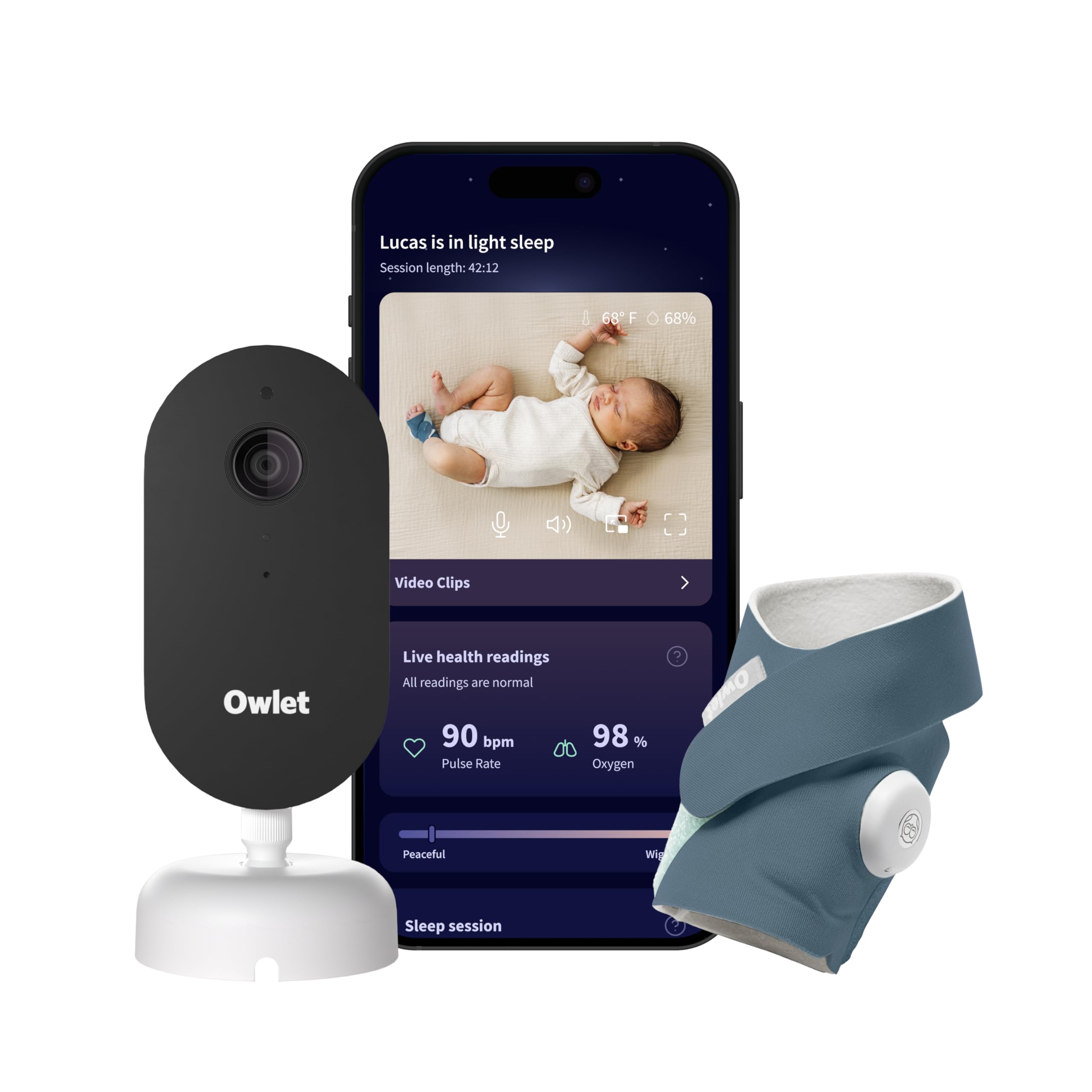
The point of the Dream Duo isn't the camera — it's the sock. Owlet pairs an FDA-cleared pulse oximeter that slips over a foot with a 2K camera, and both report to the same app, so the oxygen number and the video sit on one screen at 3 a.m.

The sock tracks pulse rate and oxygen and alerts you when a reading leaves the range you've set; the camera adds 2K video, night vision, two-way audio, and motion and sound alerts. Predictive Sleep Technology suggests wake windows, which is the part that turns a stream of numbers into something you can act on the next day. Four socks come in the box, sized for babies from 1 to 18 months and 6 to 30 pounds.

We think it justifies the money for one kind of household: a parent who will not sleep without a number on the screen. If that's you, nothing else here comes close on overnight data, and the peace of mind is the actual product. If it isn't, a two-camera system with a big screen costs less and watches more of the house.

Two things to plan around. The sock is sized for babies up to 30 pounds and 18 months, so this is a purchase with an expiry date built in. And because readings travel from the sock to the base station and then to your phone, that base's link is the piece to set up carefully — sort it on day one and the rest of the system stays quiet.

Pros

  • Pulse rate and oxygen with 2K video in one app
  • FDA-cleared sock monitoring
  • Four sock sizes for 1-18 months
  • Cable guards included for cord safety

Cons

  • Sock only fits 1-18 months, 6-30 lb
  • The most expensive system here
Our verdict

Worth the outlay for parents who won't settle without overnight oxygen readings; everyone else can spend less and cover more of the house.

Check Latest Price
5

Best Value

Blemil 5.5-Inch Smart Monitor

88 /100
LBD Score Excellent

Key details

Video
1296p
Screen
5.5-inch IPS
Battery
5000mAh, up to 22 hours ECO
Storage
microSD or encrypted cloud
View on Amazon

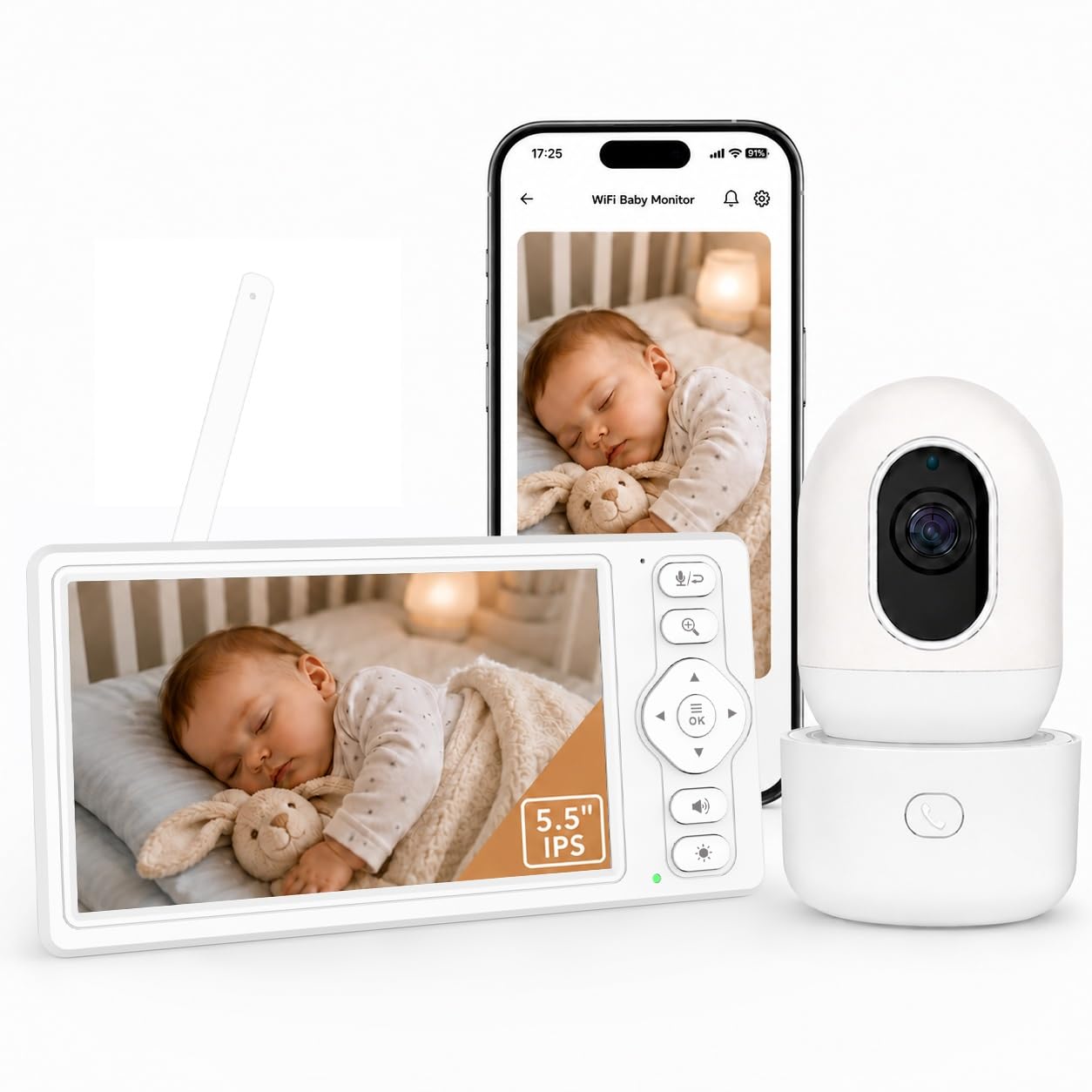
The Blemil makes its case in the first minute: a 5.5-inch IPS parent unit, a phone app, and 1296p video for well under what the big-screen systems cost. We think that's the right trade for most families who want a screen and an app without paying premium prices for one.

The screen is genuinely useful rather than decorative — big enough to read a face at arm's length, and bright enough that you won't be squinting. Picture quality is the surprise of this pick: 1296p is sharper than several monitors here that cost more, and the color holds up in daylight. Auto motion tracking, cry, sound and motion alerts, and temperature and humidity readouts cover the practical side.

Battery is rated up to 22 hours in ECO mode, which is the number to trust if you want to leave the unit unplugged on a nightstand; keep the screen always on and you'll be charging more often. Family sharing lets several people watch at once, and recording goes to a microSD card or encrypted cloud storage.

The one thing to know before you buy is that the screen is bright even on its lowest setting. Six feet from a pillow it lights the wall, so plan on turning it face-down at night. Do that and the rest of the package is easy to live with.

Pros

  • 5.5-inch parent unit plus app
  • 1296p video at a value price
  • Up to 22 hours in ECO mode
  • microSD or encrypted cloud recording

Cons

  • Screen is bright at its lowest setting
Our verdict

The value pick: a real 5.5-inch screen, an app, and sharp 1296p video for a modest outlay — just point the bright screen away from the bed.

Check Latest Price
6

Best Twin Setup on a Budget

VTech VM901-2HD

84 /100
LBD Score Excellent

Key details

App
Free, no subscription
Screen
5-inch HD
Battery
About 5 hours
Cameras Included
2
View on Amazon

Two cameras, one 5-inch parent unit, and a free app with no subscription: the VM901-2HD is the least expensive way here to watch two rooms at once without making your phone the monitor.

For twins, or a baby plus a toddler, that's a strong argument. Both cameras pan, tilt, and zoom independently — 10x from the app, 8x from the parent unit — and the screen splits so you can watch both rooms side by side, then tap one to fill the display. The app is free, which is rarer in this group than it should be, and it streams live to a phone or tablet when you're out.

Treat the parent unit as a bedside appliance rather than a portable one. It's rated for about five hours off the charger, so it lives plugged in next to the bed and comes to the kitchen on battery. Night vision is black-and-white infrared, clean enough to read a sleeping position, and both cameras take the wall brackets that come in the box.

The Wi-Fi radio is 2.4 GHz only, so it wants a router that still runs that band well; a mesh system pushing everything to 5 GHz needs a dedicated 2.4 GHz network for the cameras. Get past that and this is a lot of monitoring for the money.

Pros

  • Two cameras with independent pan and tilt
  • Free app, no subscription
  • Split-screen on the parent unit

Cons

  • 2.4 GHz Wi-Fi only
Our verdict

The twins answer: two pan-tilt cameras, a free app, and split screen, on the one condition that your router still runs 2.4 GHz properly.

Check Latest Price
7

Best Starter Monitor

Jeeber 4-Inch WiFi Monitor

83 /100
LBD Score Excellent

Key details

Screen
4-inch IPS
Battery
Up to 14 hours
Warranty
2 years
Connection
FHSS plus 2.4 GHz Wi-Fi
View on Amazon

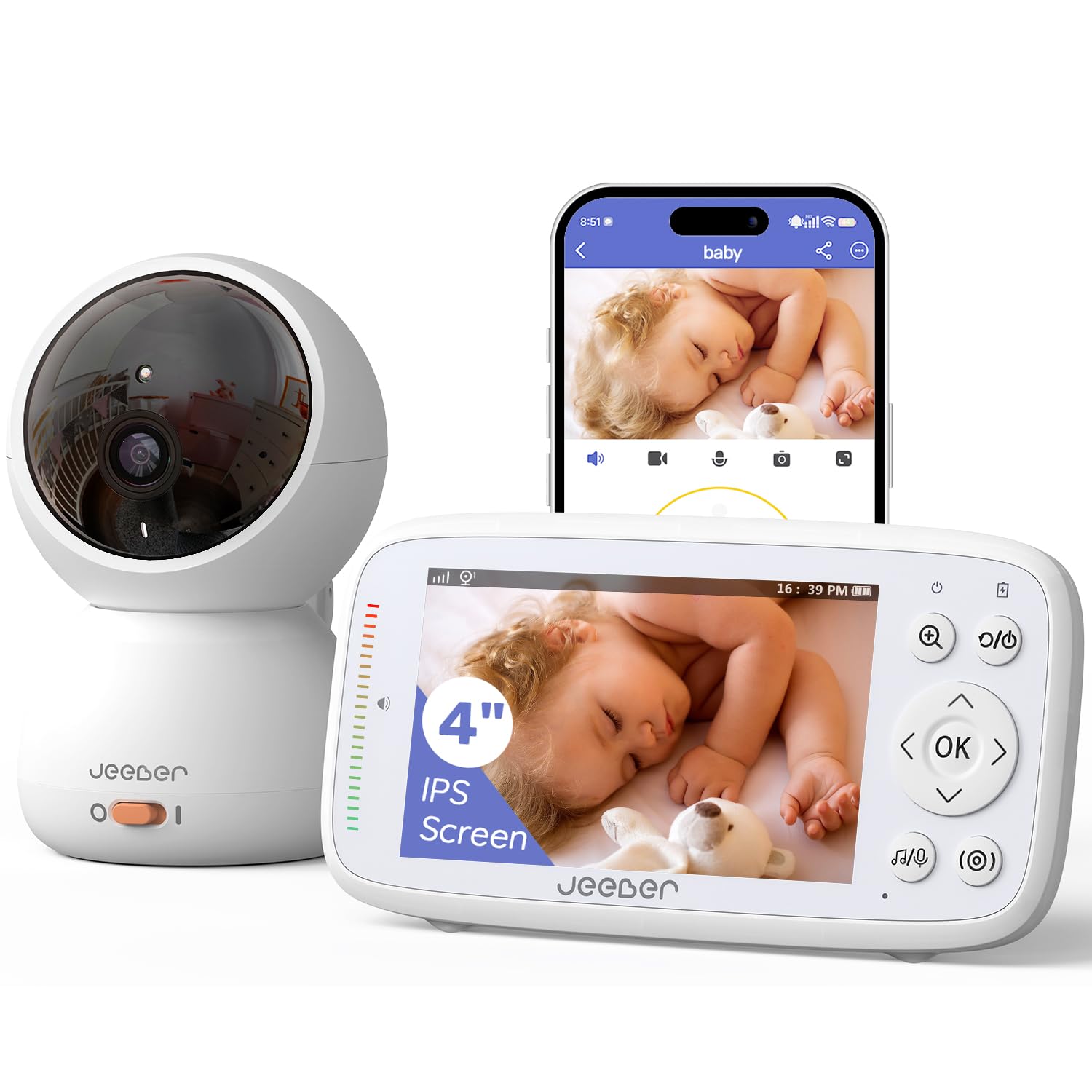
At the bottom of the price range, the jeeber still hands you both halves of a smart monitor: a 4-inch screen that works on its own, and a 2.4 GHz Wi-Fi app for when you're out of the house.

The parts list runs longer than the price suggests. Cry detection pushes an alert to your phone, two-way talk and preset lullabies let you respond, room temperature gets its own alarm, and the signal between camera and parent unit is FHSS with AES encryption. The parent unit is rated for up to 14 hours of screen-on use, and the camera's night vision reaches about 8 meters — enough for a nursery, not a hallway.

Where it shows its price is the Wi-Fi side. The local link between camera and parent unit is the dependable half; the phone app is the half that stutters, and a lagging feed is exactly what you don't want when you're checking in from work.

So treat it as a second monitor — the grandparent's spare room, the basement playroom, a travel bag — rather than the only one in a house where you'll lean on the app every night. A 2-year warranty and a 90-day return window make that an easy experiment to run.

Pros

  • Screen and app for the least money here
  • 2-year warranty and 90-day returns
  • Up to 14 hours on the parent unit
  • Cry alerts with two-way talk

Cons

  • Wi-Fi app feed lags behind the local link
  • 4-inch screen is the smallest here
Our verdict

Best as a second monitor for a spare room or a grandparent's house, where its price and 2-year warranty matter more than Wi-Fi polish.

Check Latest Price
8

No-Wearable Tracking

Philips Avent SCD971/37

83 /100
LBD Score Excellent

Key details

App
US only
Camera
1080p
Screen
5-inch HD
Tracking
Wearable-free breathing motion
View on Amazon

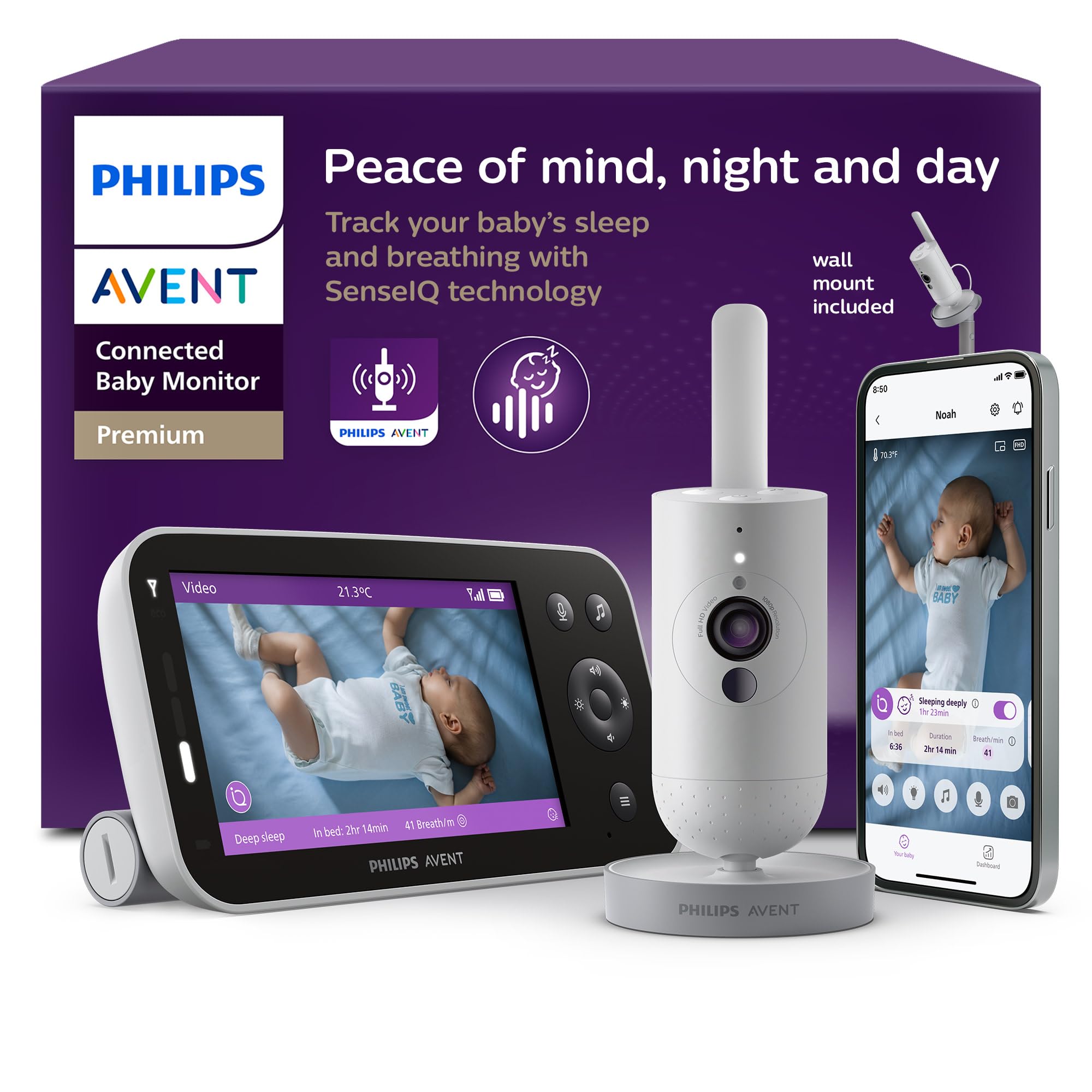
The Avent is the only monitor in this set that watches breathing without putting anything on the baby. SenseIQ reads motion from the camera's pixels, so there's no sock, no band, and nothing to fit before bed.

It's a proper hybrid otherwise: a 5-inch HD parent unit and a 1080p camera with night vision, a wall mount in the box, a rechargeable battery in the screen, and a range Philips rates at up to 1,300 feet. The app adds remote viewing and a sleep diary, and there's a cry analyzer that sorts cries into categories through an outside service.

What it doesn't do is measure pulse or oxygen. The breathing readout is motion-based, which is a different and less clinical thing than the Owlet's sock, so don't buy this expecting hospital-style numbers. The app is US-only as well, the same catch as the Babysense.

Where that leaves us: this is the pick for a parent who wants a breathing signal without a wearable on a newborn, and who doesn't mind paying near the top of this range to get it. On the things that matter every night — picture, screen, mounting — it delivers.

Pros

  • Wearable-free breathing and sleep tracking
  • 5-inch HD parent unit plus app
  • Wall mount included

Cons

  • Motion-based breathing, not pulse or oxygen
  • App only available in the USA
Our verdict

The one to choose if you want a breathing signal without a wearable on the baby — accepting motion-based data and a US-only app.

Check Latest Price

How We Tested Smart Baby Monitors

We started with about 40 monitors and cut the list by reading spec sheets and return complaints: does it charge a subscription for the features it advertises, does it come with a parent unit or only an app, can it hold a second camera, and what does it cost to run after year one. That left 12 units, which we set up in our own homes and used for six months.

Setup came first. I unboxed and installed each one alone on a weeknight after bedtime, timing how long it took from box to live picture and noting whether the mount needed tools, whether the stand felt steady enough to survive a toddler thumping the crib, and whether the app demanded an account or a Wi-Fi band change before it would show anything. Then we lived with them: overnight, through naps, handed between two phones, and left with a babysitter who had never seen the app.

We kept a running log of every dropout, every false cry alert, and how fast the feed came back after we rebooted the router on purpose. Range got tested the unglamorous way, walking the phone to the far corner of the house, down to the basement, and out the back door. Night vision was judged at full darkness, with a night light, and with the hallway light on, watching for grain and for lag between movement and image. Battery life meant a full charge run overnight at default settings. For sound, we listened for hiss and delay and compared which alerted first, the app or the parent unit. Value came last, when we totaled what a subscription bought and what it didn't.

How to Choose a Smart Baby Monitor

Decide Between a Parent Unit, an App, or Both

A hybrid system gives you a dedicated screen that talks to the camera directly, plus an app for when you're out of the house. An app-only monitor like the Nanit puts everything on your phone and does it better than most hybrids do, but your phone becomes the monitor, and that is a problem on the night it's charging in the kitchen.

The test we use is simple: if the router rebooted right now, what would you be holding? For most households the answer should be a parent unit. Go app-only when the sleep data is the reason you're buying, or when a second screen in the house would just gather dust.

Treat the Connection as the Main Feature

Nearly every camera here runs on 2.4 GHz Wi-Fi, which pushes through walls better than 5 GHz but shares airtime with every other device nearby. Put the camera on that band deliberately, keep the router off the floor and out of a cabinet, and test the live view from the furthest corner of the house before the baby arrives.

The trap is assuming a strong signal at the router means a strong signal at the crib. Distance and walls decide it, and a single mesh node in the hallway usually fixes more than a bigger router does.

Judge Night Video, Not the Resolution Number

1080p versus 2K matters far less than how a camera handles a dark room. Infrared night vision gives you a black-and-white image with real detail; night-color modes look friendlier but smear movement. Range figures such as the jeeber's 8 meters describe the infrared reach, not how much of the crib you'll actually see.

Mounting angle decides the rest. A camera above the crib looking down shows you the mattress; one at rail height shows you the rail. A floor stand or a crib clip gets the angle right without a shelf or a drill.

Understand What Smart Tracking Can Tell You

Three approaches are on offer. A wearable like the Owlet's sock is FDA-cleared to track pulse rate and oxygen and alerts on ranges you set. A wearable-free system like the Philips Avent reads breathing motion from the camera. Camera-based sleep tracking like the Nanit's logs sleep, wake-ups, and visits, then suggests wake windows.

None of them prevents SIDS and none replaces safe sleep. Pick the one whose alerts you'll actually act on, because a monitor that wakes you for false alarms costs you the sleep it was meant to protect.

Add Up the Cost After the Box

The purchase price is rarely the whole bill. A second camera for a second child can rival the cost of a basic monitor, cloud recording usually means a subscription, and a microSD card is the cheapest way to keep local footage — both the Blemil and the Dr.Care take one.

Batteries are the slow cost. A parent unit whose cell stops holding a charge becomes a parent unit that lives on a cable, and replaceable cells like the Dr.Care's are the exception rather than the rule.

Frequently Asked Questions

Final Verdict

Buy the Dr.Care VistaView first. It's the one monitor here that doesn't make you choose between a parent unit on the nightstand and an app in your pocket, and the removable battery means a dead screen never becomes a 3 a.m. problem. For most families that combination is worth more than any single headline feature on this page.

Change the requirement and the answer changes with it. Two children in two rooms point to the Babysense TOUCH and its 7-inch split screen. A need for overnight oxygen and pulse readings points to the Owlet Dream Duo. And if the budget is the deciding factor, the Blemil gets you a real screen, an app, and sharp video for less than the rest.