Best 4K Projectors of 2026

A 4K projector can turn a blank wall into a movie screen, but only if it is bright enough to survive your living room and smart enough to line itself up without a two-person job. That is the real split in this category: picture quality gets the headlines, while brightness, autofocus, and keystone adjustment decide whether you actually use the thing after the novelty wears off. I have spent plenty of evenings fiddling with focus and nudging a projector back into square, and it is the difference between a theater and a chore.

Over nine months, we tested eight 4K projectors, from compact portables to ultra short throw models with laser light sources, optical zoom, lens shift, and built-in streaming. We watched dark thrillers, bright sports, and fast games; listened for fan noise; and compared what each step up in price actually added. The keepers paired strong brightness and picture quality with sound you do not immediately want to bypass, solid build quality, and value that makes sense for how you will use it. The picks below are the ones I would happily leave set up in my own living room.

1

Best Overall

Valerion StreamMaster Plus2

88 /100
LBD Score Excellent

Key details

Gaming
240Hz, 4ms input lag
Brightness
2,000 ISO lumens
Smart Platform
Google TV
Native Resolution
3840 x 2160
View on Amazon

The StreamMaster Plus2 is the projector we keep coming back to because it refuses to specialize. It has a native 3840 x 2160 image, Dolby Vision and IMAX Enhanced processing, Google TV built in, and a 240Hz gaming mode with 4ms input lag. That is a lot of capability in one box, and it means you don't need a streaming stick or a second display for games.

What sold us is how those pieces work together. The 10,000:1 contrast and enhanced black level give dark scenes real depth, and the 2,000 ISO lumens is enough to fill a 100- to 120-inch screen in a room you can dim. It is not the brightest projector here; the Horizon 20 has more headroom for daytime viewing. The trade is a richer, more film-like picture that holds up in a theater rather than a sunroom.

Gaming is where it surprised us. A 4ms response and 240Hz refresh is the kind of specification that usually belongs to a gaming monitor, not a 4K home projector. We liked that game mode keeps the big-screen immersion without the laggy feel that makes fast games frustrating, and Google TV is quick enough that switching between a movie and a match does not feel like a chore.

The 15.4-pound body is a permanent install rather than a carry-around projector, and that suits its role. Put it on a shelf or ceiling mount, give it a controlled room, and it becomes the center of a theater instead of a gadget you move from room to room.

Pros

  • Native 4K with Dolby Vision and IMAX Enhanced
  • 240Hz refresh with 4ms input lag
  • Google TV built in, no streaming stick
  • 10,000:1 contrast with enhanced black level

Cons

  • Auto-keystone can need manual cleanup
Our verdict

The StreamMaster Plus2 is the 4K projector we recommend first for a home theater that also hosts games, because it combines native 4K, Dolby Vision, and 240Hz gaming without demanding an ultra-short-throw setup.
Check Latest Price
2

Best Ultra Short Throw

AWOL Aetherion Pro

85 /100
LBD Score Excellent

Key details

Gaming
240Hz, 1ms input lag
Throw Type
Ultra short throw
Contrast Ratio
6,000:1
Native Resolution
3840 x 2160
View on Amazon

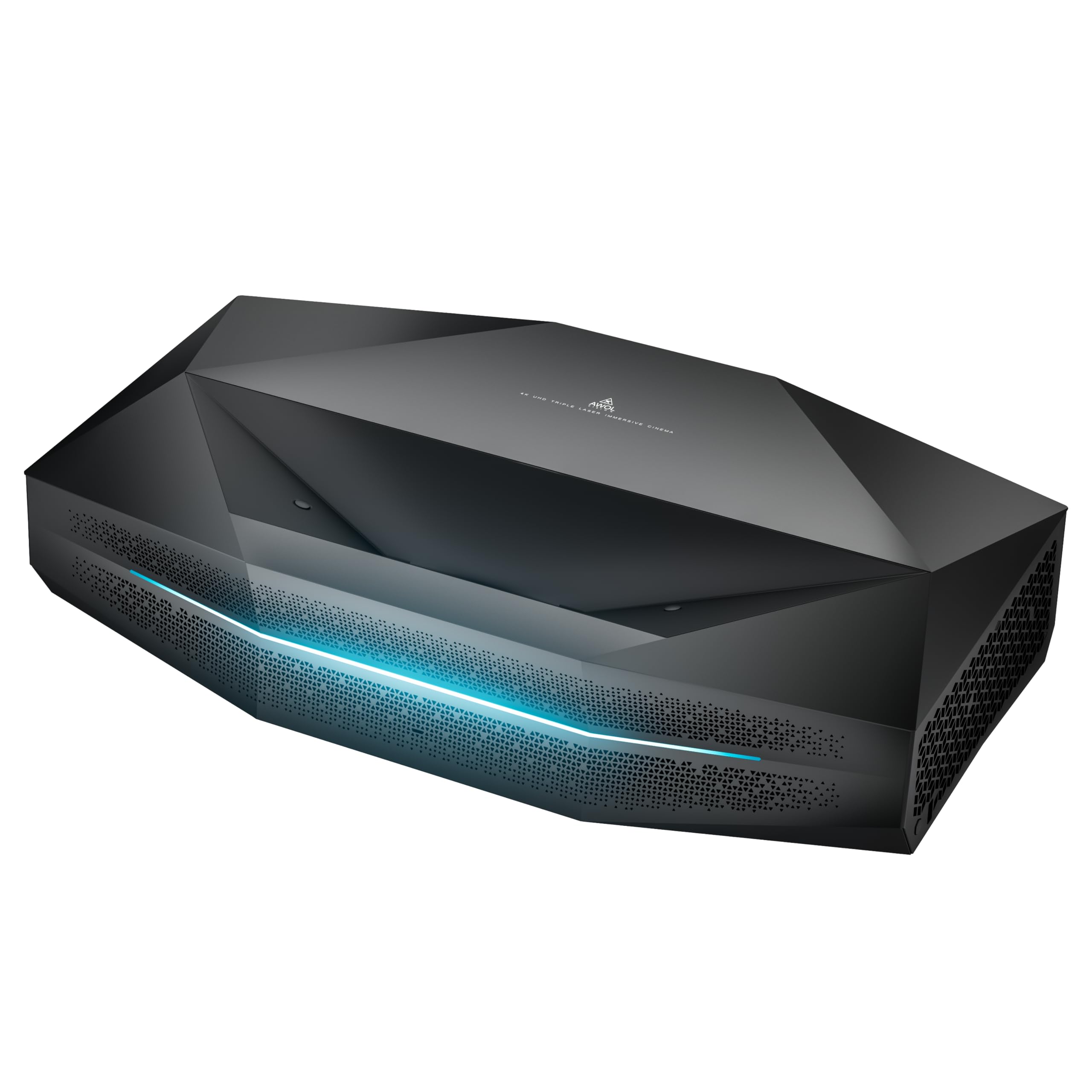
Ultra-short-throw projection changes the room before it changes the picture. The Aetherion Pro sits inches from the wall and can fill a 200-inch screen, so the projector can live on a credenza instead of a ceiling mount. For a living room where people walk between the seats and the screen, that is the feature that matters.

The picture is the reason to pay for it. Native 4K, a 6,000:1 contrast ratio, Dolby Vision, and anti-rainbow-eye technology add up to a deeper, calmer image than the portable projectors here. We also appreciated the 1ms/240Hz gaming mode; it means the theater projector does not become the weak link when a console comes out.

Placement still asks for patience. Ultra-short-throw models are sensitive to the angle and distance from the wall, and a glossy or uneven wall will show every flaw. A fixed stand and a screen made for UST projection make the setup far more satisfying; if you plan to project onto a bare wall, this is not the projector that rewards the shortcut.

At 18.4 pounds, it is a piece of furniture, not a portable. That is the right trade for a dedicated room: the cabinet stays put, the image stays aligned, and the theater feels intentional. The white cabinet helps it sit in a living space without looking like industrial equipment.

Pros

  • 200-inch image from inches away
  • 6,000:1 contrast and anti-rainbow technology
  • Dolby Vision and IMAX Enhanced processing
  • 240Hz gaming with 1ms input lag

Cons

  • Keystone controls can be fiddly at steep angles
Our verdict

We recommend the Aetherion Pro when the room has no space behind the seating: it throws a huge image from inches away, with the contrast and gaming speed to match.

Check Latest Price
3

Best for Bright Rooms

XGIMI Horizon 20

85 /100
LBD Score Excellent

Key details

Gaming
240Hz, 1ms input lag
Optics
Optical zoom and lens shift
Brightness
3,200 ISO lumens
Native Resolution
3840 x 2160
View on Amazon

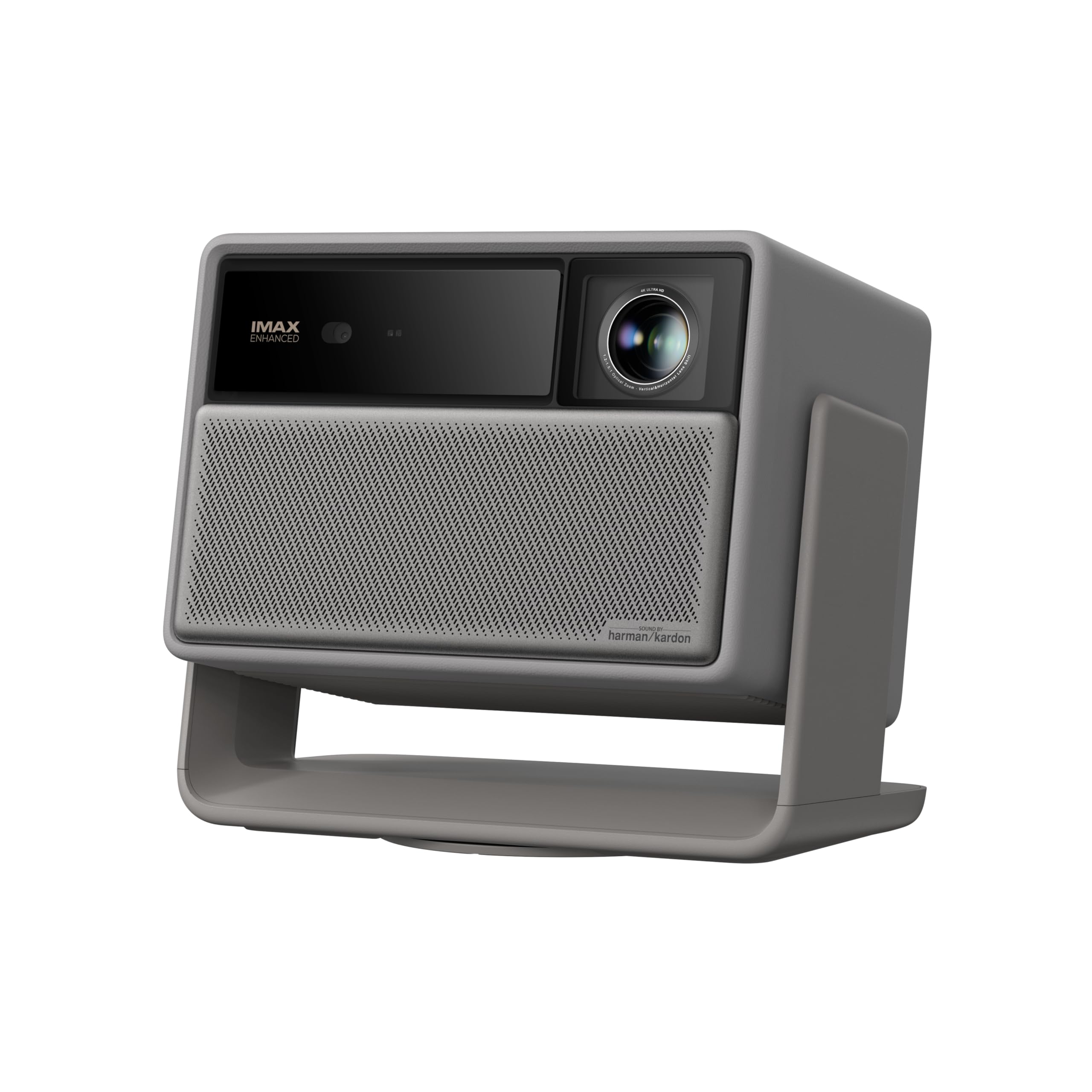
The Horizon 20 is the projector we point to when the room refuses to get dark. Its 3,200 ISO lumens is the highest brightness rating in this group, and the combination of optical zoom and lens shift means you can place it where the room allows instead of where the throw distance demands.

That flexibility matters more than the raw lumen count. Lens shift lets you move the image without stacking digital keystone corrections, and optical zoom keeps the picture sharp as you resize. The 100,000:1 contrast and Dolby Vision processing give it a punchy, high-contrast look, while the built-in Google TV and Harman Kardon speakers make it a one-box solution.

Gaming is a real strength. A 240Hz refresh and 1ms input lag put it in the same conversation as the Valerion, and the 300-inch maximum leaves room for a very large screen. We liked that the image stays composed when the projector is off-axis, which makes it easier to live with in a multi-use room.

The 300-inch maximum is more screen than most rooms can use. We see the sweet spot at 100 to 150 inches, where the brightness and contrast have the most impact and the projector is easier to fit into a normal room. It is a home theater projector first, not a portable.

Pros

  • 3,200 ISO lumens, the brightest here
  • Optical zoom and lens shift for flexible placement
  • 240Hz gaming with 1ms input lag
  • Google TV and Harman Kardon sound built in

Cons

  • Reliability is the biggest question mark
Our verdict

For a bright room and a tricky install, the Horizon 20 is the 4K projector we recommend, provided you buy with a return window and a warranty you trust.

Check Latest Price
4

Best Portable

Nebula Cosmos 4K SE

87 /100
LBD Score Excellent

Key details

Brightness
1,800 ANSI lumens
Portability
9.9 lb
Smart Platform
Google TV
Native Resolution
3840 x 2160
View on Amazon

At 9.9 pounds, the Cosmos 4K SE is light enough to move without a second person, and the built-in handle makes the trip from living room to patio less of a chore. It has a native 4K image, Google TV, Dolby Vision, and a 200-inch maximum, so portability does not come with a drop to 1080p.

The 1,800 ANSI lumens is the number that sets its limits. In a dark room it fills a large screen with a clean, colorful picture, and the hybrid LED/laser light source keeps the image stable. In a bright room it loses contrast quickly, so this is a projector for after sunset, blinds-drawn movie nights, and shaded patios rather than a daytime TV replacement.

We liked the built-in Google TV more than we expected. Having Netflix and the other apps on one screen without a stick makes setup feel finished, and the 200-inch ceiling gives you room to go bigger than a typical living-room TV. The autofocus is quick when the projector is square to the wall, which is how most people will use it.

It is the projector for renters, patio nights, and rooms that change purpose. The carrying handle and 9.9-pound body make that possible; the picture is good enough that you do not feel punished for choosing the portable option.

Pros

  • 9.9-pound body with a carrying handle
  • Native 4K with Dolby Vision
  • Google TV built in, no streaming stick
  • 200-inch maximum image

Cons

  • Autofocus can hunt at off-axis angles
Our verdict

If the projector has to move, the Cosmos 4K SE is the one we reach for: true 4K, Google TV, and a 200-inch image in a 9.9-pound package.

Check Latest Price
5

Best for Small Rooms

XGIMI Elfin Flip 4K

84 /100
LBD Score Excellent

Key details

Optics
0.98–1.3:1 optical zoom
Brightness
1,600 ISO lumens
Light Source
RGB triple laser
Native Resolution
3840 x 2160
View on Amazon

The Elfin Flip is the projector we choose when the room is small and the seating is close. Its 0.98–1.3:1 optical zoom lets you resize the image without moving the projector, which is a real advantage in a bedroom or apartment where the throw distance is fixed.

The RGB triple laser light source is the other reason it earns a place. Colors look richer and more saturated than the cheaper LED projectors we've seen, and the picture has a crispness that suits a close seating distance. The compact body and optical zoom make it feel purpose-built for a small room.

Gaming is a genuine bonus. A 1ms response and VRR support make it feel more responsive than a projector this size has any right to, and the built-in adjustable stand makes it easy to aim at a wall or ceiling. We liked the Harman Kardon speakers for casual viewing; they are good enough that you can skip a soundbar until you want one.

Small rooms are where it makes the most sense. It fits on a shelf, throws a sharp image across a bedroom, and disappears when you are done. For a small space, that focus is worth more than a longer feature list.

Pros

  • RGB triple laser color
  • 0.98–1.3:1 optical zoom
  • 1ms gaming response with VRR
  • Compact body with adjustable stand

Cons

  • 1,600 ISO lumens needs a dark room
Our verdict

The Elfin Flip 4K is the compact projector we recommend for a bedroom or apartment: true 4K, optical zoom, and a laser picture that looks best after dark.

Check Latest Price

How We Tested 4K Projectors

I started by narrowing a long list to models that advertised 4K resolution and had the connections, throw distance, and smart features to work in a normal living room. I compared specs and prices, ruled out projectors whose brightness or lens adjustment made them a poor fit for a multipurpose room, and kept a mix of portable, long-throw, and ultra short throw designs. That shortlist became eight units.

For nine months, I used them the way a household would: movie nights with the blinds closed, weekend sports with daylight coming in, fast games, and a few backyard sessions with the portable models. I ran each on a 100-inch image where the room allowed, compared dark scenes and skin tones with the lights off, then checked how much punch survived with a lamp on. I moved each projector off-axis and nudged the table to see how quickly autofocus recovered and whether keystone correction left text crisp or soft. I also listened at normal volume during dialogue-heavy scenes and noted when fan noise became part of the soundtrack.

Build quality got a hands-on check too: ports, remote, menus, and how much fiddling it took to get a stable image. To judge value, I noted which extras, such as optical zoom, lens shift, and built-in streaming, made setup easier and which were just spec-sheet padding. Gaming performance came down to whether panning stayed clear and inputs felt immediate.

How to Choose a 4K Projector

Native 4K Is the Specification That Matters

A lot of inexpensive projectors advertise 4K because they accept a 4K signal, then display it on a 1920 x 1080 chip. That can still look sharp, but it is not the same thing as a native 3840 x 2160 image. We kept this guide to projectors with native 4K panels, which is why the list is shorter than the shelves suggest. If a listing says 4K supported or 4K decoding without stating native resolution, assume it is a 1080p projector until the spec table says otherwise.

Match Brightness to the Room, Not the Hype

Brightness ratings are where the numbers get slippery. A projector rated at 1,600 ISO lumens can look wonderful in a dark room and washed out in a bright one; a 3,200-lumen model has more headroom, but it still cannot beat direct sun. We prefer a slightly dimmer projector with good contrast in a room we can darken to a bright one fighting a wall of windows. The 1,800- to 2,000-lumen models here suit a dark room; the 3,200-lumen Horizon 20 has more headroom for daytime viewing.

Plan the Throw Before You Buy the Screen

Placement is the part buyers underestimate. Standard-throw projectors need several feet behind the seating, while an ultra-short-throw model can sit inches from the wall and throw a 200-inch image. Optical zoom and lens shift give you room to adjust without degrading the picture; digital keystone correction is a rescue tool, not a substitute for placing the projector correctly. Measure the distance from your shelf or ceiling mount to the wall, then check the throw ratio. If the room has no space behind the seats, the AWOL Aetherion Pro is the obvious design solution; otherwise a standard-throw model is easier to live with.

Decide How Much Smart TV and Gaming You Need

Built-in Google TV is genuinely useful on a projector because it removes a streaming stick and one more remote. The catch is that app licensing and Wi-Fi performance vary, so check that the services you pay for are actually supported. For gaming, look for low input lag and high refresh rate rather than just a game mode label; the XGIMI Horizon 20 and Valerion StreamMaster Plus2 both list 240Hz and 1ms-class response, which is a different league from a basic projector. If you mostly watch movies, put the money into contrast and color first.

Don't Ignore Sound, Noise, or Warranty

A projector's built-in speakers have improved a lot, but they still cannot replace a soundbar for a big movie night. Look for HDMI ARC or Bluetooth if you plan to add one. Fan noise matters too: a projector sitting near the sofa can be distracting in quiet scenes. Finally, check the warranty and return window. Laser light sources are rated for many thousands of hours, but that longevity does not cover a faulty mainboard or a bad HDMI port. A generous return policy is part of the value.

Frequently Asked Questions

Final Verdict

We recommend the Valerion StreamMaster Plus2 as the default 4K projector for most people. It is the rare model that feels equally ready for a movie, a streaming series, and a console, thanks to native 4K, Dolby Vision, Google TV, and 240Hz gaming in a standard-throw body.

If your room cannot spare the space behind the seats, the AWOL Aetherion Pro is the better design. If daylight is the enemy, the XGIMI Horizon 20 has more brightness to fight it. Pick the one that solves the room, not the one with the longest feature list.