Best TV Antennas of 2026

The first time I pulled the cable box out of the living room, I expected the antenna part to take ten minutes. It took an afternoon, three rescans, and a move from the bookshelf to the window. The difference between a crisp local newscast and a frozen square is often placement, not price.

Over the past seven months, my team and I tested 14 antennas—flat indoor panels, rabbit ears, amplified models, and outdoor units for a roof or attic. We set them up in living rooms, attics, and on a camper van for weekend trips. We counted channels, watched whether the picture held in rain and wind, and noted how clear the instructions were and how much mounting hardware each one needed.

The specs that sound impressive—mile-range claims, 4K and 8K support—matter less than whether the antenna covers VHF and UHF and whether you can aim it. Amplifiers can help a weak signal, but they can also overwhelm a strong one. Below are the ones that earned a spot by being easy to live with, not just easy to unbox.

1

Best Overall

FGOTV Indoor/Outdoor Antenna

84 /100
LBD Score Excellent

Key details

Placement
Indoor or outdoor
Coax Cable
16.5 ft
Range Modes
Short and long range
Stated Range
250 miles
View on Amazon

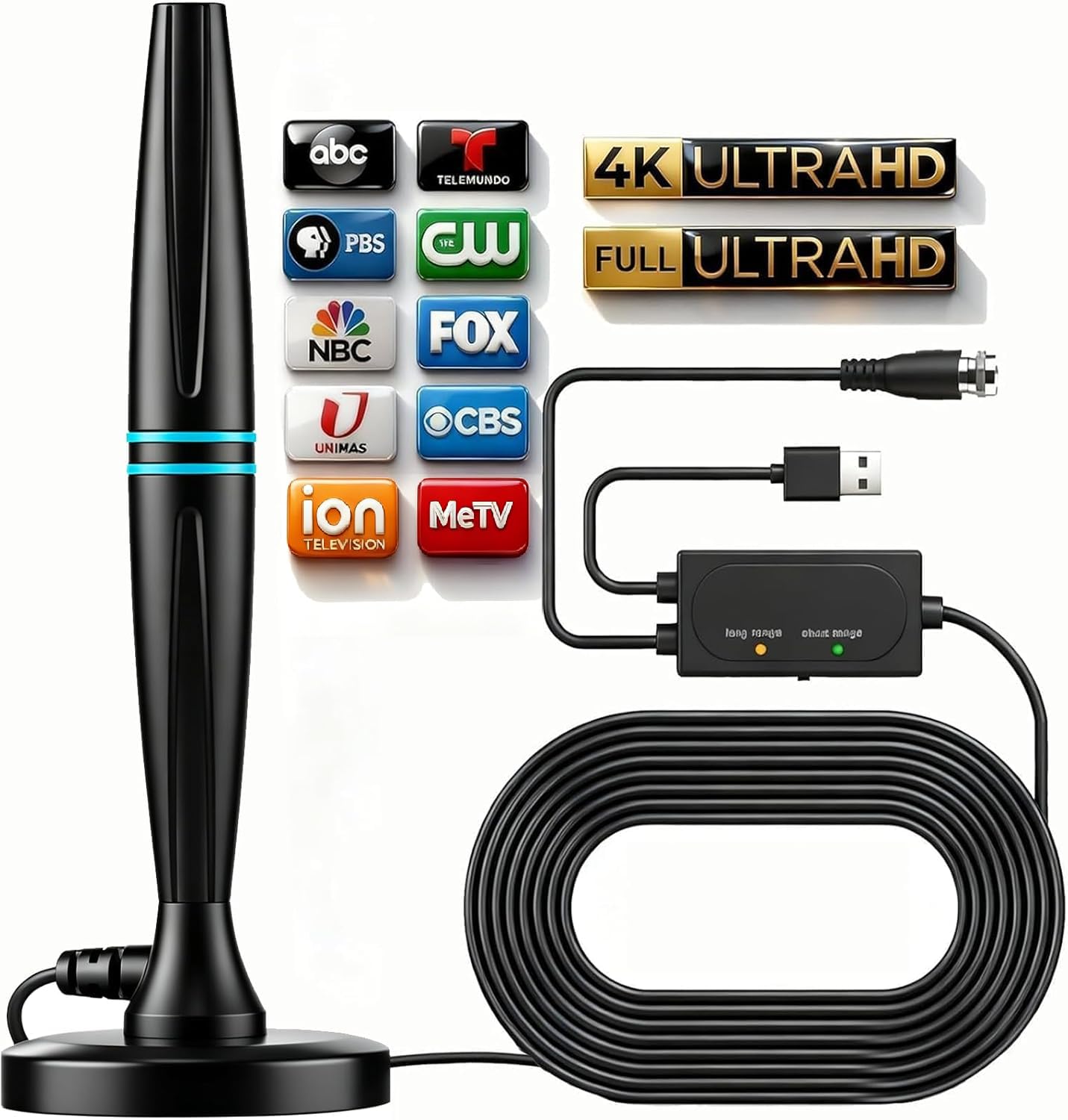
Two switchable modes is an unusual thing to find on an inexpensive indoor antenna, and it is the detail that makes this one easy to live with. Short-range mode is meant for homes close to the transmitters, long-range mode for everything further out, so you are matching the antenna to your address instead of hoping one fixed setting suits it. Most panels at this end of the market give you a slab, a plug, and no explanation.

Setup is close to nothing. The coax screws onto the ANT IN jack, the antenna goes somewhere with a clear path toward the towers, and the TV finishes the job with a channel scan. The 16.5-foot cable is the practical part — long enough to reach a window from a set on the opposite wall, which is where most indoor antennas end up. We hung ours high and away from the television, and that placement did more for the picture than either mode switch.

It is rated for indoor and outdoor use, and the housing is a slim dark cylinder that does not need shelf space. What it will not do is defy physics: reach depends on distance, terrain, and whatever sits between you and the transmitter, so placement beats any setting on the unit. Get it high, get it facing the towers, and rescan every time you move it.

For the ordinary cord-cutter — towers within half an hour's drive, no ridge in the way — this is the antenna we reach for first. The two modes give you one variable to try before you commit to a roof install, the cable reaches a window without an extension, and the whole thing is done in minutes. Past 40 miles, or with a hill between you and the transmitters, put the money into one of the outdoor picks below instead.

Pros

  • Switchable short- and long-range modes
  • 16.5 ft coax reaches a window
  • Rated for indoor or outdoor use

Cons

  • Advertised range far outstrips real-world results
Our verdict

For most cord-cutters within about 35 miles of the towers, this is the antenna we tell people to buy first: quick to hang, easy to scan, and it finds the local networks without fuss.
Check Latest Price
2

Best Outdoor

GE Outdoor HD Antenna 29884

89 /100
LBD Score Excellent

Key details

Mount
J mount included
Weight
3 lb
Placement
Attic or outdoor
Stated Range
70 miles
View on Amazon

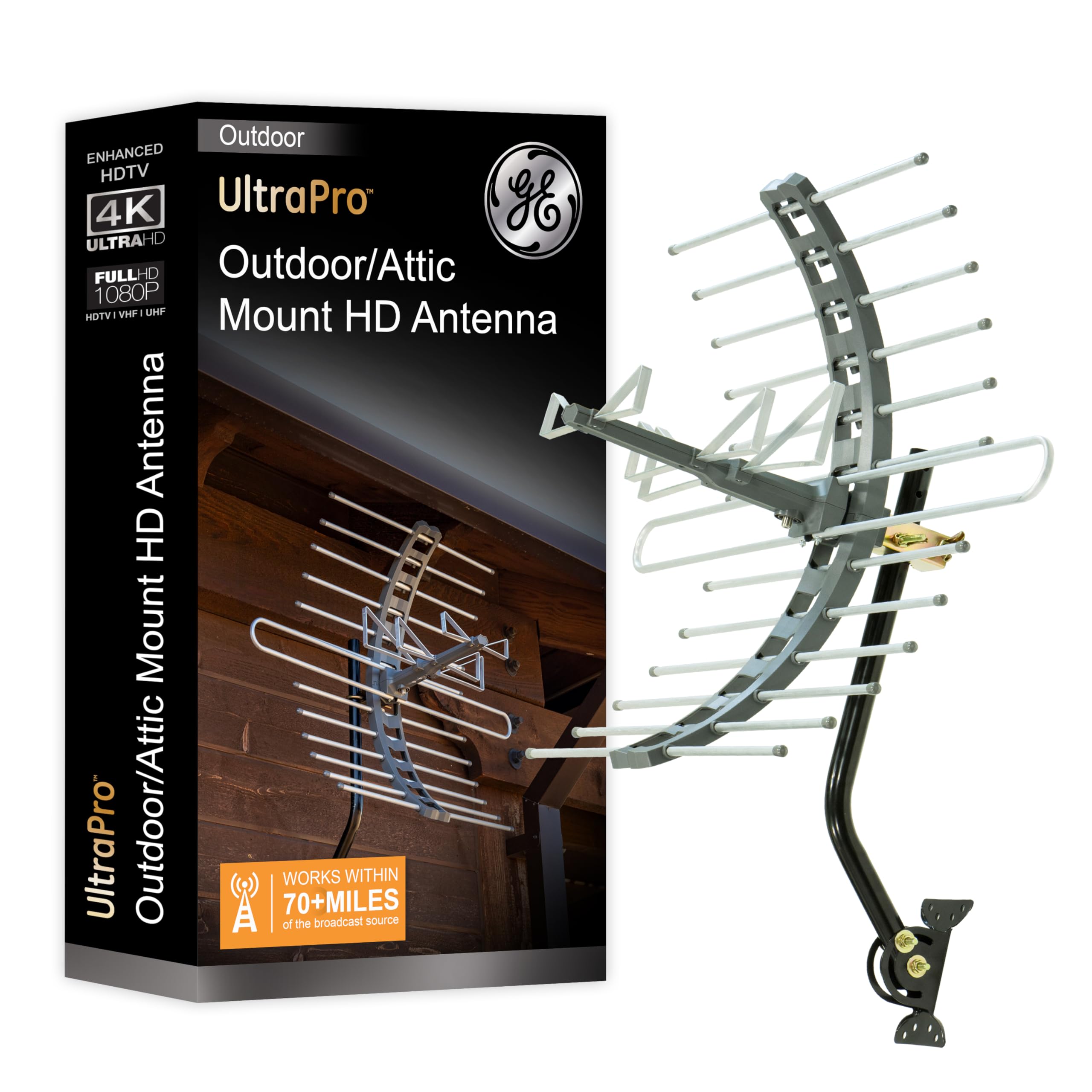
The box contains the antenna, a J mount, and the hardware to bolt the assembly to a roof, gable, or attic rafter — the mast is the part people forget to price in, and here it comes included. Assembly takes a genuine evening: the elements go on in sequence, the printed sheet is a small, sparse booklet, and the frame is light enough at 3 pounds that one person can carry it up and seat it.

Once it is up, it justifies the climb. The 70-mile VHF and UHF rating covers the suburban and small-market addresses where an indoor panel gives up, the housing is weather resistant enough to live outdoors year-round, and the limited lifetime warranty matters when the alternative is climbing up again in two years. We rate it the best outdoor value in this group.

Aim it at the towers, run a scan, and expect the major networks plus their subchannels. Two things to know before ordering: it is ATSC 3.0 ready, so it will not need replacing when NextGen TV reaches your market, but your TV still needs the tuner to use it. And if your towers sit past 70 miles or behind a ridge, this is the wrong tool — that is the Televes's territory.

Pros

  • J mount and hardware included
  • 70 miles of VHF and UHF reception
  • ATSC 3.0 NextGen TV ready
  • Light 3 lb frame for one-person work

Cons

  • Instructions are thin for a first roof install
Our verdict

If you have given up on window antennas, this is the one we send people up a ladder with: a complete rooftop kit, 70 miles of VHF and UHF reach, and NextGen TV support already built in.

Check Latest Price
3

Best for Scattered Towers

Antennas Direct ClearStream 4V

89 /100
LBD Score Excellent

Key details

Weight
4.1 lb
Warranty
Lifetime
Stated Range
70 miles
Reception Pattern
Multi-directional
View on Amazon

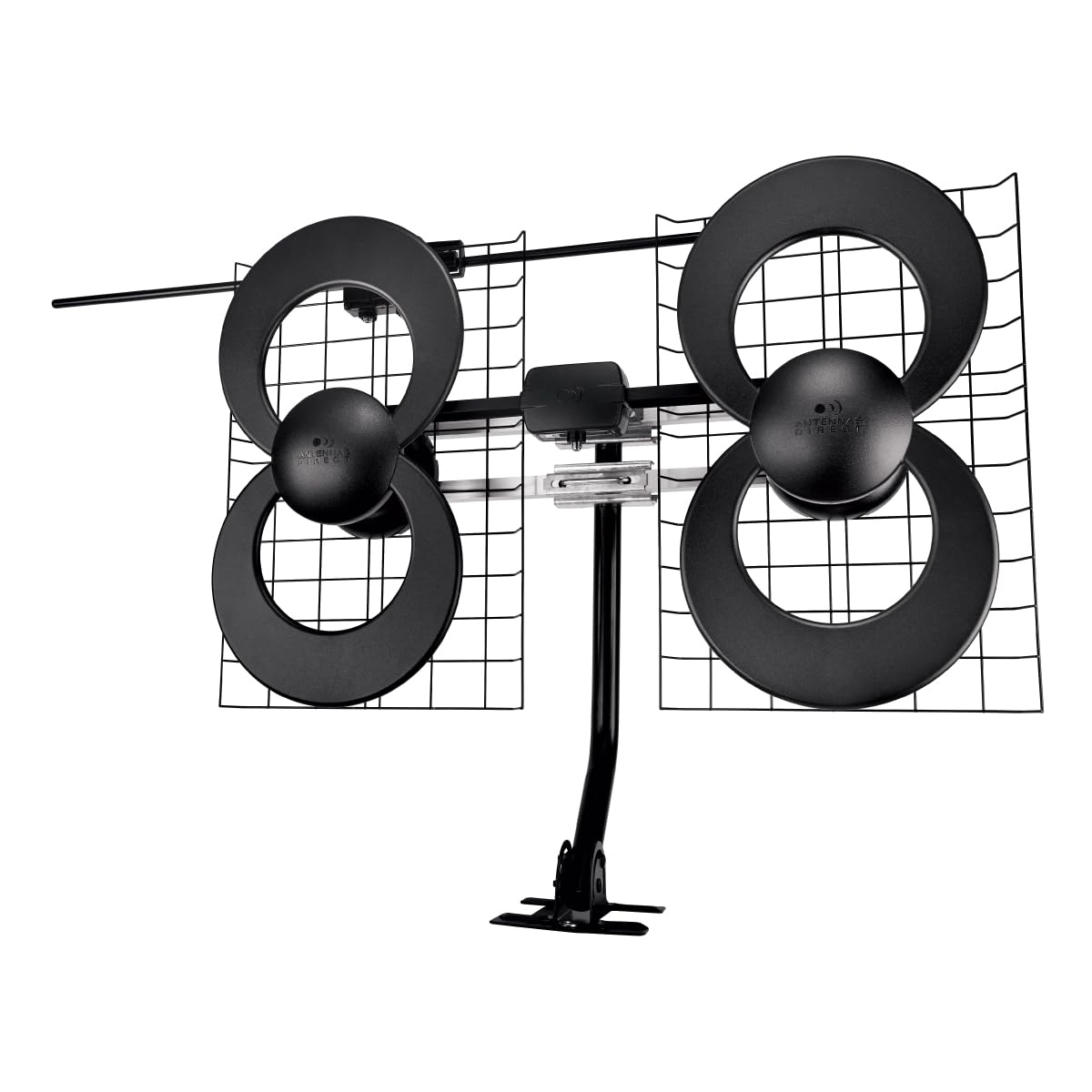
Four loops, reflectors, and Hi-VHF elements make the ClearStream look like something that belongs on a roof, and it is. The multi-directional pattern is the reason to pay for it: in markets where the network affiliates sit on two or three different bearings, it collects them without a rotor, and the reflectors add forward gain that helps hold a marginal signal together. We were surprised how much of the dial came back after swapping out a flat panel.

It is serious hardware at 4.1 pounds and 27.8 inches across, so plan on a mast, a gable, or an attic rafter rather than a windowsill — the 20-inch mast in the box saves a hardware run, and the lifetime warranty is the longest here. Two cautions. Multi-directional buys tolerance, not magic, so it still wants to face the general cluster. And this is premium money for a fixed install, which it earns only if your towers are genuinely scattered.

Pros

  • Multi-directional pickup without a rotor
  • Reflectors add forward gain
  • Lifetime manufacturer warranty

Cons

  • Large frame needs a mast or rafter
Our verdict

Worth the premium if your towers are spread across two or three directions: it collects several at once, so nobody is up on the roof turning a rotor every time the channel changes.

Check Latest Price
4

Best Long-Range

Televes DAT BOSS Mix LR

88 /100
LBD Score Excellent

Key details

Length
84.13 in
Amplifier
Built-in TForce
Filtering
FM, LTE, 4G/5G
Stated Range
80 miles
View on Amazon

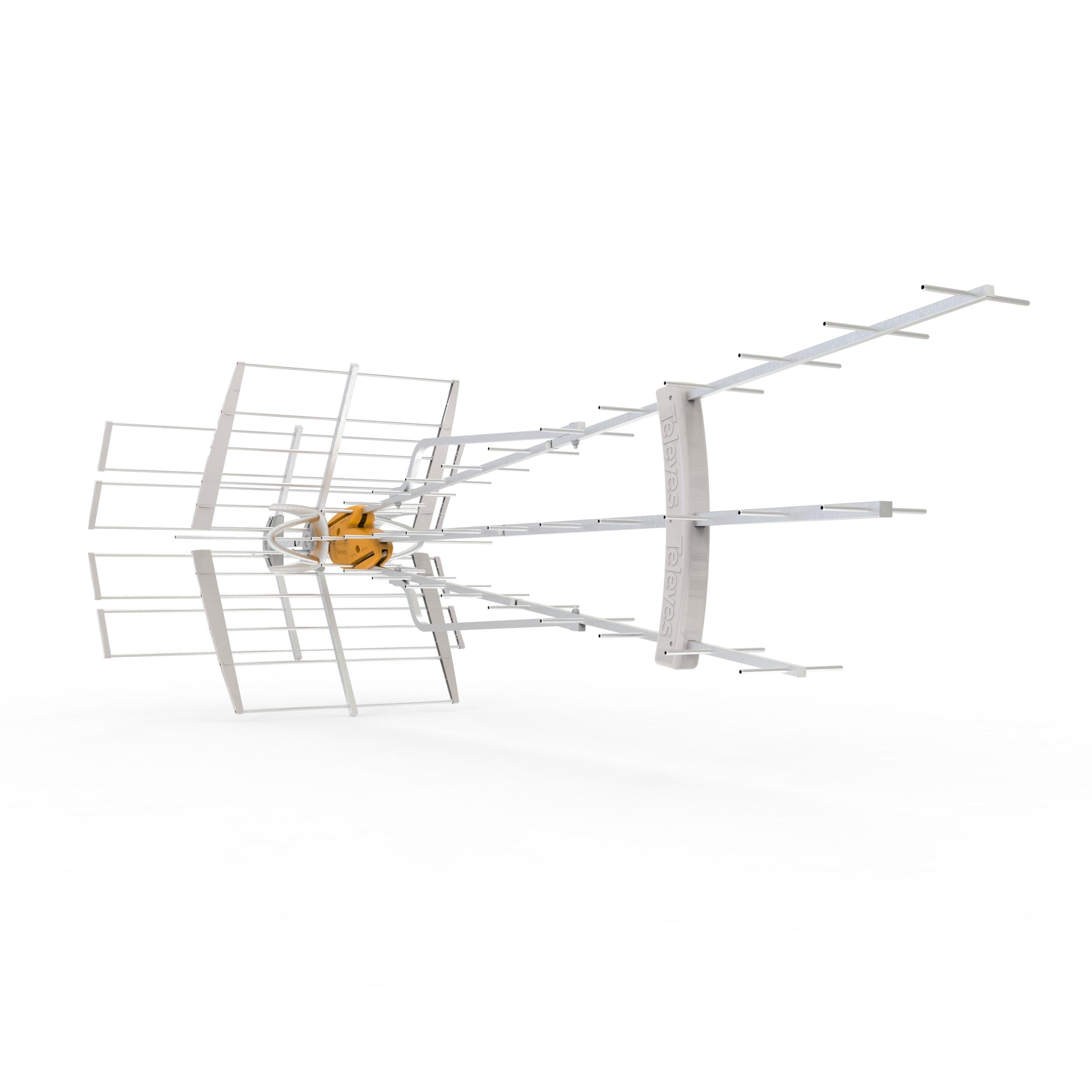
Unboxing this one is a commitment: 84 inches of boom, 34 inches of reflector, and a stack of aluminum elements in a very orange finish. It is the biggest antenna in this guide and it is meant to be, because everything about the layout — stacked triple boom, multiple directors and reflectors — is aimed at pulling a usable signal out of a place where smaller antennas find nothing.

The built-in TForce amplifier adjusts gain separately by band, 38 dBi on high VHF and 46 dBi on UHF, which matters when your network affiliates are split between the two. Just as useful is the filtering: FM, LTE, 4G, and 5G traps are built in, so a nearby cell site does not shred a channel that would otherwise be fine. Out in the country, that filtering often does more for you than the extra gain.

Assembly took us the better part of an afternoon on a picnic table, and the instructions are clear rather than elegant. Once aimed, the thing is steady: aluminum elements, stainless hardware, and a housing built to shrug off rain and UV. Plan the mount for two people — this is not a one-hand-up-the-ladder job.

This is the pick for the address that has already failed with everything else: 50-plus miles out, terrain in the way, or a market where the high-VHF stations are the ones you actually watch. For a suburban house 20 miles from the towers it is capability you will never use, and the size makes it a two-person project on a roof.

Pros

  • Per-band automatic gain control
  • Built-in FM and LTE/5G filtering
  • Weather-resistant aluminum construction

Cons

  • Very large and heavy to mount
  • Assembly runs to hours, not minutes
Our verdict

For a rural address where everything else came back empty, this is the antenna that earns its price: per-band amplification and serious filtering on a very large boom.

Check Latest Price
5

Best Indoor Panel

Channel Master FLATenna

83 /100
LBD Score Excellent

Key details

Coax Cable
12 ft RG6
Panel Size
12 x 15 in
Stated Range
35 miles
Broadcast Standard
ATSC 3.0
View on Amazon

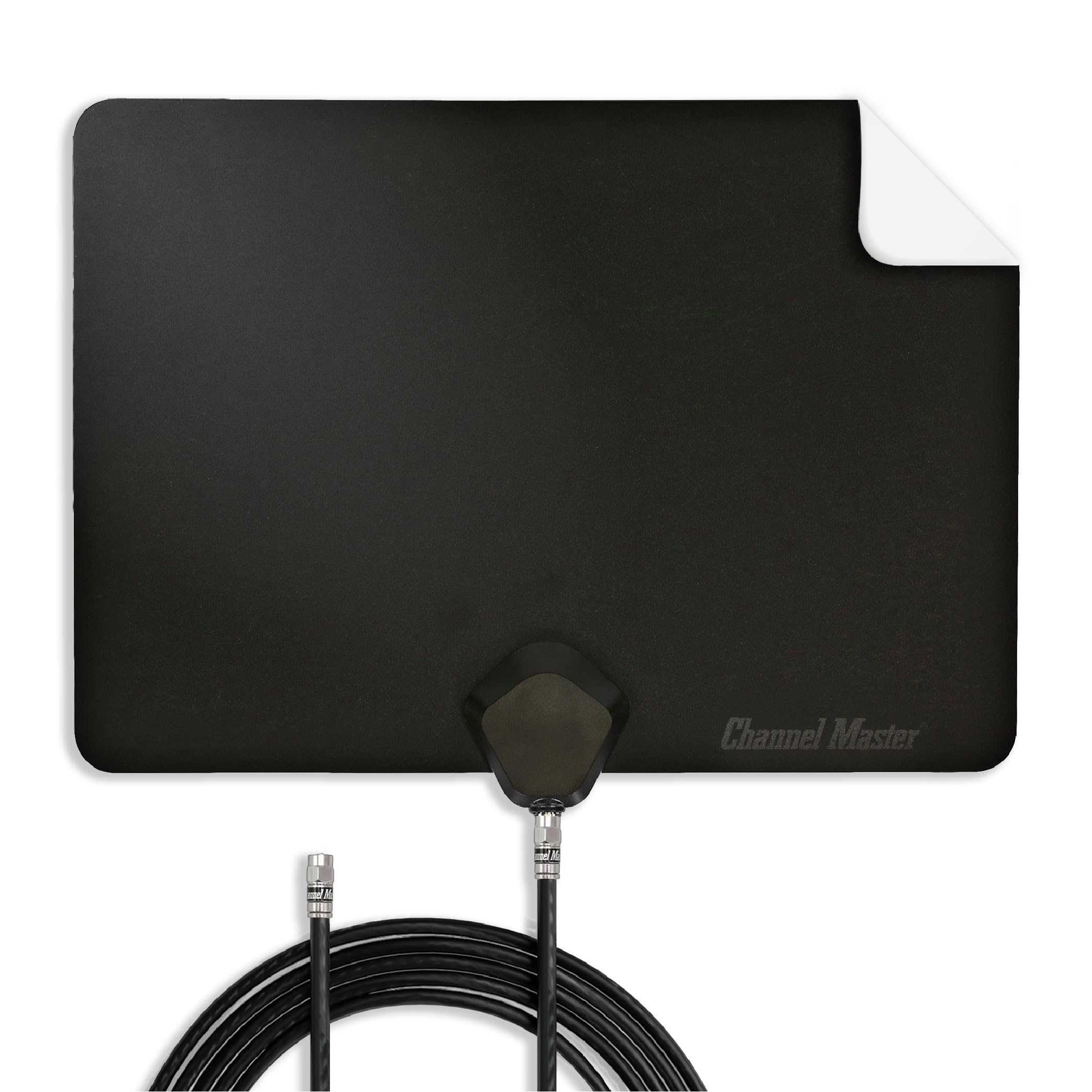
Thirty-five miles is the least exciting range figure on this page, and it is the one we believe. The panel is rated for realistic conditions — obstructions, walls, interference — rather than a number invented for the side of a box. If your towers sit inside that radius, that honesty is worth more than a bigger claim, because you can plan around it.

For a suburban house, or an apartment with a window on the tower side, this is the indoor antenna we trust most. It is 12 inches by 15 and thin enough to vanish against glass, black on one face and white on the other so it can match the room, and the 12-foot RG6 cable is better shielded than the thin stuff bundled with most panels. ATSC 3.0 support means it is ready for NextGen broadcasts where they exist.

One thing to fix before you hang it. The adhesive pads are the weak point on glass, and a panel that drops at two in the morning is a panel you stop trusting. Use the pre-drilled holes at the corners with pushpins or small screws instead — the panel is light enough that either holds it — and place it as high and as unobstructed as the cable allows.

Pros

  • Realistic 35-mile range rating
  • Well-shielded 12 ft RG6 cable
  • Reversible black and white face

Cons

  • 35-mile rating leaves fringe homes out
Our verdict

The indoor panel we trust most in a close-in market: an honest 35-mile rating, a well-shielded 12-foot cable, and a thin reversible face that disappears against a window.

Check Latest Price
6

Best Budget Tabletop

Philips Rabbit Ears Antenna

86 /100
LBD Score Excellent

Key details

Elements
Dipoles and loop
Footprint
7.5 x 3.5 x 6 in
Coax Cable
5 ft
Stated Range
30 miles
View on Amazon

Rabbit ears came back for a reason. A visible dipole is something you can move, and moving it is most of the battle when you are close to the towers but surrounded by walls. The two dipoles handle VHF, the circular loop handles UHF, and you adjust each by hand until the scan stops losing channels. It is a five-minute tuning session rather than a permanent installation, and that is the appeal.

The 5-foot cable is the catch. It is short enough that the antenna has to sit near the TV, which is exactly where reception is usually worst, so budget for an extension if the only good spot is a window across the room. The footprint is small, about 7.5 by 6 inches on a shelf, and nothing needs mounting.

Where it earns a place: a second TV, a spare room, a rental where you cannot put holes in anything, or a first experiment before you spend on an outdoor install. We keep one around for precisely that — it settles in an afternoon whether the signal is there at all before anyone commits to a mast.

Pros

  • Adjustable dipoles plus UHF loop
  • No mounting or assembly required
  • Small enough to tuck behind a set

Cons

  • 5 ft cable ties it to the TV
Our verdict

A budget way to experiment with over-the-air TV: adjustable dipoles you aim by hand, a tabletop footprint, and nothing to stick, drill, or assemble.

Check Latest Price
7

Best for RVs and Tailgates

GE Portable HD Antenna

82 /100
LBD Score Excellent

Key details

Base
Magnetic
Warranty
Limited lifetime
Reception
360° omnidirectional
Stated Range
20 miles
View on Amazon

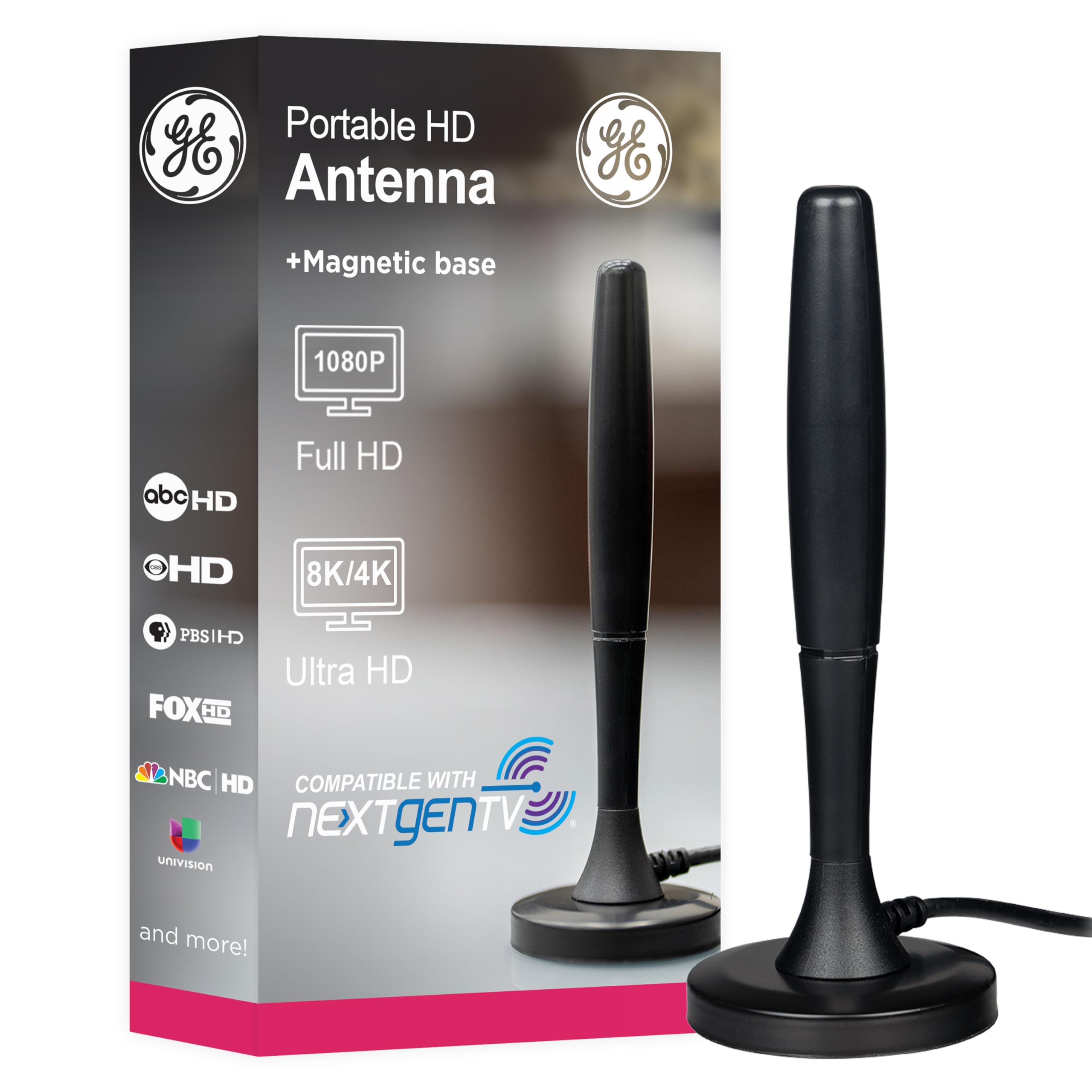
A tailgate with a generator and a small TV is its own kind of fun, and this is the antenna designed for it. It is the one we hand people who want local channels at a campsite rather than at home. The base is magnetic, so it parks on a truck roof, a steel RV panel, or a metal table; pickup is 360 degrees, so there is no aiming ritual; and it packs down small enough to live in the same bag as the TV.

The 20-mile rating is both the honest part and the limiting part. In a town with strong local signals it works fine; 40 miles out in the country it will not. Before you count on the magnet, check what you are sticking it to — aluminum RV siding and fiberglass will not hold it, so a steel roof or a metal shelf is what you are looking for. ATSC 3.0 support means it keeps working as NextGen broadcasts arrive.

Pros

  • Magnetic base grips metal surfaces
  • Omnidirectional, so no aiming
  • Compact enough to travel with

Cons

  • 20-mile range only suits strong-signal areas
Our verdict

Built for the camper, the tailgate, and the rental with no cable: a magnetic base, omnidirectional pickup, and a 20-mile reach that suits anywhere with strong local signals.

Check Latest Price
8

Clean Look

UltraPro Hover Antenna

80 /100
LBD Score Excellent

Key details

Mount
On top of TV
Reception
360°
Dimensions
17.3 x 3 x 1.7 in
Stated Range
40 miles
View on Amazon

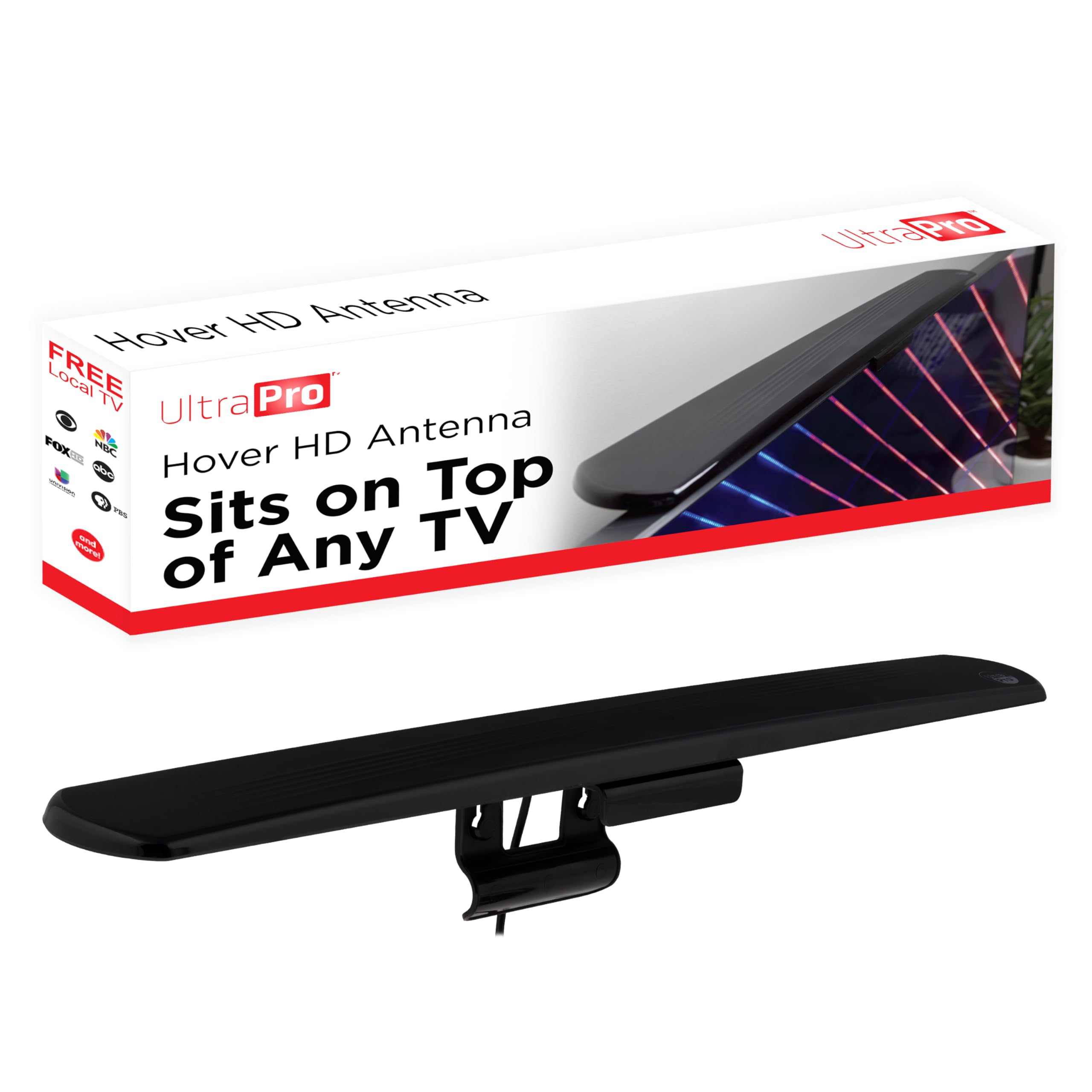
The Hover clips onto the top edge of the television and swivels horizontally, so there is no panel in the window and no cable trailing down the wall. It measures 17.3 inches across and 1.7 tall — a slim bar that reads as part of the set rather than an accessory bolted to the room. For a wall-mounted TV with no shelf beneath it, that solves a problem the flat panels cannot.

Reception is the trade. The 40-mile rating and 360-degree pattern are fine for a bedroom in a strong-signal suburb, and the local networks come in clean when the signal is there. It is also the pick with the most variable results in this group: in weaker markets it brings in fewer channels than a plain window panel, and on sets with thin bezels the bar can overlap the top of the picture.

We like it for the room where looks matter and the towers are close — a den with a mounted set, no shelf, and no appetite for a wire running to the window. If you are chasing a marginal signal, buy range and put up with the cable instead; this one is about living with the thing afterward.

Pros

  • Sits on the TV, using no wall space
  • Swivels to fine-tune without remounting

Cons

  • Can overlap the picture on thin-bezel TVs
Our verdict

The neatest-looking option here: it rides the top edge of the TV like a soundbar and swivels to aim, and it works nicely wherever the signal is already strong.

Check Latest Price

How We Chose and Tested the Best TV Antennas

We started by sorting through antennas that matched how people actually watch free TV: flat indoor panels, amplified indoor models, classic rabbit ears, attic and outdoor units, and a compact portable option for RV and tailgate use. We filtered out vague VHF/UHF claims, missing mounting hardware, and instructions that read like an afterthought. That left 14 antennas, which we tested over seven months.

Testing happened where antennas live. Indoors, we set each one on a shelf, taped it to a window, and tried it across the room using the supplied coax. In an attic and on an outdoor mount and mast, we ran cable, checked how the mount held, and watched how each unit handled rain and wind. For the portable model, we packed it for weekend trips and set it up on a camper van and a tailgate table.

At every stop, we ran a channel scan, counted how many local stations appeared, and noted whether the picture stayed stable or broke up when a truck went by. We read the instructions first, timed installation without extra help, and noted every trip to the hardware store. We compared channel count and picture quality against price, because a cheap antenna that pulls the major networks beats an expensive one that needs a perfect rooftop.

Amplified models got extra scrutiny: we tried them with the amplifier on and off to see whether the boost helped or added noise. We judged quality by the feel of the coax, the sturdiness of the mount, and whether the antenna still held its position after a week. The best ones scanned quickly, locked onto VHF and UHF stations, and stayed put.

How to Choose a Tv Antenna

Start With the Distance to the Towers

The number that matters is not printed on any box — it is the mileage and bearing from your address to the broadcast towers, which a coverage map will give you in about a minute. Advertised ranges of 200 or 250 miles are marketing; the ratings worth trusting in this group run from 20 to 80 miles and assume an outdoor mounting height. Inside roughly 30 miles, a thin indoor panel like the Channel Master FLATenna is enough. Past 50, plan on the attic or the roof.

Placement Beats Specification

Every wall, roof, and mature tree between you and the transmitter costs signal, which is why a cheap antenna in the right window routinely beats a better one behind the television. Work outward from where the TV sits: on top of the set, then a window on the tower side, then the attic, then the roof. The trap is buying range you cannot position — a 70-mile antenna in an interior closet loses to a 35-mile panel in a window.

Directional, Multi-Directional, or a Rotor

If your towers sit in one cluster, a directional antenna aimed once gives you the most gain for the money. If they are spread across two or three bearings, you either buy a multi-directional design like the ClearStream 4V or a directional one with a motorized rotor. We lean toward the multi-directional route: a rotor is a moving part living outdoors in the rain, and moving parts are what fail first.

Amplifiers Help Less Than You Expect

An amplifier cannot manufacture a signal that never reached the antenna; it makes up for losses in a long cable run. Close to the transmitters, extra gain can overload the tuner and make reception worse, which is why a passive antenna is often the right answer in the suburbs. Filtering is the genuinely useful half of the circuitry — FM and LTE/5G traps stop nearby transmitters from shredding a channel — and the Televes unit builds it in.

Cable, Connectors, and What Is in the Box

Match the cable to the run. Five feet keeps a tabletop antenna beside the TV, 12 to 16.5 feet reaches a window across the room, and an outdoor install usually needs a longer RG6 run plus a mast. A J mount in the box, as on the GE 29884, saves a separate purchase and a second trip. Every antenna here uses a standard 75-ohm coax connection, so the connector is never the compatibility problem — your TV's tuner is.

Frequently Asked Questions

Final Verdict

Buy the FGOTV antenna first. For most homes inside about 35 miles of the towers it does the whole job — two range modes to match your distance, a cable long enough to reach a window, and a scan that takes minutes rather than an evening.

Change the requirement and the pick changes. Rooftop or attic install, or towers past 40 miles: the GE 29884, with the mount in the box and 70 miles of VHF and UHF reach. Networks arriving from two directions: the ClearStream 4V, which removes the aiming problem. Genuinely difficult reception: the Televes, and nothing smaller.