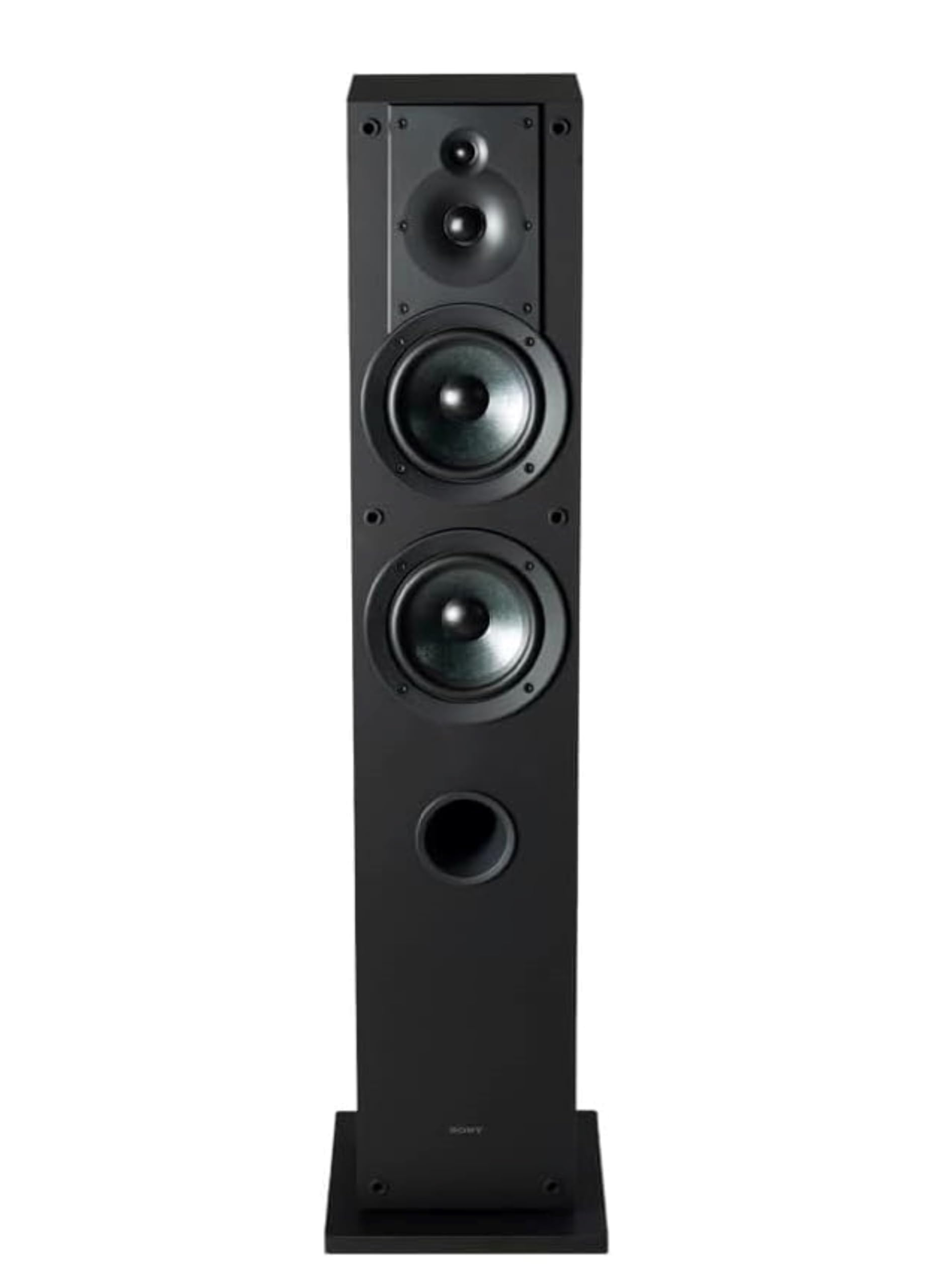
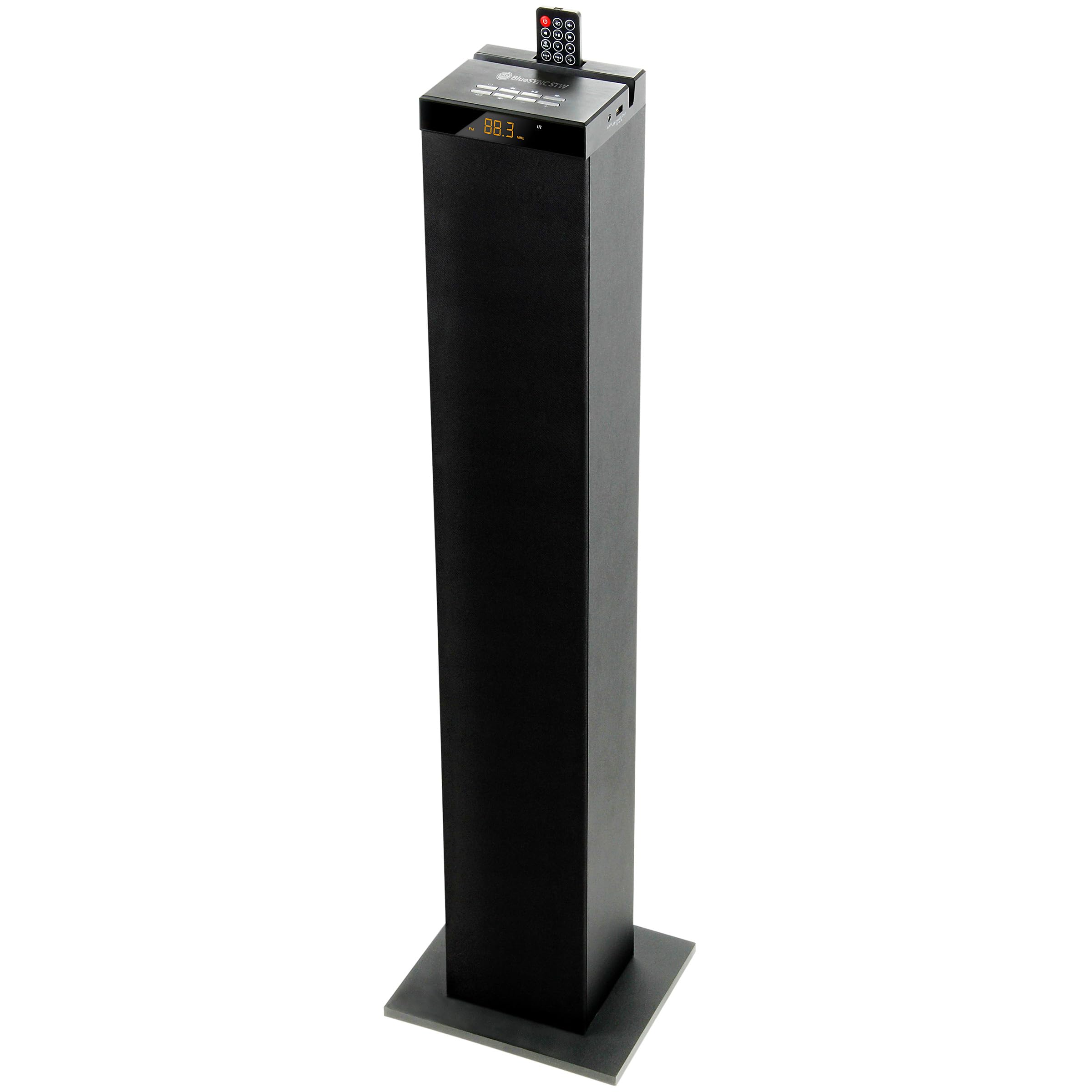
We started by pulling current tower speakers from established audio brands and value-focused newcomers, then filtered by size, price, driver configuration, and whether they were sold as singles or pairs. Vague power claims and confusing setup stories got cut early; that left 10 models, which we tested for eight months.
Each tower moved through the same living-room routine: a TV on the long wall, a couch against the back wall, and enough space to pull the cabinets a foot or two off the wall. We watched action scenes at late-night volume and at room-filling levels, listened to bass-heavy and vocal-heavy tracks, and let long weekend playlists run to see whether fatigue set in. We noted whether dialogue stayed locked to the screen, whether bass turned muddy when we pushed the volume, and whether cabinets buzzed or finishes scratched when we shifted them around.
Build quality got hands-on scrutiny: we lifted each cabinet, tapped the sides, checked binding posts and grilles, and noted whether the feet felt stable on carpet and hardwood. For the models with Bluetooth and a remote, we paired a phone from across the room, walked out of range, and changed inputs without looking at the manual. We also compared value by asking what each speaker made us give up—floor space, a separate subwoofer, an amplifier, or extra cables—and whether the sound justified the trade.
Hi-res certification and Atmos compatibility came up often, so we treated them as buying questions, not badge claims. We checked whether the extra height or detail was audible with everyday TV, and whether the speaker stayed coherent when we switched to stereo music. We ended with a simple enjoyment test: after a month, did we want to keep listening, or were we finding excuses to turn it off?