Best Spotlight Cameras of 2026

A spotlight camera has to do two jobs at once: light up what goes bump in the night and record a clip clear enough to tell you what it was. I have squinted at grainy driveway footage of a raccoon that looked like an intruder, and I have had a porch light blast a visitor into a white silhouette. The right model catches the approach, lights the scene without washing out faces, and sends an alert you can use.

Over the past eight months, I mounted 11 spotlight cameras around my driveway, front porch, side yard, and a relative's shop entrance. I cared about what gets old fast: whether daytime video stayed sharp when someone moved, whether night footage kept usable color, whether the spotlight lit the scene without blinding the lens, and whether alerts fired for people and packages rather than moths. Battery life and reliability separated contenders as much as picture quality did, and the two picks below earned their screws by giving me usable evidence, sensible alerts, and light where I needed it.

1

Best Overall

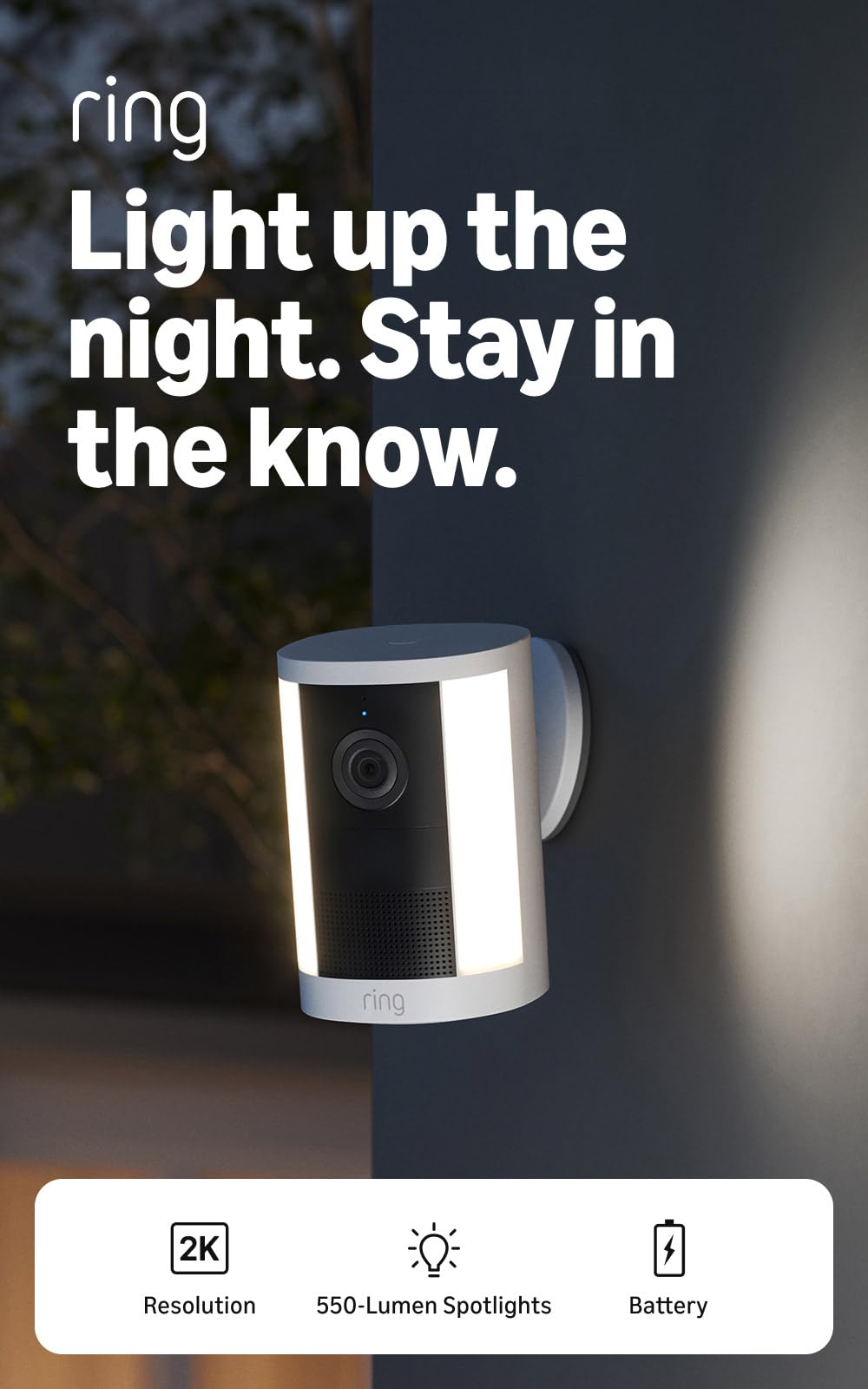
Ring Spotlight Cam 2K (Battery)

84 /100
LBD Score Excellent

Key details

Siren
Built-in, app-controlled
Spotlights
Motion-activated LED spotlights
Power Source
Battery, multiple power options
Video Resolution
Retinal 2K, 6x Enhanced Zoom
View on Amazon

A battery-powered spotlight camera buys the one thing a wired one can't, and it isn't a line on a spec sheet: you put the camera where the problem is, not where the outlet is. That's most of the reason the Spotlight Cam 2K is the one we hand people first. A fence post, a shed corner, the side of a garage no electrician has ever visited — all fair game, and the camera comes down easily when the pack needs charging.

The picture is the part we have the least to argue with. Retinal 2K covers a wide view, so a whole walkway or a driveway apron fits in the frame, and 6x zoom is enough to pull a face or a delivered box out of the far edge of it. In daylight the image is clean enough to describe someone afterwards rather than just confirm that a person was there. The spotlight is what makes the night footage worth having: a face lit by the camera's own light is recognizable in a way a grainy infrared frame isn't.

Aimed narrowly, it reacts quickly. Aimed across a whole front yard, it will feel sluggish, and that's the one thing we plan around: point it at a gate, a side door, or the end of a path instead of trying to cover everything at once, and set the motion zones before deciding the camera is slow. The two spotlights come on with movement and light the area the lens is already looking at, and the app's siren is a tap away — together they're the difference between a camera that watches and one that discourages.

Battery life is the tax on that freedom. Recording, live view, and two lights firing on every passing cat drain the pack, and cold weather takes a further bite. If the mount gets real sun, add the solar panel at the same time as the camera; if it doesn't, plan a recharge cycle and keep the camera somewhere you can reach it safely. That upkeep is the whole trade, and it's worth deciding you're fine with it before you drill.

Pros

  • Mounts anywhere with a Wi-Fi signal
  • Wide 2K video with 6x zoom
  • Motion spotlights plus app siren
  • Lowest price of our picks

Cons

  • Battery pack needs periodic recharging
Our verdict

For most yards this is the spotlight camera we point people to: it mounts where the wiring isn't, and 2K video with motion-triggered lights covers the job for far less than the Pro.
Check Latest Price
2

Best for Identification

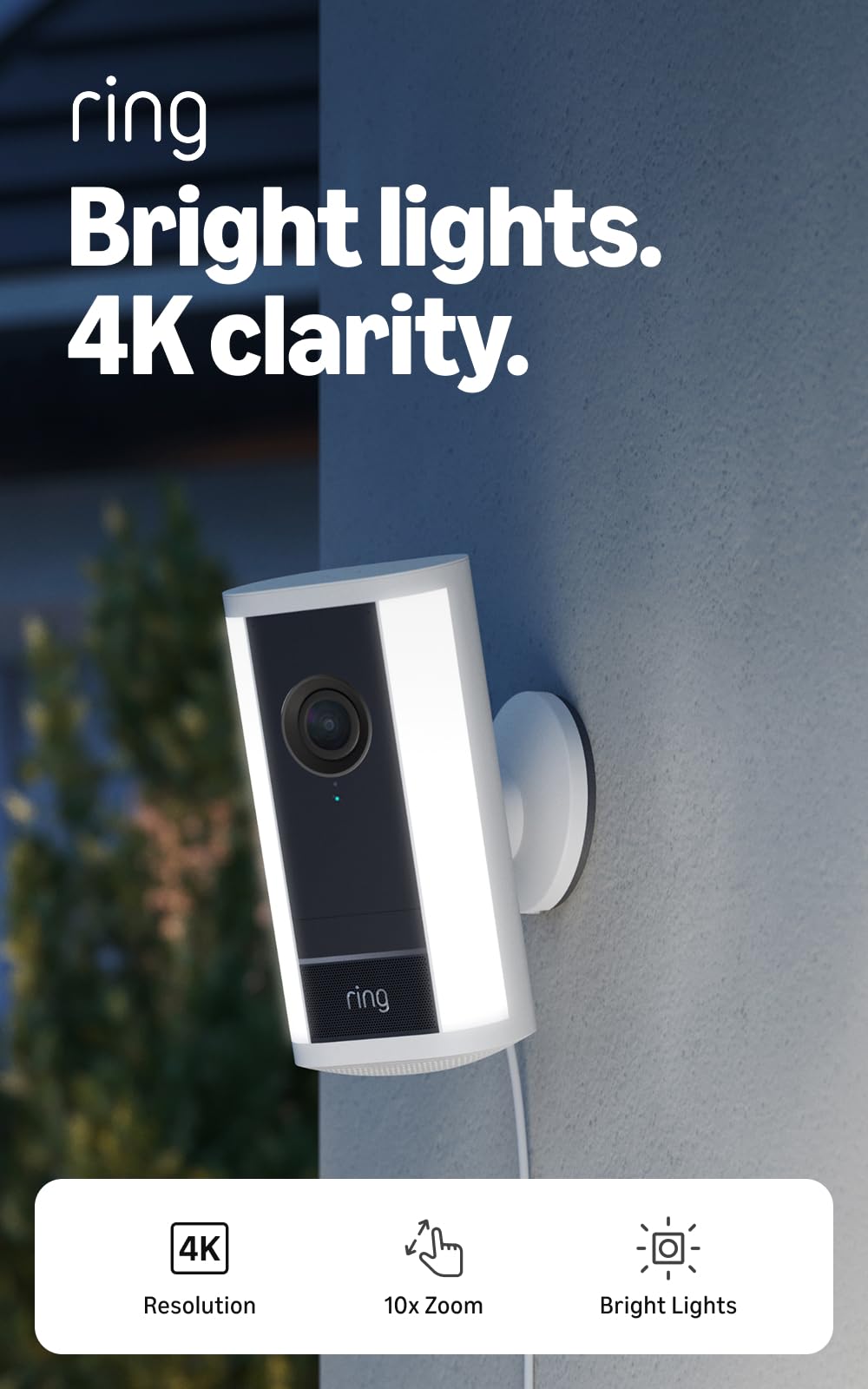
Ring Spotlight Cam 4K Pro (Plug-In)

85 /100
LBD Score Excellent

Key details

Power Source
Plug-in
Motion Detection
3D Motion Detection
Spotlight Output
600 lumens
Video Resolution
Retinal 4K, 10x Enhanced Zoom
View on Amazon

Resolution is where the 4K Pro earns its money, and it isn't the marketing kind. At the distances a camera actually watches — the far end of a driveway, the back of a parking pad — Retinal 4K is the difference between knowing someone walked up and being able to say who. The 10x zoom also leaves more room to crop than the 2K camera's 6x before the picture gives out.

The light is the other half of it. 600 lumens across two heads will light a side yard or a small lot properly, and Low-Light Sight holds color in the picture with the spotlights off, as long as a streetlight or a porch light is doing the ambient work. 3D Motion Detection is the feature that earns its keep on a busy road: it places a person within the property rather than merely registering movement, so passing traffic is easier to filter out than with a plain motion zone.

Whether that's worth the extra money comes down to what you want from the footage. To know a delivery landed or that someone came up the steps, the 2K battery model does the job for far less, and we recommend it to most people for exactly that reason. For a camera whose clips might need to identify a person or a car, this is the one here built for it.

We minded the cord more than the price. This is a plug-in camera and the cable is shorter than the run most people are imagining, so the outlet decides the mount rather than the other way around — walk the path before you drill. 4K also asks more of your network: a weak signal at that corner of the house shows up as stutter and dropped live view, not as a slightly softer picture. Stand where the camera will go and check your phone's signal first.

Pros

  • 4K detail and 10x zoom for identification
  • 600-lumen spotlights light a small lot
  • 3D Motion Detection filters street traffic
  • Color video in near-dark with lights off

Cons

  • Short cord restricts outlet placement
  • 4K stream needs strong Wi-Fi at the mount
Our verdict

If you need footage that can identify a face or a plate rather than just show that someone stopped by, the 4K Pro delivers — provided an outlet sits within reach of the mount.

Check Latest Price

How We Tested Spotlight Cameras

I started by researching models with wide-angle video, motion-activated spotlights, and zoom that could pull a face or package label out of a wider scene, then narrowed the shortlist by price, power source, and mounting hardware. That left 11 cameras, which I mounted for eight months at my driveway, front porch, side yard, and a relative's shop entrance. Each one stayed in place through ordinary weeks and weather, not a staged afternoon.

At each location, I walked, drove, and carried boxes through the field of view at different times of day, then reviewed the clips for detail in faces, clothing, and package labels. After dark, I crossed the spotlight's path at dusk and again late at night to see how quickly the light came on, whether it lit the foreground without blowing out faces, and whether night vision stayed in color or switched to black-and-white with usable contrast. I also noted how each camera handled motion at the edge of the frame and whether it followed a person across the scene or lost them halfway.

For detection, I logged a week of alerts at each location and counted real events against false triggers from wind, insects, and headlights. Battery-powered units got a fresh charge at the start, and I tracked days until the first low-battery warning; plug-in models were watched for reconnection after Wi-Fi drops and power blips. Reliability meant checking whether footage was still there when I needed it, and value meant comparing what each camera delivered against its price rather than assuming the higher resolution was automatically the better buy.

How to Choose a Spotlight Camera

Power Decides Where It Can Go

Battery models go anywhere with a Wi-Fi signal — a fence post, a shed, a rental you can't rewire — and you pay for that with a recharge cycle and run time that shortens in the cold. Plug-in models never need charging and can hold a brighter light and a higher-resolution stream all night, but the outlet picks the mount, and a short cord picks it for you.

If the spot you care about is within reach of power, take the plug-in. If it isn't, no amount of resolution rescues a camera aimed at the wrong place. That's the trade we weigh first on every pick here.

Resolution You Can Actually Use

2K is the sensible floor now. 4K earns its premium in one specific case: identifying a person or a plate at the far edge of the frame, where the extra pixels survive a crop that turns lesser footage to mush. What 4K does not fix is a bad angle or a weak signal — a 4K stream squeezed through a marginal connection stutters and looks worse than a clean 2K one, and it eats more upload and more storage.

Our rule: buy resolution for the distance you need to see across, not for the number itself.

Light Output and the Night Picture

Where a maker publishes lumens, read them: 600 lumens across two heads is enough to light a side yard or a small lot. Two heads also spread light wider than a single one. Two things trip people up. A very bright light close to the lens can blow out a face at three feet while leaving the gate dark, and low-light color depends on what else is lighting the scene — with no streetlight or porch light, you're back to black-and-white infrared.

Look at what already lights your yard before you pay extra for brightness.

Aim It Where Motion Actually Happens

Detection range is mostly a function of aim. A camera pointed across a whole yard has to notice everything at once and will feel slow; the same camera aimed down a path or at a gate triggers quickly and sends fewer false alerts. Set the motion zones before you decide the hardware is lazy.

Mount high enough that nobody can grab it and low enough to service from a step ladder, angle it slightly down, and keep the street and any heat source out of the frame. On a busy road, a model with 3D motion detection that maps where a person is on the property is worth the extra money.

Frequently Asked Questions

Final Verdict

For most houses the Ring Spotlight Cam 2K Battery is the pick. It goes where the problem is rather than where the wiring is, the 2K picture is detailed enough to describe someone afterwards, and the motion-triggered spotlights do the discouraging. Accept the recharge cycle and it's the least fuss for the least money.

Change one requirement and the answer changes: if the footage has to identify a face or a plate across a driveway, and there's an outlet within reach of where the camera goes, buy the 4K Pro. Detail at distance is the only thing that moves this decision.