Best Solar Generators for RVs of 2026

An RV solar generator does two jobs that fight each other: carry enough power for a coffee maker, a microwave, or a roof air conditioner, and stay light enough for one person to lift out of a storage bay. Get it wrong and you trip a breaker mid-breakfast or wrench your back at setup. Get it right and nobody thinks about power at all — the fridge stays cold, the furnace runs, the CPAP doesn't quit at 2 a.m.

After a few months, the spec sheet stops being the story. Chemistry matters more than capacity: almost every serious unit now runs a lithium iron phosphate battery, which is why they survive being drained flat and parked in a hot trailer. Boost modes can start a load bigger than the inverter's rating, but only briefly. We spent nine months running eight of these on real trips to see which claims held.

A weekend box you carry to a tent site and a heavy expandable system bolted into a bay both belong here — the picks below are sorted by how you travel.

1

Best Overall

Jackery Explorer 2000 v2

91 /100
LBD Score Outstanding

Key details

Capacity
2,042Wh
Warranty
5 years
AC Output
2,200W
Included Solar
2 × 200W panels
View on Amazon

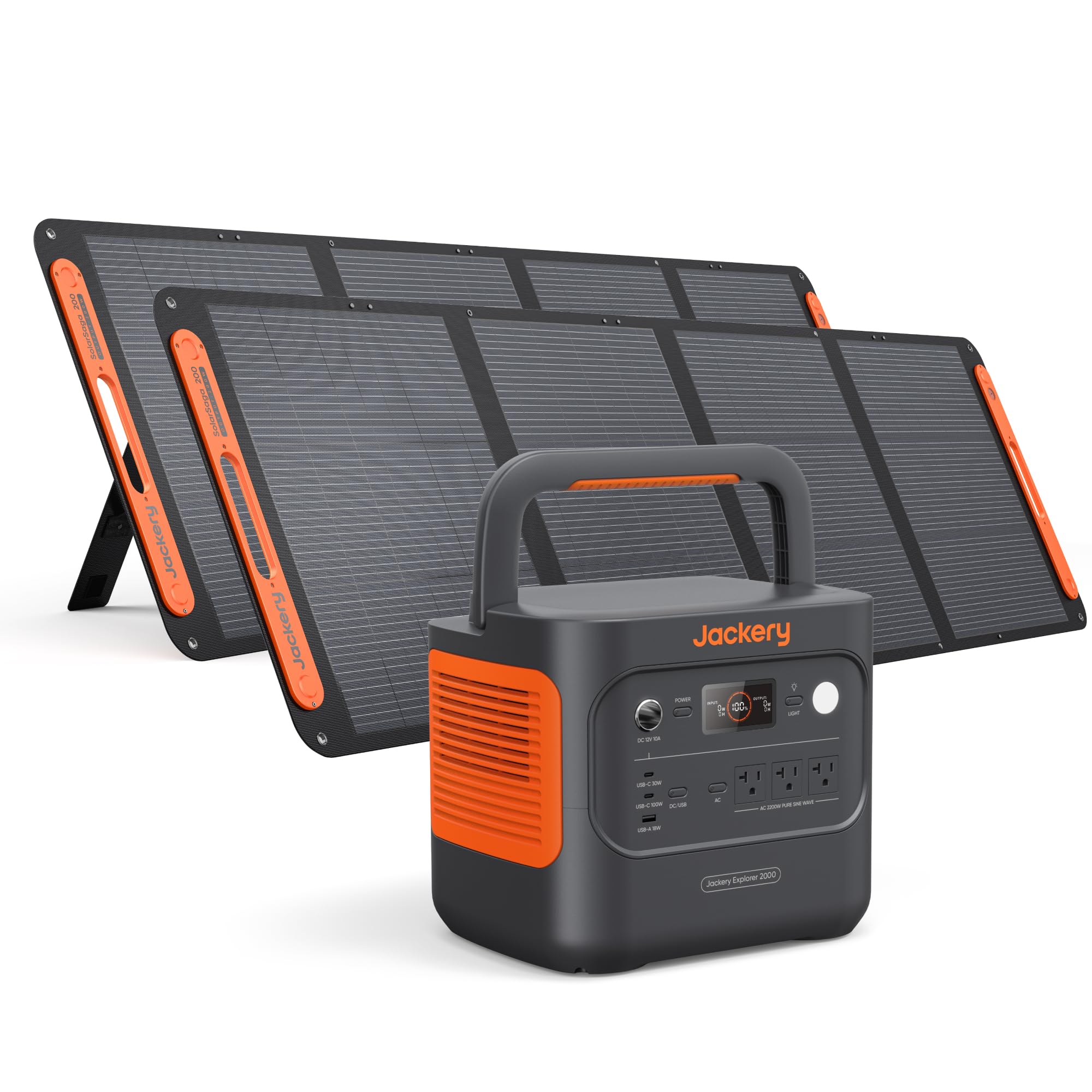
Two folding 200W panels ship in the box with the Explorer 2000 v2, and that pairing is what put it at the top of this list. A 2,042Wh battery on its own is a tank you fill at home. Add 400W of panel and it becomes a system that recovers on the road, provided someone is willing to move the panels around the rig as the sun crosses.

The station side is well sorted too. 2,200W of continuous AC output runs a coffee maker, a microwave, or a trailer's fridge and lights at the same time, and the panel covers three AC outlets plus 100W USB-C. The 20ms transfer switch is the detail we appreciate most: put it between the pedestal and your electronics and it takes over before anything reboots. Recharging on AC is quick, at 80% in 66 minutes and full in about 102 with the app's emergency mode.

The panels are the half we trust less. They are the part that gets folded, propped, and carried every morning, and in the hand they feel flimsier than the station they charge. Store them flat and out of the wind, and check the cable run from where you plan to prop them to where the unit sits before you commit to a spot.

Set up the app before you leave, because the fastest charge time lives behind emergency mode, which you switch on yourself. Five years of warranty is the other reason it holds the top spot; two years is common at this size.

Pros

  • Two 200W panels included
  • 2,200W runs several appliances at once
  • 20ms transfer protects electronics
  • Five-year manufacturer warranty

Cons

  • Panels feel flimsier than the station
  • Priciest way to get 2kWh here
Our verdict

Our pick for trailer boondocking: two 200W panels in the box, 2,042Wh of storage, and 2,200W that runs the coffee maker and the fridge together.
Check Latest Price
2

Best Capacity for the Money

EcoFlow Delta 3 Max

88 /100
LBD Score Excellent

Key details

Capacity
2,048Wh
Warranty
5 years
AC Output
2,400W (3,400W X-Boost)
Included Solar
220W bifacial panel
View on Amazon

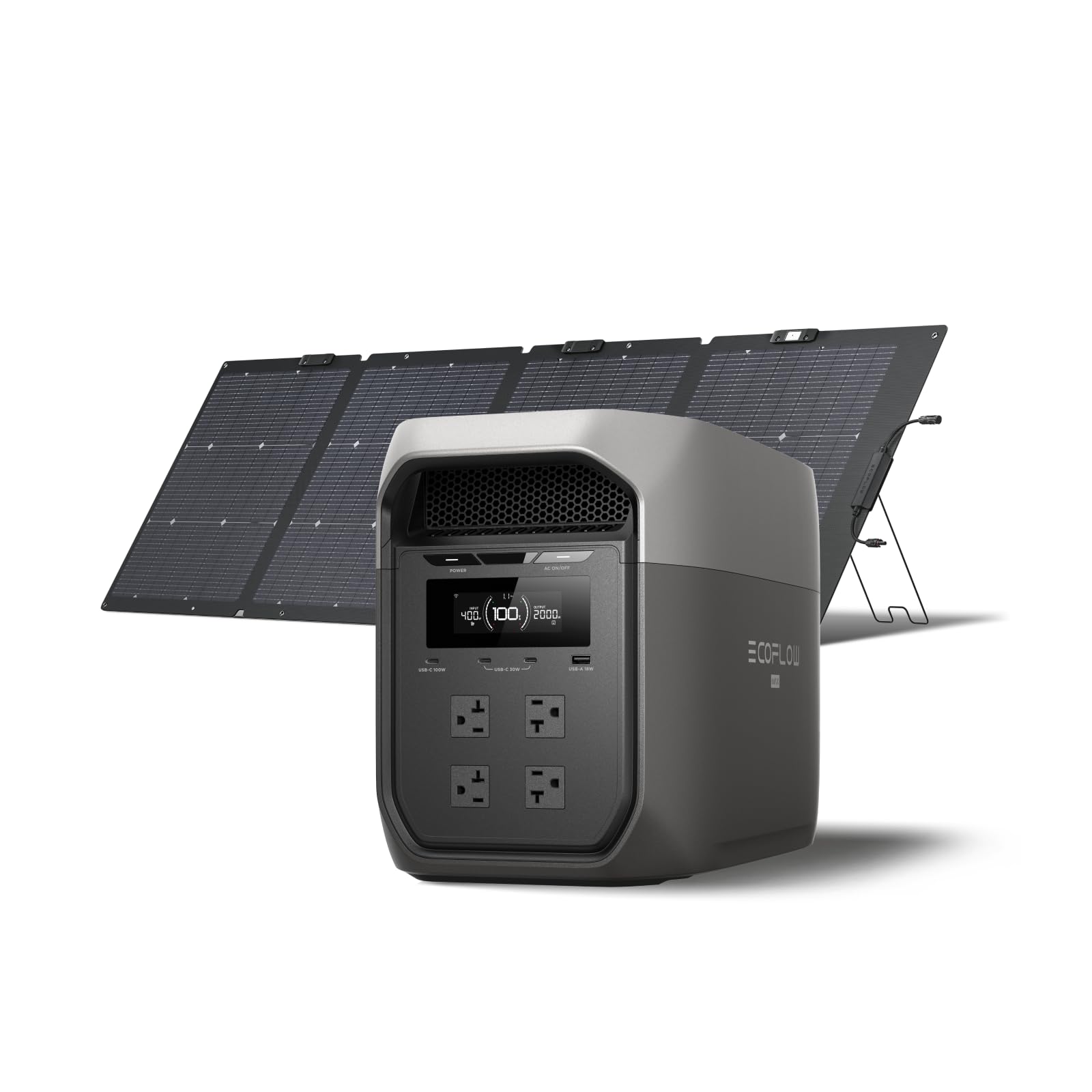
Match the top pick's capacity, beat its output, and come in under its price, and you have the argument for the Delta 3 Max. 2,048Wh of storage and 2,400W continuous, with X-Boost carrying resistive loads up to 3,400W. We think it's the strongest value in this group, and for plenty of rigs it's simply the better machine.

Around camp it behaves like a bigger unit than it is. AC charging reaches 80% in 1.13 hours, the inverter runs a fridge, a microwave, and an air fryer without complaint, and the sub-10ms transfer time is the quickest here for gear you don't want rebooting. Set a charge limit in the app if the unit spends weeks on shore power.

One 220W bifacial panel is the catch, and it's why this sits behind the Jackery for a no-hookups week. On a 2kWh battery a single panel is a slow daily harvest, and there is one solar input, so a second panel means wiring the pair in series rather than plugging in a second array. With good sun and one panel, plan on a full day rather than an afternoon.

Pros

  • 2,400W continuous, 3,400W X-Boost
  • 0-80% in 1.13 hours on AC
  • Sub-10ms transfer time
  • 220W bifacial panel included

Cons

  • Not expandable with extra batteries
Our verdict

More output than our top pick at a lower price — the better buy if one panel is enough for how you camp.

Check Latest Price
3

Best for Small RVs and Vans

Jackery Explorer 1000 v2

89 /100
LBD Score Excellent

Key details

Weight
23.8 lb
Capacity
1,070Wh
AC Output
1,500W (3,000W surge)
Included Solar
200W panel
View on Amazon

23.8 pounds, and about the footprint of a small cooler. That is the case for the Explorer 1000 v2 in one line: it fits in a dinette footwell, comes out with one hand, and never needs a second person or a ramp. Vans and teardrops are where this one earns its keep.

The numbers hold up at that size. 1,070Wh of LFP storage, 1,500W of AC output with a 3,000W surge, three AC outlets, and 100W USB-C. The 200W panel in the box keeps a weekend's use topped up when you chase the sun, the battery is rated to 4,000 cycles, and the app's emergency mode takes an AC charge to full in about an hour.

Solar is where expectations get away from people. That one-hour figure is a wall-outlet number, and a 200W panel is most of a good sunny day for this much battery rather than a top-up over lunch. If your trips are two nights with a hookup in between, that's plenty. If you're stringing together a week off-grid, step up to the 2kWh units.

Pros

  • 23.8 pounds, manageable one-handed
  • 3,000W surge starts bigger loads
  • 4,000-cycle LiFePO4 battery
  • 200W folding panel included

Cons

  • Two-year warranty is the shortest here
Our verdict

If the generator has to come out of a cupboard every evening, this 23.8-pound kit is the answer, and a 200W panel rides along.

Check Latest Price
4

Best Mid-Size All-Rounder

Anker SOLIX C1000 Gen 2

93 /100
LBD Score Outstanding

Key details

Capacity
1,024Wh
AC Output
2,000W (3,000W peak)
Included Solar
200W panel
Max Solar Input
600W
View on Amazon

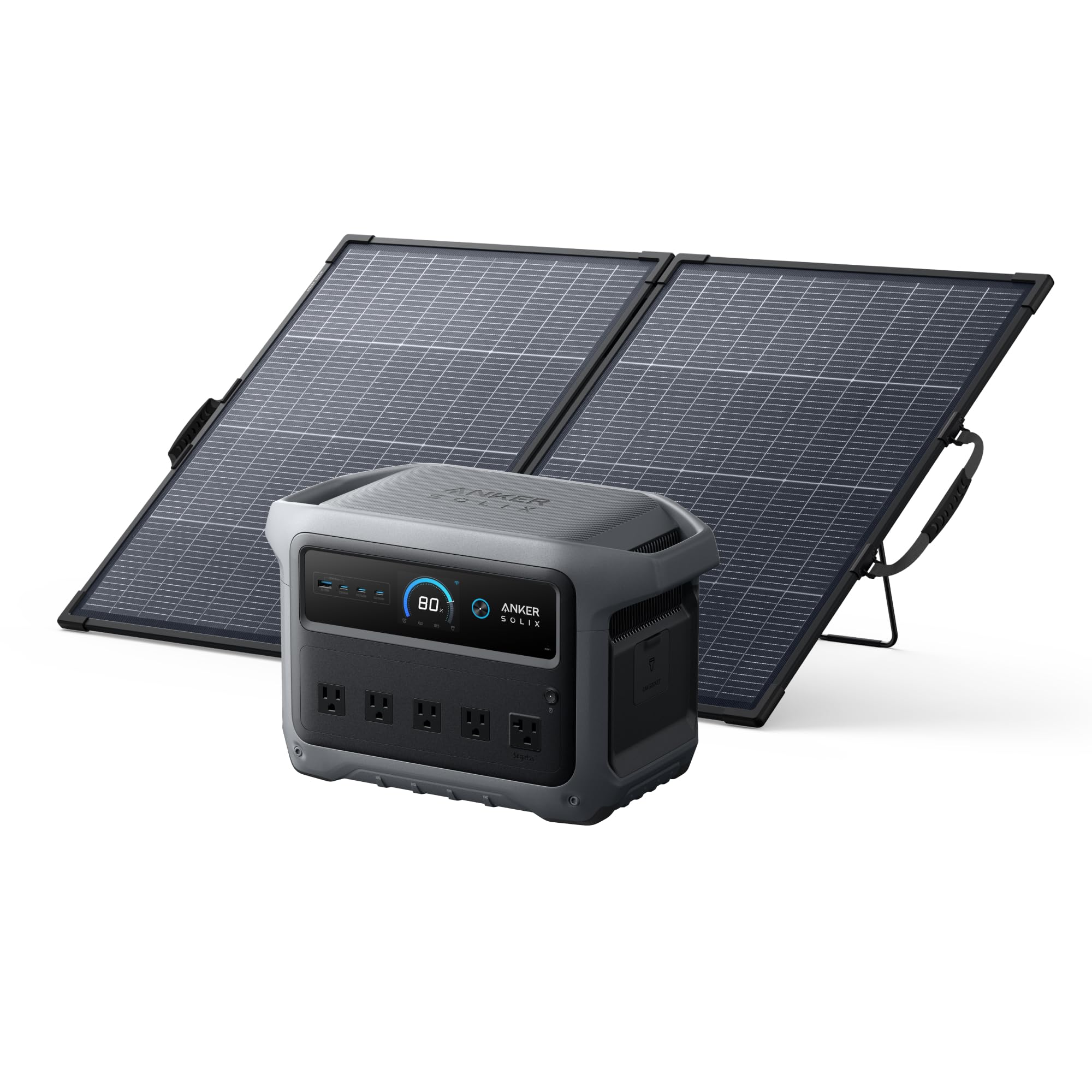
2,000W of continuous output from a 1,024Wh battery is what sets the C1000 Gen 2 apart, and we were surprised by how little it gives away to the 2kWh units on the appliance side. A microwave, a coffee maker, a hair dryer: all of it runs, and the box still tucks into a storage bay.

Solar input goes to 600W, and with that much panel a full recharge takes about 1.8 hours, which is generous headroom for this size. Nine outlets cover the small stuff, the LFP cells are rated to 4,000 cycles at 80% capacity, and the warranty runs five years.

The limit is storage, not power. A night of lights, phones, a fan, and a fridge cycle is realistic; a weekend of air conditioning is not. For a van or a small trailer that plugs in every few days, that trade — full appliance power, modest capacity — is the right one, and it's why this sits comfortably in the middle of our list.

Pros

  • 2,000W continuous from 1,024Wh
  • 600W solar input
  • Five-year warranty
  • Nine outlets in one small box

Cons

  • Station and panel arrive in separate boxes
Our verdict

Buy it for the output: 2,000W from a 1,024Wh battery runs a microwave, and five-year coverage backs the purchase.

Check Latest Price
5

Best for 30-Amp Rigs

Anker SOLIX F3000

85 /100
LBD Score Excellent

Key details

Weight
91.5 lb
Capacity
3,072Wh
AC Output
3,600W
Max Solar Input
2,400W
View on Amazon

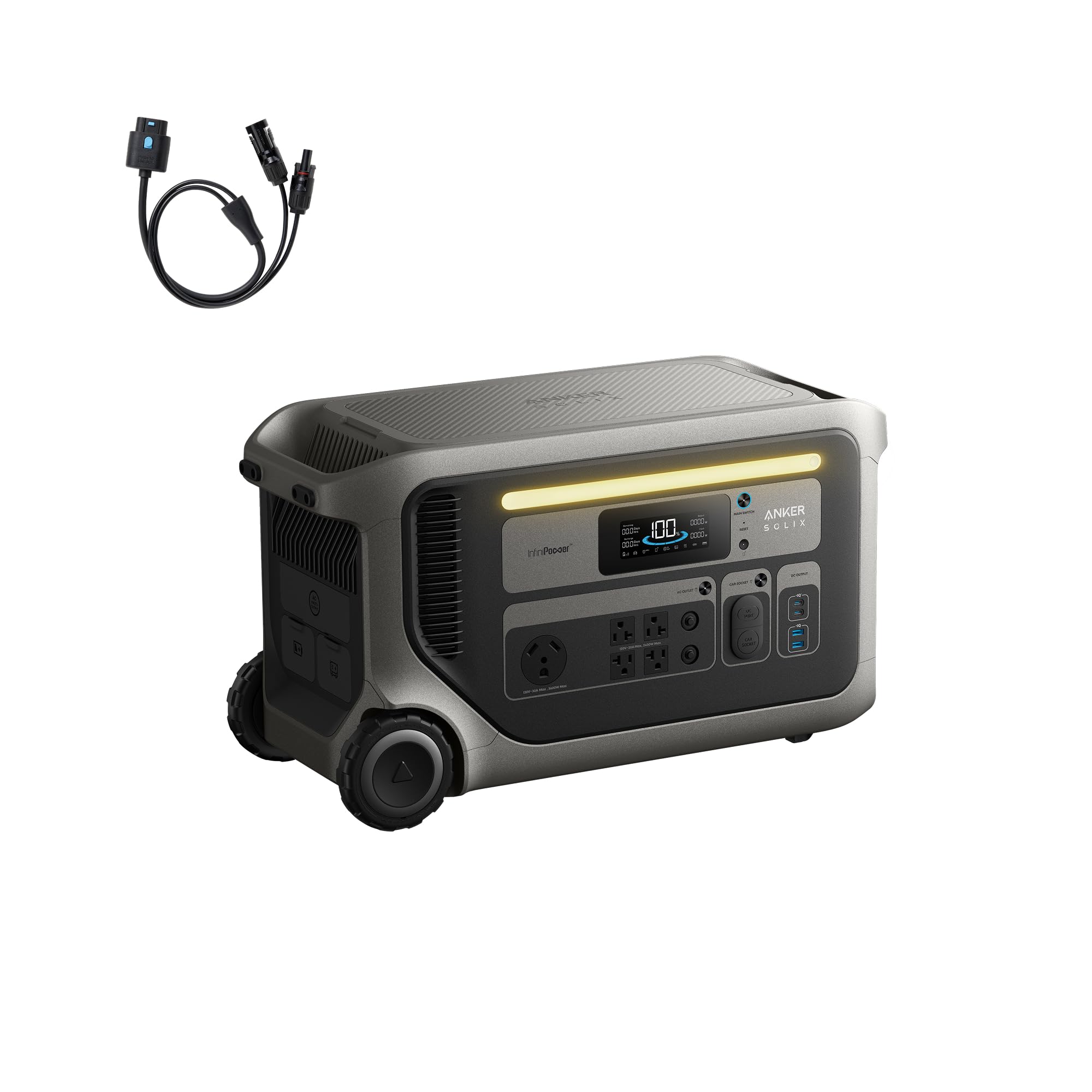
Eleven outlets, and the one that gets used first is the RV-style 30-amp receptacle. That single connection lets you run a trailer's own distribution panel from a battery instead of running cords to appliances one at a time, and it changes what a power station is for.

Behind it sits 3,072Wh and 3,600W, expandable to 24kWh with extra batteries, plus a 3,600W generator pass-through so a small gas set can refill it while the loads keep running. Solar input goes to 2,400W, which is enough panel to refill it in an afternoon rather than a day.

The lifting is the trade-off. 91.5 pounds makes this a permanent spot rather than a carry-along, and the wheels and suitcase handle help on a hard floor far more than on gravel. Plan a bay near the door or a corner of the rig and treat it as installed equipment.

For a full-timer, or anyone with a 30-amp inlet who wants the whole trailer live overnight, this is our pick. 3,600W gives a 13,500 BTU roof air a real chance if you fit a soft start; without one, startup draw is what trips it. For weekend trailers, the Delta 3 Max does most of this for less money.

Pros

  • 3,600W with a 30-amp RV outlet
  • Expandable to 24kWh
  • 2,400W solar input
  • Generator pass-through at full power

Cons

  • No solar panel included
Our verdict

For a rig with a 30-amp inlet, this is the one that feeds the trailer's own panel instead of a row of extension cords.

Check Latest Price
6

Best for Long Off-Grid Stays

ABOK Ark3600

86 /100
LBD Score Excellent

Key details

Capacity
3,840Wh
Warranty
2 + 3 years
AC Output
3,600W (4,500W peak)
Expandable To
11,520Wh
View on Amazon

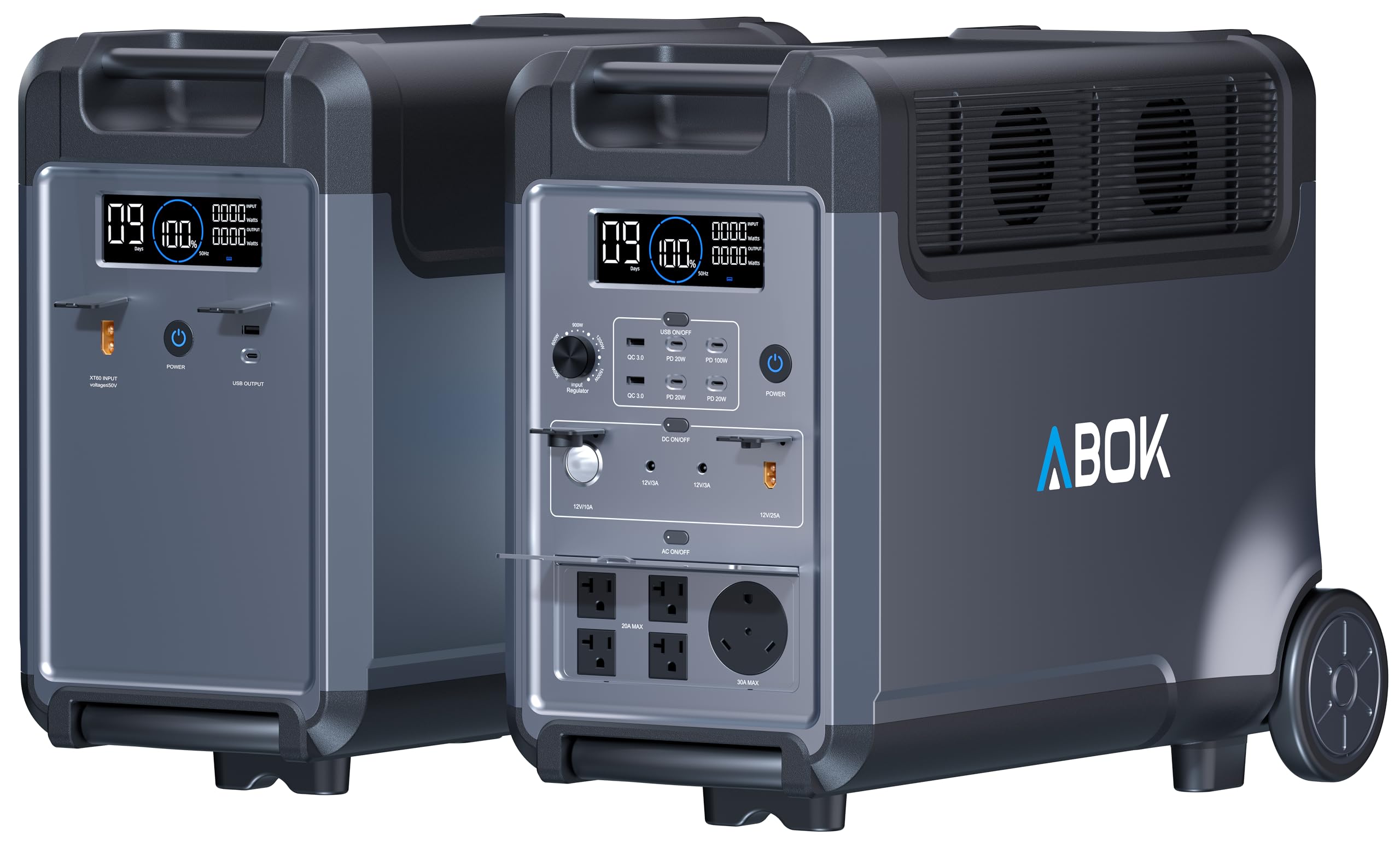
A telescoping handle and wheels on a 3,840Wh box is a decision we like more the longer we think about it. This is luggage-sized equipment that moves like a suitcase, and on a gravel pad that counts for more than another column of specifications.

Underneath is the biggest battery here: 3,840Wh, expandable to 11,520Wh, with 3,600W continuous and a 4,500W peak. Fifteen ports include a 30-amp AC outlet for a trailer panel, and a full AC charge takes about three hours, which is quick at this capacity. Being able to add battery instead of buying a second station is the reason to pick it for a long stay.

It's heavy, and the wheels are the whole reason it's manageable: this is a unit you park rather than carry. Find its spot before you fill it, keep the handle side clear, and accept that it lives near the door.

Pros

  • 3,840Wh, expandable to 11,520Wh
  • 15 ports including a 30-amp AC
  • Telescoping handle and wheels
  • Three-hour AC recharge

Cons

  • No solar panel included
  • The most expensive unit here
Our verdict

A week off-grid is what this is for: 3,840Wh that grows to 11,520Wh, on wheels, with a 30-amp outlet.

Check Latest Price
7

Best for Charging on the Road

EcoFlow Delta 3 Plus

88 /100
LBD Score Excellent

Key details

Capacity
1,024Wh
AC Output
1,800W (2,400W surge)
Included Solar
220W bifacial panel
Alternator Charging
800W
View on Amazon

800W of alternator input is what separates the Delta 3 Plus from every other 1kWh unit here. For a Class B or a tow vehicle, it means the battery refills while you drive rather than waiting for a sunny afternoon in camp, with wall, solar, and vehicle charging among the paths it accepts.

The rest is a solid mid-size station: 1,024Wh, 1,800W with a 2,400W surge, 13 outlets including 140W USB-C, LFP cells rated to 4,000 cycles, and a five-year warranty. AC charging reaches 80% in 40 minutes.

The panel is the part we appreciate most. EcoFlow's 220W bifacial unit has a 30-to-60-degree bracket and an angle guide built in, so aiming it takes seconds instead of a cooler and a rock. Bifacial cells also pick up light bouncing off a pale roof or a gravel pad, which helps when the rig is throwing shade.

Where it fits is a van or a truck camper that covers ground most days and stops for a night or two. The battery refills between camps, the panel tops it up when you park, and nothing about the routine needs a hookup or a generator.

Pros

  • 800W alternator charging while driving
  • Bifacial panel with adjustable bracket
  • 13 outlets including 140W USB-C
  • Five-year warranty

Cons

  • 1,024Wh is modest for the price
Our verdict

The pick for a rig that moves every day: 800W of alternator charging refills the battery between camps.

Check Latest Price
8

Budget 2kWh

Dabbsson 2000L

85 /100
LBD Score Excellent

Key details

Weight
41 lb
Capacity
2,048Wh
AC Output
2,200W (3,300W boost)
Max Solar Input
800W
View on Amazon

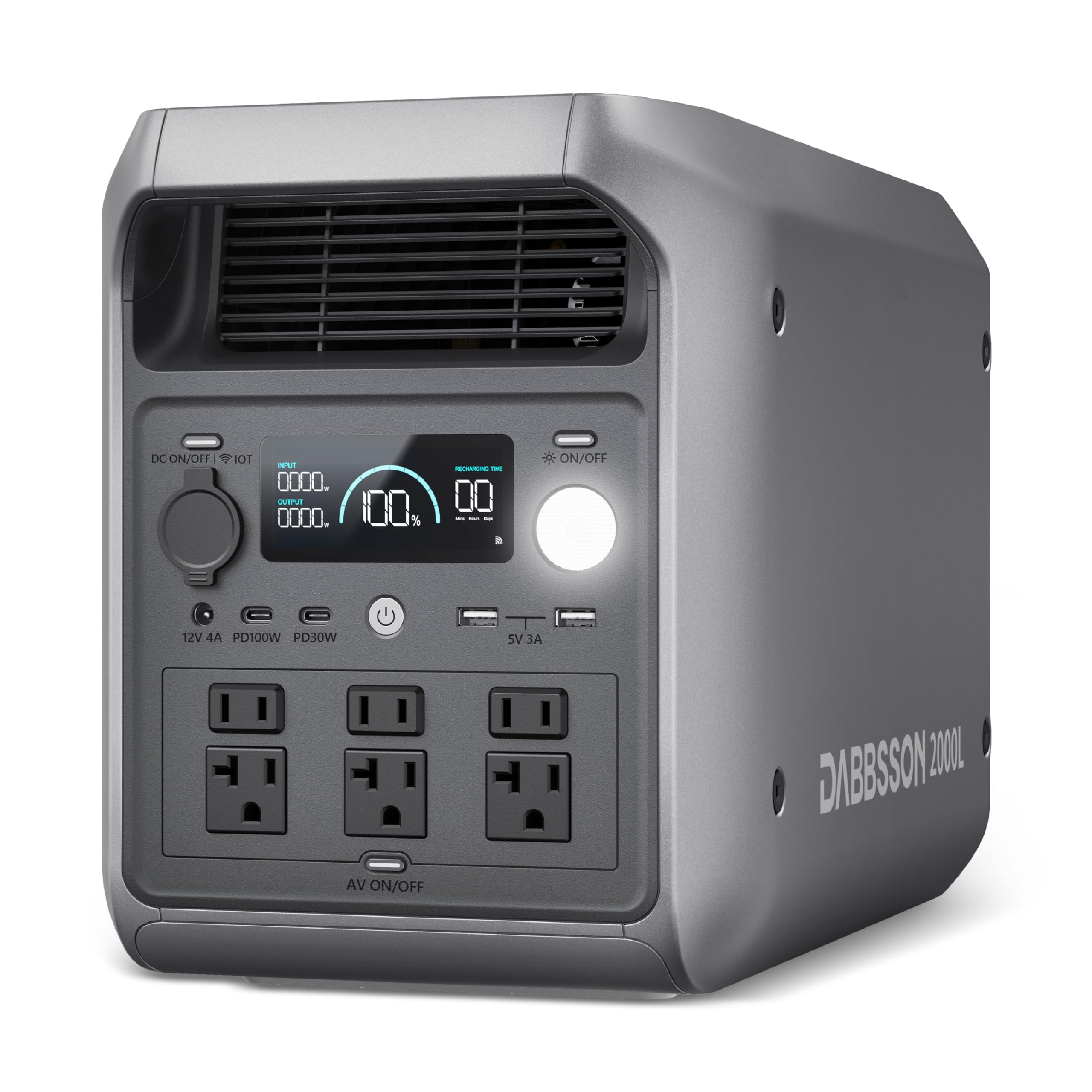
2,048Wh for the least money here is the headline, but the weight is the detail that changes how you use it. At 41 pounds it's light enough for one person to lift into a trailer bay without a plan or a helper, and that combination of 2kWh and a one-person lift is why it stays on this list despite the caveat below.

The rest of the specification is competitive: 2,200W continuous with a 3,300W boost, semi-solid LFP cells, an AC recharge to full in about an hour, 800W of MPPT solar input, a sub-15ms transfer switch, and an app for monitoring and charge limits. Coverage runs three years plus two more.

Now the caveat. Some of these have failed early, including units that never took a charge, and reliability is the thing we watched closest here. Buy where returns are easy, run a full charge and discharge in the first week, and put a real load on the AC outlets before the window closes.

For a budget-minded boondocker who wants 2kWh and can live with that risk, it's the value pick of the group. Set a charge ceiling in the app if the unit sits on shore power between trips; the cells age better at partial charge than at full.

Pros

  • 2,048Wh at the lowest price here
  • 41 pounds, a one-person lift
  • One-hour AC recharge
  • 800W MPPT solar input

Cons

  • No solar panel included
Our verdict

For a budget boondocker, this is the cheapest way to 2kWh here at 41 pounds — buy it where returns are easy and test it early.

Check Latest Price

How We Tested the Best Solar Generators for RVs

We built the shortlist from spec sheets and owner complaints rather than from shelf appeal: lithium iron phosphate chemistry, at least 1,000Wh of capacity, an output that would carry a 30-amp trailer, a port for adding batteries later, and a solar panel either in the box or clearly available. That narrowed the field to eight units, which we lived with for nine months.

Each unit took a turn in the same 24-foot travel trailer across weekend boondocking trips, a two-week run with no hookups, and one 14-hour home outage after a storm. We ran the microwave, the coffee maker, and a 15,000-BTU air conditioner with a soft start, reading actual draw with a plug-in power meter instead of trusting the label. A CPAP ran three consecutive nights on each battery, and a laptop plus a router ran through the UPS switchover while we watched for a blink.

Charging got timed, not estimated: minutes from empty to 80 percent on shore power, then a full solar recharge with panels laid flat on gravel, propped toward a low sun, and — for the two-sided ones — turned over to see what the back face actually added. We weighed every unit on a bathroom scale and had one person lift it into the bay and carry it out to a picnic table, because a spec weight doesn't tell you where the handles dig in.

Durability meant a few hundred miles of washboard road, dust working into the vents, and 50 plug-in cycles per outlet while we checked whether cables or ports got hot. Value came down to usable watt-hours per dollar against rated cycle life, not the biggest number on the box.

How to Choose a Solar Generator for an Rv

Size the battery to your nights

Start with what runs between sunset and sunrise, not with the appliances you own. A compressor fridge cycling through the night, a few lights, phones, a fan, and a CPAP add up faster than most people expect, and the arithmetic is simple: watts times hours, then add about a fifth for inverter losses. A 1kWh unit covers a modest night with margin. Two kWh gets you that night plus a slow morning of coffee and a microwave.

The 1,024Wh picks here are for trailers that plug in every few days. The 2kWh and up units are for real boondocking, and the 3kWh-plus machines are for full-timers who want the trailer's own panel live overnight.

Output, surge, and the outlets your rig uses

Continuous watts decide what runs at once; surge decides what starts. A 13,500 BTU roof air is the hardest thing most trailers ask for, and it needs a soft-start kit before a battery in this class brings it up — without one, startup draw is what trips the unit. Treat boost modes that advertise more watts than the rating with care: they get there by dropping voltage, which is fine for a resistance heater and less kind to a compressor motor.

If you want to feed the trailer's own panel rather than a row of cords, you need a 30-amp RV outlet. Only two units here have one, and that single connector is worth more to a full-timer than another few hundred watt-hours.

Treat solar as a daily budget

A 200W folding panel in real sun gives you something closer to 130 to 160W across the five or six useful hours of the day, so call it 700 to 900 watt-hours — under half of a 2kWh battery. That is the number that decides whether you keep up or slowly drain. Two panels, or 400W and up, is what turns a battery into a system.

Weight decides where it lives

The best generator is the one you can move. A 24-pound unit comes out of a cupboard every evening; a 41-pound unit is a one-person lift into a bay; a 91-pound unit has a permanent floor. Wheels and a telescoping handle help enormously on a hard floor and much less on gravel or a step well.

Measure the opening of your storage bay before you order, and think honestly about whether the unit has to go up a step or over a dinette to reach its spot.

What's in the box, and how the system grows

Some of these ship with a panel, some don't, and the difference is a real part of the cost. A kit with two 200W panels is a complete system on day one; a station on its own needs panels before the solar half exists. Check the expansion path too — a unit that grows to 11,520Wh with an extra battery solves a long stay differently than buying a second station.

Look at the solar input count and limit as well: one input means wiring panels in series rather than plugging in a second array. And check whether the app works without a signal, because charge limits and emergency fast charging often live there.

Frequently Asked Questions

Final Verdict

Most trailer owners should buy the Jackery Explorer 2000 v2. Two panels in the box and 2,042Wh of storage mean a sunny day puts back what a night takes, and the five-year warranty covers the part that gets used hardest.

If one panel is enough for how you camp, the EcoFlow Delta 3 Max gives you more output and the same capacity for less money. And if your rig has a 30-amp inlet and you want the whole panel live overnight, wheel the Anker SOLIX F3000 into place and leave it there.