Best Solar Generators for Camping of 2026

Watt-hours tell you how big the tank is; watts tell you how wide the faucet is. That one distinction explains most of the confusion in this category — a 300Wh unit will run a camp fan and charge four phones, but it will not run a coffee maker, whatever the box implies. What these actually fix is the quiet panic of watching your last bar of battery vanish miles from an outlet.

I've hauled them into the woods, onto tailgates, and through a two-day outage, and my team put nine through identical routines over eight months. The keepers weren't the ones with the biggest wattage claims — plenty advertise a surge figure and then throttle under load. LiFePO4 chemistry, refill speed on a hazy afternoon, and clean AC output for a laptop mattered more, and so did whether the price still felt fair once you added a panel and cables.

One thing nobody warns you about: anything near 1,000Wh is a two-handed carry, while the 250–300Wh units are what actually live in your trunk. Both kinds earn their place below.

1

Best Overall

Jackery Explorer 1000 v2

94 /100
LBD Score Outstanding

Key details

Weight
23.8 lb
Capacity
1,070Wh
AC Output
1,500W (3,000W surge)
Solar Panel
Optional
View on Amazon

A 1,070Wh battery and a 1,500W inverter are the numbers that make the Explorer 1000 v2 our top pick. That's enough capacity to run a 12V fridge, a CPAP, or a Starlink setup through a camping weekend, and the 3,000W surge gives a fridge compressor room to start. We like that it doesn't force a choice between real power and a box you can still move.

At 23.8 pounds, it's a two-hand carry from the trunk to the picnic table, but it's still a one-person move. The one-hour AC recharge is the feature we appreciated most before a trip: plug it in while you pack, and it's ready by the time the car is loaded. The LiFePO4 battery is rated for 4,000 cycles to 70%, so the long-term math is better than the older lithium-ion units.

The 100W USB-C port is the quiet upgrade. It can charge a laptop or a drone battery without a wall adapter, which is the kind of detail that makes a weekend trip feel less like a power audit. The Explorer 300 is the one to grab when every pound counts; the 1000 v2 is the one we pack when the trip includes a fridge or a multi-night CPAP.

Pros

  • 1,070Wh runs a fridge, CPAP, or Starlink
  • 1,500W AC output with 3,000W surge
  • 23.8 lb is manageable for car camping
  • One-hour AC recharge via app

Cons

  • Solar panel sold separately
Our verdict

We recommend the Explorer 1000 v2 as the best all-around camping solar generator: 1,070Wh and 1,500W cover a fridge or CPAP, and 23.8 pounds is still manageable.
Check Latest Price
2

Best Solar Bundle

EcoFlow Delta 3 Classic

89 /100
LBD Score Excellent

Key details

Capacity
1,024Wh
AC Output
1,800W (3,600W surge)
AC Recharge
0-80% in 45 min
Solar Panel
220W included
View on Amazon

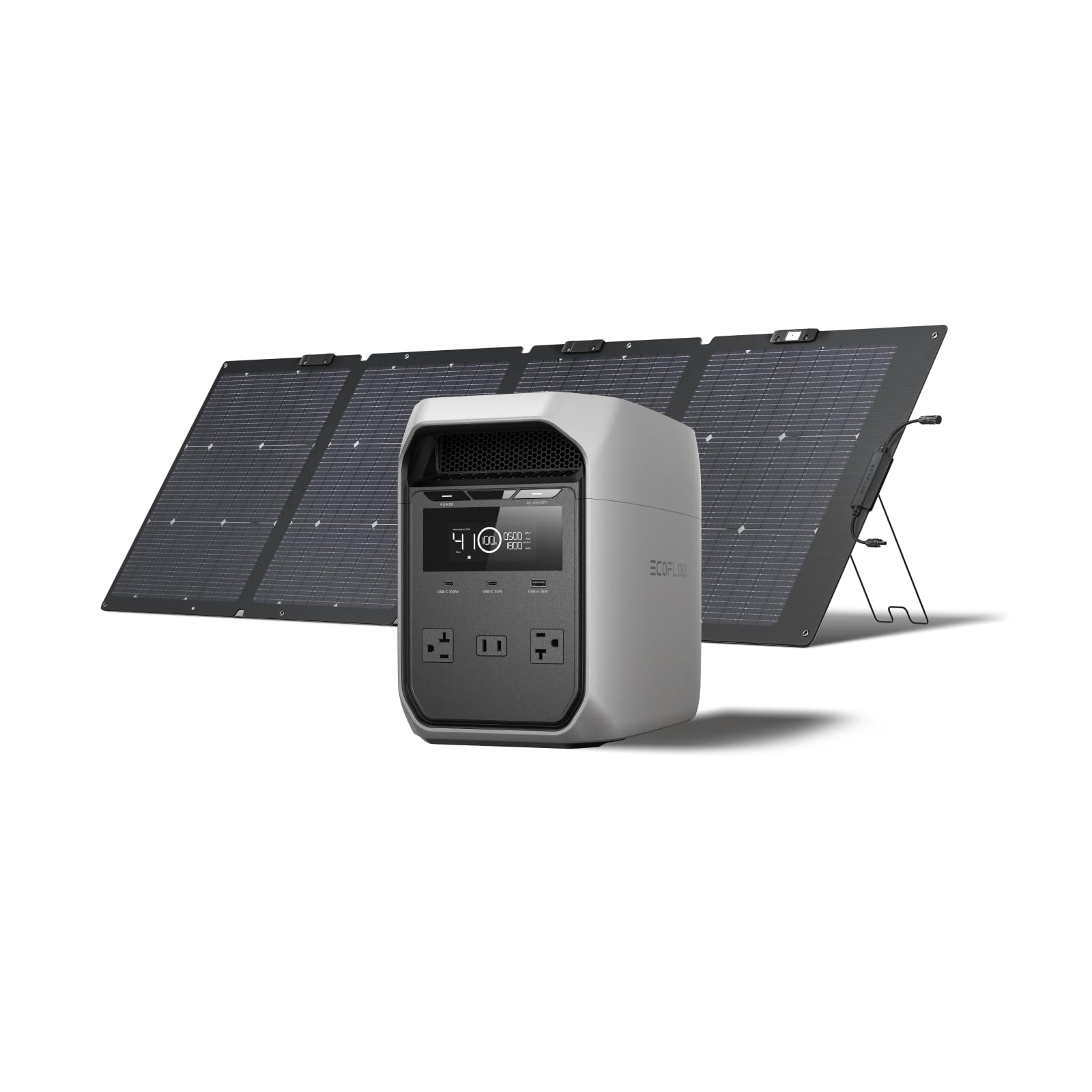
The 220W panel in the box is the difference between a solar generator and a solar generator you can actually run on sun. EcoFlow pairs it with a 1,024Wh LiFePO4 battery and a 1,800W inverter, and the panel can recharge the station in about 5.8 hours in good light. That's a complete solar setup, not a power station plus a shopping list.

We recommend the Delta 3 Classic for campers who want one purchase and a five-year warranty. The 1,800W output can run a fridge, a microwave, or a coffee maker, and the 0-to-80% AC charge takes about 45 minutes when you're prepping at home. It's a basecamp box rather than a backpacking one, but it has the power to justify the space.

The 10ms UPS is a home-backup feature that matters more off the campsite than on it, but it's a nice safety net for a fridge or a CPAP. Against the Jackery 1000 v2, you give up a little capacity and gain the panel, a higher AC ceiling, and faster solar recharge. The five-year warranty is the longest here alongside the Anker, and it's the reason this bundle makes sense as a long-term buy.

Pros

  • 220W solar panel included
  • 1,800W AC output runs bigger appliances
  • 0-80% AC charge in 45 minutes
  • Five-year manufacturer warranty

Cons

  • Premium price compared with the top pick
Our verdict

We recommend the Delta 3 Classic for campers who want a panel in the box, 1,800W of output, and a five-year warranty without building a solar kit from scratch.

Check Latest Price
3

Best Ultralight

Jackery Explorer 300

93 /100
LBD Score Outstanding

Key details

Weight
7.1 lb
Capacity
292Wh
AC Output
300W (600W surge)
Solar Panel
Optional
View on Amazon

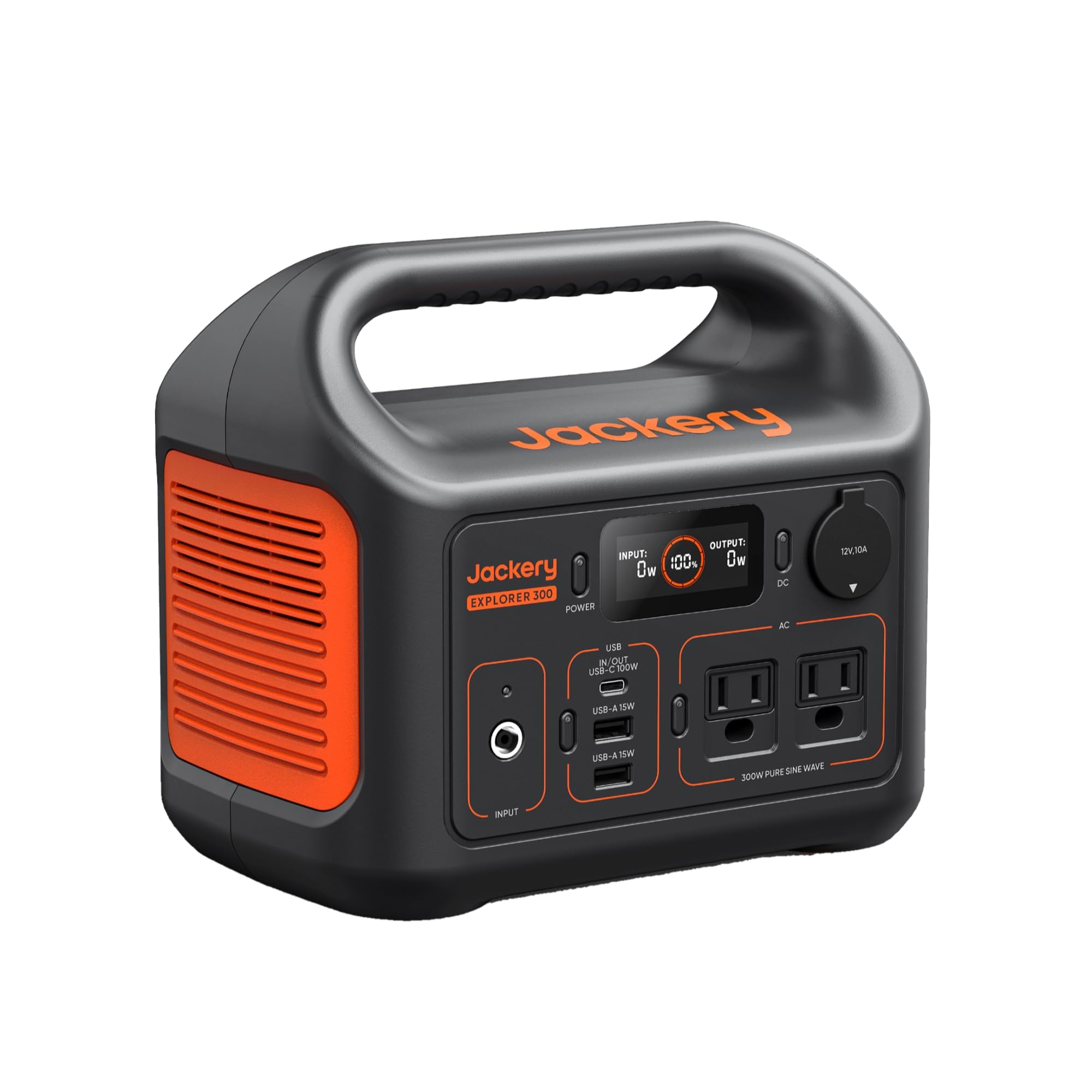
At 7.1 pounds, the Explorer 300 is the one we hand to someone who has to carry the power station from the car to the tent. The 292Wh battery and 300W inverter are sized for phones, lights, laptops, camera batteries, and a CPAP for a night, not for a camp kitchen. The built-in handle makes it feel more like a lunchbox than a generator.

We like the 100W USB-C port and the 120W car socket because they cover the devices we actually carry. The LiFePO4 battery is rated for 4,000 cycles to 70%, which is the same long-life chemistry as the bigger Jackery units. It's a small battery, so plan your loads instead of assuming it will run everything.

We recommend it for solo campers, short trips, and anyone who values a light pack over appliance power. The Explorer 1000 v2 is the better choice when a fridge or a multi-night CPAP is on the list; the 300 is the one that disappears into the trunk. The 4,000-cycle battery is the detail that makes it more than a weekend toy.

Pros

  • 7.1 lb with built-in handle
  • 292Wh with 300W AC output
  • 4,000-cycle LiFePO4 battery
  • 100W USB-C and 120W car port

Cons

  • Solar panel sold separately
Our verdict

We recommend the Explorer 300 for solo campers and short trips where 292Wh is enough and every pound you carry matters.

Check Latest Price
4

Best Budget Panel Kit

ZeroKor 300W

85 /100
LBD Score Excellent

Key details

Weight
5.1 lb
Capacity
280Wh
AC Output
300W
Solar Panel
60W included
View on Amazon

The ZeroKor kit arrives with a 60W solar panel, a 280Wh battery, and a 300W inverter, which is the budget-friendly version of the solar-generator idea. The 5.1-pound body has a built-in handle and seven outlets, including two AC, a car port, and several USB ports. It's the kind of kit you can keep in the car for a weekend without clearing trunk space.

We recommend it for campers who want a panel and battery in one purchase and don't need to run appliances. The 60W panel is a trickle for a 280Wh battery, so think of it as a top-up while you're out rather than a full recharge in an afternoon. The 300W AC output is fine for a laptop, a fan, and lights.

The 5.1-pound body and seven outlets make it easy to live with, and the BMS adds the basic protection you want in a budget box. The included panel uses a DC adapter, so you don't have to match a connector on day one; that's a small thing that makes the kit feel complete. It's the one to take when the goal is keeping phones and lights alive, not running a camp kitchen.

Pros

  • 60W solar panel included
  • 5.1 lb with built-in handle
  • Seven output ports
  • BMS protection

Cons

  • 300W output limits appliances
Our verdict

We recommend the ZeroKor kit for budget-minded campers who want a panel included and only need to charge small devices.

Check Latest Price
5

Best Low-Cost Battery

Dyness 300W

85 /100
LBD Score Excellent

Key details

Outlets
1 AC, 6 total
Capacity
256Wh
AC Output
300W (600W surge)
Solar Panel
Optional
View on Amazon

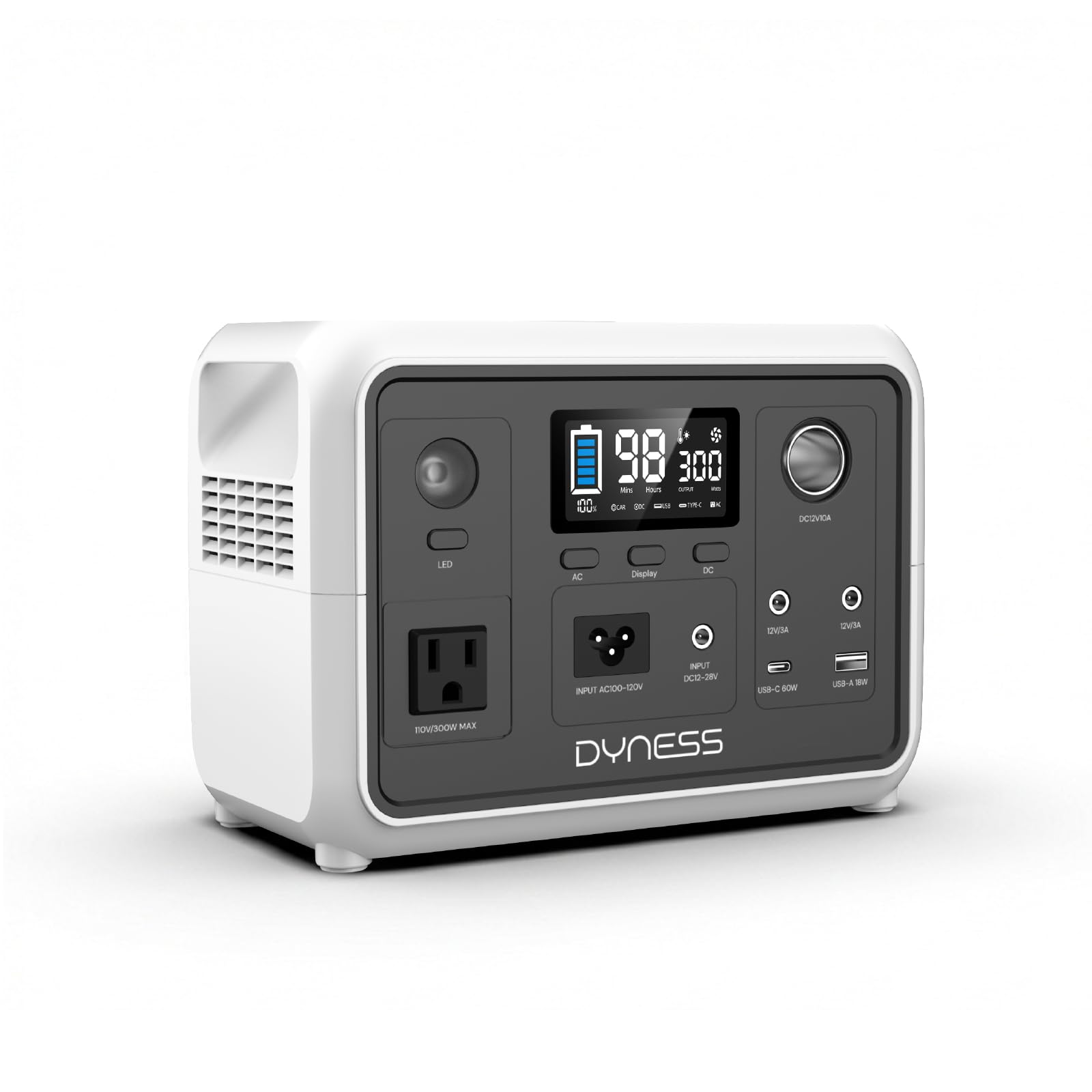
The Dyness 300W is the budget entry that still uses a LiFePO4 battery, which is the chemistry we look for when a power station is going to sit in a car for years. It packs 256Wh, a 300W inverter with a 600W surge, and six output ports into a compact case. We recommend it as a second battery or a first setup for a solo camper who already has a panel.

The six ports cover a phone, a laptop, a light, and a 12V cooler, and the 300W ceiling is enough for small electronics. The two-year warranty is shorter than the five-year coverage on the Anker and EcoFlow, so the low price isn't the whole story. It's a solo-camper battery, not a family power hub.

The single AC outlet is the catch: two campers with two laptops will want a power strip. The six-port layout helps, because phones and lights can stay on USB while the AC outlet handles the laptop. If you want a panel in the box, the ZeroKor kit is the easier buy; the Dyness is for someone who already has one.

Pros

  • 256Wh LiFePO4 battery
  • 300W AC output with 600W surge
  • Six output ports
  • Compact case

Cons

  • Solar panel sold separately
Our verdict

We recommend the Dyness as a low-cost LiFePO4 backup for solo campers who already own a solar panel or plan to charge from AC.

Check Latest Price
6

Gadget Charging

Anker SOLIX C300

91 /100
LBD Score Outstanding

Key details

USB-C
140W two-way
Weight
4.13 kg (9.1 lb)
Capacity
288Wh
AC Output
300W (600W surge)
View on Amazon

The SOLIX C300 is built around its ports: eight of them, including three AC outlets, two USB-C, and a 140W two-way USB-C port that can charge a laptop or refill the station itself. The 288Wh LiFePO4 battery and 300W inverter are modest, but the tower shape and 9.1-pound body make it easy to set on a small camp table.

The 140W USB-C is the feature we kept coming back to. It can top up a MacBook or a drone battery without a wall adapter, and the 0-to-80% AC charge takes about 50 minutes. The 300W AC output is enough for a fan, lights, and a small appliance, and the five-year warranty is the longest here alongside the EcoFlow.

We recommend it for gadget-heavy campers who value ports and a five-year warranty more than capacity per dollar. The Jackery 300 gives you similar capacity for less and a lighter body, while the Anker gives you faster USB-C and more outlets. The tower shape is the detail that makes it feel at home on a narrow camp table.

Pros

  • Eight ports including three AC
  • 140W two-way USB-C
  • 0-80% AC charge in 50 minutes
  • Five-year warranty

Cons

  • Premium price for 288Wh
  • 300W output limits appliances
Our verdict

We recommend the SOLIX C300 for gadget-heavy campers who value eight ports and 140W USB-C more than capacity per dollar.

Check Latest Price
7

Built-In Panel

BLAVOR 1600W

84 /100
LBD Score Excellent

Key details

Weight
26 lb
Capacity
1,024Wh
AC Output
1,600W (3,200W peak)
Solar Panel
Built-in 40W
View on Amazon

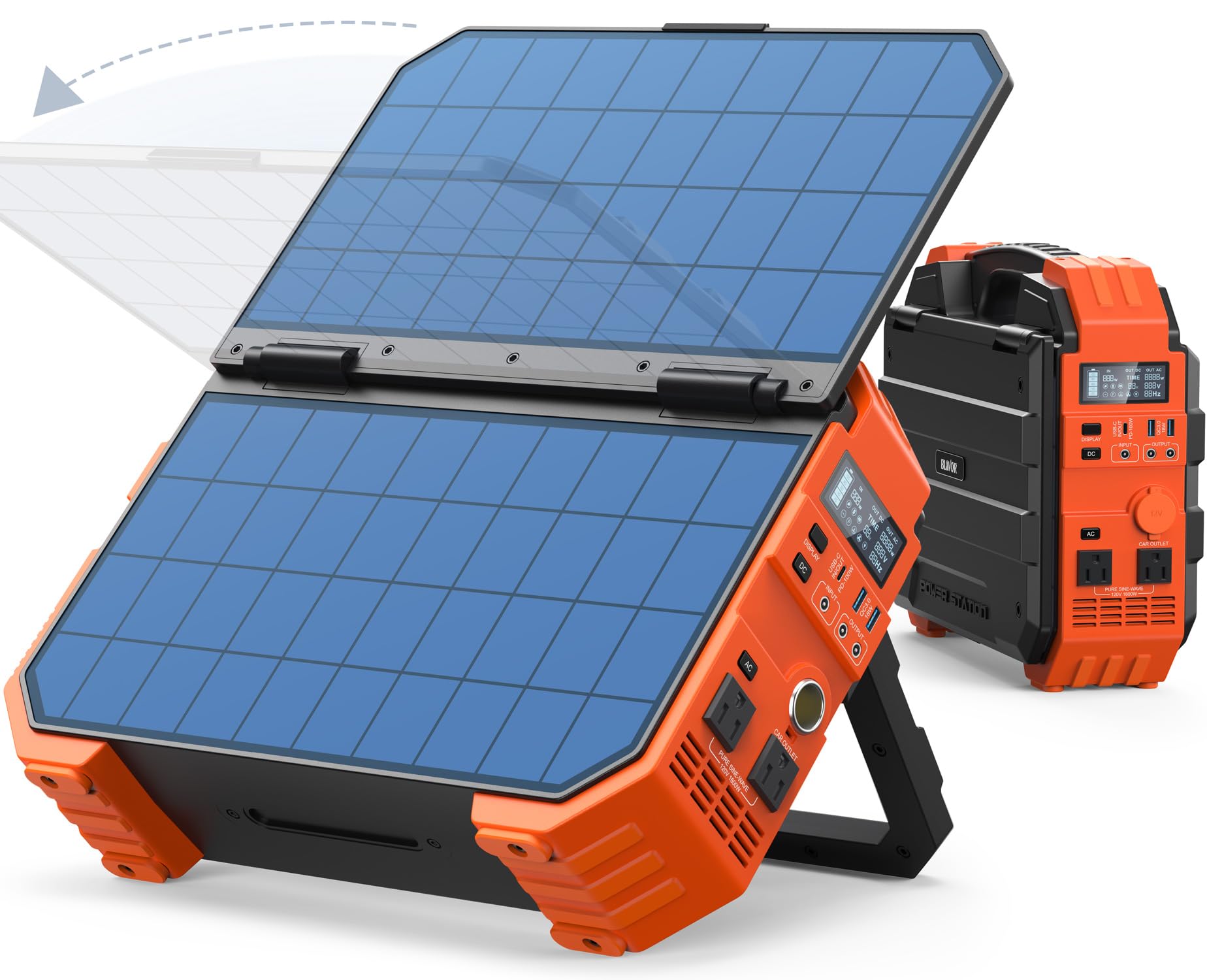
A 1,600W inverter and a 1,024Wh battery in a 26-pound box is a lot of power for car camping, and BLAVOR builds the solar panel into the case so there's no separate folding panel to pack. The 3,200W peak output can handle a mini fridge, laptops, phones, and lights, and the LiFePO4 battery is rated for 3,500 cycles.

The built-in 40W panel is the design hook, but it's a trickle charger for a battery this size. It will add some charge while the unit sits in the sun, but a full recharge from the built-in panel is a multi-day project. Use it as a top-up and bring an external panel or an AC cord for real recharges.

At 26 pounds, it's a two-hand carry, and the all-in-one shape is built for car camping rather than a hike-in site. The trade-off is convenience: you don't have to set up a separate panel, and the built-in panel means the unit can be charging while you're away from camp. The three-year warranty is a useful cushion for a newer design.

We recommend it for campers who want an all-in-one solar case and can live with slow solar, not for someone who needs a fast recharge between cloudy days. The EcoFlow Delta 3 Classic bundle is the better solar setup because its 220W panel does the real work; the BLAVOR is the one for a basecamp where the panel can stay attached and the unit doesn't move far.

Pros

  • 1,024Wh and 1,600W output
  • Built-in 40W solar panel
  • 3,500-cycle LiFePO4 battery
  • Three-year warranty

Cons

  • Heavy at 26 lb
Our verdict

We recommend the BLAVOR for car campers who want an all-in-one solar case and can live with slow built-in solar charging.

Check Latest Price

What Eight Months of Testing Taught Us About Solar Generators

We started with about 40 models from names we know and filtered by battery chemistry, capacity, and what actually ships in the box. Anything still running older NMC cells, or with a solar input too small to refill its battery over a weekend, came off the list. That left nine, bought at retail like anyone else's.

Each one lived the same life: a weekend of car camping, a tailgate, a week parked in the garage as home backup, and a planned two-day outage where we ran the router and a string of small loads off it. We timed every recharge from a wall outlet and again from a solar panel, stopping the clock at 80% and watching what the screen reported for incoming watts when a cloud passed over. A unit that implied a one-hour fill and took three didn't get credit for the claim.

For output, we put a watt meter inline and pulled hard loads — a small kettle, a compressor fridge, a laptop dock — to see which units held their rated wattage and which tripped or throttled. We weighed each on a luggage scale, then carried it one-handed where possible the 150 yards or so from the car to a campsite pad, because that's where handles and weight balance reveal themselves. Durability got the least glamorous version of the job: truck beds, gravel, a 38°F morning, then a full discharge-and-recharge cycle at the end to see whether capacity had slipped or the fan had gotten louder.

The last pass was about money and what came with it: whether the panel was included or sold separately, whether the cables were long enough to be useful, whether the USB-C port could fast-charge a phone. One mid-sized model moved up simply because everything we needed was already in the box.

How to Choose a Camping Solar Generator

Match capacity and output to your devices

A 300Wh station is a phone, light, laptop, and camera battery; a 1,000Wh station is a fridge, CPAP, or Starlink for a weekend. The watt-hour number tells you how long it runs; the AC output tells you what it can start. A fridge may draw only 60W running but need several hundred watts of surge to start, so check both.

We prioritize 1,000Wh for anyone who wants a fridge or a multi-night CPAP; the Jackery Explorer 1000 v2 is the balance point in this set. A 300Wh unit like the Explorer 300 is the better match for a solo camper who charges devices and runs a light. Add up the watts you'll use at once, then leave headroom.

Treat weight as part of the spec

Every watt-hour costs pounds. The 292Wh Explorer 300 is 7.1 pounds; the 1,070Wh Explorer 1000 v2 is 23.8 pounds; the 1,024Wh BLAVOR is 26 pounds. The difference matters most on the walk from the car to the tent, not on the spec sheet.

If you camp at a drive-in site, a 25-pound box is a reasonable trade for real appliance power. If you carry gear any distance, a 7-pound unit is the one that actually goes with you. Pick the weight you can move alone, then see how much capacity that buys.

Check whether the panel is in the box

Solar generator is a capability, not a promise that a panel is included. Many stations are sold alone, and the panel is an extra purchase. The EcoFlow Delta 3 Classic is the clear bundle here, with a 220W panel in the box; the Jackery units are solar-ready but ship without a panel.

Panel wattage matters as much as capacity. A 40W built-in panel on a 1,024Wh battery is a trickle, while a 220W folding panel can do a real recharge in good sun. Look at the box contents and the panel wattage before you compare prices.

Choose LiFePO4 for the long haul

LiFePO4 has become the default for camping power stations because it lasts more cycles and holds up better than older lithium-ion packs. The Jackery 300 and 1000 v2 are rated for 4,000 cycles to 70%, and the Dyness uses LiFePO4 at a budget price. That cycle life matters if the unit will live in a garage or car for years.

Recharge speed is the other half of the routine. A one-hour AC charge makes a last-minute trip possible; solar is slower and weather-dependent. Use AC before you leave, then solar or a car charger to top up at camp.

Count the ports and check the warranty

The port count is where small stations separate. The Anker SOLIX C300 has eight ports and a 140W two-way USB-C, while the Dyness has six ports but only one AC outlet. If two people need to plug in laptops at the same time, one AC outlet becomes a bottleneck.

Warranty coverage varies widely, from two years on the Dyness to five on the EcoFlow and Anker. We treat a longer warranty as part of the value, especially on a battery that will cycle often. Check the outlet mix and the warranty before you decide.

Frequently Asked Questions

Final Verdict

For most campers, the Jackery Explorer 1000 v2 is the one to buy: 1,070Wh and 1,500W cover a fridge, CPAP, or Starlink, and 23.8 pounds is still a one-person carry. If you want the panel in the box and faster solar charging, choose the EcoFlow Delta 3 Classic bundle. If every pound counts, the Explorer 300 is the better fit.