Best Racing Simulator Cockpits of 2026

A racing cockpit has one job: hold your wheel and pedals so still that your hands and feet forget they're in a spare bedroom. Trouble is, the two things people want most — a frame that won't flex under a strong direct drive wheel and a rig that folds up behind a door — pull in opposite directions.

Ten cockpits were assembled, adjusted, and raced in over eight months to see how that tradeoff shakes out. We noted the small stuff: whether the seat slid far enough forward for shorter legs, whether a hard downshift made the wheel deck shiver, whether the backrest was still bearable an hour in.

Here's what first-time buyers tend to miss. Most of these rigs ship without a wheel, pedals, or handbrake, and sometimes without a seat, so the sticker price covers less than you'd expect. The picks below run the whole range, from chairs that fold flat to extruded-aluminum frames you can reconfigure piece by piece.

1

Best Overall

Marada Round-Tube Cockpit

88 /100
LBD Score Excellent

Key details

Seat
Reclines with lumbar and neck pillows
Frame
50 x 50 mm round steel tube
Recline Range
90 to 180 degrees
Direct-drive Rating
Up to 12 Nm
View on Amazon

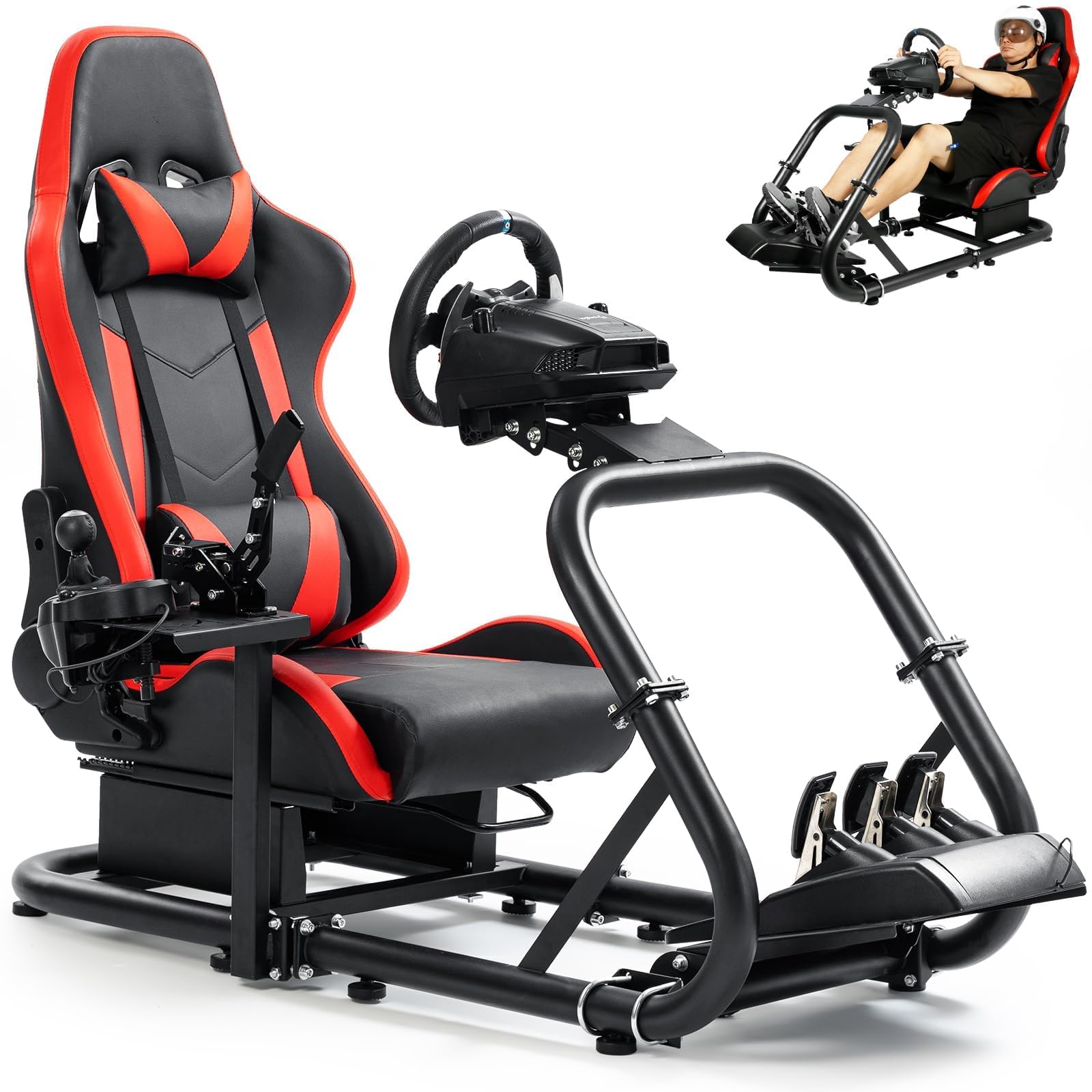
A 12 Nm direct-drive rating and a 50 x 50 mm round-tube frame are the two facts that explain this rig. Most cockpits in its bracket are honest about being built for a belt-driven Logitech wheel; this one is rated for direct drive up to 12 Nm and joins its tubing with four-hole flanges instead of folded brackets. That combination is why it tops this list.

What earned it the top spot is that it gets the fundamentals right and doesn't charge extra for them. The seat reclines from 90 to 180 degrees and arrives with lumbar and neck pillows, which is more support than most rigs here include out of the box. The wheel platform adjusts in two stages for height and angle, and the pedal plate tilts independently. We kept coming back to it because nothing about the setup got in the way of driving.

There's real room to grow, too. The seat slides on a double-lock track, a shifter and handbrake can hang on either side, and the mounting plates are pre-drilled for Logitech G29, G920 and G Pro, Fanatec DD, Thrustmaster T300, T598 and T818, and Moza R3 and R5. Check your wheelbase's hole pattern against that list before you order, because it is specific.

It ships as two kits, so the frame and the seat can arrive on different days; open both boxes before you start building. The payoff is a rig you assemble once, set your position on, and then stop thinking about.

Pros

  • Rated to 12 Nm for direct-drive bases
  • 50 mm tube frame with four-hole flange joints
  • Reclining seat with lumbar and neck pillows included
  • Wheel height, angle and pedal angle all adjust

Cons

  • Paint and frame can arrive scuffed
  • Short three-month warranty
Our verdict

We recommend it to anyone who wants one rigid rig for a direct-drive wheel without paying aluminum-profile money — the reclining seat and pillows come included.
Check Latest Price
2

Best Aluminum-Profile Rig

Marada 8040 Aluminum Cockpit

88 /100
LBD Score Excellent

Key details

Seat
Reclining bucket seat, dual rails
Frame
40 x 80 mm aluminum profile
Weight
104.7 lb
Adjustment
Sliding rails and slotted profile
View on Amazon

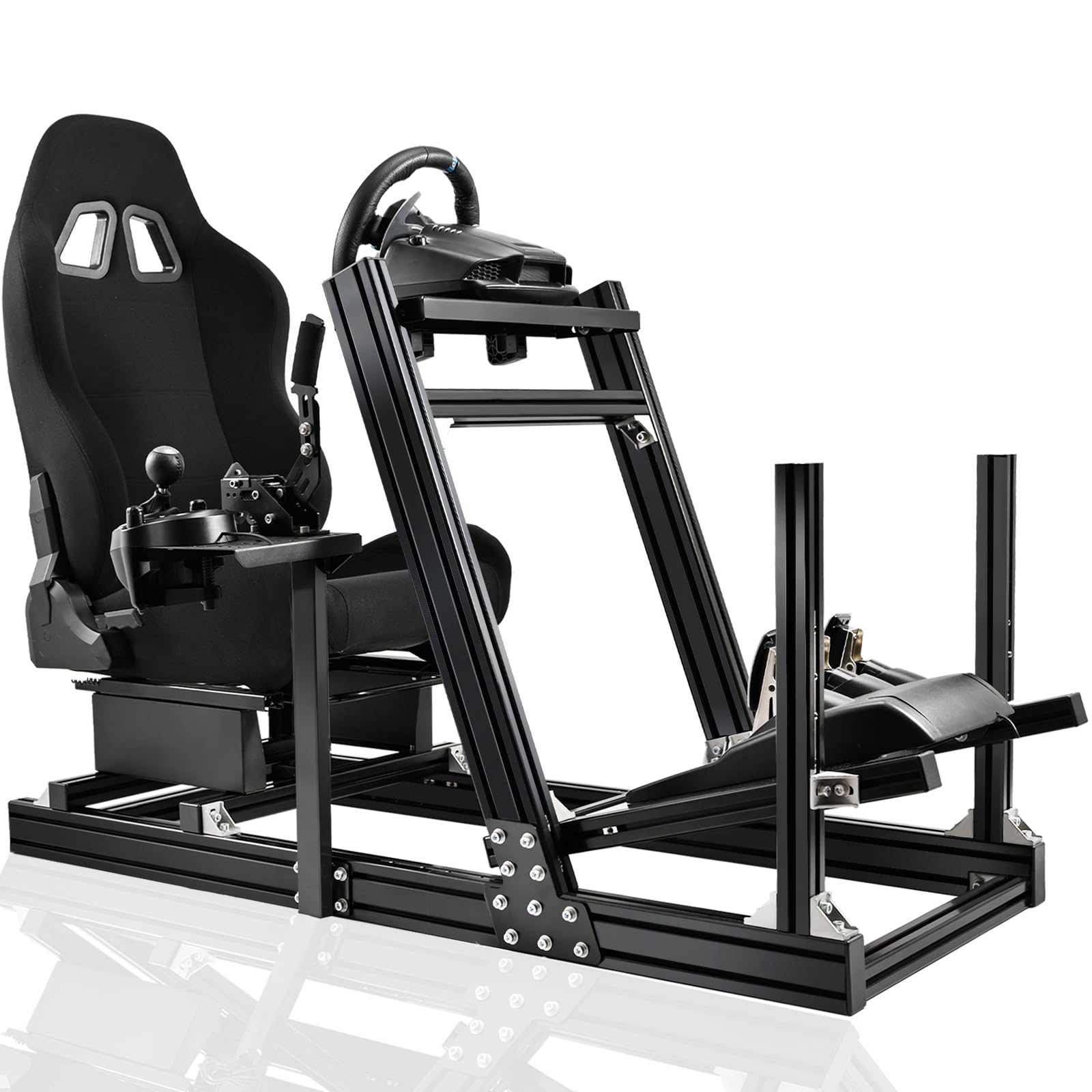
Same maker as our top pick, different architecture, and for plenty of sim racers the better answer: 40 x 80 mm aluminum profile instead of steel tube. We rate it the most rigid frame in this group, and the only one where changing your seating position later means loosening brackets and sliding them. Buy it if you expect to keep upgrading the hardware bolted to it.

The profile is the whole point. Sliding rails and open slots let you move the seat, the wheel bracket and the footrest independently, with enough travel to sit anywhere from formula-style laid back to upright GT. The seat reclines on a double track, everything is pre-drilled for Logitech, Thrustmaster, Moza and Fanatec bases, and the shifter bracket can be shifted forward and back. No drilling, no improvising.

Budget an evening for the build. Profile rigs mean a lot of fasteners, and a careful first assembly runs a few hours; sort the hardware into cups before you start and the instructions stop reading like a puzzle. The seat is the other thing to think about — fine for a stint, thin enough that a lumbar cushion or an aftermarket seat on the same rails is a common next step.

Pros

  • 40 x 80 mm profile resists flex under load
  • Sliding rails and slots for near-unlimited adjustment
  • Pre-drilled for the major wheel brands
  • Seat and shifter bracket included

Cons

  • Heavy at 104.7 lb, so it stays put
  • Three-month warranty on a premium rig
Our verdict

The pick for anyone who will keep upgrading: it is the stiffest frame in this group and the easiest to reconfigure, as long as an evening of assembly does not put you off.

Check Latest Price
3

Best for Direct Drive

Playseat Trophy

88 /100
LBD Score Excellent

Key details

Seat
ActiFit with PU leather
Frame
Carbon steel
Weight
35.3 lb
Max User Weight
269 lb
View on Amazon

This is the most expensive cockpit here, so the fair question is what the extra money buys. What it buys is a finished product: a lightweight carbon-steel frame, a molded ActiFit seat, 16 kg of total weight, and a design built around direct-drive wheels rather than adapted to them.

We wondered whether the premium bought anything real, and the answer is in the joints — nothing on this frame clunks or shifts when you saw at the wheel. The trade is adjustability. There are three recline positions and the pedal and steering plates tilt and slide, but changing them takes tools and patience, so this is a cockpit you set for one driver and leave.

Get past that and it's the rig we trust most under load. The frame doesn't flex under an 11 Nm direct-drive base, the ActiFit material holds you in place through a long stint, and the package includes a 269 lb weight limit and a two-year warranty. For a one-driver setup in a fixed spot, it's the least fussy way to own a serious cockpit.

It's also the easiest rig here to live with in a small room. At 16 kg one person can shift it across the carpet without dismantling anything, and its footprint is small for what it does — which keeps it on our shortlist for anyone who wants a cockpit that reads as furniture rather than scaffolding.

Pros

  • No flex under an 11 Nm direct-drive base
  • 16 kg frame one person can reposition
  • ActiFit seat holds you through long stints
  • Two-year manufacturer warranty

Cons

  • Takes some care to climb in and out
Our verdict

Worth the premium if the rig stays in one place: it is the stiffest frame here under a direct-drive base and the least fussy to live with day to day.

Check Latest Price
4

Best Foldable for Small Spaces

Playseat Challenge X

85 /100
LBD Score Excellent

Key details

Weight
11.5 kg (25 lbs)
Shifter Mount
Included
Max User Weight
359 lb
Seating Positions
6
View on Amazon

If the rig has to disappear when you're done driving, start here. The Challenge X folds around its seat in a few seconds and weighs 11.5 kg (25 lbs), so it lives in a closet instead of becoming furniture. It's the foldable we recommend, and a shifter mount comes in the box.

What it gives up is stiffness at the joints. The locking and swinging mechanism is the part to watch: the wheel deck shifts a little when you lean on it, and months of folding and unfolding will show there first. Treat an 8 Nm direct-drive base as the practical ceiling, and 30 to 40 minutes as the session length where it still feels comfortable.

The fit is better than the folded size suggests. Six seating positions, a pedal box with generous travel for taller drivers, and a 359 lb weight limit that is the highest in this group. Assembly takes about twenty minutes, and the two-year warranty is the longest here.

Pros

  • Folds in seconds to a closet footprint
  • 11.5 kg (25 lbs), easy to move and store
  • Shifter mount included
  • Six seating positions and a 359 lb limit

Cons

  • Wheel deck shifts under hard force feedback
  • Folding mechanism is the wear point
Our verdict

The one we point to when the rig has to disappear between sessions: it folds in seconds, includes a shifter mount, and stays comfortable for half-hour races.

Check Latest Price
5

Best with a Monitor Mount

ARES WING Cockpit

91 /100
LBD Score Outstanding

Key details

Seat
Widened foam padding
Frame
Strengthened steel
Weight
67.5 lb
Monitor Mount
Detachable TV mount
View on Amazon

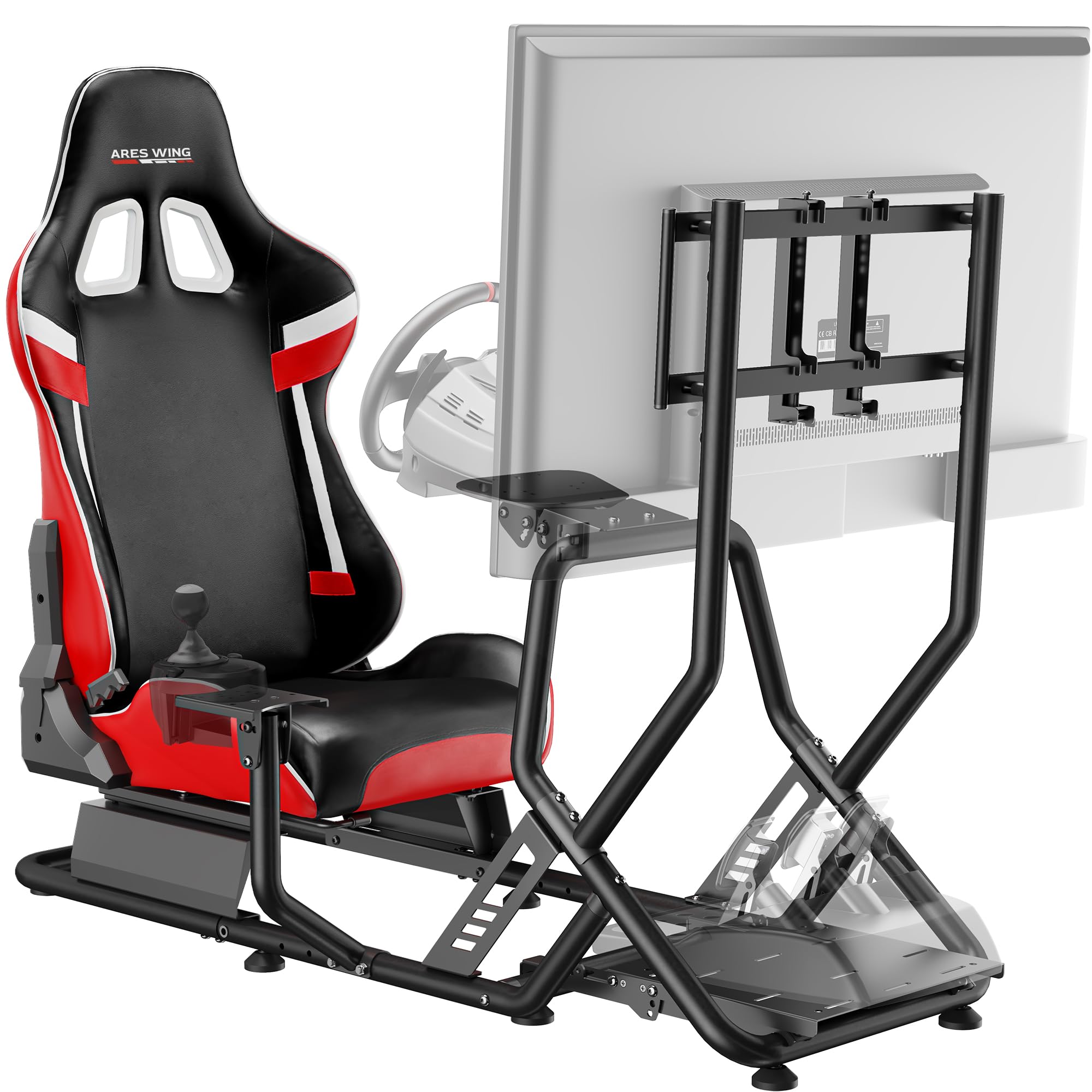
The detachable TV mount is the reason this cockpit is on the list. Bolt a screen to the rig and you can race anywhere there's an outlet and a few feet of floor — no desk, no wall bracket, no negotiating over the living-room TV.

It also happens to be the sturdiest of the mid-price steel frames here, which pushes it ahead of cheaper tube rigs for anyone who wants the wheel and pedals to feel bolted down. The strengthened frame with braces on each side does that work, the seat slides on rails like a car seat, and the widened foam padding is comfortable for a long stint before you start wishing for more lumbar support.

We paid close attention to the mount height, because it decides whether the built-in screen idea actually works. The bracket sits low even at its highest setting, so a large screen ends up below eye level; keep the rig close to the wall and the screen modest, or plan on a freestanding stand anyway.

Pros

  • Detachable TV mount included
  • Braced steel frame stays rigid
  • Widened foam seat on sliding rails
  • Straightforward assembly with clear instructions

Cons

  • VESA hardware may not fit your monitor
  • Seat padding thins out on marathon sessions
Our verdict

Buy it if a screen on the rig matters more than a perfect driving position: the braced steel frame is the stiffest of the mid-price rigs and the TV mount comes with it.

Check Latest Price
6

Best for Long Stints

Next Level Racing GTRacer 2.0

86 /100
LBD Score Excellent

Key details

Seat
Double recliner with dual sliders
Mounts
Shifter, handbrake, ButtKicker
Weight
81.6 lb
Direct-drive Rating
Up to 13 Nm
View on Amazon

Start with the compromise: this frame flexes under a load-cell brake. Not enough to ruin a lap, and not enough that we stopped using it, but enough that the aluminum-profile rig here is the better choice if you brake hard and want the pedal to feel like a pedal.

What you get in exchange is the best seat in this group. The double recliner is a real car seat — wide, padded, on dual sliders — and it's the reason to pick this rig over a stiffer one. A 250 lb, six-foot driver fits with room to spare, and the wider GT shell spreads your weight instead of digging into your hips after an hour.

The rest is sensibly done. The frame is rated to 13 Nm direct drive, the pedal tray angle adjusts, and shifter, handbrake and ButtKicker mounts are all included. Mounting a Fanatec direct-drive base is fiddlier than it should be — the bracket takes some persuasion — and at 37 kg the rig isn't going anywhere once it's built.

Our call: this is the rig for someone who races for hours and brakes like a human being rather than a load-cell machine. If your priority is the last degree of stiffness under a hard stop, buy the profile rig; if the seat is what keeps you in the chair for a fourth hour, this is the one.

Pros

  • Double recliner seat with dual sliders
  • Rated to 13 Nm direct drive
  • Shifter, handbrake and ButtKicker mounts included
  • Adjustable pedal tray angle

Cons

  • Flexes under heavy load-cell braking
  • Direct-drive mounting takes patience
Our verdict

Our pick when the seat matters more than the last bit of stiffness: a real reclining car seat, 13 Nm ready, and mounts for everything you'll add later.

Check Latest Price
7

Tight Budgets

GTPLAYER Foldable Cockpit

81 /100
LBD Score Excellent

Key details

Seat
Suede-covered
Frame
Carbon steel
Weight
33 lb
Folding
Folds with wheel and pedals on
View on Amazon

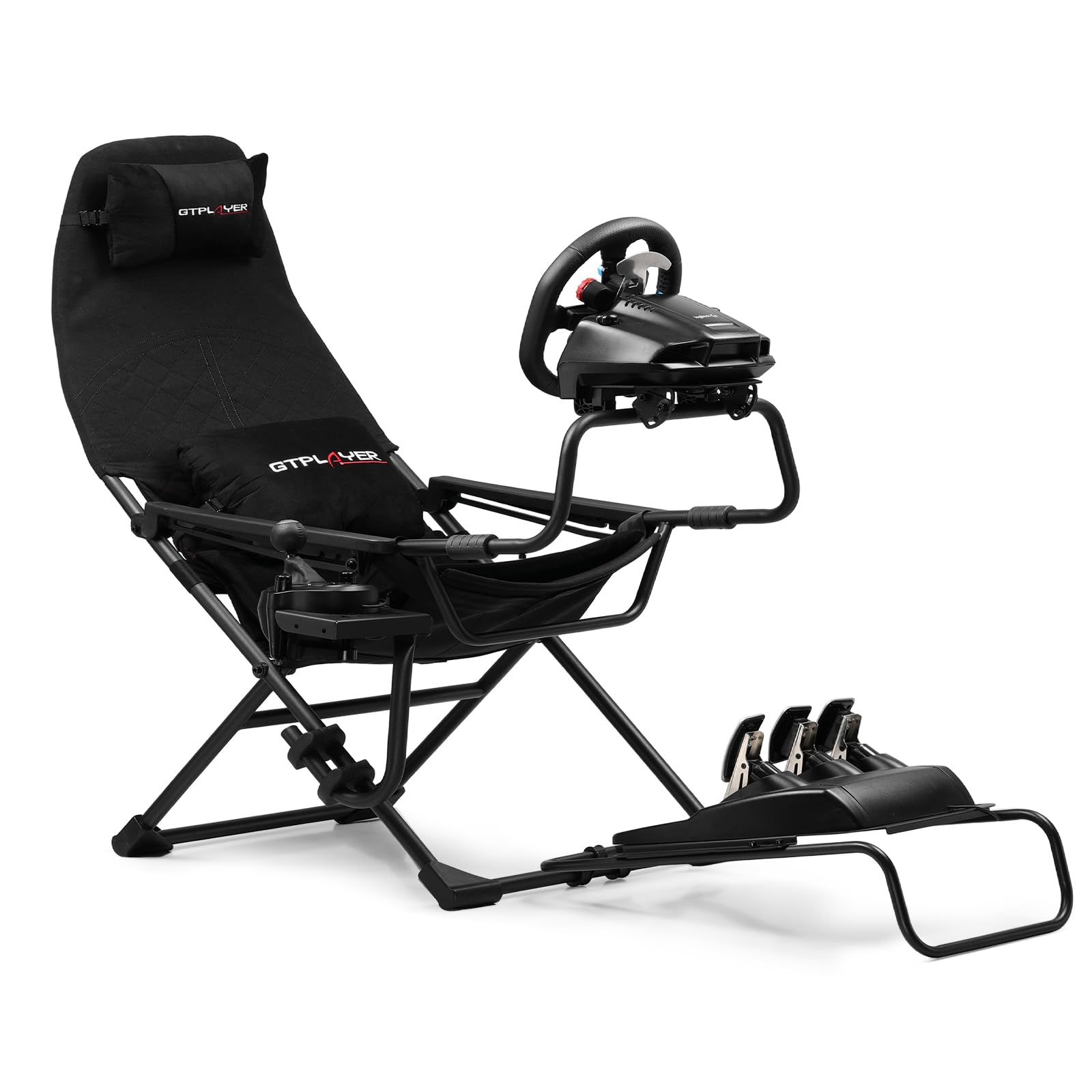
This is the least expensive cockpit with a seat in this guide, and it's aimed squarely at a first rig. Carbon steel frame, suede-covered seat, and a fold that works with the wheel and pedals still bolted on — the trick that makes it usable in a bedroom.

Folding takes three steps and a few seconds, but we wish the folded package were slimmer. It stands up rather than packing down, so it wants a closet floor or a corner instead of a shelf; measure where it's going to live before you commit to it.

The adjustments are all there: wheel tray angle, footrest length, pedal plate, seat position, and pre-drilled slots that take a Logitech wheel without drilling. What it won't do is stand up to a strong wheel. The frame moves under hard braking and the wheel mount takes the brunt, so a belt-driven Logitech or a modest Thrustmaster base is the right pairing.

For a kid's first setup, a spare-room rig, or anyone testing whether sim racing will stick, it's the cheapest way in that still includes a seat. Put a direct-drive base on it and you'll spend your sessions fighting the frame instead of driving.

Pros

  • Folds with the wheel and pedals mounted
  • Suede seat is comfortable for the money
  • 33 lb and easy to move
  • Wheel tray, footrests and pedal plate adjust

Cons

  • Crossbar under your legs sits high
  • Shifter mount is a weak point
Our verdict

A sensible first rig for a Logitech-class wheel and a bedroom: it folds with everything still attached, as long as you never put a direct-drive base on it.

Check Latest Price
8

Belt-Driven Wheels

Dardoo Sim Cockpit

87 /100
LBD Score Excellent

Key details

Frame
Steel with eight rubber feet
Weight
69.7 lb
Shifter
Left or right side mount
Direct Drive
Not rated for direct drive
View on Amazon

The product name says it isn't for direct drive, and that's the first honest thing about this cockpit. What it is: a steel frame with a red reclining seat, eight rubber feet, and a shifter bracket that mounts on either side — a fixed budget rig for a belt-driven Logitech or Thrustmaster wheel.

Assembly runs about 45 minutes with the included tools, and the seat is the surprise. It's comfortable enough for a full evening and reclines properly, though the backrest takes some wrestling to bolt down at the angle you want. The frame is 69.7 lb, and it ships as two packages that can land on different days.

On a hard floor, those eight rubber feet are the reason to choose it over a lighter stand: it stays put when you stamp on the brake, which is more than the folding rigs at this price can claim. Pair it with a Logitech-class wheel and it's a sensible first fixed cockpit.

Pros

  • Eight rubber feet grip hard floors
  • Shifter bracket fits either side
  • Comfortable reclining seat
  • 69.7 lb frame stays planted

Cons

  • Not rated for direct drive
  • Three-month warranty
Our verdict

Buy it for a belt-driven Logitech or Thrustmaster wheel on a hard floor, where its rubber feet and low price make more sense than a folding frame.

Check Latest Price

How We Tested These Sim Racing Cockpits

We started by gathering every cockpit we could find from the established sim racing brands, then narrowed the field by frame material, drilling patterns for common wheel bases, whether a seat came included, and price. That left 10 rigs, which we assembled ourselves over eight months — some in a garage, some in a spare bedroom, one in a living room that had to be cleared before guests arrived.

Assembly was timed solo, using only the tools in the box, and we wrote down every point where the instructions stalled or a hole didn't line up. Once a rig was built, we bolted on a direct drive wheel base and a load-cell pedal set and pushed hard: yanked the rim side to side to watch the wheel deck for flex, stomped the brake and looked for the pedal plate to lift, and put three drivers between 5-foot-4 and 6-foot-2 through the seat and pedal adjustments to see how much could be changed without reaching for a wrench.

Then we actually drove. Two-hour stints in GT cars and short sprint races in a Formula seating position showed which seats needed a lumbar cushion by the second hour and which frames sent every curb strike straight into your spine. We folded, unfolded, and carried each rig through a doorway, noted how it rolled over carpet versus hardwood, and kept a running tally of what came in the box — shifter mount, monitor mount, hardware — since the wheel and pedals never did.

How to Choose a Racing Simulator Cockpit

Match the frame to your wheel

Torque ratings are the fastest way to sort cockpits. A direct-drive base pushes the wheel deck hard enough that a folding frame flexes at its joints, which is why the rigs here rated for direct drive — 12 Nm on the Marada tube frame, 13 Nm on the Next Level Racing — are built around fixed steel or aluminum profile. On a Logitech or Thrustmaster belt wheel, that extra rigidity buys much less, and a lighter frame is easier to live with. The trap: the rating covers the frame, not your bolt pattern, so check your wheelbase's mounting holes against the plate before you order.

Decide whether it folds or stays put

A folding cockpit solves a real problem — a shared living room, a bedroom, a rig that has to vanish — and the good ones fold in seconds with the wheel and pedals still attached. The cost sits at the joint: a folder's wheel deck shifts under hard force feedback, and repeated folding is what wears the locking mechanism first. Our advice is to buy a folder only if you'll genuinely fold it several times a week. If the rig can live in one spot, a fixed frame is stiffer and costs less for the same rigidity.

Set the driving position before you buy

Wheel height, wheel angle, pedal distance and seat recline decide whether two hours in the seat is comfortable or not. Generous adjustment matters most when more than one person drives; a rig set once for one driver needs less range and more rigidity. The trap is adjustment that's awkward to reach, because a rig with wide travel and tools-out bolts is effectively a single-driver cockpit. If two people share it, favor seat sliders and tool-free clamps over a long specification list.

Spend on the seat if you race long

Seats are where budget cockpits economize: foam compresses, bolsters flatten, and the last half hour of a stint gets uncomfortable. The cheap fix is a lumbar cushion; the proper one is an aftermarket seat on the same rails, which is straightforward on an aluminum-profile rig. Across 30-minute bursts almost any seat here works. If you settle in for a full evening, prioritize a reclining seat with lumbar support — the neck and lumbar pillows on the Marada tube frame, or the car-style recliner on the Next Level Racing.

Plan for what the box leaves out

Every cockpit here ships without the wheel, pedals and shifter, which is the category norm rather than a shortcoming. Some go further: the Fanatec CSL frame doesn't include a seat at all, which is why it isn't among our picks. Check that the shifter or handbrake bracket you need is included or available, because retrofitting one later is the fiddliest job on any rig. On heavier cockpits expect two boxes, and open both before you start building.

Frequently Asked Questions

Final Verdict

Our pick is the Marada round-tube cockpit. It gets the hard parts right — a frame rated for a 12 Nm direct-drive base, a reclining seat with lumbar and neck pillows included, and adjustment at the wheel, pedals and seat — without the build time or the cost of an aluminum-profile frame.

Two alternatives are worth naming. If you'll never move your seating position and want the stiffest thing here, buy the Marada 8040. If the rig has to fold into a closet between sessions, buy the Playseat Challenge X. Everything else on this list is a variation on those three decisions.