Best Portable Power Stations Under $500 of 2026

A portable power station is a backup plan you can carry—until it’s too heavy, too slow to recharge, or too optimistic about what it can run. I’ve used them to keep a laptop alive through a storm and to light a campsite after dark; I’ve also watched an affordable unit fold under a small fan. The real job is simpler than the spec sheet: deliver steady power, recharge without drama, and stay portable enough that you actually bring it along.

Over eight months, I tested 12 power stations on a midrange budget, from pocket-size battery banks with an AC outlet to 300-watt units with LiFePO4 cells. I took them camping, worked from a parked car, and ran blackout drills at home, plugging in phones, laptops, a CPAP, and a small fan. The gap between best and worst was mostly in the unglamorous stuff: recharge time, usable capacity after the claimed number, and whether a unit was light enough to carry from trunk to tent. The picks below are the ones that earned a spot in my trunk and closet.

1

Best Overall

Jackery Explorer 300

93 /100
LBD Score Outstanding

Key details

Weight
7.1 lb
AC Output
300W continuous, 600W surge
Battery Type
LiFePO4, 4,000 cycles
Battery Capacity
292Wh
View on Amazon

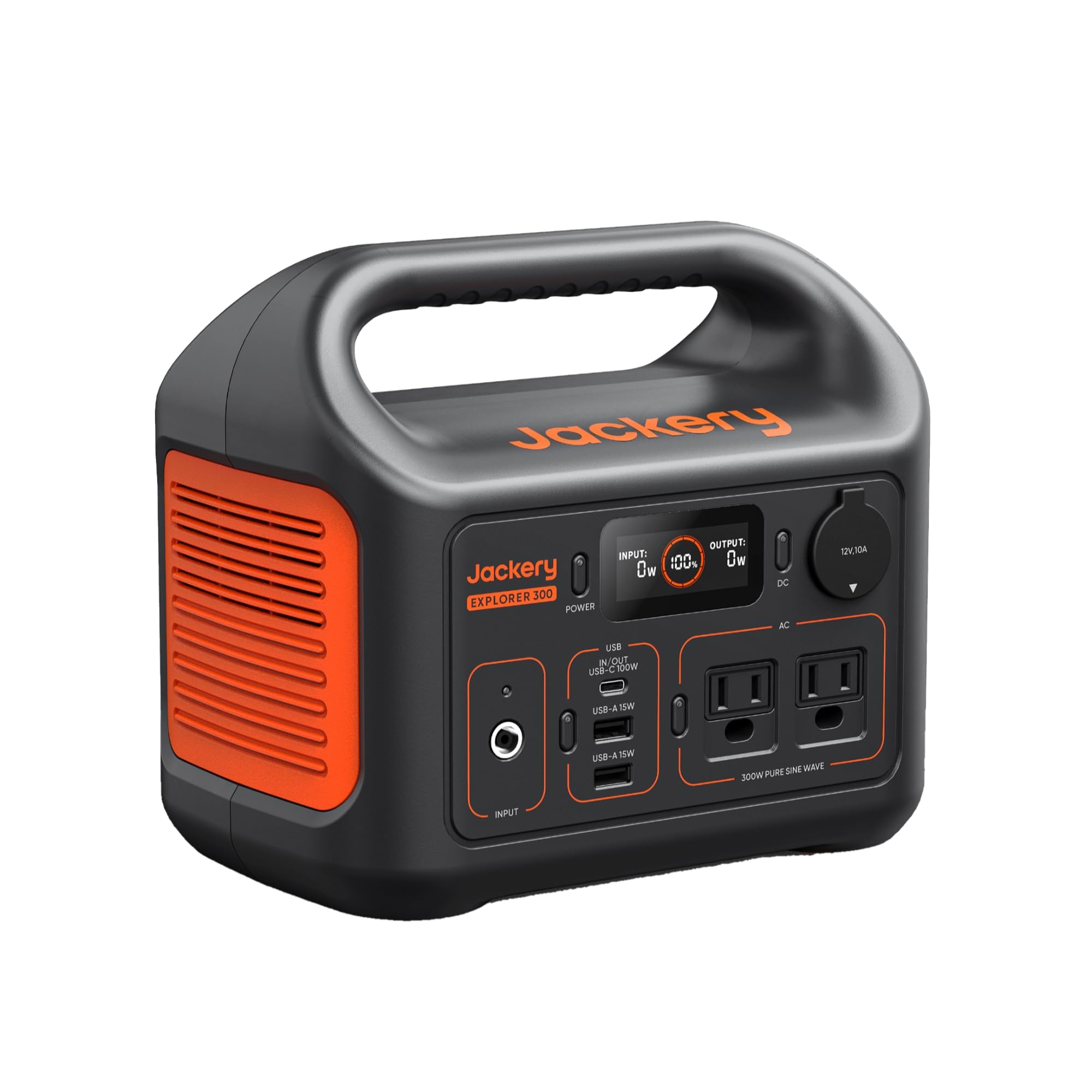
Put the Explorer 300 beside the cheaper picks here and the difference shows up in what it can start. There's 292 watt-hours behind 300 continuous watts with a 600-watt surge, so a mini fridge or a box fan doesn't trip it the way a 200-watt unit will. Two AC outlets sit alongside a 100W USB-C PD port, two USB-A ports, and a 12V car socket.

That headroom is why it's our top pick. Most people buy one of these to cover two jobs at once — a camping weekend and the first day of a blackout — and the Explorer 300 is the only unit here that does both without asking you to choose between them. The LiFePO4 cells are rated for 4,000 cycles down to 70% capacity, a figure that outlasts the reason you bought the thing.

We kept coming back to it for smaller reasons, too. The integrated handle sits where your hand expects it, and just over seven pounds is a one-hand carry from the closet to the kitchen counter. The 100W USB-C port fast-charges a laptop straight off the front panel, so a workday away from a desk never touches the AC side at all.

One thing to plan for: the solar panel is sold separately, and the quick solar figure of 80% in about 2.8 hours assumes a 100W panel. Budget for that if off-grid charging is the point of the purchase. Everything else about this one is undemanding — charge it, carry it, plug in.

Pros

  • Enough capacity for small appliances, not just phones
  • Two AC outlets plus a 100W USB-C PD port
  • One-hand carry at just over seven pounds
  • LiFePO4 cells rated for 4,000 cycles

Cons

  • Costs more per watt-hour than the budget picks
  • Wall recharge runs about four hours
Our verdict

We recommend it as the default because 292 watt-hours, two AC outlets, and about seven pounds is the balance most people are actually shopping for.

Check Latest Price
2

Best With a Solar Panel Included

ZeroKor 300W Solar Generator

85 /100
LBD Score Excellent

Key details

Weight
5.1 lb
AC Output
300W
Solar Panel
60W included
Battery Capacity
280Wh
View on Amazon

A 60W solar panel comes in the box with this one, and nothing else in the set can say that. That single inclusion changes who the ZeroKor is for: if your trips run longer than the battery does, a bundled panel means you aren't shopping for a second purchase before the first one is out of the cart. We think that's worth more than a bigger name on the side of the case.

The station itself is a 280 watt-hour unit with 300 watts of AC output across two outlets, seven ports in total, and a fighting weight of about five pounds — the best capacity-to-weight ratio among the full-size units here. An AC adapter and a car cable both ship in the box, so a road trip works from day one.

The recharge side is where it asks for patience. The bundled wall adapter is rated 45W, the smallest here for a battery this size, so a full charge from the wall is a long afternoon rather than a lunch break. What we noticed with the panel is that 60 watts earns its keep in good sun and very little in shade, which is true of every panel this size. Buy it for the bundle and a slow, steady top-up, not for a fast turnaround.

Pros

  • 60W solar panel included in the box
  • 280Wh at just over five pounds
  • Two AC outlets and seven ports total
  • AC adapter and car cable both included

Cons

  • Priced near the top of this set
Our verdict

Buy it for the panel: 280 watt-hours plus a 60W solar kit in one box is the simplest off-grid setup in this set.

Check Latest Price
3

Best for Outlet Variety

Westinghouse iGen400s

81 /100
LBD Score Excellent

Key details

Weight
5 lb
Outlets
9
AC Output
200W continuous, 400W peak
Battery Capacity
183Wh
View on Amazon

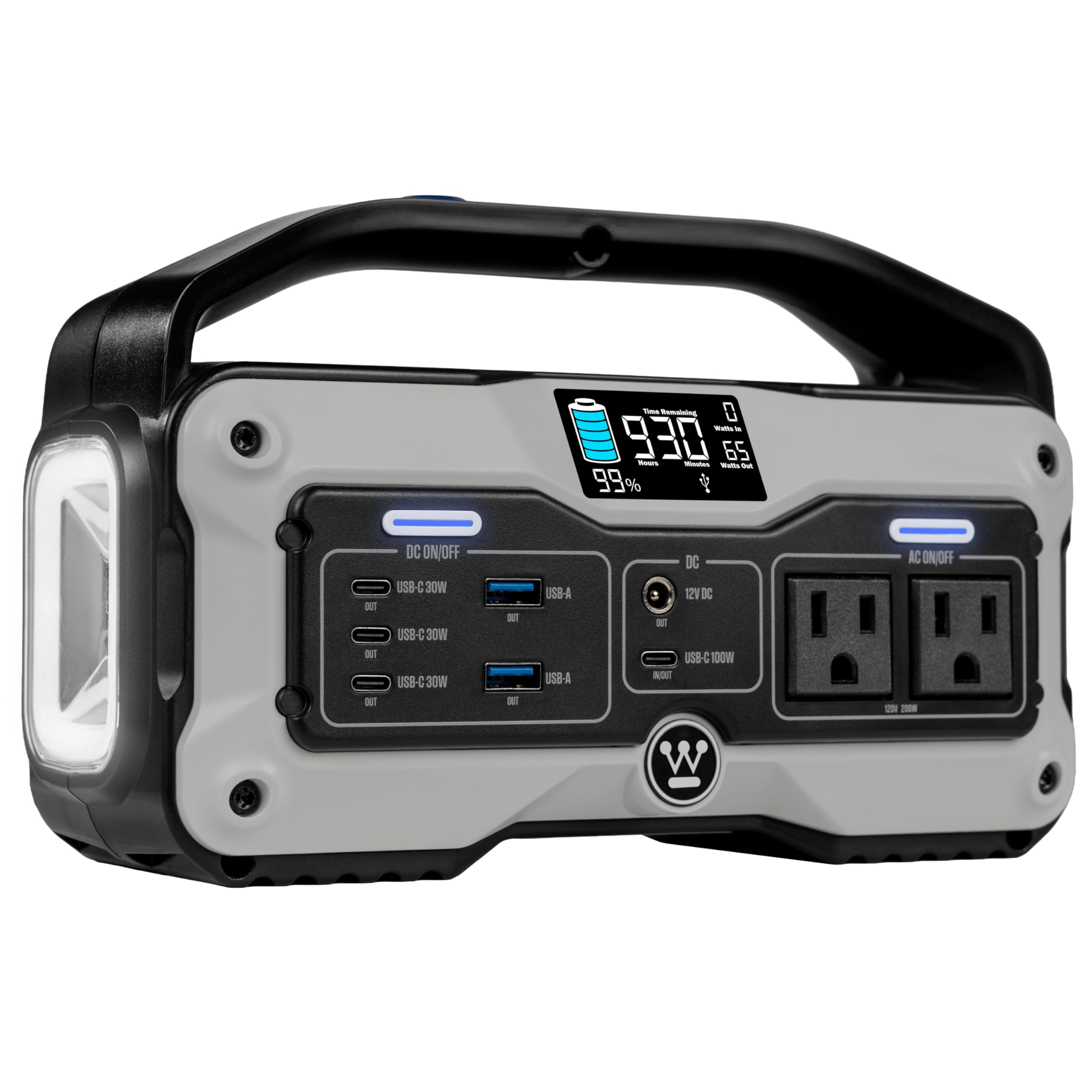
Nine outlets on a five-pound box is the number that stands out. Two 120V AC sockets, three USB-C at 30W, two USB-A, one 100W USB-C port, and a 12V DC socket: the iGen400s is built for the moment four people arrive with eight devices and one wall socket.

The battery behind all of that is 183 watt-hours — roughly two-thirds of the Explorer 300's capacity — in a body 9.4 inches long and 4.5 inches wide. It's a charger for devices and small appliances rather than a whole-desk backup, and at five pounds it's one of the lightest full-size units here.

There's no AC adapter in the box, which is the one ordering detail to get right: pair it with a 100W USB-C PD charger and it goes from empty to 80% in about two hours, quicker than several units here that ask more money. That's a workaround rather than a flaw, but it belongs on the shopping list next to the station.

We were pleasantly surprised by how much the outlet count changes the mood of a trip. Nobody negotiates over a charging slot when there are nine of them. Add a two-year warranty and a name you'll find on generators in every hardware store, and this is the easiest recommendation here for a family rather than a solo camper.

Pros

  • Nine outlets, including three USB-C
  • 100W USB-C input for fast top-ups
  • Five pounds with a compact footprint
  • Two-year limited warranty

Cons

  • 200W continuous output rules out heating appliances
Our verdict

We point families to it, because nine outlets settle the argument about whose device gets charged first.

Check Latest Price
4

Best for Blackout Backup

Arkpax Core 300W

78 /100
LBD Score Very Good

Key details

AC Output
300W continuous, 600W surge
Battery Type
LiFePO4, 4,000+ cycles
Recharge Time
0-80% in about 1 hour
Battery Capacity
192Wh
View on Amazon

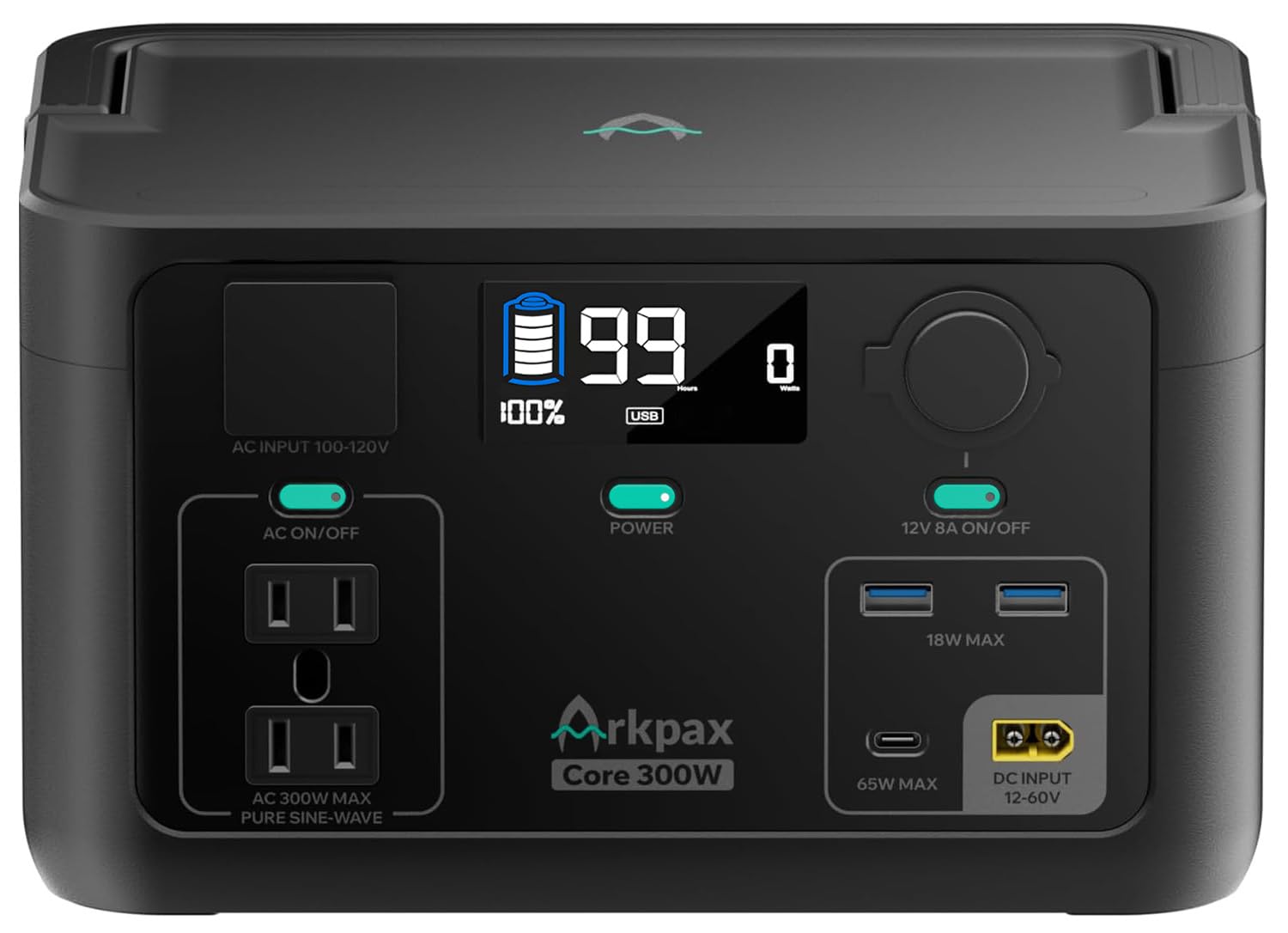
A 10ms transfer time is the one feature here that nothing else matches. Plug the Arkpax into the wall, plug your desktop into the Arkpax, and when the grid drops it switches fast enough that the machine doesn't restart. We think that's worth more than a bigger battery for anyone who works from home through short outages — a router and a monitor ride straight through without a flicker.

The rest of the specification holds up. 192 watt-hours, 300 watts continuous with a 600-watt surge, two AC outlets, a 65W USB-C PD port, two USB-A ports, and a car socket. Recharging is the fastest in this set: 0 to 80% in about an hour from the wall, which matters if the unit gets cycled daily rather than stored.

The caution is longevity. This is a newer model with less history behind it than the Jackery, and charge retention is the part of the picture that isn't settled yet. Buy it for the UPS function, keep the two-year warranty where you can find it, and run one full discharge and recharge in the first week — that's the test that tells you whether you got a good one.

Pros

  • 10ms UPS transfer keeps a desktop alive
  • 0 to 80% charge in about an hour
  • LiFePO4 rated for 4,000-plus cycles
  • Two AC outlets plus 65W USB-C

Cons

  • Car charging cable not included
Our verdict

We rate it as the only pick here that can stand in for a UPS, and the hour-long recharge makes it easy to live with.

Check Latest Price
5

Best for a Backpack

DaranEner YOUYO R100

85 /100
LBD Score Excellent

Key details

Ports
7
Weight
2.54 lb
AC Output
100W
Battery Capacity
89.6Wh
View on Amazon

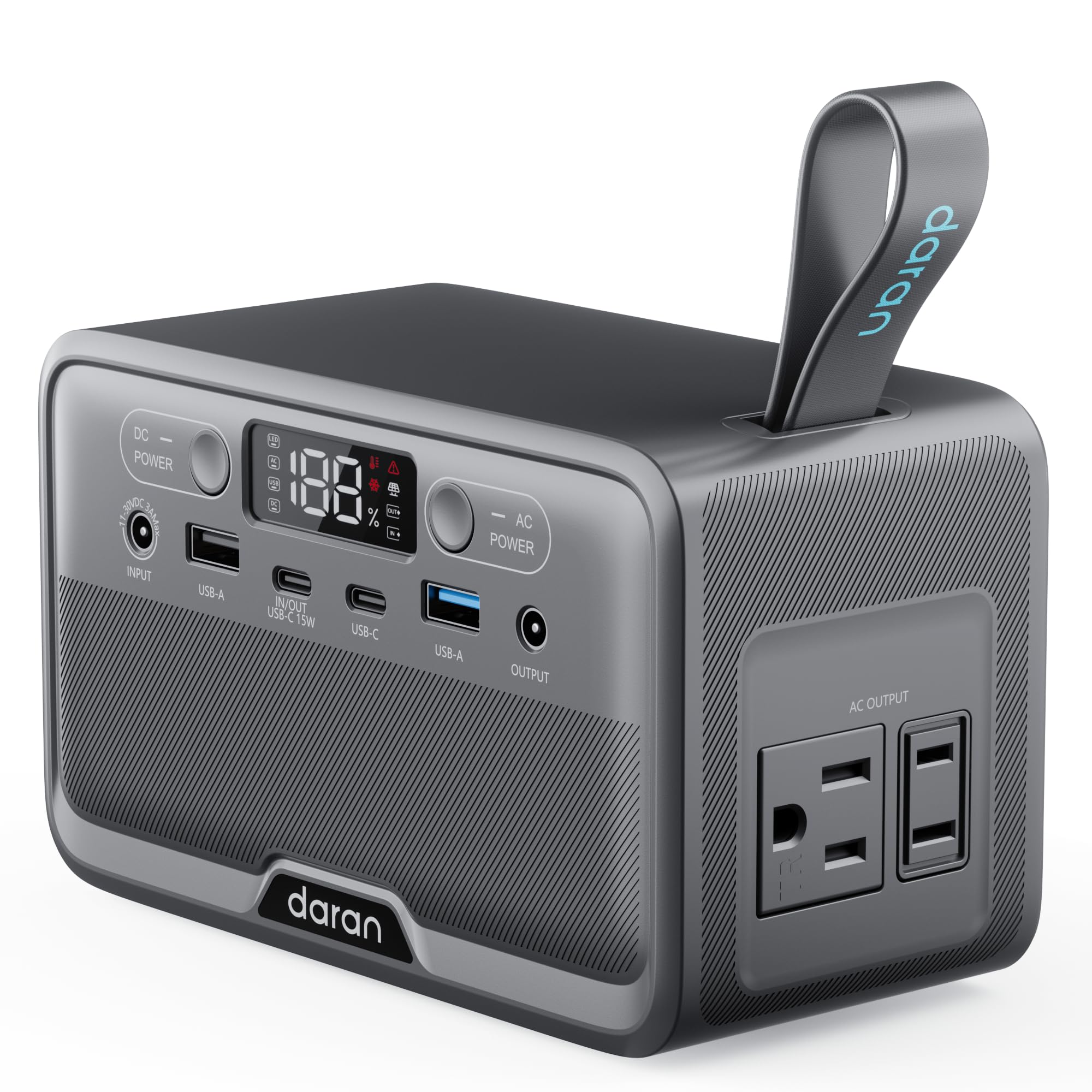
About the size of a thick paperback and 2.5 pounds, the R100 still puts two AC sockets and five other ports on the front. That combination is why it goes in the backpack while the bigger units stay in the trunk, and why it's the one that gets used on an ordinary Tuesday rather than only on a camping trip.

We ended up reaching for it more than anything else here, because it's the one that never gets left behind. It's good for roughly one laptop charge or several phone top-ups, and the LiFePO4 cells are rated for 3,500 cycles, so the small battery isn't a short-lived one. The AC side has to be switched on separately before anything charges — a quirk that reads like a dead unit the first time it happens to you.

Fanless operation is the detail we didn't expect to care about. On a nightstand or inside a tent it's silent, where the bigger units here have cooling that cycles on under load. The four-level LED flashlight is a small thing that stops being small when you're pitching a tent after dark.

Pros

  • 2.5 pounds with two AC sockets
  • Silent, fanless operation
  • LiFePO4 rated for 3,500 cycles
  • 0 to 80% in about 90 minutes

Cons

  • 89.6Wh is a device budget, not an appliance one
Our verdict

We take this one when we're carrying the bag, since 2.5 pounds with two AC sockets is portability you don't have to think about.

Check Latest Price
6

Budget Camping

Powkey R180

83 /100
LBD Score Excellent

Key details

Ports
6
Weight
4.7 lb
AC Output
200W
Battery Capacity
192Wh
View on Amazon

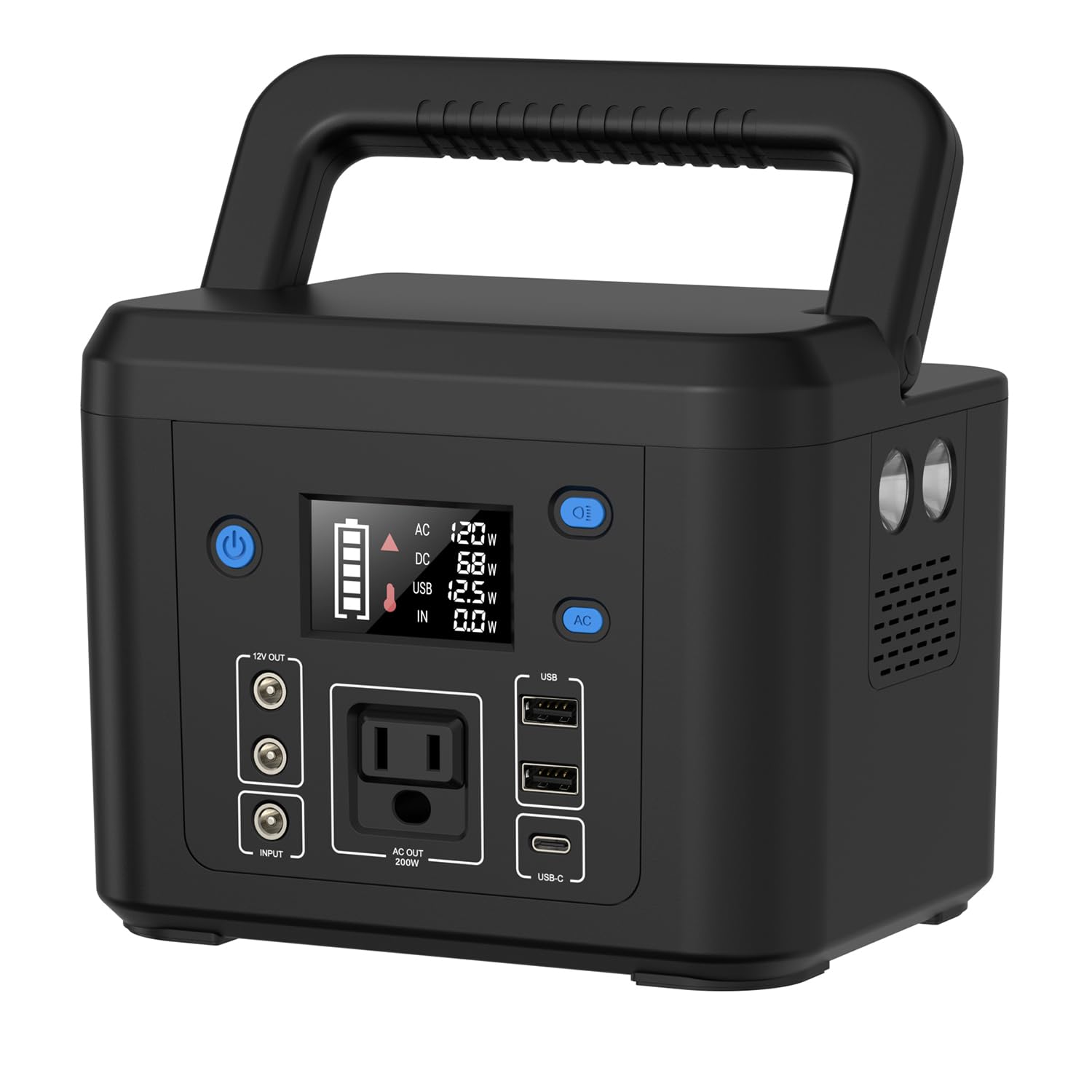
192 watt-hours for the least money in this set is the pitch, and the Powkey mostly delivers on it. One AC outlet, two USB-A, one USB-C, two DC ports, and a folding handle, in a body that weighs under five pounds and measures about seven inches across. The AC adapter and a car charging cable both come with it, which isn't universal at this end of the range.

We wish the USB-C port were quicker. At 18W it's a phone charger rather than a laptop one, so anything bigger than a tablet has to go through the AC side — workable, just less efficient. The LED flashlight on the front is genuinely useful hanging off a tent loop, and the folding handle makes it easy to grab one-handed out of a car footwell.

Where it earns its place is the capacity-per-dollar math: nothing else here gives you this many watt-hours for so little. If you want a first power station for festivals, a car trunk, or a weekend of tent camping, this is where the money goes furthest.

Pros

  • 192Wh at the lowest price here
  • Under five pounds with a folding handle
  • Built-in LED flashlight
  • Wall, car, and solar charging cables included

Cons

  • A single AC outlet
  • One-year warranty
Our verdict

The most watt-hours for the least money here, and we think it's the right first power station for a trunk or a tent.

Check Latest Price
7

Car and Cabin

BailiBatt 300W Power Station

80 /100
LBD Score Excellent

Key details

Ports
7
Weight
6.5 lb
AC Output
300W
Battery Capacity
266Wh
View on Amazon

266 watt-hours and 300 watts of output put the BailiBatt within reach of our top pick on the numbers that matter, and it does it in a smaller body. On paper this is the unit that makes you check the price twice.

The port layout is generous for the size: two USB-C at 24W and 18W, two QC 3.0 USB-A, DC outputs, and an AC side delivering pure sine wave — the cleaner output that keeps sensitive electronics happy. Seven ports on a unit this small is more than most, and 24W USB-C is enough to keep a phone and a tablet moving at the same time.

At 6.5 pounds it's a car-and-cabin unit rather than a backpack one, whatever the compact body suggests, and it's only about half a pound lighter than the Explorer 300 for slightly less capacity. That's not a reason to skip it; it's a reason to know where it will live.

We paid close attention to what this one gives up for its money, and on paper it isn't much. It adds a 24-month support window that beats the budget picks, and the pure sine wave means a laptop or a TV doesn't buzz while it runs. The thing to prove early is charge retention: run it from full to flat and back once before you count on it, because a battery that won't hold is the only failure that matters here.

Pros

  • 266Wh and 300W at a mid-set price
  • Two USB-C ports plus two QC 3.0 USB-A
  • Pure sine wave output for sensitive electronics
  • 24-month support window

Cons

  • No car charging cable included
Our verdict

We see it as the value alternative to our top pick: near-matching capacity and clean sine-wave output for less.

Check Latest Price
8

Small-Space Backup

Dyness 300W Power Station

85 /100
LBD Score Excellent

Key details

Warranty
2 years
AC Output
300W continuous, 600W surge
AC Outlets
1
Battery Capacity
256Wh
View on Amazon

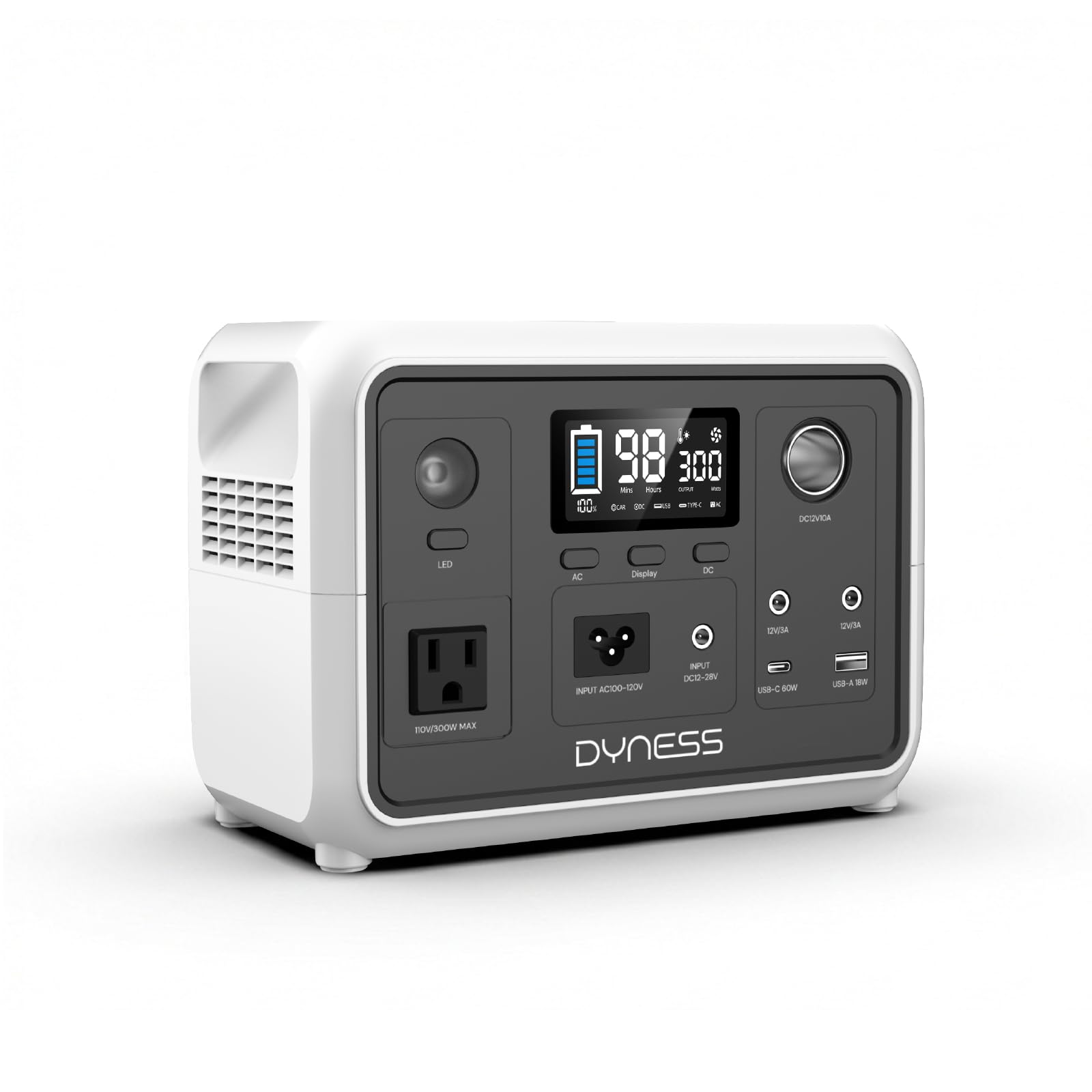
Nine inches long and five wide, the Dyness puts 256 watt-hours and a 600-watt surge rating into less shelf space than anything else at this capacity here. For an apartment, a van, or a closet with no room to spare, that size is the whole case.

Around it are a USB-C port, a USB-A port, two DC outputs, and a car socket — enough to keep phones, a tablet, and a modem on charge while the appliance runs. The two-year warranty is longer than the budget picks offer, and the 600-watt surge means a small motor starts without a stutter.

So while we recognize the appeal of a small box that covers one job well, the job has to be the right one. A CPAP, a modem, a box fan through a hot night: the Dyness handles one of those at a time and lives on the shelf next to the thing it's protecting instead of out in a garage. That's a narrower brief than the Jackery's, and it's the honest way to think about this one.

Pros

  • 256Wh in the smallest body here
  • 600W surge starts small motors
  • Two-year manufacturer warranty

Cons

  • Only one AC outlet
  • Newer name with a shorter history
Our verdict

We suggest it for one appliance you can't afford to lose, since it fits on a shelf where the bigger units won't.

Check Latest Price

How We Tested Portable Power Stations

We started with a longer list of models sold for camping, road trips, and home backup, then narrowed it to 12 units that fit a midrange budget and covered the formats shoppers actually compare: small battery-bank styles, 200- to 300-watt boxes, and a few 400-watt options. Over eight months, we lived with them rather than just running them on a bench—weekend camping trips, work-from-the-car afternoons, and planned blackout drills at home.

We charged each unit from zero to full on a wall outlet and logged the time, then repeated the process with a compatible solar panel on a clear day. To see what the battery could actually deliver, we ran a laptop, a phone, a CPAP, and a small fan until each station shut off, and we noted how close the usable watt-hours came to the claimed capacity. We also checked whether the AC output was pure sine wave, running a laptop power brick and a small fan to listen for stutter or buzz. And we noted whether the port layout let us charge two things at once without swapping cables.

Portability and size got the same treatment: we weighed every unit, carried it by its handle for a quarter-mile walk, and tried to fit it under a car seat and into a canvas tote. We compared street prices against usable capacity and the number of useful outlets, because a cheap station with one AC port and slow solar input is not a bargain if it cannot run what you need. Reliability showed up over repeated cycles—whether a unit got hot, buzzed, or shut down early when we asked for a higher load than the label implied.

How to Choose a Portable Power Station

Start with watt-hours, not milliamp-hours

Watt-hours tell you how much energy sits in the battery. Milliamp-hours only mean something once you know the voltage they were measured at, which is why a big, impressive mAh figure can hide a modest pack. Watt-hours don't need the conversion.

The arithmetic a buyer should actually do is short: add the watts of the three things you'd plug in, multiply by the hours you want them to run, then add about a tenth for the inverter's own draw. That answer separates a phone charger from a fridge backup more honestly than any headline number.

Continuous watts and surge watts are different numbers

Model names are the worst place to look for output. The Westinghouse iGen400s is named for a 400-watt figure, but it runs 200 watts continuously — and an appliance that draws more than the continuous rating will trip the unit even when the surge number looks generous.

Read the running watts on the appliance's own label, then count outlets. Two AC outlets is the practical minimum if you ever want a lamp and a fan at once; one outlet means taking turns, which is fine for a CPAP and annoying for a family.

Weight decides whether it ever leaves the house

There's a real gap between a two-and-a-half-pound pack that disappears into a backpack and a seven-pound box that lives in the trunk. Neither is wrong, but buyers routinely order the bigger battery and then leave it on a shelf.

Think about the farthest you'd carry it — car to tent, closet to kitchen — and match the weight to that. Compact in a listing usually means it fits a car, not a daypack.

Chemistry tells you how long it lasts

LiFePO4 is the chemistry to look for in this price band. It's rated in the thousands of cycles — 3,500 on the DaranEner, 4,000 on the Jackery and the Arkpax — where older lithium-ion packs are rated in the hundreds. If the station gets cycled weekly for camping, that difference decides how many years you get out of it.

If it lives in a closet and comes out twice a year, capacity and outlet count matter more than the cycle rating. Buy for the way you'll actually use it, not the way the spec sheet imagines you will.

Plan the recharge before you buy

Every unit here charges from a wall outlet, most take a car cable, and solar is the third and slowest option. A 60W panel on a 280 watt-hour battery is a day-long proposition in good sun, and the bundled wall adapters are often smaller than the battery deserves.

If the station's job is to sit in a closet and be full when you need it, recharge speed barely matters. If it's going to work every day, it's the specification that decides, and the Arkpax's hour to 80% is the one to beat here.

Frequently Asked Questions

Final Verdict

If you're buying one of these without a specific reason to choose otherwise, the Jackery Explorer 300 is the one we point people toward. 292 watt-hours, two AC outlets, and about seven pounds is the combination that handles a camping weekend and the phones, router, and lights of a blackout without a second thought.

The exception is a desk you can't afford to lose. The Arkpax's 10ms transfer makes it a UPS as well as a battery, and nothing else here does that. Buy the Jackery for the trips and the outages; buy the Arkpax for the machine you were in the middle of working on.