Best Planar Magnetic Headphones of 2026

A planar magnetic driver works differently than the dynamic one in most headphones: instead of a cone pushed from a single voice coil, a wafer-thin diaphragm with conductive traces printed across it vibrates evenly between two banks of magnets. The payoff is speed and control — bass that stops and starts without smearing, detail that holds together in a crowded mix.

The same design explains the two complaints you see under every pair: they're heavy, and they want more current than a phone jack supplies. I've had seven pairs on my desk over the past ten months, and the deciding factors were rarely the ones on the spec sheet. Clamp, headband range, where the weight lands on your skull, how much sound leaks out of an open-back cup, and which cables come in the box mattered as much as tuning.

Worth knowing before you scroll: in this category, paying more doesn't reliably buy better sound. It usually buys more metal in the frame, spare pads, and a pair that's fussier about amplification. The ones below are the pairs I kept reaching for after the novelty wore off.

1

Best Overall

FiiO JT7

86 /100
LBD Score Excellent

Key details

Driver
95 x 86 mm planar
Weight
11.2 oz
Impedance
18 ohm
Included Cables
3.5 mm and 4.4 mm balanced
View on Amazon

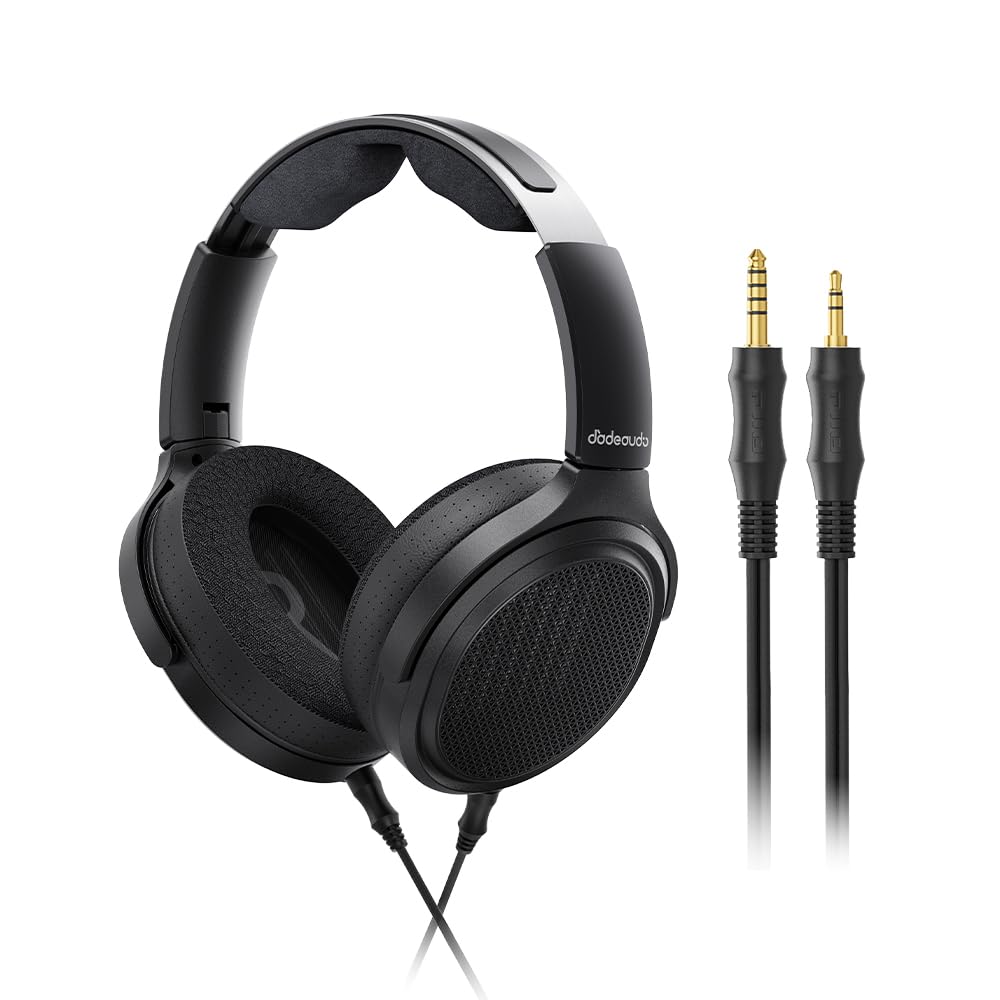
The JT7 weighs 318 grams, and that number does most of the work. Planars have a reputation for feeling like a helmet, and the FiiO is the one here you can forget you are wearing: the four-axis frame and the breathable mesh pads spread the load instead of pinning it to one spot behind the ears. We wore it through a long afternoon of listening and never reached up to adjust it.

Two details make it easy to keep. The cups fold, so it lives on a shelf instead of claiming desk space, and both the earpads and the headband come off, which turns a worn pad into a swap rather than a reason to replace the whole headphone. In the box you get a 3.5 mm cable with a 6.35 mm adapter and a 4.4 mm balanced cable, the second of which is usually an after-the-fact purchase on everything else we have tried.

Sound is why it holds the top spot. The stage runs wide, the bass stays tight and reaches low without thickening the midrange, and the treble holds together on cymbals and strings. At 18 ohms and 92 dB/mW it plays loud straight off a laptop or a decent dongle; a desktop amp is what gives it grip at higher volume, and this is a headphone that rewards one.

What we appreciated most after living with it is how little there is to manage. No strap to re-seat, no fiddling to find the sweet spot, no drama between tracks. That is the quality that keeps a headphone on your head rather than in a drawer, and at this price it is the part we did not expect.

Pros

  • Light enough to forget you have it on
  • Balanced 4.4 mm cable included
  • Pads and headband both replaceable
  • Wide stage with tight, deep bass

Cons

  • Plastic-heavy build feel
  • Cups run large on smaller heads
Our verdict

We point most listeners to the JT7: open-back planar sound, 318-gram comfort, and both a 3.5 mm and a 4.4 mm balanced cable in the box, for the least money here.

Check Latest Price
2

Best for Soundstage

HIFIMAN Edition XS

83 /100
LBD Score Excellent

Key details

Cable
Detachable 3.5 mm
Weight
14.3 oz
Impedance
18 ohm
Sensitivity
92 dB
View on Amazon

The Edition XS wears two very large, egg-shaped cups, and fit is the first thing to settle before anything else about it matters. On a bigger head the cups surround the ears with room to spare; on a smaller one the headband rides high and the whole thing feels borrowed from somebody else. After a couple of hours the pressure also collects along the top of the head rather than spreading out.

What that size buys is the widest stage in this group. Instruments sit outside your head, the bass reaches down and stays controlled instead of collapsing into one thump, and detail arrives without the bright edge that makes long sessions tiring. Of the five, this is the one that turns a live recording into a room, and if space is the thing you want from a planar, nothing else here gets you there for the money.

The rest is uncomplicated. At 18 ohms and 92 dB it runs off a laptop, the cable detaches at each cup with a standard 3.5 mm connector, and the cups swivel enough to sit flat on a desk between sessions. It is also the most recording-dependent headphone here: a thin master stays thin, and a good one is startling.

Pros

  • Widest soundstage of the group
  • Deep, controlled bass extension
  • Easy to drive from a laptop
  • Detachable 3.5 mm cable at each cup

Cons

  • Light clamp lets the cups shift
  • Buzz or rattle can appear at volume
Our verdict

Buy the Edition XS for the stage: it puts you in a bigger room than anything else here if the oversized cups suit your head.

Check Latest Price
3

Best for Gaming and Calls

ASUS ROG Kithara

81 /100
LBD Score Excellent

Key details

Driver
50 mm planar
Weight
11.2 oz
Connectors
3.5 mm, 6.35 mm, 4.4 mm, USB-C
Microphone
On-cable MEMS boom
View on Amazon

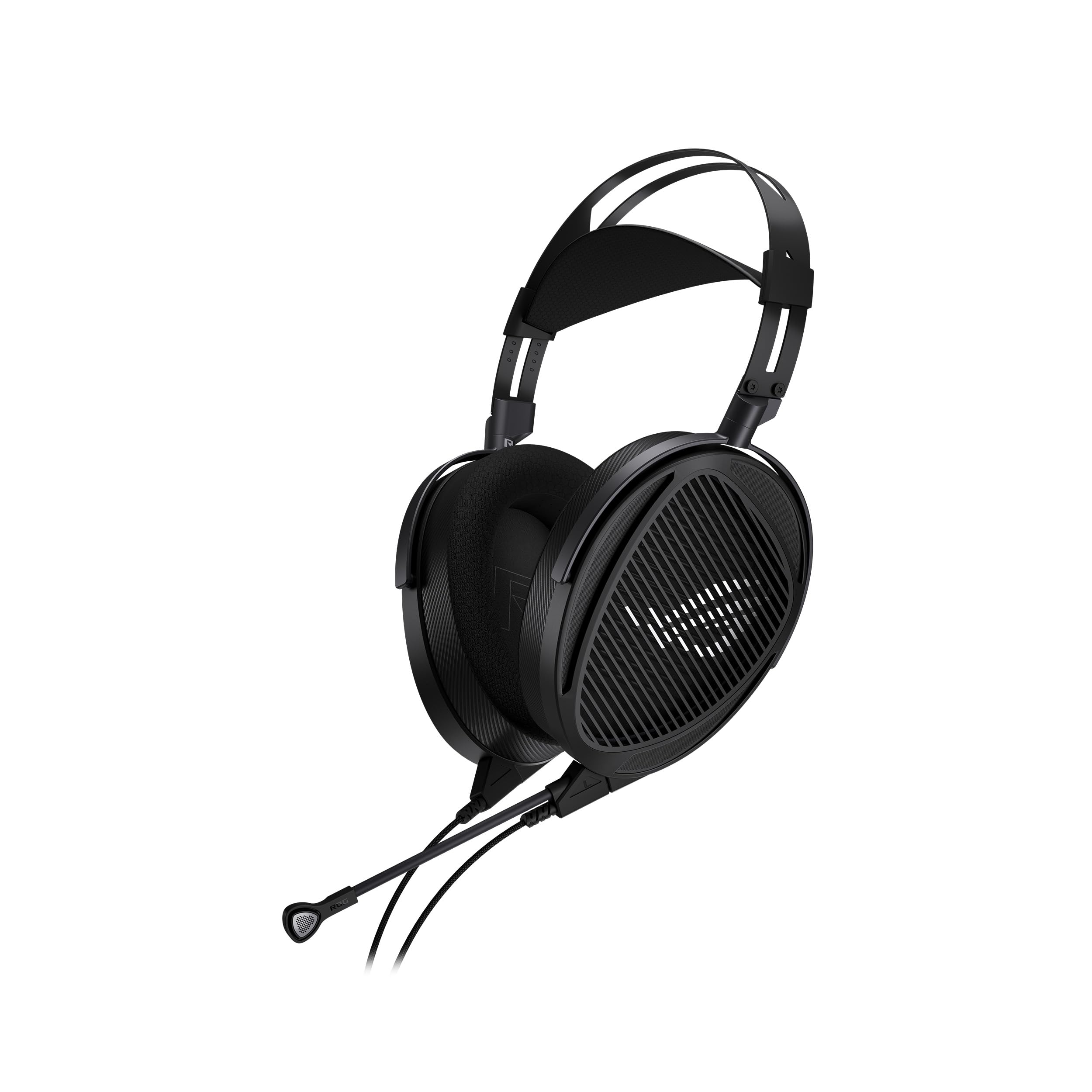
The Kithara is the only headphone here that ships with a boom mic, and that single cable changes the math for anyone whose desk does double duty. It runs ROG-tuned 50 mm HIFIMAN planar drivers in an open-back frame, so you get the wide, separated presentation of a planar plus a full-band MEMS mic on the cord. That combination is why we keep it on the short list rather than filing it as a gaming accessory.

The bundle is unusually complete: a 1.8 m cable that terminates in swappable 3.5 mm, 6.3 mm, and 4.4 mm balanced plugs, a USB-C adapter for a laptop or console, a separate boom-mic cable, and two sets of pads. The fabric pads are the ones for a long session, and the eight-level headband spreads weight across the top of the head instead of loading a single band.

At 11.2 ounces it sits between the FiiO and the big HIFIMANs, and the metal frame and hinges feel built for desk life. The mic is sensitive, so keep it off to the side of your mouth and a hand's width back, and it cleans up nicely. Gaming is where the open stage earns its place: footsteps and dialogue occupy different points in space instead of piling into the center channel.

Pros

  • Boom mic cable included for calls
  • Swappable 3.5, 6.3, and 4.4 mm plugs plus USB-C
  • Two sets of earpads in the box
  • Wide, well-separated open-back stage

Cons

  • Cups slide with head movement
  • One-year warranty only
Our verdict

We think the Kithara is the right buy if one headset has to cover both your listening and your voice, and no other pick here does that.

Check Latest Price
4

Best Premium

HIFIMAN Arya Stealth

88 /100
LBD Score Excellent

Key details

Cable
Detachable 3.5 mm
Weight
15.2 oz
Impedance
32 ohm
Sensitivity
94 dB
View on Amazon

The Arya Stealth uses the shape HIFIMAN has been refining for years: a tall, asymmetric cup, a metal headband, and a suspension strap that carries most of the 430 grams. On the head it distributes weight better than that figure suggests, and the cups swivel to sit around the ears rather than pressing on them, which is what keeps a long session from turning into a countdown.

What the extra money buys is control. Sub-bass arrives as texture rather than a thud, the stage places instruments well outside the head, and busy passages stay separated at volumes that collapse cheaper drivers. The Edition XS gives you a similar signature for a lot less; the Arya adds resolution, deeper bass, and a lighter hand on the treble, and it is the one here we reach for when nothing else is happening that evening.

It is also the easiest of the big HIFIMANs to live with: 32 ohms and 94 dB, a detachable 3.5 mm cable, and a three-year manufacturer warranty that nothing else here matches. Power still matters, because this is a headphone that shows you the difference between a dongle and a proper desktop amp, and it is worth building the system around it rather than the other way around.

Pros

  • Reference-level detail and sub-bass texture
  • Suspension strap carries the weight well
  • Three-year manufacturer warranty
  • Detachable 3.5 mm cable for easy swaps

Cons

  • Mostly plastic build for the price
  • Suspension strap slips out of adjustment
Our verdict

The Arya Stealth is the reference pick here: buy it when the listening session is the point of the evening and the amp budget exists.

Check Latest Price
5

Bass-Forward Listening

FiiO FT7

85 /100
LBD Score Excellent

Key details

Cable
Detachable 4.4 mm balanced
Driver
106 mm planar
Weight
15.1 oz
Impedance
25 ohm
View on Amazon

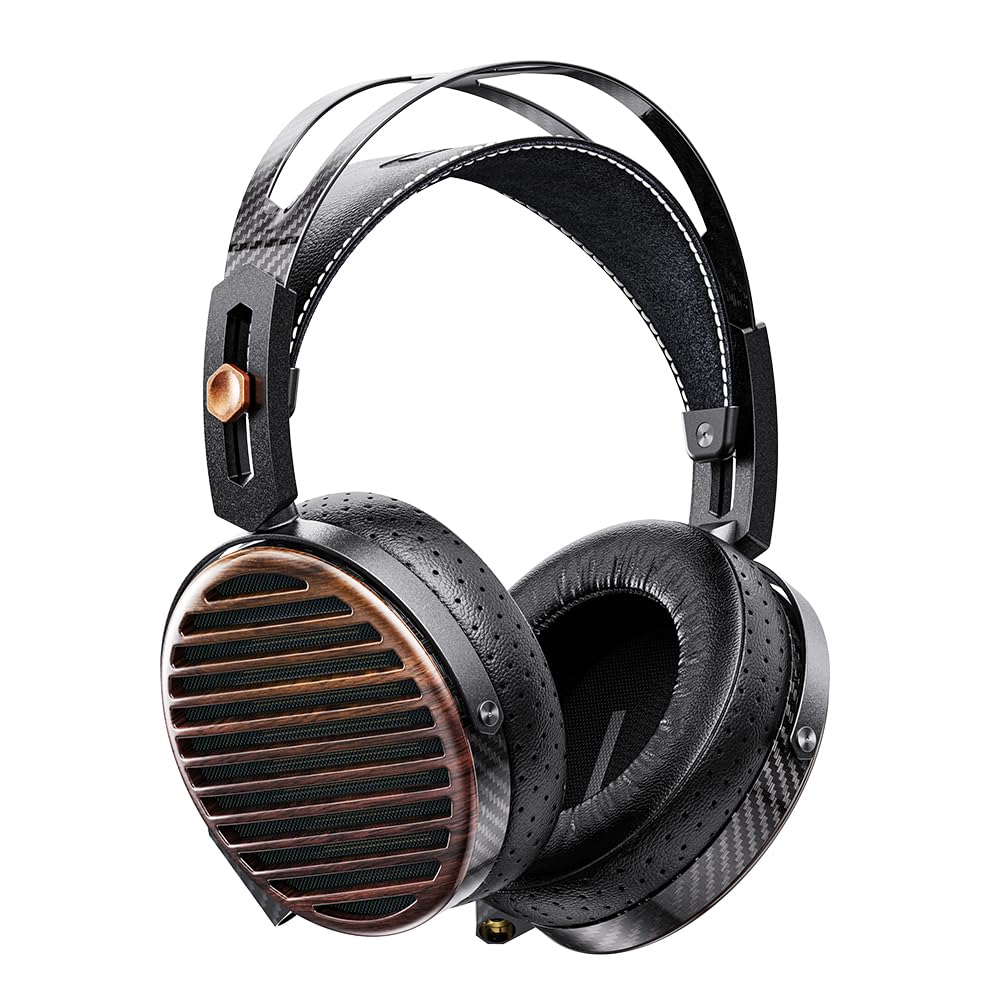
FiiO builds the FT7 around a 106 mm planar driver, the largest in this set, and finishes it in carbon fiber with a zebrawood grille. It is the only headphone here that looks like a piece of furniture rather than equipment, and the two pad sets, lambskin and breathable fabric, are both user-swappable.

The driver does what a big planar should. Bass has weight and reach, but separation is what stands out: on dense progressive rock, instruments hold their own lanes instead of smearing together, and the top end keeps a little sparkle without hardness. Swapping to the fabric pads pulls the midrange forward and takes some weight off the low end, which gives you a second voicing from the same headphone.

Where the case gets harder is the price, which sits above the Arya Stealth. You are paying for a warmer, heavier presentation and better materials, and giving up some stage and resolution in return. If you want a planar that hits hard, wears wood and carbon fiber, and arrives with a 4.4 mm balanced cable and modular plugs, this is the one. If you want the most headphone for the money, it is not.

Pros

  • Largest driver here with weighty, deep bass
  • Carbon fiber and zebrawood construction
  • Two swappable pad sets change the tuning
  • 4.4 mm balanced cable and adapters included

Cons

  • 427 g gets heavy over a long session
Our verdict

Choose the FT7 for bass weight and materials, but only after you have heard the Arya Stealth, which costs less and throws a wider stage.

Check Latest Price

How We Tested Planar Magnetic Headphones

Before anything arrived, I pulled spec sheets for the models that come up most often in headphone forums and retailer listings — driver dimensions, impedance and sensitivity figures, published weight, headband adjustment range, and which cable terminations ship in the box — and used those to cut a long list down to seven pairs. Then we spent ten months living with them.

Listening was split between a desktop amp, a laptop's headphone jack, a phone dongle, and a console controller, because the question isn't only how a pair sounds but whether your gear can drive it. On a fixed set of tracks — a dense orchestral recording, upright bass, a close-miked vocal, bass-heavy electronic — I listened for whether low notes started and stopped with the kick drum or smeared behind it, and whether the midrange stayed open when the mix filled in. I logged how far the volume dial traveled on each source, and for the open-back pairs I asked a colleague two desks away whether they could hear my music at a normal listening level.

Cable options got the same treatment: I swapped between every termination that shipped in the box, coiled and uncoiled each one, and noted how much handling noise reached the earcups when a cable brushed a collar. For comfort, I wore each pair through full workdays and had a second tester with a larger head try every headband position, tracking hot spots at the crown and jaw and how much clamp remained after an hour. We checked fit with glasses on and watched for ear contact inside the cups. Build quality came down to feel — flexing the yokes, working the sliders, looking for play at the cup joints — and value came down to what was in the box. At the ten-month mark we went back through the group for compressed pads, loose connectors, and driver rattle.

How to Choose Planar Magnetic Headphones

Start With Isolation, Not Sound

Open-back cups let the diaphragm breathe, and that is where the space and the absence of cup resonance come from. It is not a setting you can switch off. The trade is close to zero isolation both ways: everyone nearby hears your music, and you hear them.

All five headphones here are open-back. If you listen in a shared office, on a train, or next to a loud fan, sort that out first. A closed-back design, even a cheaper one, will serve you better than any of these.

Match Power to the Numbers on the Box

Sensitivity in dB/mW tells you how loud a headphone gets from a given amount of power; impedance tells you how much voltage it takes to get there. The models here that publish both sit at 92 to 94 dB and 18 to 32 ohms, which means a laptop or a decent dongle gets any of them loud.

The trap is stopping at loud. Planars want current, and a desktop amp is what tightens the bass and pulls instruments apart at volume. If you listen at a desk, budget for one alongside the headphone rather than after it.

Weigh the Headband, Not Just the Grams

Weight in this group runs from 318 grams to 430, and the number alone predicts almost nothing. A single band concentrates load on the crown, a suspension strap spreads it, and clamp decides whether the cups stay put when you look down at a keyboard.

If you wear glasses or have a small head, shop the headband and the cup size rather than the spec sheet. Expect a trade either way: light clamp means shifting cups, firm clamp means pressure after a couple of hours.

Check What You Will Have to Replace

Cables and pads fail before drivers do, and the difference between a headphone you keep and one you replace is usually whether those parts come off. A detachable cable with a standard 3.5 mm connector at the cup is the safest design to live with.

A balanced cable in the box saves a purchase later, and replaceable pads mean the seal comes back instead of the whole headphone going in a drawer. Check both before you buy, not after the first pad goes flat.

Decide Whether You Need a Microphone

If a meaningful share of your listening is meetings or co-op, a planar with a boom mic on the cable saves a second device and the desk space it occupies. The ROG Kithara is the one here that does it, with swappable plugs and a USB-C adapter for a console.

For the occasional call, use the laptop mic and put the difference into the headphone instead.

Frequently Asked Questions

Final Verdict

For most people the decision ends at the FiiO JT7. It is the lightest headphone here, comfortable enough for an entire evening, and it arrives with both a single-ended and a 4.4 mm balanced cable rather than making the balanced one an upgrade.

Spend more only for a specific reason. The HIFIMAN Edition XS buys the widest stage in this group if its fit suits your head; the Arya Stealth buys resolution and sub-bass at reference level. And if your desk is also your calls desk, the ROG Kithara is the only one here that answers the microphone question.