Best PLA Filament of 2026

A failed print almost never announces itself. You slice the file, go to bed, and come back to a spaghetti nest on the build plate — and the culprit is usually the spool, not your settings. Filament wound with a crossing loop, wound too loose, or shipped damp will pop and spit its way through a nozzle that was doing everything right. A good spool is the boring kind of good: consistent diameter, dry, neatly wound, and tough enough that the part doesn't snap when you flex it.

The past four months have been the most printing I've done in years: my team and I ran 16 spools of PLA and PLA+ through three machines, in standard, matte, silk, and multicolor bundles, because the finish you want changes what counts as a good spool. Plain PLA holds crisp detail and releases supports cleanly, PLA+ trades sharpness for toughness, and matte hides layer lines while showing every stray string. Vacuum packing matters more than most shoppers expect, since a spool that sat out in a humid room prints with a hiss and a chalky skin. What's below earned a permanent spot beside the printers — it didn't tangle, didn't snap at hour nine, and didn't have me re-leveling the bed every other day.

1

Best Overall

Creality PLA 2-Pack

91 /100
LBD Score Outstanding

Key details

Material
PLA
Warranty
1 year
Spool Count
2 × 1 kg
Diameter Tolerance
±0.02 mm
View on Amazon

Black and white are the two colors that keep a printer useful, and Creality's two-pack puts both on the shelf in one purchase. The bundle removes the first-order decision: one spool for ordinary parts and a second for contrast, labels, or quick prototypes, without paying for a rainbow you may not use. The 1.75 mm diameter and ±0.02 mm tolerance are what most FDM printers expect, and the two 1 kg spools fit ordinary holders.

The appeal is predictability, not exotic performance. This is standard PLA, not PLA+, so it is the material we choose for models, simple jigs, and the constant stream of test prints that comes with a new machine. Creality's listing claims improved toughness and clog-free feeding; those are sensible claims to verify with a small test print, not promises that remove the need to tune a first layer. The two colors are also easy to live with: black hides seams, and white takes paint or marker well.

What this bundle doesn't do is give you a color range. If your queue is mostly decorative, the matte and silk sets below are more fun. It is also standard PLA, not a toughened blend, so a part that takes repeated impact belongs with the ELEGOO PLA+ pack. Those are different jobs, and the bundle is honest about the one it does.

For the person who wants to stop thinking about filament and keep printing, the combination of two essential colors, standard spool sizes, and a one-year warranty is the most broadly useful package here. The warranty is the detail that tips it for a first printer: if a spool is not right, you have a route to a remedy. That is why it leads this group.

Pros

  • Two essential colors in one pack
  • 1 kg spools fit standard holders
  • One-year warranty adds cover

Cons

No notable drawbacks to flag.

Our verdict

We recommend this as the default two-spool buy: black and white cover most printing, and the warranty adds cover for a first printer.

Check Latest Price
2

Best Budget Single Spool

SUNLU PLA 1KG

91 /100
LBD Score Outstanding

Key details

Material
PLA
Spool Weight
2.2 lb
Diameter Tolerance
±0.02 mm
Nozzle Temperature
200–230°C
View on Amazon

The single black spool is the least dramatic product here, and that is exactly why we keep one on the shelf. It is a full kilo of standard PLA with a ±0.02 mm diameter tolerance, a 1.75 mm diameter, and a listed nozzle range of 200–230°C. The spool is a standard 8-inch diameter with a 2.2-inch hub, so it drops onto common holders without an adapter. For a first spool or a quick restock, the low commitment is the point.

What keeps it from the top spot is consistency. Winding and bed adhesion can vary from roll to roll, and a crossed turn can turn a long print into a watchdog job. We treat a new spool like a new material: check the first few meters for a pinch, slow the first layer, and keep the bed clean. Those steps do not fix a bad wind, but they make a cheap spool behave predictably enough for everyday brackets, boxes, and prototypes. The black is deep and neutral, which we prefer for parts that will be sanded or painted.

If you print unattended for hours, a crossed turn is a real risk and the single-spool format gives you no second roll to fall back on. If you are learning a printer or you just need one dependable color without a bundle, this is the easiest place to start. It is not the filament we choose for a show model, but it is the one we are least annoyed to have on the shelf.

Pros

  • Low-cost single-kilo spool
  • Deep neutral black
  • 200–230°C nozzle range
  • Standard 8-inch spool

Cons

  • Winding can vary from roll to roll
Our verdict

Our pick for a first spool or a cheap black restock, provided you check the wind and give the first layer some attention.

Check Latest Price
3

Best for Functional Parts

ELEGOO PLA+ 4KG

92 /100
LBD Score Outstanding

Key details

Finish
Glossy
Material
PLA+
Spool Count
4 × 1 kg
Diameter Tolerance
±0.02 mm
View on Amazon

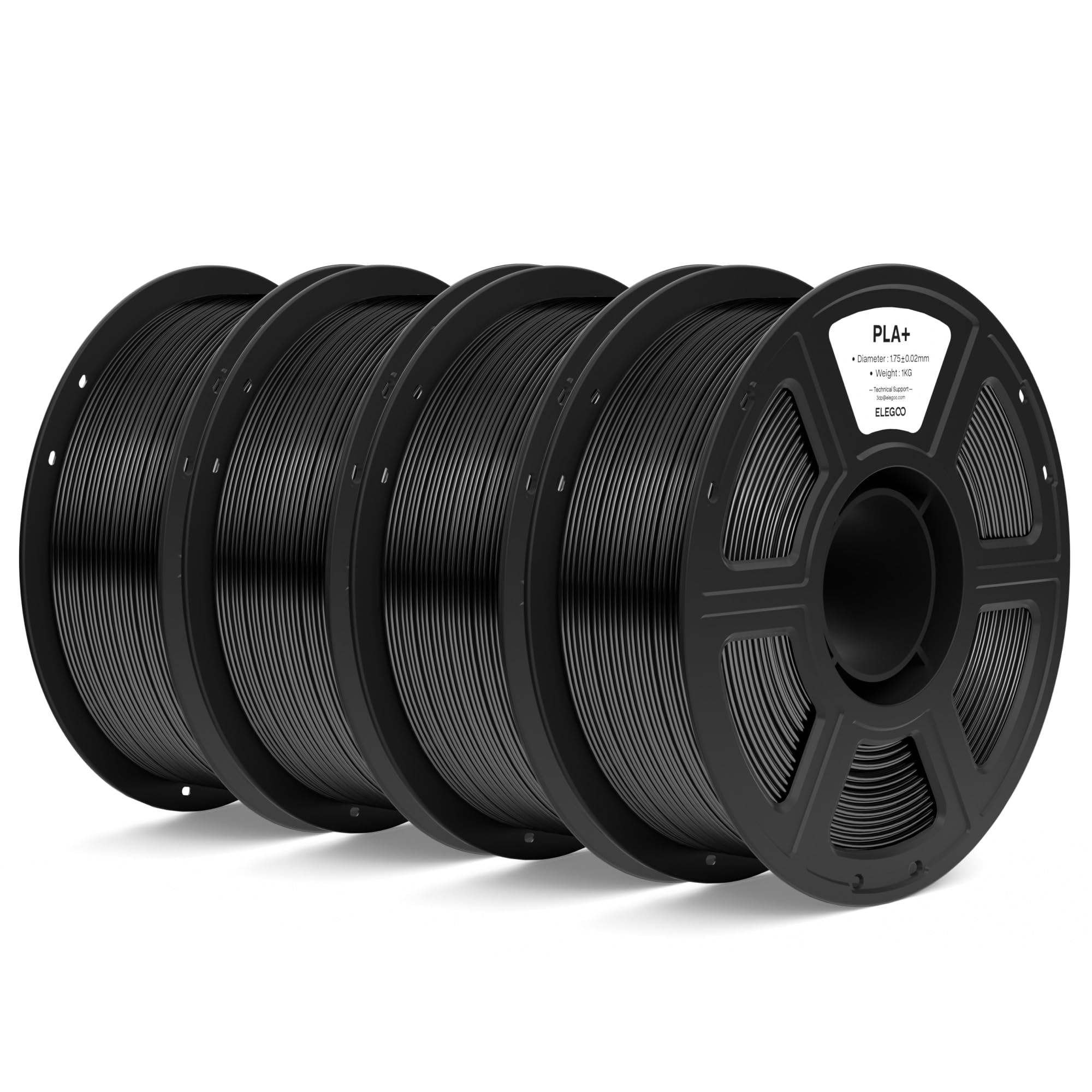
The reason to buy PLA+ is the part that survives the drop, not the print that looks pretty on the shelf. ELEGOO's four-kilo black pack is aimed at brackets, jigs, replacement knobs, and other pieces that get handled, and the blend is sold as tougher and more impact-resistant than standard PLA. We like the four 1 kg spools for someone who has settled on a functional filament and does not want to reorder every few weeks. The ±0.02 mm tolerance and glossy finish are standard on paper, but the consistent surface is what makes this one useful for parts that need to fit together.

Toughness comes with a caveat. PLA+ is still PLA, and tangling and layer adhesion can vary enough that we do not treat a new roll as hands-off. The glossy surface is a look choice: it suits mechanical parts and bright colors, while matte hides layer lines better. Our approach is to print a small test coupon, check the first layer, and keep the spool dry. If those habits are already part of your routine, the pack is a good value for workshop work.

Four kilos also asks for shelf space and a plan. If you print a few pieces a month, the single SUNLU spool is the easier buy; if you have a queue of functional parts, this is the pack we reach for. It is not the filament for a decorative print that needs a soft finish, and it is not the most forgiving first spool. It is the one we choose when the print has to take a knock.

Pros

  • Tougher PLA+ blend
  • Four 1 kg black spools
  • ±0.02 mm diameter tolerance
  • Glossy surface for mechanical parts

Cons

  • Can turn brittle on the spool
  • Glossy finish highlights layer lines
Our verdict

We choose this pack when prints need more impact resistance than standard PLA, and you have room for four spools.

Check Latest Price
4

Best Matte Finish

ELEGOO Matte PLA 4-Pack

92 /100
LBD Score Outstanding

Key details

Finish
Matte
Material
PLA
Spool Count
4 × 1 kg
Diameter Tolerance
±0.02 mm
View on Amazon

Matte PLA changes the look of a print before you change anything about the model. ELEGOO's set softens reflections and makes layer lines less obvious, which is why we like it for figurines, desk organizers, and gifts that will sit out. The four colors are Sakura Pink, Lavender Purple, Ice Blue, and Sunshine Yellow, so this is a palette for someone who wants soft, bright finishes rather than a black-and-white restock. Each spool is 1 kg at 1.75 mm with a ±0.02 mm tolerance.

The print quality is the strongest part of the case: the matte surface hides the small surface flaws that glossy PLA tends to magnify, and the filament prints cleanly at ordinary PLA settings. Bed adhesion is the variable, especially on small parts with narrow footprints. A clean textured plate and a slower first layer are worth the extra minute. The finish also makes a print look more deliberate, which is why we reach for it for gifts rather than for hidden brackets.

Four kilos of pastel is a lot if you only print occasionally. The single OVERTURE matte spool is the easier test; this set makes sense once you know you like the look and have projects queued. It is not the bundle for functional parts that need maximum toughness, but for decorative work it earns its place. The yellow is the one we keep for highlights; the pink and blue do most of the heavy lifting on models.

Pros

  • Matte finish hides layer lines
  • Four soft, bright colors
  • Clean prints at ordinary PLA settings
  • ±0.02 mm tolerance

Cons

  • Pastel-heavy color selection
Our verdict

We like this set when the surface matters as much as the part, especially for gifts, models, and visible organizers.

Check Latest Price
5

Best for Fast Printing

SUNLU PLA+ 2.0 4-Pack

91 /100
LBD Score Outstanding

Key details

Material
PLA+ 2.0
Print Speed
Up to 300 mm/s
Spool Count
4 × 1 kg
Diameter Tolerance
±0.02 mm
View on Amazon

SUNLU's PLA+ 2.0 is built around one number: up to 300 mm/s. That is the pitch for a modern printer with input shaping and a well-tuned profile, not a promise that every machine will suddenly print three times faster. We like the idea for a busy black-parts queue, and the upgraded blend is also sold as more resistant to brittleness and cracking than standard PLA+. The four 1 kg spools are individually vacuum packed, which is the right format for someone who wants one color in bulk.

The speed benefit is real only after calibration. A fast profile amplifies a crossed turn, a partial clog, or a first layer that is a little too high, and the tangling and clogging risk on this blend is the reason we do not treat it as plug-and-play. The ±0.02 mm tolerance is fine, but the winding is the thing to inspect before a long print. The black is deep and hides layer lines well, so it is a sensible choice for functional parts that will not be painted.

Compared with ELEGOO's PLA+, this is the faster-printing pick, while ELEGOO is the safer bet for clean surface quality. If your printer is stock and slow, you will not get the benefit. If it is tuned and busy, this is the pack we put on the shelf. The four-spool format is the commitment, so make sure you have a dry place to keep the unopened rolls.

Pros

  • Rated for up to 300 mm/s
  • PLA+ 2.0 toughness claim
  • Four vacuum-packed 1 kg spools
  • ±0.02 mm tolerance

Cons

  • Only black in this bundle
  • Winding and clogging can vary
Our verdict

We keep this for a tuned high-speed printer and a long queue of black parts, not for a stock machine.

Check Latest Price
6

Best Single Matte Spool

OVERTURE Matte PLA 1KG

91 /100
LBD Score Outstanding

Key details

Finish
Frosted matte
Material
Matte PLA
Spool Weight
2.2 lb
Diameter Tolerance
±0.02 mm
View on Amazon

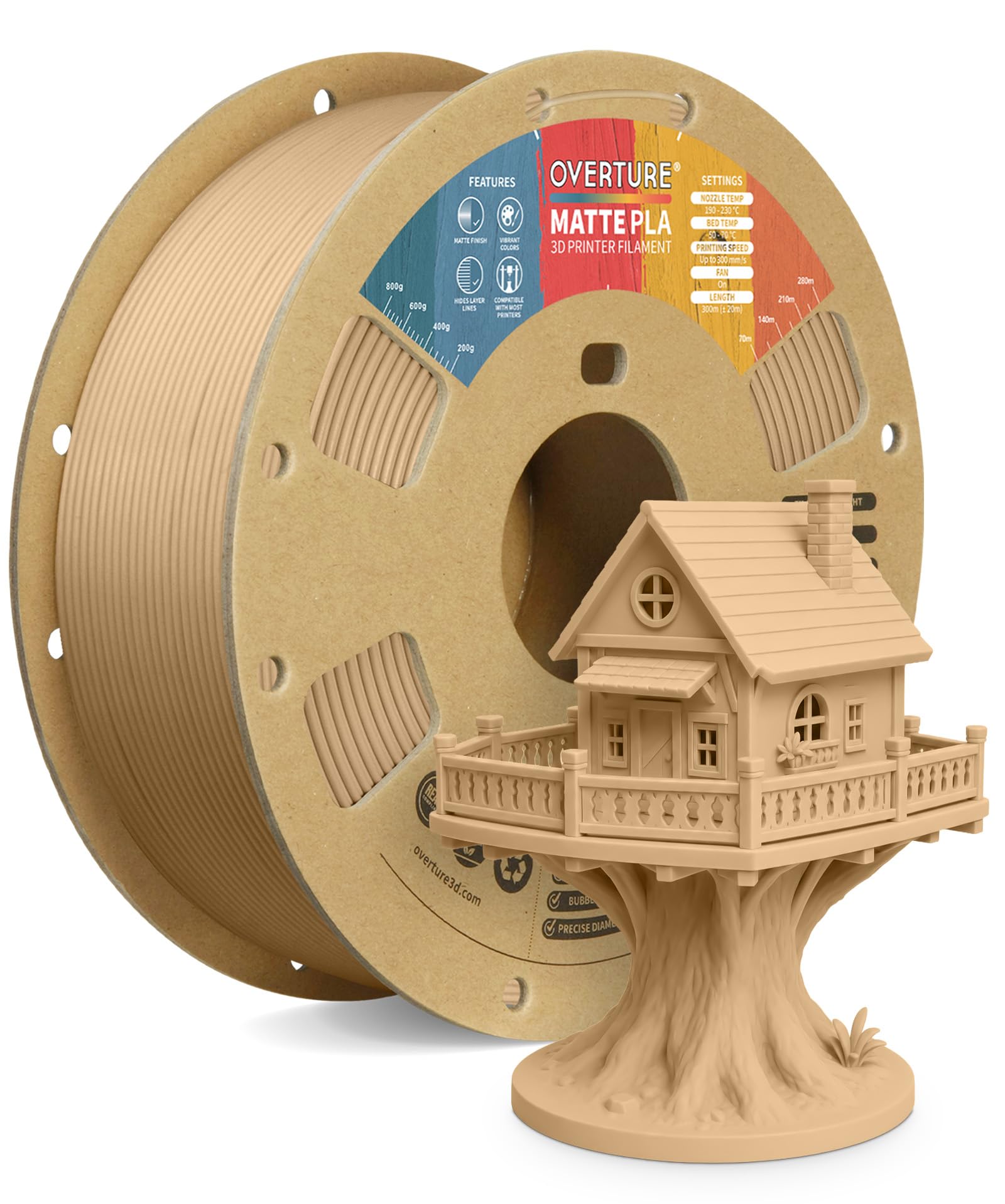
OVERTURE's matte PLA is the one-spool answer for someone who wants a specific color, not a four-color set. The frosted surface scatters light and softens layer lines, so a print looks more finished than glossy PLA without any post-processing. We like the single-kilo format for a color library: buy the light brown for a wood-toned planter, finish it, and move on. The 1.75 mm diameter and ±0.02 mm tolerance are standard for the category.

Matte formulations can be fussier at the bed. Adhesion and reliability are the two areas where this spool is most likely to need attention, and the fix is usually mechanical: clean the plate, slow the first layer, and check that the spool feeds without a pinch. The one-year shelf life for an unopened spool is a useful detail if you keep a small color library rather than printing every week. The frosted finish also shows fingerprints less than gloss, which is a small win for display pieces.

Compared with the ELEGOO matte set, this is the lower-commitment route and the better choice when you need one specific color. Compared with standard PLA, it trades a little forgiveness for a much nicer surface. That is a fair trade for display pieces, less so for hidden brackets. The light brown is the shade we reach for when a print is meant to look like wood rather than plastic.

Pros

  • Frosted matte finish
  • Single 1 kg spool
  • ±0.02 mm tolerance
  • One-year unopened shelf life

Cons

  • One color per spool
Our verdict

We reach for this when you want one matte color, not a four-spool commitment, and can tune the first layer.

Check Latest Price
7

Bulk Color Printing

ANYCUBIC PLA+ 10KG

87 /100
LBD Score Excellent

Key details

Material
PLA+
Color Range
10 colors
Spool Count
10 × 1 kg
Diameter Tolerance
±0.02 mm
View on Amazon

Ten one-kilo spools in one box is a different purchase from a single roll. ANYCUBIC's PLA+ bundle covers black, white, texture grey, pink, red, blue, green, orange, yellow, and purple, which is enough to stop buying color one spool at a time. We like the idea for a classroom, a cosplay maker, or anyone whose queue moves through many colors; the high-toughness PLA+ blend is a sensible base for parts that get handled. The ±0.02 mm tolerance and 1.75 mm diameter are the usual specs.

The drawback is commitment. Ten kilos takes shelf space, and every spool needs to stay sealed until use; a bundle this size can outlast a casual printer's interest. The case for it is per-spool convenience and a coordinated palette, not a lower failure rate. We do not treat a ten-spool box as a shortcut to reliable printing; each roll still needs the usual storage and first-layer attention. The colors are the point, and the bundle is priced as a bulk buy rather than a sampler.

This is a bulk option, not the first spool we recommend. If you already know you will use ten colors, the convenience is real. If you are still testing whether you like PLA+, start with a four-pack and add colors later. The black and white spools are the ones that will disappear first; the pink and orange are the ones that make the bundle fun.

Pros

  • Ten 1 kg spools
  • Ten-color palette
  • High-toughness PLA+

Cons

  • Ten-spool commitment needs storage
Our verdict

We see this as a bulk color buy for a classroom or busy maker, not a first spool for a casual printer.

Check Latest Price
8

Decorative Color Shifts

YOOPAI Silk PLA+ 4-Pack

91 /100
LBD Score Outstanding

Key details

Finish
Silk
Material
Silk PLA+
Spool Count
4 × 250 g
Color Effect
Dual/tri-color shift
View on Amazon

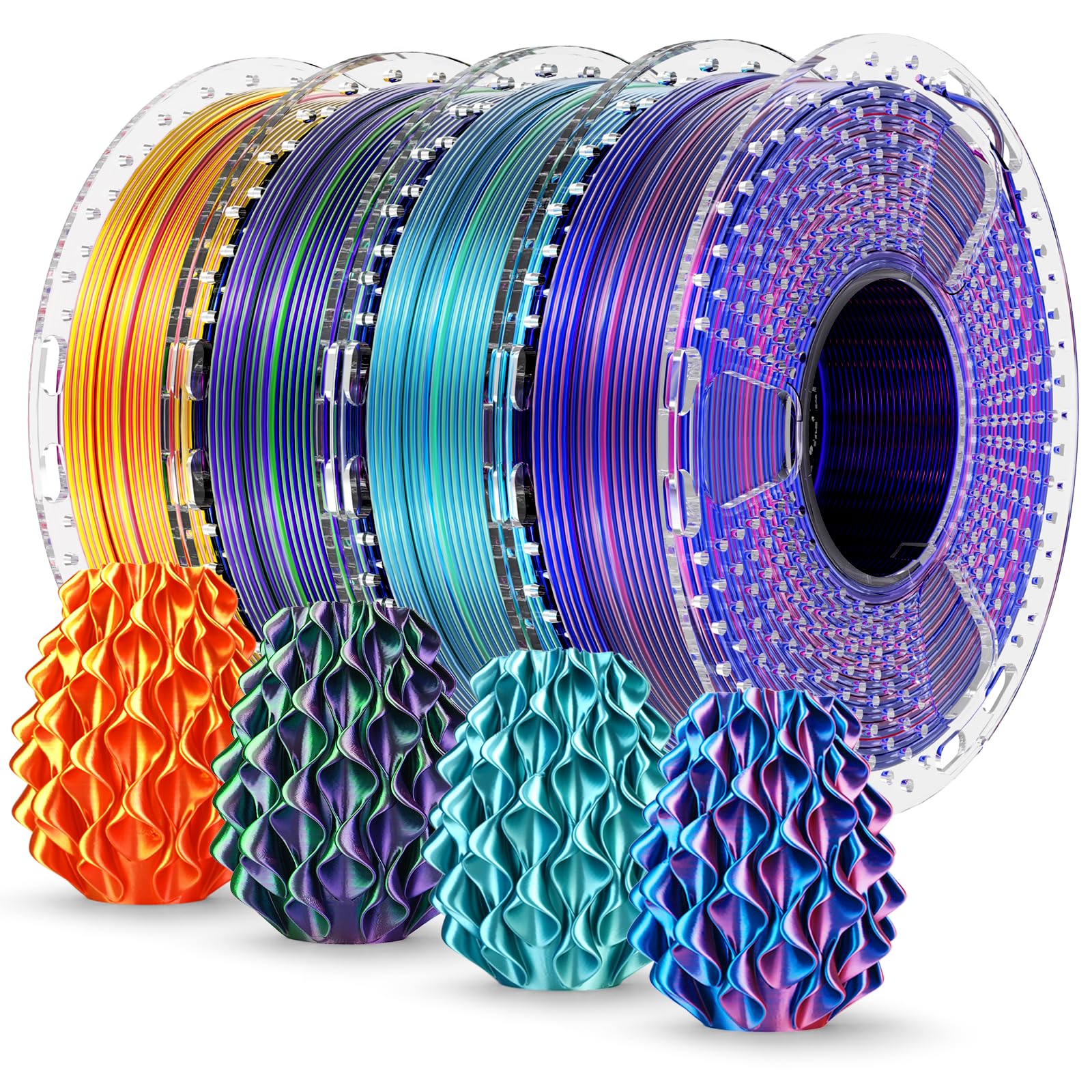
Silk PLA is the filament you buy for the look, and YOOPAI's four-spool set leans into that with dual- and tri-color shifts that change as a model turns. The 250 g spools are small enough to try several combinations without dedicating a full kilo to a finish you may not love. We like that for gifts, toys, and display pieces where a standard black print is wasted. The satin surface is the draw; the colors are red-gold, blue-green, red-blue, and green-purple.

The trade-off is that silk PLA is less forgiving than ordinary PLA. The glossy surface can hide layer lines, but it also exposes stringing and blobs, and bed adhesion and tangling can be fussy. A slow first layer and a tidy spool path are worth setting up before a long print. The 250 g size helps here: a failed experiment costs less filament and less time. We also like that the spools are individually wound, which matters more with four small rolls than with one big one.

The color shift is not a substitute for tuning. If your printer already strings with standard PLA, silk will make that more visible, not less. The four small spools are also a test kit rather than a production set, and a large model can eat a 250 g roll quickly. We treat the bundle as a way to find the one combination worth buying in a full spool later.

If you want a single silk color for a specific model, a full spool makes more sense. If you want to play with color shifts, a 250 g set is the lower-risk way in. The red-gold combination is the one we reach for first because it shows the shift without looking like a toy. The others are there for when a print needs a colder or greener shift.

Pros

  • Dual- and tri-color shifts
  • Four 250 g spools
  • Satin finish
  • Individually wound spools

Cons

  • 250 g spools limit large prints
Our verdict

We recommend this for decorative prints and color experiments, with the expectation that silk needs a slower profile.

Check Latest Price

How We Tested the PLA Filament

The shortlist came from spec sheets, not product photos. Every spool had to state a 1.75mm diameter with a plus-or-minus 0.02mm tolerance, arrive vacuum-sealed, and sit on a standard spool holder without an adapter. We dropped anything that wouldn't name a tolerance, wouldn't state a spool weight, or looked like it would bind on the holders we use. From there we ordered 16 spools across standard PLA, PLA+, matte, and silk, in single colors and multi-spool bundles, and printed with them for four months.

The printers live in a spare bedroom and on a garage workbench, which is roughly where most of these spools will live, humid summers included. We measured diameter with calipers at ten points along the first few meters of each spool and again near the end, then watched the strand during long prints to see whether it crossed itself, dug into the layer below, or tugged the spool off its holder. Spools left mounted for two weeks got a second round of prints with no drying in between, which is how we caught the ones that had gone brittle.

Each spool printed a calibration cube, a first-layer sheet across the plate, and one long overnight part — planters, phone stands, flexi toys for the neighbor's kid. We flexed and snapped test bars to separate toughness claims from reality, peeled flat prints off a bare PEI sheet to judge bed adhesion, and held finished pieces under a desk lamp to compare surface and color from spool to spool. Weighing each spool before the first print and after the last told us whether the advertised kilogram held up, and reprinting the same file days later showed whether a spool behaved the same way twice.

How to Choose Pla Filament

Pick the PLA variant for the job

Standard PLA is the easiest starting point for models, prototypes, and the constant test prints that come with learning a printer. PLA+ is the step up for brackets, jigs, and parts that get handled, because it is formulated for more impact resistance; it is not unbreakable, and it can still be brittle on the spool. Matte PLA is a surface choice: it hides layer lines and gives a softer finish, while silk PLA is decorative and less forgiving. Choose the finish first, then the spool size. ELEGOO's PLA+ four-pack is the functional example here; the matte ELEGOO set is the one for visible prints.

Size the spool to your print volume

A 250 g spool is a sample, not a workhorse: it is ideal for testing a color or a finish, but a large model can use it up in one print. A 1 kg spool is the default for most home printers. Four- and ten-kilo bundles keep a color queue moving, but they need dry storage and a plan. The Creality two-pack is the simplest version of that idea: two standard 1 kg spools in the colors most people use. If you print one color most of the time, buy that color in a larger pack and keep a small spool for accents.

Check the tolerance and the wind

Nearly every PLA here is 1.75 mm with a ±0.02 mm tolerance; one or two sit at ±0.03 mm, which is still workable on most FDM printers. The number is a manufacturing target, not a guarantee, so the first meter and the first layer tell you more than the box. Winding matters just as much: a neatly wound spool feeds smoothly, while a crossed turn can stop a long print. Inspect a new roll before an overnight job.

Plan for moisture, heat, and speed

PLA absorbs moisture, and a wet spool can pop, string, or print weak layers. Keep opened rolls in a sealed box with desiccant, and dry a spool before a long print if it has been out for weeks. Standard PLA usually prints best in open air; an enclosure can trap heat and soften filament in the feeder. High-speed PLA+ only pays off on a tuned printer, so calibrate flow and temperature before chasing the speed claim.

Frequently Asked Questions

Final Verdict

We recommend the Creality two-pack for most people. It gives you black and white in standard 1 kg spools, a ±0.02 mm tolerance, and a one-year warranty, which is the most useful combination here for everyday printing. The lack of color choice is the trade-off, and it is a fair one if your queue is mostly parts and prototypes.

If you want a single low-cost spool, choose SUNLU. If your prints need more impact resistance, move to the ELEGOO PLA+ pack; for a matte finish, the ELEGOO four-color set is the stronger choice. OVERTURE is the easier test when you need one matte color rather than a palette.