Best Outdoor Projectors of 2026

A backyard movie night can fall apart in the ten minutes before it starts. The chairs are out, the popcorn is popped, and someone is still crouched in the grass tilting a projector on a stack of books, hunting for a picture that isn't crooked. I've been that person, which is why I care less about the brightness number on the box than whether the thing can set itself up once everyone sits down.

My team and I spent six months with 12 outdoor projectors, running them through real evenings instead of a lab bench. Autofocus and keystone that straighten a crooked, off-angle setup made the biggest difference, along with built-in streaming apps that spare you from dangling a stick off the back. The quieter stuff mattered too: whether audio carries across a yard, whether WiFi and Bluetooth hold when your phone goes inside, and how much fan noise you hear in a quiet scene.

One thing worth knowing before you shop: brightness figures aren't measured the same way across brands, so a bigger number doesn't reliably mean a brighter picture—and every pick below looks best once the sun is down.

1

Best Overall

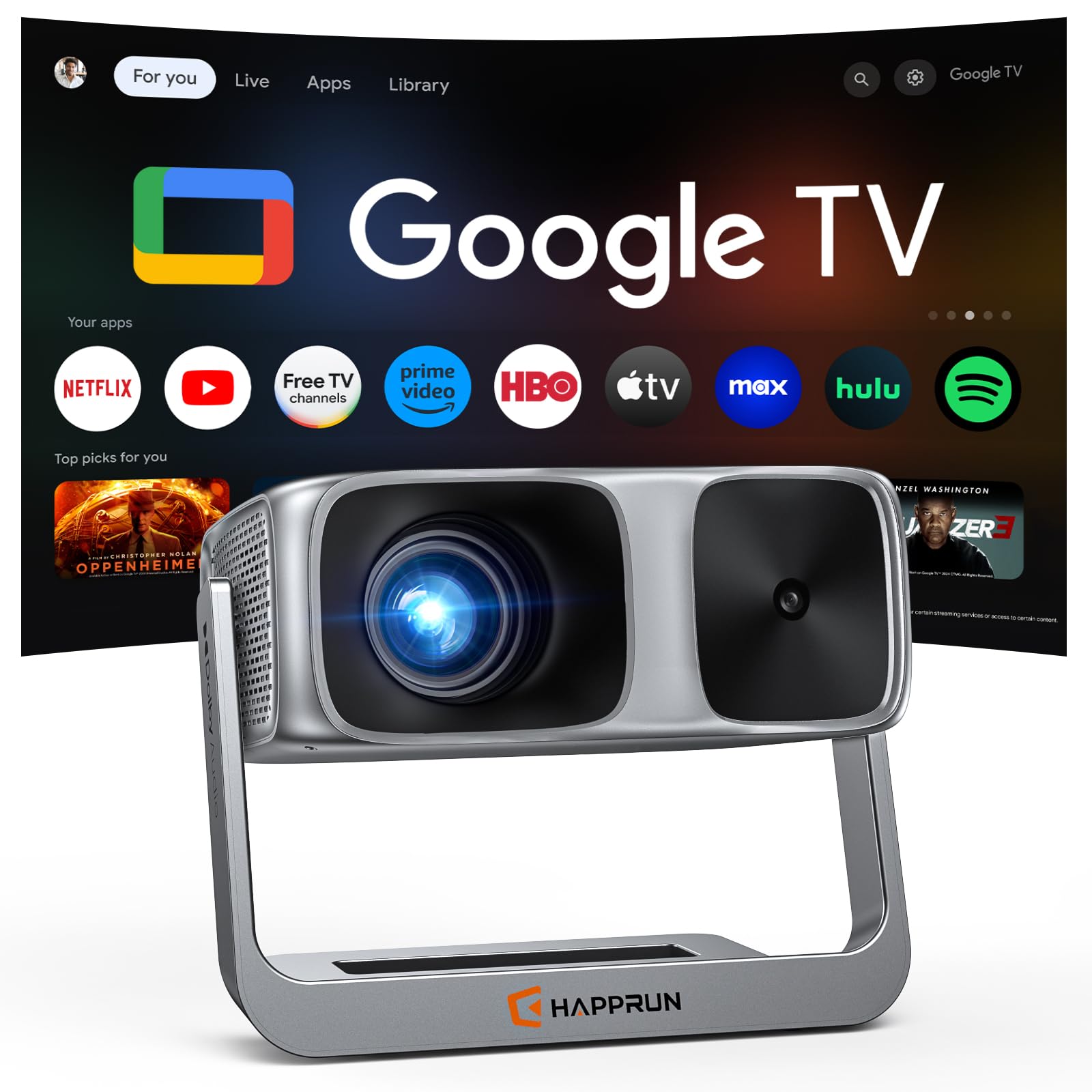
HAPPRUN K7

87 /100
LBD Score Excellent

Key details

Weight
4.5 lb
Max Image
300 in.
Streaming
Google TV built in
Brightness
2,500 ANSI lumens
View on Amazon

Google TV is the part of the HAPPRUN K7 that earns it the top spot here. Netflix, Prime Video, and YouTube sit on the home screen, the remote takes voice search, and there is no streaming stick clipped to the back and no phone being handed around the circle. It is a licensed build, which matters more than it sounds: apps update and sign in the way they do on a television, and the interface never feels like a workaround.

The 2,500 ANSI lumens put it near the top of this set, and it shows in the twenty minutes that decide most backyard nights. The picture keeps its color while the sky is still pink instead of going gray and waiting for full dark. Setup is quick in the same way: auto focus, 6D keystone, obstacle avoidance, and screen fit all run within seconds, so a projector parked off to one side still throws a rectangle. The 270-degree stand is the detail we appreciated most, angling the lens up at a hanging sheet without a tripod.

Sound is the one place it settles for good enough. The Dolby-tuned speakers carry dialogue across a small yard, and four people on a patio will be perfectly happy; a dozen talking over the opening credits will not. Pairing a Bluetooth speaker sorts that out, and it is the only accessory worth adding.

What the money buys is the absence of workarounds: no stick, no manual keystone fiddling, no hunting for a tripod, and enough brightness that you are not scheduling the evening around the last of the sunset. If you are buying one projector for several summers of backyard movies, this is the one that stops being a project.

Pros

  • Licensed Google TV with voice remote
  • 2,500 ANSI lumens holds early dusk
  • 270-degree stand removes the tripod
  • Auto focus and keystone in seconds

Cons

  • 4.5 lb body is a two-hand carry
Our verdict

Our pick if you want one projector to handle everything outdoors: licensed Google TV, 2,500 lumens, and auto setup that works from an angle.
Check Latest Price
2

Best Value

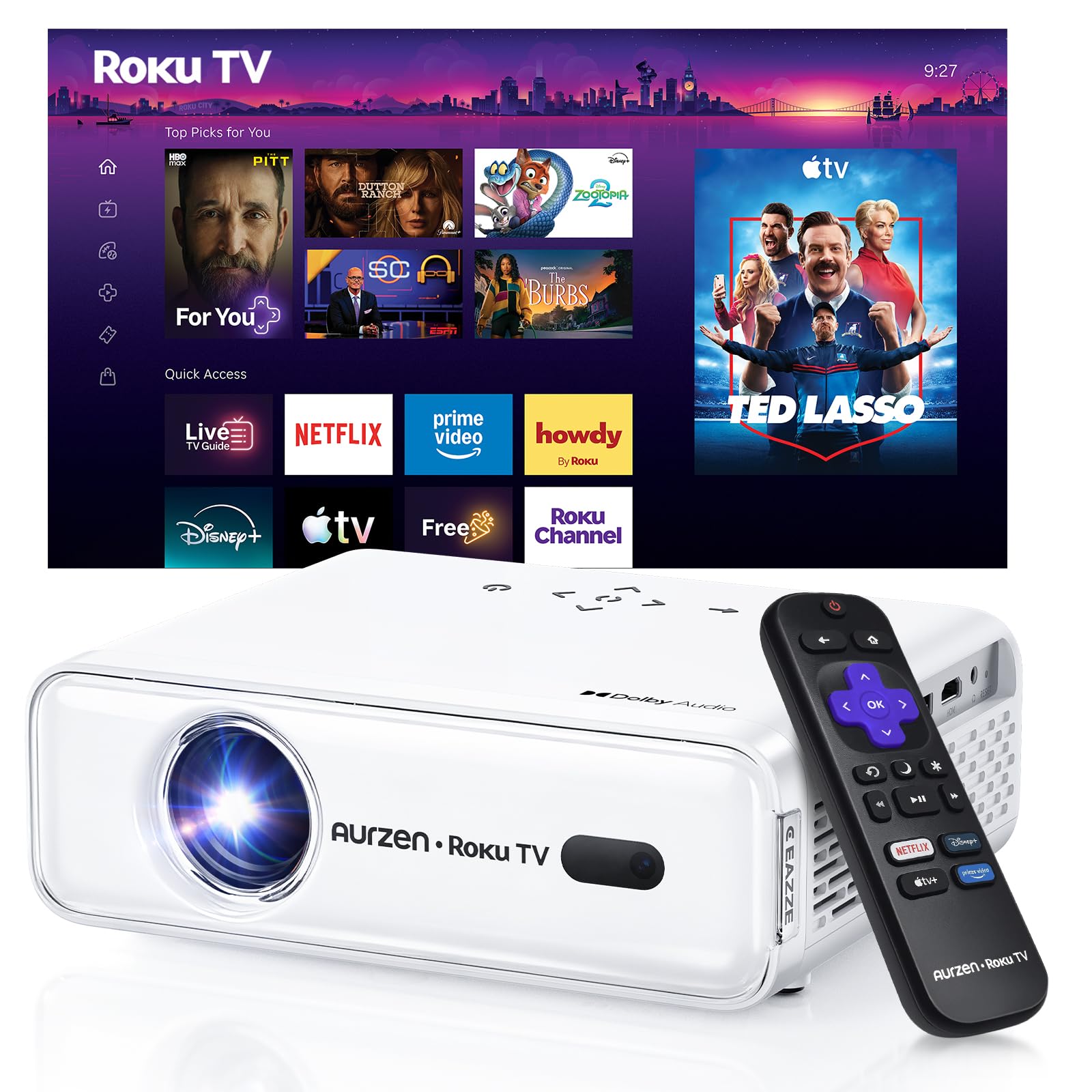
Aurzen Roku TV D1R

91 /100
LBD Score Outstanding

Key details

Weight
4.6 lb
Streaming
Roku TV built in
Image Size
40 to 200 in.
Resolution
1080p native
View on Amazon

The D1R is the least expensive projector here that does not make you supply your own streaming device, and for a lot of households that settles it. Roku TV is built in, so the home screen, the remote, and the app logins are the ones already in the living room, and AirPlay puts an iPhone on the screen in a couple of taps. If your house runs on Roku, that familiarity is worth more than a brightness bump.

It is a native 1080p LCD with auto focus, auto keystone, and zoom, throwing anywhere from 40 to 200 inches. Ours was focused and squared up within a few seconds of switching on, which is the whole game when you are setting up on a patio table in the near dark. The zoom earns its place too: you can shrink the picture to fit a sheet without moving the projector.

Brightness is the trade. Aurzen does not publish an ANSI figure, and the picture explains why. After full dark it is clear and steady, with good color for the money, but a porch light or a lingering sunset washes it out. Schedule the start for proper dark and it is a satisfying picture; start early and the first half hour is a preview.

There is a Roku account and a Wi-Fi connection to set up before the first movie, a five-minute job that is not a zero-minute one. After that the D1R does what a good budget projector should: it turns on, finds its focus, and gets out of the way.

Pros

  • Roku TV built in, no stick needed
  • Among the least expensive here
  • Auto focus and keystone in seconds
  • AirPlay from an iPhone

Cons

  • Fan is audible during quiet scenes
Our verdict

The least expensive way to put a real Roku interface on a backyard screen, as long as you wait for proper dark before pressing play.

Check Latest Price
3

Best for Early Dusk

HAPPRUN J7

84 /100
LBD Score Excellent

Key details

Audio
30W Dolby
Max Image
300 in.
Streaming
Built-in app store
Brightness
1,500 ANSI lumens
View on Amazon

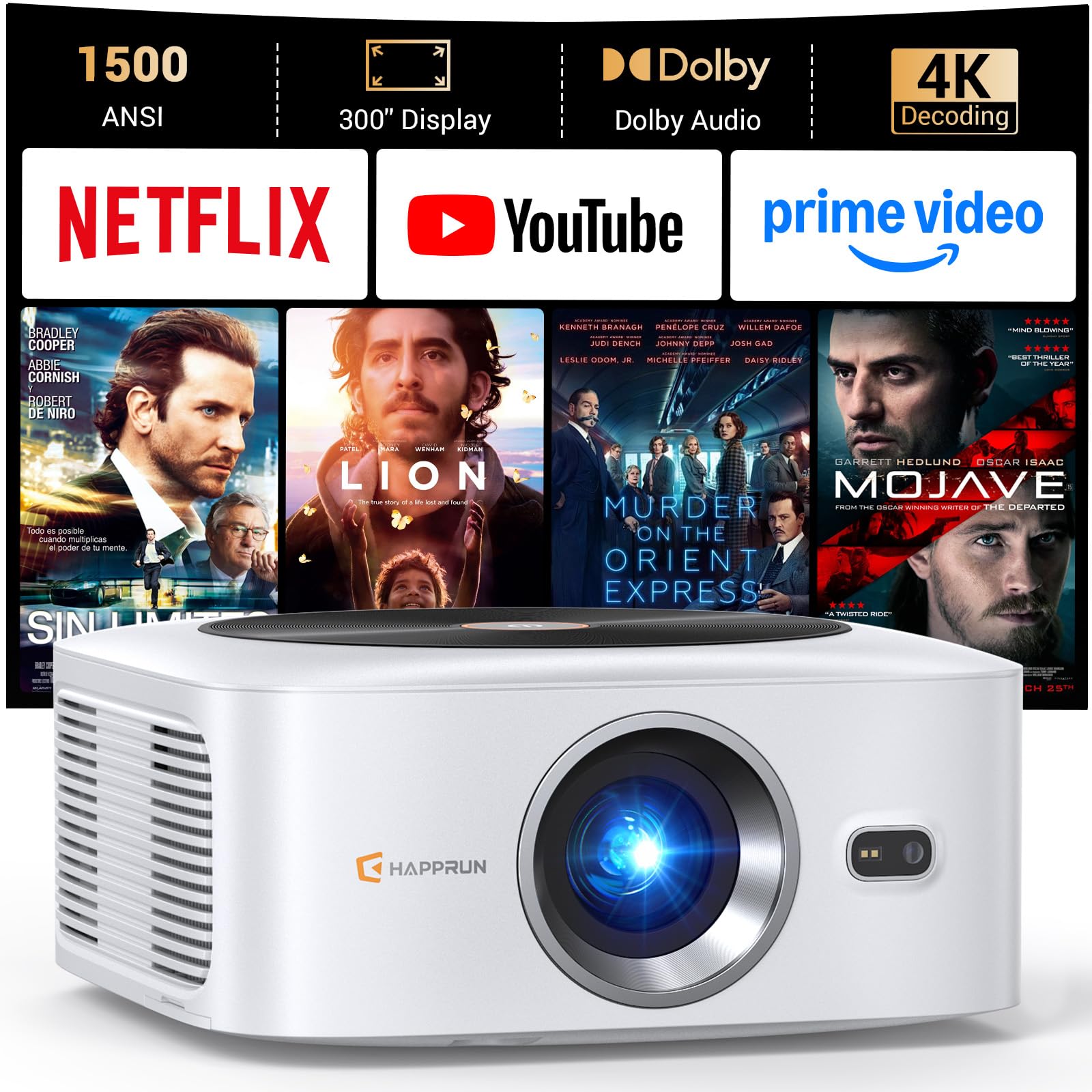
The J7's argument is a rated 1,500 ANSI lumens and 30W of Dolby audio at a budget price, and that combination is hard to beat at this end of the list. The brightness figure is a real measurement rather than one of the invented brightness numbers printed on some boxes, and it is enough for a 100-inch picture that keeps its color on a dark lawn and stays watchable while the last of the light goes.

The rest of the package holds up. Auto focus and AI keystone square the image within about three seconds, the built-in store carries Netflix, Prime Video, YouTube, and Hulu without a stick, and the speakers are loud enough that a patio of six does not need a soundbar. Nothing else at this price in the guide matches that audio.

Portability is untroubled: 2.8 pounds, an eight-inch footprint, and a body that slides onto a shelf when the night is over. In a normal yard you will run it between 100 and 150 inches, which is where the picture looks best; the 300-inch maximum needs a barn wall and about 26 feet of throw. For a first outdoor projector, that is the sensible size to aim at anyway.

It is also the pick that leaves room in the budget for the things that make a yard night work: a screen, a longer extension cord, a Bluetooth speaker for the loud scenes. That is a more useful place to spend money than a bigger badge on the front of the case.

Pros

  • Rated 1,500 ANSI lumens at a low price
  • 30W Dolby sound beats other budget picks
  • Apps built in, no streaming stick
  • 2.8 lb and easy to move

Cons

  • App system is a step behind Roku and Google TV
Our verdict

Buy it if the movie starts while the sky is still light: a rated 1,500 ANSI lumens and 30W Dolby sound for budget money.

Check Latest Price
4

Most Portable

Jimveo J62Pro

91 /100
LBD Score Outstanding

Key details

Audio
40W with HDMI eARC
Stand
180-degree built-in
Weight
2.6 lb
Resolution
1080p native, 4K decoding
View on Amazon

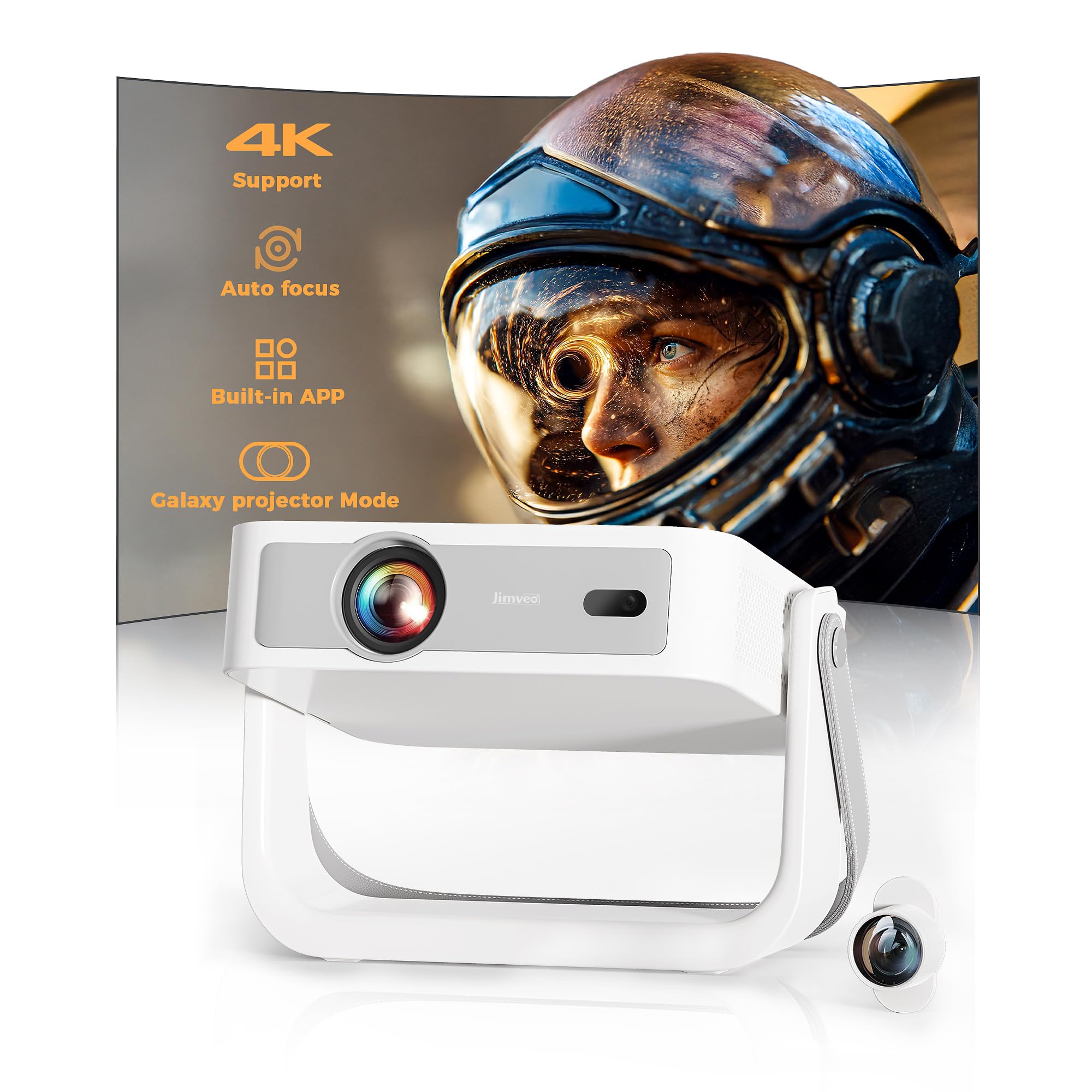
The magnetic star filter is the kind of extra that sounds like a gimmick until you switch it on. It drops a slow field of stars across the wall, a lovely thing to have running while people arrive or after the kids' film ends, and it snaps off in a second when you want the 1080p picture back.

The projector under the trick is good. Netflix and a broad app library are built in, so there is no stick, and the 40W speakers with HDMI eARC hold their own against anything here but the Lisowod. The 180-degree stand folds out of the body, so it sits on a step, a railing, or the ground and still aims at the wall, and at 2.5 inches thick and 2.6 pounds it packs next to a laptop.

Brightness is where it asks you to plan. Jimveo does not publish an ANSI figure, and the picture explains the omission: it is at its best after full dark, and a lit patio or a bright evening costs it contrast and color. In a yard with security lights that is a real constraint; on a balcony after dark it is not.

What the J62Pro has that nothing else here does is charm, a small, clever projector that makes the setting up part of the evening. For balconies, small patios, and rooms where the projector lives on a shelf, that counts for more than the brightness it gives up.

Pros

  • 2.5 inches thick and 2.6 lb
  • 180-degree stand built into the body
  • 40W audio with HDMI eARC
  • Magnetic star filter is genuinely fun

Cons

  • In-house app system is clunkier than Roku or Google TV
Our verdict

A genuinely packable projector with a 180-degree stand and a star filter that makes setup fun, provided your yard goes fully dark.

Check Latest Price
5

Best Premium

TOPTRO X9 PRO

92 /100
LBD Score Outstanding

Key details

Audio
40W Dolby
Streaming
VIDAA OS built in
Brightness
920 ISO ANSI lumens
Throw Distance
3.6 to 16.4 ft
View on Amazon

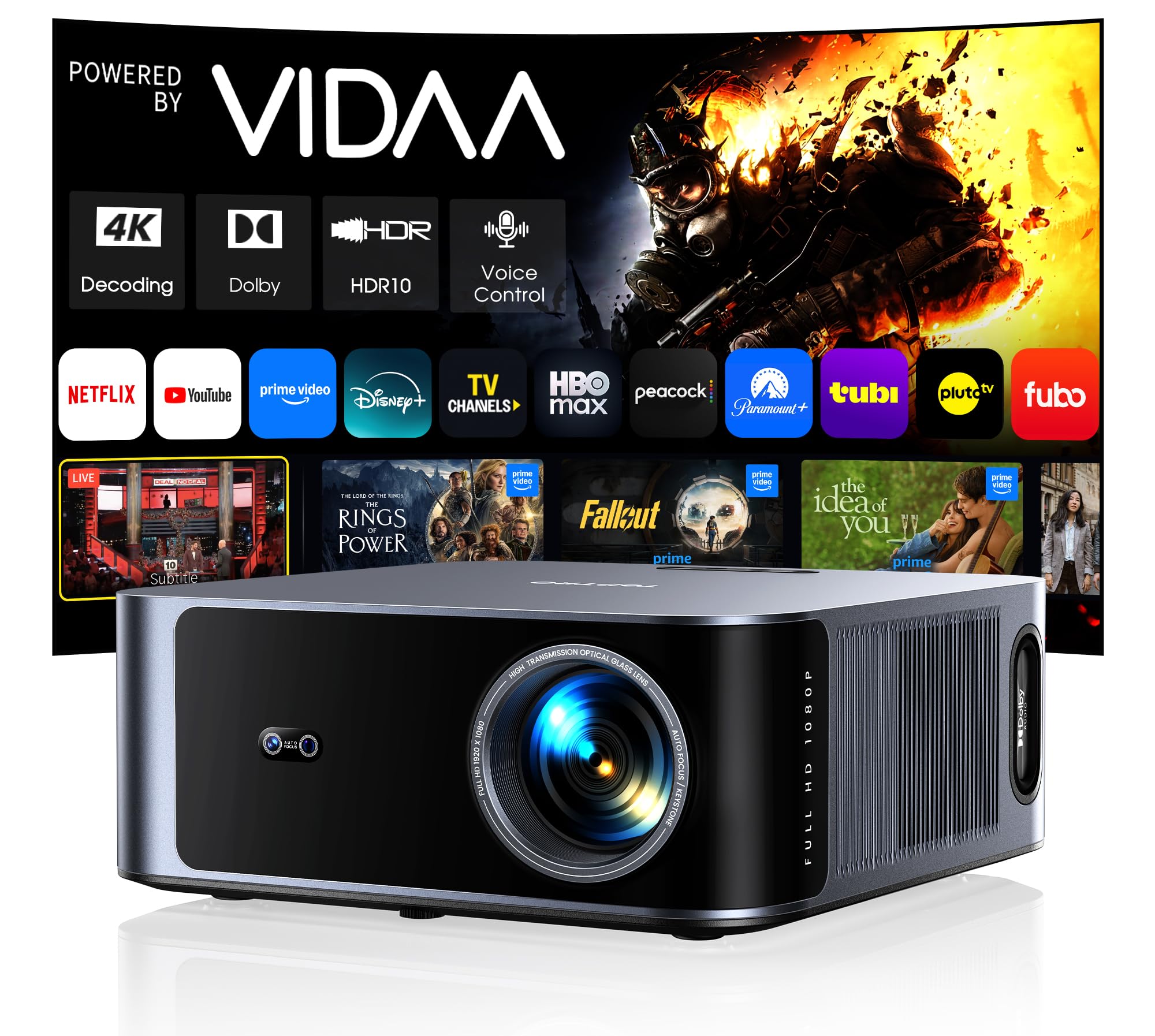
920 ISO ANSI lumens looks like a humble number next to the 3500 brightness figures printed on half the boxes in this category. TOPTRO grades its projector on a standard instead, and the picture it throws is comfortably the equal of models claiming several times that figure. In a dark yard it fills 120 inches with detail intact in the shadows, and we know which number we trust.

Everything around the picture is premium in ways you notice after a few weeks rather than a few minutes. The 40W Dolby speakers pair with HDMI eARC and CEC, so one remote wakes the sound and the projector together; two-way Bluetooth 5.4 takes headphones or sends audio out to a speaker; AirPlay 2 and HomeKit work without a dongle. VIDAA is the smoothest interface in this group, with live channels sitting alongside the usual apps.

Setup is fully automatic, covering focus, keystone, obstacle avoidance, and screen fit, and the fan stays quiet enough that we stopped noticing it, which is not true of most of the projectors here. The trade is bulk: 6.6 pounds and more than 11 inches wide, which makes it a shelf-and-cart projector rather than something you carry out on a whim.

That is the honest description of what it is: a projector for a patio with a fixed screen, a covered porch, or a garage theater. Set it up once, leave it there, and the extra money goes into the parts you notice every single time.

Pros

  • 920 ISO ANSI lumens, honestly rated
  • 40W Dolby with HDMI eARC and CEC
  • VIDAA is the smoothest system here
  • Quiet fan and automatic setup

Cons

  • Costs more than anything else here
Our verdict

For a projector that lives on a shelf and comes out for every big game, the honest 920 lumens and 40W sound are worth the money.

Check Latest Price
6

Best Sound

Lisowod L61Pro 2.0

91 /100
LBD Score Outstanding

Key details

Audio
50W Dolby
Weight
2.4 lb
Streaming
15,000+ apps built in
Brightness
2,500 ANSI lumens
View on Amazon

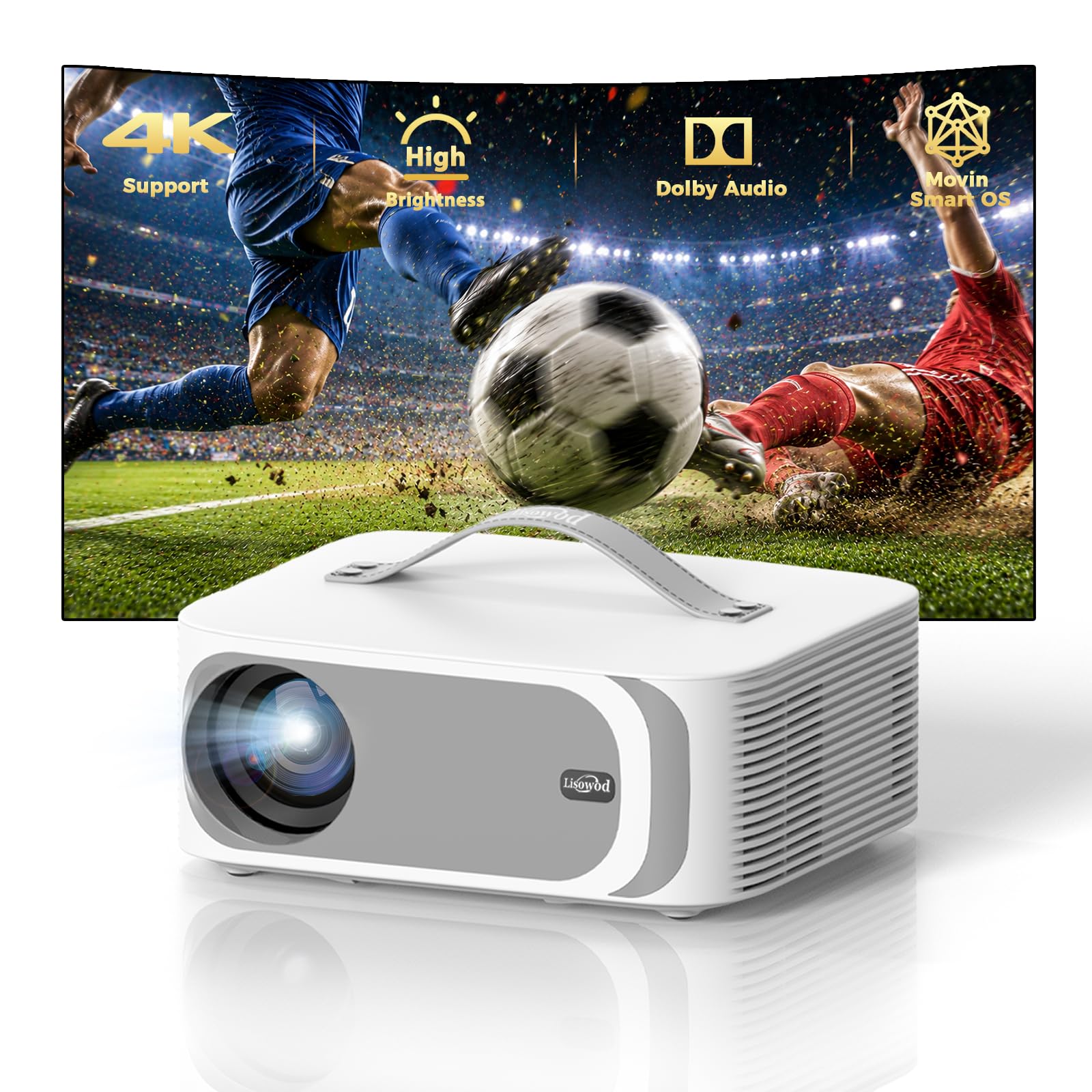
A handle is a small thing to appreciate until you have made three trips across a yard with a projector, a stand, and a speaker. The L61Pro weighs 2.4 pounds with the grip molded into the body, and its 50W Dolby speakers mean the speaker you would otherwise carry is already inside. One box, one cord, one trip.

Sound is where this one separates from the rest. Fifty watts is the most power in this group, and it is tuned well enough that dialogue stays clean and music does not smear; for a dozen people on a patio, that is the difference between a movie night and a mumble. Bluetooth takes a bigger speaker when the yard calls for one.

The picture side is solid rather than spectacular. The 2,500 ANSI rating puts it near the top of this set, auto focus and 6D keystone settle in seconds, and the Movin 2.0 system carries Netflix, Prime Video, and a very long list of others. The body is a 10-inch cube, though, so it eats table space in a way the Jimveo does not, and on a big patio table that is a trade worth taking for the sound.

Think of it as the all-in-one of the group: the projector you grab when you do not want to think about what else to bring. If the evening matters more than the spec sheet, this is the one that makes it easy.

Pros

  • 2.4 lb with a molded carry handle
  • 50W Dolby, the most power here
  • 2,500 ANSI lumens
  • Apps built in, no stick

Cons

  • Costs more than our top pick
Our verdict

The one to carry out under one arm: 2.4 pounds, a molded handle, and 50W of Dolby sound that saves you bringing a speaker.

Check Latest Price
7

First Projector

NICPOW E2 PRO

87 /100
LBD Score Excellent

Key details

Audio
5W stereo
Max Image
300 in.
Brightness
1,500 ANSI lumens
In The Box
Tripod stand
View on Amazon

The tripod in the box solves the problem that undoes most first attempts: getting the projector to the right height without stacking it on a cooler. Set the E2 PRO behind the seating, tilt it at the wall, and the auto focus and keystone do the rest. With a rated 1,500 ANSI lumens and apps built in, it is a lot of projector for the money.

After dark the 1080p picture is bright and clean, and the app selection covers Netflix, YouTube, and Prime Video without a stick, so a guest can be watching something within a couple of minutes of the box coming open. The 300-inch maximum is there if you have the throw distance; most yards land between 100 and 150 inches and look better for it.

The phone side is the shaky part. Casting and Wi-Fi pairing are where this one gets difficult, with connections that take several tries and fail slowly when they fail, so the safe way to run it is the built-in apps and the remote, with a streaming stick in the HDMI port as backup. Set up the Wi-Fi in daylight, before anyone is waiting for a movie.

As a first projector that arrives with everything needed to start, tripod, cable, and apps included, it is a sensible buy and the least fussy way into a backyard movie night on a budget. Just plan on its apps rather than your phone.

Pros

  • Tripod included in the box
  • Rated 1,500 ANSI lumens
  • Apps built in, no stick
  • Light at 2.4 lb

Cons

  • 5W speakers are quiet for a group
Our verdict

A complete first projector with the tripod included, provided you stream through its own apps instead of casting from your phone.

Check Latest Price
8

Packing Light

XuanPad S5

86 /100
LBD Score Excellent

Key details

Stand
360-degree detachable
Weight
1.9 lb
Brightness
1,800 ANSI lumens
Resolution
1080p native
View on Amazon

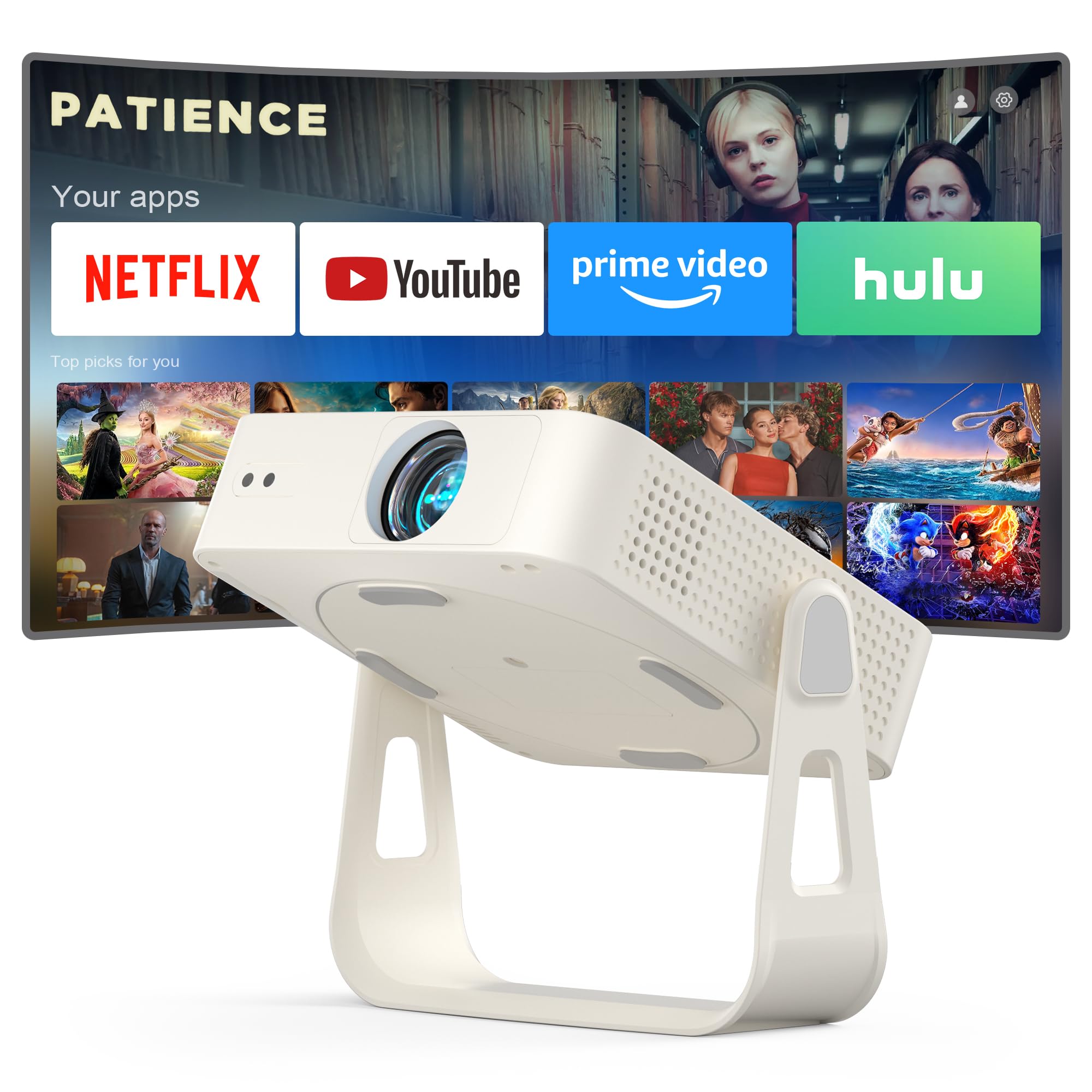
At 1.18 inches thick and under two pounds, the S5 is the only projector here that slips into a backpack next to a tablet. The 360-degree stand unscrews from the base, so you can aim the lens at a wall, a ceiling, or a sheet hung on a fence without hunting for a tripod.

It is a native 1080p LCD with a licensed app built in, auto focus that lands in about three seconds, 6D keystone, and up to 210 inches of picture. For a bedroom ceiling or a small patio, that is a remarkable amount of screen from something this small, and the first setup genuinely takes under a minute.

The compromises arrive with the movie. Contrast falls away as soon as there is any light around; this is a full-dark projector, more so than anything else here, so a white fence at dusk and a white wall at midnight are two different experiences. Schedule it late and it looks far better than its price suggests.

Buy it for the size and the price, not for a picture that will fight the sunset. For a dorm room, a first apartment, or a kit that has to pack flat, nothing here disappears into a bag as completely.

Pros

  • 1.2 inches thick and under 2 lb
  • 360-degree detachable stand
  • Native 1080p at a budget price
  • Auto focus in about three seconds

Cons

  • Fan is loud during quiet scenes
  • Built-in speaker is thin
Our verdict

The thinnest, lightest route to a 1080p picture, with the fan noise and thin sound that come with a body this small.

Check Latest Price

How We Tested Outdoor Projectors

We started with a research pool of about 40 projectors pulled from retailer listings and customer review threads, then narrowed it by the things that decide whether a projector actually works outside: a built-in streaming platform versus a required stick, a stand that tilts the lens high enough to hit a screen or a wall from the grass, size and weight for carrying out to the yard, and price. That left 12 units, which we used for six months.

Testing happened where these live. We hung a bedsheet on the fence and projected at dusk, then again once it was fully dark, to see how much picture came through in each light. We set units on the driveway aimed at the garage door, took a few camping on a portable battery, and turned one at the ceiling on rainy nights. Each unit got moved, nudged, and knocked off-axis on purpose to see how fast autofocus and keystone recovered on uneven ground.

We timed setup solo, from opening the bag to a watchable picture, including whether we had to run an extension cord indoors. We played the same dialogue-heavy scene at three brightness levels and listened for the fan during quiet moments. Audio got judged from about 10 feet back, at yard volume. For connectivity, we paired phones, plugged in a streaming stick, added a Bluetooth speaker, and checked whether apps stayed logged in and whether streams buffered when a phone walked out of range.

At the end, we weighed what each unit delivered against what it cost, which is where a few impressive-looking projectors fell out of contention.

How to Choose an Outdoor Projector

Read the brightness number, not the label

Brightness is the specification that decides whether an outdoor projector works, and it is the one most often dressed up. A figure given in ANSI or ISO lumens comes from a standard measurement; a claim like 3500 brightness or a bare lumen count usually does not. The honest ratings in this group run from 920 ISO ANSI lumens on the TOPTRO to 2,500 ANSI on our top pick and the Lisowod.

For a 100-inch picture, roughly 1,000 to 1,500 lumens is comfortable after full dark, and more than that buys back the first half hour of dusk. If you want the movie running before the sun is down, spend on brightness before you spend on apps.

Built-in streaming saves the most hassle

A projector with Roku, Google TV, or another licensed smart system on board means one remote, no HDMI stick, and nobody handing a phone around the circle. The licensed platforms are the ones we trust most, because apps update and sign in the way they do on a television; the in-house systems range from good to merely workable.

Whichever you pick, confirm the services you actually watch are supported where you live, and remember that any projector here will take a cheap streaming stick in its HDMI port if an app is missing.

Placement and throw decide the picture size

Image size comes from distance, not a dial. The K7 throws 30 to 300 inches from about 4.7 to 28 feet, while the compact Jimveo covers 35 to 300 inches from roughly 3 to 21 feet. Measure from where people will sit to the wall and choose a projector that reaches your target size from that spot.

A built-in stand matters more outdoors than an extra app, because patios rarely offer a table at screen height. The 270-degree stand on the K7, the 180-degree stand on the Jimveo, and the detachable 360-degree ring on the XuanPad all solve angles that a flat base cannot.

Plan for sound before you need it

Outdoors there are no walls to bounce sound back at the seating, so a speaker that fills a living room can sound thin over a lawn. Below about 10W you should count on a Bluetooth speaker for anything more than two people; the 30W and 40W units here — the J7, the Jimveo, and the TOPTRO — handle a small gathering, and the Lisowod's 50W is the loudest of the group.

Bluetooth audio out is available on every pick here, and pairing a speaker is the upgrade we suggest before a bigger screen.

Power, cords, and where it lives between shows

These are wall-powered projectors drawing somewhere between 60 and 135 watts, so a normal outdoor circuit has plenty of headroom; the cord and the connection are what need attention. Use an outdoor-rated extension cord, keep the plug and any adapter off wet grass, and route the run where nobody will trip over it in the dark.

Treat the projector like a laptop: let it cool with the vents clear, cap the lens, and bring it inside after the credits. A plastic bin by the back door holding the projector, cord, and remote does more for how often you use it than any specification on this page.

Frequently Asked Questions

Final Verdict

The HAPPRUN K7 is the one we point people to first. Licensed Google TV means no stick and no fiddling, 2,500 ANSI lumens covers the whole evening rather than only the dark part of it, and the 270-degree stand handles the fact that patios are short on level tables. Nothing else here puts those three together.

If the budget is tighter, the HAPPRUN J7 keeps a rated 1,500 lumens and built-in apps for a fraction of the money, and the Aurzen D1R is the least expensive way to get a Roku screen into the yard. Choose the TOPTRO X9 PRO only if the projector will live on a shelf, where its honestly rated brightness, quiet fan, and 40W sound earn the premium.